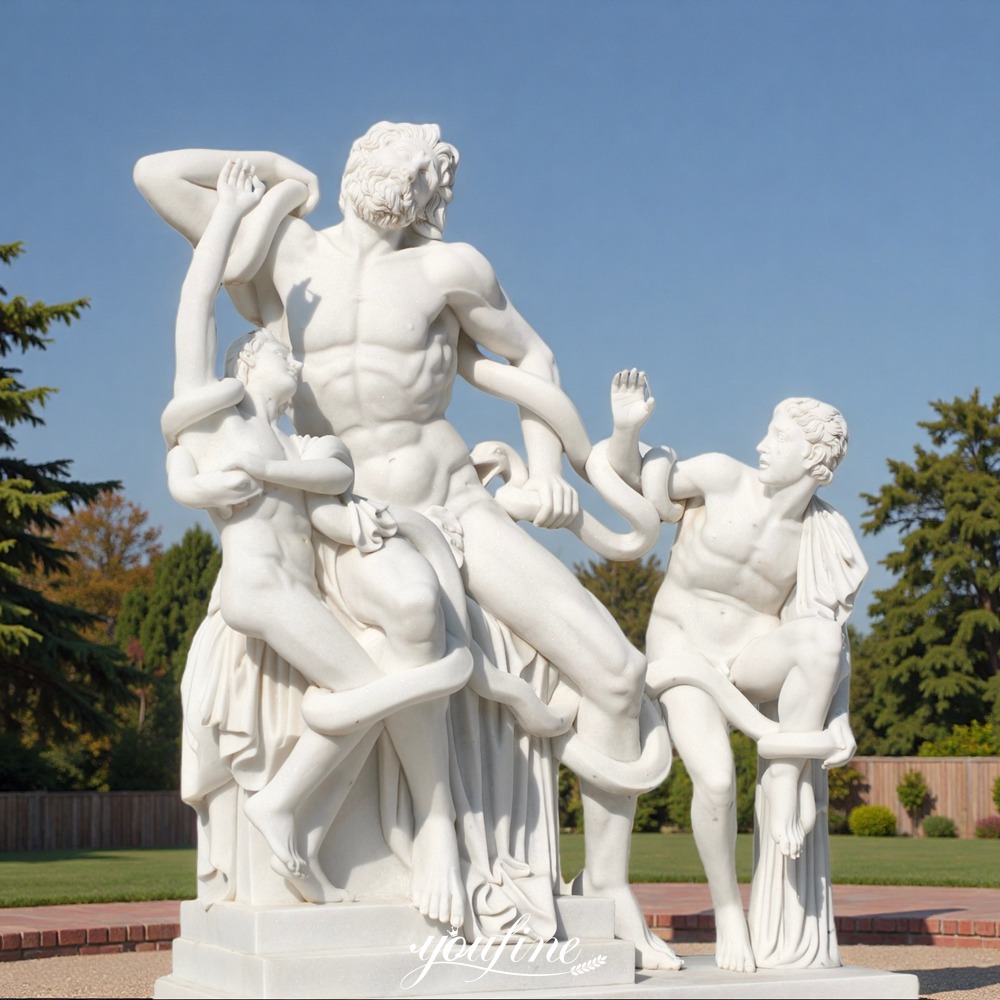
The Sculpture of Laocoön and His Sons, often called the Laocoön Group, stands as one of the most powerful and emotionally intense masterpieces of ancient sculpture. Carved in marble and charged with dramatic tension, it depicts a moment of unbearable suffering that has fascinated viewers for more than two thousand years. Since its rediscovery in Renaissance Rome, the statue has shaped the course of Western art, influencing masters such as Michelangelo and redefining how pain, movement, and the human body could be represented in sculpture.
This article explores the story behind Laocoön and His Sons—its mythological origins, historical background, artistic meaning, creators, lasting influence, and why it remains one of the most important sculptures in the world.
The Mythological Story of Laocoön and His Sons
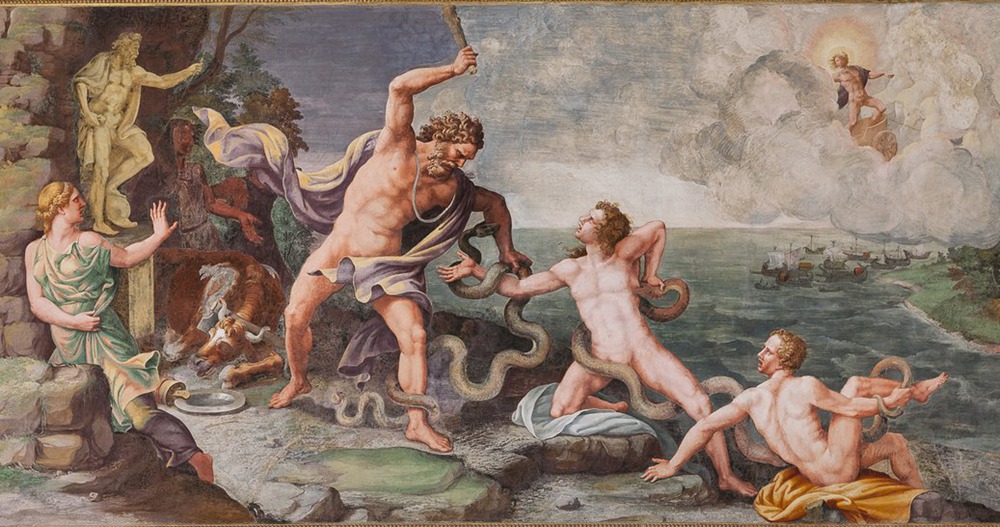
The sculpture is based on a tragic episode from Greek mythology, best known through Virgil’s Aeneid. Laocoön was a Trojan priest, commonly associated with Apollo or Poseidon. During the final days of the Trojan War, after the Greeks appeared to abandon their camp, Laocoön famously warned the Trojans not to trust the massive wooden horse left outside the city gates.
He suspected deception and urged his people to destroy the horse rather than bring it into Troy. His warning—later summarized by the phrase “Beware of Greeks bearing gifts”—went unheeded.
According to the myth, the gods who supported the Greeks punished Laocoön for opposing their divine plan. Two enormous sea serpents emerged from the sea and attacked Laocoön and his two sons, crushing and suffocating them in their coils. Witnessing this horrifying scene, the Trojans believed Laocoön had been punished for offending the gods, and they interpreted his death as proof that the wooden horse was sacred. This fatal misunderstanding led directly to the fall of Troy.
The sculpture captures this precise moment of violent struggle—Laocoön and his sons locked in a hopeless battle against divine forces beyond human control.
Historical Background of the Sculpture
Laocoön and His Sons is generally dated to the late Hellenistic period, around the late 2nd century BCE or early 1st century BCE. The work reflects the Hellenistic artistic tradition, which emphasized drama, emotional intensity, and complex movement rather than calm idealism.
Most scholars believe the statue is either:
- a Greek original from the Hellenistic era, or
- a Roman marble copy of an earlier Greek bronze sculpture.
The sculpture was lost for centuries and rediscovered in January 1506 in a vineyard near the Esquiline Hill in Rome. Its discovery caused an immediate sensation. Pope Julius II quickly acquired the statue and placed it in the Vatican, recognizing its extraordinary artistic value. It has remained in the Vatican Museums ever since.
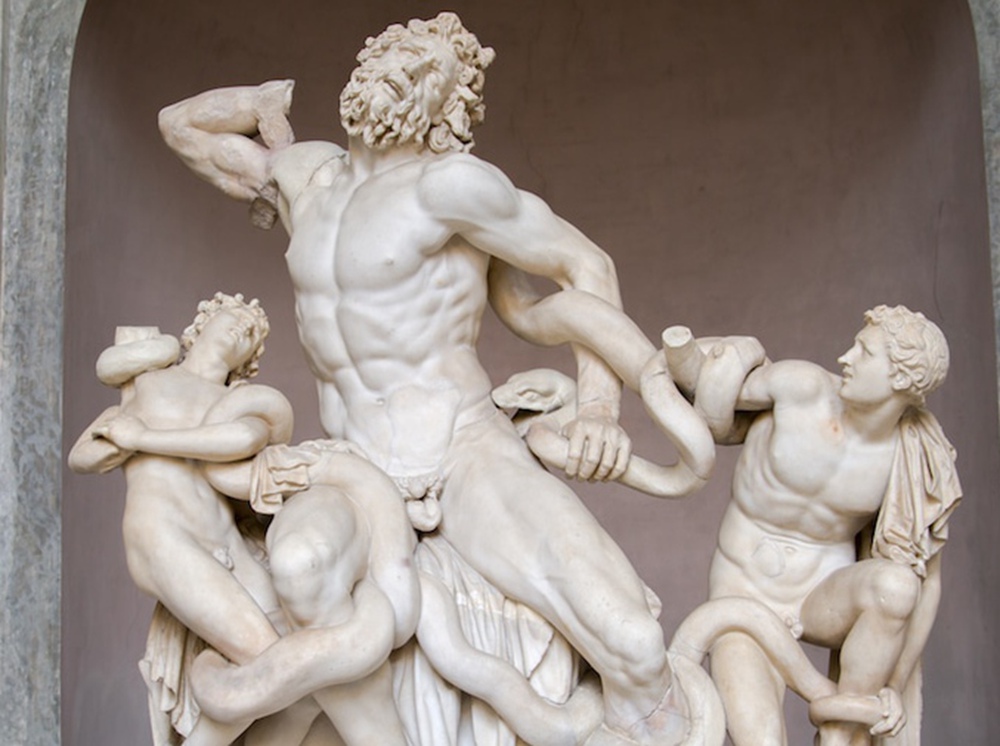
Who Sculpted Laocoön and His Sons?
The ancient Roman writer Pliny the Elder provides the most important historical reference to the sculpture. He attributes Laocoön and His Sons to three Greek sculptors from the island of Rhodes:
- Agesander
- Athenodoros
- Polydorus
Pliny described the sculpture as a supreme achievement of art, carved from a single block of marble—though modern research suggests multiple blocks were used. Whether the three artists collaborated simultaneously or worked sequentially remains debated, but their collective skill is evident in the sculpture’s technical complexity and expressive power.
Artistic Meaning and Symbolism
The meaning of Laocoön and His Sons goes far beyond a simple mythological illustration. At its core, the sculpture explores the universal themes of suffering, fate, and human vulnerability.
Expression of Human Agony
Laocoön’s twisted torso, strained muscles, and anguished facial expression communicate physical pain and psychological despair with unprecedented realism. His sons’ fear and helplessness intensify the emotional impact, emphasizing innocence destroyed by forces beyond comprehension.
Struggle Against Fate
Unlike heroic sculptures that celebrate victory or divine order, this work presents a man who is morally right yet doomed. Laocoön’s suffering is not redemptive; it is tragic. This absence of consolation makes the sculpture profoundly human and deeply unsettling.
Mastery of Movement
The composition forms a complex, spiraling structure that draws the viewer’s eye around the figures. Every angle reveals new tensions between balance and collapse, strength and defeat.
Why Is Laocoön and His Sons So Important?
The importance of the Laocoön Group lies in its revolutionary approach to sculpture:
- It represents one of the highest achievements of Hellenistic art
- It redefined how emotion and pain could be depicted in marble
- It became a benchmark for anatomical accuracy and dynamic composition
In Western aesthetics, the sculpture became a central reference for discussions of the “sublime”—art that overwhelms the viewer through intensity rather than beauty alone.
These qualities not only made it a milestone in Western art history but also enabled it to transcend geographical and temporal boundaries, becoming a famous and renowned artistic treasure familiar to audiences worldwide. It is still highly sought after by numerous museums, scholars, and art enthusiasts to this day.
Laocoön and His Sons and Michelangelo
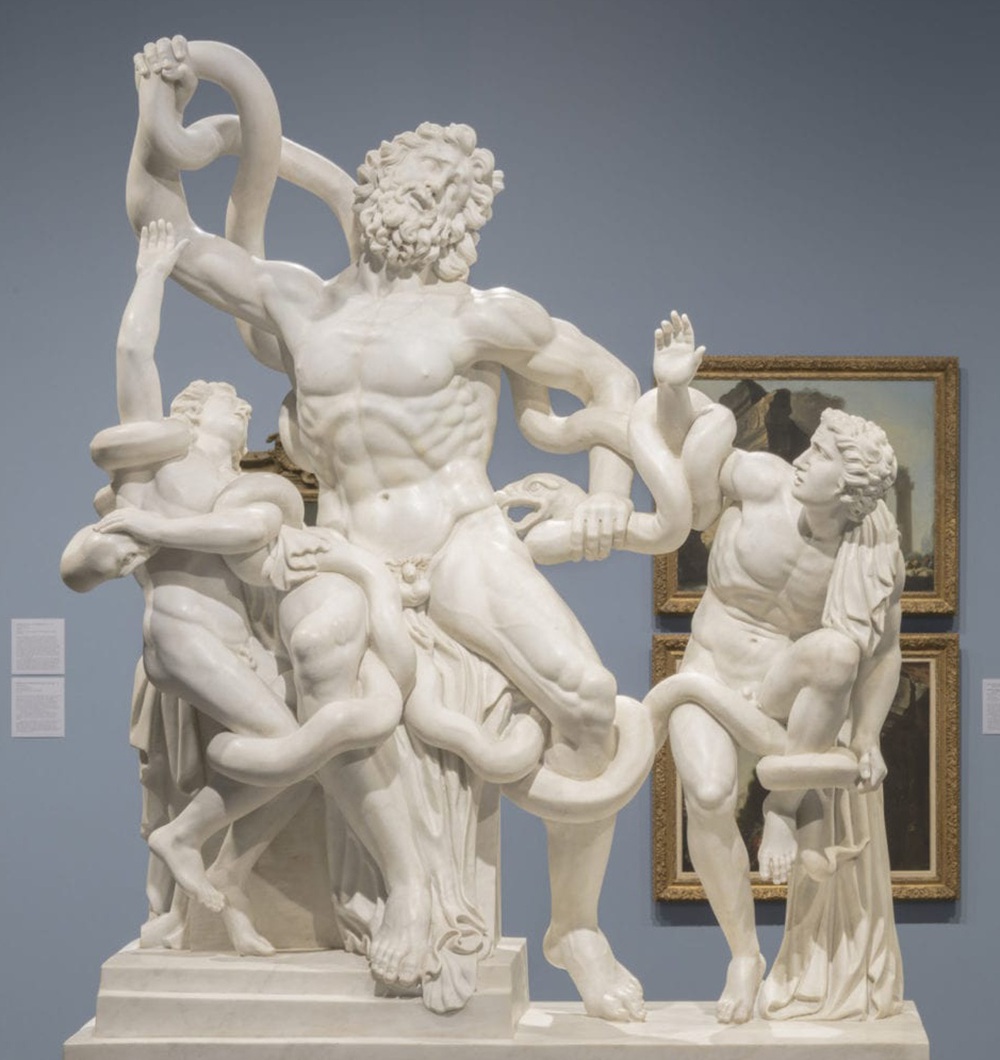
The rediscovery of Laocoön and His Sons had a profound impact on Renaissance art, especially on Michelangelo. He was reportedly present shortly after the statue was unearthed in 1506 and immediately recognized its significance.
Michelangelo deeply admired the sculptures:
- powerful anatomy
- twisting poses
- expressive tension
These qualities strongly influenced his later works, including:
- The figures on the Sistine Chapel ceiling
- The Last Judgment
- sculptures such as The Dying Slave
While Michelangelo did not imitate the Laocoön directly, its emphasis on muscular energy and emotional intensity became central to his artistic language. Through him, the influence of the Laocoön extended to countless later artists, from Raphael to Baroque sculptors like Bernini.

Interesting Story:
The sculpture lacked Laocoön’s right arm when unearthed. Most artists thought it was originally extended, but Michelangelo argued it was bent at the elbow—pulled back by the serpent—due to anatomical logic. Centuries later, a bent arm fragment was found and reattached, confirming his view on the sculpture’s original design.
Where is Laocoon and His Sons Sculpture Located?
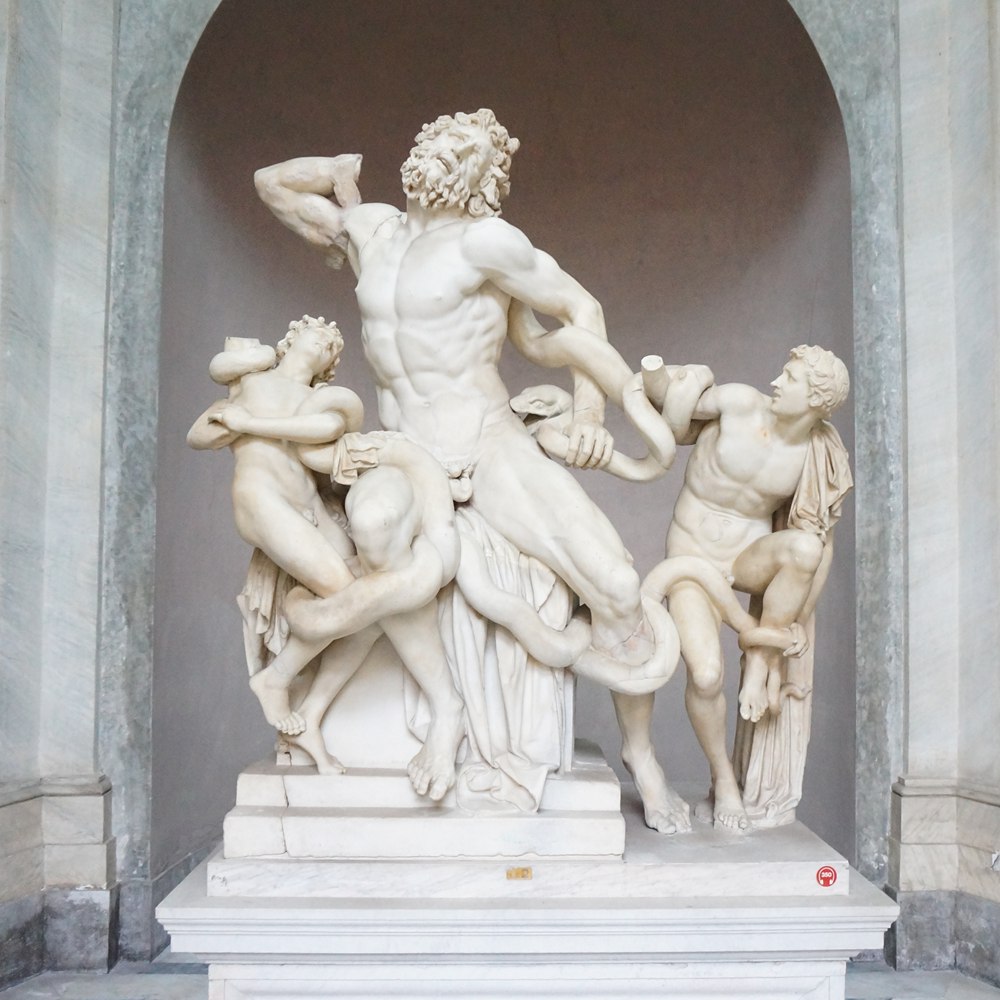
Today, the original sculpture is housed in the Vatican Museums, specifically in the Pio-Clementino Museum in Vatican City. It is displayed as one of the museum’s most important classical sculptures and is considered an essential viewing experience for anyone interested in art history.
The sculpture is positioned to allow viewers to walk around it, emphasizing its three-dimensional complexity and dramatic composition.
Replicas Around the World
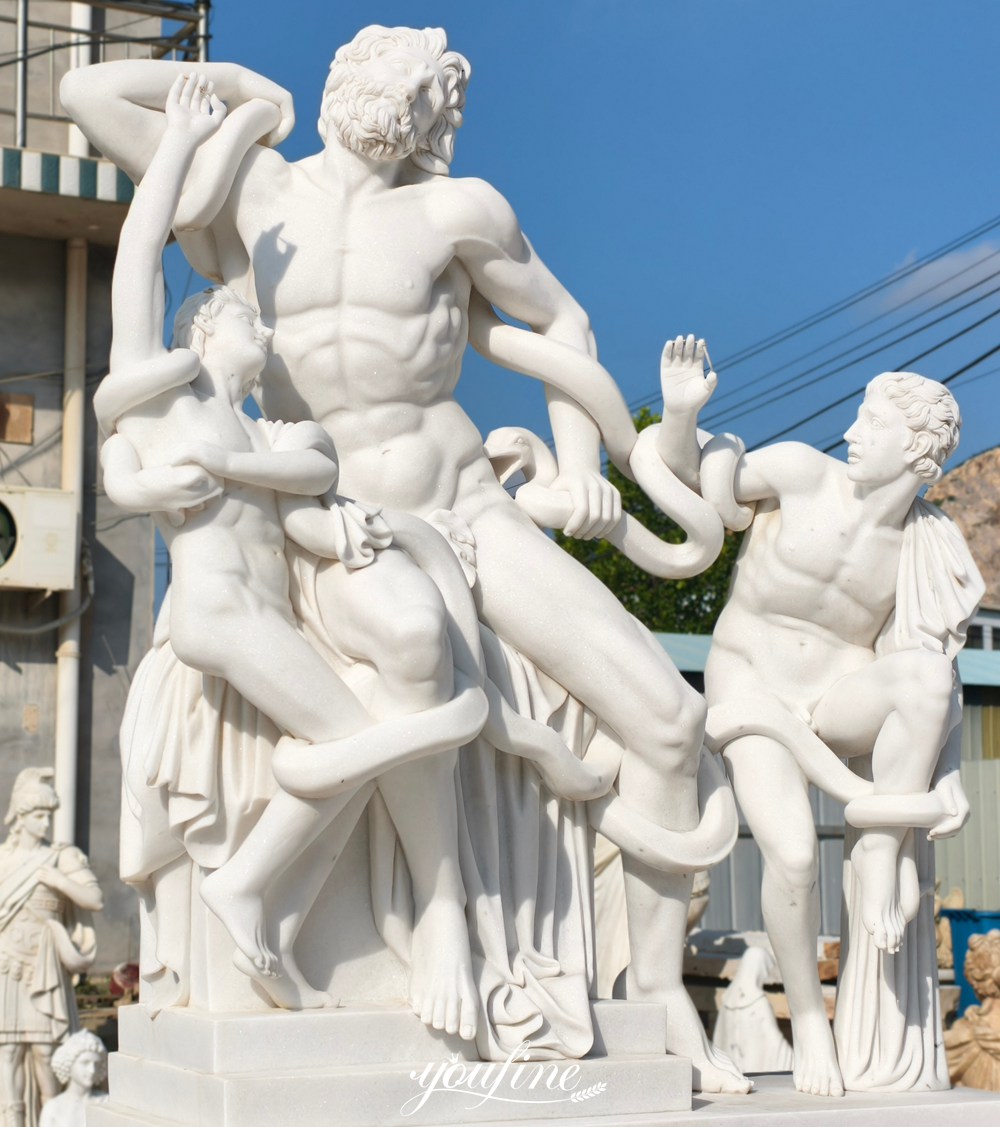
Because of its importance, Laocoön and His Sons has been widely replicated since the Renaissance.
- Plaster casts were used in European art academies to teach anatomy and composition
- Marble copies exist in major museums such as the Louvre and the British Museum
- Modern reproductions appear in universities, gardens, and private collections
These replicas helped spread the sculpture’s influence across Europe and beyond, making it one of the most studied artworks in history.


Conclusion: A Timeless Masterpiece of Human Suffering
The Laocoön and His Sons statue is a depiction of a myth—it is more a profound meditation on human suffering, fate, and resistance. Its emotional realism, technical brilliance, and historical impact place it among the greatest works of art ever created.
From ancient Greece to Renaissance Rome and into the modern world, Laocoön’s struggle continues to speak to viewers across cultures and centuries. It reminds us that art’s power lies not only in beauty, but in its ability to confront the deepest truths of the human condition.
FAQ:
Is Laocoön and His Sons a Greek or Roman sculpture?
The sculpture is based on Greek mythology and Hellenistic artistic traditions. However, the existing marble version is generally believed to be a Roman copy or adaptation of an earlier Greek original.
Why does Laocoön look so Muscular?
The muscular body emphasizes physical strain and emotional intensity, a key feature of Hellenistic sculpture.
Is the Sculpture Complete or Restored?
The sculpture was restored; Laocoön’s right arm was missing and later correctly reattached in a bent position.
How Large is the Statue of Laocoön and His Sons?
The statue is about 2 meters (approximately 6 feet 7 in) tall.