
Two of the most famous sculptures in Renaissance art are Donatello’s David and Michelangelo’s David. Both depict the biblical hero who defeated Goliath, yet the two statues look completely different.
Donatello’s David appears youthful, delicate, and mysterious. Michelangelo’s David looks powerful, muscular, and intensely heroic. One sculpture captures the quiet aftermath of victory, while the other freezes the dramatic tension before battle.
These differences are not accidental. They reflect the evolution of Renaissance ideals, artistic techniques, political culture, and the changing understanding of the human body.
In this blog, we will compare Donatello David vs Michelangelo David in terms of style, symbolism, material, anatomy, and historical meaning.
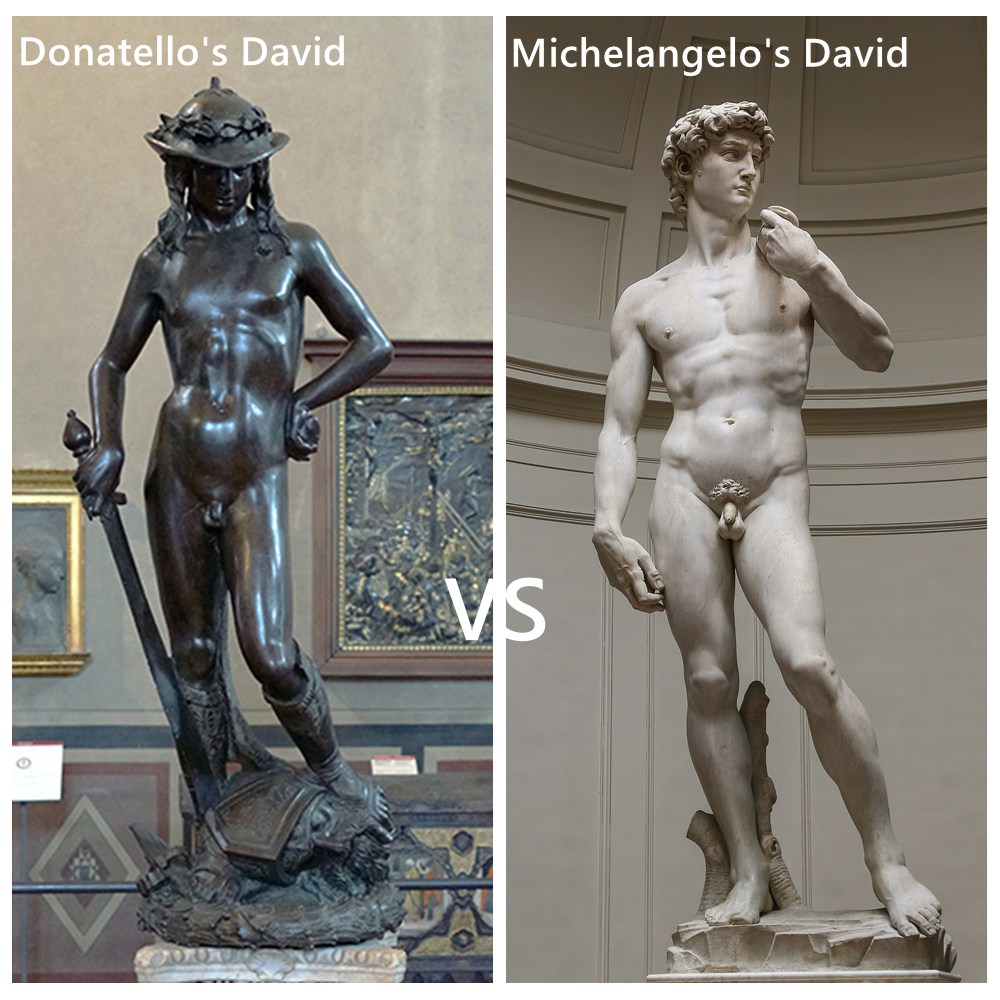
Quick Comparison Table: Donatello’s David vs Michelangelo’s David
| Aspect | Donatello’s David | Michelangelo’s David |
|---|---|---|
| Date | c. 1440s | 1501–1504 |
| Renaissance Period | Early Renaissance | High Renaissance |
| Material | Bronze | Marble |
| Height | About 5 feet | About 17 feet |
| Moment Depicted | After defeating Goliath | Before battle |
| Body Style | Slim and androgynous | Muscular and heroic |
| Emotional Tone | Calm and reflective | Intense and focused |
| Artistic Ideal | Psychological realism | Idealized perfection |
| Original Setting | Medici Palace | Florence Public Square |
| Symbolism | Victory through faith and intellect | Civic strength and heroic power |
Why Do Donatello’s and Michelangelo’s David Look So Different?
Before Battle vs After Victory
One of the biggest differences between the two sculptures is the moment of the story each artist chose to portray.
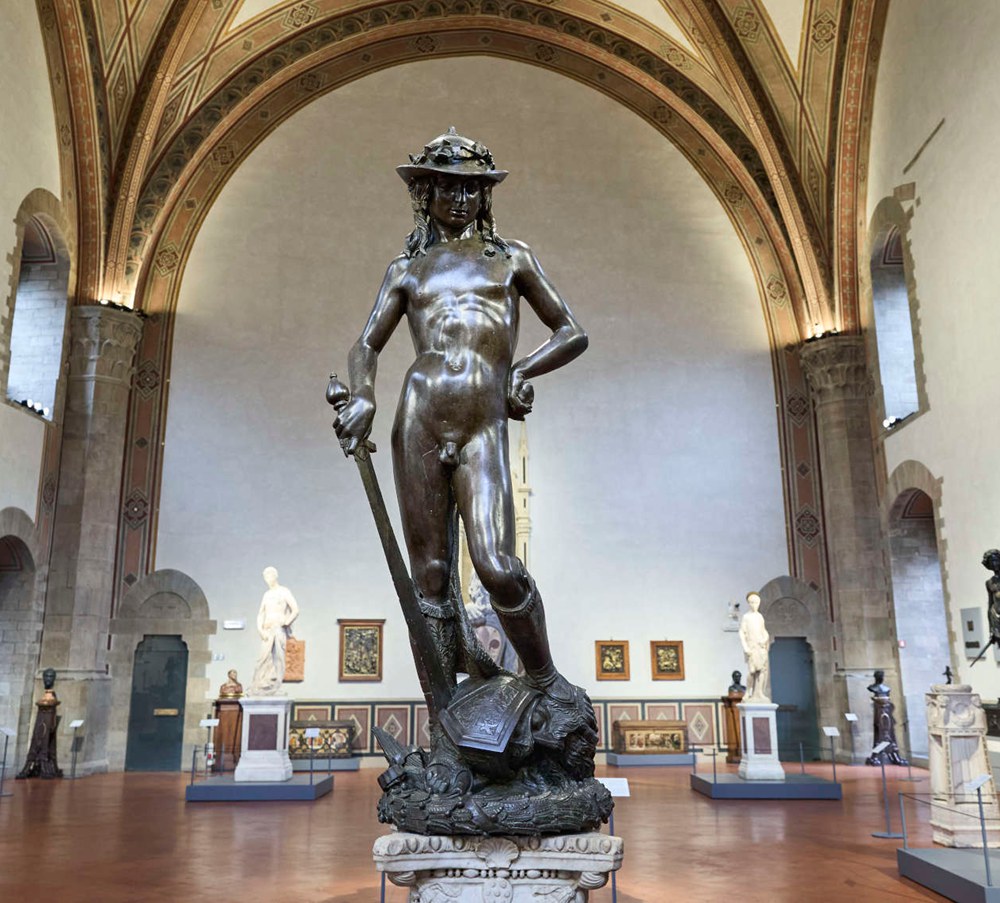
Donatello’s David: After the Battle
Donatello shows David after defeating Goliath.
Key characteristics include:
- standing calmly on Goliath’s severed head
- relaxed posture
- quiet confidence
- reflective emotional atmosphere
Instead of dramatic action, Donatello focuses on psychological tension and subtle victory. The sculpture feels personal and introspective rather than openly heroic.
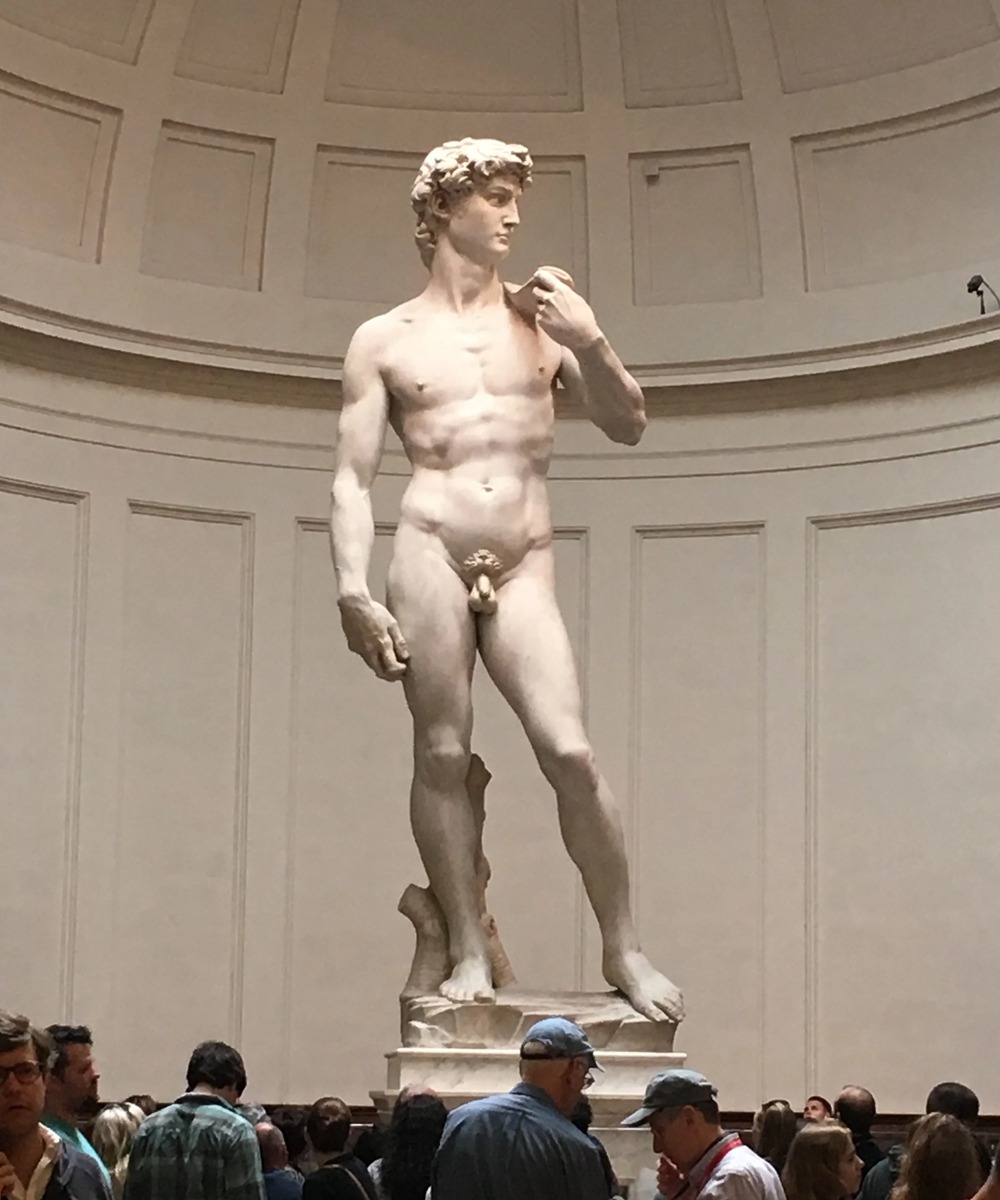
Michelangelo’s David: Before the Battle
Michelangelo chose the opposite moment.
David appears just before the battle begins.
Key characteristics include:
- tense muscles
- concentrated facial expression
- enlarged hands symbolizing strength
- intense anticipation
Michelangelo captures the mental and physical preparation before action, creating a powerful sense of heroic energy.
Key Difference
Donatello portrays victory after action, while Michelangelo captures the tension before action.
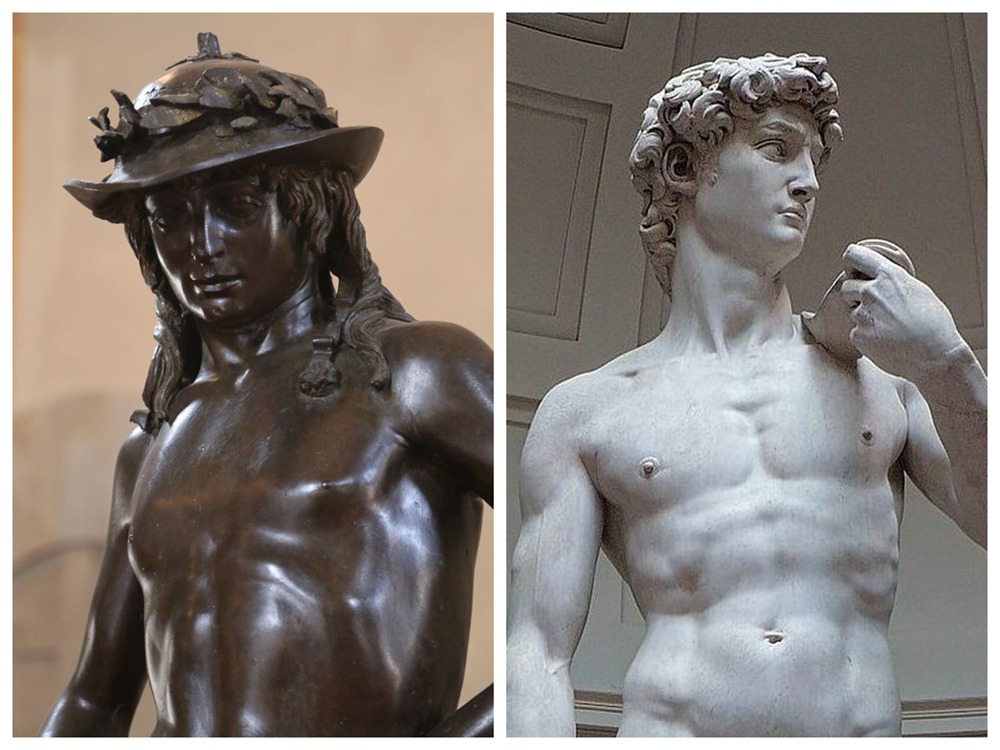
Bronze vs Marble: How Material Changed the Sculpture
The material used by each artist strongly influenced the appearance and emotional impact of the sculpture.
Donatello’s Bronze David
Donatello’s David was created in bronze, making it one of the first freestanding nude bronze sculptures since antiquity.
The bronze material allowed for:
- softer contours
- delicate details
- smooth surface reflections
- a more intimate scale
These qualities give the sculpture an elegant and almost sensual atmosphere.
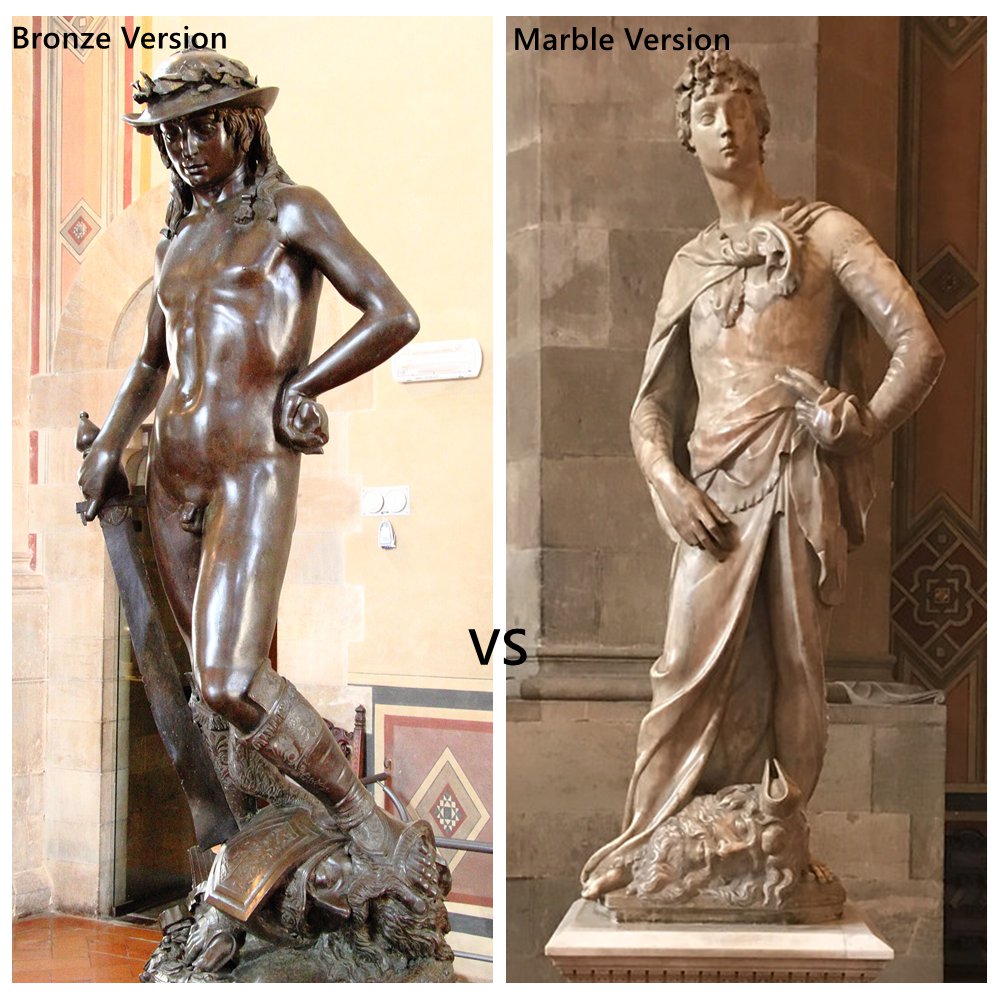
Although the bronze version is the most famous, Donatello also created an earlier marble David around 1408–1409.
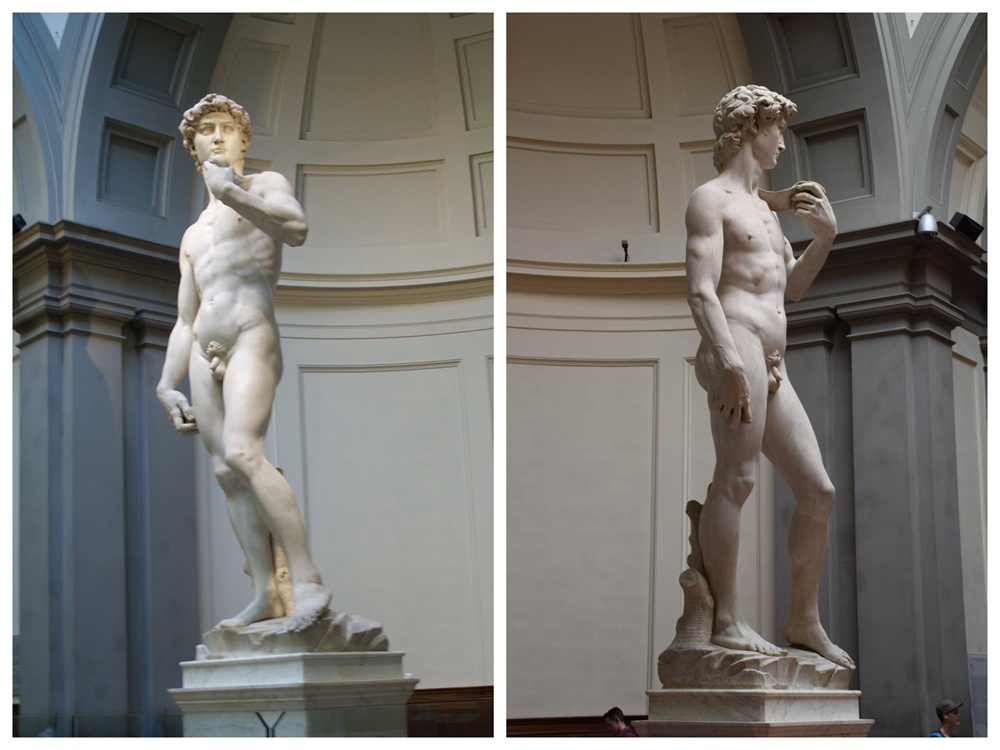
Michelangelo’s Marble David
Michelangelo carved David from a massive block of white marble.
The marble contributes to:
- monumental scale
- anatomical precision
- visual permanence
- heroic public presence
Michelangelo used the stone to demonstrate extraordinary mastery of anatomy and proportion.
Key Difference
Donatello’s bronze David feels refined and intimate, while Michelangelo’s marble David feels monumental and heroic.
Masculinity, Anatomy, and the Human Body
The two sculptures also reveal very different ideas about masculinity and beauty.
Donatello’s Androgynous Figure
Donatello’s David appears youthful and almost feminine in certain details.
Features include:
- slim proportions
- soft facial expression
- graceful posture
- subtle sensuality
Rather than emphasizing physical dominance, Donatello explored individuality and psychological complexity.
Michelangelo’s Heroic Ideal
Michelangelo’s David represents the ideal Renaissance male body.
Important features include:
- powerful musculature
- enlarged hands and neck
- perfect anatomical balance
- heroic physical confidence
The sculpture reflects the High Renaissance belief that the human body could symbolize perfection and divine greatness.
Why This Difference Matters
This contrast reflects changing Renaissance ideas about the role of the human figure in art.
Donatello focused on psychological realism and experimentation, while Michelangelo pursued ideal beauty and heroic perfection.
Early Renaissance vs High Renaissance
The differences between the two Davids also reflect the evolution of Renaissance art itself.
Early Renaissance Ideals
Donatello worked during the Early Renaissance, a period focused on rediscovery and experimentation.
Artists during this time explored:
- classical influence
- natural movement
- emotional realism
- individual personality
Donatello’s David reflects this spirit of artistic curiosity and innovation.
High Renaissance Ideals
Michelangelo belonged to the High Renaissance, when Renaissance art reached greater technical and intellectual maturity.
This period emphasized:
- harmony
- ideal proportion
- balance
- artistic perfection
Michelangelo’s David embodies confidence, stability, and heroic grandeur.
Quick Take
Donatello’s David reflects artistic experimentation, while Michelangelo’s David reflects artistic mastery.
Why Renaissance Art Changed So Much Between Donatello and Michelangelo?
The dramatic differences between the two sculptures reveal how quickly Renaissance art evolved.
From Experimentation to Mastery
During Donatello’s lifetime, artists were still rediscovering ancient Roman and Greek art.
By Michelangelo’s era, artists had developed:
- advanced anatomical knowledge
- greater technical confidence
- more ambitious artistic goals
- stronger understanding of classical ideals
This shift transformed sculpture from experimental realism into monumental perfection.
The Rise of Humanism
Humanism played a major role in this artistic evolution.
Renaissance thinkers increasingly valued:
- human intelligence
- individual achievement
- physical beauty
- human potential
Donatello’s David reflects early humanist curiosity, while Michelangelo’s David elevates the human figure into a heroic ideal.
Florence and Political Identity
The political environment of Florence also influenced the sculptures.
During Donatello’s period:
- Powerful families like the Medici controlled patronage
- Art often served private intellectual culture
During Michelangelo’s time:
- Florence faced political uncertainty
- Public monuments became civic symbols
- Art represented collective identity and strength
Key Takeaway
The two Davids reveal how Renaissance art evolved from intellectual experimentation into heroic idealism.
Public Symbol vs Private Artwork
The original settings of the sculptures changed how audiences experienced them.
Donatello’s Private Commission
Donatello’s David was created for the Medici family and displayed in a private courtyard.
The sculpture was intended for:
- elite viewers
- intellectual discussion
- artistic appreciation
- private cultural prestige
Its smaller scale and subtle symbolism suited an intimate setting.
Michelangelo’s Public Monument
Michelangelo’s David was created for public display in Florence.
The sculpture became:
- a civic symbol
- a representation of Florentine independence
- a public statement of strength
- an icon of political resistance
Its monumental size was designed to inspire and impress large audiences.
Key Difference
Donatello’s David was created for private reflection, while Michelangelo’s David became a public symbol of civic power.
Which David Sculpture Replica Is Right for Your Space?
Both David sculpture replicas are timeless favorites for collectors, luxury estates, art galleries, and high-end architectural spaces. You can select the ideal piece based on the following factors:
Selection by Space & Placement
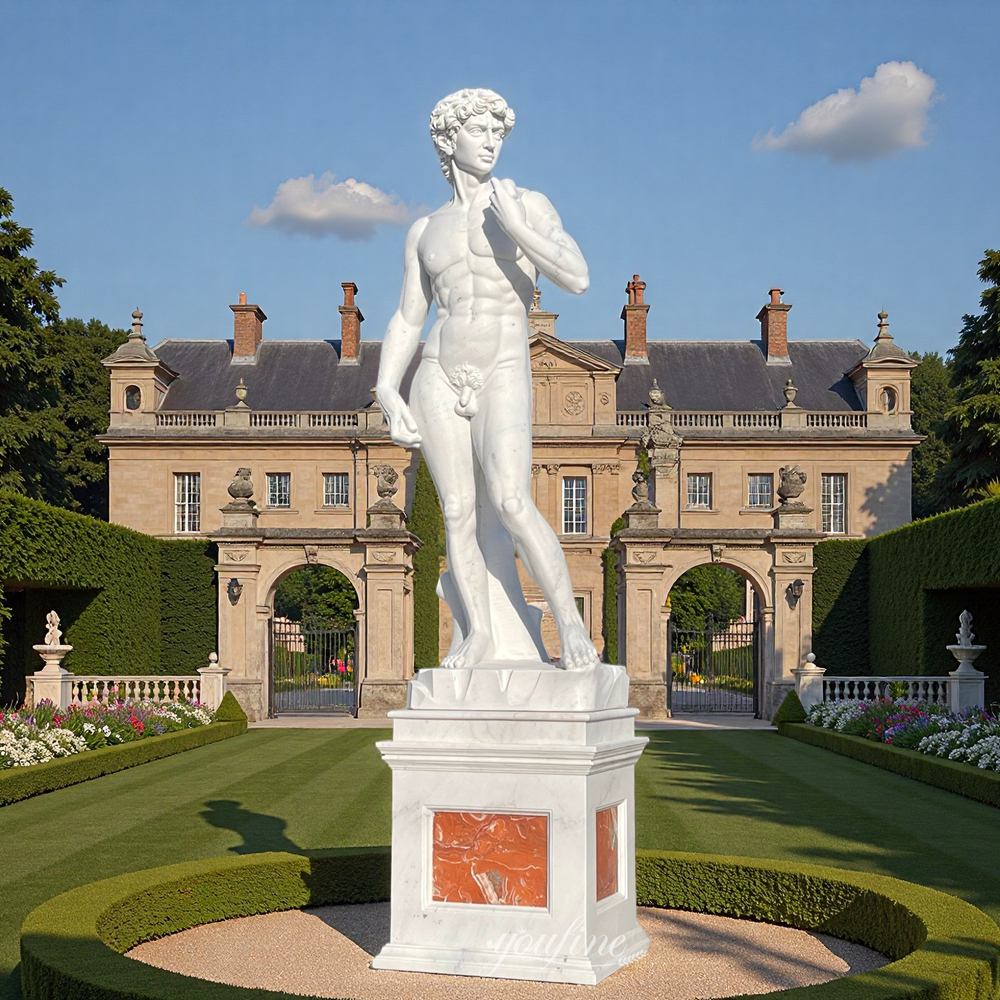
Choose Michelangelo’s David sculpture replica → Large plazas, grand estate entrances, and high-ceiling indoor halls.
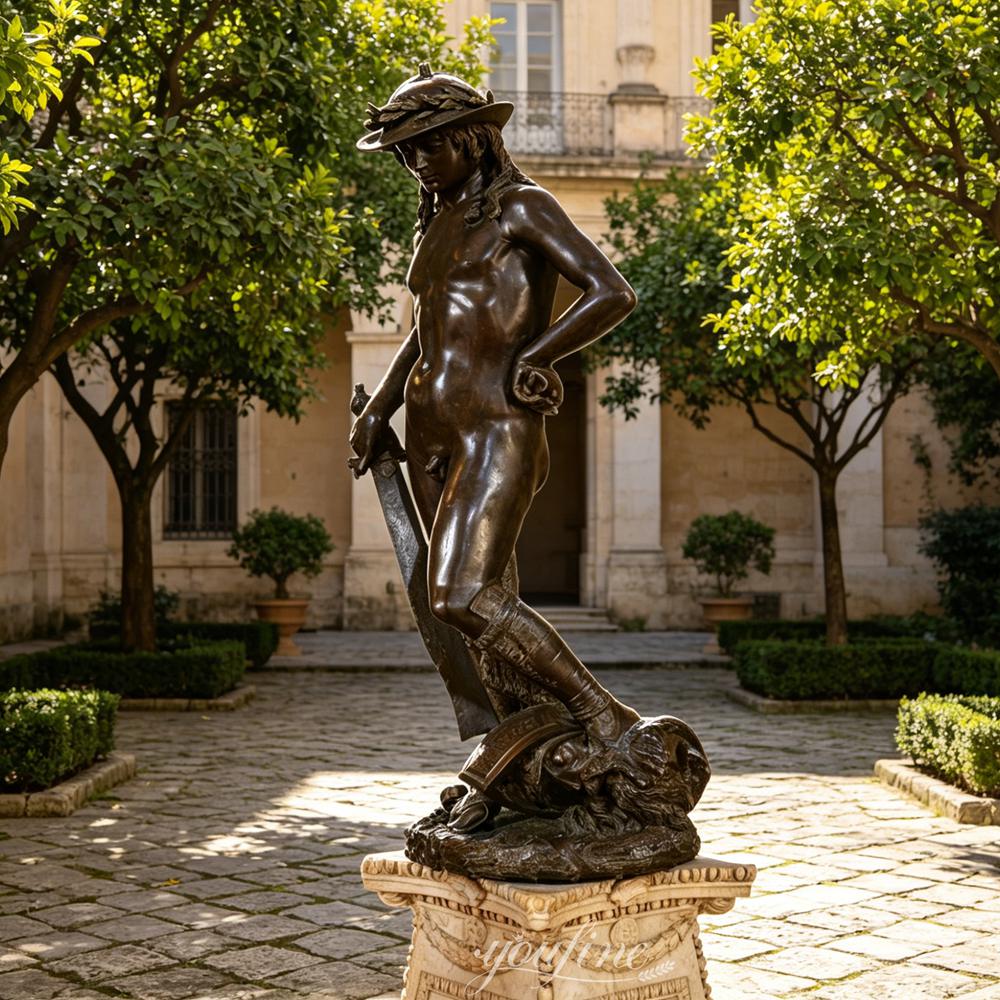
Choose Donatello’s David sculpture replica → Small gardens, private studies, art galleries, and refined fountain courtyards.
Selection by Material & Ambiance
Choose Michelangelo’s marble David statue replica → Create a classic, sacred, and pure atmosphere.
Choose Donatello’s bronze David statue replica → Create a profound, mysterious, and historic artistic ambiance.
Selection by Symbolic Meaning
Choose Michelangelo’s David replica → Convey fearlessness, focus, and upcoming victory.
Choose Donatello’s David replica → Convey triumph, youth, and wonderful miracles.
Summary
If you are seeking a majestic centerpiece to act as a stately guardian for your property, choose Michelangelo’s David. If you prefer an artistic piece that highlights your unique taste and serves as a fascinating conversation starter, Donatello’s David is the perfect choice.
FAQs
Who made the David statue first, Donatello or Michelangelo?
Donatello is the predecessor. He cast his famous bronze David around the 1440s, approximately 60 years before Michelangelo began carving his massive marble masterpiece (1501–1504).
How many versions of David did Donatello create?
Donatello created two primary versions. The first was an early marble statue (1408), characterized by its Gothic style. The second and more famous one is the bronze statue (c. 1440s), known for being the first freestanding nude male sculpture since antiquity.
Why is Donatello’s bronze David more famous than his marble one?
The bronze David is a revolutionary milestone, being the first freestanding, life-sized male nude created since ancient Rome. Unlike his earlier Gothic-style marble version, the bronze statue broke a thousand-year tradition of religious stiffness, introducing a daring psychological depth and realism that defined the Early Renaissance breakthrough.
What are the key similarities between Donatello’s David and Michelangelo’s David?
Both statues revive the classical Contrapposto stance (weight shifted to one leg) and celebrate the humanist ideals of the Renaissance. Additionally, both served as powerful symbols of Florentine independence and victory against tyranny.
Why is Donatello’s David considered feminine or androgynous?
It emphasizes youthful realism over heroic idealism. By depicting David as a slim, delicate boy rather than a muscular warrior, Donatello highlights that his victory was a divine miracle, not a result of physical strength alone.
Why was Donatello’s David so controversial?
It was the first unsupported nude sculpture produced in over a thousand years, which challenged medieval moral codes. Its sensual, intimate nature and unconventional accessories (like the winged helmet of Goliath) sparked intense debate about its artistic intent.
How does Bernini’s David differ from Michelangelo’s or Donatello’s?
While Donatello shows the aftermath (victory) and Michelangelo shows the moment before (contemplation), Bernini’s Baroque version captures the climax of action. Bernini’s David is depicted in mid-swing, full of dynamic movement and raw facial expression.
Final Thoughts
Although Donatello’s David and Michelangelo’s David portray the same biblical hero, they represent two completely different visions of Renaissance humanity.
Donatello emphasized psychological realism, subtle emotion, and artistic experimentation. Michelangelo pursued heroic perfection, monumental power, and ideal beauty.
If you are interested in any of the replicas, please don’t hesitate to contact us directly!