
David, the legendary biblical hero, has inspired some of the most iconic sculptures in art history. From the Renaissance masterpieces of Michelangelo and Donatello to Bernini’s Baroque interpretation, David statues represent artistic skill and also deep symbolic meaning. In this blog, we will explore five famous statues of David, compare these different versions of the sculpture from multiple aspects, including style, historical influence, artist, and carving techniques, and provide insights for collectors and enthusiasts interested in replicas.
Whether you are a traveler planning to see these masterpieces, an art student analyzing sculptural techniques, or someone considering a replica for decoration, this blog will help you do a detailed reference.
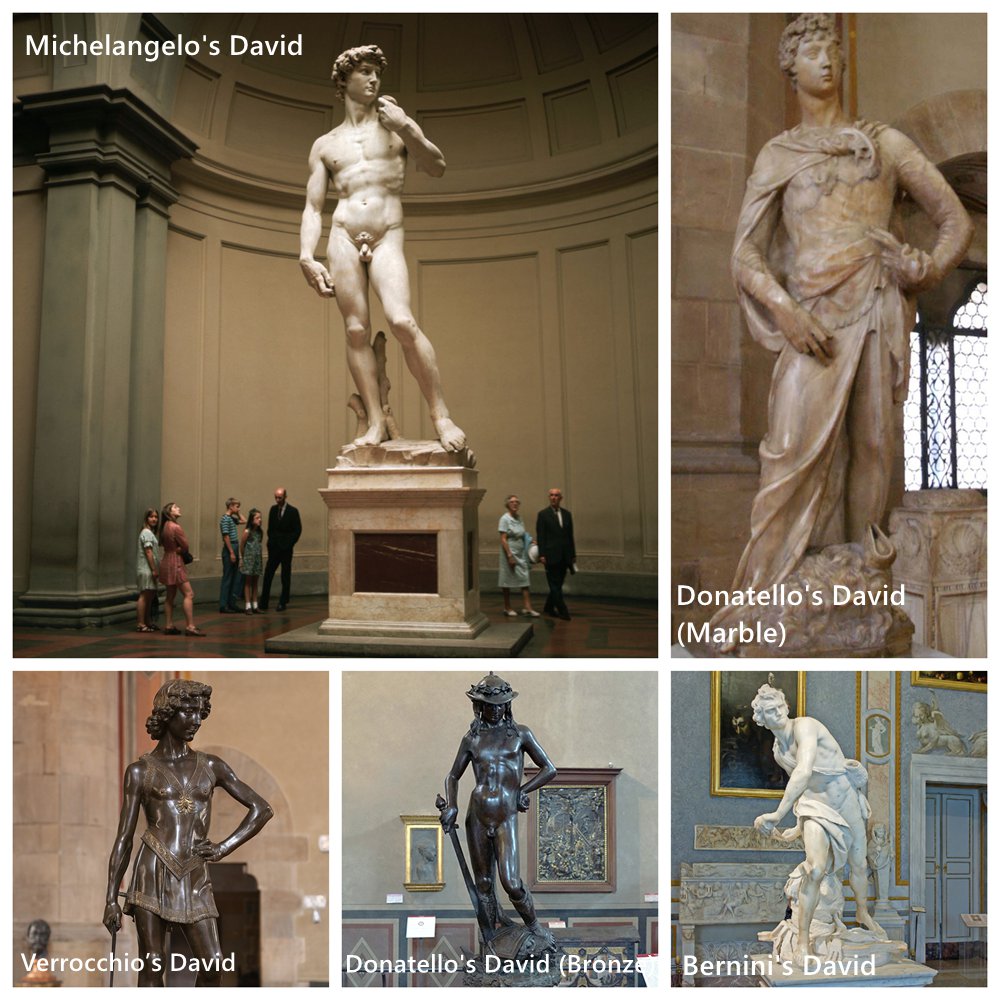
Quick Comparison: The 5 Famous Statues of David at a Glance
Before we dive into the artistic and making process and other aspects of each piece, this executive matrix outlines the core characteristics of the five historical masterpieces:
| Artist | Material | Era / Style | Key Visual Feature | Captured Moment | Current Location |
| Donatello | Marble | 1408–1409 (Gothic Transition) | Fully clothed, slender shepherd boy, crowned with laurel | Post-victory celebration | Bargello Museum, Florence |
| Donatello | Bronze | c. 1440 (Early Renaissance) | Fully nude, effeminate youth, wearing a classical hat | Post-victory meditation | Bargello Museum, Florence |
| Verrocchio | Bronze | 1473–1475 (Early Renaissance) | Dressed in ornate armor, with a slender build and a confident smirk | Post-victory pride | Bargello Museum, Florence |
| Michelangelo | Marble | 1501–1504 (High Renaissance) | 17ft colossal nude, perfect anatomy, intense gaze | Pre-battle tension | Accademia Gallery, Florence |
| Bernini | Marble | 1623–1624 (Baroque Explosion) | Twisted posture, intense facial expression, biting lip | Mid-battle action | Borghese Gallery, Rome |
Timeline Analysis: Detailed Descriptions and Craftsmanship Insights
To truly appreciate these works, we must examine them through the evolution of sculptural engineering and the specific moments each artist chose to analyse.
-
Donatello’s Marble David (1408–1409): The Clothed Gothic Shepherd
- Period & Style: Late Gothic to Early Renaissance Transition
- Artist: Donatello (Donato di Niccolò di Betto Bardi)
- Pose: Clothed shepherd boy, standing calmly
- Current Location: Museo Nazionale del Bargello, Florence.
Sculpture Description & Features:
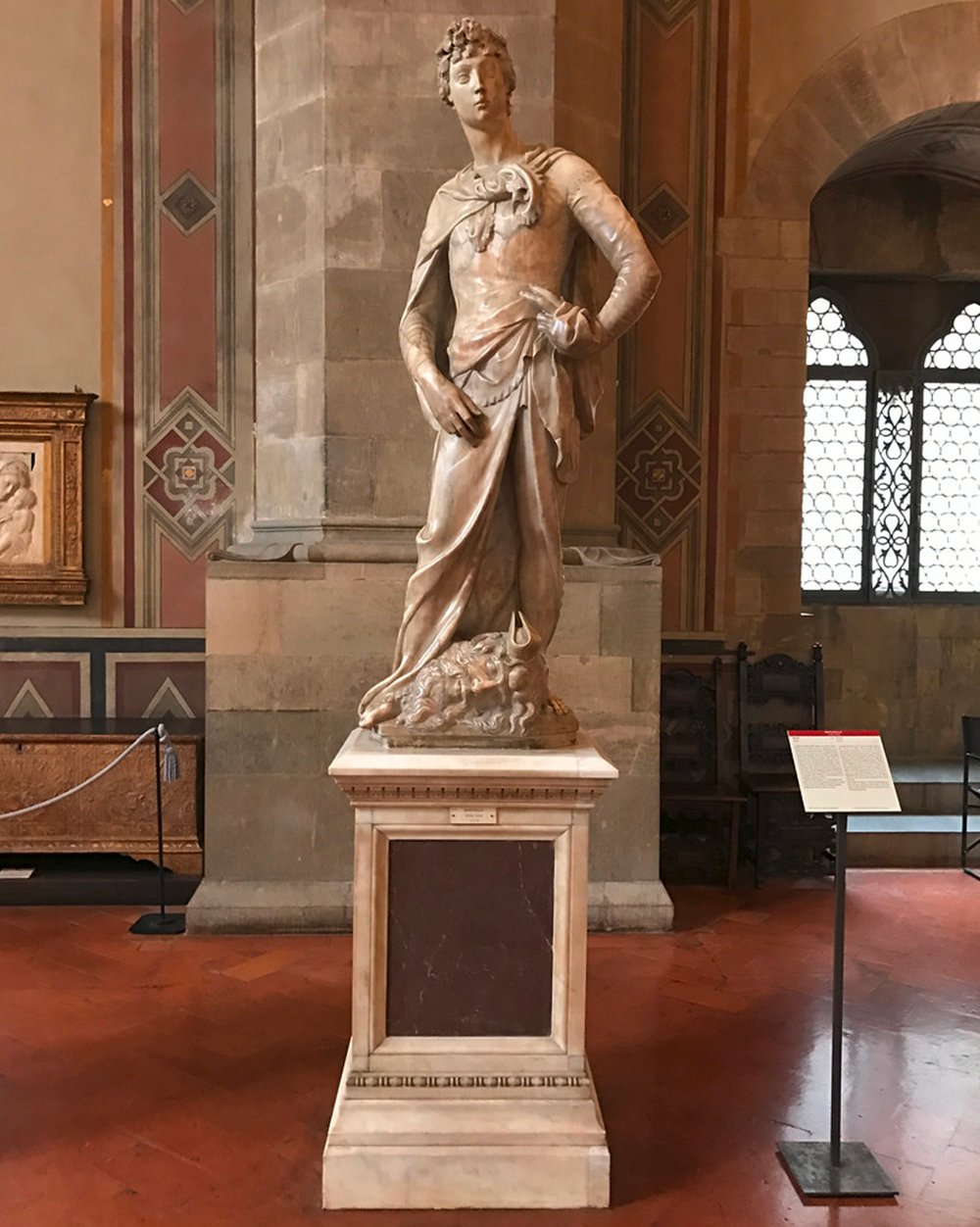
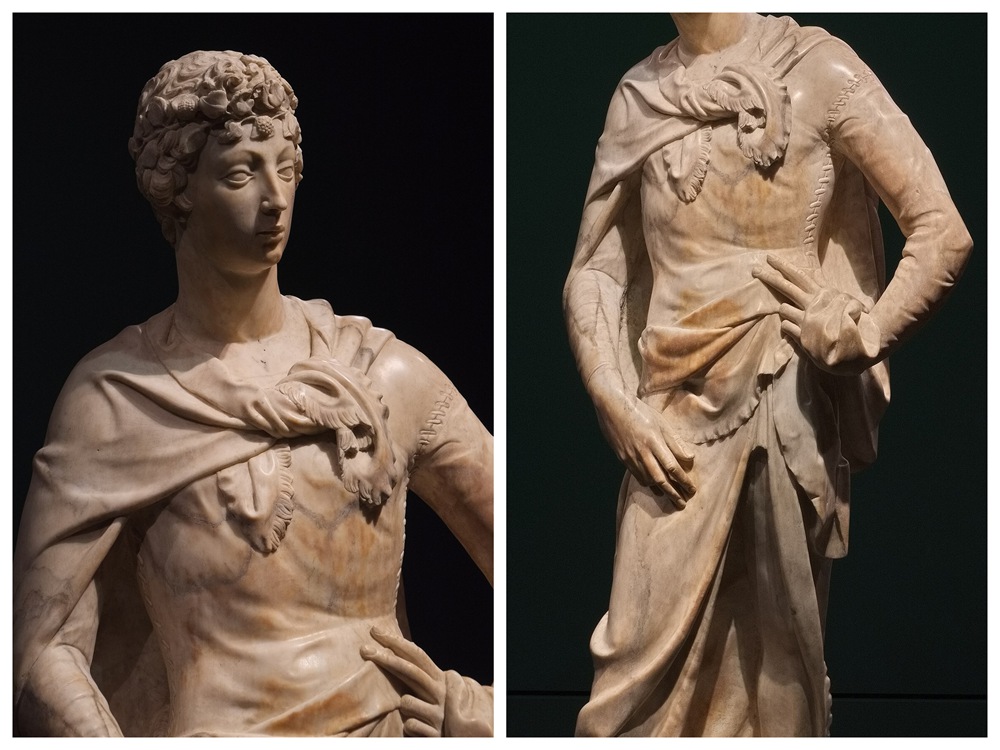
Created when the artist was in his early twenties, this life-size marble statue depicts a young, elegant shepherd boy standing proudly over the severed head of Goliath. David is fully clothed in heavy, cascading robes and crowned with victory laurels.
Historical Context & Symbolism:
Originally commissioned by the operators of the Florence Cathedral, it was later moved to the Palazzo Vecchio. It served as a powerful civic symbol of Florentine freedom, independence, and defiance against tyrannical neighboring states.
Factory Artist Insight:
From a stone-carving perspective, this version is an incredible study in drapery. Replicating the deep, layered folds of the marble fabric requires intense, traditional chiseling skills. It lacks the raw anatomical challenge of Michelangelo’s work, but it offers a softer, more historical, and aristocratic elegance. It is highly favored by clients who prefer classical narrative over raw nudity.
-
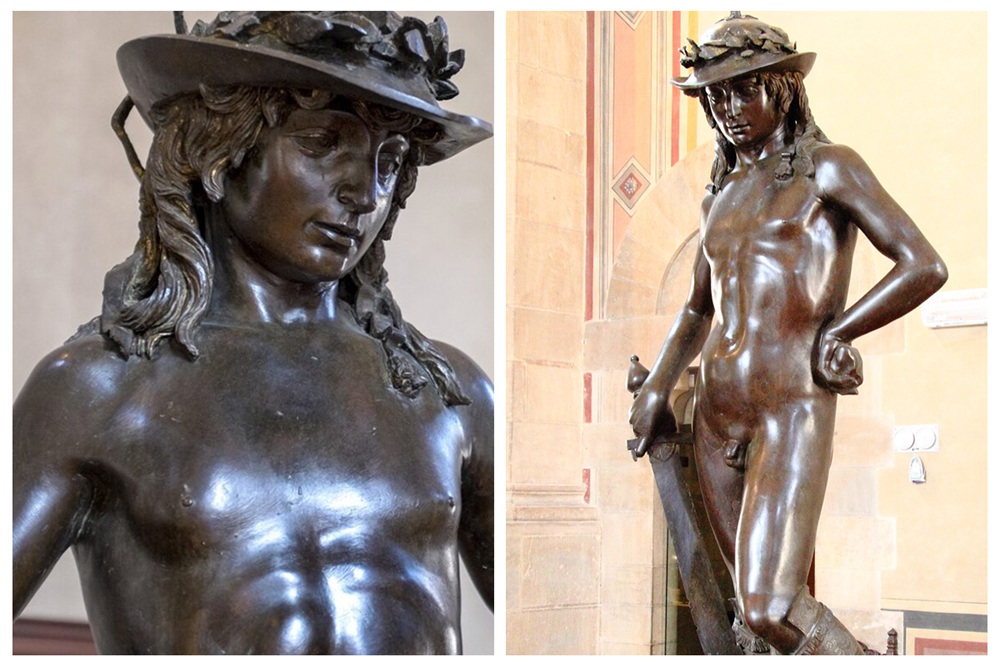
Donatello’s Bronze David (c. 1440): The Revolutionary Renaissance Nude
- Period & Style: Early Renaissance
- Artist: Donatello
- Pose: Youthful David standing over Goliath’s head
- Current Location: Museo Nazionale del Bargello, Florence.
Sculpture Description & Features:
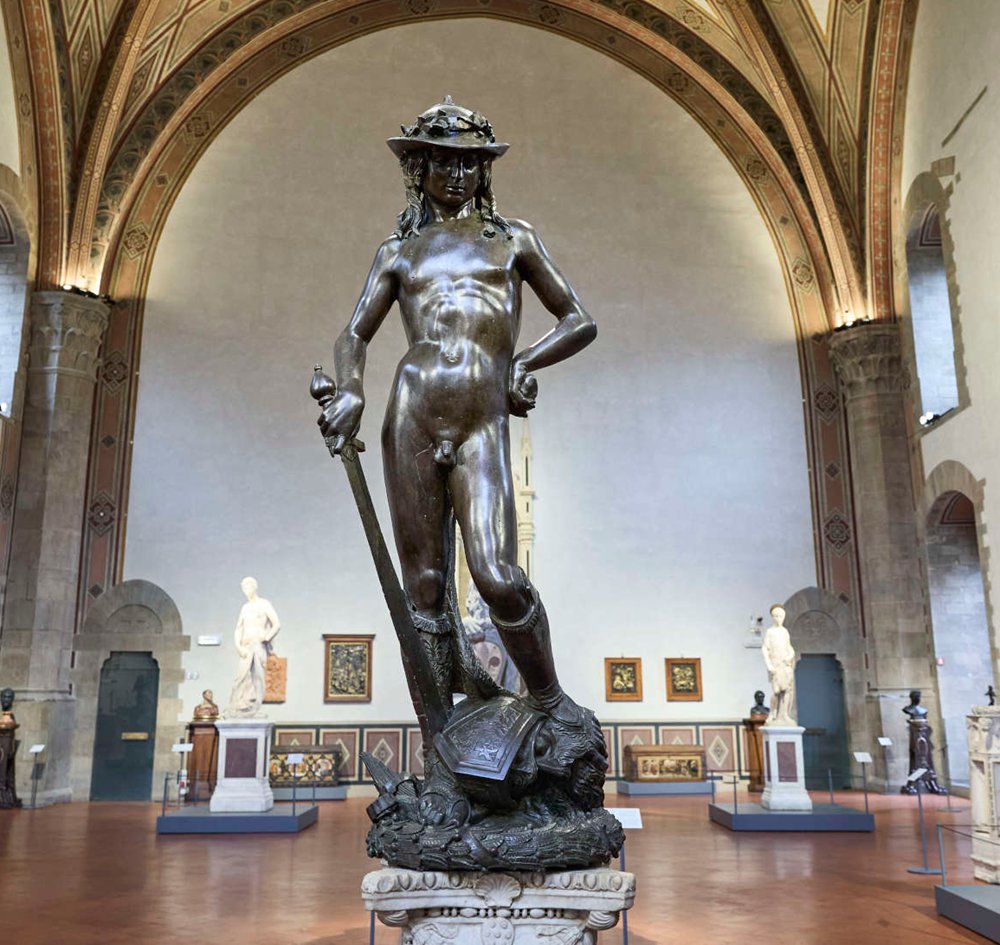
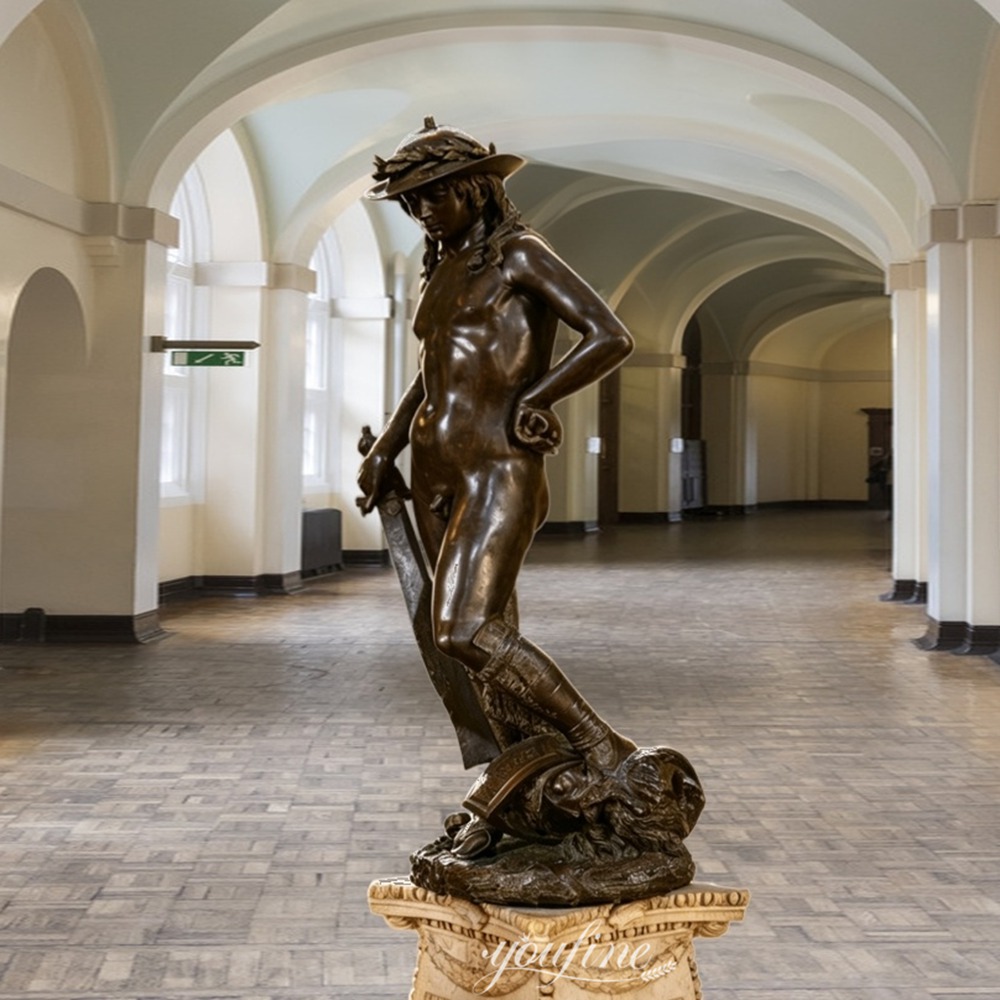
Standing at just over five feet tall, this sculpture is a radical departure from tradition. It depicts David as a delicate, almost feminine adolescent, completely nude except for beautifully detailed boots and a shepherd’s hat (petasos) adorned with laurel leaves. He gently rests his foot on Goliath’s heavy, feathered helmet.
Historical Context & Symbolism:
Commissioned by the powerful Medici family for their private palace courtyard, this statue represents a monumental historic breakthrough—it was the first free-standing, unsupported male nude cast in bronze since ancient Rome. It symbolizes the triumph of youthful grace over brutal force, infused with intense humanist poetry.
Factory Artist Insight:
In our foundry, we view this piece as a masterclass in the lost-wax casting process. The true difficulty in reproducing Donatello’s bronze lies in the micro-textures: the intricate feathers on Goliath’s helmet, the delicate leaves on the hat, and the smooth, poetic skin tension of youth. Bronze allows for a level of fluid, organic detail that marble simply cannot support without structural risk.
-
Verrocchio’s Bronze David (1473–1475): The Confident, Slender Warrior
- Period & Style: Early Renaissance
- Artist: Andrea del Verrocchio (The legendary master who trained Leonardo da Vinci)
- Pose: Confident stance, youthful but realistic
- Current Location: Museo Nazionale del Bargello, Florence.
Sculpture Description & Features:
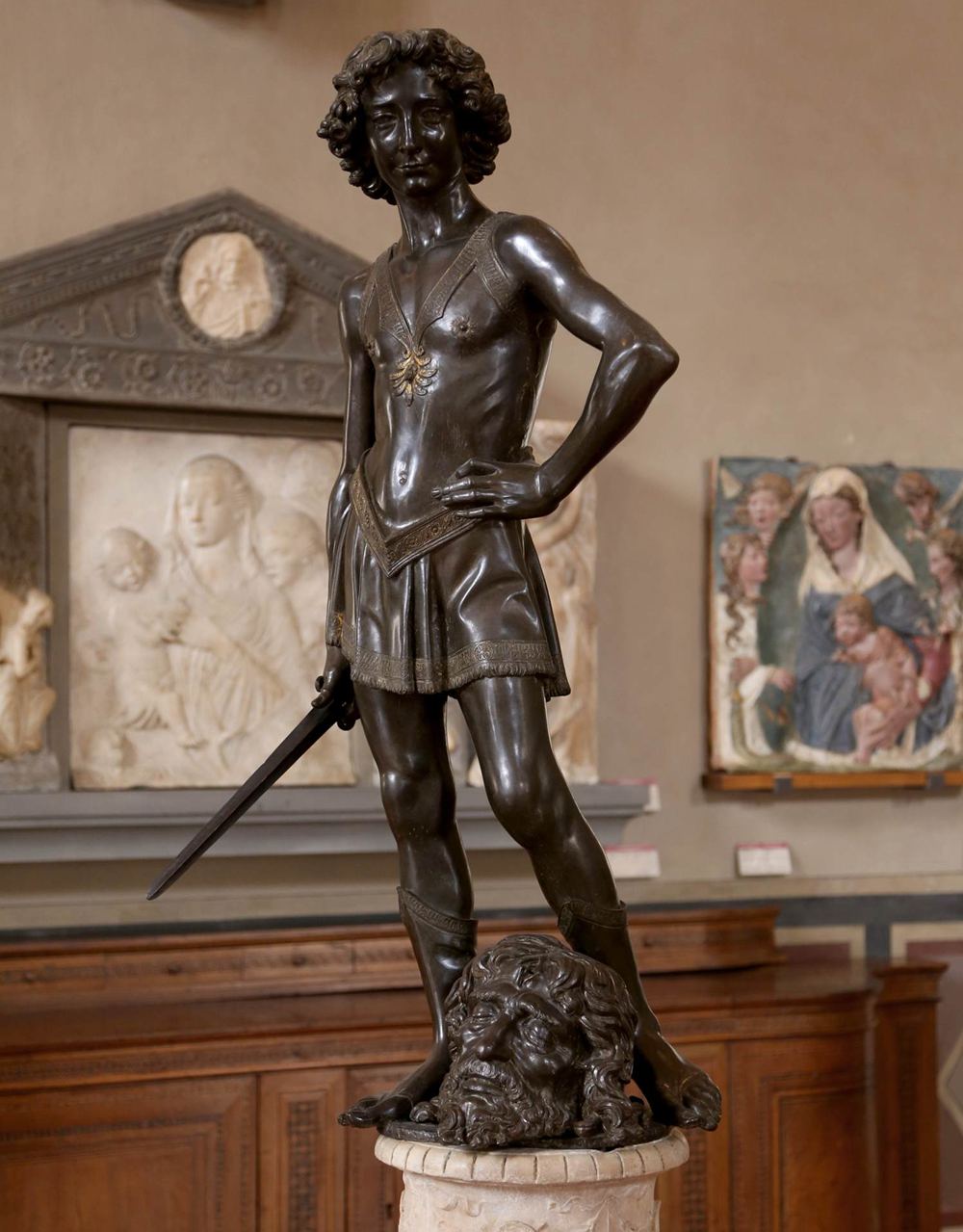
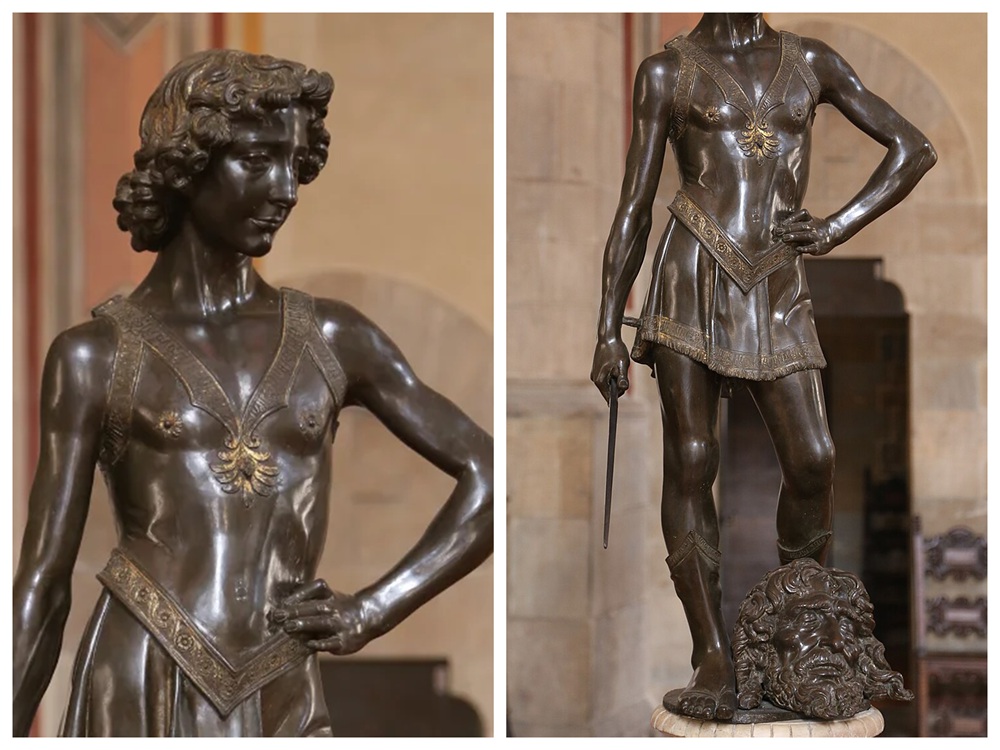
Standing proudly in an ornate leather doublet and kilt, Verrocchio’s David is a lean, agile, and fiercely proud teenager. He stands with his left hand cocked on his hip, a short sword in his right hand, and a confident, almost arrogant smirk on his face. The severed head of Goliath rests neatly at his feet.
Historical Context & Symbolism:
Also purchased by the Medici family for public display, this version reflects the growing wealth and confident realism of 15th-century Florence. Rumor has it that Verrocchio used his brilliant young pupil, Leonardo da Vinci, as the facial model for David.
Factory Artist Insight:
Verrocchio’s David is a favorite among landscape designers because of its structural crispness. The sharp details of the armor plate and the texturing of the hair catch patina and environmental light beautifully. Because the sword is cast as a separate, delicate element resting on the ground, this statue requires exceptional metal-joining and alignment skills to ensure perfect structural balance and longevity in outdoor conditions.
-
Michelangelo’s Marble David (1501–1504): The Colossal High Renaissance Icon
- Period & Style: High Renaissance
- Artist: Michelangelo Buonarroti
- Pose: Pre-battle tension, poised with a slingshot
- Current Location: Galleria dell’Accademia, Florence.
Sculpture Description & Features:
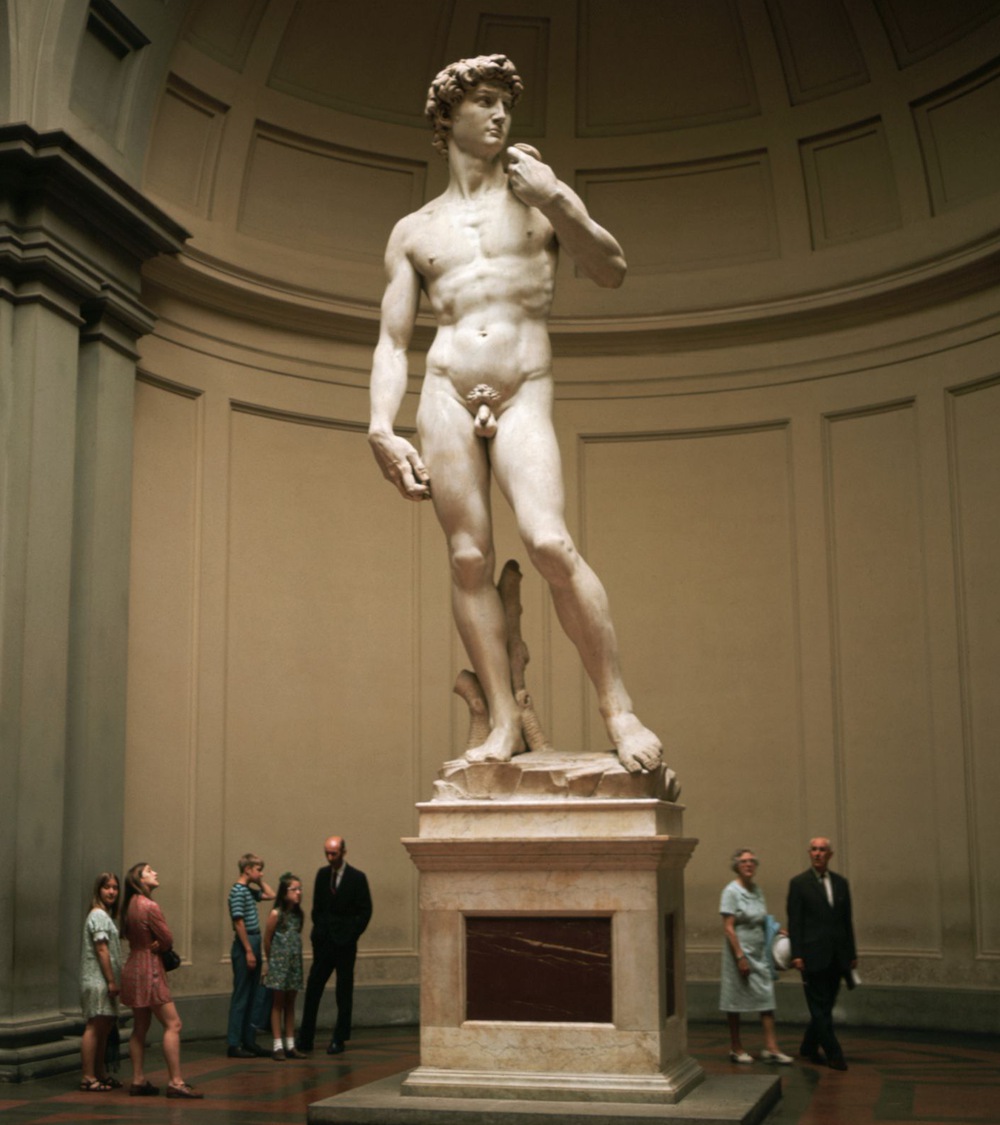
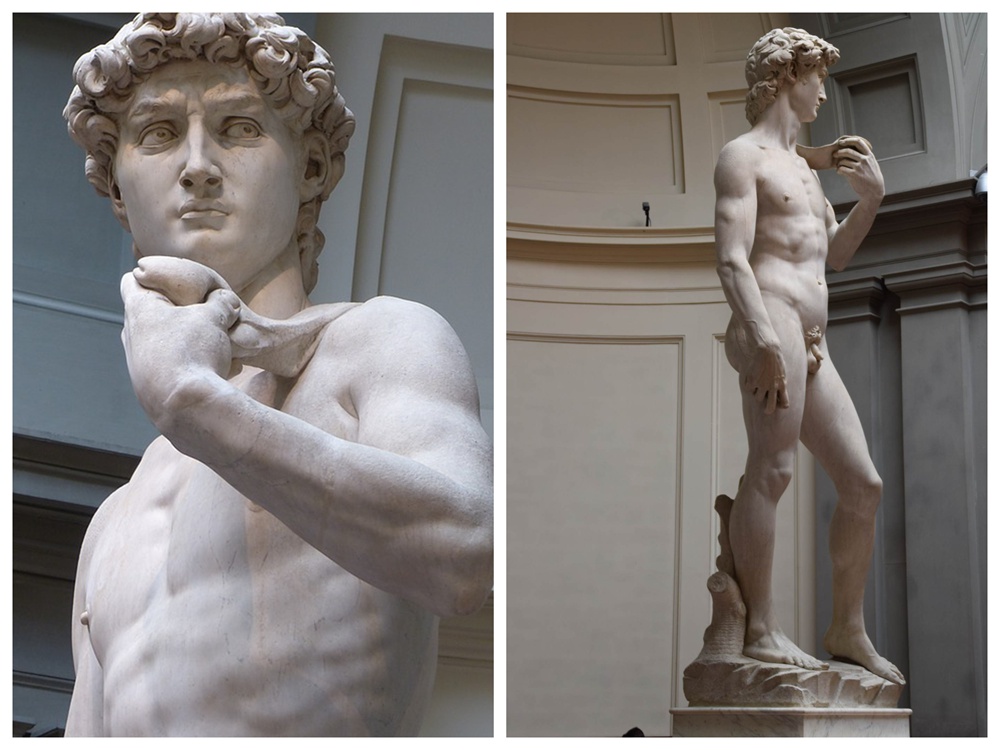
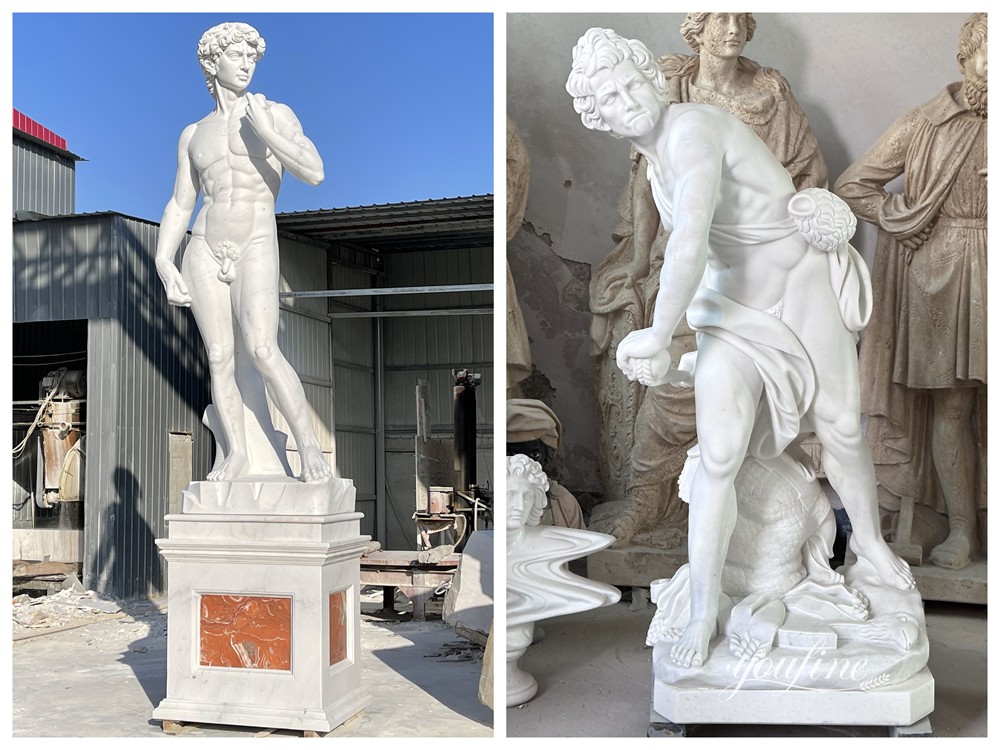
Standing at a colossal 17 feet tall, Michelangelo did away with the tradition of showing David after the victory. Instead, he carved a heroic titan caught in the psychological apex before the battle. David is fully nude, his veins bulging, his brow furrowed, and his eyes locked onto the distant giant. Every muscle is dialed into a state of intense, coiled energy.
Historical Context & Symbolism:
Carved from a single, massive block of flawed Carrara marble that other sculptors had abandoned, it was placed outside the Palazzo Vecchio. It became the ultimate symbol of the Florentine Republic’s strength and the supreme expression of human physical and spiritual perfection.
Factory Artist Insight:
Replicating Michelangelo’s David is the ultimate test for any master carver. The sheer scale is intimidating, but the hidden trap is the intentional disproportion. Michelangelo slightly enlarged the right hand and the head because the statue was originally meant to be viewed from far below on a cathedral roofline. When sculpting a scaled-down residential replica (e.g., 6 feet or 7 feet), our artists must meticulously adjust these proportions so the statue looks anatomically flawless at eye level.
-
Bernini’s Marble David (1623–1624): The Dramatic Baroque Motion
- Period & Style: Baroque
- Artist: Gian Lorenzo Bernini
- Pose: Mid-action, twisting body as he throws the stone
- Current Location: Galleria Borghese, Rome.
Sculpture Description & Features:
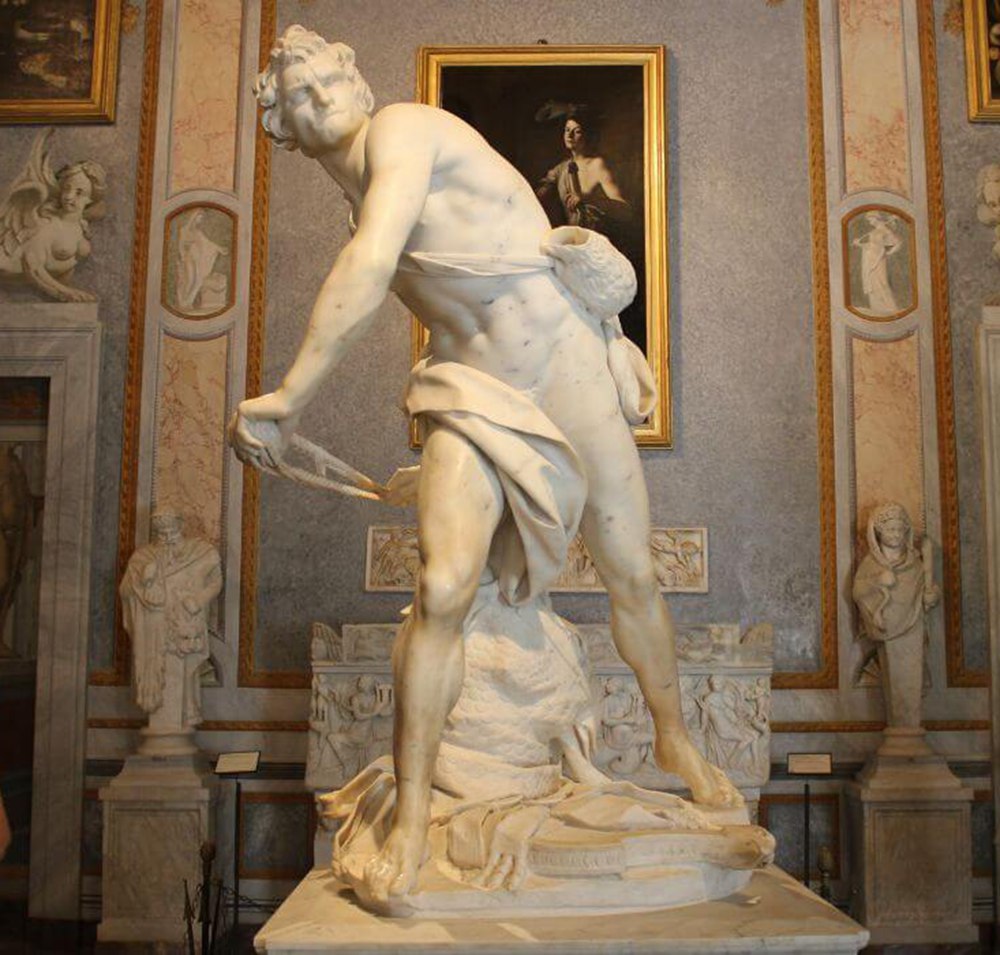
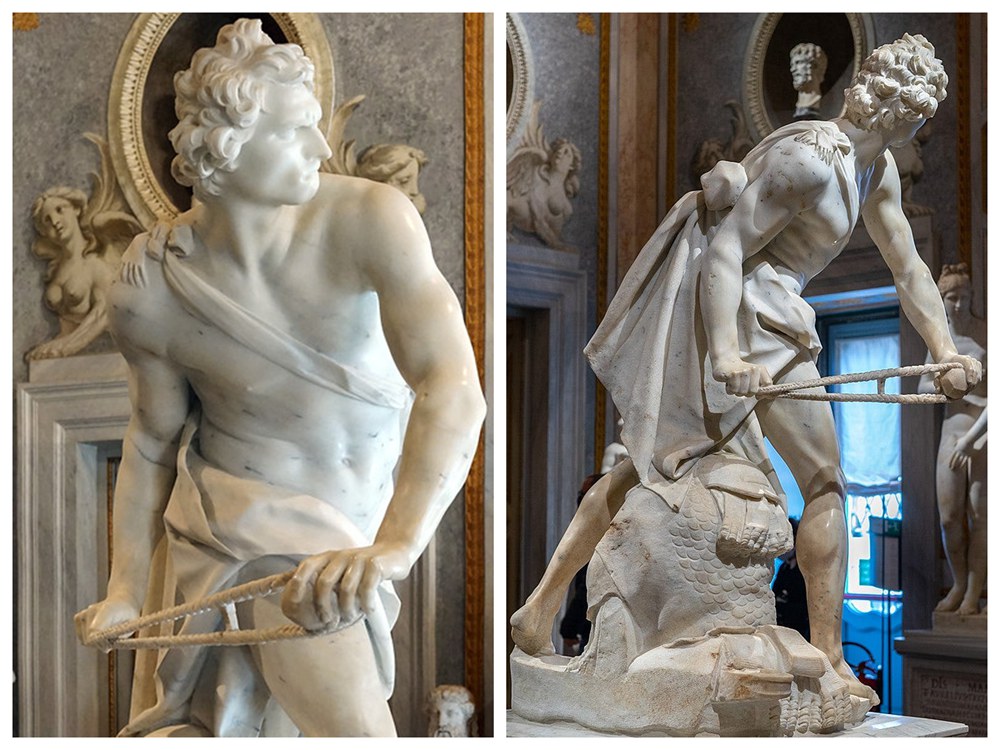
This life-size marble masterpiece shattered the calm restraint of the Renaissance. Bernini captures David in a whirlwind of theatrical, cinematic action. Biting his lower lip in sheer physical concentration, his body is violently twisted into a dramatic spiral as he pulls back his sling, ready to unleash the stone.
Historical Context & Symbolism:
Commissioned by Cardinal Scipione Borghese, this statue represents the heart of Baroque art—capturing intense emotion, movement, and psychological drama. It symbolizes the relentless, active faith and human energy championed during the Counter-Reformation.
Factory Artist Insight:
From an engineering standpoint, Bernini’s David is a logistical challenge—and a technical marvel. Marble is incredibly heavy and brittle under tensile stress. Carving a figure with its limbs extended wide, twisting through space, requires deep calculations regarding the center of gravity. The drapery twisted between his legs acts as a crucial structural anchor. Replicating this requires premium-grade, flawless marble blocks; a single hidden internal fracture line, and the entire composition could collapse under its own dynamic weight during carving.
The Enduring Impact of David: Why Replicas Fascinate Us
For over five hundred years, the image of David has successfully transitioned from the public squares and cathedrals of Italy into the private estates, luxury resorts, and manicured landscapes of the world’s elite. The enduring love for high-quality David replicas comes down to two powerful factors:
- A Universal Statement of Triumph: David represents the ultimate victory of intellect, courage, and grace over raw, brute force. Placing a replica in a modern space creates an immediate atmosphere of resilience, high achievement, and personal triumph.
- Architectural Anchor Points: Because these sculptures were designed by the greatest minds of art history, they possess inherently perfect geometric proportions. They act as magnificent visual anchors, grounding expansive green lawns, drawing the eye down long architectural corridors, or framing grand stone entryways.
Buyers’ Guide: How to Choose the Perfect David Replica?
Selecting the right David statue replica depends on three factors: your architectural style, material preference, and the emotional tone of your space.
Choosing by Material: Marble vs. Bronze
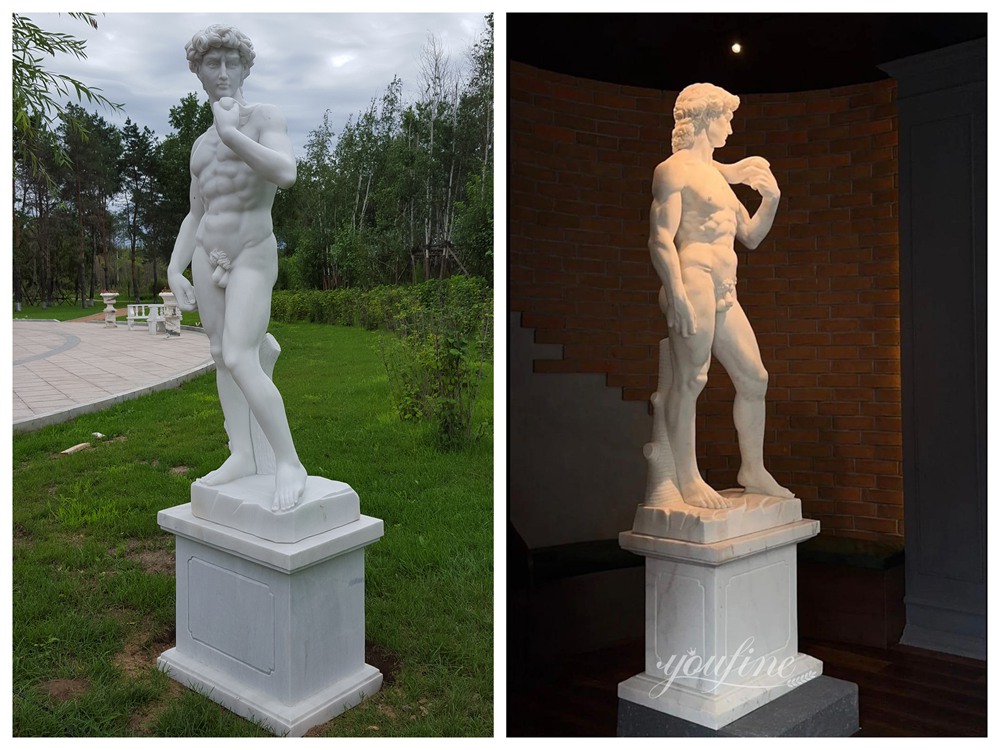
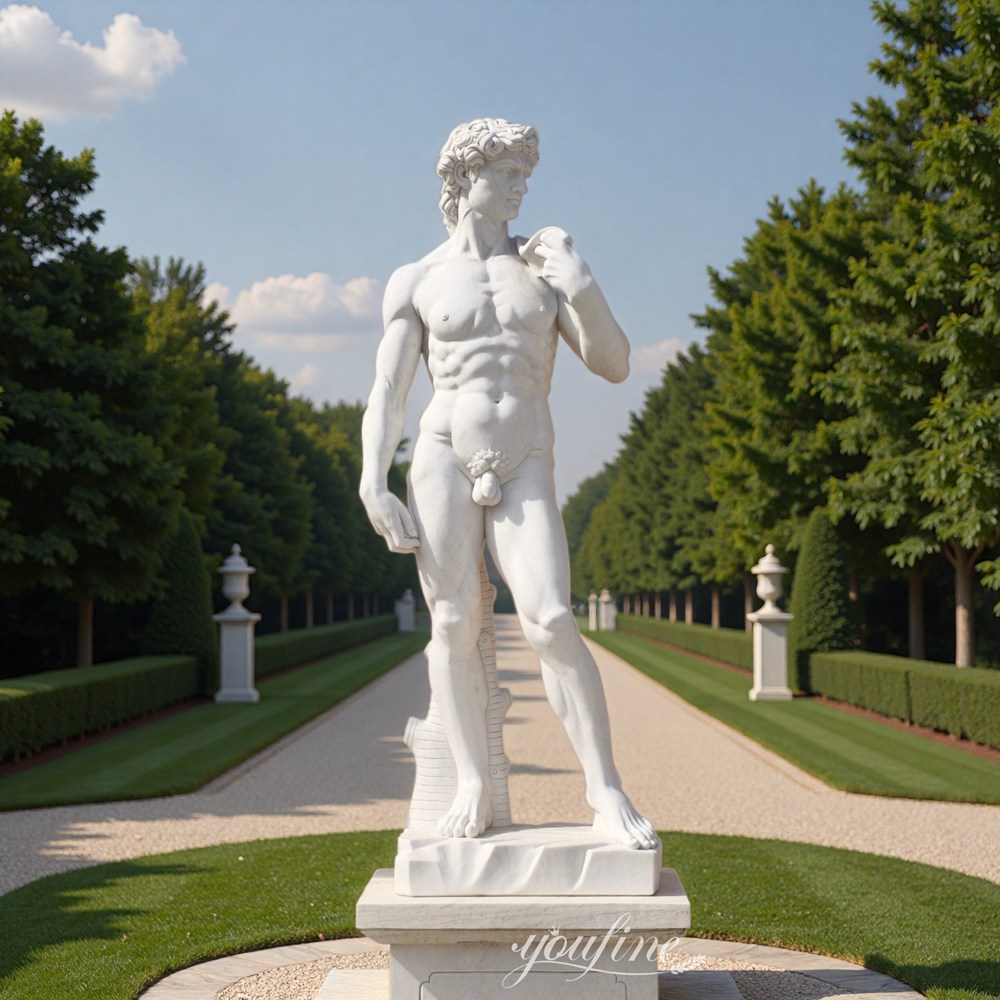
- Fine White Marble: Best for a heroic, pure, and monumental aura. It reflects natural sunlight beautifully, making it ideal for classical European gardens, symmetrical pool pavilions, or grand white-stone manor entryways. It delivers a permanent, museum-like luxury.
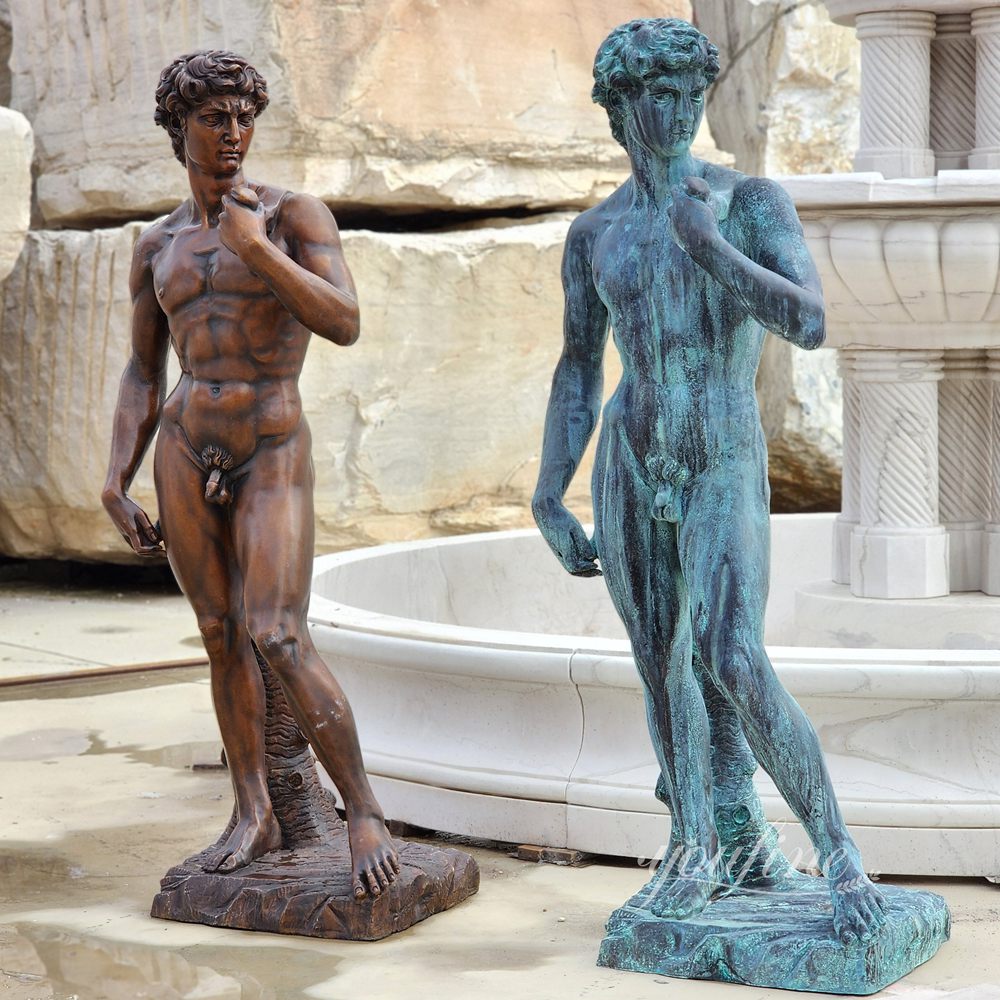
- Cast Bronze: Best for rich tones, complex textures, and extreme durability. Over time, it develops a magnificent natural patina. It pairs flawlessly with lush greenery, brick courtyard walls, or sophisticated indoor libraries and studies.
Choosing by Environment: Indoor Elegance vs. Outdoor Grandeur
- The Intimate Space (Donatello/Verrocchio Bronze): Standing at a life-size 5 to 5.5 feet, these replicas fit beautifully within human-scaled environments. They are perfect for private courtyards, fountain centers, or the end of a formal garden hedge, creating an air of curated, intellectual sophistication.
- The Dramatic Statement (Michelangelo/Bernini Marble): Ideal for creating an unforgettable first impression. A scaled-down Michelangelo’s David (6.5 to 8 feet) looks unparalleled, commanding a front driveway circle or a grand foyer atrium. For architecture with dynamic, modern lines, Bernini’s Baroque David adds a perfect burst of energy and cinematic movement.
FAQs
-
What is the most famous sculpture of David?
Michelangelo’s 17-foot marble masterpiece, carved between 1501 and 1504, is universally recognized as the most famous David statue in the world. Housed in Florence’s Galleria dell’Accademia, it is celebrated as the absolute pinnacle of High Renaissance sculptural engineering and anatomical perfection.
-
How many statues of David are there?
While there are hundreds of replicas worldwide, five historic versions stand out. These include Donatello’s marble and bronze Davids, Verrocchio’s bronze, Michelangelo’s Renaissance masterpiece, and Bernini’s Baroque marble. These works by four Italian masters shaped art history.
-
What is the difference between Michelangelo’s David and Bernini’s David?
Michelangelo’s David is a High Renaissance masterpiece showing David poised before battle, emphasizing ideal proportions and calm tension. Bernini’s David, in contrast, is Baroque, capturing David in mid-action with a dynamic twist and intense emotion. Michelangelo focuses on perfection and stillness, while Bernini highlights movement and drama.
-
Donatello’s David vs. Michelangelo’s David: How Do They Differ?
Donatello’s David is an Early Renaissance work, either a clothed marble shepherd or a youthful bronze nude standing over Goliath, emphasizing elegance and subtlety. Michelangelo’s David is monumental, tense, and heroic, focusing on idealized anatomy. For a deeper comparison, see Donatello vs Michelangelo’s David.
-
Donatello’s David vs Bernini’s David: How Do They Differ?
Donatello’s David is calm and static, highlighting elegance and proportion, while Bernini’s David is dynamic and full of motion, showing David mid-throw. Donatello reflects Early Renaissance ideals, and Bernini embodies Baroque drama and emotion.
-
Can I customize a replica of the David statue?
Yes, you can customize both the material and size of your David replica. Marble replicas are usually white, while bronze offers various finishes like brown or green. You can also add inscriptions to the base if desired. Sizes range from life-size to larger sizes, even over 5 meters for marble versions.
Final Thoughts
The David sculptures stand as timeless icons of human artistry, from the youthful innocence of Donatello to the monumental grandeur of Michelangelo and the dramatic motion of Bernini. Understanding their historical context, artistic differences, and craftsmanship insights enriches both appreciation and collection.
If you are looking for a highly faithful replica of the David sculpture, we invite you to contact us directly. With over 40 years of manufacturing experience—covering both marble and bronze materials—and satisfied clients across more than 30 countries and regions worldwide, we are highly worthy of your trust!