Among all figures in Greek mythology, Atlas is one of the most recognizable symbols of strength and endurance. The image of Atlas holding up the world has inspired countless sculptures, paintings, and architectural artworks throughout history. From ancient Roman marble statues to monumental public sculptures in modern cities, Atlas statues continue to symbolize power, responsibility, and perseverance.
Today, Atlas Greek mythology statues are widely used in luxury villas, gardens, hotels, public squares, and landmark architectural projects. Their dramatic posture and deep symbolic meaning make them timeless works of art.
Who Is Atlas in Greek Mythology?
In Greek mythology, Atlas was one of the powerful Titans, the ancient race of gods who ruled before the Olympian gods led by Zeus. He was the son of the Titan Iapetus and fought alongside the Titans during the great war known as the Titanomachy.
After the Titans were defeated, Zeus gave Atlas a unique and eternal punishment. Instead of imprisoning him in Tartarus like many other Titans, Zeus condemned Atlas to stand at the edge of the world and hold up the heavens forever.
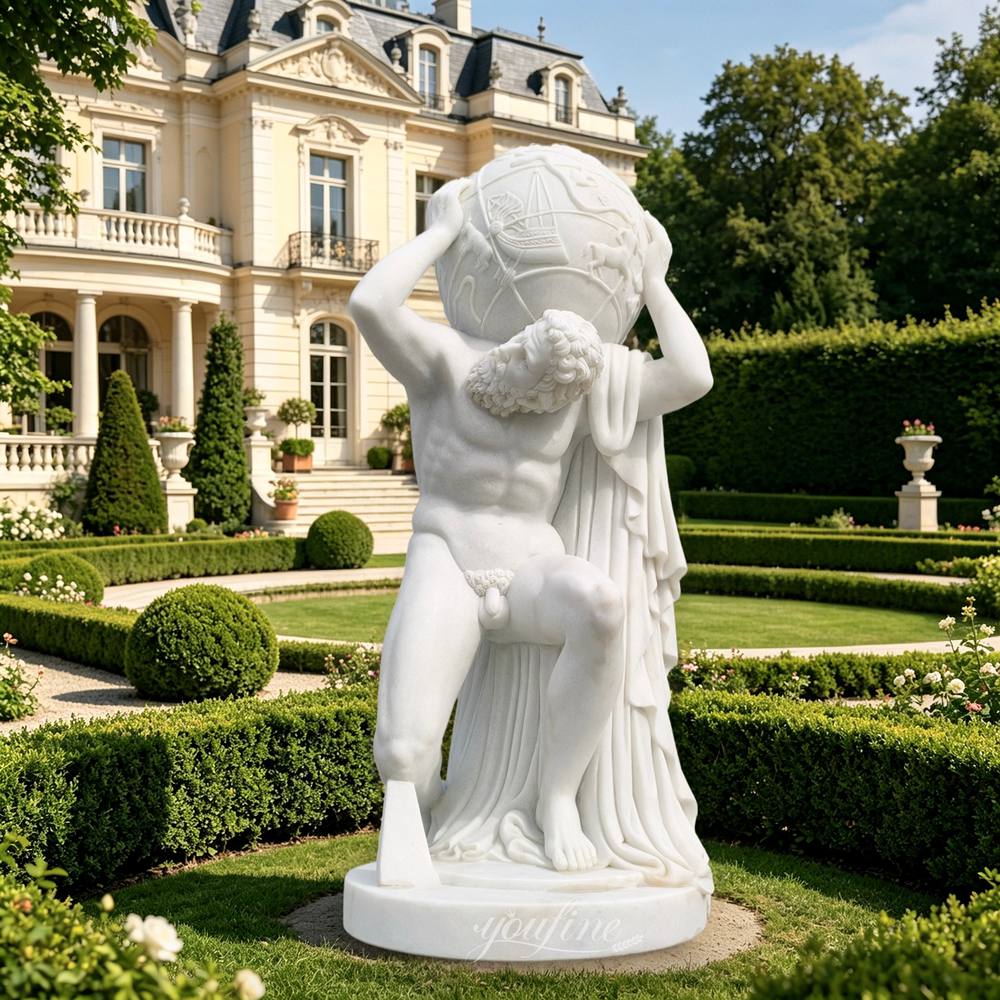
This image of Atlas carrying an immense cosmic burden eventually became one of the most recognizable symbols in mythology, representing strength, endurance, and responsibility. Over time, artists and sculptors transformed Atlas into a timeless artistic figure that continues to inspire monumental sculptures today.
Why Is Atlas Holding the World?
The famous image of Atlas holding the world originates from his punishment after the war between the Titans and the Olympian gods. Ancient Greek mythology described Atlas as supporting the heavens on his shoulders for eternity, symbolizing both physical strength and endless endurance.
One of the best-known stories involving Atlas appears in the myth of Heracles (Hercules). During his Eleventh Labor, Heracles needed the golden apples guarded by the Hesperides. Atlas agreed to retrieve the apples while Heracles temporarily carried the heavens in his place. However, Atlas later tried to avoid taking the burden back, only to be tricked by Heracles into resuming his eternal punishment.
This dramatic myth became a major inspiration for later Atlas sculptures, especially the iconic “Atlas holding globe” pose commonly seen in classical and modern art.
Did Atlas Hold the Earth or the Sky?
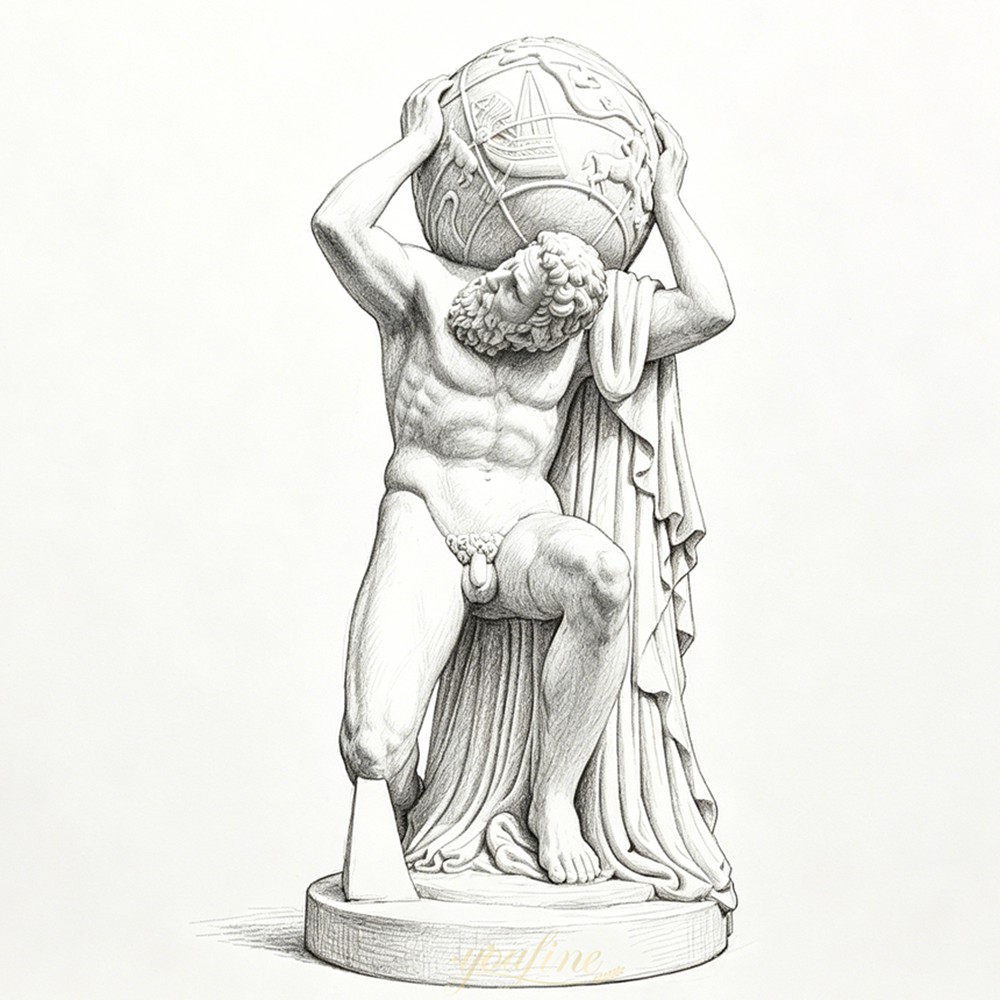
A common misconception is that Atlas carried the Earth. In the original Greek myths, Atlas actually held up the heavens or celestial sphere rather than the planet itself.
Ancient Greeks imagined the sky as a massive dome surrounding the world, and Atlas was believed to keep the heavens separated from the Earth. Over time, especially because mapmakers named the collection of maps “atlases”, artists began representing the celestial sphere as a globe, which gradually evolved into the modern image of Atlas carrying the world.
A famous example is the Farnese Atlas, an ancient Roman sculpture that depicts Atlas supporting a celestial globe covered with constellations instead of a map of Earth.
Today, many modern Atlas sculptures intentionally use a globe representing the Earth because it creates a stronger and more universally recognizable symbol of carrying the weight of the world.
What Does an Atlas Statue Represent?
Strength and Endurance
Atlas statues primarily symbolize immense strength and the ability to endure hardship. The powerful posture of Atlas carrying a massive burden represents resilience through adversity.
Responsibility and Burden
Atlas is often viewed as a symbol of responsibility. Carrying the heavens reflects the idea of bearing great duties and obligations.
Because of this meaning, Atlas sculptures are frequently used in corporate buildings, universities, and public spaces.
Power and Determination
The dramatic muscular form of Atlas symbolizes determination and unwavering willpower. Monumental Atlas sculptures often create a strong architectural presence.
Human Perseverance
Many modern interpretations view Atlas as a symbol of human perseverance and ambition. His endless struggle resonates with themes of effort, endurance, and achievement.
Famous Atlas Statues Around the World
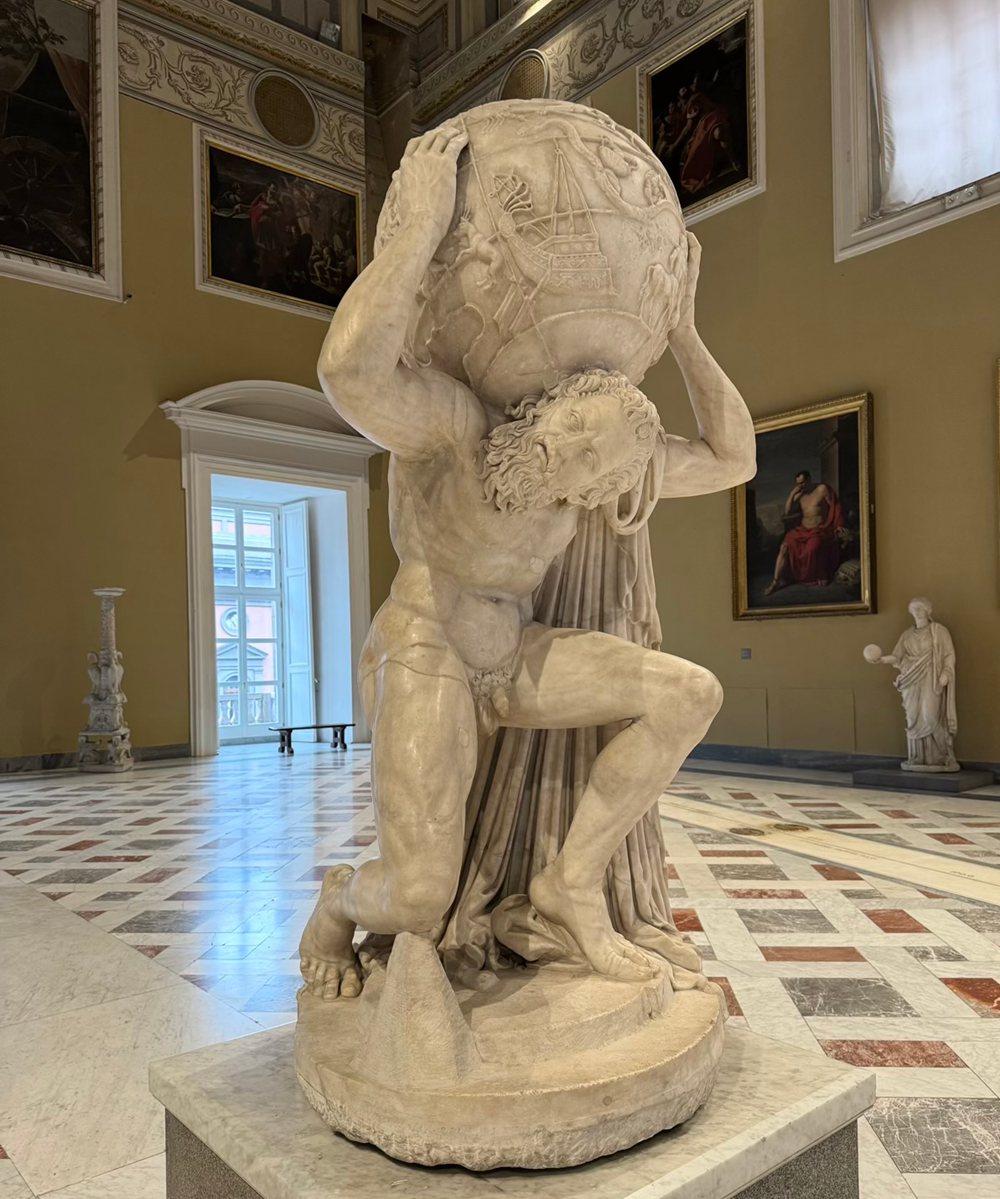
The Farnese Atlas
Creation Date: 2nd Century CE (Roman Period)
Artist: Unknown Roman Sculptor
Dimensions: Height: Approx. 7 feet (2.1 meters)
Current Location: National Archaeological Museum of Naples, Italy
Description: This ancient marble masterpiece is the oldest known depiction of Atlas surviving in human history. It features a weary, kneeling Titan bearing a massive, solid celestial globe on his shoulders. The sculpture is a masterclass in classical anatomy, and the sphere itself is intricately carved with 42 distinct ancient Roman constellations and zodiac bands rather than a map of Earth.
Historical Impact: It remains one of the most important mythological sculptures in art history, serving as the ultimate reference point for classical marble carving and early astronomical science.
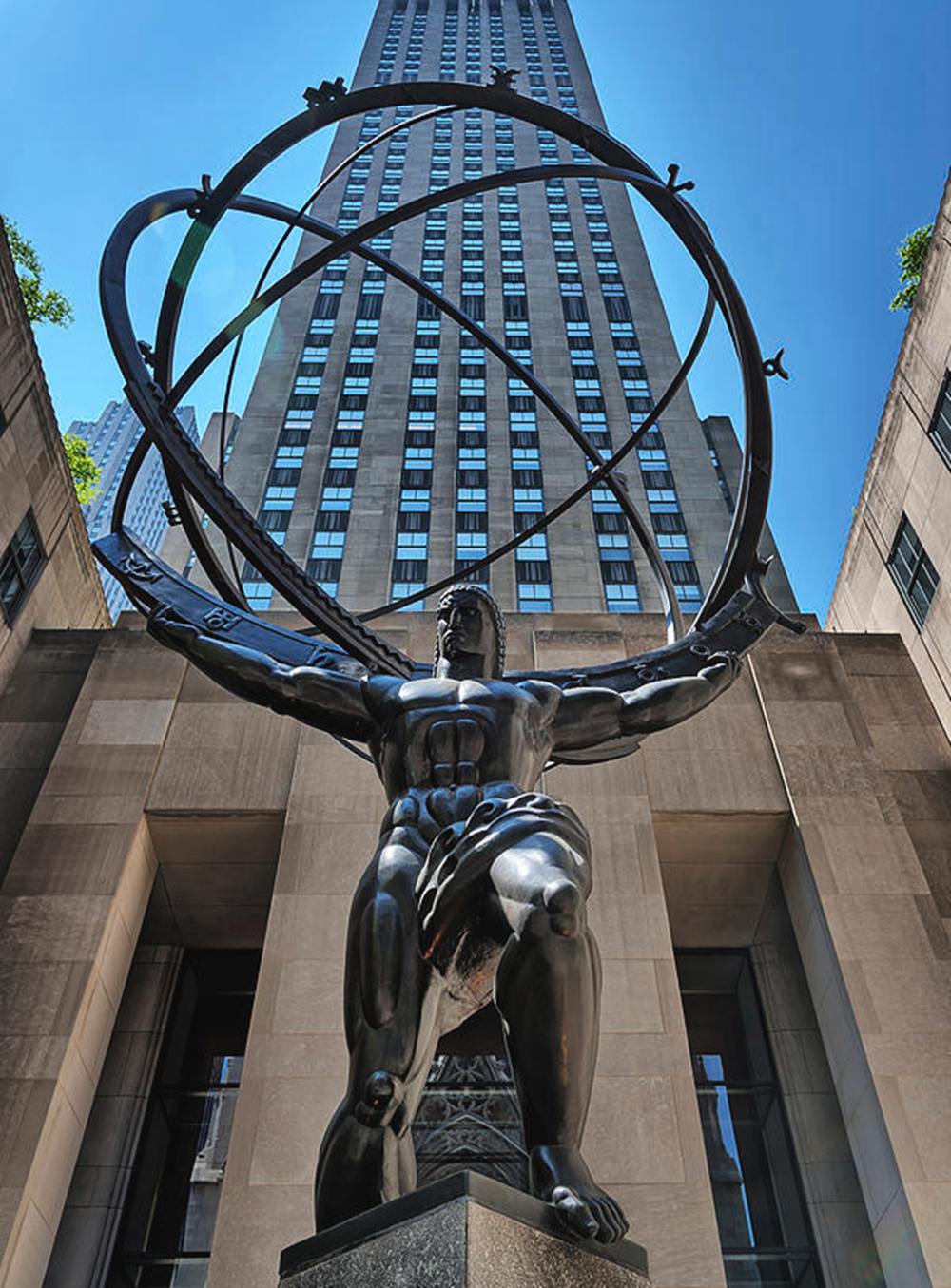
The Rockefeller Center Atlas
Creation Date: 1937 (Installed)
Artist: Lee Lawrie and Rene Chambellan
Dimensions: Total Height: 45 feet (14 meters); Statue alone: 15 feet (4.6 meters)
Current Location: Midtown Manhattan, New York City (Opposite St. Patrick’s Cathedral)
Description: A monumental masterpiece created in the classic bronze sculpture Art Deco style. Cast in solid bronze, the figure stands dramatically with clean, powerful, muscular lines. Instead of a heavy stone sphere, this modern Titan holds an open, ringed armillary sphere whose axis points directly toward the North Star, perfectly marrying ancient myth with modern industrial power.
Historical Impact: It has become an iconic New York landmark and the most famous modern depiction of Atlas in the world, redefining how mythological figures integrate into urban commercial architecture.
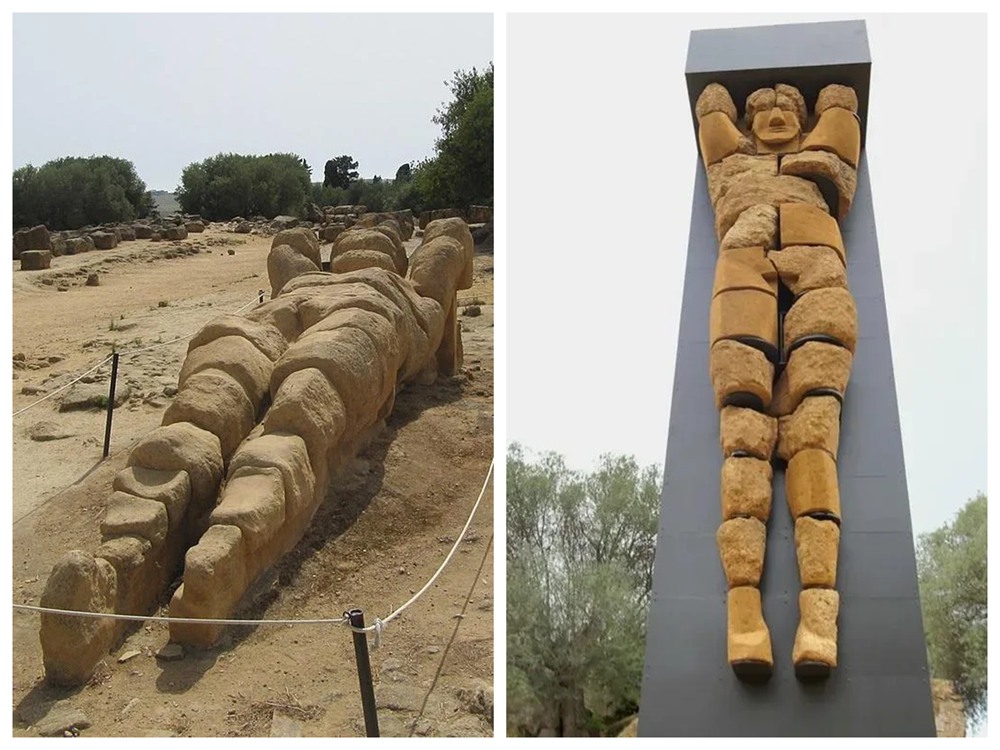
The Valley of the Temples (Agrigento, Sicily)
Creation Date: Around 480 BCE (Ancient Greek Classical Period)
Artist: Unknown Sicilian Master Carvers
Dimensions: Height: Approx. 26 feet (8 meters)
Current Location: Valley of the Temples Archaeological Park, Agrigento, Sicily, Italy
Description: These colossal stone giant figures (known historically as Telamons or Atlantes) were seamlessly integrated into ancient Mediterranean engineering. Instead of being standalone art, they acted as functional supporting pillars within the grand Temple of Olympian Zeus, with their arms bent backward to carry the heavy stone beams above. Today, both original fragments and reconstructed colossal models are on display after centuries of being buried.
Historical Impact: Their enormous scale demonstrated the sheer power and grandeur of ancient Greek architecture, proving how Atlas can be used as a structural support column—a design concept that translates beautifully to high-end estate entries and luxury manor colonnades today.
Why Atlas Statues Remain Popular Today?
- Everlasting Popularity & Spiritual Symbolism: Atlas statues remain popular because they combine powerful symbolism with dramatic visual impact. As a symbol of strength, endurance, and responsibility, Atlas continues to resonate in both classical and modern design.
- Wide Application & Diversified Appeal: The iconic image of Atlas holding the world also creates a strong architectural presence, making these sculptures especially popular for luxury estates, hotels, public squares, and landmark projects. Some people are drawn to the deep mythological meaning behind Atlas, while others appreciate the sculpture’s bold and timeless appearance.
Today, artists continue to reinterpret Atlas in classical, modern, and even abstract styles, allowing the figure to fit a wide range of architectural and landscape designs.
Where to Place an Atlas Holding the World Statue?
- Luxury Villas and Gardens: Atlas sculptures create a dramatic focal point in large gardens, courtyards, and luxury residential landscapes.
- Hotels and Commercial Buildings: Many hotels and commercial spaces use Atlas statues to symbolize strength, prestige, and architectural grandeur.
- Public Squares and Landmark Projects: Large Atlas sculptures are highly effective in public spaces because of their monumental and recognizable appearance.
- Interior Decorative Spaces: Smaller Atlas sculptures can also be displayed in lobbies, halls, libraries, and luxury interior spaces.
Popular Materials for Atlas Greek Mythology Statues
The Atlas sculpture is one of the most popular designs produced by our factory. Over the 40-plus years since our establishment, we have sold countless exquisite Atlas sculptures. Based on the common requests of our clients and current market trends, we have compiled the following summary regarding the materials most frequently used for this sculpture:
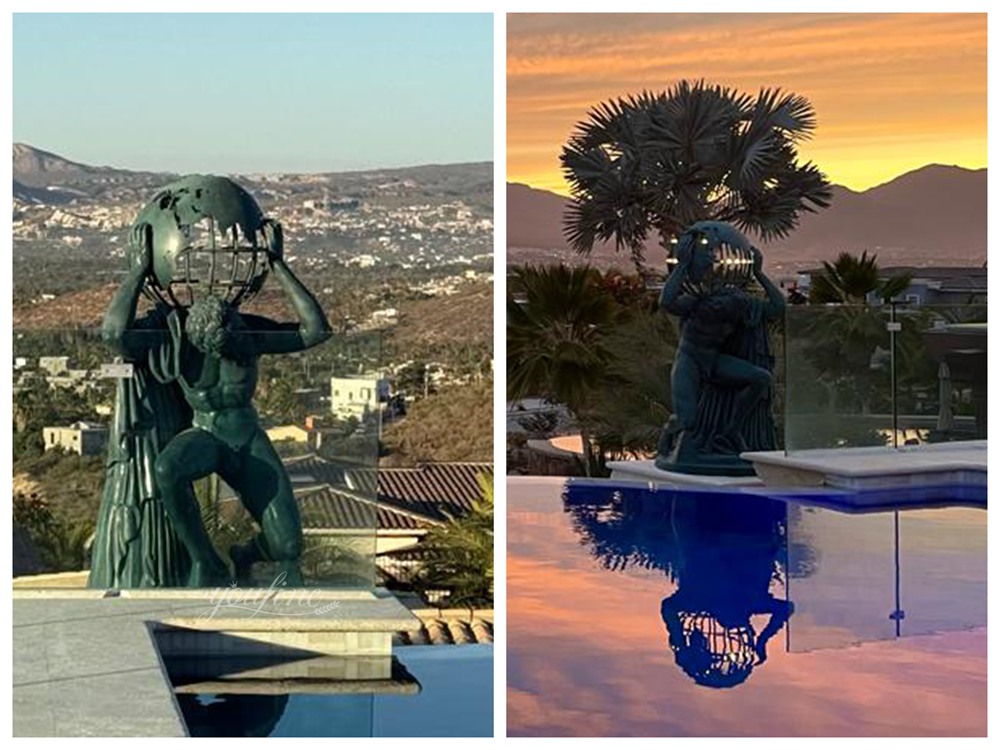
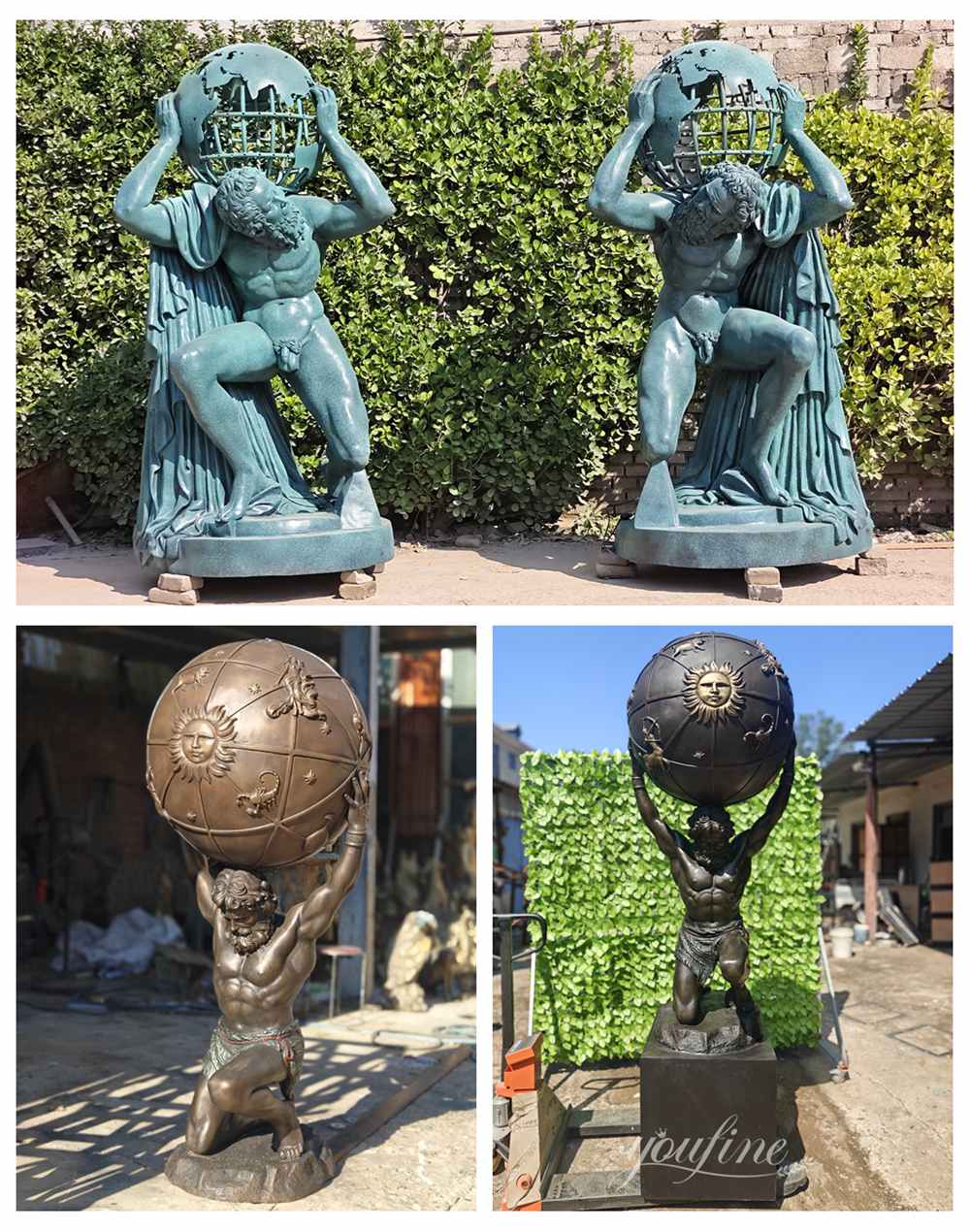
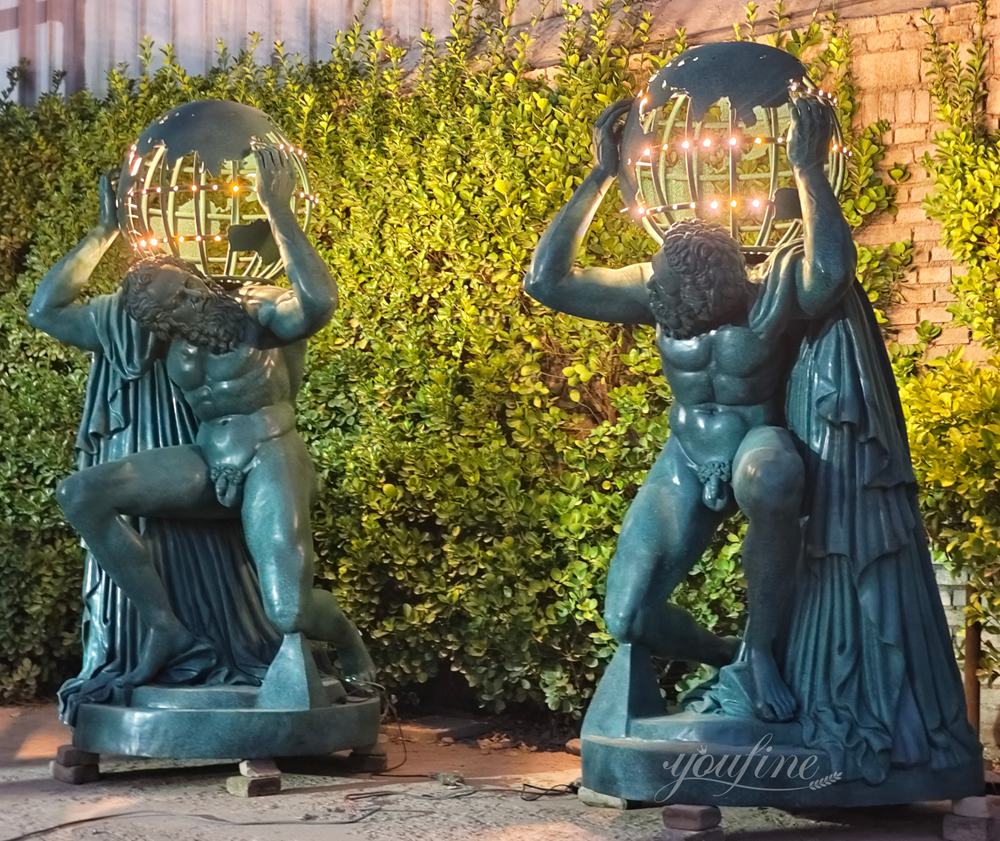
- Bronze: Bronze Atlas sculptures are typically rendered in a semi-crouching posture. The celestial sphere is crafted using an openwork technique, resulting in a vintage aesthetic with rich textural depth—making it an ideal decorative piece for swimming pools and courtyards.
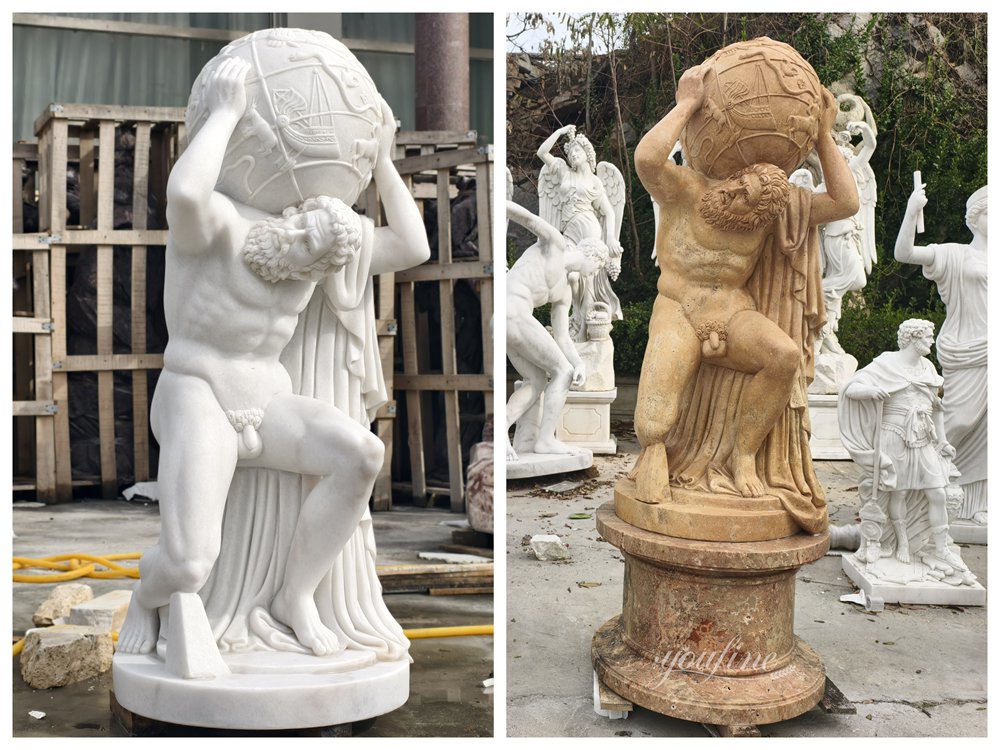
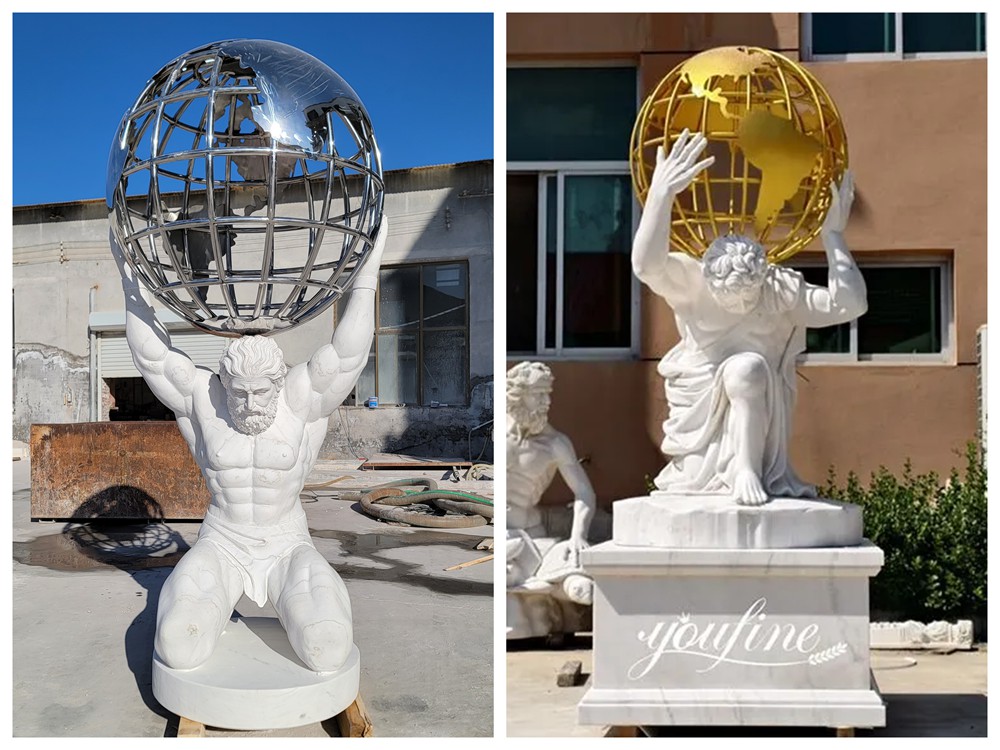
- Marble: Sculptures made entirely of marble are generally replicas modeled after the Farnese Atlas. Hand-carved exclusively from natural marble, these pieces possess a heightened elegance that makes them perfectly suited for luxurious gardens, courtyards, and classical architectural settings.
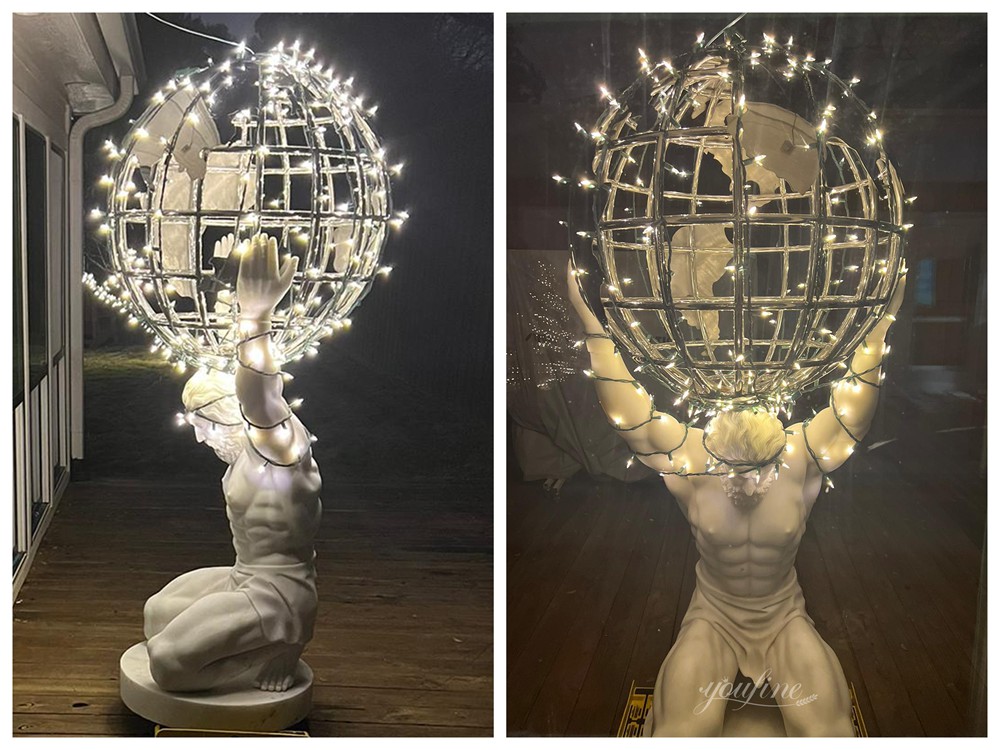
- Marble + Stainless Steel: This variation typically features the figure of Atlas carved from marble, while the globe he supports is crafted from openwork stainless steel; Atlas is depicted in a kneeling posture. The combination of natural white marble and polished stainless steel creates a sophisticated interplay of materials, making this style an excellent choice for modern villas, hotels, and commercial projects.
Customize Your Atlas Statue
To ensure that Atlas sculptures blend harmoniously into your setting and meet your specific needs, we offer the following customization services:
- Custom Materials: As a comprehensive art sculpture factory, we specialize in a wide range of materials, including bronze, marble, and stainless steel. You may choose from various options.
- Custom Colors: Marble is available in white and beige, and other colors, while bronze comes in green, brown, and other shades. You could customize the color or finish to suit your preferences.
- Custom Sizes: We support customization from life-size to larger dimensions to meet your indoor and outdoor needs.
- Custom Globs: You could choose from celestial spheres, globes, solid spheres, or hollow spheres, among other forms.
- Custom Lighting Decorations: You could select LED strips or ground lights in warm tones, white, or other colors to decorate the sculpture, making it equally captivating at night.
FAQs
-
What is the most famous Atlas statue?
The most celebrated modern depiction is the 45-foot Art Deco bronze Atlas at Rockefeller Center in New York City. For classical art enthusiasts, the 2nd-century CE marble Farnese Atlas housed in Naples, Italy, remains the ultimate historical and anatomical masterpiece.
-
What are the advantages of a stainless steel sphere over a marble sphere?
Compared to heavy, solid marble spheres, a stainless steel armillary sphere offers three major engineering advantages:
- Structural Safety: It drastically reduces the sculpture’s top-heavy center of gravity, lowering wind resistance and foundation load.
- Visual Interaction: Mirror-polished stainless steel reflects shifting sky movements and landscaping, acting as a living canvas.
- Architectural Lighting: An open-ringed steel design allows natural sunlight to pass through by day and accommodates dramatic spot-lighting effects at night.
-
How long does the production of a custom Atlas statue take?
Production usually takes 20–45 days, depending on the statue’s size and carving complexity. This timeline includes structural engineering design, rough blocking, fine hand-detailing by artists, and pre-shipping structural stability tests.
-
How do you maintain a large bronze or marble Atlas statue outdoors?
For marble, an annual rinse with clean water and a mild stone cleaner prevents staining. For outdoor bronze, applying a thin coat of specialized clear paste wax once a year protects the metallic patina from oxidation and acidic rainfall, ensuring it lasts for generations.
Final Thoughts
From ancient mythology to modern public art, Atlas remains one of the most powerful symbolic figures in sculpture history. His image carrying the heavens continues to inspire artists, architects, and collectors around the world.
Whether crafted in bronze, marble, or stainless steel, an Atlas Greek mythology statue represents far more than physical strength—it symbolizes endurance, responsibility, and the timeless human spirit.
If you also wish to own a high-quality Atlas sculpture, don’t hesitate to contact us directly!