
From ancient Greek figures and Renaissance masterpieces to modern religious statues, garden sculptures, and memorials, marble has been used by sculptors for thousands of years.
But why is marble so suitable for sculpture?
Quick Answer
Marble is used for sculptures because it is workable enough for detailed carving, strong enough to hold its form, and able to produce a smooth, slightly translucent surface. These qualities help sculptors create realistic faces, hands, hair, and fabric. However, the final result also depends on the quality of the marble, the design, and the sculptor’s skill.
Marble offers a useful balance of workability, detail, strength, and beauty. When the right marble is combined with skilled carving, it can show delicate features such as eyes, lips, hair, fingers, and folds in clothing. Some light-colored sculptural marbles also have slight translucency, which can give a human figure a soft, skin-like appearance.
However, marble is not a perfect material for every design. Not every block is suitable for detailed carving either. Through regular communication with our factory carvers, observation of the production process, and research into marble and art history, I have learned that material selection, structural design, and carving skill are equally important.
In this guide, I will explain why marble is used for sculptures, how sculptors select a marble block, and what benefits and limitations the material has.
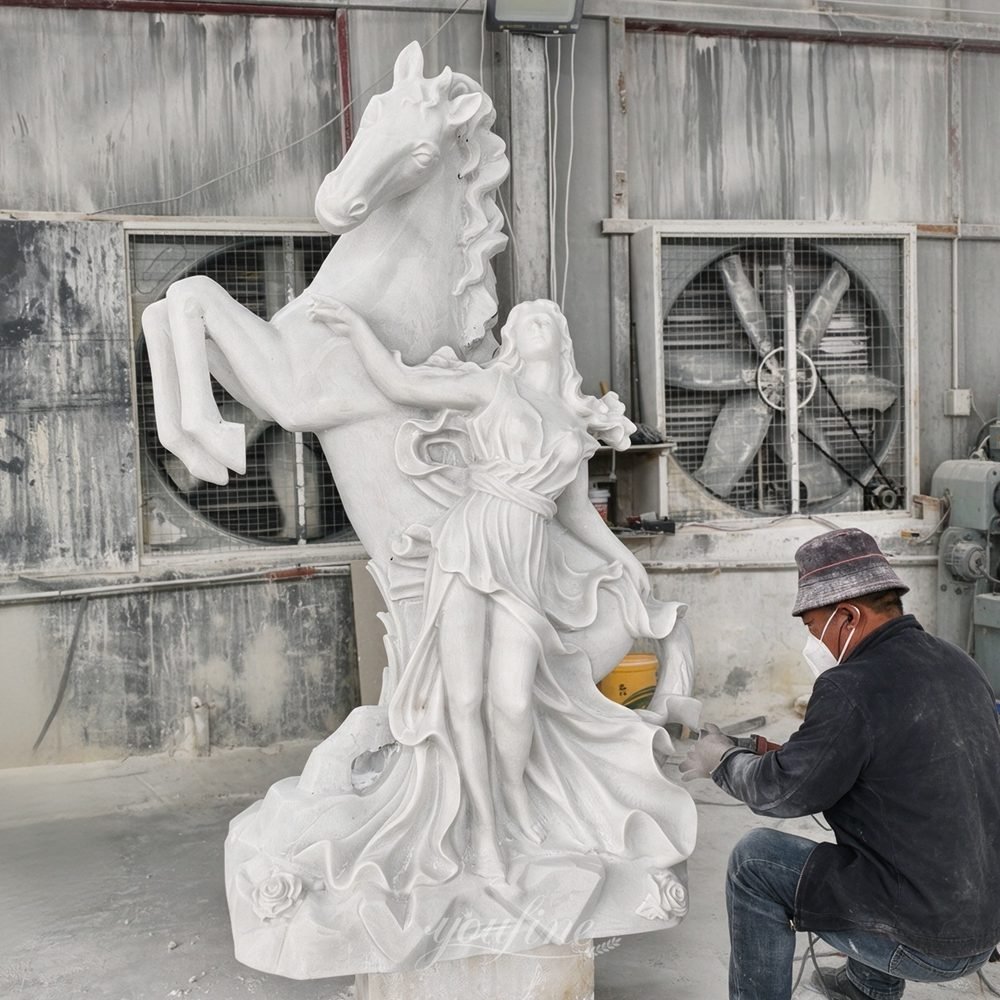
Why Can Marble Hold Such Fine Sculptural Details?
When carving a figure, the material must be workable enough to shape but strong enough to hold clear edges. If the stone is too hard, carving becomes extremely difficult. If its structure is too loose, details such as fingers, eyelids, and fabric edges may break away.
Marble offers a useful balance between these two conditions.
Marble Is Relatively Workable
Compared with harder natural stones such as granite, marble is easier to cut and carve. A sculptor can first remove large areas of unwanted stone and then move to smaller tools for the shape and details.
“Easier” does not mean easy. Marble carving still requires experience, patience, and accurate tool control. Once too much stone has been removed, the original shape cannot simply be restored.
A Consistent Structure Helps Sculptors Control Details
Marble suitable for figure carving usually has a relatively dense and consistent crystalline structure. This helps a sculptor control the tools and remove the stone in a more predictable way.
The right marble, combined with skilled carving, can be used to create:
- Subtle changes around the eyelids and mouth;
- Fingers, toes, and joints;
- Layers of hair and beards;
- Feathers, wreaths, and jewelry;
- The thickness and folds of clothing;
- Depth in relief sculpture;
- The illusion of a thin veil over a face or body.
Information about traditional European marble work also notes the importance of a consistent crystalline structure. See the CRAFT introduction to marble craftsmanship for more information.
| Marble Quality | How It Helps the Sculptor | Visible Result |
|---|---|---|
| Relative workability | Stone can be removed gradually | Controlled shapes and proportions |
| Consistent structure | Tools behave more predictably | Cleaner edges and details |
| Ability to hold fine edges | Narrow areas remain clearly defined | Fingers, eyelids, hair, and fabric |
| Multiple surface finishes | Areas can be finished differently | Clear differences between skin, hair, and clothing |
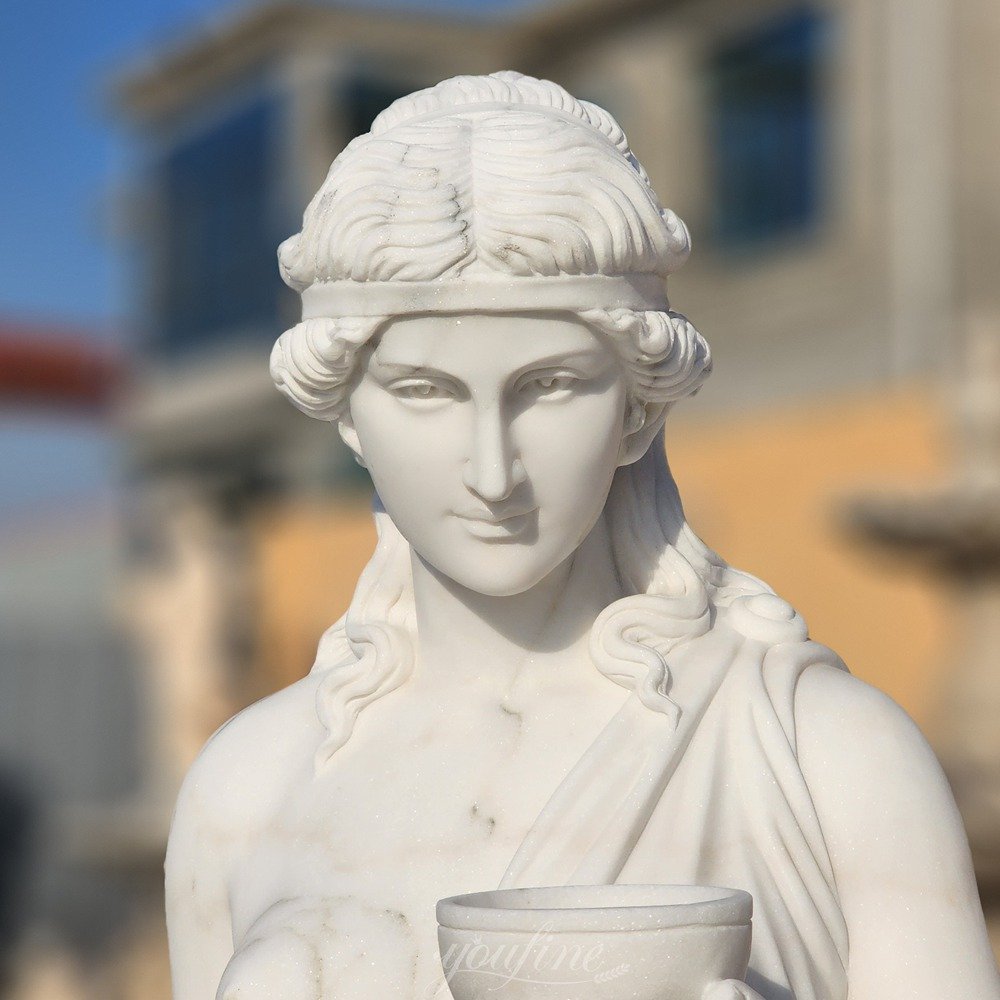
How Does Marble Give a Sculpture a Lifelike Appearance?
Fine lines are only one reason why a marble sculpture can look realistic. Light, form, and surface finish are also important.
Some Marble Has Slight Translucency
Some white and light-colored sculptural marbles have slight translucency. Light enters the surface of the stone and scatters before it is reflected. This creates a softer and warmer appearance.
This effect is especially useful for the human figure. The face, shoulders, and arms do not look as flat or hard as ordinary white material. Instead, they can have a soft glow similar to skin.
The Metropolitan Museum of Art also discusses the translucency, consistency, and fine-detail capability of white marble in its introduction to Roman sculpture. See The Met’s article on polychromy in Roman marble sculpture.
Light and Shadow Reveal the Form
A sculptor uses different carving depths to control light and shadow. Eye sockets, curled hair, and deep fabric folds create darker shadows. Rounded areas such as the forehead, cheeks, shoulders, and arms reflect more light.
These changes help viewers see:
- Facial expression;
- Body structure;
- Muscles and movement;
- The weight of clothing;
- Gesture and pose.
A lifelike figure does not depend only on the number of details. It also depends on how the sculptor organizes form, depth, light, and shadow.
Different Surfaces Can Suggest Different Materials
A well-made marble figure normally does not have the same finish from head to toe.
By combining form, carving depth, tool texture, sanding, and polishing, the sculptor can make one block of stone suggest several different surfaces:
- Skin can appear smooth and soft;
- Hair can keep a clear carved texture;
- Clothing can have a lower shine;
- Jewelry and decoration can look more polished;
- Rocks and bases can keep visible tool marks.
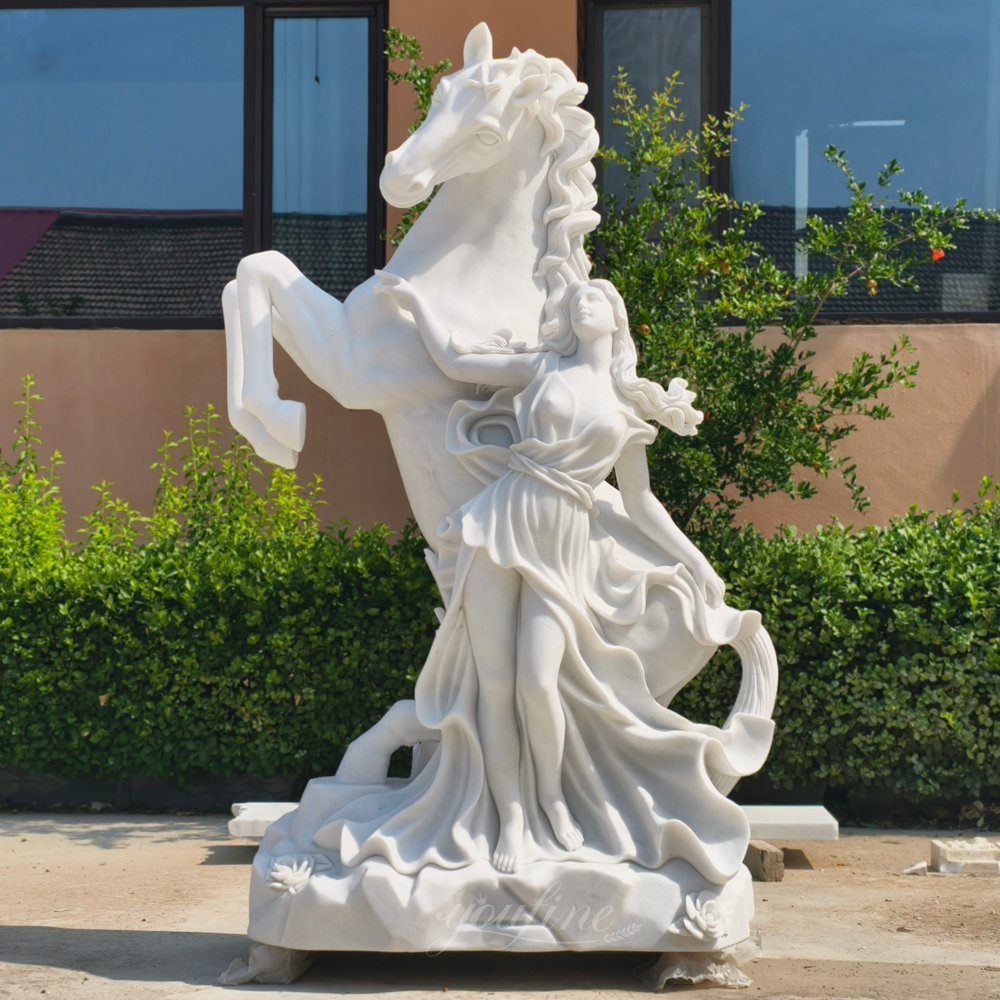
How Do Sculptors Choose Marble for a Statue?
Not every type or block of marble is suitable for a detailed figure. Sculptors do not choose a block only by its commercial name or color. They must decide whether that specific piece of stone suits the design.
What Sculptors Check Before Carving
- Crystal consistency: Can the stone hold fine edges?
- Cracks and weak veins: Do they pass through narrow areas?
- Block dimensions: Is there enough material for the complete pose?
- Vein direction: Will it affect the face or structural areas?
- Color and setting: Does it suit the subject and installation space?
- Indoor or outdoor use: Can it perform in the local environment?
1. Is the Crystalline Structure Consistent?
For detailed areas such as the face, hands, and thin fabric edges, sculptors usually look for stone that is dense, consistent, and able to hold a clean edge.
Large differences in the crystal structure may cause different parts of the block to react differently during carving. This can make fine detail harder to control.
2. Are There Cracks or Weak Veins?
Natural veining is part of the beauty of marble, but a decorative vein is not the same as a structural crack.
If a weakness passes through a wrist, ankle, finger, or fabric edge, it may increase the risk of damage during carving, shipping, or installation. A surface inspection can reveal some problems, but changes inside natural stone cannot always be fully confirmed from the outside.
For this reason, sculptors continue to watch how the stone reacts throughout the carving process.
3. Is the Block Large Enough for the Pose?
A standing figure and an angel with open arms may require very different blocks, even if the finished sculptures have the same height.
The sculptor must consider:
- The widest and highest points of the figure;
- Extended arms, wings, or fabric;
- The connection between the figure and its base;
- The amount of safety material that must remain;
- Shipping and installation requirements.
The more complex the pose, the more important the early structural planning becomes.
4. How Will the Veining Affect the Structure and Appearance?
Sculptors also study where the natural veins will appear on the finished figure.
A dark vein crossing the face may distract from the expression. A vein passing through a wrist, ankle, or another narrow area may need further structural evaluation.
Veining is not always a problem. The important question is whether it supports the subject, pose, and visual focus of the sculpture.
5. Does the Color Suit the Setting?
White marble is often used for figures, religious statues, and classical sculpture because it clearly shows form, light, and shadow.
Beige and warm-colored marble can blend naturally into gardens, traditional courtyards, and architectural spaces. Marble with stronger colors or veins may suit decorative or abstract work.
The right material is not always the most expensive one. It is the material that best suits the design and installation environment.
What Happens When the Wrong Marble Is Chosen?
A marble block may have a beautiful color but still be unsuitable for a complex sculpture. Poor material selection can create problems during carving and after installation.
| Material or Planning Problem | Possible Result |
|---|---|
| Inconsistent crystal structure | Eyelids, fingers, hair, or fabric edges may chip during detailed carving. |
| A crack crosses a narrow area | The wrist, ankle, finger, or decoration may be more likely to break. |
| Strong veining crosses the face | The pattern may distract from the facial expression. |
| The block is too small | Extended arms, wings, robes, or the base may not fit the design. |
| The stone is unsuitable for the climate | The outdoor surface may change or weather more quickly. |
| Selection is based only on a sample photo | The finished color, pattern, or structure may differ from expectations. |
This is why professional marble selection should consider the complete design, not only the stone name, color, or a small sample photograph.
How Is a Marble Sculpture Made?
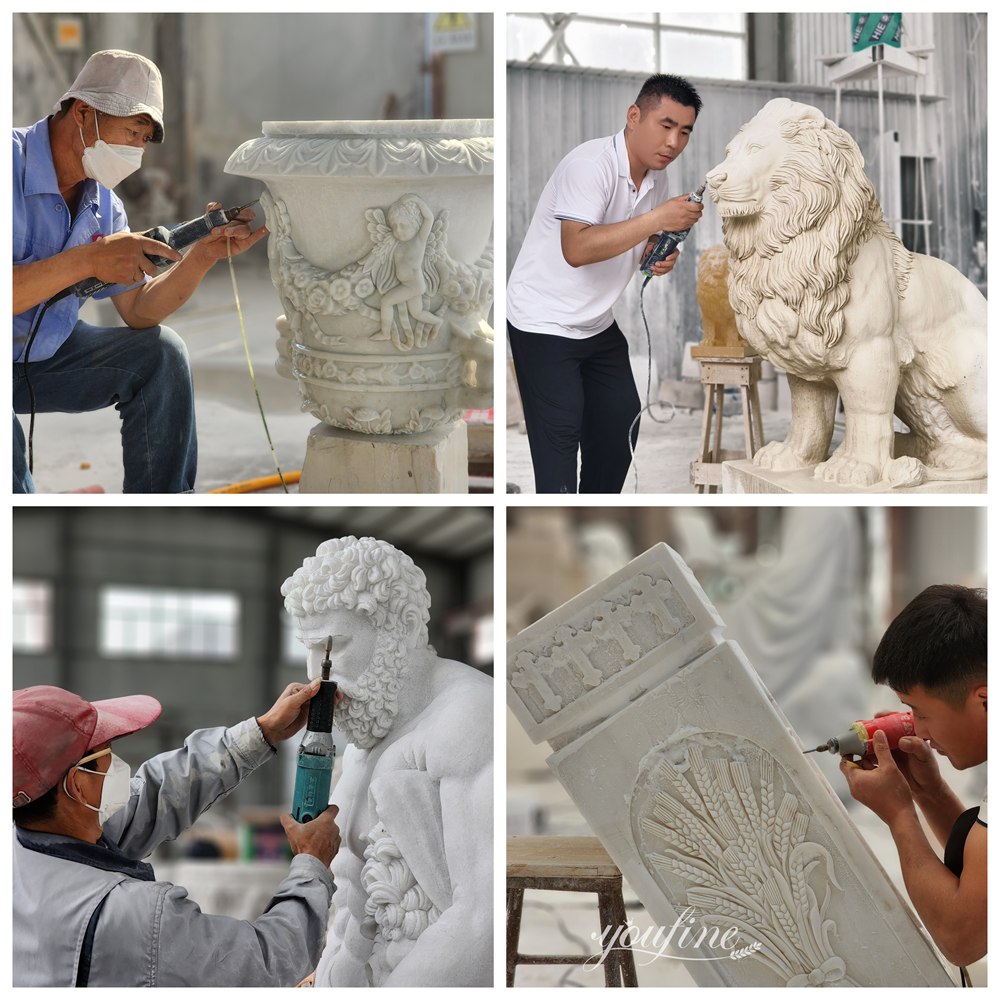
After the marble has been selected, the sculptor can begin the work. Marble carving is a subtractive process. Once stone has been removed, it cannot be added back as easily as clay.
The exact process varies by workshop and design, but it usually includes the following stages.
- Confirm the Design and Proportions. The sculptor studies photographs, drawings, models, or other references and confirms the pose, size, and main proportions.
- Mark the Main Shape on the Block. The approximate position of the figure is marked on the marble. The sculptor also plans which structural areas must remain.
- Remove Large Areas of Unwanted Stone. This rough-carving stage establishes the main form. The head, body, limbs, and clothing gradually begin to appear.
- Refine the Pose and Structure. Before carving small details, the sculptor repeatedly checks the proportions, balance, movement, and relationship between different parts of the figure.
- Carve the Face and Fine Details. Once the overall form is stable, the sculptor works on the eyes, lips, fingers, hair, fabric, and decoration.
- Finish the Surface. Different areas may keep visible tool textures or receive various levels of sanding and polishing. These finishes help separate skin, hair, clothing, and other surfaces.
- Check the Base and Installation Structure. After carving, the workshop checks the base, connection points, center of gravity, shipping plan, and installation method.
For a more detailed explanation, read our guide to how marble sculptures are made.
Is Marble Durable, and What Are Its Limitations?
Many ancient marble works still exist today, showing that marble can last for a very long time. However, durable does not mean impossible to damage.
The main body of a marble sculpture can be strong, while fingers, ankles, fabric edges, and extended arms may still break under impact or concentrated pressure.
Structural Support Is Important
Some figure sculptures include a tree trunk, column, robe, or another connecting form beside the body. These elements may be decorative, but they can also support the legs or other extended areas.
The Victoria and Albert Museum discusses the brittleness, weight, and structural support of marble sculpture in its guide to sculpture techniques.
Outdoor Conditions Affect Marble
Outdoor sculptures may be affected by:
- Freeze-thaw cycles and temperature changes;
- Long-term moisture;
- Salt in coastal areas;
- Air pollution and acidic substances;
- Water collecting around the base;
- Unsuitable cleaning products;
- Poor shipping or installation.
Using marble outdoors is not as simple as moving an indoor statue into a garden. The stone, structure, base, drainage, installation, and maintenance must all be considered.
Other Limitations of Marble
- It is heavy;
- Carving mistakes are difficult to reverse;
- Every natural block is different;
- Thin unsupported forms can be difficult;
- Shipping and installation require planning;
- Acidic cleaners may damage the surface.
These limitations do not make marble a poor material. They simply mean that the design and production method must suit the stone.
Why Has Marble Been Important Throughout Sculpture History?
Marble became important because of its material qualities, local availability, technical development, and cultural meaning.
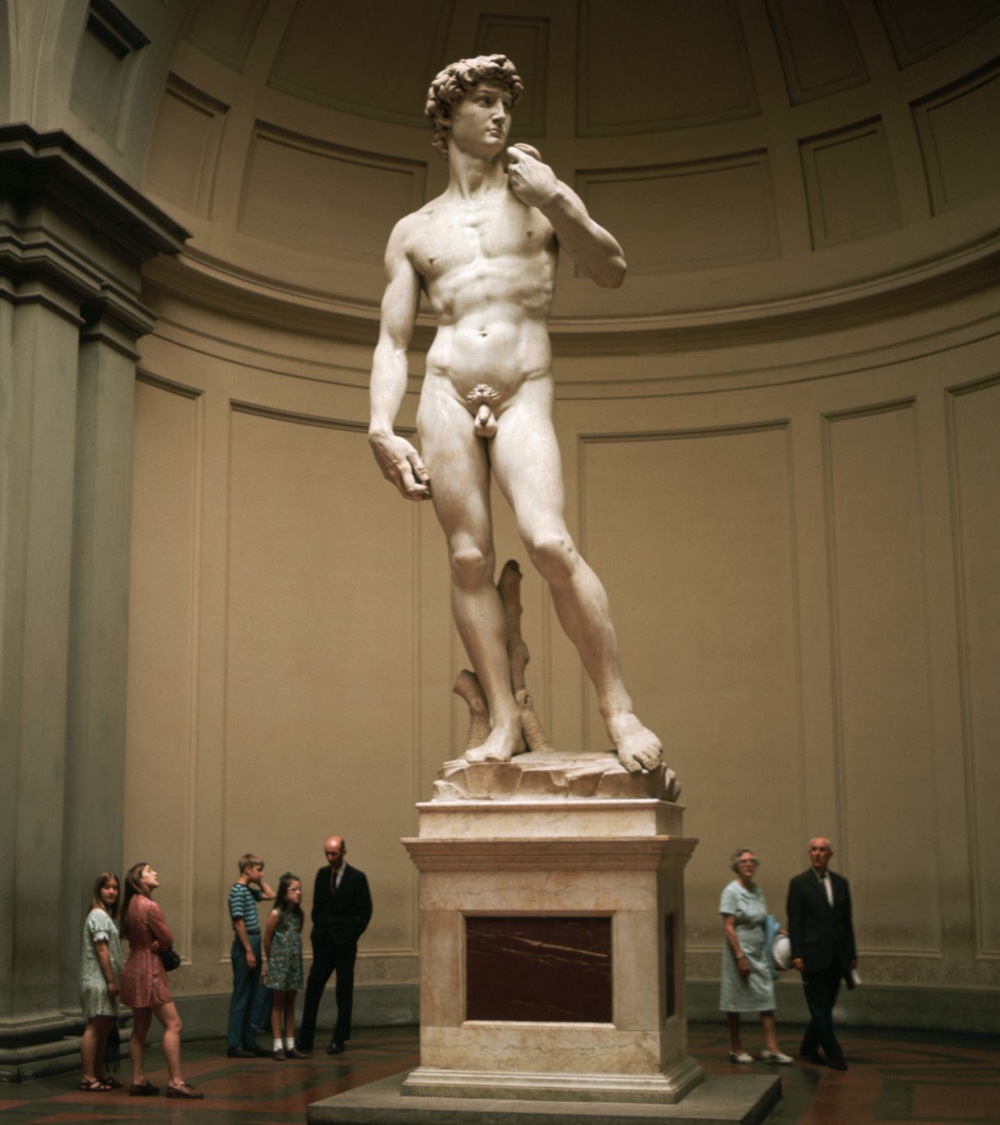
Parts of mainland Greece and several Greek islands had marble resources. As quarrying, transportation, and carving tools improved, sculptors learned how to use marble to show the human body, clothing, and ideal proportions.
However, ancient Greek sculptors did not use only marble. Bronze was also an important material for freestanding figures. Some famous classical marble statues that survive today are Roman versions of earlier Greek bronze works.
Bronze could be melted down and reused, so many ancient bronze sculptures were lost. Marble works and marble copies were more likely to survive. For more background, see Smarthistory’s guide to Roman copies of ancient Greek art.
The plain white ancient statues seen in museums today may not show their original appearance either. Many Greek and Roman marble sculptures originally had different amounts of color. Some were painted over large areas, while others used color mainly to emphasize the eyes, lips, hair, clothing, and decoration.
Much of this color disappeared through burial, weathering, cleaning, and restoration. See Smarthistory’s introduction to color in ancient sculpture for more information.
During the Renaissance, artists studied classical work again. Marble gradually became a powerful symbol of classical sculpture in Western art. It remains widely used today for figures, religious statues, memorials, and architectural decoration.
Is Marble the Right Material for Your Sculpture?
Marble is an excellent sculpture material, but the choice should still depend on the design, environment, and purpose of the project.
| Marble May Be a Good Choice When… | Another Material May Be Better When… |
|---|---|
| Fine facial, body, or fabric details are important. | The design has many thin or unsupported forms. |
| Natural stone color and variation are desirable. | Many completely identical copies are required. |
| A classical, religious, or formal appearance is preferred. | A mirror-polished or modern metal appearance is preferred. |
| The work will be placed in a garden, church, estate, or memorial space. | The sculpture must be moved frequently. |
| Hand carving and long-term display value are important. | Low weight and lower cost are the main priorities. |
| Professional shipping and installation can be arranged. | The environment is especially difficult for natural marble. |
Bronze, for example, can be better for complex movement and narrow extended forms. Stainless steel works well for modern, geometric, and reflective designs. Resin and fiberglass are lighter and easier to reproduce in larger quantities.
Professional material advice should not simply claim that marble is always best. It should help the client find the material that best fits the design, environment, and budget.
If you are planning a sculpture based on a photograph, drawing, or specific space, read our custom marble statue guide to ordering and cost. You can also browse our marble statue collection to compare different subjects and styles.
Conclusion
Marble has been used for sculpture for thousands of years for more than its elegant appearance.
It is relatively workable but can still hold fine details such as faces, fingers, hair, and fabric folds. It can be polished to create a soft surface or left with clear tool textures. The slight translucency of some light-colored marble can also give the human figure a warm, skin-like appearance.
However, an excellent marble sculpture is never created by the material alone. The choice of stone, structural design, carving skill, surface finish, base, and installation method all affect the final appearance and service life of the sculpture.
What makes marble special is that it gives sculptors a wide range of artistic possibilities while also requiring them to understand and respect the natural structure and limits of the stone.
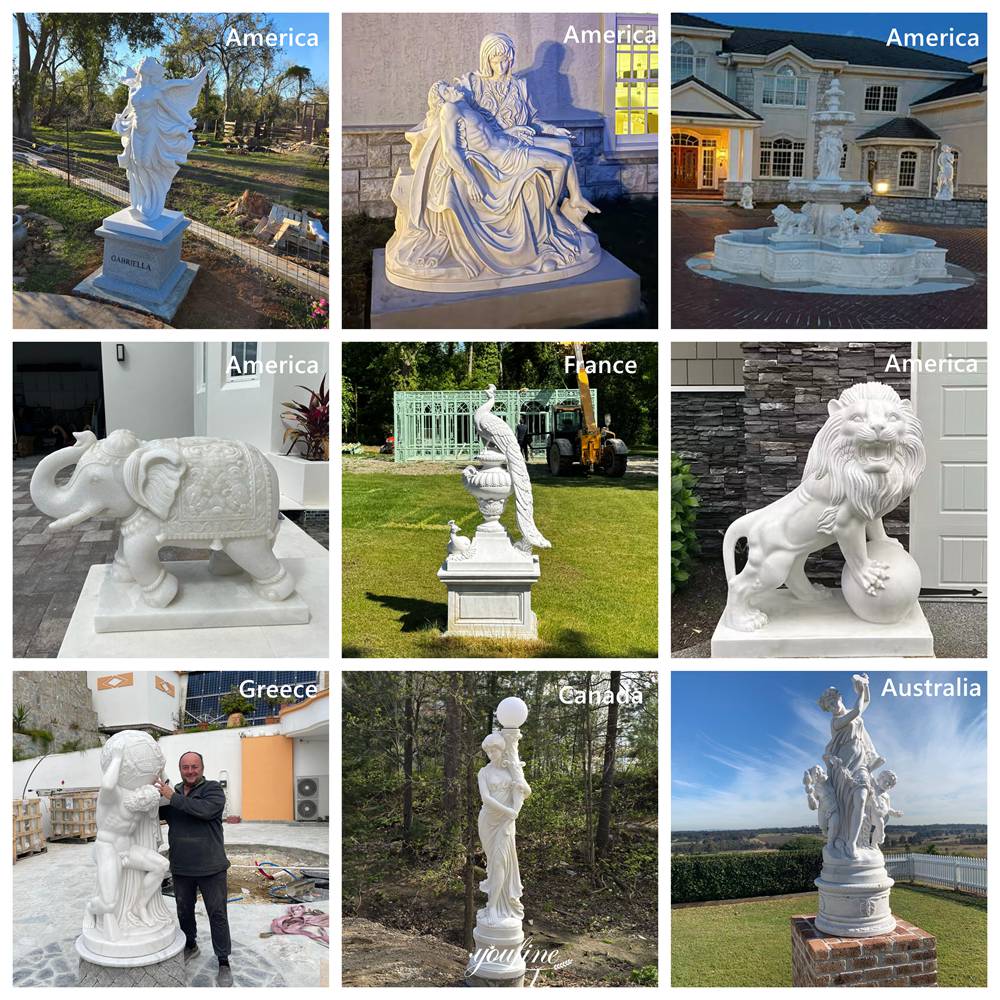
If you are looking for a marble sculpture for a garden, church, estate, hotel, memorial space, or another project, we can help you select a suitable material and production plan based on your design, photographs, dimensions, and installation environment.
You can send us your reference images, design ideas, preferred size, and installation location. Our team can help evaluate the marble, structure, carving details, base, shipping, and installation requirements.
Frequently Asked Questions
Why is marble used for sculptures?
Marble is relatively workable and can hold details such as faces, fingers, hair, and fabric folds. It can also be sanded and polished in different ways. The slight translucency of some light-colored marble gives figures a softer appearance.
Why is marble good for sculpting?
Compared with harder stones such as granite, marble is easier to remove and shape gradually. Marble with a consistent structure and few weaknesses can also hold clean, detailed edges.
How does marble make statues look lifelike?
Form, light, shadow, and surface finish all help create a lifelike result. Some light-colored marble also has slight translucency, creating a soft glow similar to skin.
Is marble easy to carve?
Marble is relatively easy to carve compared with granite, but it still requires professional tools and experience. Marble carving is an irreversible subtractive process, so removing too much stone can be a serious problem.
What is the best marble for statues?
No single marble is best for every statue. Detailed figures usually require stone with a consistent structure, few cracks, and the ability to hold clean edges. Color, veining, pose, and installation environment must also be considered.
Can marble statues be placed outdoors?
Yes, but the stone should be selected for the local environment. Structure, base design, drainage, installation, and maintenance are also important. Coastal, freezing, or highly polluted locations require more careful planning.
Is marble or bronze better for statues?
Both materials can produce detailed figures. Marble offers the warmth, natural variation, and classical character of stone. Bronze is often more suitable for complex movement, narrow extended forms, and cast reproductions. The best choice depends on the design, location, budget, and intended appearance.