Quick Summary:
When exploring the perseus holding medusa head meaning, the core message in Western art is the triumph of wisdom over fear and intellect over chaotic brute force. Perseus did not rely solely on strength; instead, he used a reflective shield to defeat the petrifying Gorgon, demonstrating that clear thinking and preparation overcome seemingly impossible odds. Furthermore, Medusa’s severed head has served since antiquity as a protective, apotropaic charm, turning fear into a guardian against harm.
What Does the Sculpture of Perseus and Medusa Symbolize?
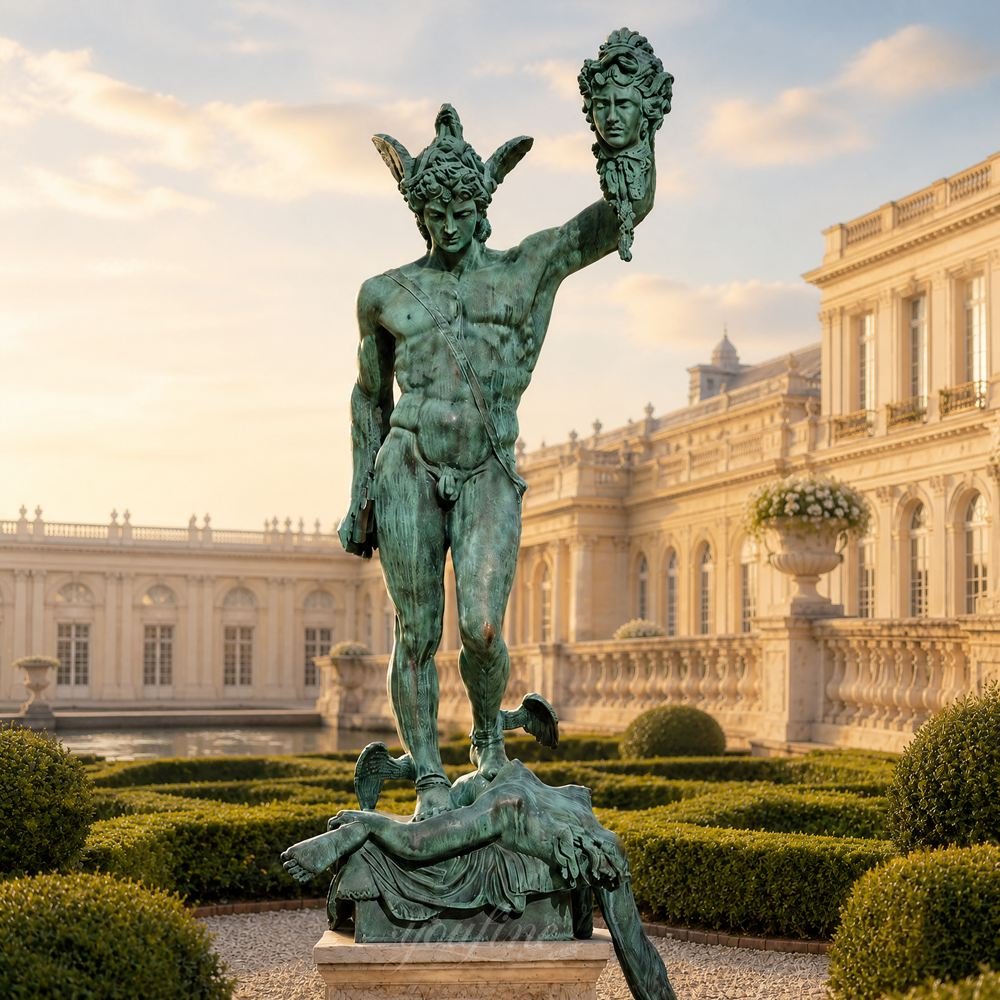
Whether visiting world-class art museums, strolling through historic European piazzas, or exploring classical private estates, you have likely encountered the striking figure of the heroic Perseus raising the severed head of Medusa high into the air.
At first glance, it might seem intense or even a bit startling. Yet for centuries, this scene has been celebrated as a timeless artistic masterpiece and cherished in homes and gardens around the world. Why has it remained so beloved?
To understand the Perseus with the head of Medusa meaning, we can look at three inspiring layers of symbolism:
-
Wisdom and Strategy Triumph Over Brute Force
In Greek mythology (as documented in classical records by the Encyclopedia Britannica), Medusa posed a terrifying danger: anyone who made direct eye contact with her would instantly turn to solid stone. If Perseus had rushed into battle relying solely on muscle and aggression, he would have met the same fate as countless fallen warriors. Instead, he acted with careful strategy. Using the polished bronze shield gifted by Athena as a mirror, he approached her indirectly and struck with precision. This reminds us that when facing life’s toughest obstacles, head-on confrontation rarely works—calm wisdom, adaptability, and thoughtful planning are what truly break through.
-
Rational Order Over Chaos
With a crown of venomous snakes and an unbridled, petrifying gaze, Medusa represents wild, untamed chaos and primal fear. Perseus, by contrast, embodies civilization, rational discipline, and divine justice. The decisive moment of holding up the head marks the triumph of inner composure and clarity over confusion, uncertainty, and panic.
-
Turning Fear into Protection
If you have ever wondered what does medusa head symbolize, ancient history offers a wonderful surprise: it was widely regarded as a powerful protective emblem. In ancient Greece and Rome, this concept was known as apotropaic magic—a symbol capable of warding off evil. Medusa’s fierce likeness (the Gorgoneion) was carved onto city gates, warriors’ breastplates, temple pediments, and home entrances to deter negative energies and harm. In this light, the head is far more than a gruesome trophy; it functions as an enduring guardian that keeps watch over sacred spaces.
Famous Sculptures in Art History and Their Political Stories
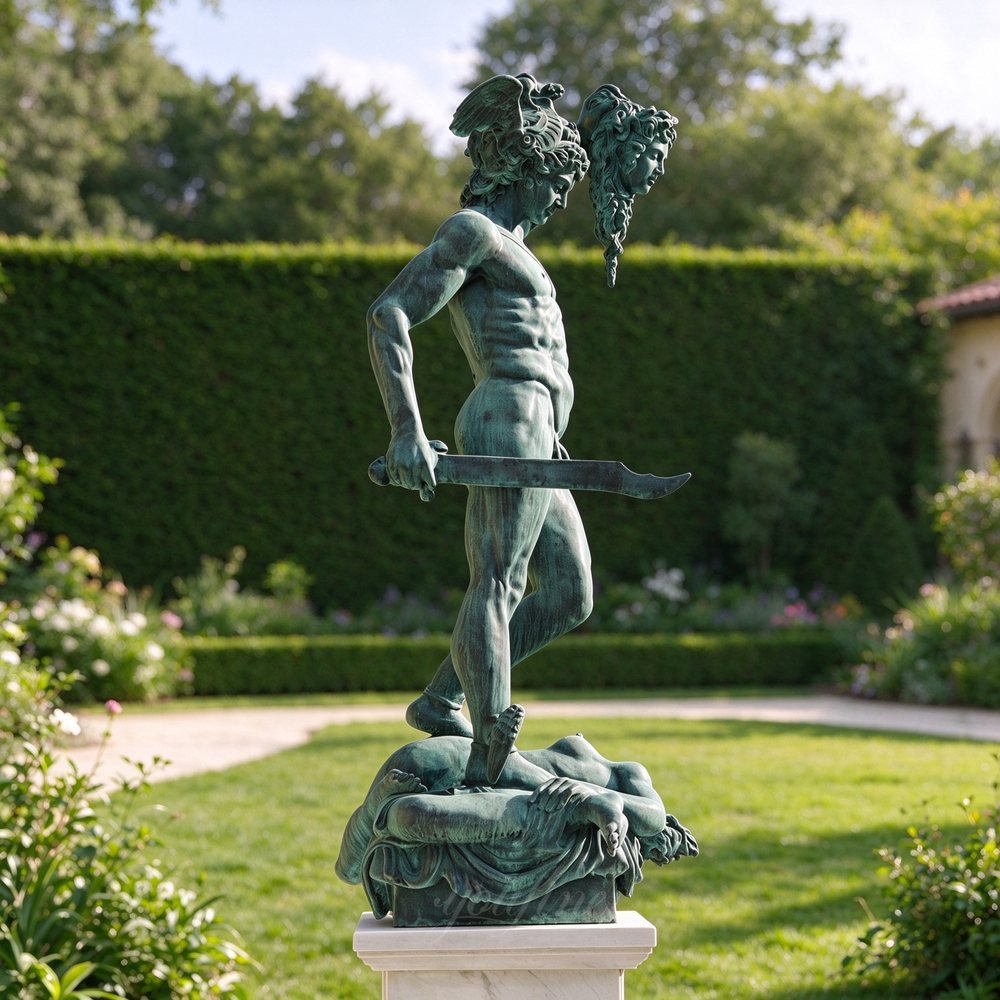
Many great masters throughout history have brought this myth to life, creating works known worldwide as Perseus with the Head of Medusa. Two world-renowned sculptures stand out, each carrying its own rich historical background:
-
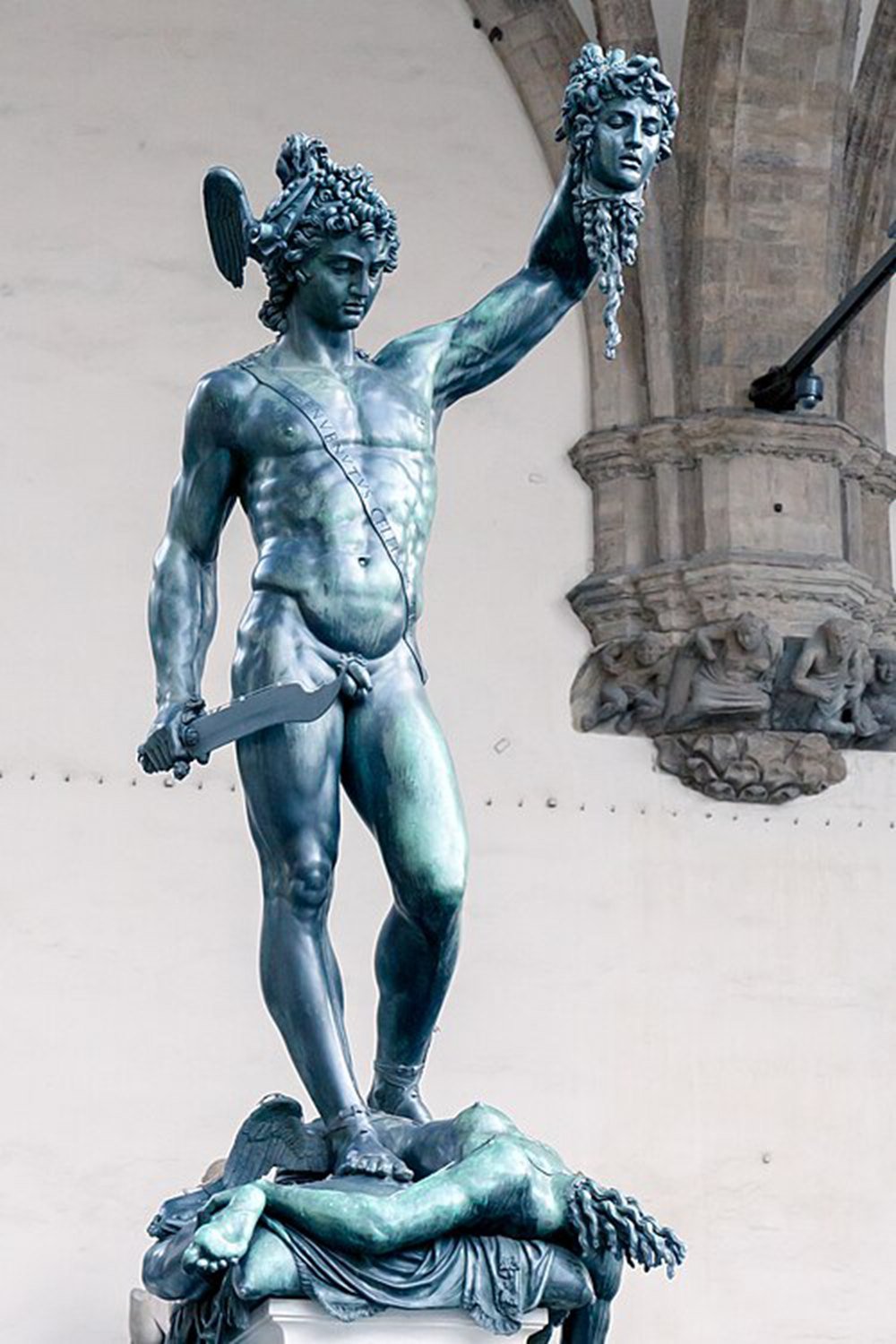
Benvenuto Cellini’s Bronze Masterpiece: A Statement of Authority
Standing gracefully in the Loggia dei Lanzi in Florence, Italy, is Benvenuto Cellini’s famous 1554 bronze statue (highlighted by Visit Tuscany). Beyond its stunning anatomical detail and fluid movement, the sculpture was commissioned by Duke Cosimo I de’ Medici with a clear civic message. The Duke metaphorically aligned himself with Perseus, viewing the fractured factions of the former Florentine Republic as the chaotic Medusa. The statue signaled that the new ducal leadership would bring lasting order, peace, and stability to Florence.
-
Antonio Canova’s Neoclassical Marble: Pure Calm and Elegance
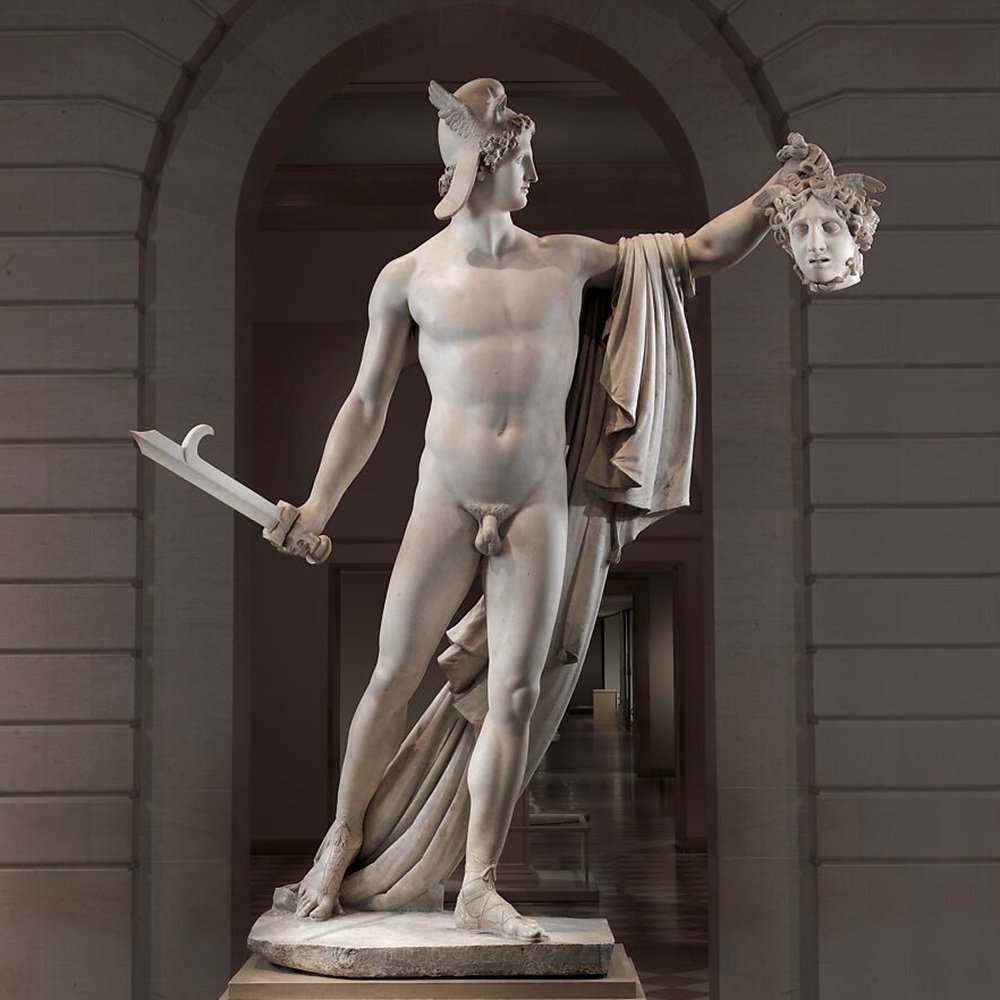
Housed in the Metropolitan Museum of Art in New York, the marble version sculpted by Antonio Canova in the early 19th century takes a very different aesthetic approach. Canova stripped away the visceral, graphic tension of earlier periods. His Perseus is sculpted in pristine, luminous white marble, featuring poised proportions and an expression of quiet serenity. Rather than depicting the fury of combat, Canova captured the effortless confidence and lasting peace that follow a righteous victory.
Contemporary Perspectives: Overcoming Inner Battles
As art evolves, modern audiences continue to find fresh, uplifting meanings in this timeless legend:
-
A Personal Anchor for Resilience
Today, many people embrace this imagery in personal collections, home decor, and even tattoos as a symbol of personal empowerment. In modern psychological readings, Medusa often represents deep-seated anxieties, toxic environments, or past emotional trauma that once felt impossible to confront. Raising her head symbolizes stepping into one’s own power—summoning the courage to face fears, sever negative loops, and reclaim direction in life.
-
New Narratives and Modern Empathy
Contemporary art has also revisited Medusa’s original backstory with greater compassion and nuance, exploring themes of resilience and self-defense. This multi-layered dialogue keeps both figures vibrant, meaningful, and deeply relevant to modern conversations.
Why Is the Perseus and Medusa Sculpture So Popular Today?
Beyond its rich mythology and history, this iconic sculpture continues to gain popularity in residential landscapes, interior designs, and architectural settings:
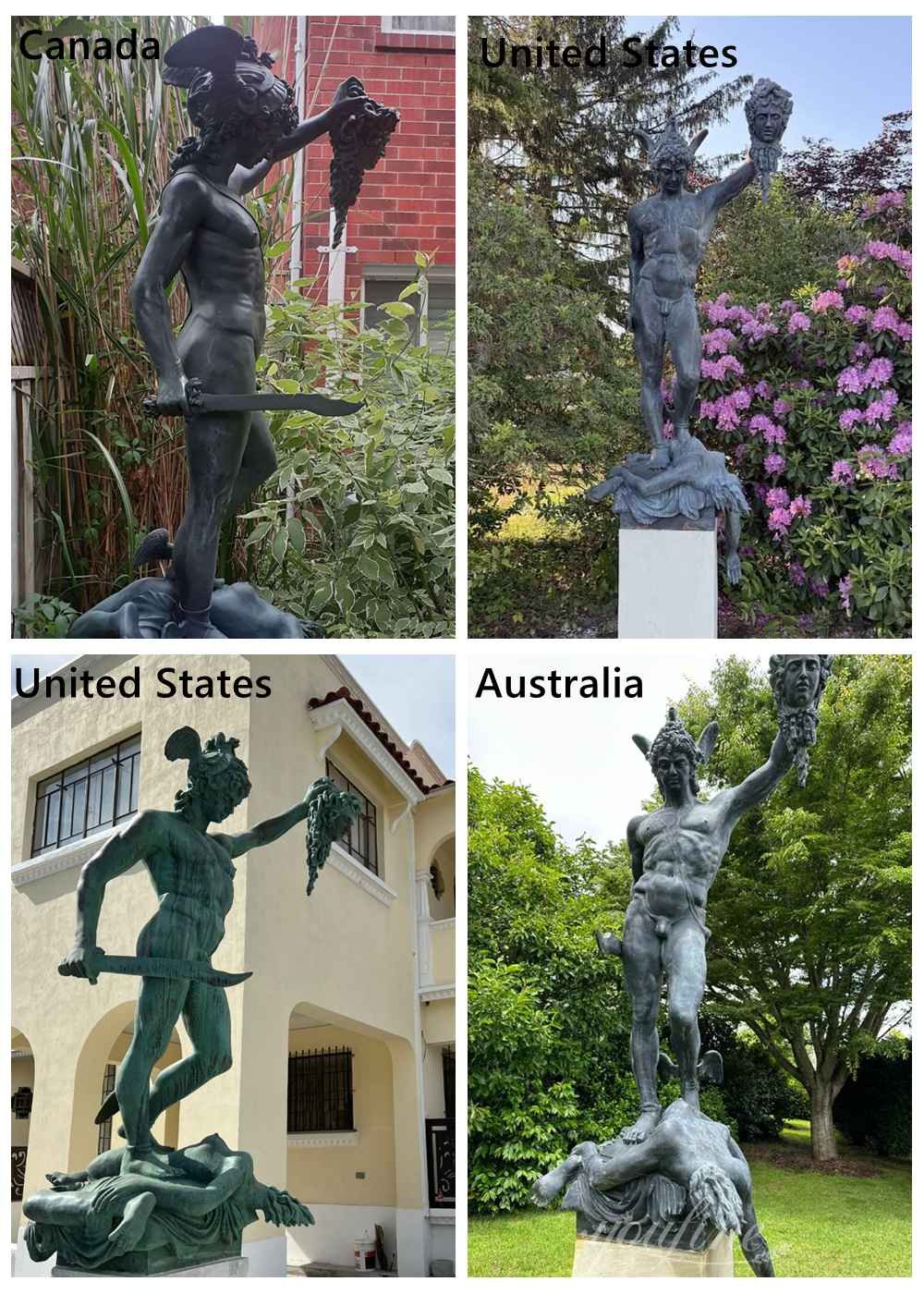
- A Striking Visual Anchor: Placed on a garden lawn, in a welcoming entrance foyer, or beside an elegant staircase, the dynamic posture and strong storytelling naturally draw the eye, serving as an unforgettable conversation piece.
- A Symbol of Guarding and Balance: Many homeowners love placing it near an entryway or courtyard as a nod to the ancient tradition of guarding the home against negativity, while serving as a daily reminder to stay grounded and wise.
- Timeless Heritage and Taste: Unlike ordinary modern ornaments, a classical mythological piece brings an authentic sense of historic gravitas, cultural depth, and understated sophistication to any home.
FAQs
Q1: What happened to Medusa’s head after Perseus defeated her?
Answer: Perseus did not keep the head for personal glory. After using its petrifying gaze to rescue Andromeda from a sea monster and protect his mother, he respectfully dedicated Medusa’s head to Athena, the goddess of wisdom. Athena placed it squarely in the center of her famous divine shield, the Aegis, transforming Medusa into a permanent, heavenly emblem of protection.
Q2: Why did Gianni Versace choose Medusa as his luxury brand logo?
Answer: Growing up in Southern Italy surrounded by classical Greco-Roman heritage, Gianni Versace was fascinated by the legend. He chose Medusa because she embodies a magnetic, fatal attraction—a beauty so captivating that once you look, you can never turn away. He wanted his fashion house to evoke that same irresistible, confident charm.
Q3: Where is the best place to display this sculpture at home?
Answer: Because the sculpture features a dynamic, three-dimensional posture, it looks best as a visual focal point. Great locations include the end of an entrance hall, an open foyer, beside a garden fountain, or along a main landscape axis. Giving the statue a little breathing room allows guests to appreciate the fine craftsmanship and muscular contours from multiple viewing angles.
Q4: How should I choose between bronze and natural marble?
Answer: Both traditional materials bring unique qualities to a space:
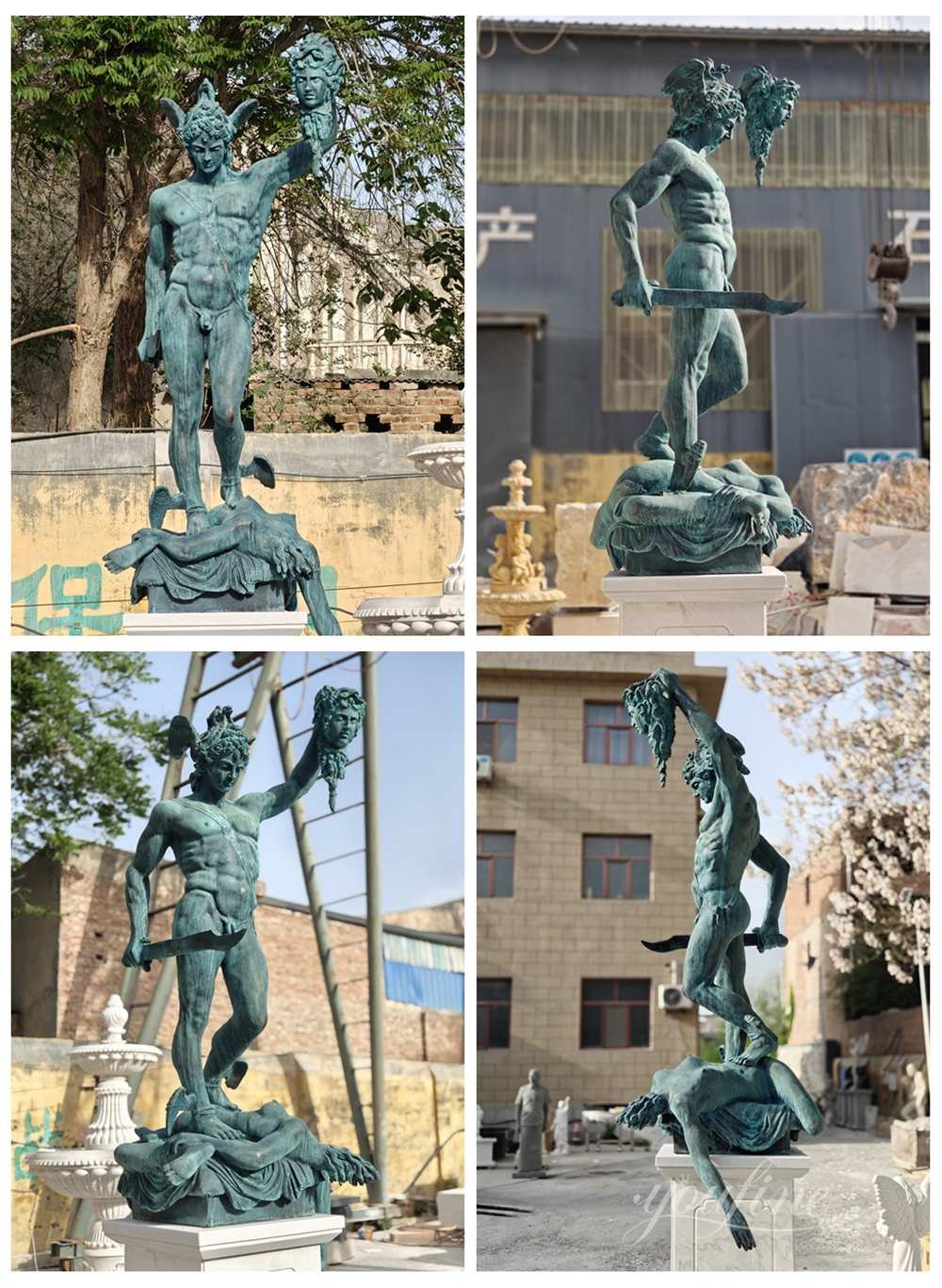
- Cast Bronze: Exceptionally durable against outdoor weather, bronze develops a warm, authentic patina over time. It is ideal for outdoor gardens, driveways, or near water features where dramatic shadows highlight its strength.
- Carved Marble: Smooth, bright, and delicately detailed, natural marble shines in interiors with soft, diffused natural light, bringing an unmatched sense of neoclassical purity and museum-grade serenity.
Bring Classical Heritage into Your Space
The lasting magic of classical myth lies in its ability to inspire us across generations. Perseus holding the head of Medusa remains a heartening tribute to calm courage, intellectual victory, and peace of mind.
If you are drawn to this legendary subject and would love to add a finely crafted replica to your home, courtyard, or project—or if you have specific custom ideas in mind—we warmly welcome you to reach out to us.
Whether you envision a grand outdoor sculpture in cast bronze or a graceful interior piece hand-carved in natural marble, we can tailor the size, finish, and details to your aesthetic preferences and space requirements. Let us help you welcome a timeless piece of art history into your everyday life.