Stainless steel sculptures are widely used in modern art, architecture, gardens, and public spaces due to their durability, corrosion resistance, and elegant appearance. However, “stainless” does not mean “maintenance-free.” Over time, sculptures can still accumulate fingerprints, dust, water spots, environmental pollution, and, in some cases, surface contamination that affects their appearance.
Proper cleaning and maintenance preserve the sculpture’s original shine and artistic value and also extend its lifespan, especially for outdoor installations exposed to changing weather conditions. This guide provides a complete professional system covering daily maintenance, step-by-step cleaning methods, common problems, outdoor care, and long-term protection strategies.
Daily and Routine Maintenance
Regular maintenance is the most effective way to keep stainless steel sculptures in good condition and reduce the need for deep cleaning.
-
Routine Care (Indoor vs. Outdoor)
- For Indoor Sculptures: Dust the surface weekly using a dry, lint-free microfiber cloth to remove airborne particles, oily fingerprints, and smudges before they bond with the metal.
- For Outdoor Sculptures: Gently rinse the piece with clean water whenever dust accumulates. Conduct bi-weekly visual inspections to catch bird droppings, salt crusts, or organic debris early.
-
Scheduled Washing (Weekly to Monthly)
Depending on your environmental pollution levels, perform a basic wash every 2 to 4 weeks:
- Use a mild, pH-neutral soap mixed with warm water to wipe down the surface.
- Always dry the surface immediately with a fresh microfiber towel to prevent hard-water spots and mineral deposits.
⚠️ Crucial Finish Rule: For brushed stainless steel surfaces, always wipe parallel to the direction of the grain lines. Wiping against the grain or in circular motions will cause permanent micro-scratches and disrupt the uniform aesthetic finish.
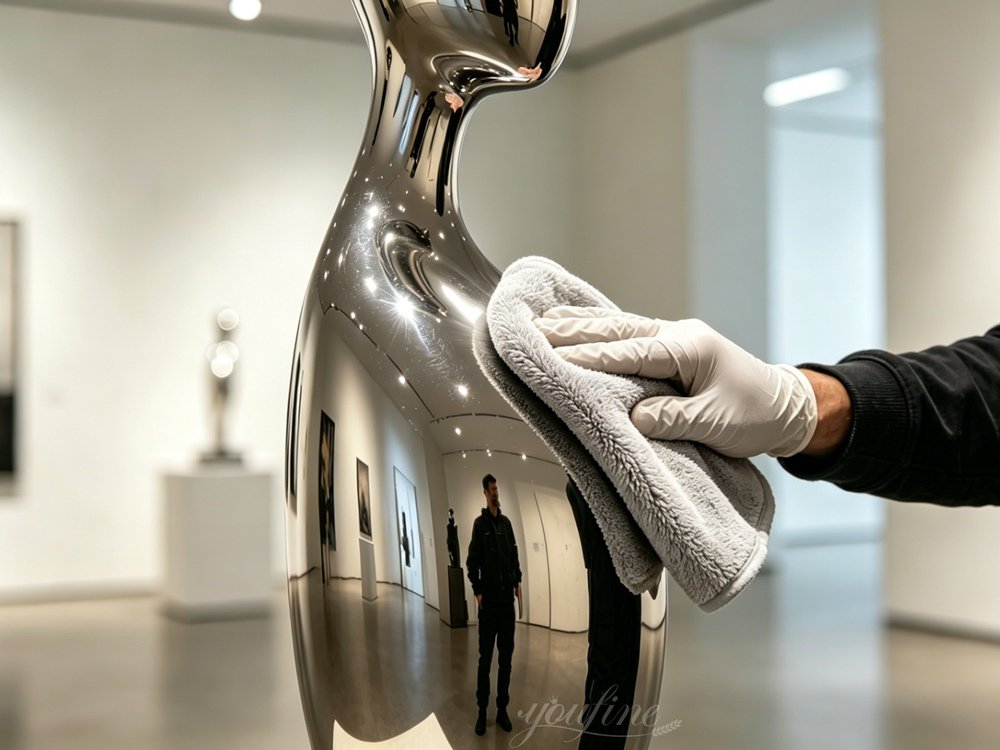
Step-by-Step Guide to Cleaning Stainless Steel Sculptures
This section explains a complete cleaning process for different levels of dirt and contamination.
Step 1: Remove Surface Debris (Indoor vs. Outdoor)
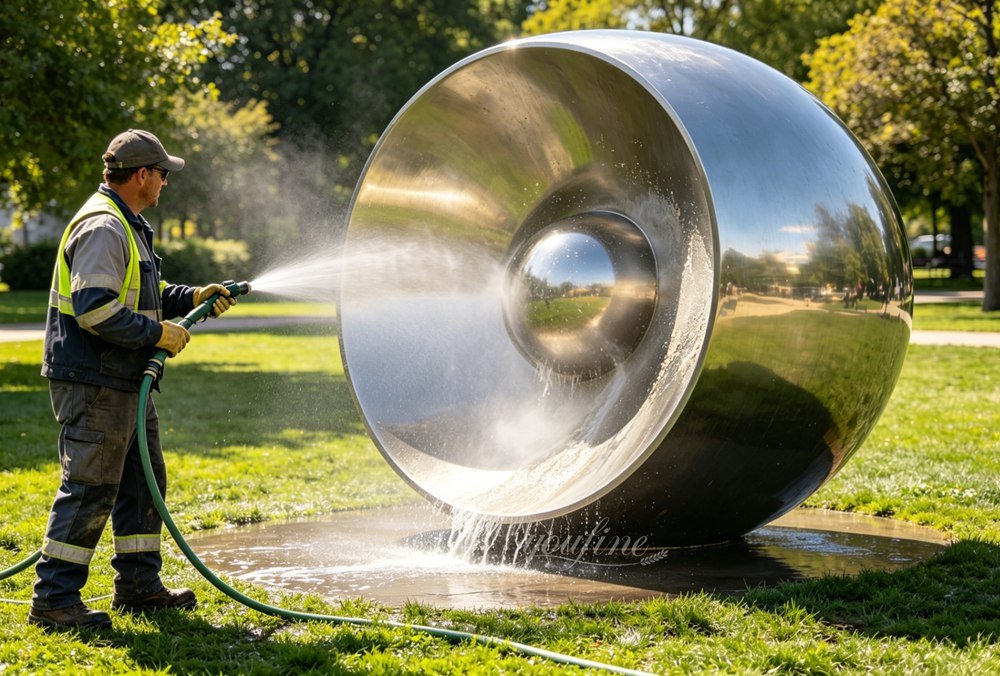
- For Outdoor Sculptures: Rinse the entire piece with clean, lukewarm water first. This removes loose sand and grit. Skipping this step will cause abrasive particles to scratch the surface during wiping.
- For Indoor Sculptures: Simply wipe away surface dust and cobwebs using a dry, ultra-soft microfiber cloth.
Step 2: Wash with a Mild Solution
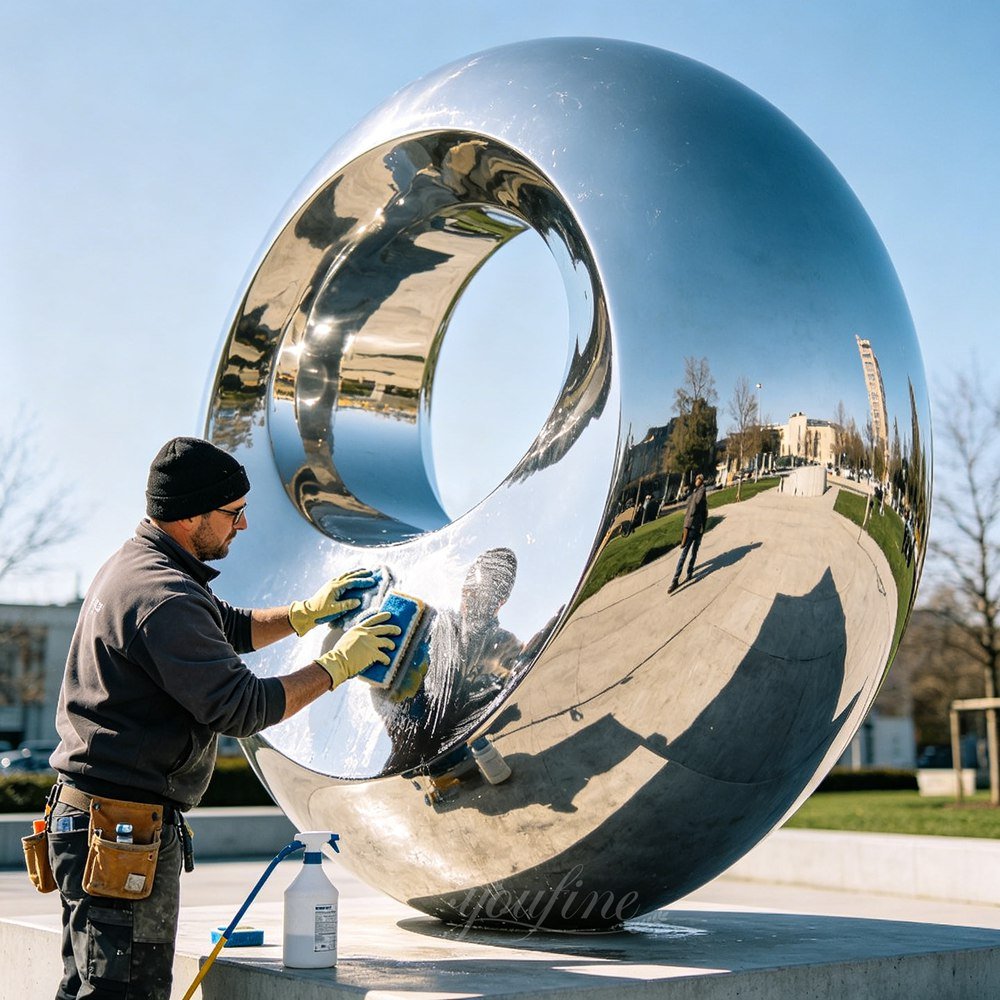
Mix a few drops of mild, pH-neutral dish soap (or a specialized architectural stainless steel cleaner) with warm water. Dip a clean microfiber cloth into the solution and gently wipe the sculpture.
Crucial Rule: For brushed finishes, always wipe parallel to the grain lines—never in circular motions. For mirror-polished finishes, apply the absolute minimum pressure to avoid micro-scratches.
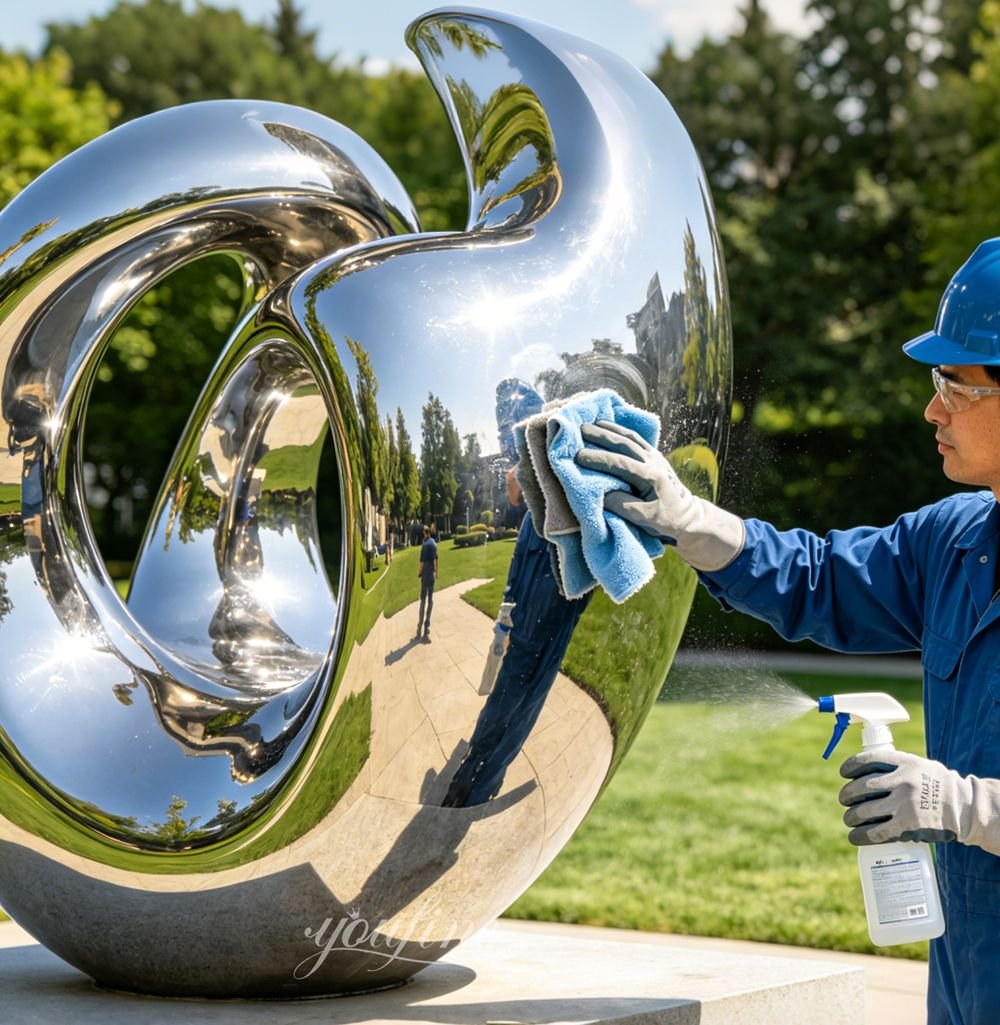
Step 3: Soften Stubborn Grime
For tough spots like bird droppings or dried tree sap, do not scrub forcefully. Instead, press a wet, soap-soaked cloth against the debris for 2 minutes to soften it, then gently wipe it away.
Step 4: Rinse Thoroughly
Rinse the sculpture completely with clean water. Make sure all soap residue is gone, as dried detergent leaves dull streaks and attracts dust faster.
Step 5: Dry Immediately
Dry the entire surface immediately with a fresh microfiber towel. Allowing the sculpture to air-dry will leave permanent water spots and mineral buildup.
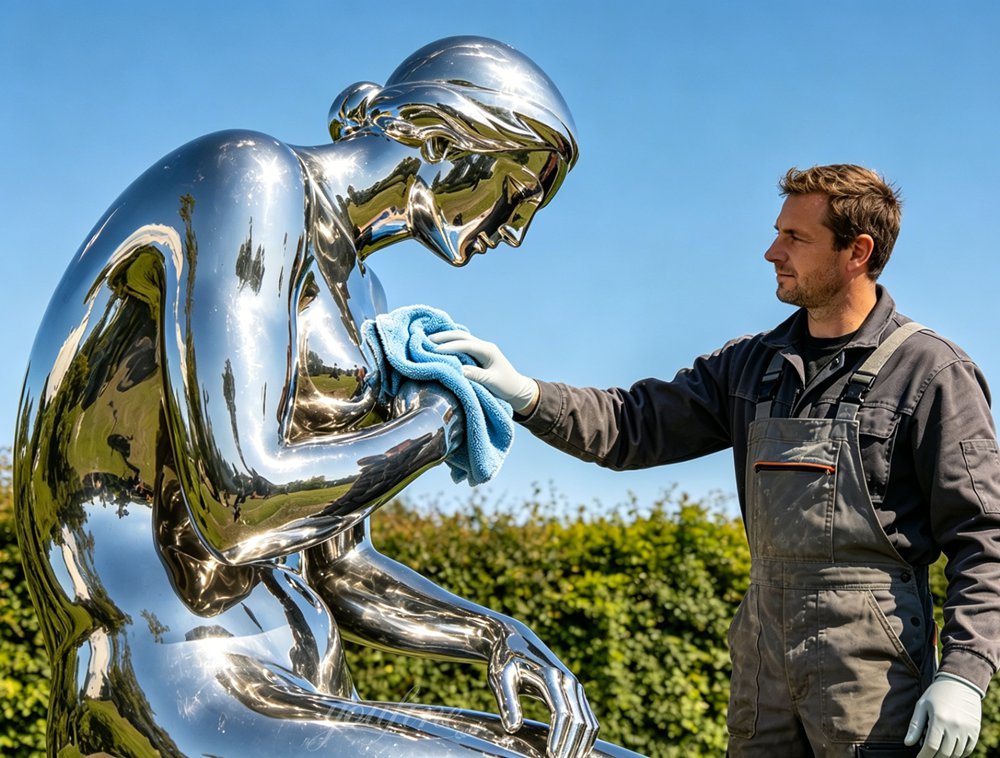
Cleaning Mistakes to Avoid
Improper cleaning methods can damage the protective surface layer and the texture of stainless steel.
Do NOT:
- Use steel wool or abrasive pads
- Use wire brushes or rough scrubbing tools
- Apply bleach, hydrochloric acid, or strong chemicals
- Leave water to air-dry on the surface
- Use rough wiping motions on brushed finishes (against the grain)
- Direct contact with the sculpture without wearing cotton or nitrile gloves.
Why This Matters
Stainless steel relies on a passive protective layer. Scratching or damaging this layer can reduce corrosion resistance and affect the sculpture’s appearance.
Common Problems and Solutions
Stainless steel sculptures may develop visual issues over time. Most of them are easy to fix if treated correctly.
| Surface Issue | Primary Cause | Professional Solution |
|---|---|---|
| Fingerprints & Smudges | Natural skin oils and frequent handling | Wipe with a microfiber cloth lightly dampened with isopropyl alcohol or a specialized glass cleaner, then buff dry with a clean soft cloth. |
| Water Spots & Mineral Rings | Evaporated hard water or rain deposits | Apply a 1:1 mixture of white vinegar and distilled water. Let it sit for about 1 minute, gently wipe along the grain direction, rinse thoroughly, and dry completely. |
| Surface Tea Staining | Atmospheric salt exposure or high-humidity environments | Clean with mild soap and warm water first, then apply a specialized non-abrasive stainless steel passivating paste to restore surface protection. |
| Minor Scratches | Abrasive contact or improper wiping methods | For brushed finishes only: gently buff along the grain using a fine-grade nylon abrasive pad and stainless steel polishing paste. For mirror finishes, professional restoration is recommended. |
Outdoor Stainless Steel Sculpture Maintenance
Stainless steel outdoor sculptures bear the brunt of environmental exposure and require a much more rigorous care schedule than indoor installations.
Environmental Stressors to Watch For
Your maintenance approach should depend heavily on the sculpture’s surrounding microclimate:
- Coastal Salt Air: Marine environments deposit airborne salt crystals that cause cosmetic brown discoloration, commonly known as “tea staining.”
- Urban Acid Rain & Industrial Pollution: Cities and industrial zones carry sulfur and nitrogen compounds that can slowly degrade the metal’s protective layer if left unchecked.
- Bird Droppings & Organic Debris: Fallen leaves, tree sap, and bird droppings contain natural acids that can bake onto the steel under direct sunlight, leaving permanent etched marks.
Recommended Maintenance Frequency
To prevent long-term atmospheric damage, align your cleaning schedule with your specific location:
- Coastal & Marine Areas (Within 5 miles of the sea): Require a weekly to biweekly cleaning and rinsing to prevent salt crust buildup.
- Urban & Inland Industrial Areas: Require a monthly thorough cleaning to counteract smog and chemical precipitation.
- Low-Pollution / Rural Environments: Requires periodic maintenance, typically during seasonal shifts (late spring and pre-winter).
Key Proactive Recommendation:
The absolute best defense for outdoor art is immediacy. Always rinse outdoor sculptures with clean water before dirt, salt, or organic debris can dry and harden on the surface. Catching contaminants early eliminates the need for aggressive scrubbing later.
Long-Term Protection Tips
To minimize maintenance intervals and keep your sculpture looking flawless, implement these proactive preservation strategies:
- Apply Protective Waxes or Oils: After a thorough deep cleaning and drying process, apply a thin layer of high-grade marine wax or specialized stainless steel protective oil. This barrier repels water, prevents fingerprint adhesion, and blocks atmospheric pollutants.
- Routine Passivation Treatments: For monumental outdoor art, periodic chemical passivation treatments using safe citric or phosphoric acid formulas can rebuild and thicken the metal’s natural chromium oxide layer, maximizing its corrosion resistance.
- Professional Restoration: If a mirror-polished sculpture develops deeper scratches or uniform dullness, avoid DIY polishing wheels. Hire a professional metal conservator to mechanically buff the artwork back to its original optical perfection.
FAQ
Do stainless steel sculptures rust?
Yes. If the protective chromium layer is damaged by salt air, harsh chemicals, or carbon steel tools, it will rust. Treat surface rust immediately with a stainless steel rust remover, rinse, and apply marine wax.
What is the difference between contamination and rust?
- Contamination: External dirt, fingerprints, or water spots sitting on top of the metal. It washes off easily with soap and water.
- Rust: Active chemical oxidation that eats into the metal, causing permanent pitting if not chemically treated.
304 vs. 316 Stainless Steel: What is the maintenance difference?
Grade 304 is ideal for indoor and standard inland outdoor use but requires regular freshwater rinsing to prevent salt pitting. Grade 316 contains molybdenum, making it highly resistant to chlorides; it requires much less maintenance in coastal or high-pollution environments.
To find the right alloy for your project, see our guide: What Are the Differences Between 201, 304, and 316 Stainless Steel?
How does indoor maintenance differ from outdoor maintenance?
Indoor stainless steel sculptures only need light dusting and fingerprint wiping with a dry microfiber cloth. Outdoor stainless steel sculptures require regular pre-rinsing and washing to remove corrosive acid rain, salt, and organic debris.
How to maintain stainless steel sculptures with different finishes?
- Brushed & Matte: Wipe strictly parallel to the grain lines.
- Mirror-Polished: Use zero abrasives and minimal pressure to avoid micro-scratches.
- Electroplated (PVD) & Painted: Clean only with warm, pH-neutral soapy water; never use acids, alcohol, or harsh solvents that could strip the color.
For full details on each finish, check out: How Surface Treatment Techniques Differ in Stainless Steel Sculptures?
Final Thoughts
Proper cleaning and maintenance are essential to preserving the beauty and longevity of stainless steel sculptures. With the right routine care, cleaning methods, and protective treatments, these artworks can maintain their original appearance for many years even in challenging outdoor environments.
If you are interested in exploring more stainless steel sculptures or custom designs, please feel free to contact us directly. We are looking forward to providing you with high-quality artistic masterpieces for your landscape project.