Hercules is one of the most recognizable figures in Greek mythology, celebrated for his strength and Twelve Labors. His statues, ranging from ancient to modern times, are found worldwide in museums and public spaces.
In this guide, we’ll explore 12 famous Greek statues of Hercules, their historical background, artistic features, and why they continue to inspire artists, collectors, and architects today. If you’re considering a marble or bronze Hercules statue replica, you’ll also gain inspiration from these timeless masterpieces.
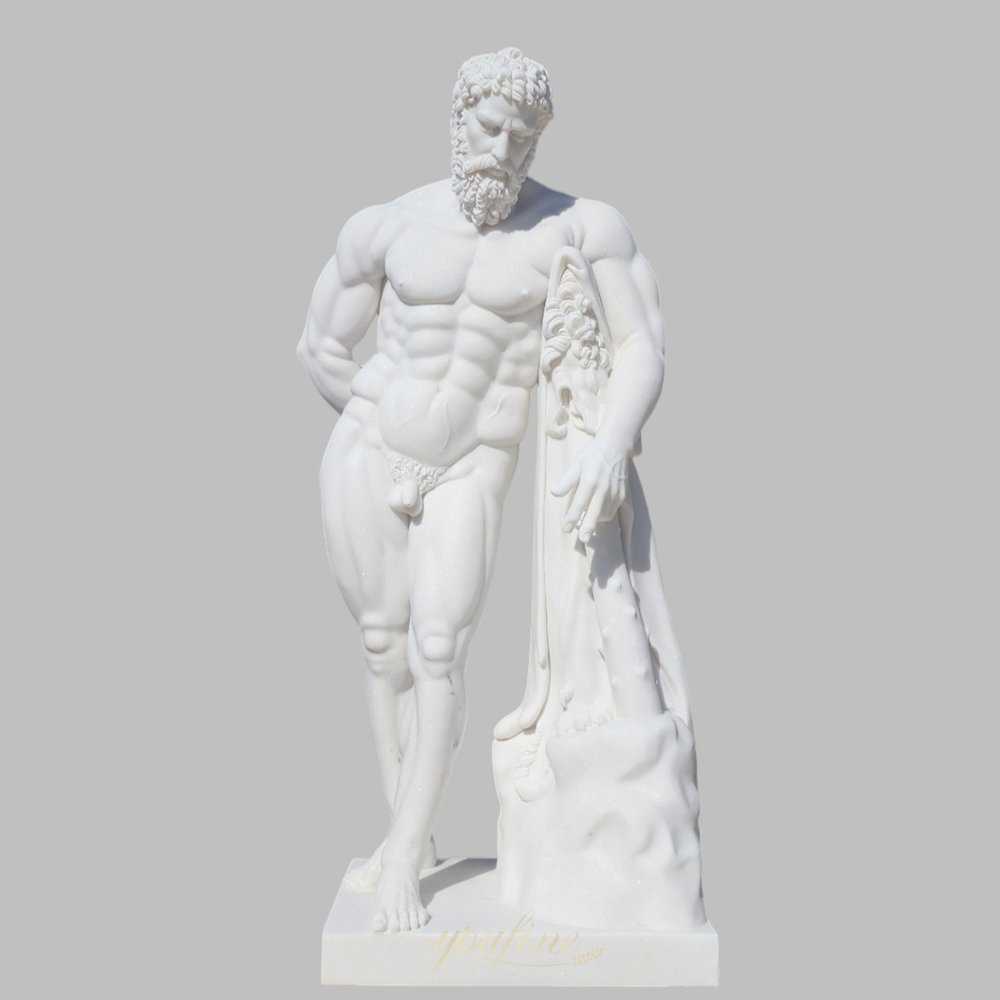
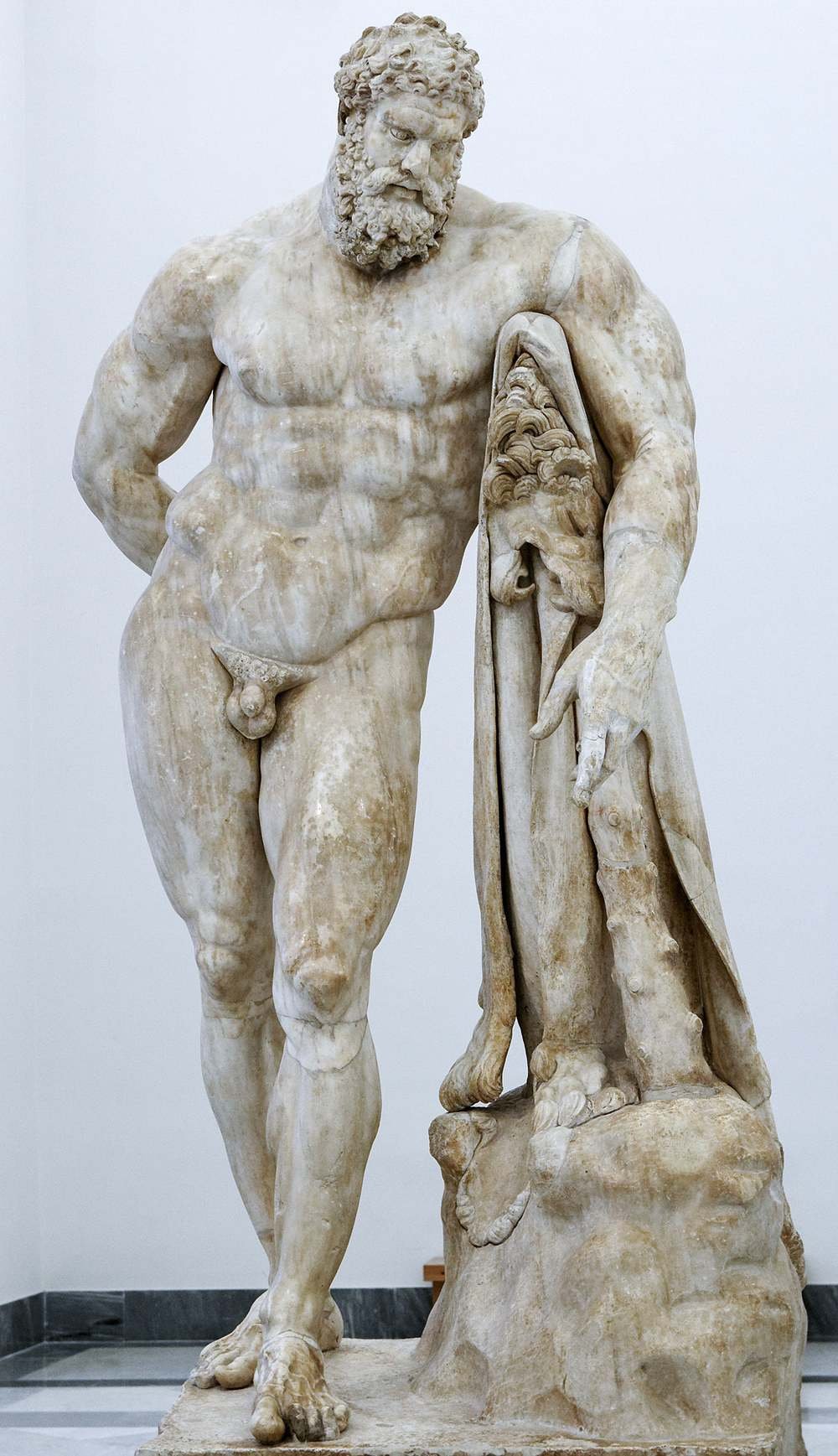
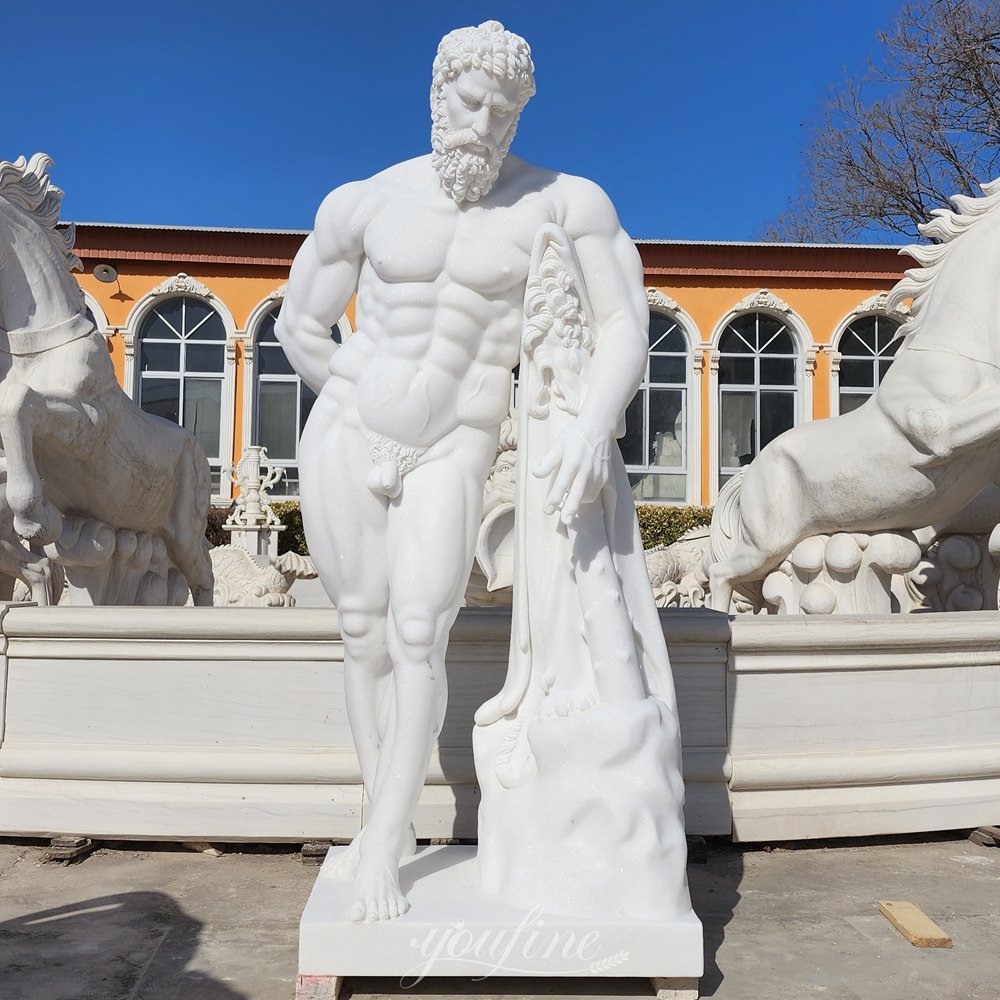
Farnese Hercules Statue (Naples, Italy)
-
Time: Early 3rd century AD (Roman copy after a 4th-century BC Greek original)
-
Artist: Glykon of Athens (Roman copy) / Lysippos (Greek original)
-
Current Location: National Archaeological Museum of Naples, Italy
Mythological & Historical Background
The Farnese Hercules is a monumental Roman marble copy of a lost Greek bronze original designed by the renowned sculptor Lysippos. It portrays Hercules after completing one of his grueling Twelve Labors, leaning wearily on his club while subtly hiding the hard-won golden apples of the Hesperides behind his back. Unearthed from the historic Baths of Caracalla in Rome in 1546, this sculpture soon became one of the greatest discoveries of classical antiquity.
Key Artistic Features
Standing over 3 meters (10 feet) tall, the masterpiece is globally admired for its hyper-exaggerated muscular anatomy and emotional depth. Instead of showing Hercules mid-battle, it captures a rare, intimate moment of complete physical exhaustion after victory. The Nemean lion skin draped over his club and the hidden apples add brilliant symbolic narratives to his stance.
Artistic Significance
Widely regarded as the world’s most famous Hercules statue, the Farnese Hercules became the ultimate blueprint for Renaissance and Neoclassical artists studying heroic anatomy. Today, it remains the most frequently reproduced classical sculpture for premium museums, luxury private estates, and professional sculpture gardens.
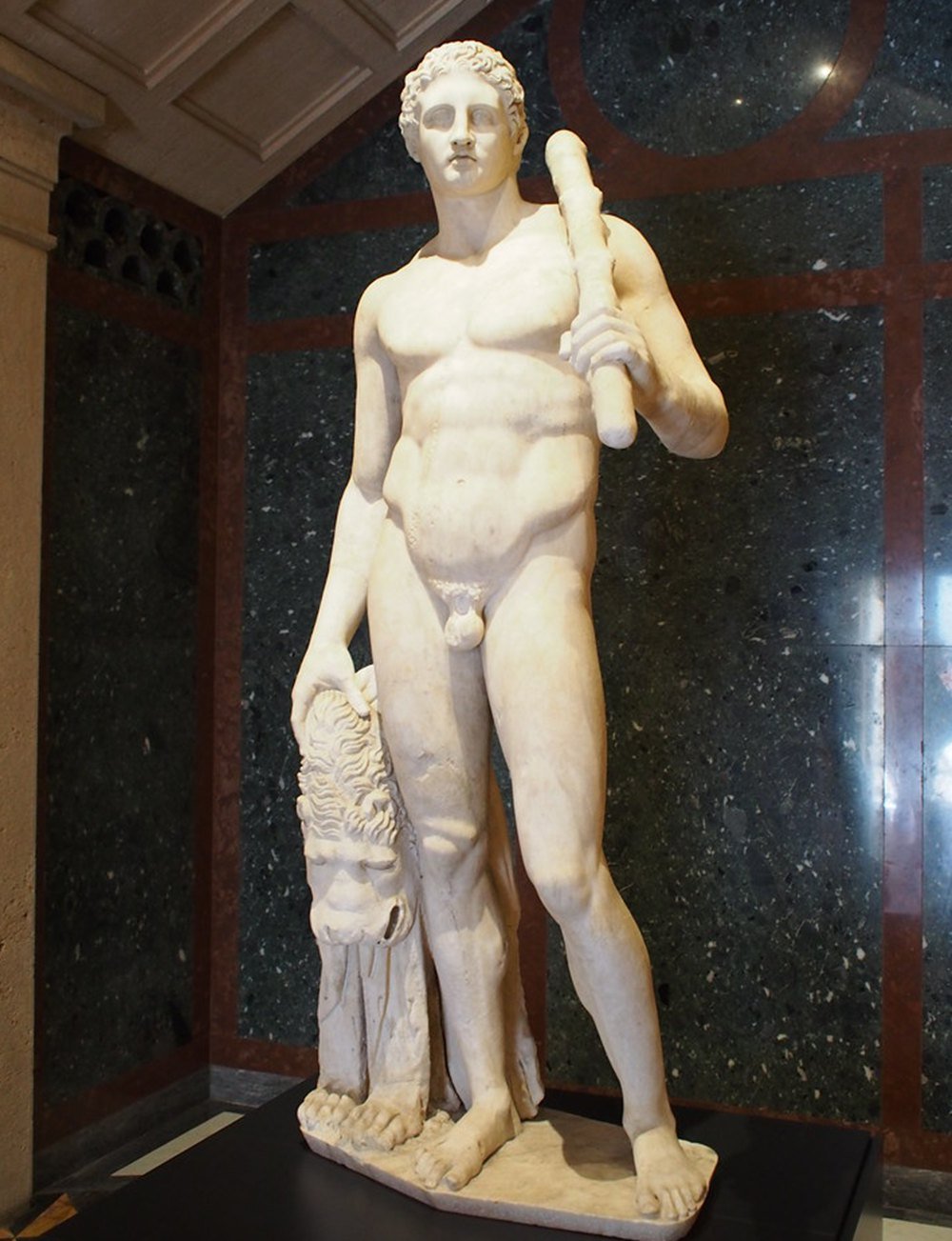
Lansdowne Herakles Youth Statue (Malibu, USA)
-
Time: c. 125 AD (Roman Hadrianic period copy after a 4th-century BC Greek original)
-
Artist: Inspired by Polykleitos or Scopas
-
Current Location: The J. Paul Getty Museum, Getty Villa, California, USA
Mythological & Historical Background
The Lansdowne Herakles is a beautifully preserved Roman marble statue discovered in 1792 near Hadrian’s Villa in Tivoli, Italy. Named after the Marquess of Lansdowne, who held it in his celebrated collection, the sculpture was later acquired by J. Paul Getty. It presents Hercules not as a battle-worn warrior, but as an idealized, radiant youth at the peak of his legendary power.
Key Artistic Features
Unlike the heavily rugged muscle masses of the Farnese Hercules, the Lansdowne Herakles emphasizes balanced proportions, harmonious symmetry, and a graceful stance. Leaning effortlessly with his club resting on his shoulder and the Nemean lion hide draped over his arm, his calm facial expression reflects the high Classical Greek pursuit of ideal beauty.
Artistic Significance
The Lansdowne Herakles is highly celebrated for masterfully blending heroic raw strength with refined aristocratic elegance. It stands as a crown jewel of ancient marble preservation, showing the immense respect Roman master carvers held for classical Greek artistic traditions.
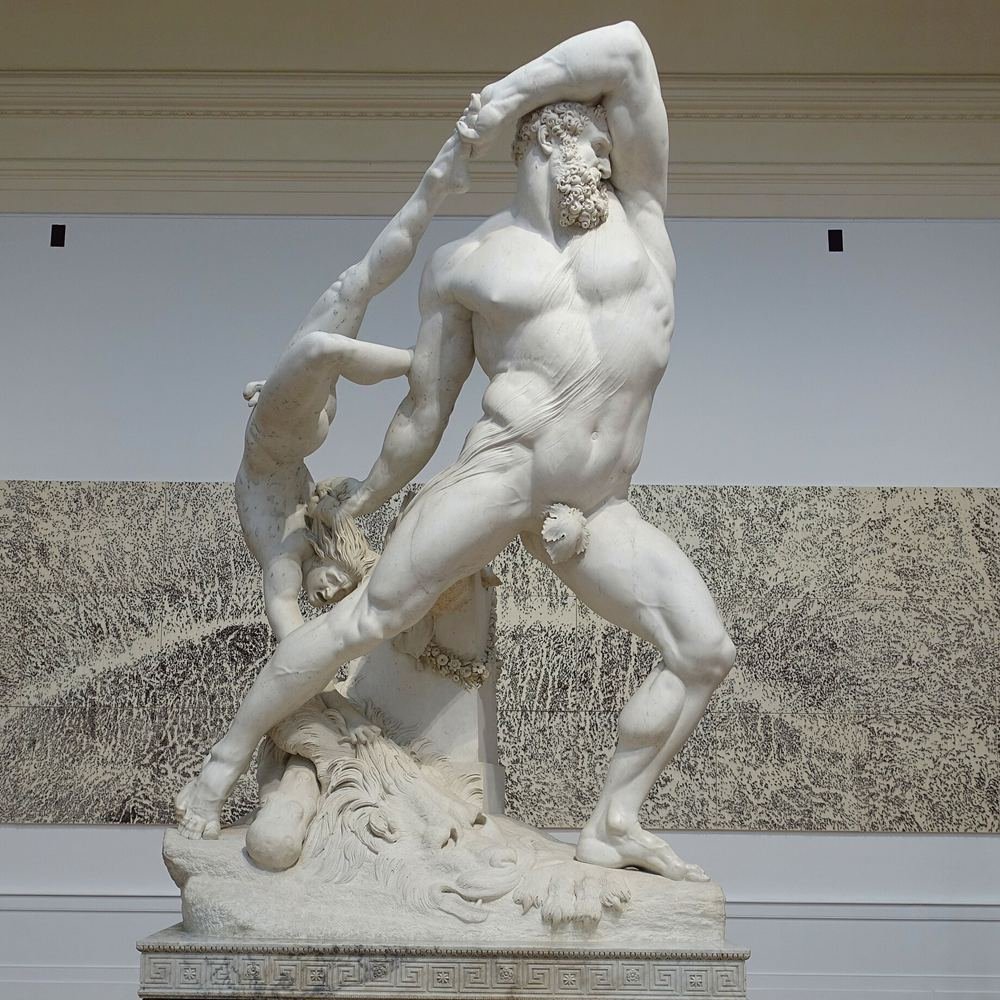
Canova Hercules and Lichas Sculpture (Rome, Italy)
-
Time: 1795–1815
-
Artist: Antonio Canova
-
Current Location: Galleria Nazionale d’Arte Moderna, Rome, Italy
Mythological & Historical Background
This breathtaking marble sculpture illustrates the tragic climax where Hercules, driven completely insane by the agonizing pain of the poisoned Robe of Nessus, turns on his innocent young servant Lichas. Believing Lichas to be the architect of his betrayal, Hercules catches him by the foot and prepares to hurl him violently into the sea. Neoclassical pioneer Antonio Canova turned this myth into an explosive study of human emotion.
Key Artistic Features
The composition is a whirlwind of dynamic tension, with Hercules twisting his massive, hyper-extended torso as he swings the helpless, terrified Lichas into the air. Canova showcases an unparalleled mastery of marble execution here—contrasting the absolute, terrifying muscle power of the hero with the soft, suspended vulnerability of the youth.
Artistic Significance
Hercules and Lichas is universally considered one of Canova’s absolute masterpieces. Its incredibly bold geometry proved that Neoclassical sculpture was not just about static calmness, but could express intense, theatrical passion and structural perfection, heavily inspiring monumental 19th-century European stone-carving.
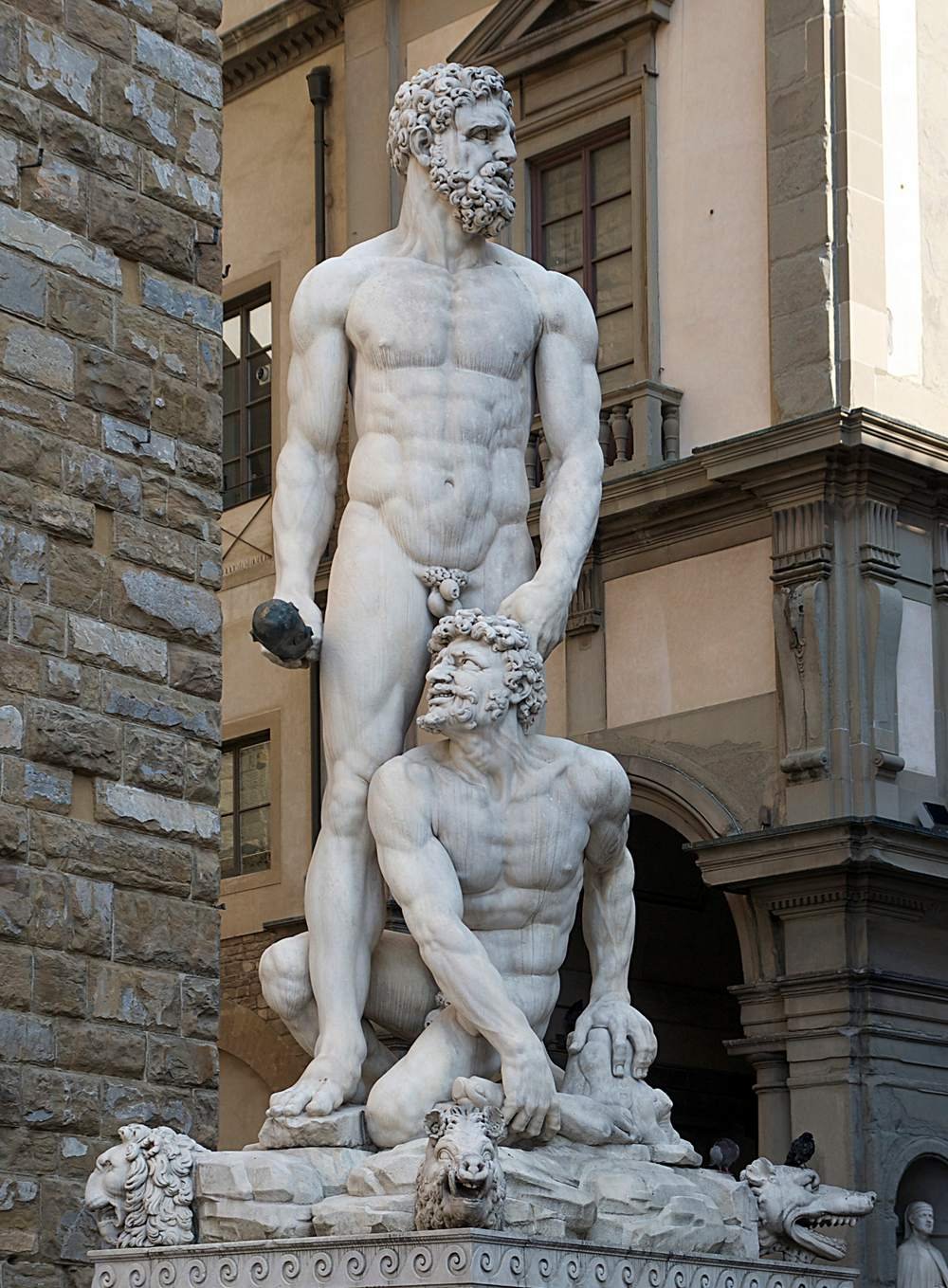
Bandinelli Hercules and Cacus Statue (Florence, Italy)
-
Time: 1525–1534
-
Artist: Baccio Bandinelli
-
Current Location: Piazza della Signoria, Florence, Italy
Mythological & Historical Background
Commissioned by the powerful Medici family, Hercules and Cacus depicts Hercules defeating the fire-breathing monster Cacus, who had dared to steal the hero’s sacred cattle. Strategically erected in Florence’s central public square, the monument was designed to symbolize the physical triumph of political justice and stability over lawless tyranny.
Key Artistic Features
Hercules dominates the visual space with an upright, unyielding posture, pinning the defeated, grimacing Cacus beneath his heavy stance. The heavily defined muscular blocks, dramatic square shoulders, and stone textures reflect a deep blend of classical motifs and the intense, competitive spirit of High Renaissance Mannerism.
Artistic Significance
Standing proudly right next to the entrance of the Palazzo Vecchio—and often historically compared with Michelangelo’s David—this sculpture remains one of Florence’s most critical public architectural landmarks. It is an exceptional case study in utilizing Greek mythology for grand political messaging through monumental stone art.
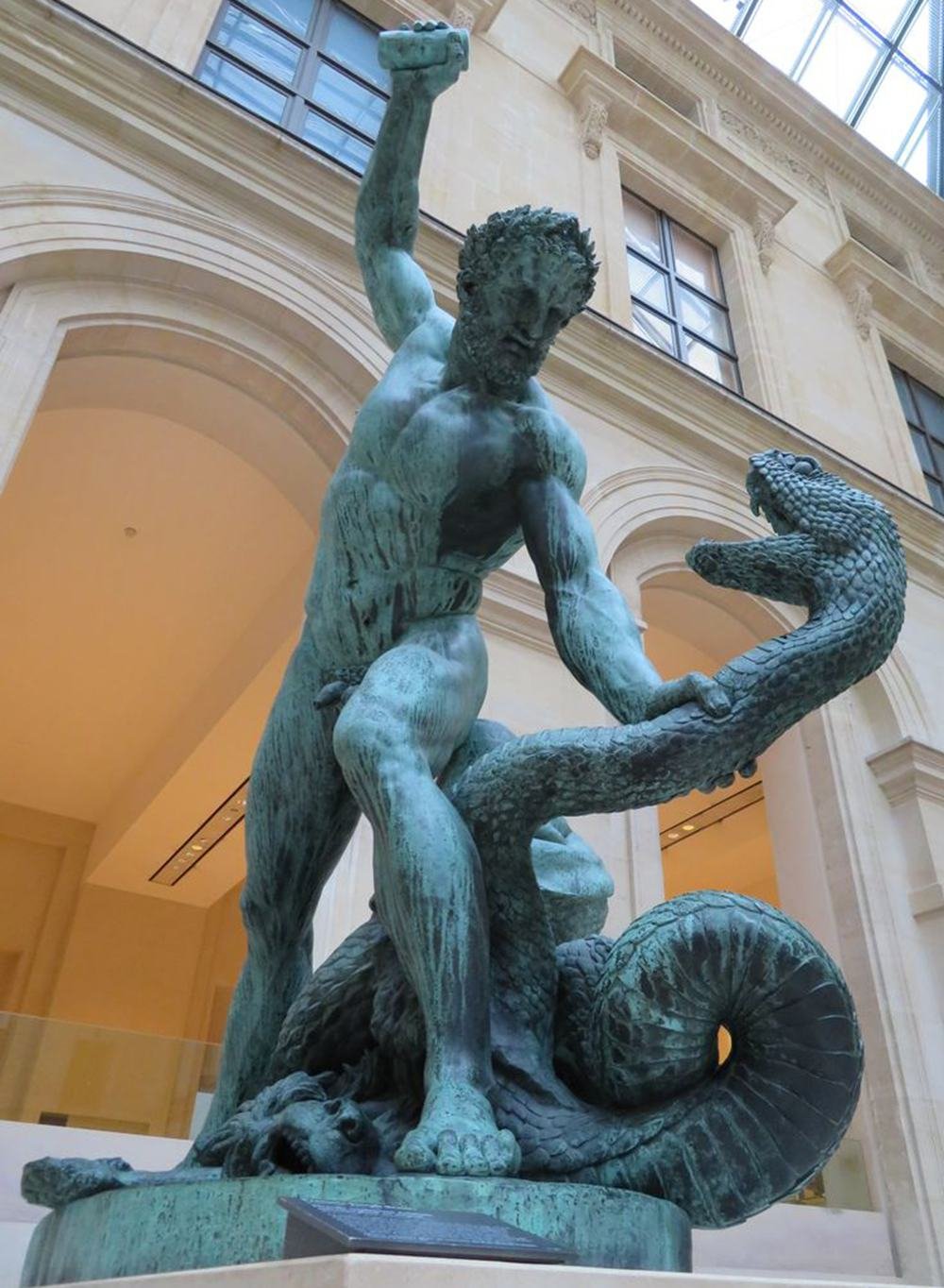
Pierre Puget Hercules and Hydra Statue (Paris, France)
-
Time: c. 1659–1660
-
Artist: Pierre Puget (Designed) / Francois Girardon (Completed)
-
Current Location: Louvre Museum, Paris, France
Mythological & Historical Background
This stunning bronze monument depicts Hercules engaged in his Second Labor: destroying the multi-headed Lernean Hydra, a beast whose heads would multiply whenever severed. To stop the monster, Hercules fights it with raw physical force and a heavy club. This work was initially commissioned for the prestigious Château de Vaudreuil before finding its permanent home in the French royal collections.
Key Artistic Features
Cast in brilliant bronze with a striking weathered green patina, this sculpture features Hercules leaning forward in a highly dynamic, diagonal stance. He grips one of the slithering, powerful serpent necks with his left hand while raising his heavy club high into the air for a final blow. The composition wonderfully balances the chaotic coils of the snake with the clean, structured musculature of the hero.
Artistic Significance
Pierre Puget’s Hercules and the Hydra is celebrated as a magnificent example of the French Baroque style. It perfectly captures how bronze casting allows for open, gravity-defying compositions that would be impossible in marble, making it a highly sought-after design template for luxury outdoor fountain centerpieces and estate roundabouts.
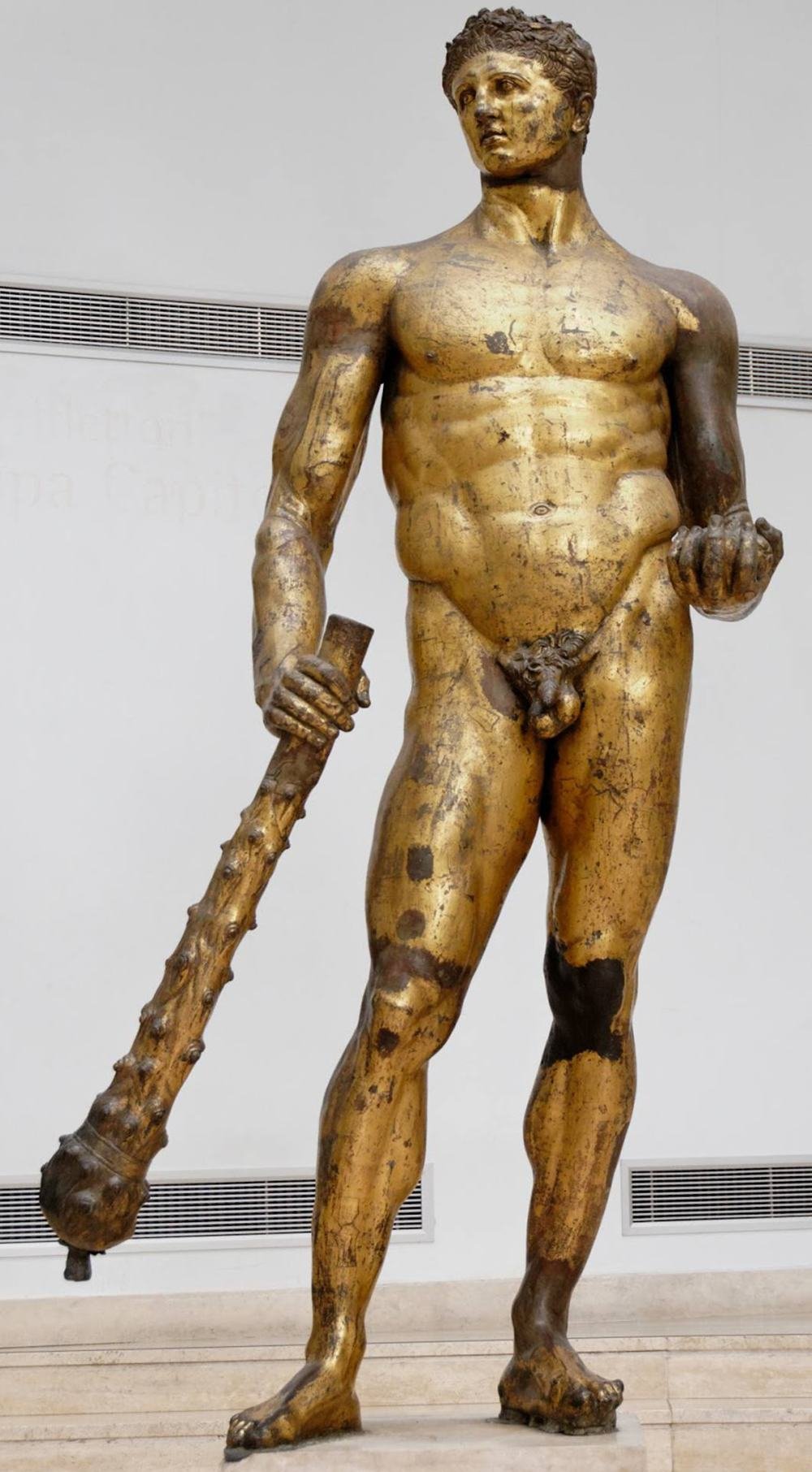
Hercules of the Forum Boarium (Rome, Italy)
-
Time: 2nd century AD (Roman Imperial Period)
-
Current Location: Capitoline Museums, Rome, Italy
Mythological & Historical Background
Discovered during the 15th century in the Forum Boarium (the ancient Roman cattle market), the Capitoline Hercules is a rare, exceptionally well-preserved gilded bronze statue. It highlights the deeply rooted, widespread religious cult of Hercules within the Roman Empire, where merchants and rulers worshipped him as a bringer of luck and victory.
Key Artistic Features
Unlike weathered stone, this Hercules of the Forum Boarium statue retains a stunning, polished metallic presence. Hercules is portrayed standing confidently, holding the golden apples in his left hand while his right hand holds his club. The smooth bronze contours create a lifelike, reflective play of light across his chest and torso, offering an entirely different sensory experience compared to traditional marble carvings.
Artistic Significance
As one of the absolute finest surviving ancient gilded bronze statues of Hercules in existence, this piece serves as a direct technical reference for historical metal-casting. It remains a prime example of the luxury and grandeur that ancient Roman bronze masters could achieve.
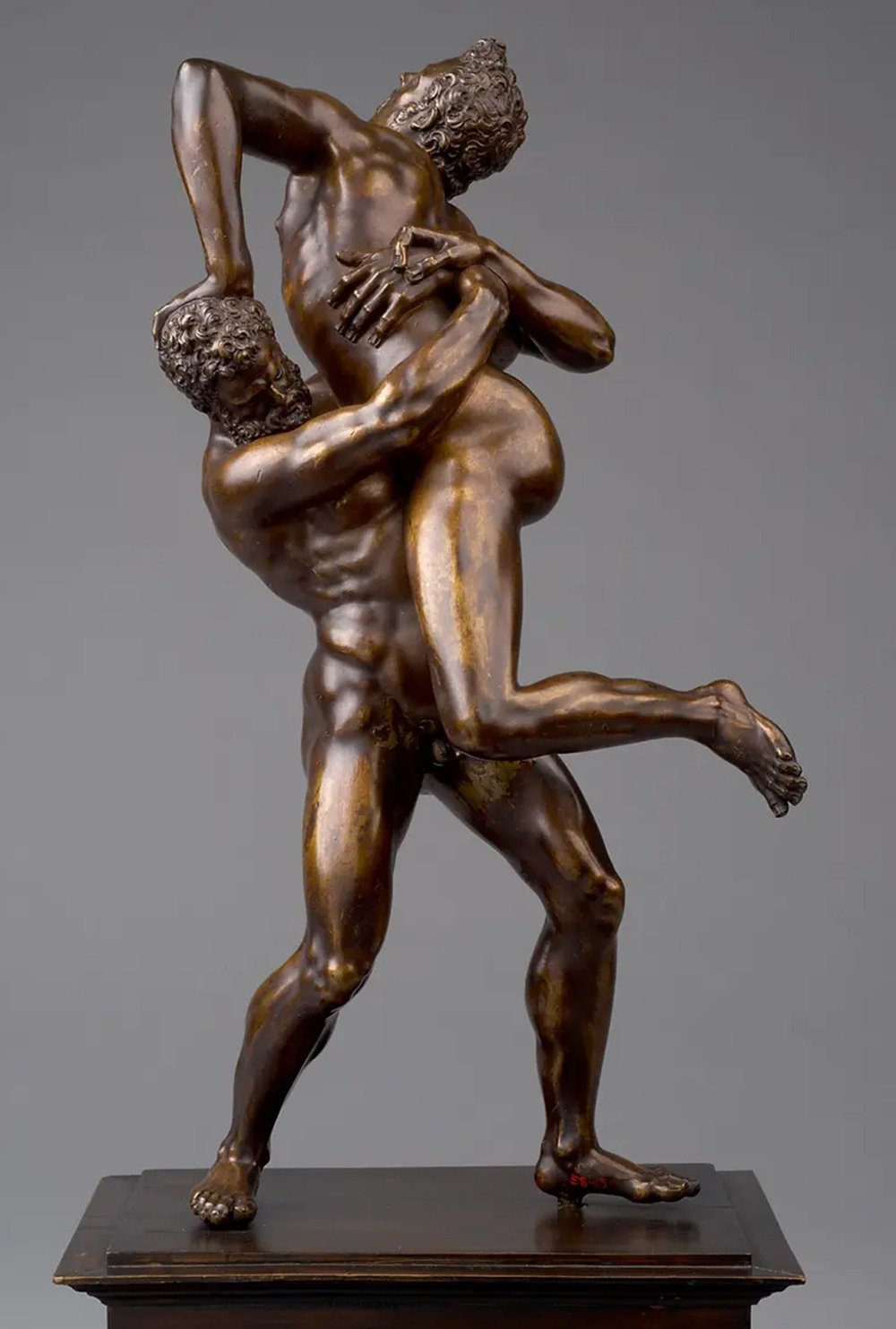
Giambologna Hercules and Antaeus Statue (Vienna, Austria)
-
Time: c. 1578–1580
-
Artist: Giambologna (Jean de Boulogne)
-
Current Location: Kunsthistorisches Museum, Vienna, Austria
Mythological & Historical Background
This sculpture captures the famous wrestling match between Hercules and the giant Antaeus, who remained completely invincible as long as he maintained physical contact with his mother, the Earth (Gaia). Recognizing this secret, Hercules smartly hoisted the giant off the ground, draining his magical energy to crush him mid-air.
Key Artistic Features
Giambologna masterfully pioneered the famous Figura Serpentina (serpentine line) in this bronze. He arranged the two figures in an intertwined, vertical spiral that forces viewers to walk entirely around the piece to capture its full energy. The dramatic arch of Antaeus’s back and the locked grip of Hercules create an unmatched sense of fluid motion and intense physical straining.
Artistic Significance
This masterpiece is widely considered one of the late Renaissance’s crowning achievements in small-to-medium-scale bronze casting. Its revolutionary multi-frontal viewpoint heavily broke away from flat compositions, laying the direct artistic foundations for later Baroque giants like Gian Lorenzo Bernini.
Cerberus and Hercules Statue (Vienna, Austria)
-
Time: c. 1893
-
Artist: Anton Schmidgruber
-
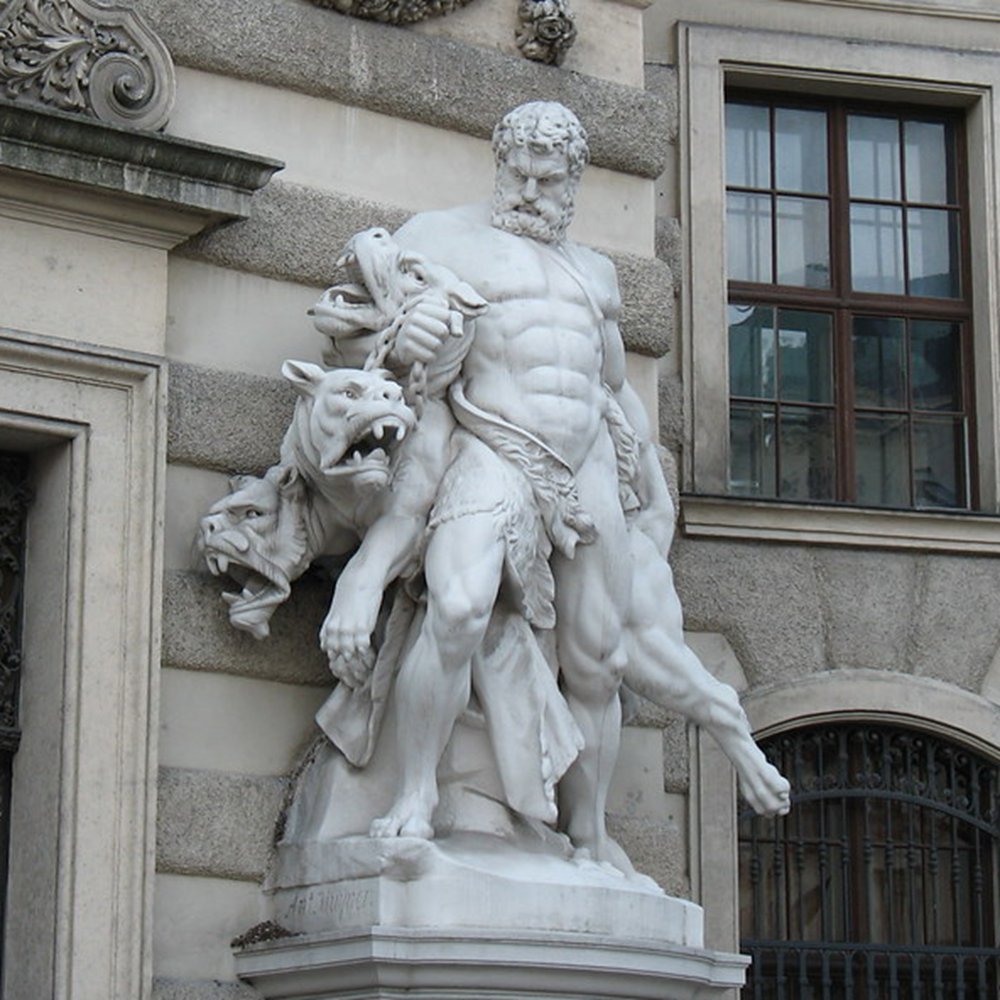
Current Location: Hofburg Palace (Michaelertor), Vienna, Austria
Mythological & Historical Background
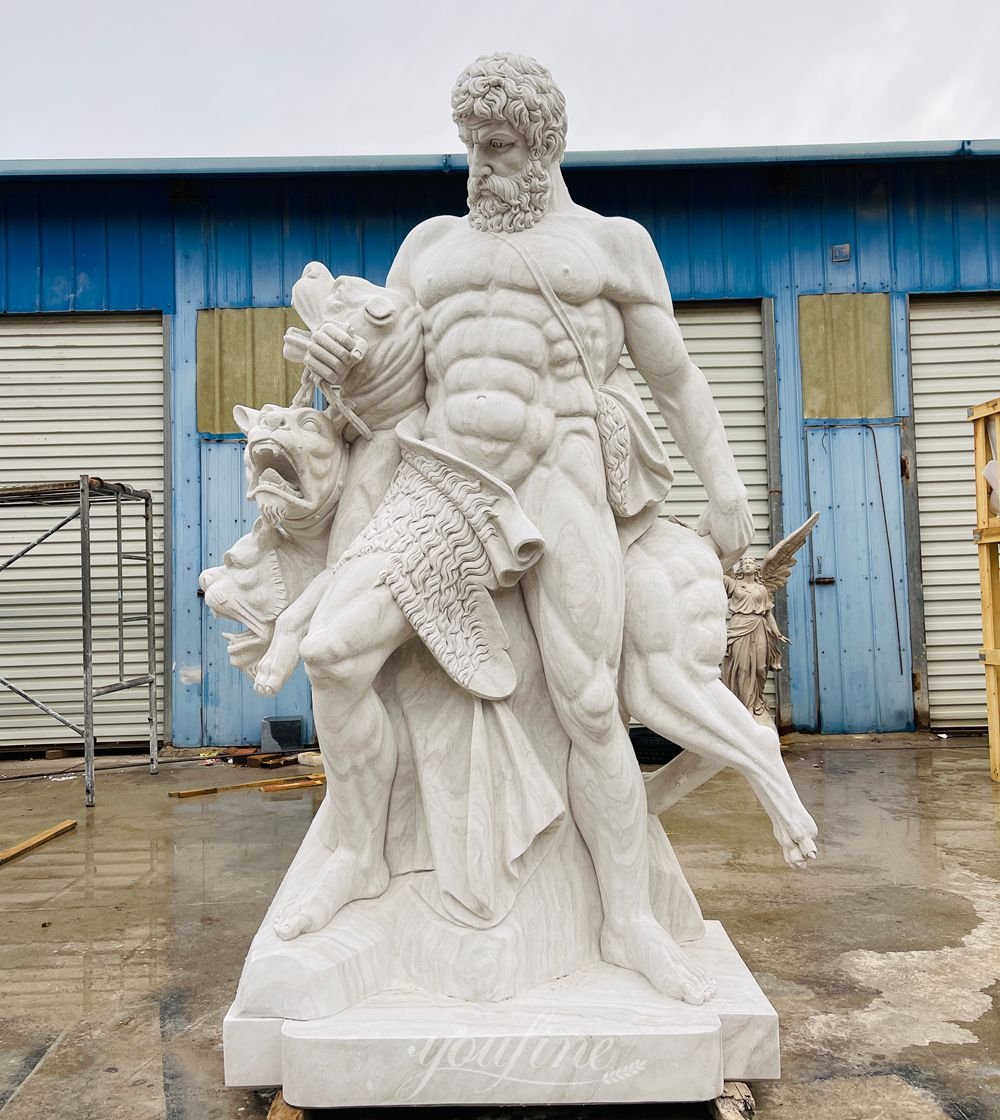
This colossal architectural sculpture represents Hercules’ Twelfth and final Labor: descending into the Underworld to capture Cerberus, the ferocious three-headed hound that guards the gates of the dead. Granted permission by Hades on the condition that he use no weapons, Hercules subdues the mythical beast using nothing but his sheer, unadulterated physical power.
Key Artistic Features
Carved out of premium, heavy-grain architectural marble, this statue is designed to fit seamlessly into a grand palace facade. Hercules is sculpted with massive, block-like core muscles and a thick, curly beard, exuding absolute authority. He firmly restrains the lunging, snapping heads of the three-headed dog with chains and brute force, creating a thrilling contrast between stone stability and beastly rage.
Artistic Significance
Symmetrically integrated into the grand triumphal arches of Vienna’s Hofburg Imperial Palace, this work is a legendary example of late 19th-century European historicist architecture. It serves as the ultimate design standard for luxury entryways, heavy architectural alcoves, and exterior wall niches for high-end manors.
Hercules and Diomedes Sculpture (Florence, Italy)
-
Time: c. 1560–1584
-
Artist: Vincenzo de’ Rossi
-
Current Location: Palazzo Vecchio, Florence, Italy
Mythological & Historical Background
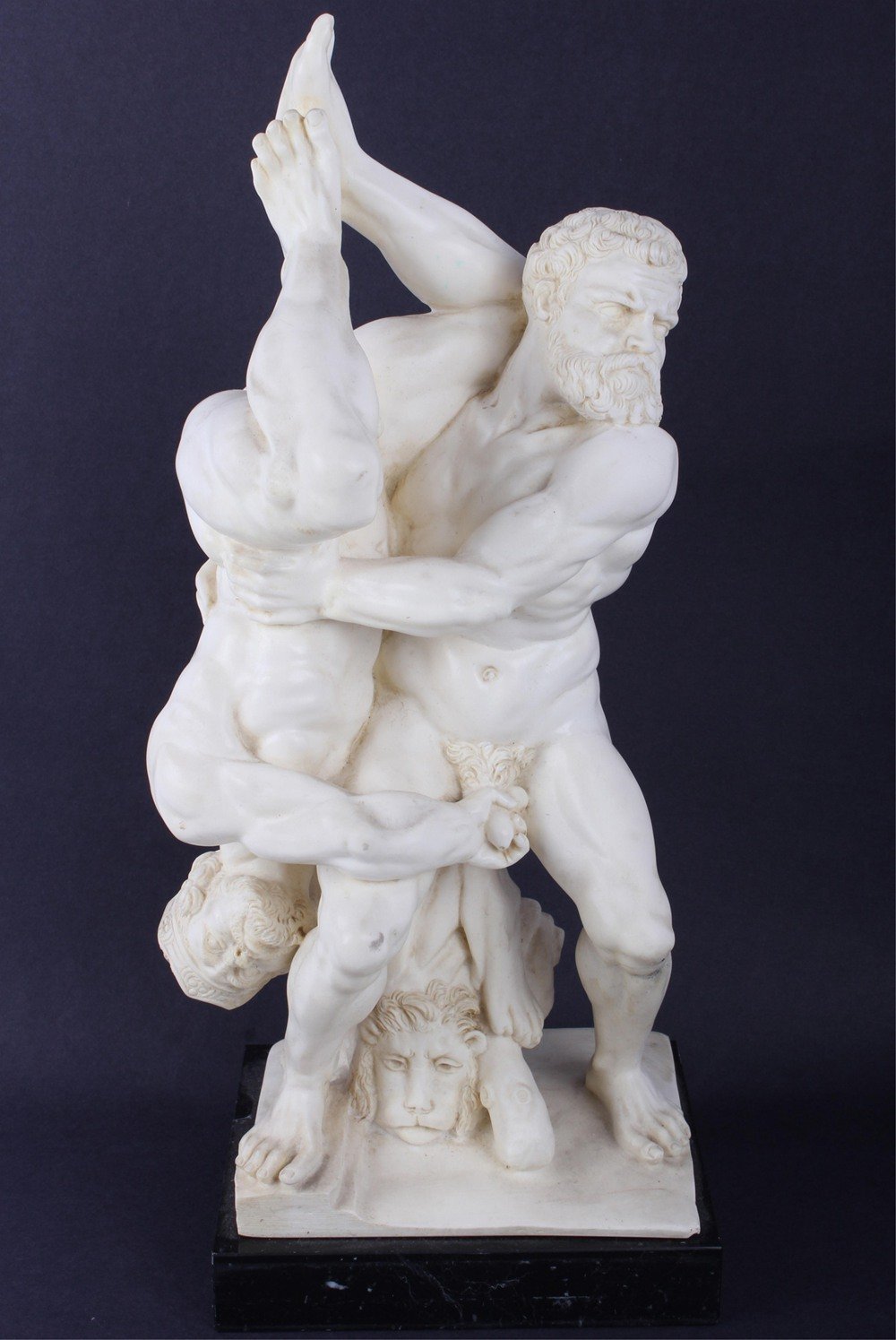
This startling marble monument is based on Hercules’ Eighth Labor, where he was tasked with stopping King Diomedes of Thrace, who notoriously fed innocent guests to his man-eating mares. Hercules famously overpowered the cruel tyrant and fed him to his own horses, resolving the conflict through poetic and brutal justice.
Key Artistic Features
Vincenzo de’ Rossi crafted a shockingly bold, vertical composition where Hercules grips Diomedes completely upside down, preparing to slam him into the ground. The intense muscular intertwining, gravity-defying balance, and deep, hand-carved drapery shadows showcase the absolute peak of Italian Mannerist exaggeration and anatomical showmanship.
Artistic Significance
Housed in the majestic Hall of the Five Hundred inside Florence’s Palazzo Vecchio, this sculpture is celebrated for its sheer compositional audacity. It proves that classical myth could be reinterpreted into breathtakingly complex, high-energy shapes that push the physical boundaries of marble carving.
Hercules and Centaur Nessus Statue (Florence, Italy)
-
Time: 1595–1599
-
Artist: Giambologna (Jean de Boulogne)
-
Current Location: Loggia dei Lanzi, Florence, Italy
Mythological & Historical Background
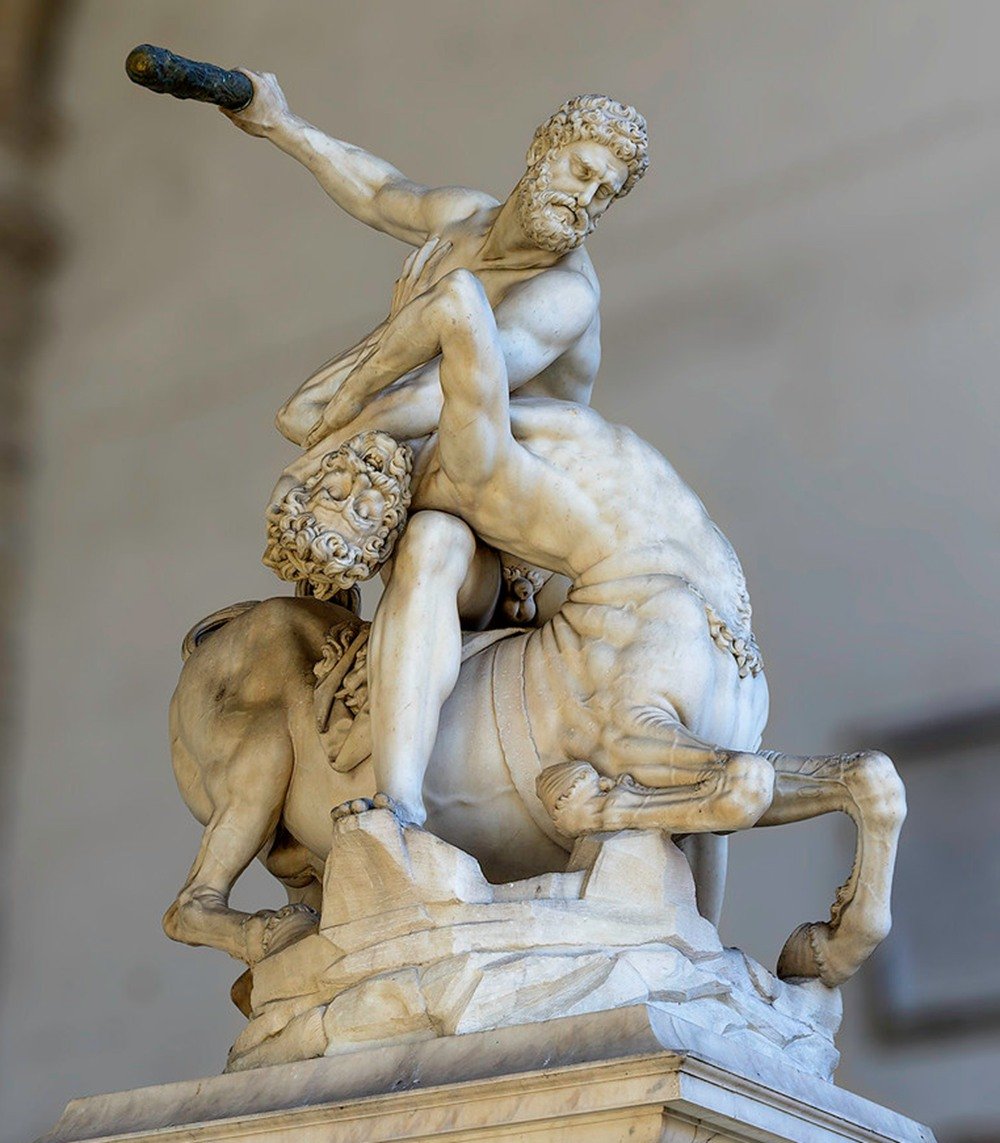
This monumental public sculpture captures the deadly combat between Hercules and the centaur Nessus, who had deceitfully attempted to abduct Hercules’ wife, Deianira. Commissioned directly by Grand Duke Ferdinando I de’ Medici, this marble group captures the precise climax of the myth, representing the ultimate victory of civilized heroics over wild, animalistic instincts.
Key Artistic Features
Hand-carved from a single, pristine block of Carrara marble, Giambologna creates an intense, violent diagonal contrast between Hercules’ stable, powerful legs and the contorted, twisting horse body of the centaur. The work utilizes a brilliant multi-frontal design, ensuring that every angle offers a completely unique view of the muscles shifting under tension.
Artistic Significance
Permanently installed under the prestigious open-air arches of the Loggia dei Lanzi in Florence, this work is universally celebrated as one of the world’s finest large-scale marble masterpieces. Its explosive energy heavily bridged the historical gap between Renaissance classicism and the theatrical passion of the upcoming Baroque era.
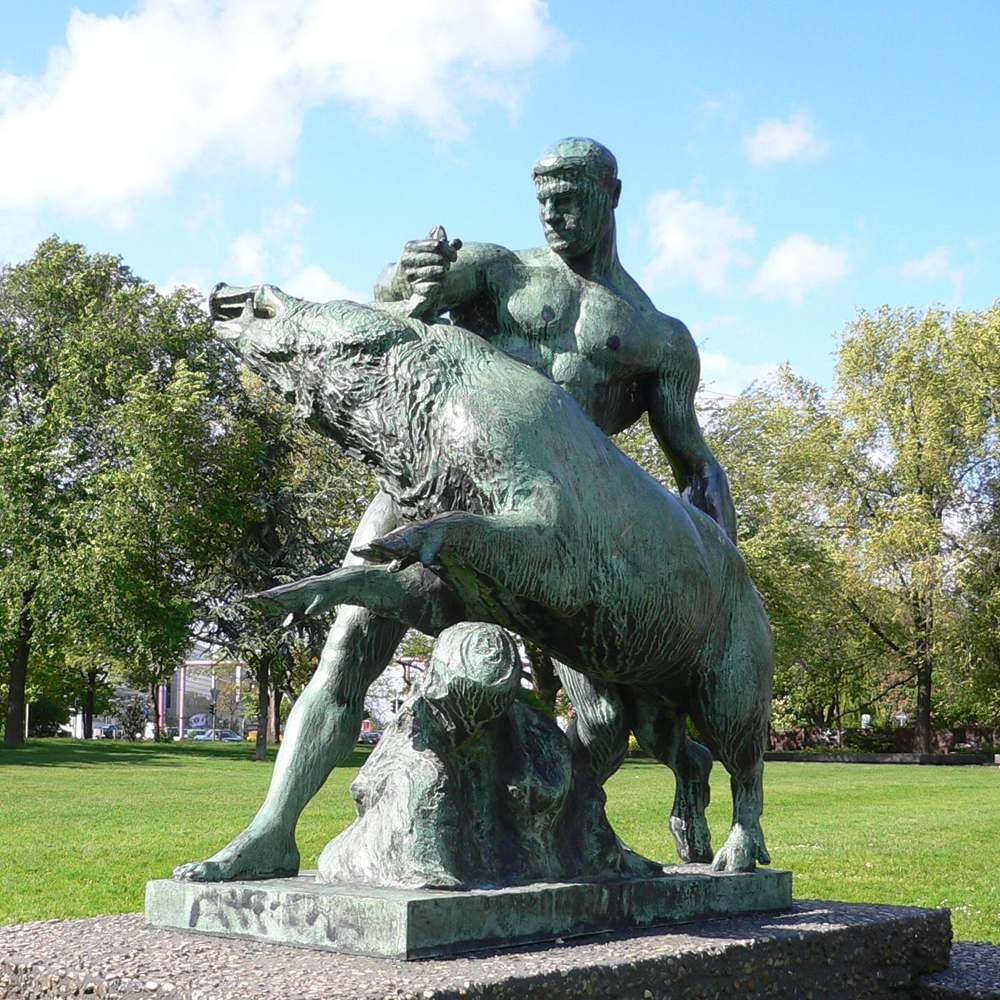
Bronze Hercules and the Erymanthian Boar Statue (Lützowplatz, Berlin)
-
Time: 1904 (German Neo-Classical Masterpiece)
-
Artist: Louis Tuaillon
-
Current Location: Lützowplatz, Berlin-Tiergarten, Germany
Mythological & Historical Background
This powerful public artwork captures the climax of Hercules’ Fourth Labor: the live capture of the ferocious Erymanthian Boar. Having driven the monstrous wild beast out of its mountain lair into the thick winter snow to exhaust it, Hercules uses his raw, mythic strength to overpower the creature. Tuaillon highlights the exact historical moment of subjugation—where brute animal fury is completely tamed by heroic, tactical dominance.
Key Artistic Features
Cast in premium dark-patinated bronze, this life-sized monument is renowned for its intense muscular tension. Hercules is depicted standing behind the massive boar, firmly grappling its body while using his left arm to press the beast’s powerful neck and shoulder down against a rugged stone base. The sculpture features clean, powerful muscular lines and a stripped-back, monumental realism that perfectly contrasts the smooth, strained anatomy of the hero with the heavy, coarse mass of the wild boar.
Artistic Significance & Commercial Value
Louis Tuaillon’s masterpiece at Lützowplatz is globally celebrated as one of the finest 20th-century expressions of heroic tension in open-air public art. For professional land developers and private estate owners seeking high-end garden layouts, this specific “grounded wrestling stance” serves as the premier custom design blueprint. It provides exceptional visual weight and architectural harmony when cast as a central outdoor bronze monument or stone centerpiece for luxury botanical gardens and courtyard entries.
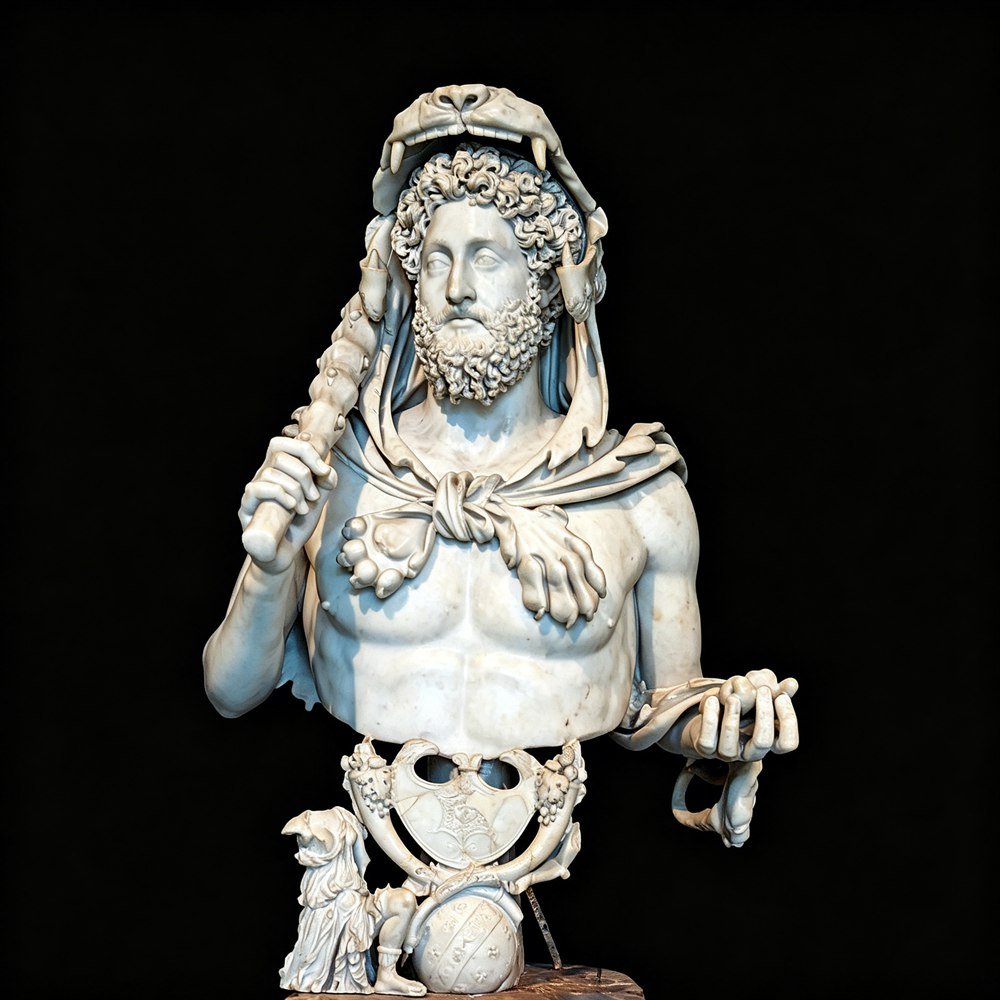
Commodus Hercules Bust (Rome, Italy)
-
Time: c. 192 AD (Roman Imperial Period)
-
Current Location: Capitoline Museums, Rome, Italy
Mythological & Historical Background
This world-famous marble masterpiece is a unique allegorical portrait. The infamous Roman Emperor Commodus (who was completely obsessed with gladiatorial combat) had himself sculpted in the literal guise of Hercules to claim divine status, wearing the hero’s legendary attributes to cement his absolute authority over Rome.
Key Artistic Features
The Commodus as Hercules bust is renowned for its incredible level of preservation and luxurious surface finish. It depicts Commodus’ face framed directly inside the gaping jaws of the Nemean Lion skin. In his hands, he elegantly holds Hercules’ signature club and the golden apples. The base is an architectural marvel of its own, supported by two kneeling Amazons, a cornucopia, and a sacred Roman shield.
Artistic Significance
This bust is regarded by art historians as one of the absolute greatest masterpieces of Roman imperial portraiture. Its intricate hair ringlets, polished marble sheen, and rich mythological symbolism make it one of the most historically significant and visually striking busts to replicate for sophisticated luxury interiors and galleries.
How to Choose the Right Hercules Statue Replica?
Selecting the perfect Hercules replica depends on your display environment, material preference, and budget. Here is a streamlined guide to help you make the best choice:
-
Match the Style to Your Space
Different designs suit different environments:
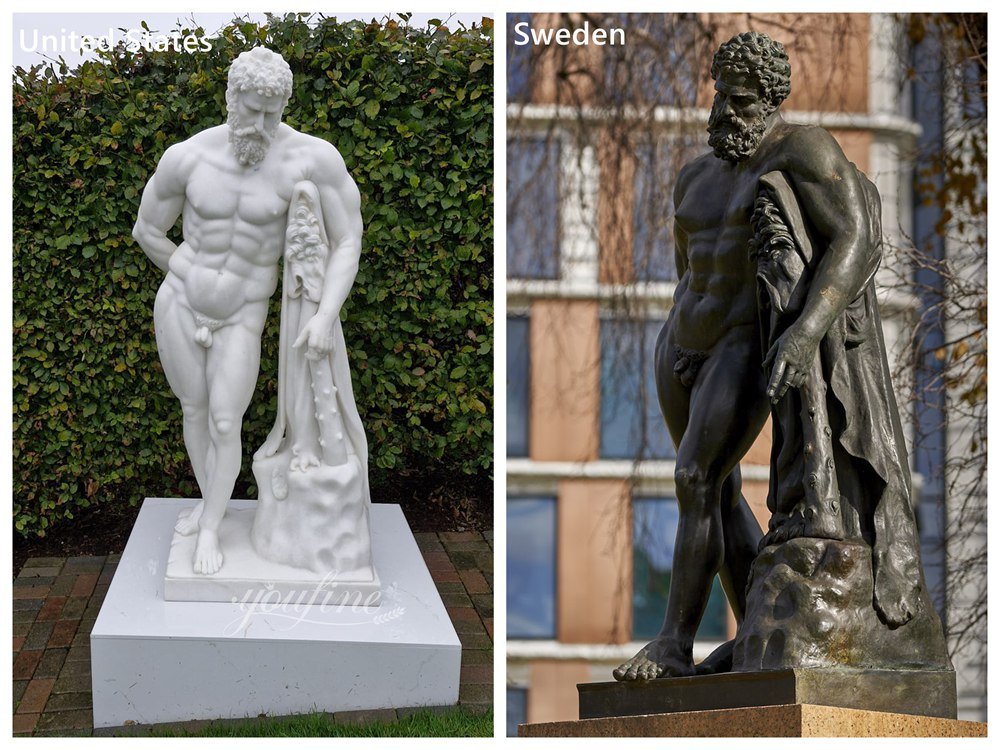
Farnese Hercules: A timeless centerpiece for luxury villas, museums, and classical gardens.
Lansdowne Herakles: An elegant, balanced design ideal for refined interiors and galleries.
Dynamic Groups (e.g., Hercules and Lichas): Best for large landscapes, hotels, and public plazas.
Action Scenes (e.g., Fighting the Nemean Lion): Perfect as powerful outdoor focal points in parks. -
Select the Right Material
Marble: Offers a timeless, classical aesthetic, perfect for gardens, villas, churches, and indoor artistic settings.
Bronze: Highly durable and weather-resistant, making it ideal for outdoor public spaces. It also develops a beautiful natural patina over time. -
Choose the Appropriate Size
Proper scale and pedestal height are crucial for visual balance:
80–120 cm (2.5–4 ft): Ideal for indoor spaces, offices, and private collections.
150–180 cm (5–6 ft): Standard life-size for gardens and villas.
Over 2 meters (6.5 ft): Large-scale projects for hotels, estates, and public spaces. -
Consider Your Budget
Prices vary based on size, material, and detail. A standard life-size marble or bronze statue typically ranges from $1,500 to $3,500. Larger or highly customized pieces will cost more. Setting a budget early helps narrow down your options. -
Evaluate Craftsmanship Quality
To ensure a museum-level replica rather than a basic decoration, inspect the following details:
Accurate muscular anatomy and classical proportions.
Realistic facial expressions and emotional depth.
Fine carving details on the lion skin, club, and drapery.
Smooth surface finishing and faithful interpretation of the original design.
Frequently Asked Questions
What does a Hercules statue symbolize?
It symbolizes raw physical strength, mental resilience, and triumph over adversity. In high-end landscaping, it serves as a classical emblem of protection and architectural stability.
Why is Hercules usually shown with a lion’s skin and club?
The lion skin represents his victory over the Nemean Lion (his first labor), while the club symbolizes his extraordinary power. Together, they are his signature visual attributes.
Which is the most famous Hercules statue?
The Farnese Hercules in Naples is universally the most famous, renowned for its massive scale, hyper-realistic muscular anatomy, and profound influence on classical art.
Why are there so many Hercules statues found in history?
Hercules embodied the ultimate heroic ideals of perseverance and godlike strength, making him the most frequently replicated mythological figure from antiquity to the Renaissance.
Are Hercules statues suitable for outdoor gardens?
Yes. Premium natural marble versions offer excellent weather resistance and create an elegant European estate atmosphere, while bronze ensures long-term outdoor durability.
Can I commission a custom Hercules statue?
Yes. While preserving original proportions, you can fully customize the dimensions (precise scaling), material selection (Grade A marble), and subtle detail restorations or finishes to fit your project.
Final Thoughts
From the monumental Farnese Hercules to dramatic Renaissance masterpieces, these twelve famous Hercules sculptures demonstrate the lasting influence of Greek mythology on Western art. Each work reflects a different interpretation of the legendary hero while celebrating the timeless ideals of strength, courage, and perseverance.
At YouFine Art Sculpture Gallery, we have over 40 years of experience creating museum-quality marble sculptures and bronze sculptures inspired by classical masterpieces. Whether you need a faithful Hercules replica or a customized masterpiece sculpture, welcome to contact us at any time.