The Bean, officially known as Cloud Gate, is one of the most recognizable contemporary sculptures in the world. Located in Chicago’s Millennium Park, this iconic mirror-polished stainless steel sculpture has transformed the way people experience public art through its unique reflection, interactive design, and seamless craftsmanship.
In this guide, we will explore where The Bean is located, its history, meaning, design techniques, and the influence of mirror-polishing technology on modern sculptures.
Where Exactly is the Bean Located in Chicago?
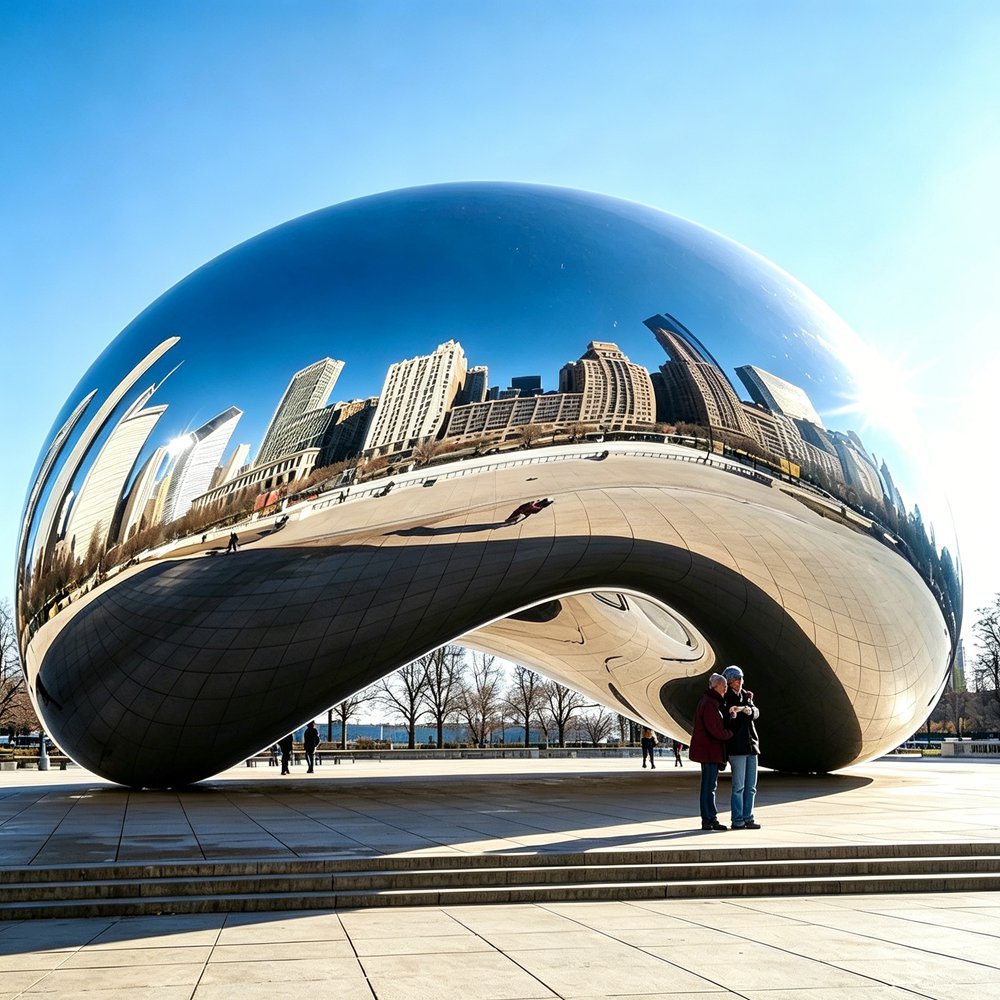
The Bean Sculpture is located in Millennium Park at AT&T Plaza in downtown Chicago, Illinois. Its exact address is 201 E. Randolph Street, Chicago, IL, between Michigan Avenue and Columbus Drive.
What Is The Bean?
The Bean is a monumental public sculpture located in Chicago’s Millennium Park. It is one of the most famous examples of contemporary public art and has become a defining landmark of the city.
Unlike traditional sculptures that are viewed from a distance, Cloud Gate encourages visitors to interact with the artwork. People can walk around it, see their reflections from different angles, and experience how the sculpture changes with the surrounding environment.
The sculpture’s smooth, curved form creates a unique connection between art, architecture, and urban space. It reflects Chicago’s famous skyline, changing weather, and the movement of people around it, making every viewing experience slightly different.
Why Is It Called “The Bean”?
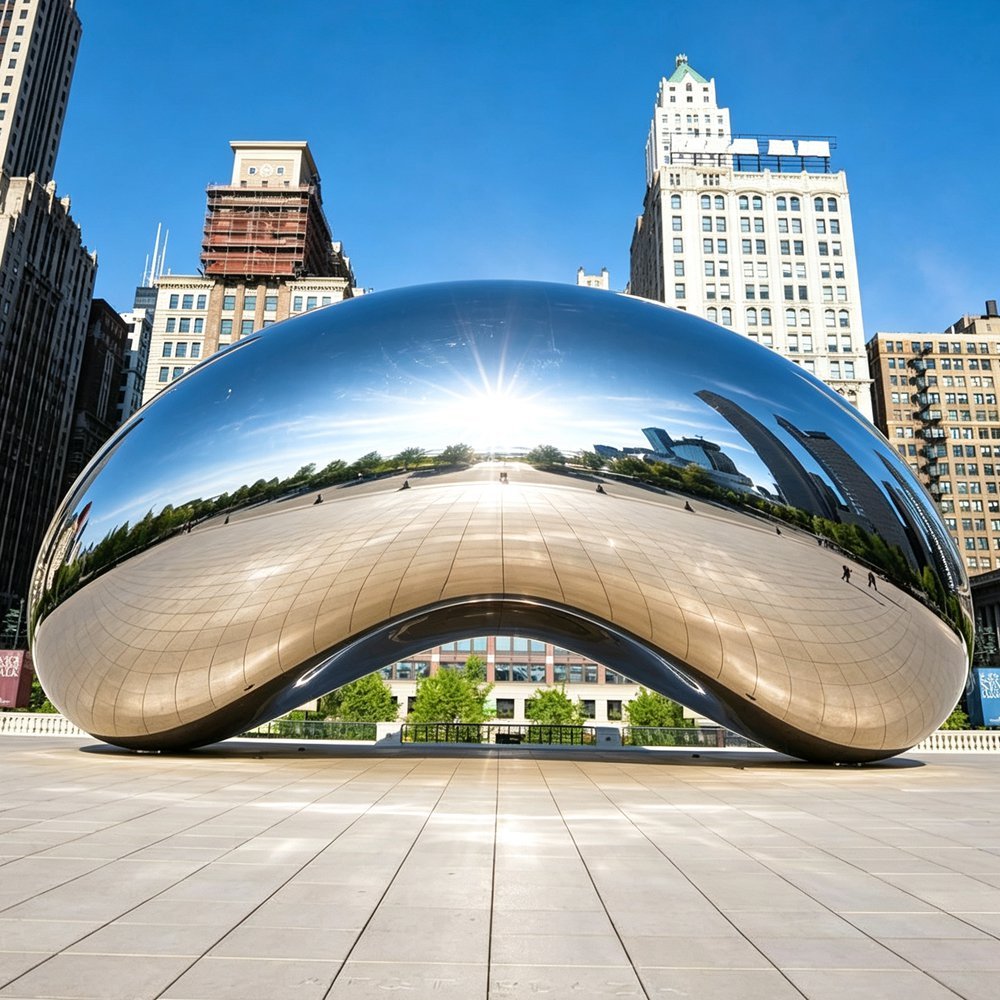
Although its official name is Cloud Gate, the sculpture is widely known as “The Bean” because of its distinctive bean-like shape.
The nickname was given by Chicago residents and visitors shortly after the design was revealed. The rounded, curved structure resembles a giant metallic bean, making the name easy to remember and popular among the public.
However, the shape was not designed simply to imitate a bean. Artist Anish Kapoor was inspired by the reflective qualities of liquid mercury. The curved surface was created to distort and reflect the surrounding environment, creating a constantly changing visual experience.
The nickname “The Bean” represents the public’s connection with the sculpture, while “Cloud Gate” reflects the artist’s original artistic concept.
How Big Is The Bean in Chicago?
The Bean is much larger than many visitors expect. Its massive scale is one of the reasons it creates such a powerful visual impact in Millennium Park.
The approximate dimensions of Cloud Gate are:
| Measurement | Size |
|---|---|
| Length | About 66 feet (20 meters) |
| Width | About 42 feet (13 meters) |
| Height | About 33 feet (10 meters) |
| Weight | About 110 tons |
The sculpture’s large arch allows visitors to walk underneath and experience the famous “Omphalos,” the concave area beneath the structure where reflections become dramatically distorted.
Its monumental size, combined with the mirror-like surface, makes Cloud Gate feel both massive and surprisingly interactive.
Who Designed The Bean in Chicago?
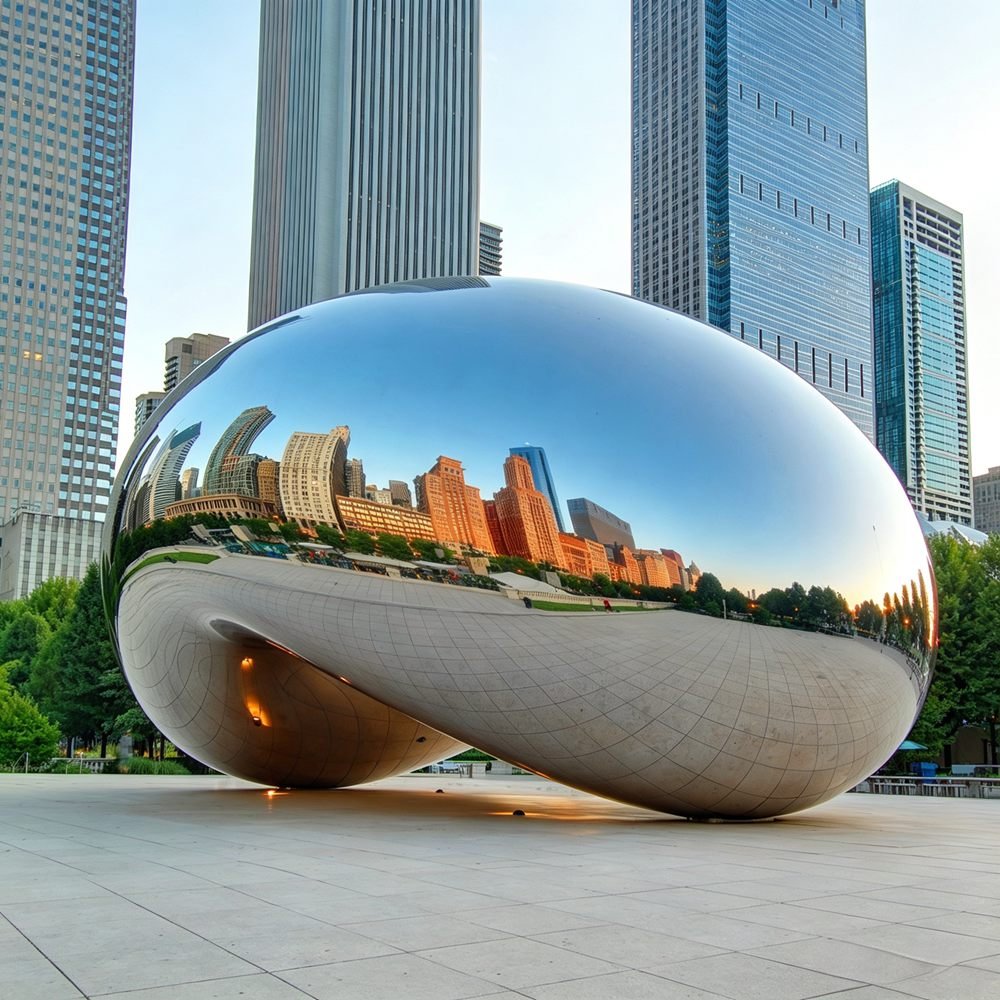
Cloud Gate was designed by Anish Kapoor, a world-renowned sculptor known for creating large-scale contemporary artworks that explore space, reflection, and perception.
Kapoor’s design concept focused on creating a sculpture that would interact with its surroundings rather than exist as an isolated object. Instead of presenting a fixed image, Cloud Gate constantly changes depending on the weather, time of day, and movement of visitors.
The artist wanted the sculpture to create a visual dialogue between:
- The city and its architecture
- The sky and the ground
- The artwork and the people experiencing it
This interactive approach helped Cloud Gate become more than a sculpture—it became a shared public experience.
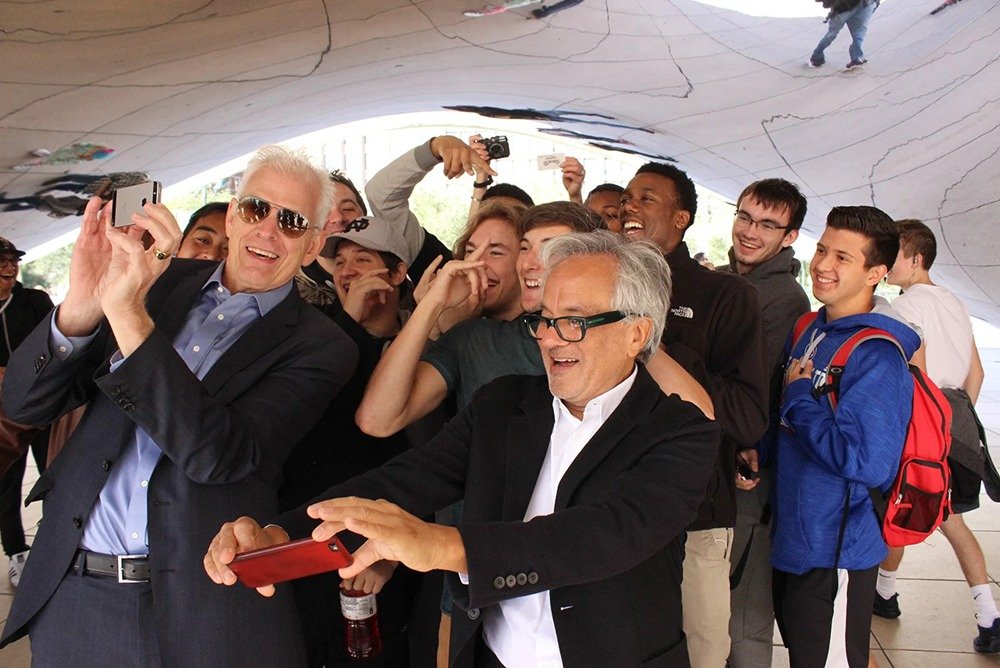
How the Cloud Gate “Big Bean” Was Built
The surface of Chicago’s “Big Bean” is flawlessly seamless, resembling liquid mercury; its construction relies on three key elements:
- 168 Panels of 316L Stainless Steel (Exterior): High-quality, marine-grade steel was selected for its superior rust resistance. The panels, ranging from 6 to 10 millimeters in thickness, accommodate thermal expansion and contraction across extreme seasonal temperature shifts without cracking.
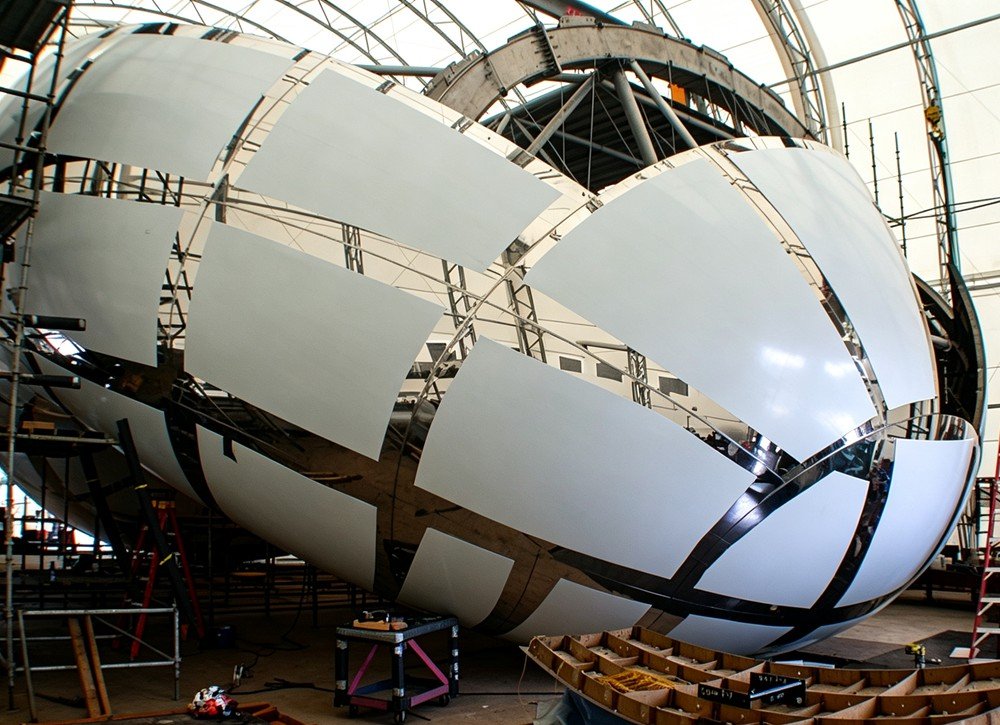
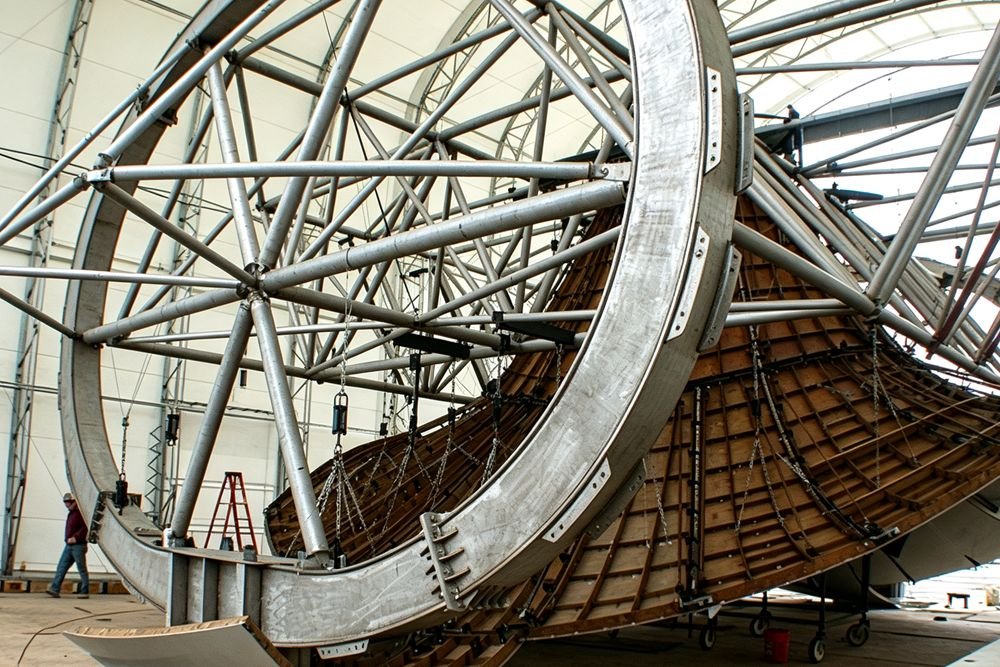
- Suspension-Bridge Style “Hidden Framework” (Interior): The 110-ton sculpture is supported internally by a heavy-duty carbon steel truss system. Its structure—akin to a suspension bridge—distributes weight evenly to the foundation, ensuring the large span remains suspended above the ground with absolute safety.
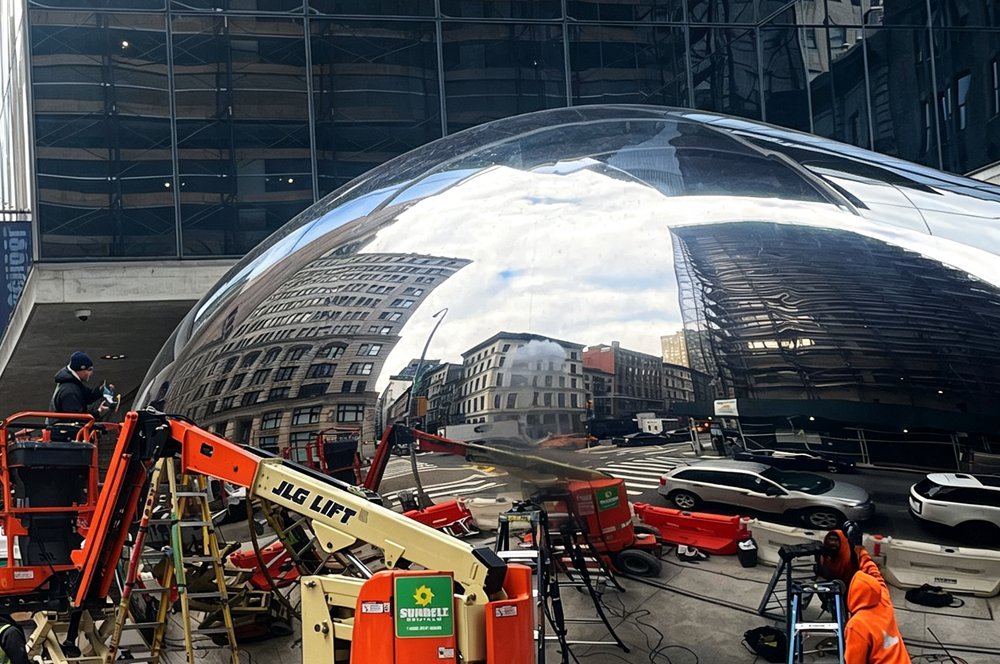
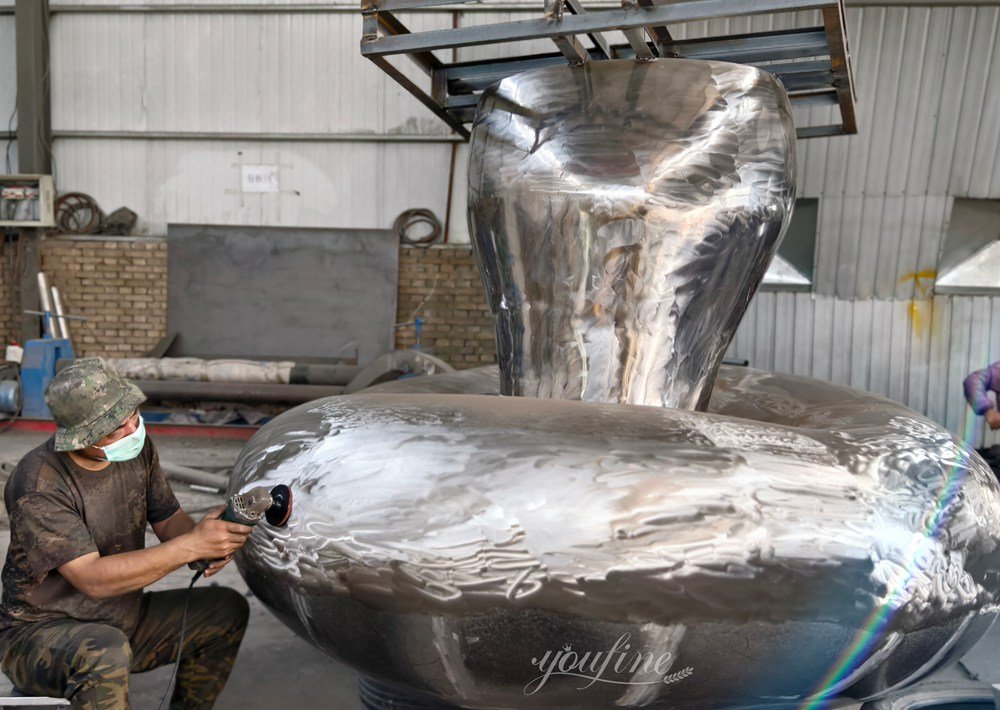
- Seamless Welding & Meticulous Hand-Polishing (Craftsmanship): The steel panels were assembled and fully welded on-site. Skilled artisans then spent months manually polishing the surface in repeated cycles until the weld seams vanished completely, creating a flawless mirror finish.
What Does The Bean Represent?
Cloud Gate represents more than a beautiful object in a public park. It symbolizes the relationship between people, architecture, and the city environment.
The reflective surface creates a unique experience where visitors see themselves integrated with Chicago’s skyline. Instead of simply observing the sculpture, people become part of the artwork.
The Bean is often interpreted as representing:
- A Reflection of Chicago
The sculpture mirrors the city’s famous buildings and skyline, creating a visual connection with Chicago’s identity.
- Interaction Between Art and People
Visitors are not passive viewers. Their movements, reflections, and photographs become part of the artwork.
- Modern Urban Creativity
Cloud Gate demonstrates how contemporary sculpture can transform public spaces and create memorable experiences for millions of people.
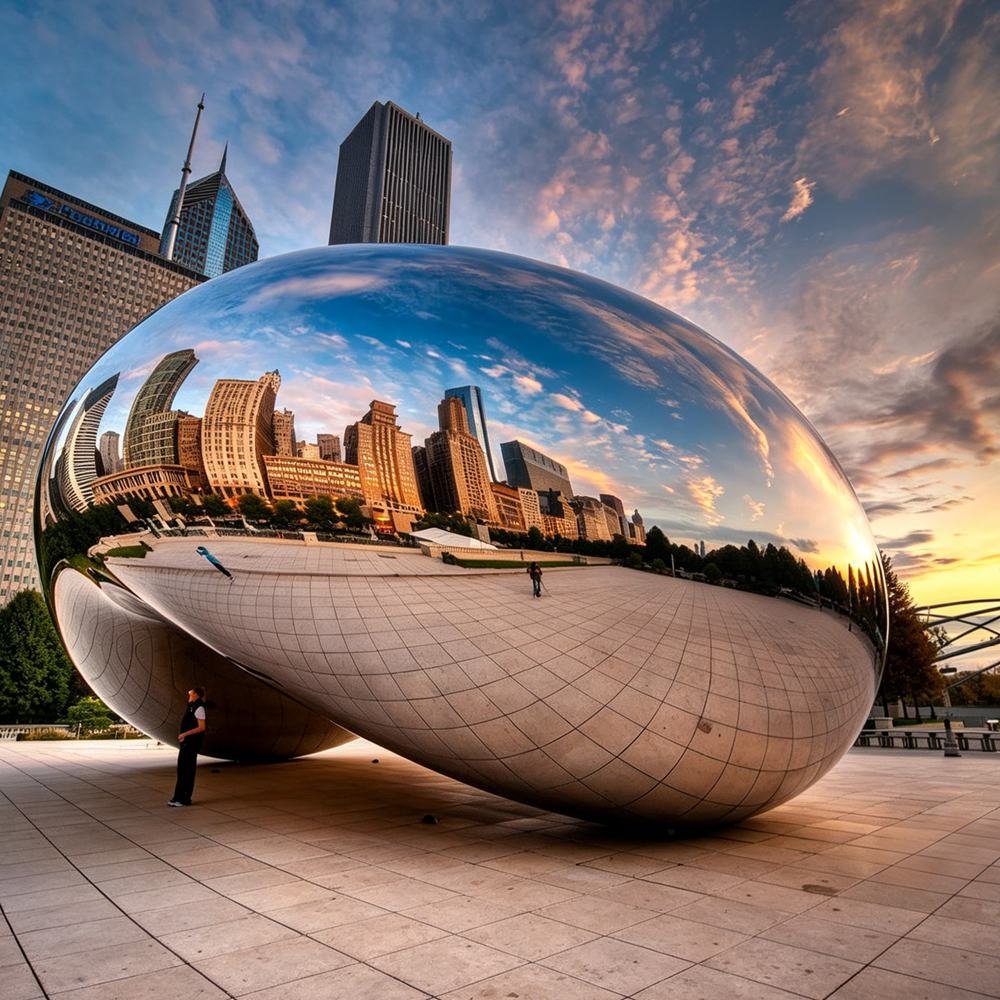
A Brief History of Cloud Gate
From a controversial blueprint to a world-famous masterpiece, the journey of Cloud Gate (The Bean) comes down to four major historical milestones:
- 1999–2002: The Vision. British artist Anish Kapoor won a global design competition for Millennium Park. His concept was inspired by liquid mercury, designed to reflect Chicago’s historic skyline and passing clouds seamlessly.
- 2002–2004: Engineering Breakthrough. Many experts initially claimed a 110-ton, hollow, curved steel structure was impossible to build safely. Engineers finally broke through by adopting structural principles used in heavy suspension bridges coupled with aerospace-grade metal scaling.
- 2004: The “Unfinished” Sensation. When the park opened in 2004, the sculpture was still a work in progress with highly visible grid lines between the steel plates. Yet, the public fell in love instantly and nicknamed it “The Bean”—a title the artist initially disliked but eventually embraced.
- 2006–Present: Seamless Perfection. In 2005, the sculpture was tented off so master polishers could spend an entire year manually grinding away every single seam. Cloud Gate officially opened in May 2006, instantly becoming one of the most iconic pieces of public modern art on Earth.
Why Has The Bean Become a Chicago Icon?
“The Bean” has become an iconic landmark of Chicago because it successfully blends artistic innovation, engineering excellence, and public interaction—manifested in the following four ways:
- Unparalleled Visual Impact: Its seamless, mirror-like form sets it apart from traditional sculptures; acting like a giant magic mirror, it fully reflects Chicago’s skyscraper skyline, the sky, and the figures of visitors, creating a rich, layered, and dramatic visual effect.
- An Immersive, Interactive Experience: Unlike many landmarks that can only be viewed from a distance, this sculpture invites visitors to touch it, walk through its hollow interior, and rest beneath it. This allows for personal, unique interactions, bridging the gap between people and art.
- A Selfie Hotspot for the Internet Age: The mirrored surface naturally creates unique, distorted reflections, making it an ideal backdrop for photography. Creative selfies and group photos taken by visitors spread rapidly across social media platforms, spontaneously propelling the sculpture to global viral fame.
- A Perfect Alignment with the City’s Spirit: Chicago is renowned for its avant-garde modern architecture and cutting-edge engineering. This stainless-steel sculpture—combining artistic creativity with complex, precision manufacturing—perfectly echoes the city’s spirit of bold innovation and the pursuit of technological excellence.
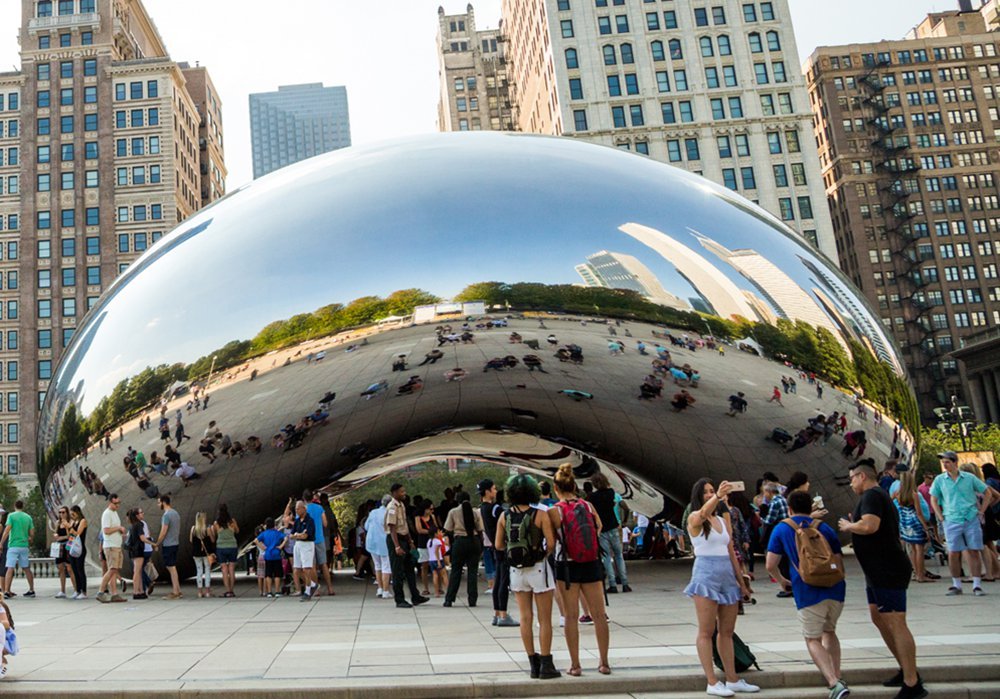
How to Visit The Bean in Chicago?
Here is a streamlined quick-reference guide to help you plan a seamless visit to Cloud Gate:
| Visitor Question | Quick Answer & Tips |
| Is it free? | 100% Free. No admission fees for the park or the sculpture. |
| How long to get there? | 35–45 mins from O’Hare Airport by taxi/train; 5–10 mins walk from downtown hotels. |
| Time needed inside the park? | Less than 3 minutes. Located right at the front plaza of Millennium Park. |
| Is it accessible? | Highly accessible. Flat, paved plaza with ramps. Wheelchairs can roll right under it. |
| Are restrooms nearby? | Yes. Clean public restrooms are inside the Welcome Center right below the plaza (<1 min walk). |
| What’s nearby? | Crown Fountain (interactive LED towers) and the Art Institute of Chicago are within a 5-minute walk. |
| Best photo tips? |
1. Stand underneath for a kaleidoscope warp effect. 2. Visit at sunrise for golden lighting and zero crowds. |
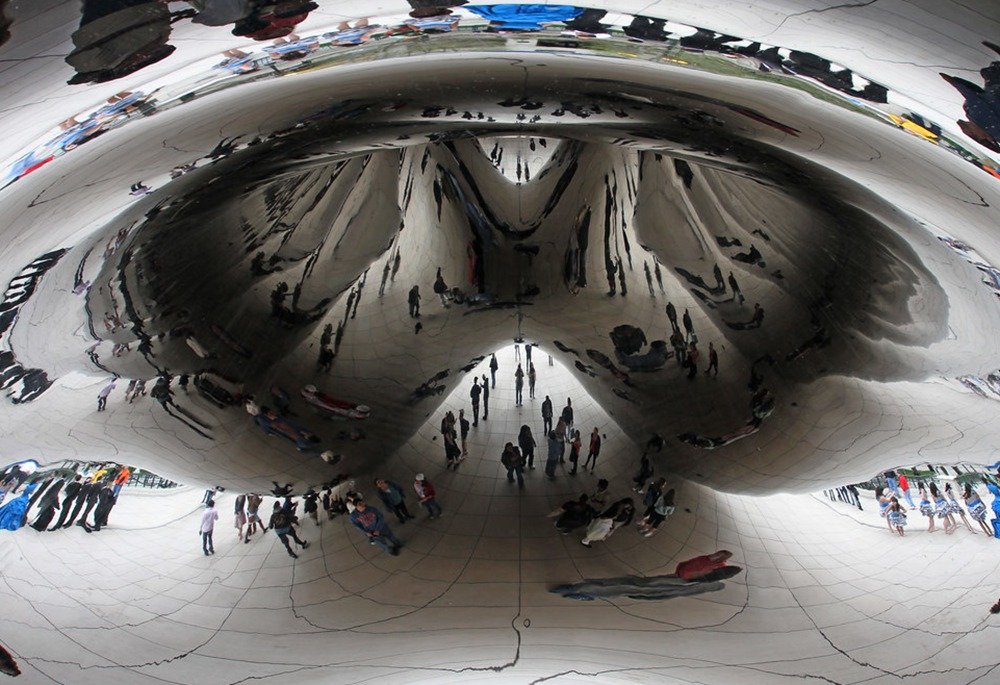
Mirror Polishing in Cloud Gate & Modern Sculpture
The most impressive feature of Cloud Gate is not only its unusual shape but also its flawless mirror-polished surface.
Achieving this effect requires much more than simply using stainless steel. The metal surface must go through multiple stages of grinding and polishing to remove imperfections and create a consistent reflective finish.
Mirror polishing influences modern sculpture by:
- Enhancing the interaction between artwork and environment
- Creating dynamic reflections that change constantly
- Making metal sculptures appear lighter and more fluid
- Combining industrial materials with artistic expression
Cloud Gate demonstrates how advanced surface finishing techniques can transform stainless steel from a functional material into a powerful artistic medium.
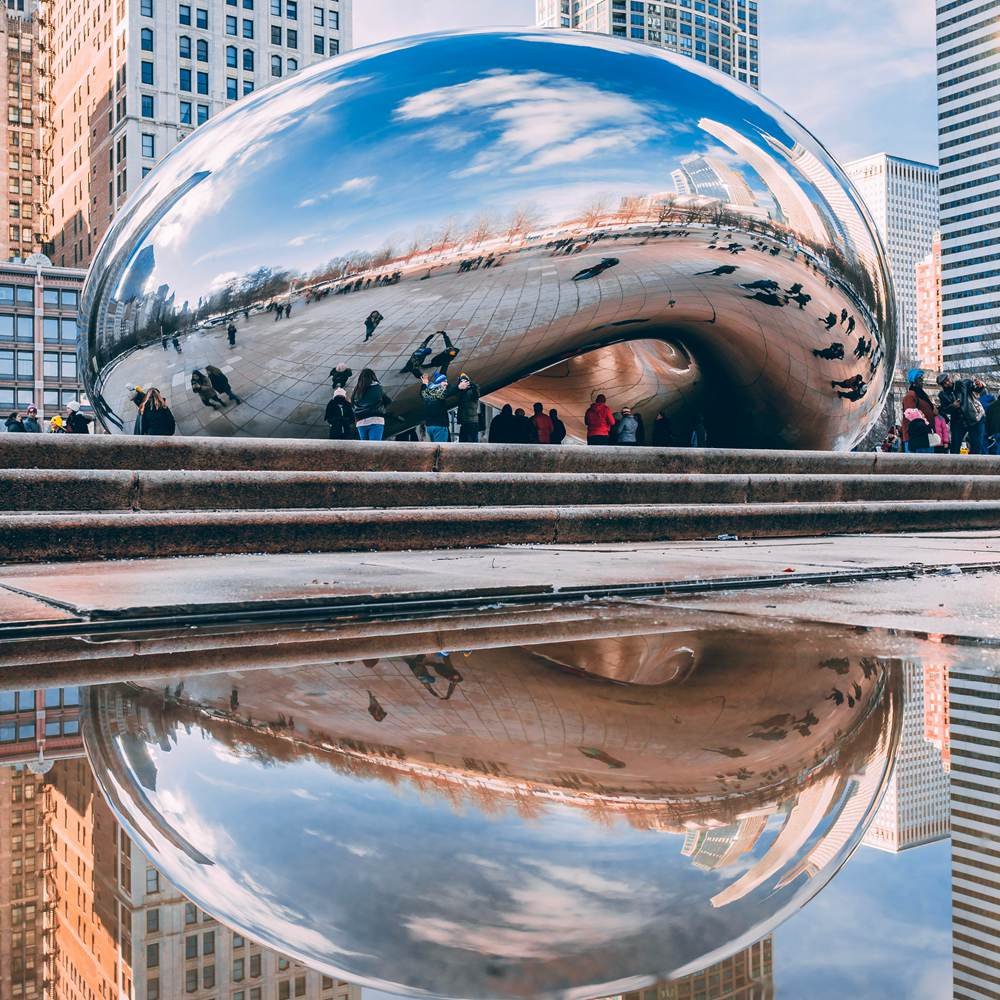
How We Ensure Mirrored Stainless Steel Sculpture Quality
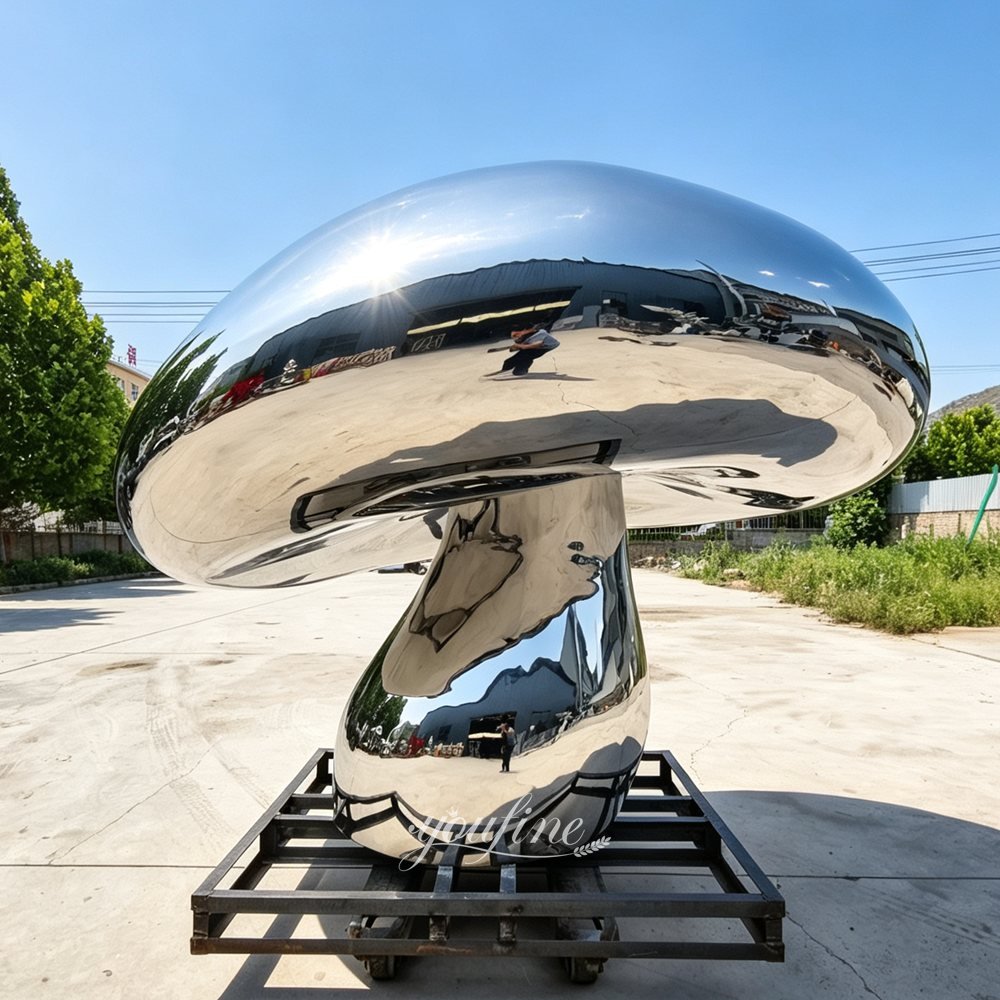
Since Cloud Gate became famous, mirror stainless steel sculptures have grown popular. They are widely placed outdoors in villa yards, parks, hotels, and plazas. We control every production step strictly as a professional sculpture fabricator:
- Premium Anti-Rust Material: We use anti-rust 304 / 316 stainless steel. It resists oxidation and corrosion, so sculptures won’t rust or fade after long-term outdoor display.
- Sturdy Steel Plate Structure: Our standard steel sheets are 3–5 mm thick to stop dents and shape distortion. We can make sheets thicker for large sculptures if clients need.
- Smooth Hand-Forged Curves: All separate steel pieces are hand-forged by skilled artists. They shape smooth, natural curved surfaces perfectly.
- Professional Welding Technical: Forged pieces are joined with spot welding plus full sealing welding. Craftsmen with over 15 years of experience make tight, flat welds.
- Multi-Step Mirror Polishing: We polish sculptures in multiple steps: rough polish, fine polish, and mirror polish. All welding and forging marks get removed, delivering a clear 8K mirror finish.
Final Thoughts
The Bean is more than a famous landmark in Chicago—it is a remarkable example of how art, engineering, and craftsmanship can transform a public space. From its unique reflective surface and innovative design to its ability to connect people with the surrounding city, this mirror-polished stainless steel sculpture has become an enduring symbol of modern public art.
Would you like a modern stainless steel sculpture? Contact us anytime! No matter if you only have a rough concept or full design drafts, our team can realize your vision. Our factory delivers full one-stop solutions for all sculpture orders!