After years of working in the sculpture industry, I’ve noticed that commercial clients rarely come to me torn between the words “abstract” and “figurative.” The question they’re really asking is more practical: Does my space need a sculpture that tells a story, or one that creates a landmark presence?
That choice shapes the first impression your project makes. The people moving through your site every day will walk right past your sculpture — at corporate campuses and office podium green spaces (our most common clients), hotel and resort entrances with their driveways and landscape gardens, mixed-use outdoor plazas, hospital entries and healing gardens, and the plazas of high-end residential and retail developments.
In this article, I’ll skip the art theory and explain, in plain language, what actually separates the two styles, which spaces each one suits, and how to make the decision step by step. Developers, landscape architects, and owners can all follow along.
What Is Abstract Stainless Steel Sculpture?
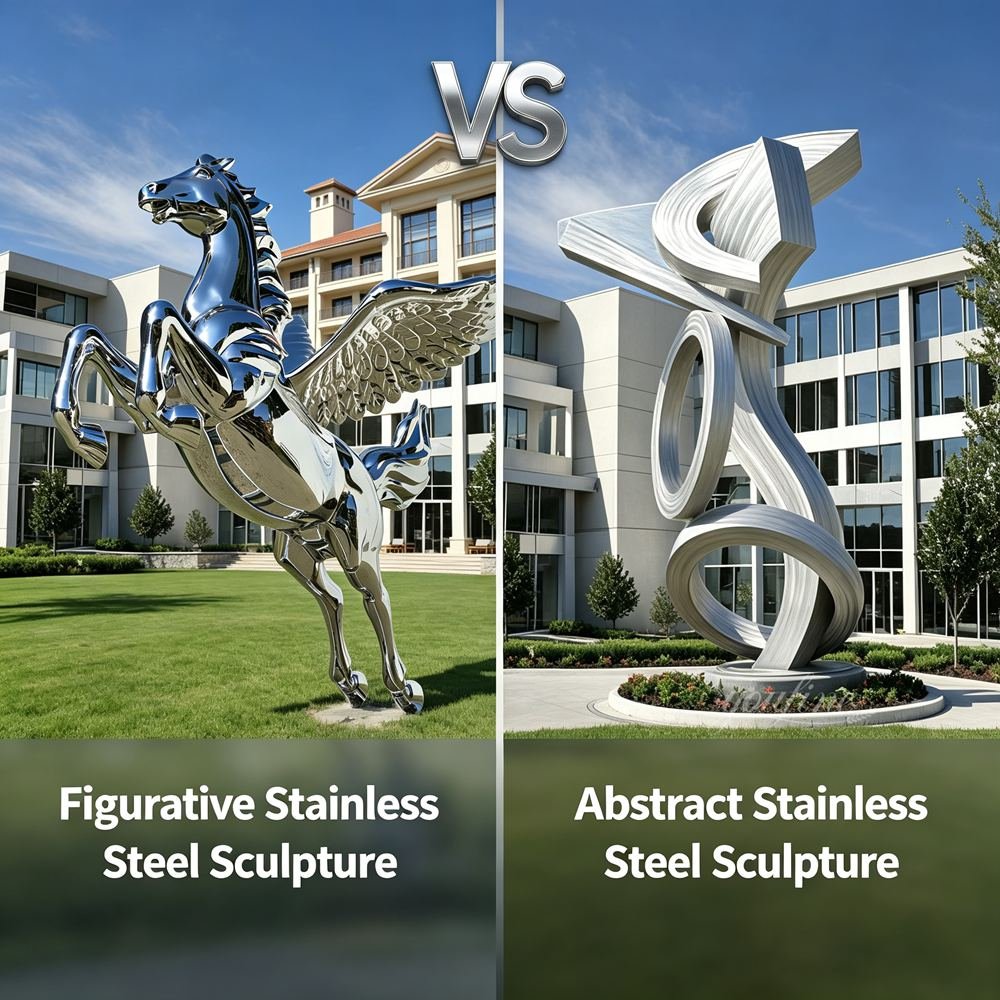
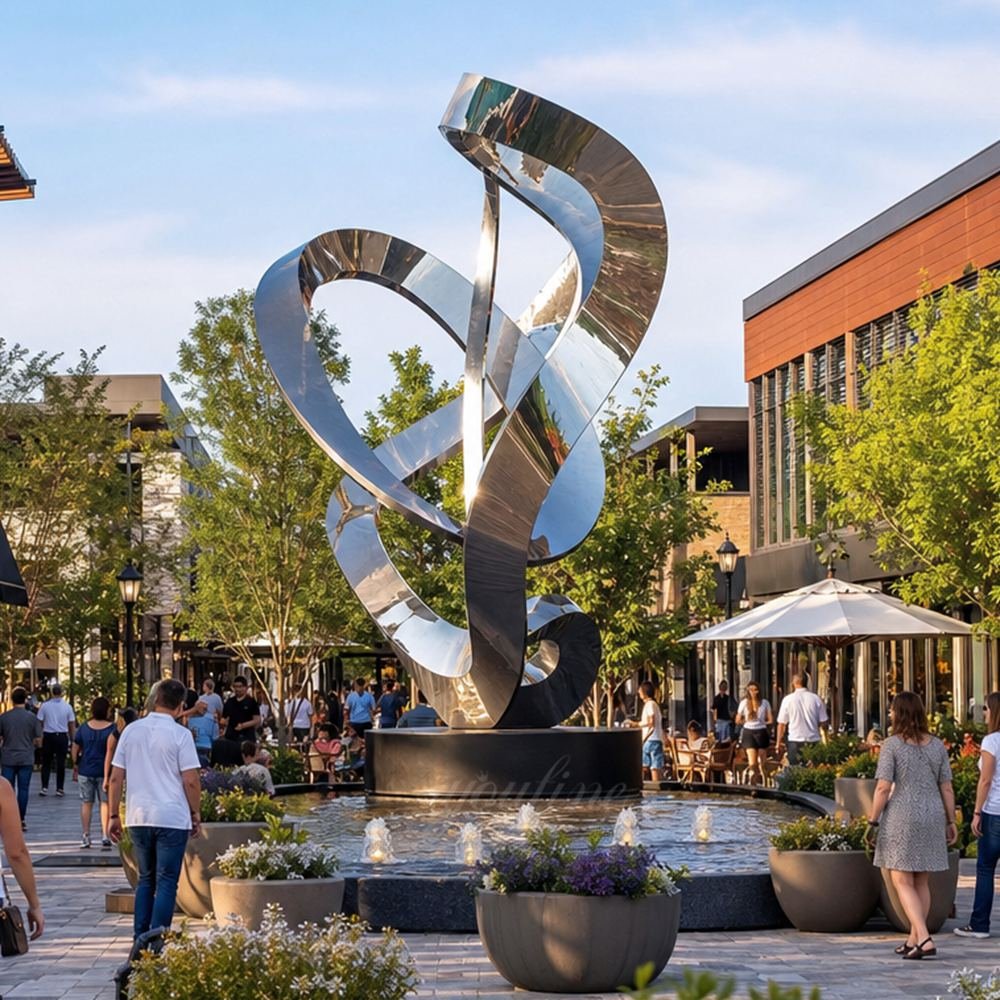
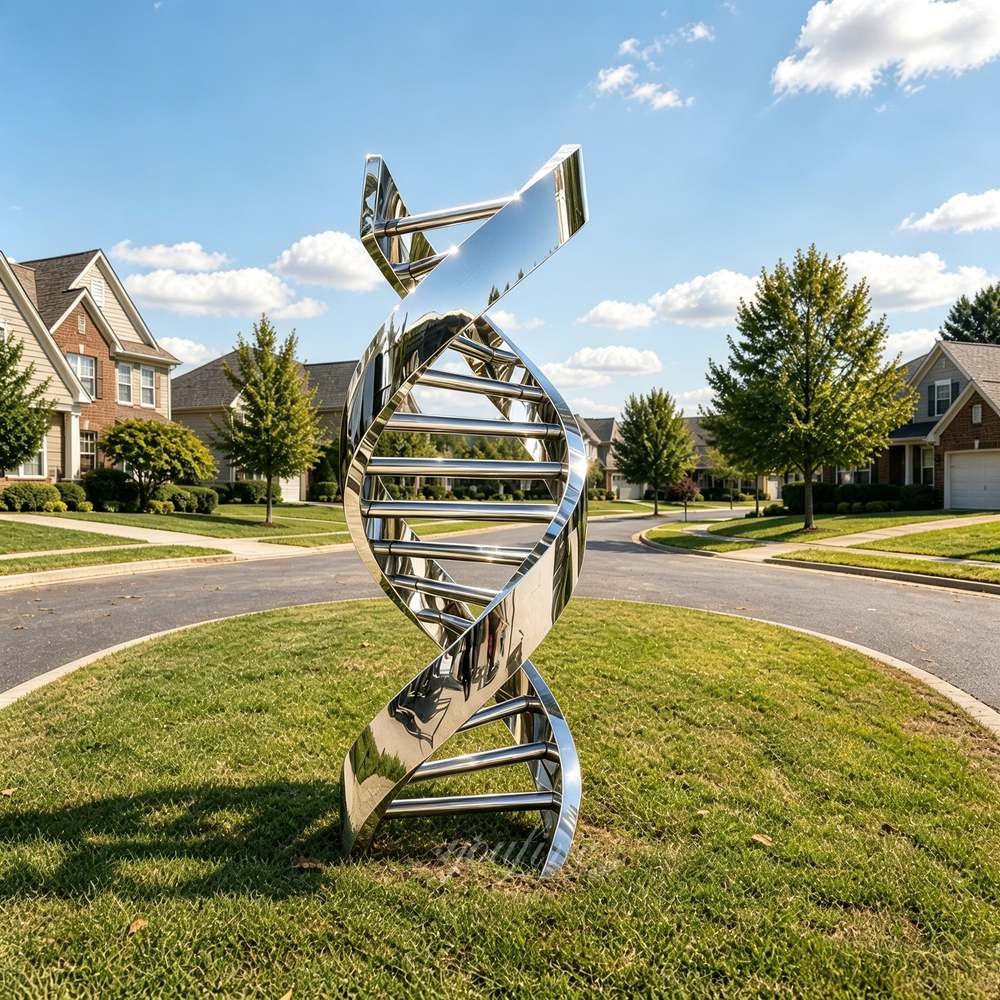
An abstract stainless steel sculpture doesn’t imitate any specific object. It speaks through geometric volumes, lines, openwork, curves, and dynamic forms. It doesn’t tell you what it is — it leaves room for each viewer to fill in their own reading. One person sees energy; another sees balance, flow, or growth. Think of an open-ended question: there is no single right answer, and the feeling matters most.
Abstract sculpture usually asks you to come a little closer. A mirror-polished surface reflects the sky, the trees, and the people passing by, so the piece seems to breathe with its surroundings. Openwork forms keep changing with the light and your angle of view. That is why abstract works so well beside modern architecture: it doesn’t compete with the building, yet it gives the whole space a confident, contemporary tone.
What Is Figurative Stainless Steel Sculpture?
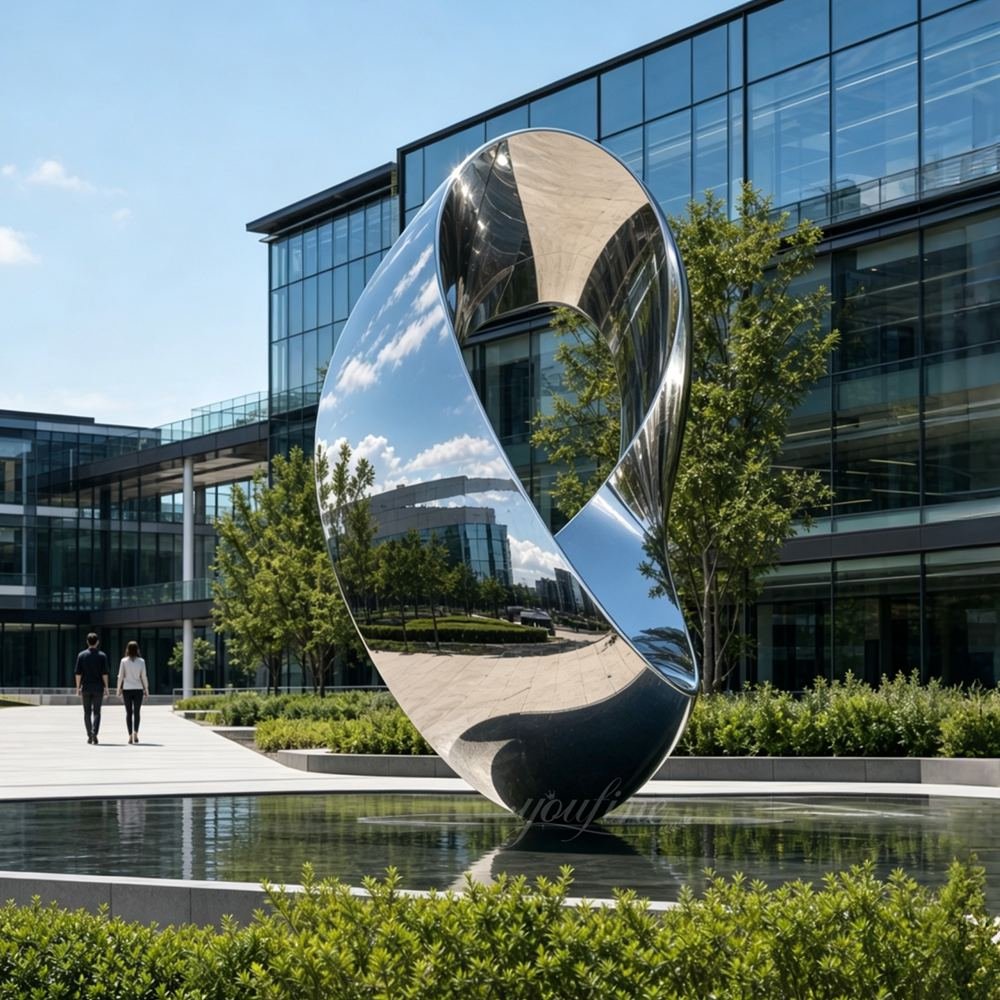
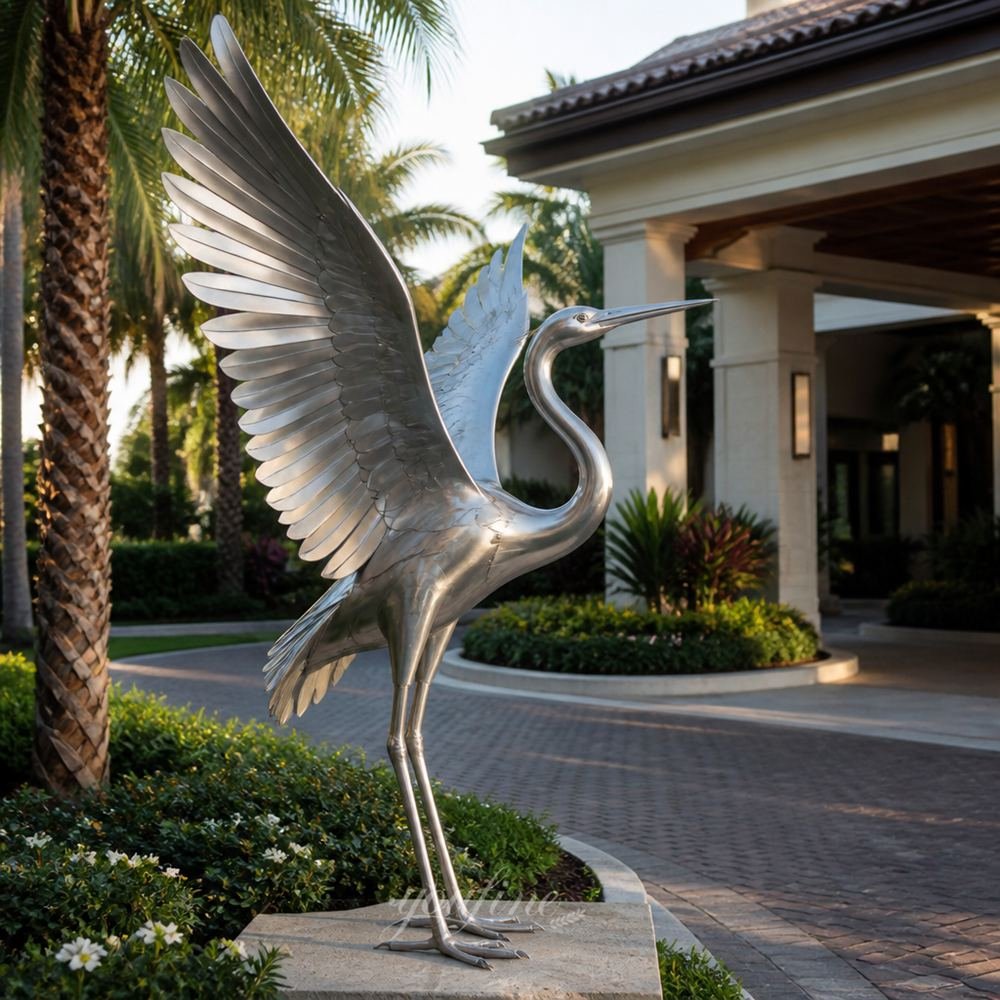
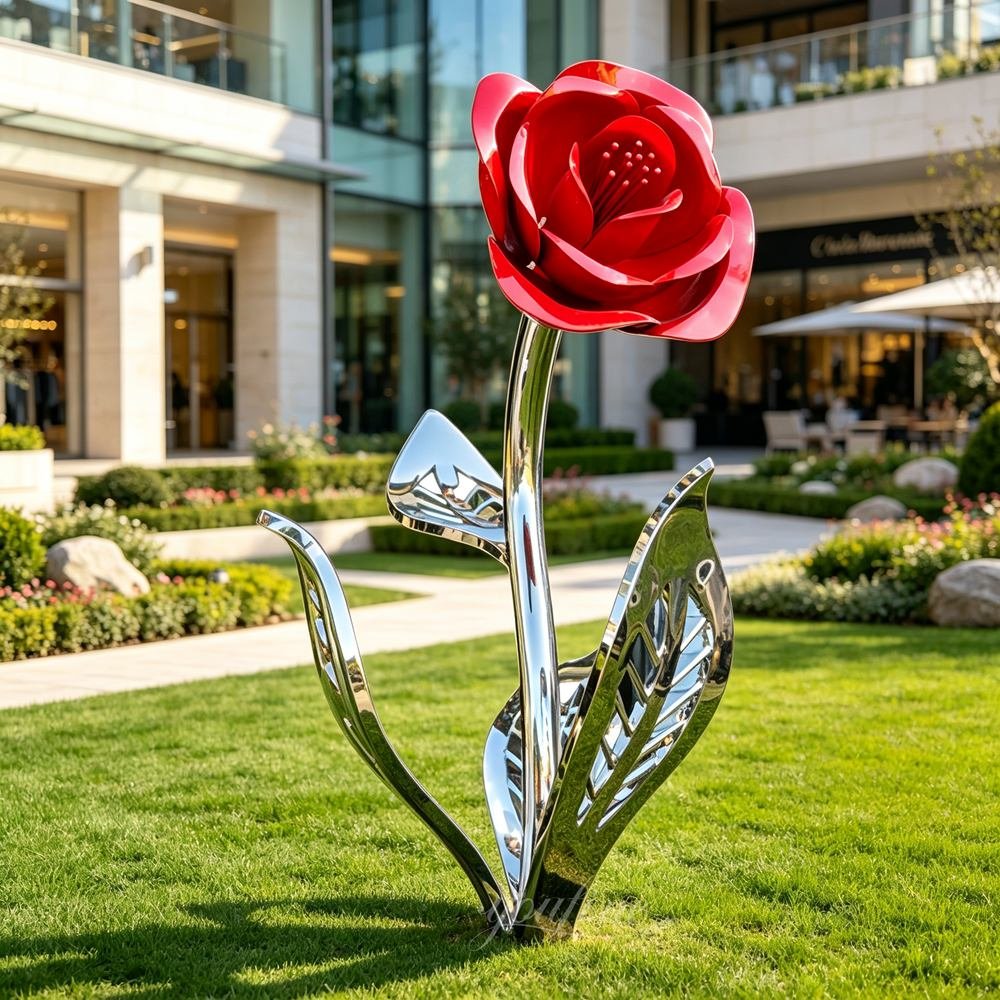
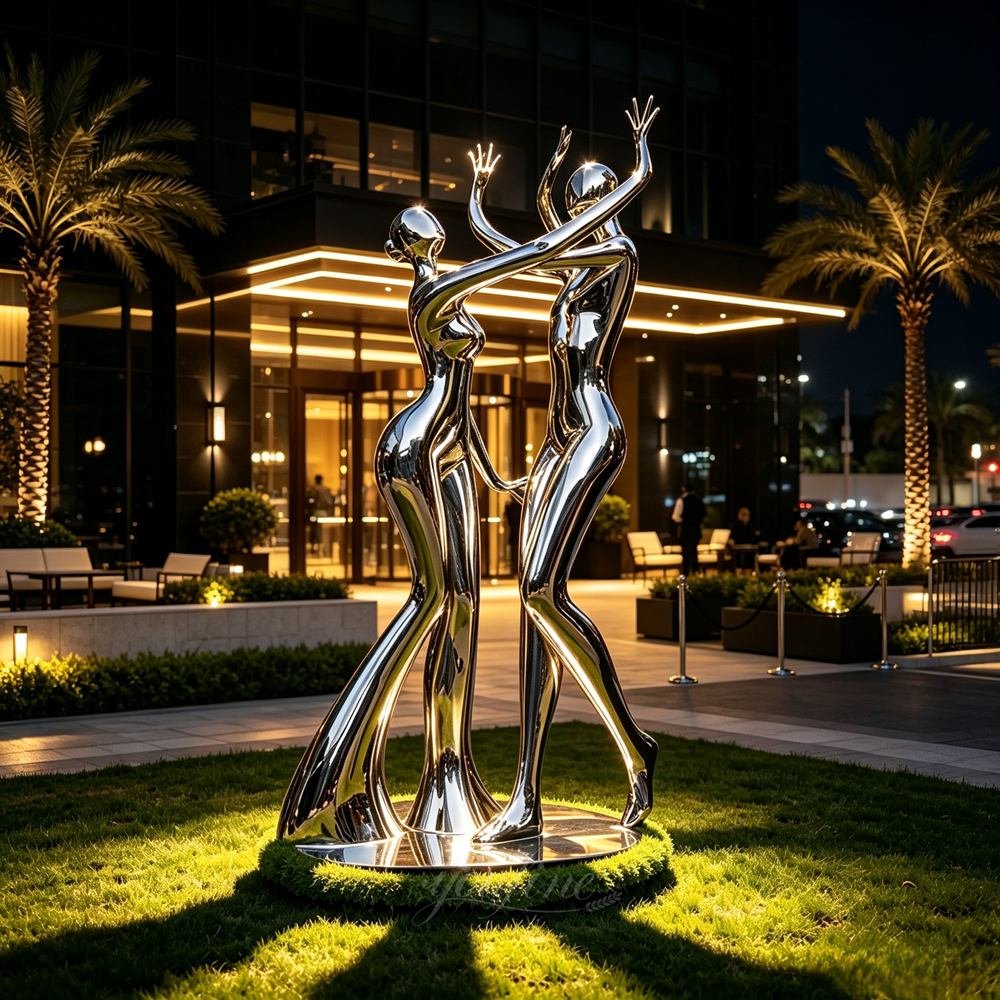
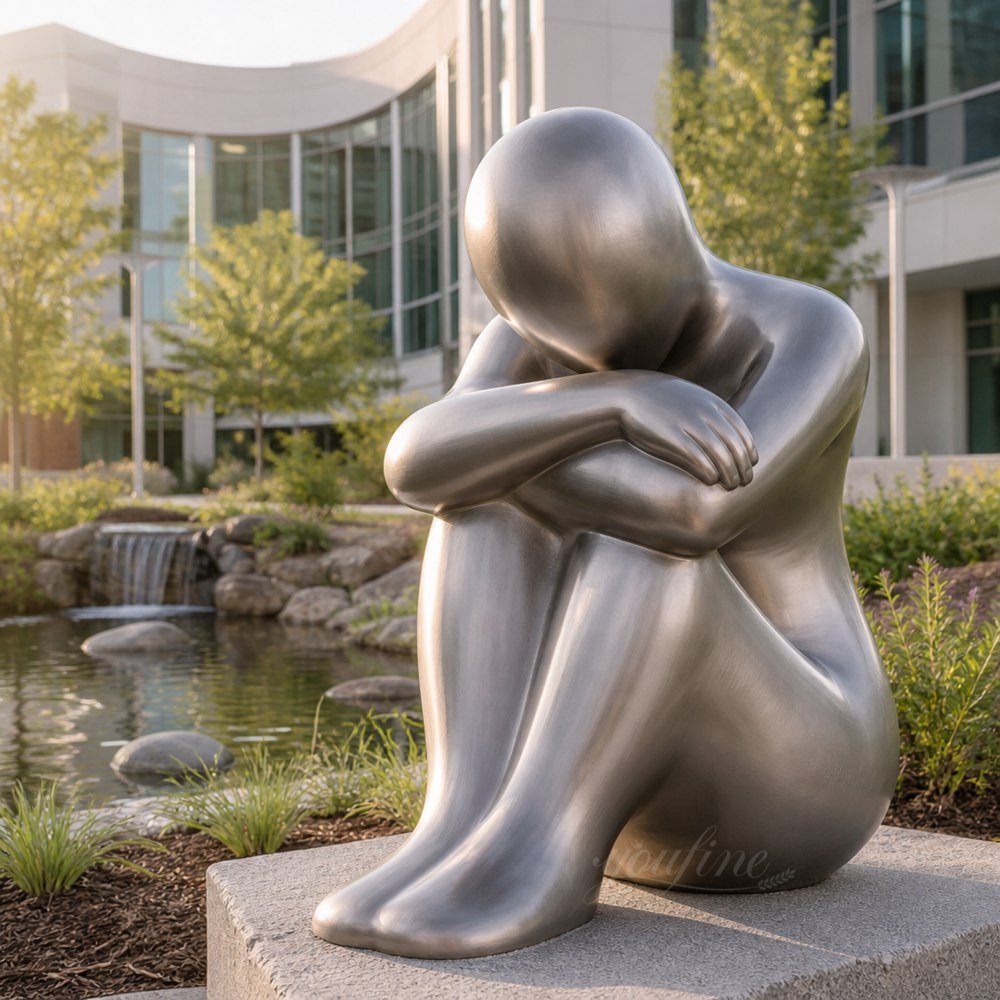
A figurative stainless steel sculpture is one you can name at first sight: a figure, a bird, a horse, a flower, or a symbolic scene. Its message is clear — welcome, strength, care, culture, movement, or family, written directly into the form. If abstraction asks a question, figuration tells a story: it speaks first and hands the message to you.
Because the subject is recognizable, figurative sculpture reads well from a distance. The silhouette of a large animal or human figure catches the eye across a lawn. From university campuses to civic squares, figurative sculpture has long played the role of public storyteller — Dartmouth’s Hood Museum, for example, curates a rich collection of public sculpture across its campus (take a look at how one campus collects public art). The same role works beautifully at a hotel arrival or beside a healing garden.
Abstract vs. Figurative at a Glance
Here is a quick comparison of stainless steel sculptures in both directions:
How to Choose for Your Commercial Outdoor Space
Start with the Space’s Personality
Every space has its own character, and it is the most important thing to read before anything else:
- Office atriums and lobbies are calm and restrained. They need a geometric language that can talk to a glass facade — abstract usually feels like the natural answer.
- Resort hotels are warm and hospitable. A figurative piece with a story to tell — a bird, a dancer — can make arriving guests smile.
- Hospitals and schools need warmth and reassurance. Gentle figurative figures and animals feel more approachable than cool abstract forms. For hospitals and healing gardens in particular, “helping people relax” is a design direction backed by real research (the University of Washington’s built-environment faculty writes about evidence-based therapeutic garden design).
- Campus plazas are busy places that need to be remembered. A well-scaled abstract landmark often grabs more attention than a figurative piece — and keeps it longer.
What makes a public space worth staying in? Project for Public Spaces has studied that question for decades, and their answer is simple: places where people want to linger are places that feel alive (see their guidance on plazas and civic squares). A sculpture can be exactly the reason people stay.
One more note: landscape architects have always treated sculpture as part of the landscape narrative, and the profession’s own body — the American Society of Landscape Architects — has made a strong case for why public art matters (ASLA on why public art is important). If you are working with a landscape architect, this conversation is already on their table.
Think About Viewing Distance and Scale
This is the simplest check — and the one most often skipped: Where will people first see the sculpture?
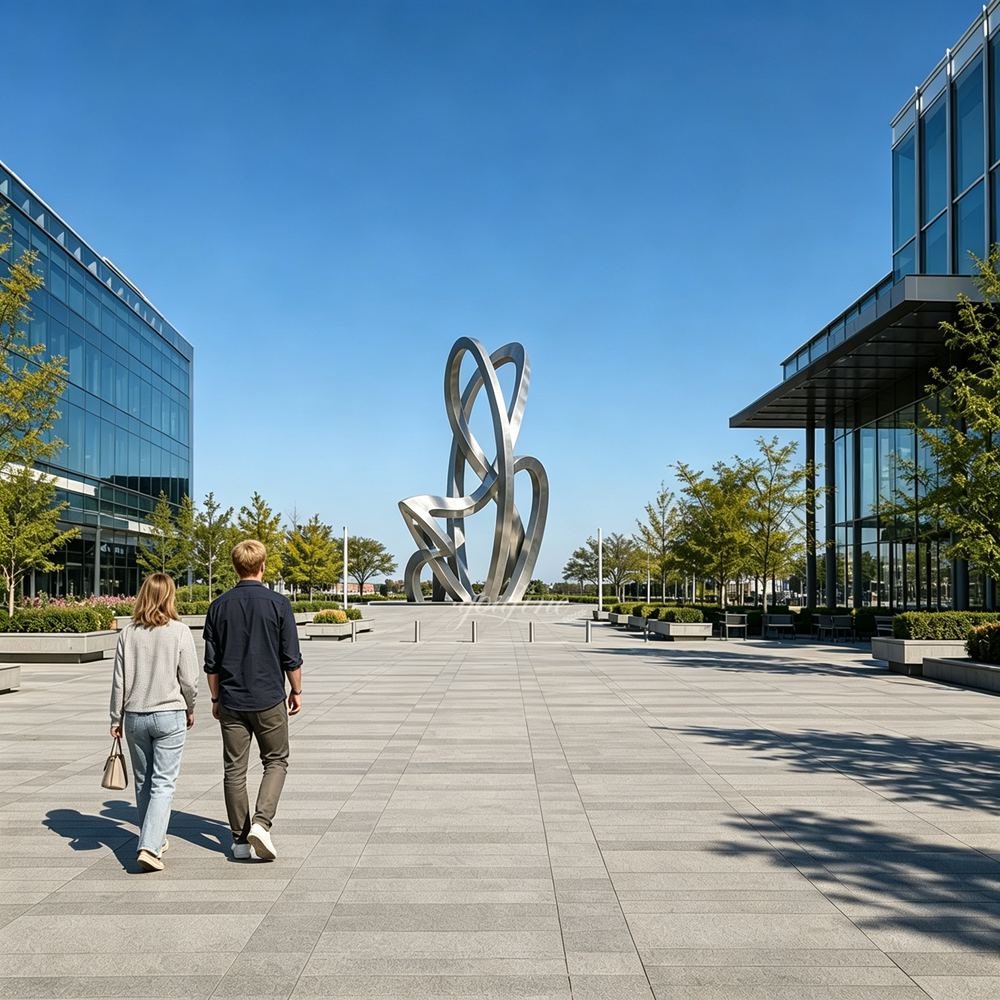
- From far away (a driveway, a large lawn, a plaza entrance): the silhouette has to hold up. Figurative wins on recognizable subjects; abstract needs a strong outline or enough height.
- Up close (a walkway, an atrium, a garden path): this is where detail matters. The curves, openwork, and reflections of abstract work, or the expression and surface of figurative work, are gifts you only unwrap at close range.
Decide the “first viewpoint” first, then work backward to size, orientation, and form. It matters far more than how the piece looks in a rendering.
Consider the Lifecycle: Will It Still Work in Five Years?
A commercial sculpture is not a seasonal decoration; it will usually stay for many years.
A figurative piece is tied to a specific story — a pose, a costume, a symbol — and any of those can date, or even land differently than intended in a different community. An abstract piece hands the interpretation to the viewer, which usually makes it more “age-proof” and better able to keep up as the tenants, brand, or landscape around it change.
But abstraction is not a free pass. A weak abstract concept just looks empty, while a well-designed figurative piece can be loved for decades. The point is simply this: design for the day after opening day, not just for it.
Decide What You’re Buying: a Story or a Landmark
This is the idea I most want you to take away: most owners think they are choosing between two art styles, but they are really choosing between two roles for the project.
- Do you want a storytelling focal point (figurative)? It acts like a host — it says “hello, welcome” before anyone reads a single sign. Choose this when the project wants to express hospitality, local culture, care, or family.
- Or do you want a landmark posture (abstract)? It stands like a monument — it doesn’t argue with the architecture, but it gives the whole project an identity people remember. Choose this when the space should feel contemporary, confident, and timeless.
Figure out the role first, and the style almost chooses itself. Abstract is a contemporary statement living alongside the building; figurative is a narrator that greets your visitors. They simply have different jobs.
Respect Culture and Community
Your sculpture may sit on private property, but employees, guests, residents, patients, and local visitors will live with it every day. If you lean figurative, ask a few extra questions:
- Does this figure or symbol mean the same thing in the local culture?
- Could the pose, expression, or clothing be misunderstood?
- Is the story too narrow for a diverse audience?
If you lean abstract, the questions change:
- Does it feel welcoming — or just cold?
- Is the scale balanced with the surrounding buildings?
- Will a mirror finish glare uncomfortably in strong sun?
None of this needs to be complicated. It comes down to one line: a sculpture should respect the people who live with it. The public art field has decades of experience in exactly this — making art that serves its community — and organizations like Americans for the Arts keep the professional resources and case studies (Americans for the Arts on public art).
The Quick Selection Checklist
Short on time? Work through this table:
And there is a third path: semi-abstract. You can just make out wings, waves, a figure, or a sense of movement — without every detail spelled out. When a project wants both emotional connection and a contemporary feel, it is often the smartest middle ground.
Frequently Asked Questions
Q: For a corporate campus, abstract or figurative?
Abstract is usually the safer starting point — modern, professional, and architectural, in dialogue with the building. If the company has a clear cultural story or symbol, figurative can work just as well.
Q: Is figurative sculpture easier for people to understand?
Yes. The subject is recognizable at a glance, with zero learning curve. That makes it a great fit for hotels, hospitals, schools, and community spaces that need to build goodwill quickly.
Q: Won’t abstract sculpture feel too “difficult” for the public?
Good abstract sculpture doesn’t need to be understood — it needs to be felt. If the form is strong, the scale balanced, and the relationship to the space clear, people may not be able to name it, but they will remember it.
Q: Can the two styles be combined?
Yes — that is exactly what semi-abstract sculpture is. It hints at natural forms or human movement without spelling everything out, and it is often the best answer when you want emotional connection and a contemporary look at the same time.
Let’s Talk About Your Project
Feeling clearer about the direction? Style is only the first step — the same sculpture still needs the right size, the right angle, the right base, and a clear picture of how it will actually look in your space. That’s where a conversation helps.
As an online curated sculpture gallery, we don’t sell sculptures from a catalog. We match each piece to its space: send us site photos, your landscape plan, an approximate size, and your ideas, and we’ll work through style direction, material language, and space fit together — treating the sculpture as a visual solution designed to speak with your space, not as a standalone product.
Whether your project is a corporate campus, a hotel or resort, a mixed-use plaza, a healthcare garden, or a high-end residential development, we’d love to hear about it.