Abstract sculptures play an extremely important role in public landscapes. Unlike traditional figurative sculptures, abstract sculptures emphasize form, space, and emotional expression, stimulating viewers’ imagination and interaction, allowing each person to derive their own unique interpretation. Below are 10 famous abstract sculptures, scattered across public spaces in different cities, becoming indispensable cultural symbols of their respective locations.
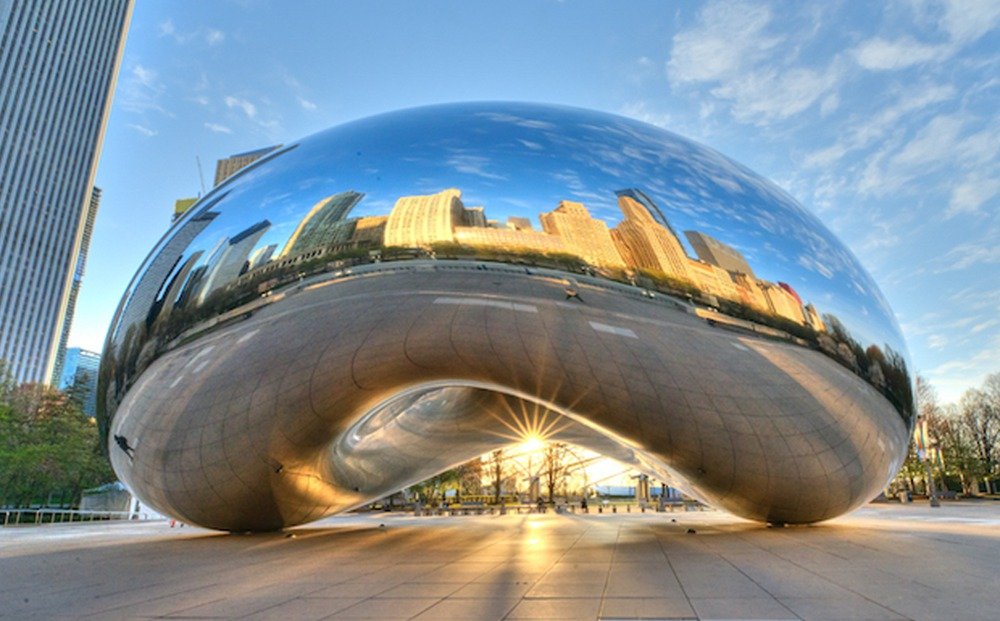
Cloud Gate – Anish Kapoor (Chicago, USA)
Cloud Gate, created by Indian-born British artist Anish Kapoor, is located in Millennium Park in Chicago. Due to its bean-like shape, it is affectionately nicknamed “The Bean” by locals.
The sculpture is made of seamlessly joined, mirror-polished stainless steel, forming a smooth, elliptical shape with no edges or seams. Its surface, like “liquid silver,” reflects the sky, buildings, and people, creating distorted and fantastical reflections.
It breaks away from the traditional viewing distance of sculptures, encouraging viewers to approach, walk through, touch, and even interact with their reflections. It is considered a classic example of modern public art and an important cultural landmark in Chicago.
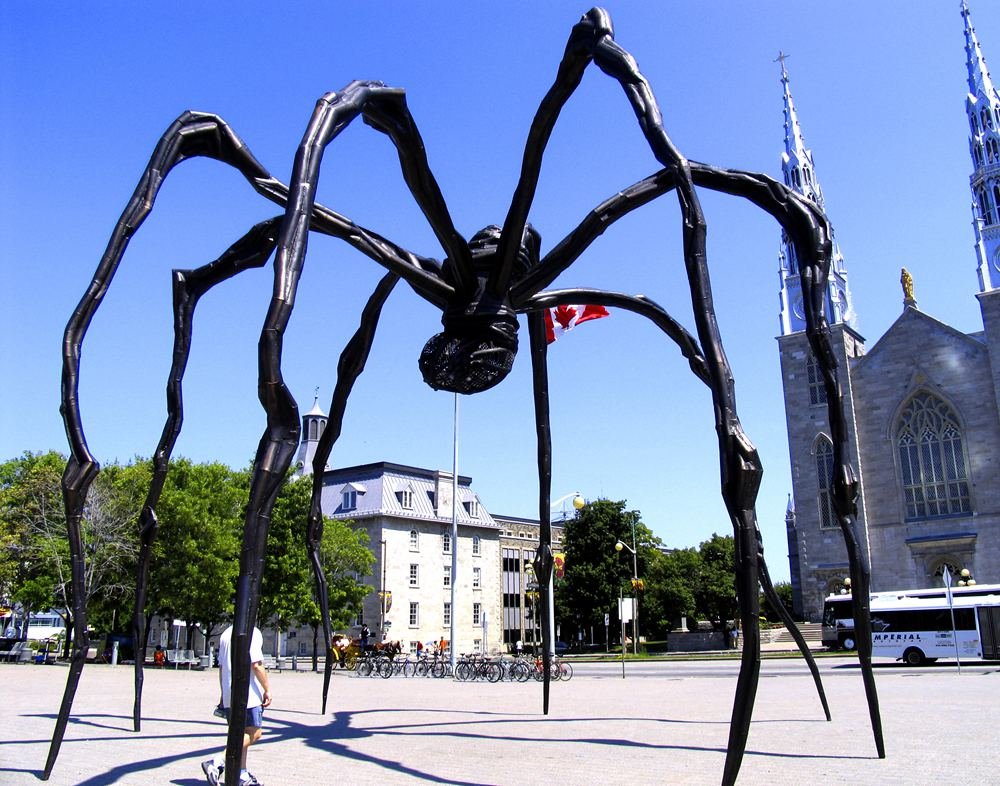
Maman – Louise Bourgeois (Various Locations)
Maman sculpture is one of the most iconic works by French artist Louise Bourgeois, with replicas located in several cities worldwide. The two most famous are in the Centre Pompidou in Paris and Lower Manhattan in New York City.
Maman is a striking, nine-meter-tall sculpture of a spider, made of bronze, stainless steel, and marble, symbolizing motherhood, protection, and strength. The spider’s eight legs are long and slender yet strong, supporting its rounded abdomen, beneath which hang dozens of white marble egg sacs, brimming with the tension of life.
Despite its immense size, it maintains a delicate balance with its surroundings in public squares and gardens, inspiring both awe and contemplation of themes of emotion and life.
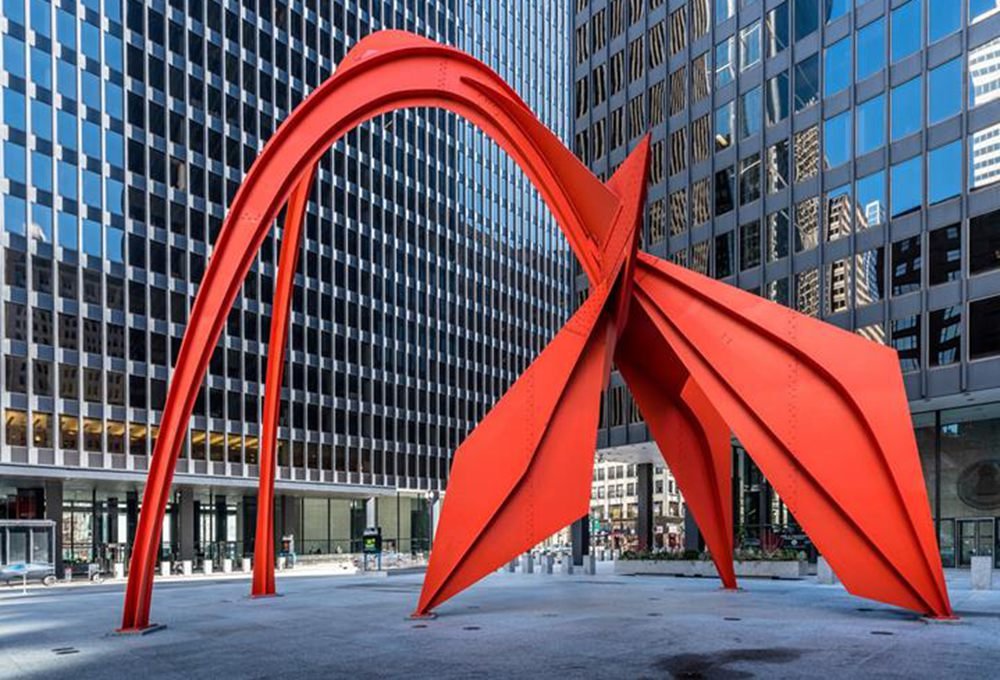
Flamingo – Alexander Calder (Chicago, USA)
Flamingo is a classic work by American sculptor Alexander Calder, located in the Federal Center Plaza in Chicago.
The sculpture is approximately 15 meters tall and is made of brightly colored red steel plates welded together. Its overall form features flowing curves, resembling a flamingo about to take flight, conveying a strong sense of vitality and creating a striking contrast with the surrounding buildings.
Its fluid curves and open structure allow pedestrians to walk through it, embodying Calder’s philosophy of “bringing art into everyday life.”
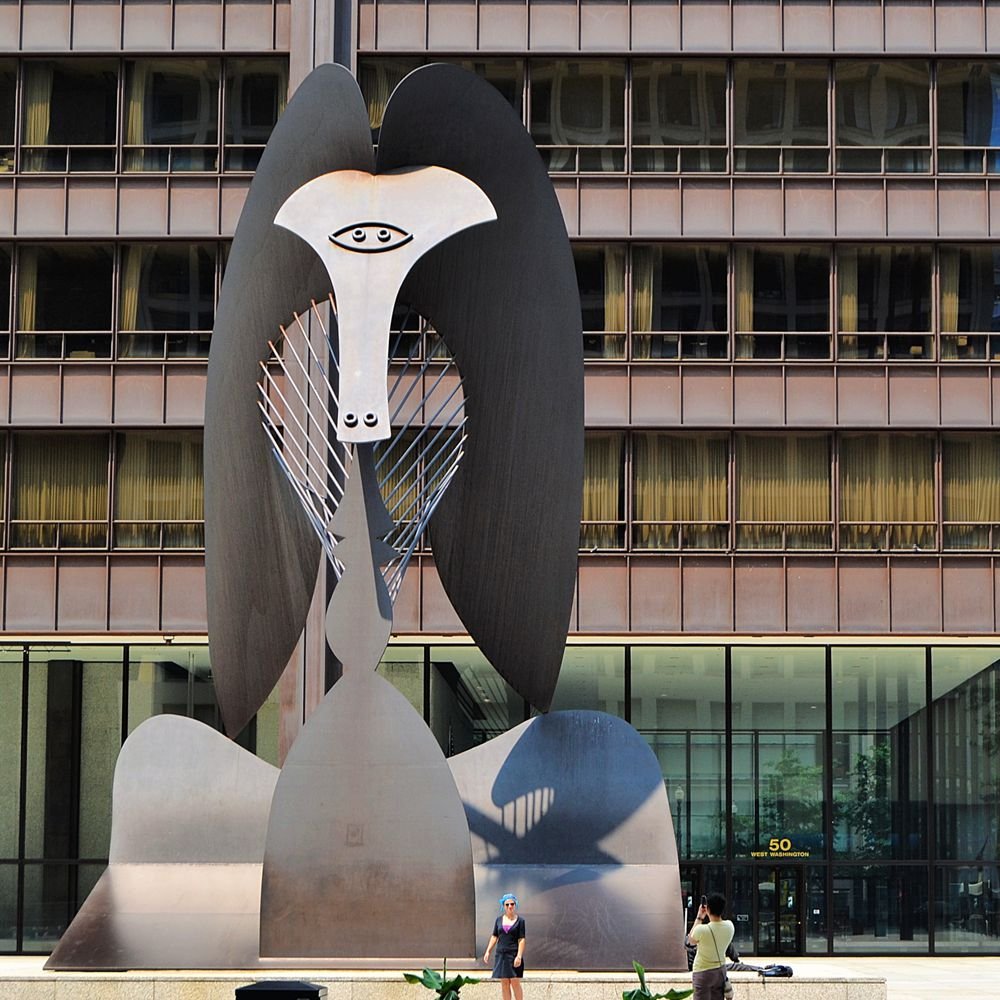
Chicago Sculpture – Pablo Picasso (Chicago, USA)
Chicago Picasso, often simply referred to as the “Chicago Sculpture,” is officially titled “Untitled” and was created by the Spanish master artist Pablo Picasso. It is located in Daley Center Plaza in Chicago.
The sculpture is approximately 15 meters tall and is welded from weathering steel. It features a complex geometric design with bold, strong lines, conveying a sense of power. Picasso stated that the sculpture represents the head of his Afghan Hound, although it has been interpreted in various ways, such as resembling an insect or an abstract human figure.
As one of the early large-scale abstract sculptures in a public square, it laid the foundation for the development of public art that followed.
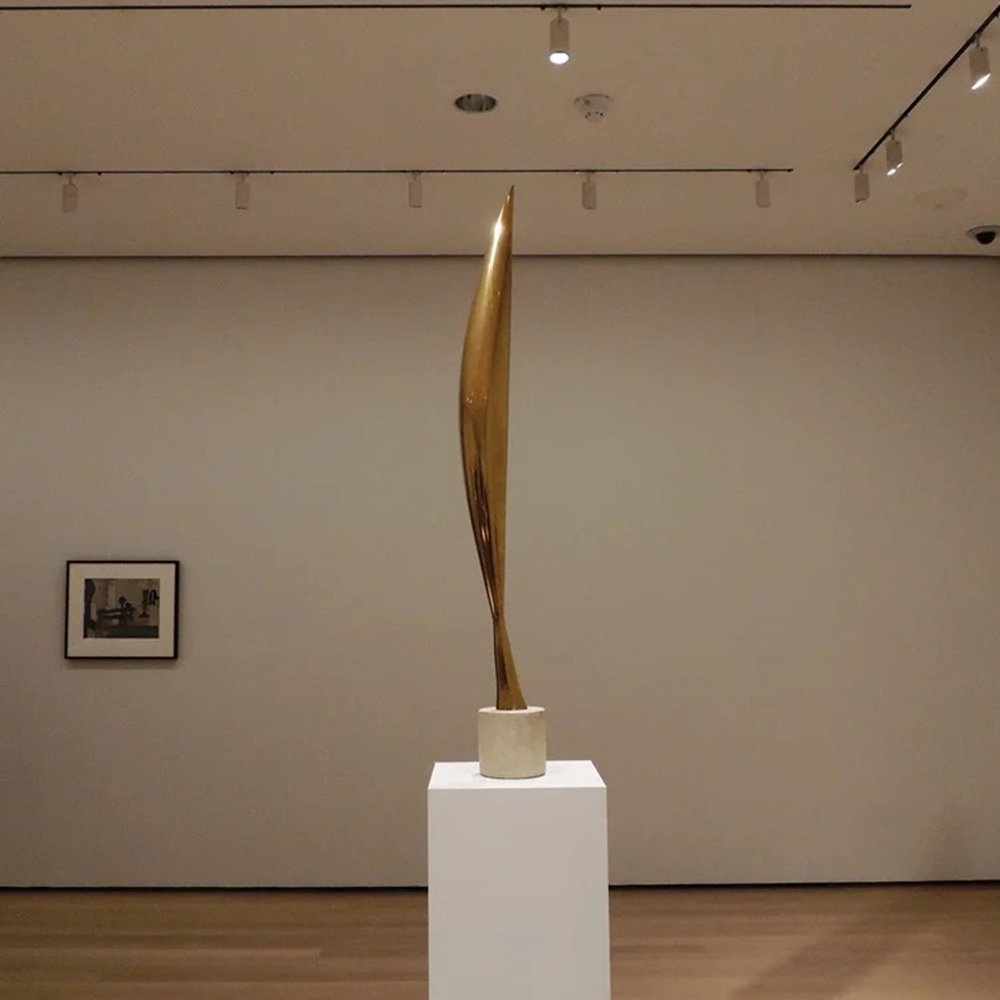
Bird in Space – Constantin Brancusi (Various Locations)
Copies of “Bird in Space” are found in numerous museums worldwide, with the two most famous located in the National Museum of Modern Art in Bucharest and the Museum of Modern Art in New York.
With its smooth and delicate surface, “Bird in Space” is not a realistic depiction of a bird, but rather an abstract expression of the “essence of flight.” The fluid and simple lines embody movement, speed, and the beauty of pure form.
Although frequently displayed in art institutions, it has had a profound influence on public abstract sculpture and modern landscape art.
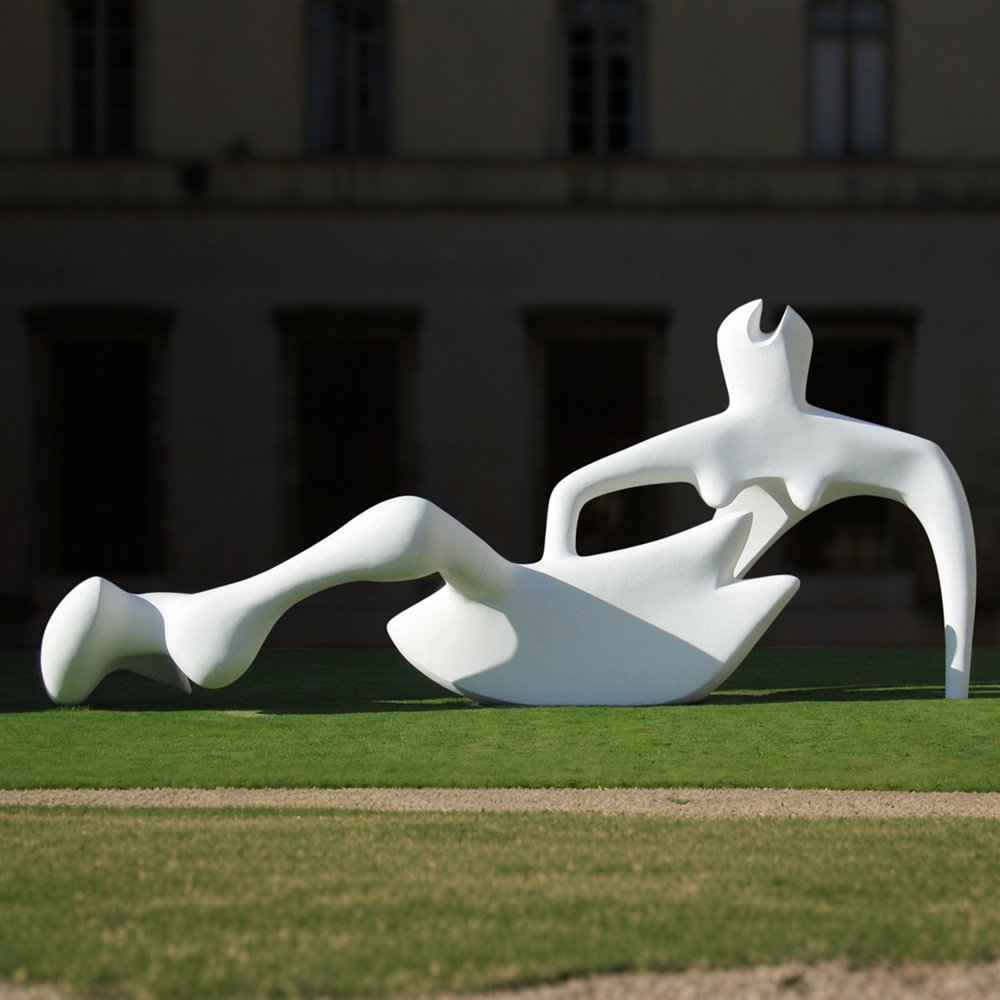
Reclining Figure – Henry Moore (Various Locations)
“Reclining Figure” is a classic series of works by British sculptor Henry Moore. Replicas can be found in numerous public spaces and museums worldwide, most notably at the Tate Modern in London and the Menil Collection in Houston.
Moore used the human body as his creative model, transforming the reclining figure into highly abstract sculptural forms through compression, stretching, and hollowing out. It breaks away from the realistic constraints of traditional human figure sculpture, emphasizing the interaction between form and space.
These sculptures are designed specifically for outdoor environments, creating a harmonious interaction with the grass, sky, and natural light, making them ideal visual focal points in parks and open spaces.
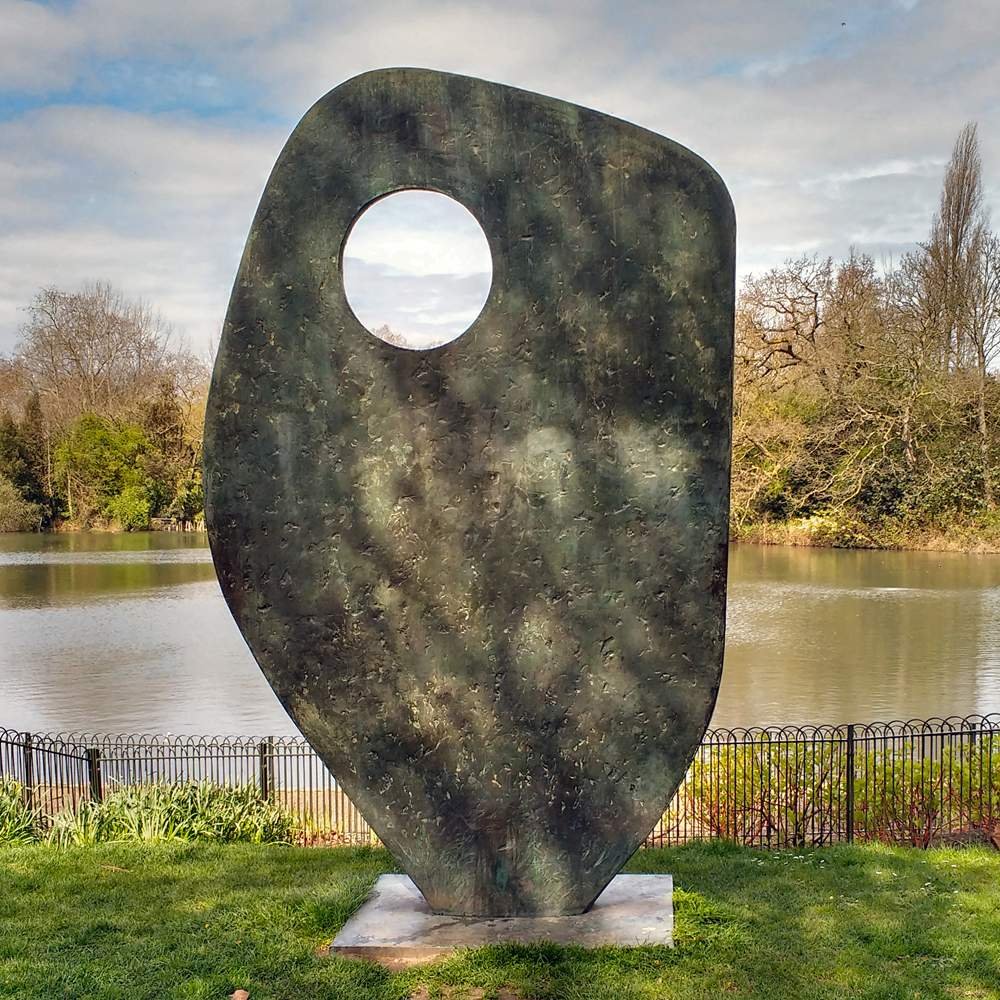
Single Form – Barbara Hepworth (New York, USA)
“Single Form,” created by British sculptor Barbara Hepworth, is located in the circular water feature at the United Nations Headquarters in New York.
It was created by Hepworth in memory of UN Secretary-General Dag Hammarskjöld. The sculpture features a simple, vertical column shape with a circular hole, conveying a sense of stability, solemnity, and harmony through its minimalist form, perfectly aligning with the UN’s ideals of peace and cooperation.
The international public setting of the artwork gives its abstract language a global significance.
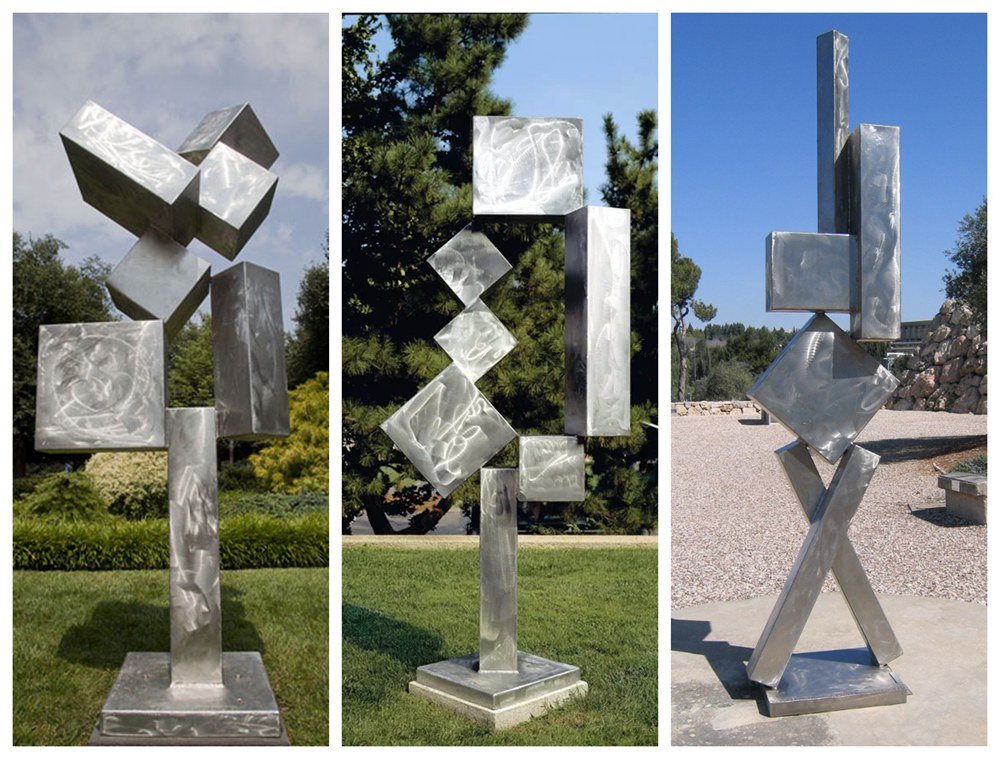
Cubi Series – David Smith (Various Locations)
The Cubi series is considered the masterpiece of American sculptor David Smith. Several works from this series are held in the collections of renowned institutions such as the Museum of Modern Art in New York and the Art Institute of Chicago, and some are displayed in public spaces.
These works primarily utilize stainless steel, employing techniques such as cutting, welding, and polishing to combine and reconstruct basic geometric forms such as cubes and cylinders, resulting in abstract forms that are both simple and rhythmic.
These sculptures stand in public spaces, becoming iconic symbols of modernist sculpture and prompting viewers to consider the relationship between art and industry, form and space.
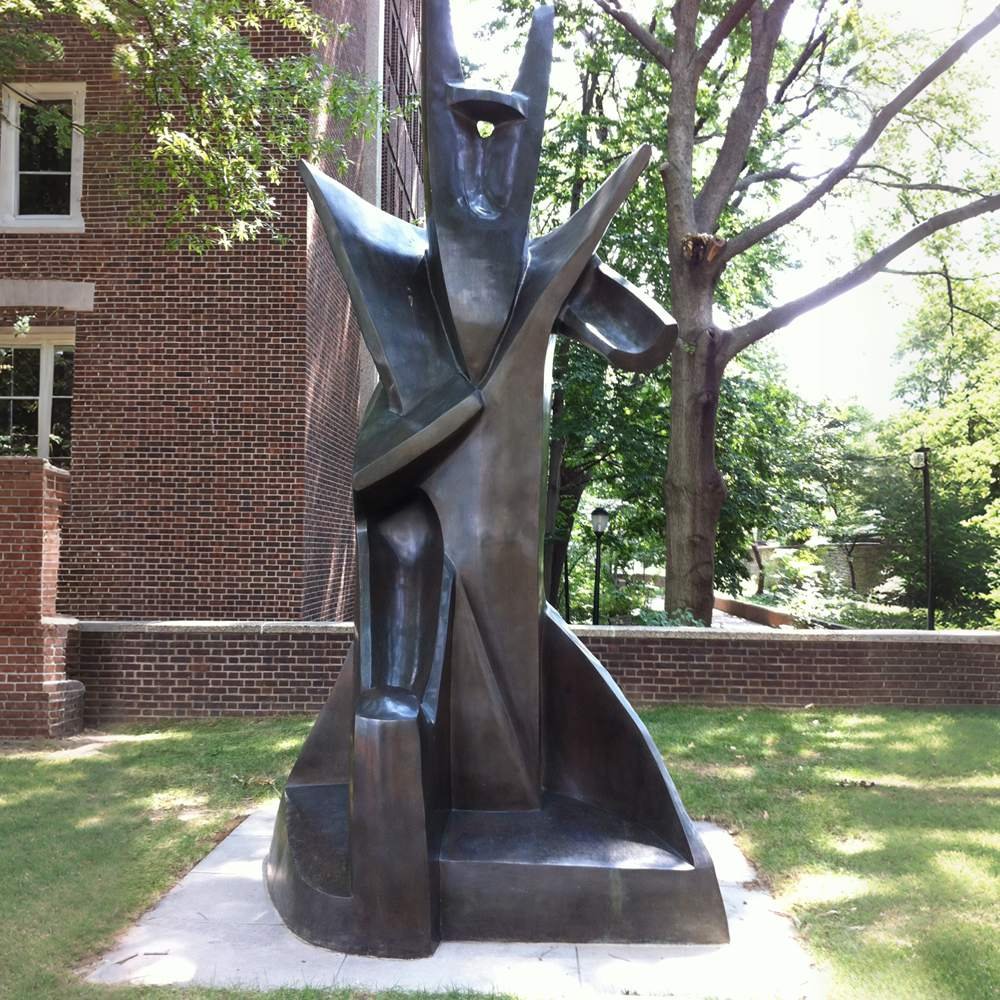
King Solomon– Alexander Archipenko (Various Locations)
“King Solomon” is an iconic abstract sculpture by the Ukrainian-born artist Alexander Archipenko, depicting Solomon, the son of King David of Israel, a king renowned for his wisdom in the Bible, who reigned in the 10th century BC.
The work constructs a three-dimensional image that integrates multiple perspectives through overlapping geometric planes and simplified forms. Solomon sits on an architectural framework, his throne and body seamlessly integrated, extending downwards to the base, forming a towering and dynamic irregular structure. His head is suggested by two elongated shapes hinting at a crown, the large triangular shapes on his shoulders symbolize a magnificent robe, and the mask-like face subtly reflects the influence of African art on Cubism. The overall form is angular and dynamic, embodying the Futurist aesthetic pursuit of mechanical power and speed.
Created decades after the rise of Cubism, this work remains a quintessential example of the Cubist style.
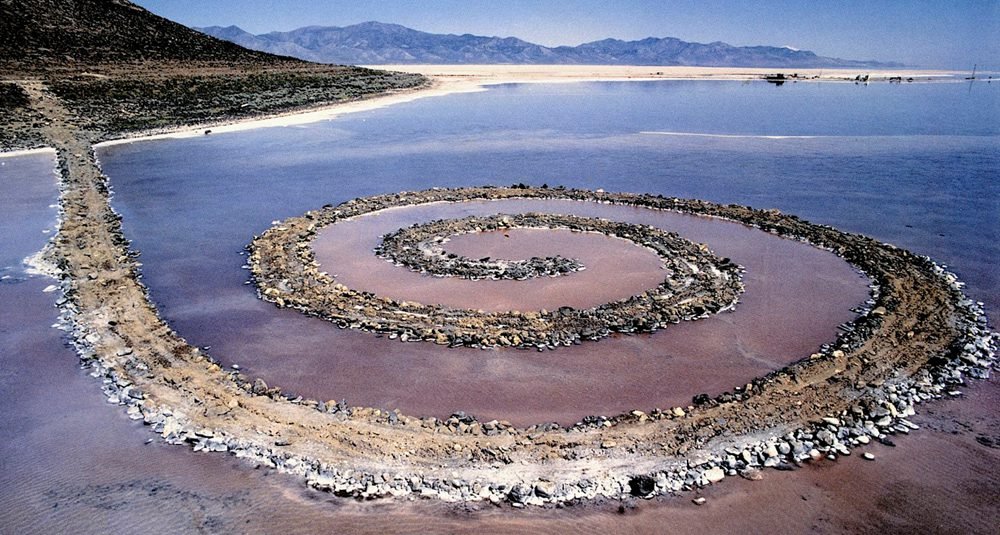
Spiral Jetty – Robert Smithson (Utah, USA)
Spiral Jetty is a representative work by American land artist Robert Smithson, located in the Great Salt Lake in Utah, USA.
Constructed primarily from black basalt, salt crystals, and earth, it forms a spiral-shaped jetty on the shallow waters of the Great Salt Lake. The spiral is 460 meters long and 4.6 meters wide, with its center pointing towards the middle of the lake.
The artwork changes its appearance depending on water levels and weather conditions. When the water level rises, it is submerged; when the water level drops, it reappears, with salt crystals accumulating on its surface, giving it a white texture.
With its grand abstract form, it showcases the magnificence of nature and the inclusiveness of art, becoming a landmark work in the field of land art.
Conclusion:
These 10 famous abstract sculptures, whether located in bustling city squares or tranquil natural environments, successfully elevate public spaces into culturally significant landmarks. As classic examples of public art, these works enrich the layers of urban or natural landscapes and also provide lasting design inspiration for architects, landscape designers, and related projects.
If you have similar creative ideas that you’d like to bring to life, please feel free to contact us. YouFine Art Sculpture factory, with 40 years of experience and expertise, would ensure your satisfaction.