Whether you are a landscape designer, architect, or artist seeking high-quality foundry; a high-end homeowner, real estate developer, or collector prioritizing both cost and quality; or simply an enthusiast curious about the craft, you likely wish to understand how bronze sculptures are made.
Quick Answer:
Bronze sculptures are mainly cast using the lost-wax method. The Making Process involves over a dozen core stages—including design finalization, clay modeling, wax shell creation, bronze shell casting, welding, polishing, and patina—so that it results in high detail, durable bronze sculptures with both artistic and collectible value.
The Evolution of Bronze Techniques: Ancient to Renaissance
Before diving into the modern bronze statue-making process, it helps to understand how these techniques evolved over time. The core method used today—the lost-wax casting process—actually dates back thousands of years.
-
How Were Ancient Bronze Sculptures Made? (Early Foundations)
Ancient civilizations, including Egypt, China, Greece, and Rome, developed the basic lost-wax method:
- Create a clay or wax model
- Make a mold around the model
- Melt and remove the wax
- Pour molten bronze into the hollow mold
This shift to hollow casting made statues lighter, more efficient, and more detailed.
-
How Were Bronze Statues Made in Ancient Greece? (Refinement & Realism)
Greeks refined lost-wax casting to a higher level:
- Cast statues in separate hollow parts
- Assemble sections carefully
- Achieve realistic anatomy and dynamic poses
They improved precision, proportion, and detail without changing the core method.
-
How Are Bronze Sculptures Made During the Renaissance? (Revival & Improvement)
Renaissance masters such as Donatello and Ghiberti further optimized the process:
- Better understanding of human anatomy
- More accurate mold-making
- Fewer defects and smoother finishes
The core technique remained, but quality and consistency greatly improved.
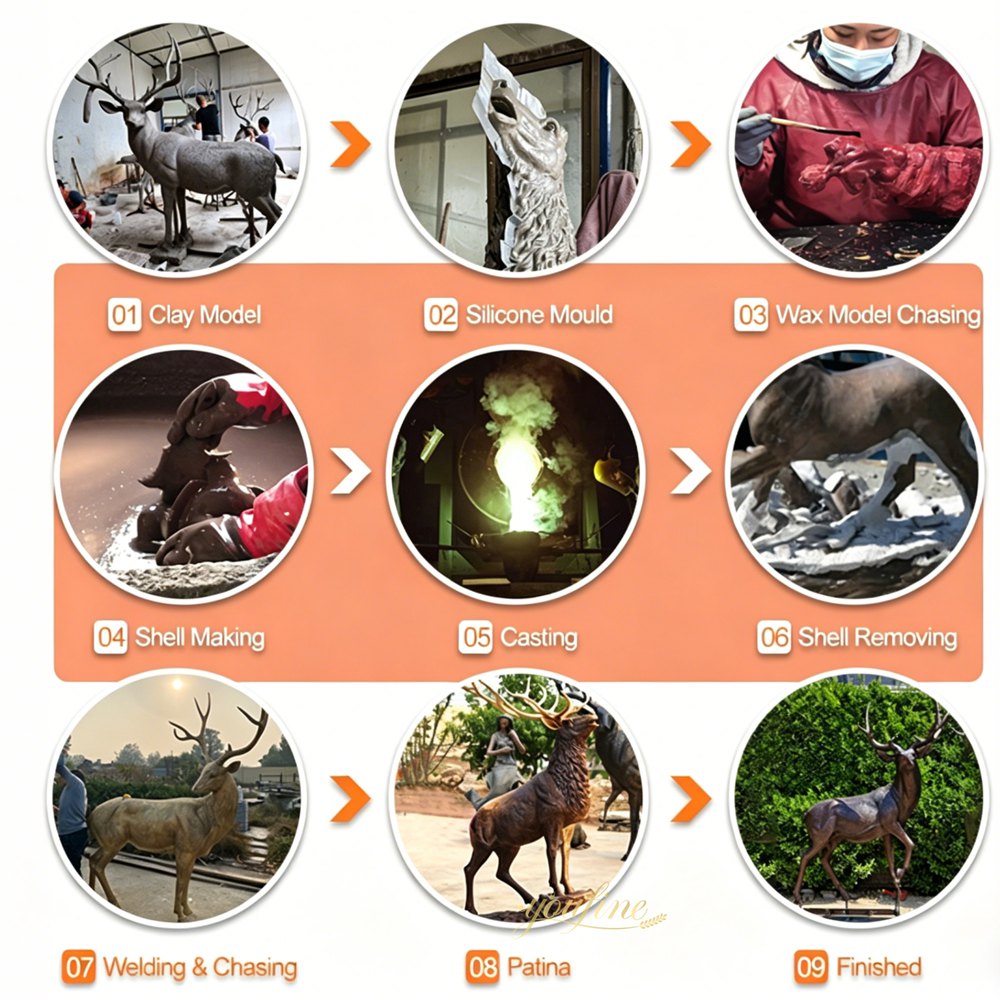
Modern Lost-Wax Process: 11 Steps
Design Confirmation
Every sculpture starts with a design—this can be a sketch, 3D model, or reference image. At this stage, size, proportions, and installation environment are determined.
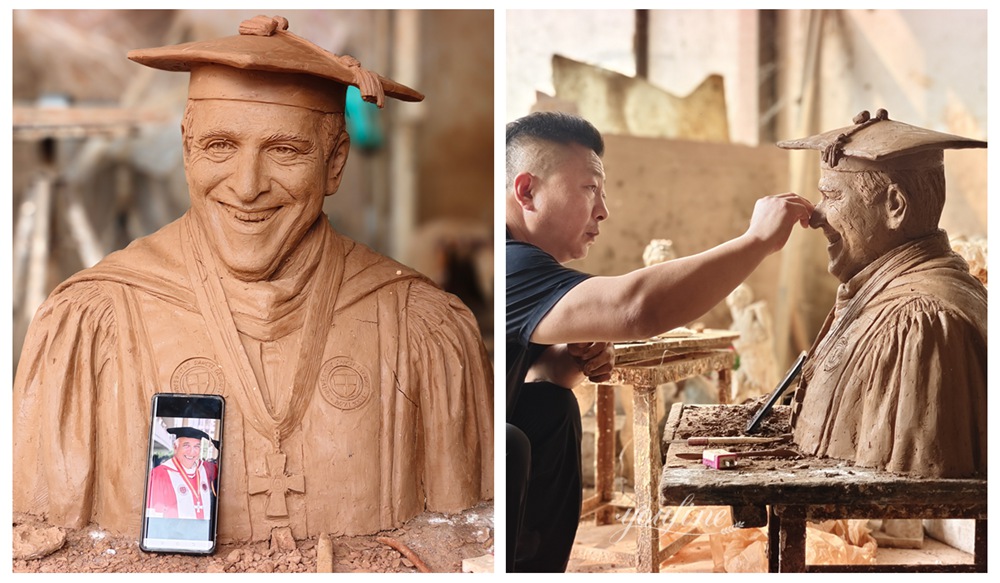
Making a Clay Model
Artists create a full-scale clay model, which captures all the fine details of the sculpture. This is the foundation of everything that follows. A good clay model can achieve an astonishing 97% accuracy in reproducing the original work.
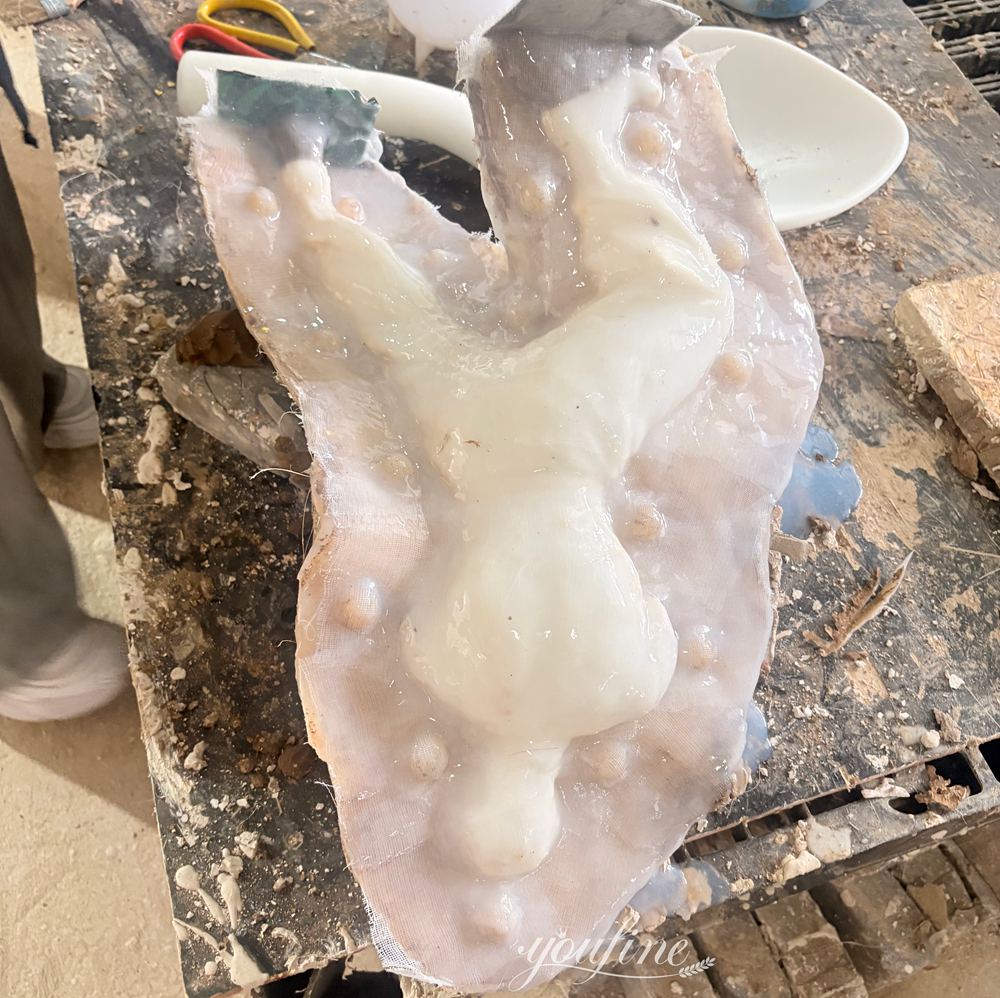
Silicone Mould Making
To replicate the clay model, we apply a flexible silicone mould over the clay model. This flexible material captures the “fingerprint” of the original sculpture. For instance, the fur of animals, the wrinkles on human faces, etc., are supported by a rigid plaster outer shell.
Creating the Wax Replica
Molten wax is poured into the silicone mould to create a hollow wax copy. This replica is the “twin” of the final bronze.
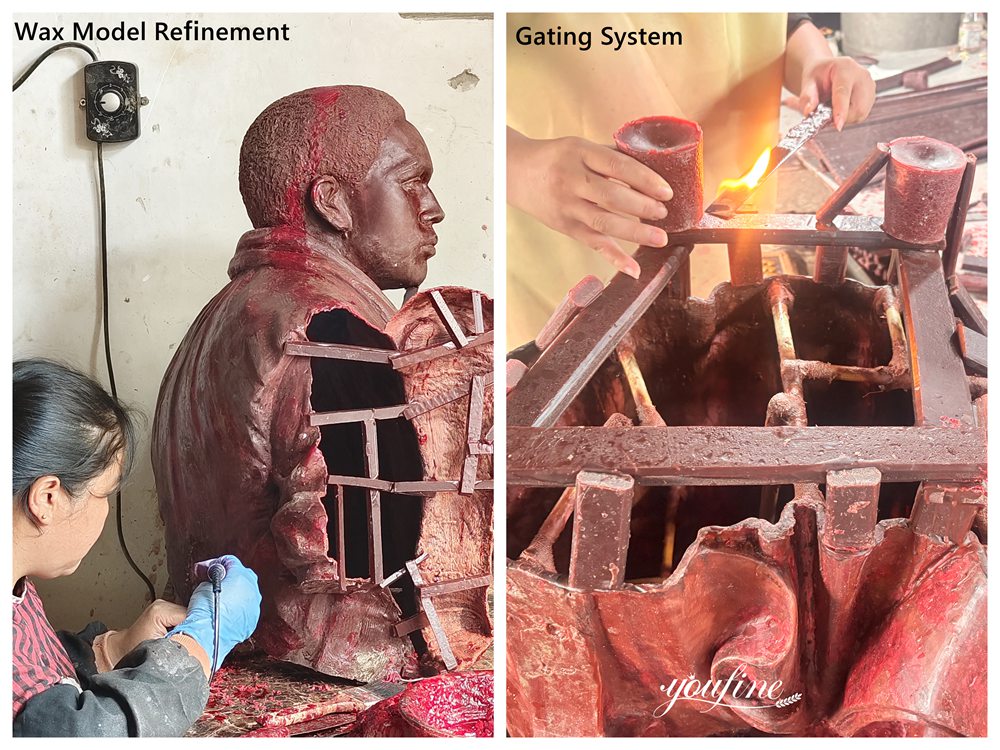
Wax Refinement
Wax finishing refines the wax model by repairing air bubbles, burrs, and optimizing textures and details, ensuring high fidelity to the original design and laying the groundwork for precise bronze casting.
A gating system of wax channels and cups is also added to allow gas escape and molten wax drainage during firing, preparing the shell for bronze pouring.
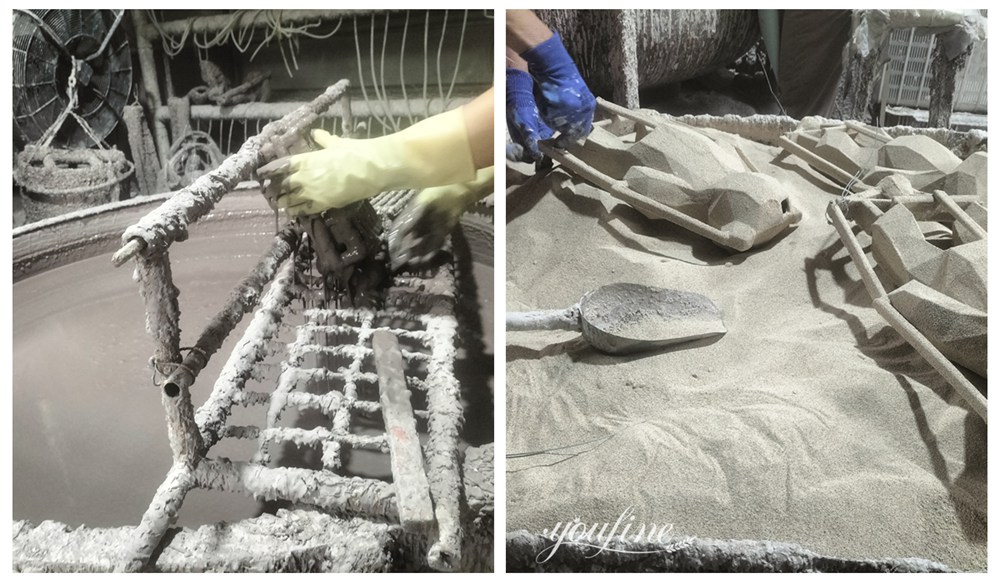
Making Sand Shell with Silica Sol
The wax model is dipped into a silica sol slurry and coated with sand. This is repeated about 8 times, moving from fine sand (to prevent sand holes), medium sand (to reinforce the structure of the sand shell), and coarse sand (to build thickness).
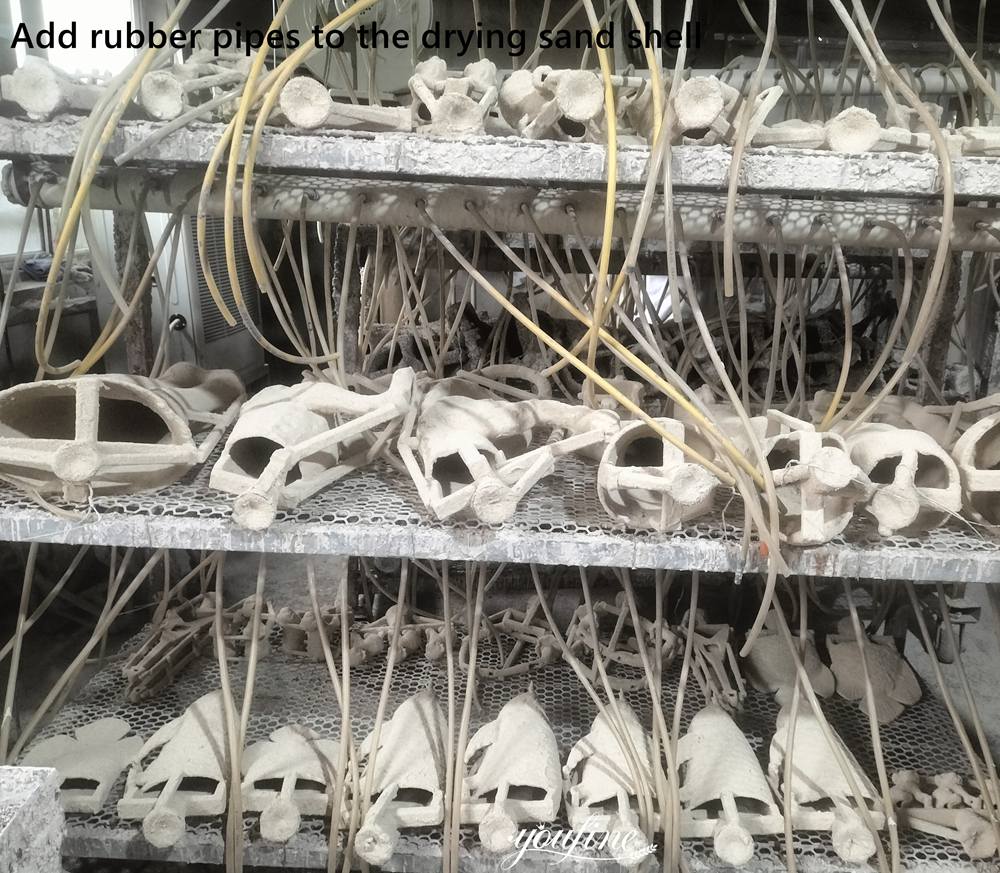
We add specialized rubber pipes to finish this stage to facilitate rapid drying and air ventilation.
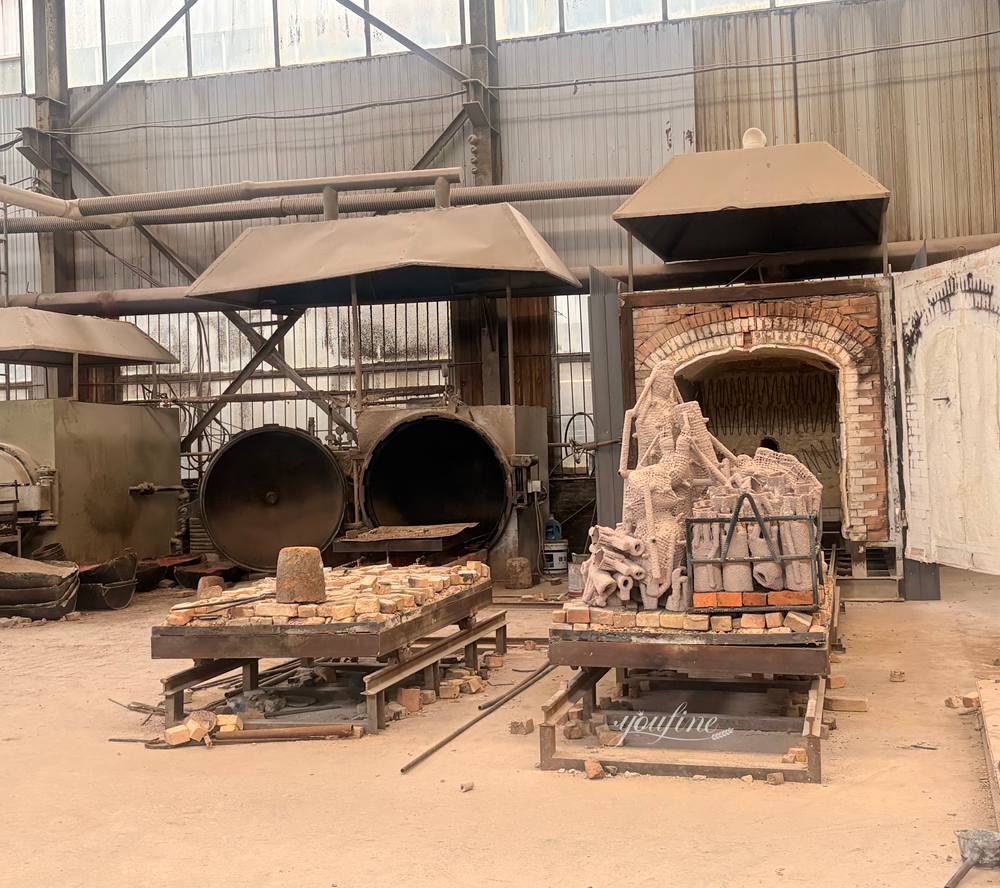
High-Temperature Dewaxing
The sand shell is heated in a furnace, melting and draining the wax—this is why it’s called the lost-wax process. thus leaving behind a hollow shell of sand.
The Bronze Pour
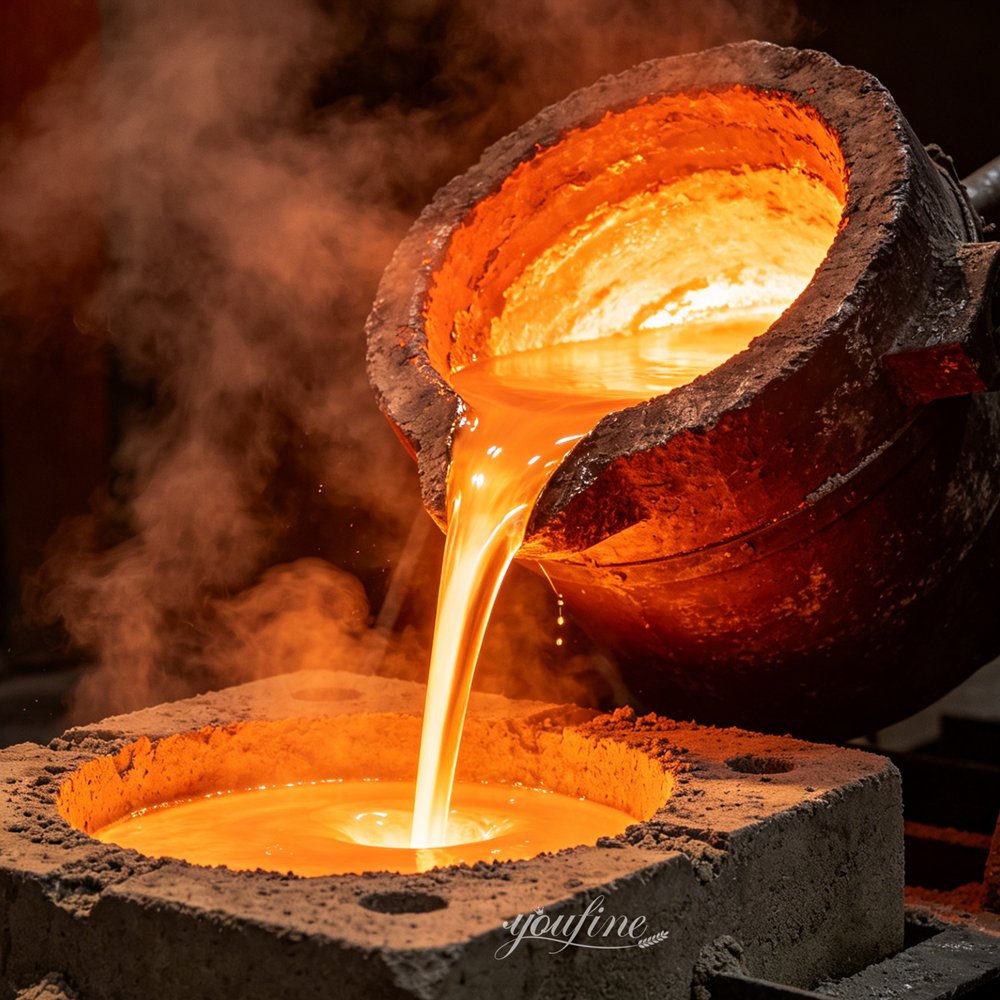
Bronze (heated to around 1100°C / 2012°F) is poured into the pre-heated shell.
Cooling & Shell Removal
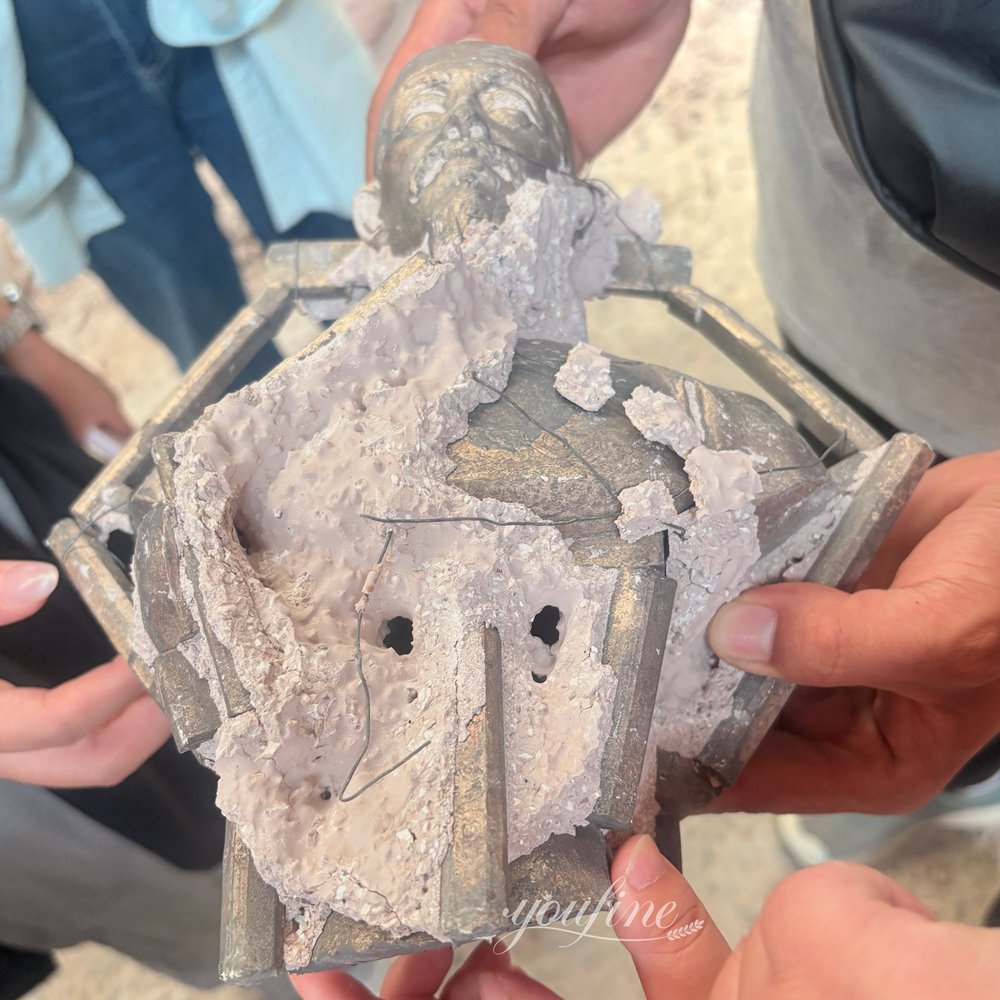
Once cooled, the sand shell is broken away. Thus, the bronze shell was formed. Thus, the bronze shell was formed. At this point, we will remove the redundant “gates” (pouring channels) to ensure the overall structure of the sculpture.
Welding and Polishing
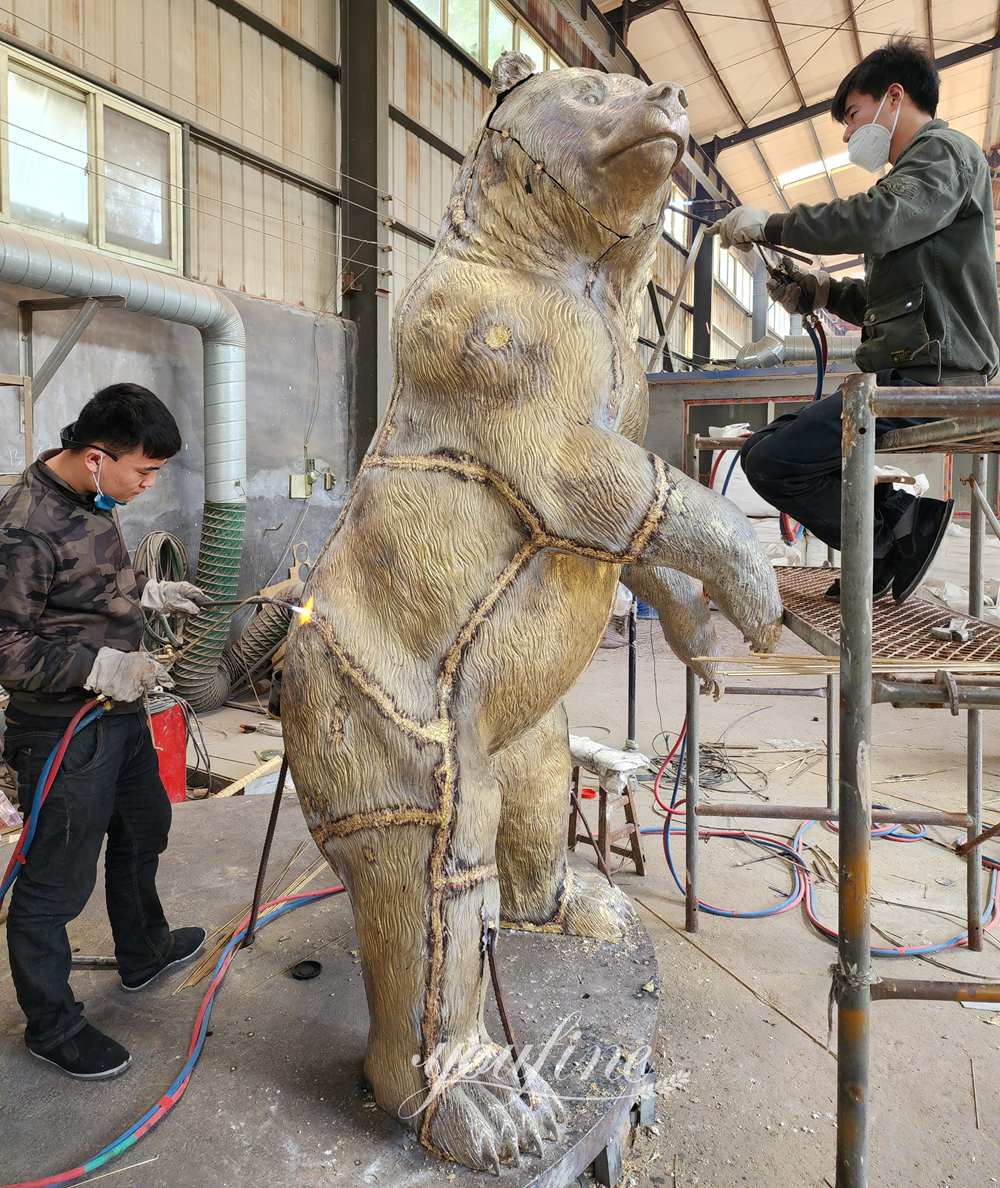
After casting, the bronze parts are joined by spot and full welding. Weld seams are carefully ground and polished to blend seamlessly into the sculpture.
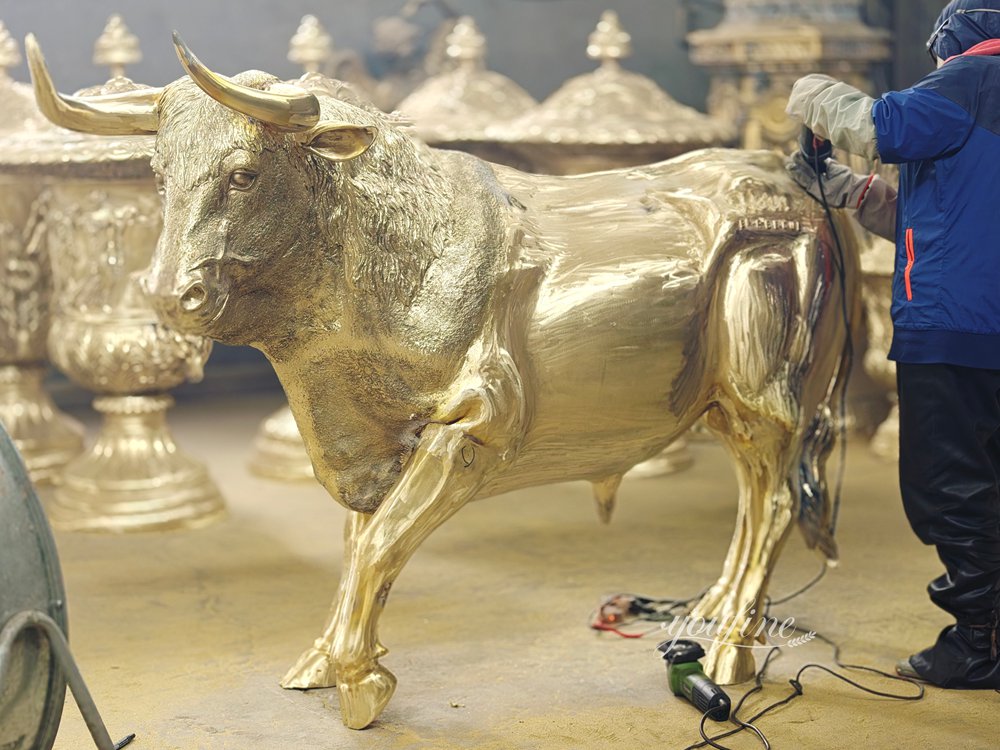
The entire surface is polished repeatedly to remove sand holes and imperfections, resulting in a smooth, flawless surface.
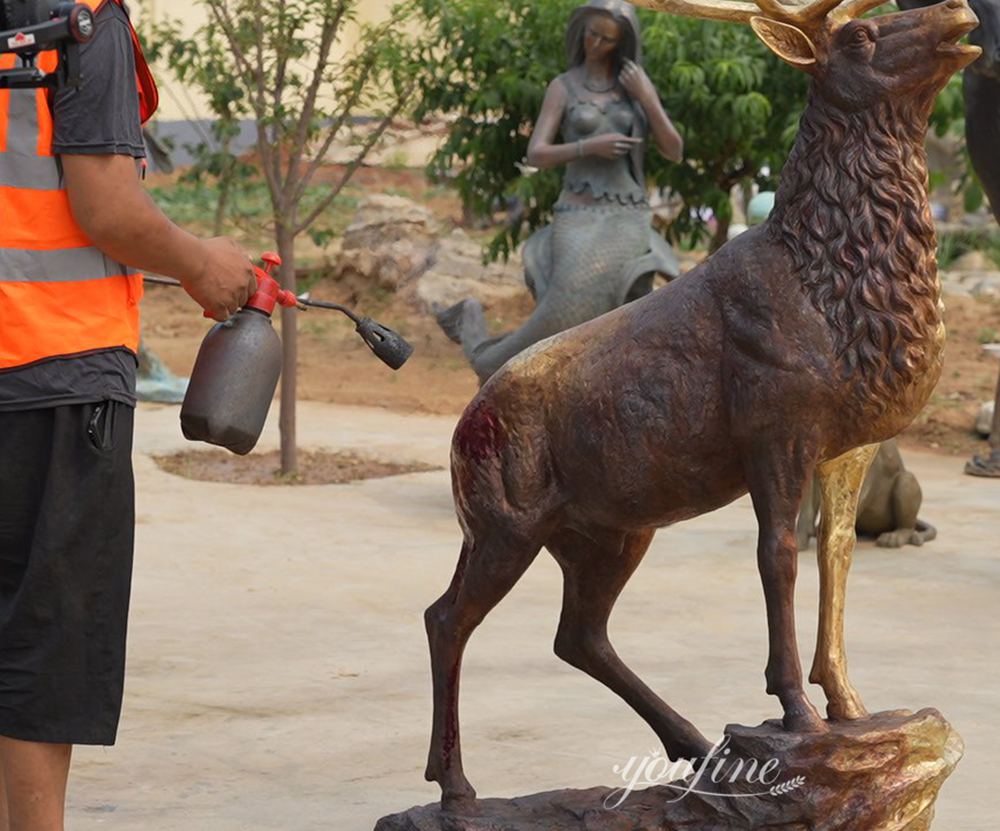
Surface Finishing (Patina & Coloring)
Coloring is a critical stage following the casting of a bronze sculpture. It primarily employs chemical patination—a process in which heat and chemical agents are applied to induce reactions that bring out the desired coloration.
Also, techniques such as spray painting, hand-painting, and gold leaf application (gilding) are used to meet customized requirements for various settings, artistic styles, and decorative effects.
Modern Other Casting Methods:
-
Cold Casting (Not Real Bronze)
- Made from resin + bronze powder
- Lower cost, lighter weight
- Lacks durability and authenticity
-
Melted Copper Art
A unique artistic technique pioneered by Zhu Bingren:
- Copper is melted and shaped directly
- More expressive, less controlled
- Better suited for the creation of abstract art sculptures.
If you want high detail, longevity, and true artistic value, lost-wax bronze casting remains the gold standard.
How to Tell If a Bronze Sculpture Is High-Quality?
A high-quality bronze sculpture that is really worth passing down to your family in the future needs to meet the standards in these five areas:
-
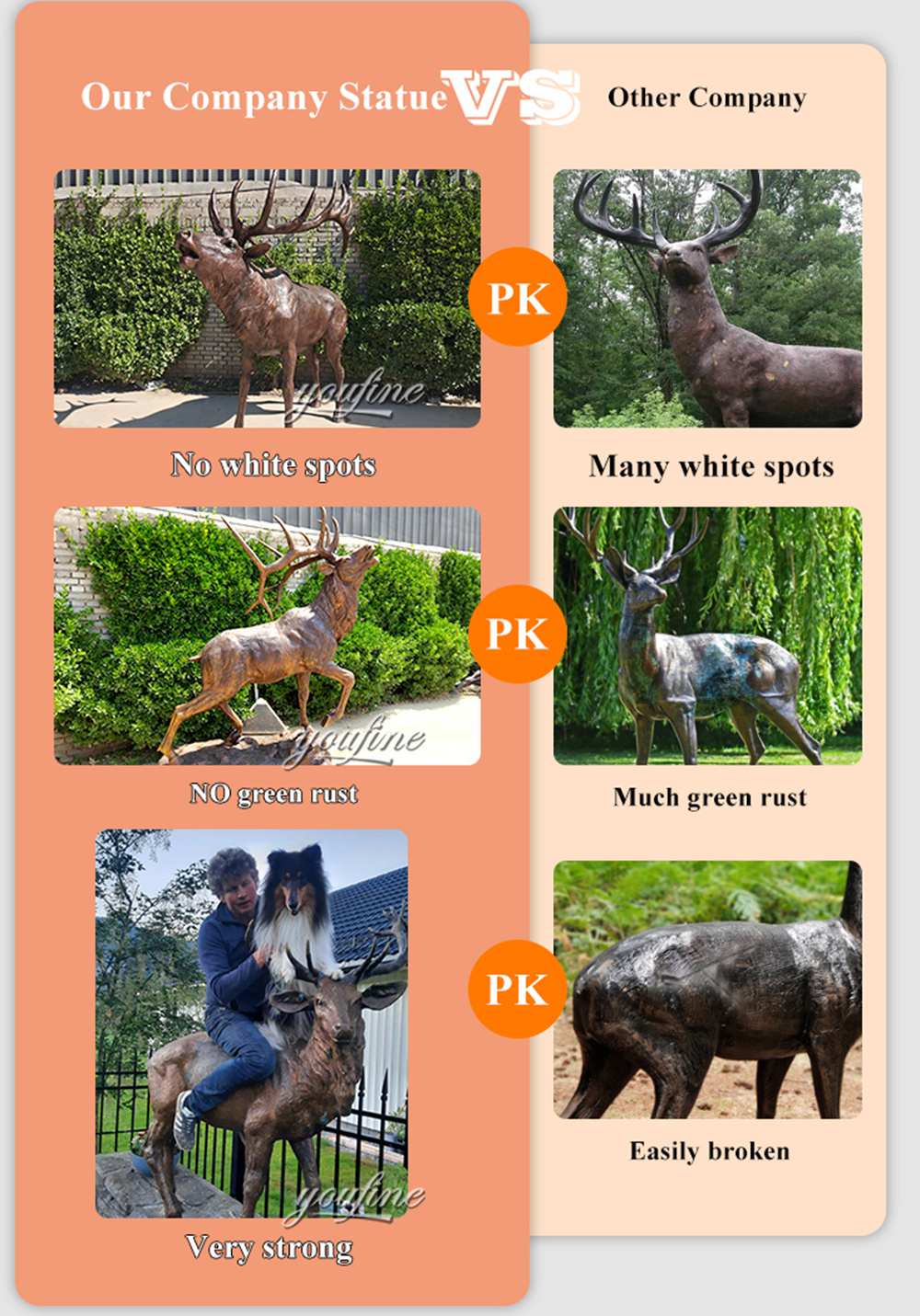
Premium Silica Sol Casting Process
Compared to the lower-cost ammonia-based process, the silica sol method effectively prevents the appearance of white spots, alkali bloom, or corrosion on the sculpture’s surface.
We consistently utilize silica sol for shell-making to ensure that the sculpture maintains a stable appearance and retains its original texture for decades.
-
Scientific, High-Standard Bronze Composition
We strictly control the copper content within the 83%–95% range and judiciously incorporate alloying elements—such as silicon, tin, and zinc—to significantly enhance the sculpture’s structural strength and resistance to aging.
By insisting on the use of high-content bronze raw materials, we guarantee the quality of the artwork right from the source.
-
Substantial and Uniform Bronze Shell Thickness
The standard thickness of the bronze shell is maintained between 5 and 8 mm, ensuring overall sturdiness, durability, and resistance to deformation.
We refuse to compromise on the thickness of the bronze layer for the sake of lower costs, thereby ensuring that every sculpture possesses the reliability required for long-term outdoor exposure.
-
Exquisitely Fine Surface Processing
Our sculptures are free of visible sand holes and exposed weld seams, featuring surface transitions that are smooth and natural.
Intricate details—such as human expressions, animal fur, and muscle contours—are rendered with lifelike precision.
-
High-Temperature Chemical Patination
Rather than relying on surface spray paint, we employ a professional high-temperature chemical patina process.
This technique produces a natural, uniform coloration with strong adhesion that resists fading over time; furthermore, as the years pass, the sculpture acquires an even richer artistic texture and a distinct vintage charm.
FAQs
Which is the most famous bronze sculpture?
“The Thinker” by Auguste Rodin is the world’s most iconic bronze masterpiece, universally recognized as a symbol of human intellect and philosophical depth.
How long do bronze statues last?
Bronze sculptures can last hundreds to thousands of years, as proven by works from ancient civilizations like Ancient Greece.
Are bronze statues worth any money?
Yes, bronze statues hold high value as durable art investments and tangible assets. Their value depends on the artist, age, history, casting quality, and size. Small pieces are affordable, while large, significant works can cost thousands or even millions of dollars.
Is a higher copper content always better for a bronze sculpture?
No, actually, pure copper is too soft for casting fine details; the ideal “Gold Standard” is an alloy of 83% to 95% copper.
Adding elements like tin and zinc is essential to ensure structural hardness, sharp detail, and superior resistance to outdoor corrosion.
How much does a bronze statue cost?
Pricing depends on factors such as size and the complexity of the craftsmanship. Generally, small bronze sculptures range in price from $500 to $1,500; life-size bronze sculptures range from $2,500 to $8,000; and large-scale public bronze sculptures start at $8,500 and up.
How long does it take to make a bronze sculpture?
Typical production time:
- Small sculptures: 20–35 days
- Medium sculptures: 30–60 days
- Large or complex projects: 2–4 months (or longer)
Factors affecting time:
- Size and complexity
- Number of pieces
- If customization
- Requirements for Details
- Requirements for Surface Color
How to spot fake bronze statues?
7 Quick Testing Methods:
- Weight Test: Real bronze is dense and heavy; light statues are usually fake.
- Magnet Test: Bronze is non-magnetic; a magnet sticking means coated metal.
- Scratch Test: A yellow-red scratch shows real bronze; other colors are fake.
- Sound Test: Real bronze rings clearly; fakes make a dull, short sound.
- Patina Test: Real patina is natural and uneven; fake patina looks like a painted coating.
- Seam Check: Real lost-wax bronze has smooth, invisible seams; rough seams mean fake.
- Base Check: The base should match the aged patina, not look new.
How to Maintain Bronze Sculptures?
Simply dust with a soft cloth and apply a clear wax coating every 1–2 years to maintain the patina’s luster.
Final Thoughts
The creation of bronze sculptures stands as a powerful testament to human patience and exquisite craftsmanship. At YouFine Art Sculpture Gallery, drawing upon over forty years of dedicated research and practice, we are committed to crafting high-quality bronze sculptures that most faithfully bring your artistic vision to life.
Whether you are seeking bronze figure statues, bronze religious statues, bronze animal statues, bronze fountains, or custom bronze statues, we offer comprehensive, one-stop services to meet your needs.
In addition to serving private clients, we also have the artist collaboration sculpture project. Therefore, should you have any specific projects or needs, please do not hesitate to contact us directly; we look forward to the opportunity to work with you!