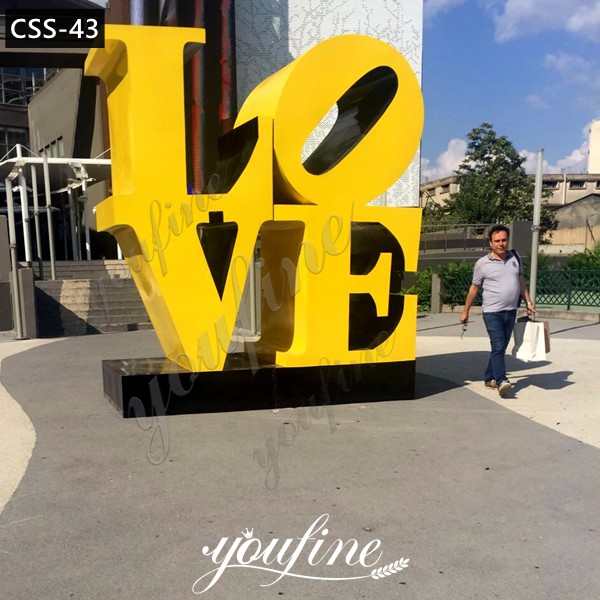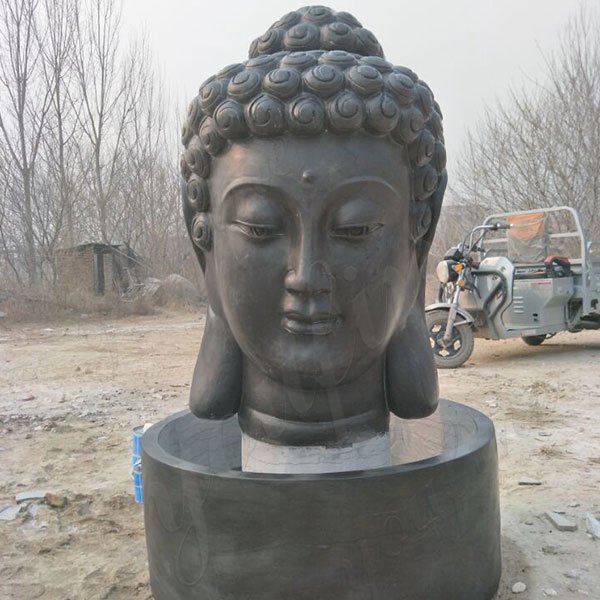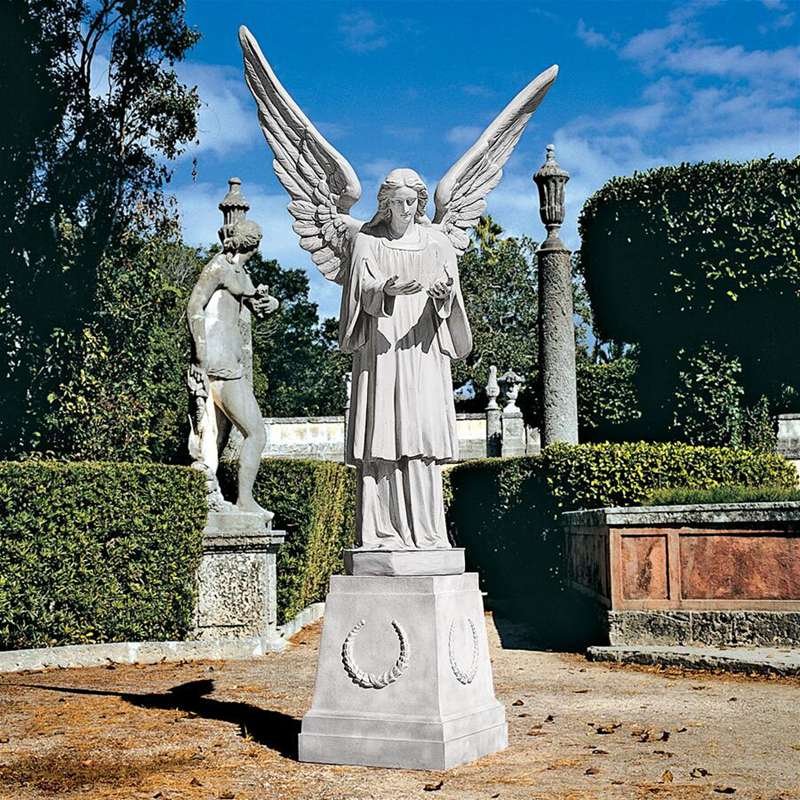
Sculpture is one of the oldest and most expressive art forms in human history. Whether classical or modern, every sculpture is created using a specific technique that determines the method of creation, the materials used, and the final result.
In this article, we will introduce four of the 4 basic sculpture techniques in a clear and easy-to-understand manner: carving, modeling, casting, and assembling. These techniques form the basis of sculpture, from ancient stone carvings to contemporary public art.
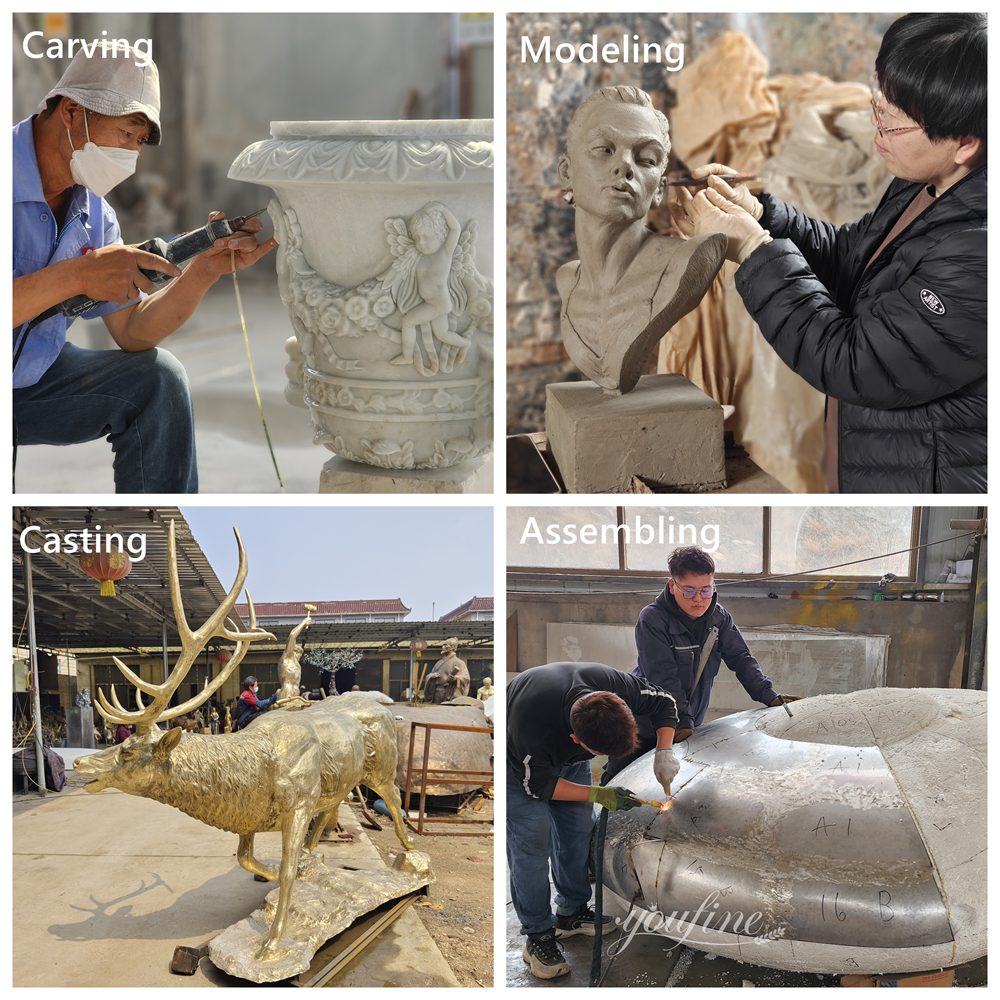
Carving Technique in Sculpture
(Subtractive Sculpture) “I simply removed the excess material, leaving David.” — Michelangelo
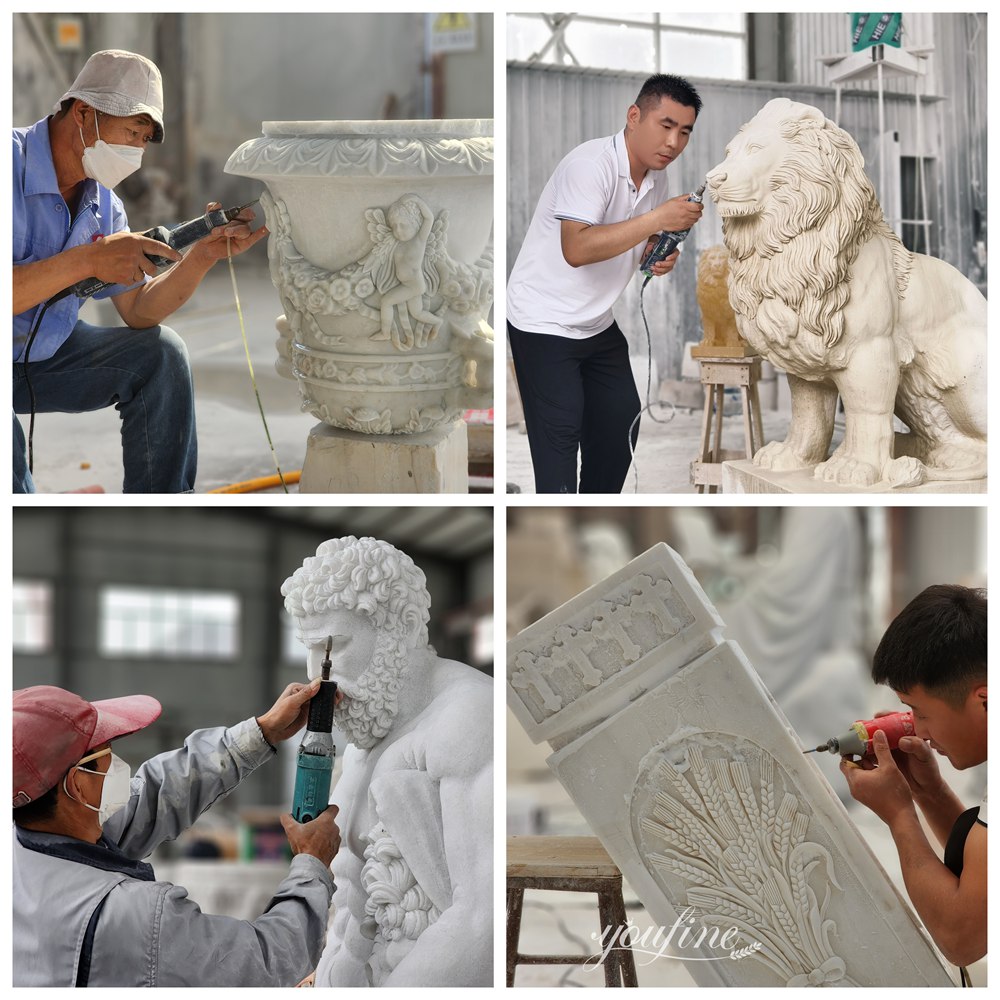
Carving is a sculptural technique that involves creating a form by continuously removing material from a larger mass.
Common Materials: Marble, granite, limestone, wood
Main Characteristics:
- Once material is removed, it cannot be restored.
- Requires high skill and experience.
- Limited room for modification.
- Closely linked to traditional and classical sculpture.
Modern Upgrade: Machine Cutting + Hand Carving: First, the cutting is done using a CNC numerical control machine, and then the artist performs the detailed hand-carving.
Common Applications: Figurative sculptures, religious sculptures, architectural decoration
Carving is one of the oldest sculpting techniques and is still widely used in stone and wood carving.
Modeling Sculpture
(Additive Sculpture)
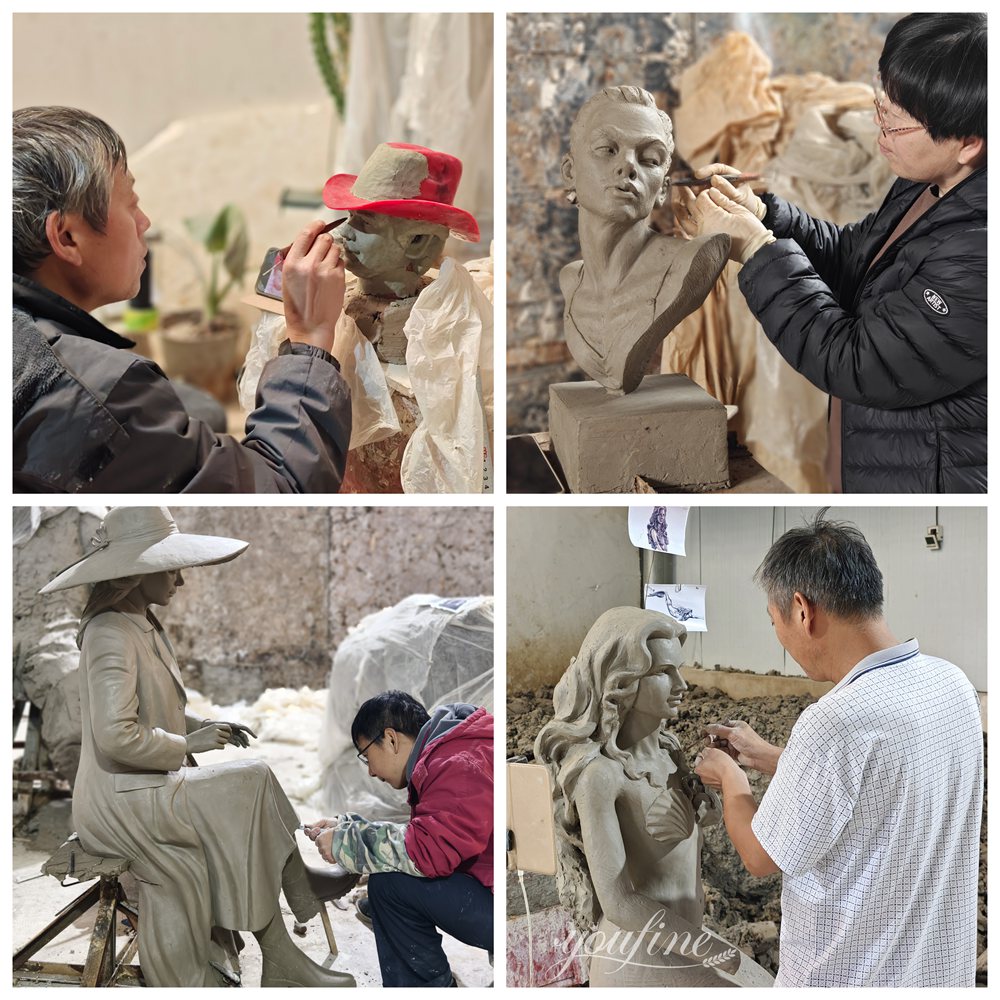
Modeling is a sculpting technique that involves continuously adding material and shaping the form. It can be done manually or with the help of digital tools.
Common Materials: Clay, wax, plaster, 3D model
Main Characteristics:
- Easy to modify and adjust.
- Suitable for creative exploration.
- Ideal for prototyping.
- Often, a crucial step before casting.
Modern Significance: In modern customization, 3D modeling is akin to the “digital sketch” of a complex sculpture. It not only supports 360° preview but also enables precise reproduction of the design through 3D printing.
Common Applications: Custom figures, wax models for bronze casting, digital sculpture design
Modeling offers the highest degree of creative freedom and is often used in the initial design stages of complex sculptures.
Casting Technique in Sculpture
(Replacement/Additive)
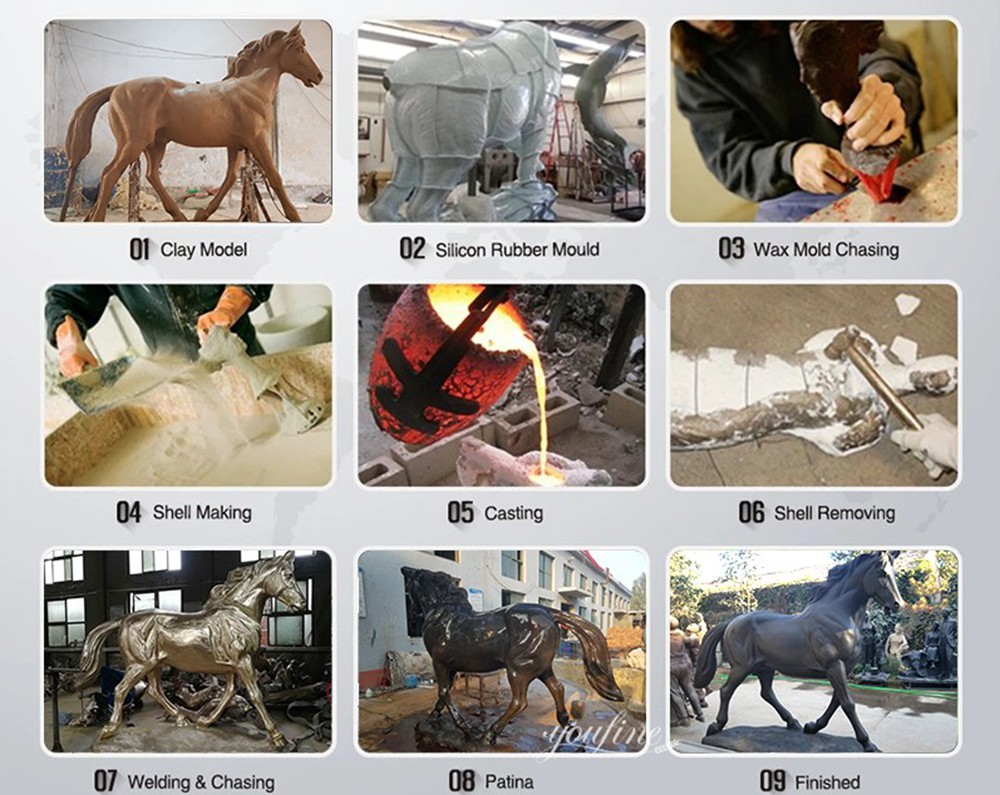
Casting is a technique in which liquid material is poured into a mold and then cooled to form the final sculpture.
Common Materials: Bronze, resin, concrete, cast iron
Main Characteristics:
- Highly detailed reproduction of features such as skin wrinkles, eyes, and hair.
- Finished products are strong and durable.
- Very suitable for outdoor and large-scale sculptures.
- Multiple copies can be produced from the same mold.
Common Applications:
Bronze sculptures made using the lost-wax method, public memorial sculptures, garden and architectural sculptures
Casting techniques (especially bronze casting) hold an irreplaceable position in public art and long-term outdoor sculptures.
Assembling Technique in Sculpture
(Additive)
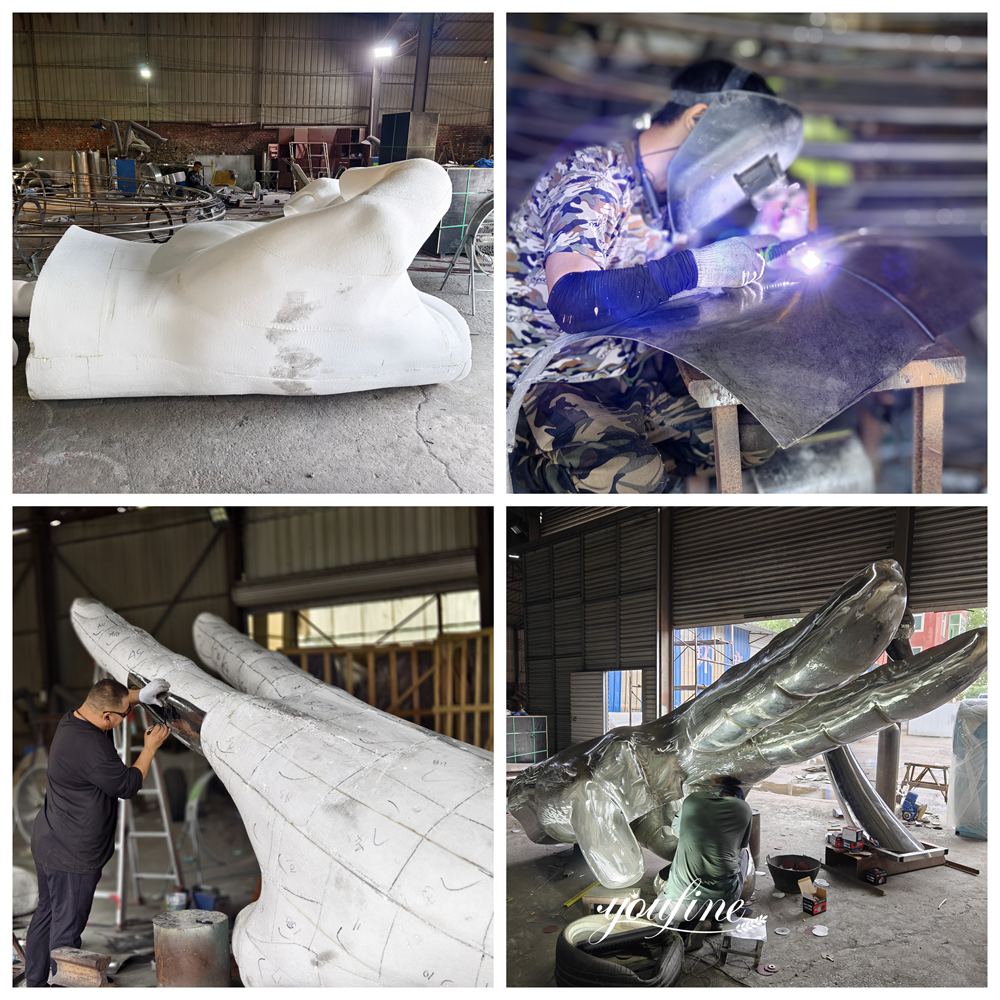
Assembly is a sculptural technique that involves connecting, welding, or joining different components to create a sculpture.
Common Materials: Metal components (such as stainless steel, weathering steel), wood, mixed or recycled materials
Main Characteristics:
- Strong sense of structure.
- High degree of design flexibility.
- Closely related to modern and contemporary art.
- Can extend infinitely into space, creating a stunning visual effect.
- Requires high engineering skills, such as weld treatment and structural stability.
Common Applications: Welded metal sculptures, abstract sculptures, installation art, and industrial-style works.
Assembly techniques allow sculpture to break free from the limitations of traditional materials and forms, becoming an important mode of expression in contemporary sculpture.
The 4 Basic Sculpture Techniques at a Glance
| Sculpture Technique | Production Method | Core Principle | Common Materials | Best Uses |
|---|---|---|---|---|
| Carving | Material removal | Subtractive | Marble, stone, wood | Stone & wood sculptures |
| Modeling | Material addition | Additive | Clay, wax, 3D models | Prototypes & artistic creation |
| Casting | Mold pouring | Additive (from model) | Bronze, resin, concrete | Outdoor & public sculptures |
| Assembling | Joining parts | Constructive | Metal, mixed materials | Modern & abstract sculptures |
How to Choose the Right Sculpting Technique
The choice of sculpting technique usually depends on several practical factors:
1️⃣ Based on Installation Location
Outdoor or public spaces
→ Casting or stone carving (strong weather resistance)
Indoor display or gallery spaces
→ Modeling or assembly
2️⃣ Based on Material Preference
Preference for natural, traditional textures
→ Carving
Seeking metallic effects and great detail
→ Casting
Emphasis on creative freedom
→ Modeling
3️⃣ Based on Sculptural Complexity
Complex shapes, rich details
→ Modeling + Casting
Strong structural sense, industrial style
→ Assembly
4️⃣ Multiple Techniques Can Be Combined in Actual Projects
In actual creation, a sculpture often combines multiple techniques, for example:
Modeling first, then bronze casting, or digital modeling, followed by partial manual processing.
FAQ:
Why are bronze sculptures usually more expensive than marble sculptures?
A: Because casting involves two complete stages: first, modeling (additive process), and then complex molding and high-temperature melting (transformative process). It encompasses both artistic creation and highly skilled industrial manufacturing.
Besides carving, modeling, casting, and assembly, what other sculpting techniques are worth noting?
A: Modern sculpture also features several distinctive techniques:
Forging: Shaping metal through heating and hammering, commonly used for fluid forms in iron or stainless steel.
3D printing: High-precision creation of complex structures or detailed prototypes.
Laser cutting: Precisely cutting patterns on metal sheets, suitable for industrial-style works such as screens and signage.
Mixed media: Combining various materials such as stone, metal, glass, and wood to create avant-garde contemporary art installations.
What is the difference between forging and casting?
A: Casting involves shaping in a liquid state and is well-suited for intricate and complex designs; forging involves shaping in a solid state and emphasizes strength and a handcrafted feel.
Conclusion
In the YouFine Art Sculpture Gallery factory, these techniques are rarely used in isolation. We often utilize modeling to determine the initial form, casting to create core components, and finally assembling to perfectly integrate different materials. So that ensures the sculpture’s high quality.
Do you have a unique idea that you want to bring to life? Whether you seek the timelessness of stone or the dynamism of metal, our skilled experts can provide the most suitable solutions for you. Contact us, and let us bring your artistic vision to life with our exquisite craftsmanship!