Introduction
Throughout the history of human art, marble has been a favorite medium for sculptors. From the rational beauty of ancient Greece to the emotional intensity of the Renaissance, these masterpieces not only symbolize the pinnacle of art but also bear witness to the evolution of human civilization.
This article explores 12 of the most famous marble sculptures from different periods, spanning the ancient Greek and Roman periods, the Renaissance, and the early Baroque era. Each work embodies the unique artistic ideals and aesthetic pursuits of its time.
Differences Between Famous Marble Sculptures from Different Periods
| Period | Timeframe | Artistic Characteristics | Representative Sculptors | Common Themes |
|---|---|---|---|---|
| Ancient Greek | 6th–4th century BC | Idealized human forms, perfect proportions, natural movement | Phidias, Polykleitos | Gods, athletes, mythological heroes |
| Ancient Roman | 1st century BC – 4th century AD | Realism, portraiture, historical, and political subjects | Unknown Roman masters | Emperors, warriors, and everyday realism |
| Renaissance | 14th–16th century | Revival of classical ideals, anatomical accuracy, and emotional depth | Michelangelo, Donatello | Biblical scenes, humanism, mythological rebirth |
| Baroque (Early) | 17th century | Dramatic motion, strong emotion, rich details | Gian Lorenzo Bernini | Dynamic mythological and religious moments |
12 Iconic and Famous Marble Sculptures
-
Venus de Milo
Sculptor: Alexandros of Antioch
Period: Ancient Greek (circa 100 BC)
Current Location: Louvre Museum, Paris
Details: The armless Venus stands, a graceful figure, and a handsome face. Her upper body is bare, her lower body covered by a long skirt, and her hair is neatly combed into a bun.
Influence: This armless Venus statue, renowned for its graceful posture and mysterious aura, symbolizes the ancient Greek ideal of female beauty and is one of the most famous marble statues in the world.


-
Discobolus
Sculptor: Myron
Period: Classical Greek (5th century BC)
Current Location: Roman marble copies in the British Museum and the Vatican Museums
Details: The young discus thrower, completely naked, stands sideways, one hand resting on his leg, the other gripping the discus, poised to launch.
Influence: The sculpture captures the power and balance of movement, showcasing the perfect combination of “strength and beauty” in ancient Greece.

-
Belvedere Torso
Sculptor: Apollonius of Athens
Period: Hellenistic Greek (1st century BC)
Current Location: Vatican Museums
Details: The sculpture depicts the upper torso of a muscular, nude man, radiating muscular tone and a sense of movement.
Influence: Although the work is incomplete, its powerful muscular lines demonstrate a striking vitality, profoundly influencing Renaissance artists such as Michelangelo.

-
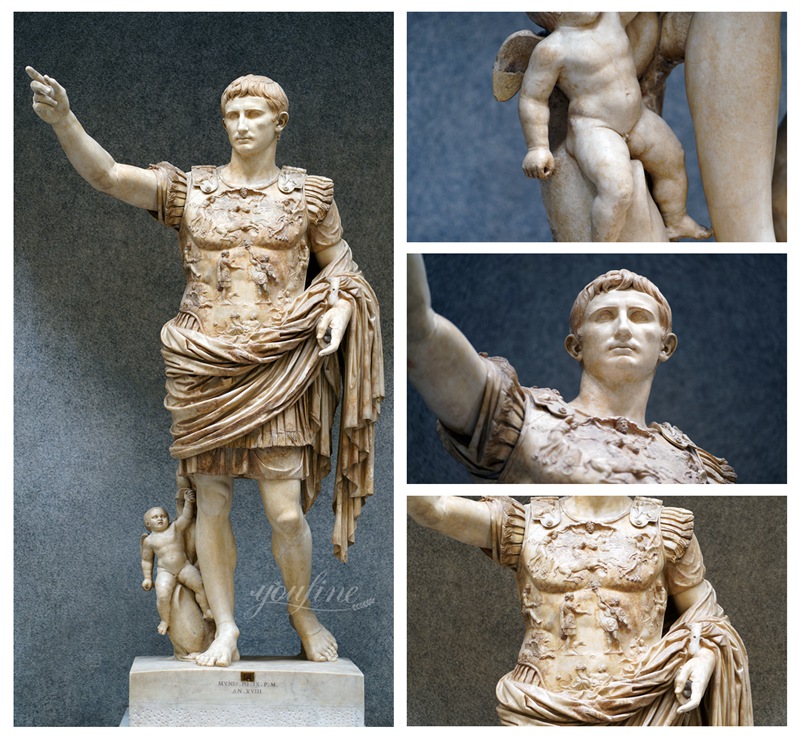
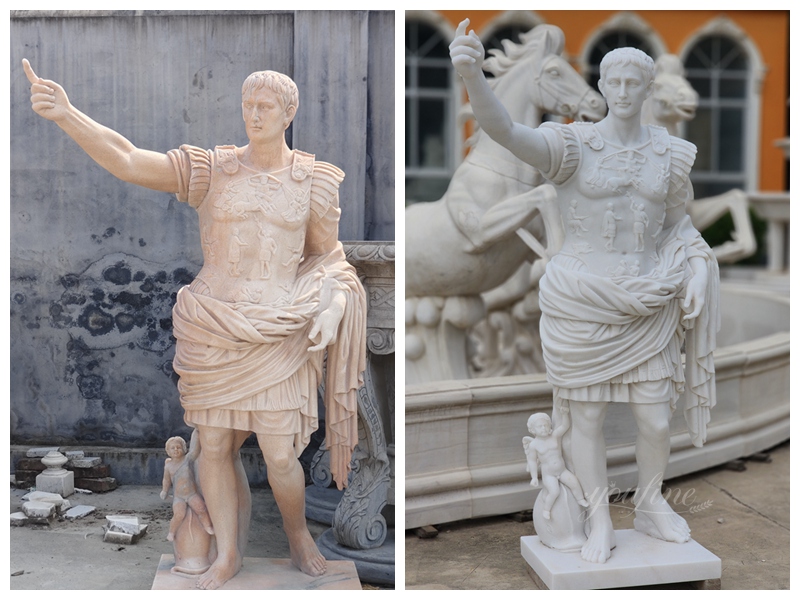
Augustus of Prima Porta
Sculptor: Anonymous Roman artist
Period: Ancient Roman (1st century AD)
Current Location: Vatican Museums
Details: Augustus wears a short-sleeved Roman military uniform, one hand pointing forward, the other resting on his garment, his expression stern. At his feet stands a small Cupid, mounted on a dolphin.
Influence: This statue combines an idealized human figure with political symbolism, symbolizing the emperor’s divinity and authority.
-
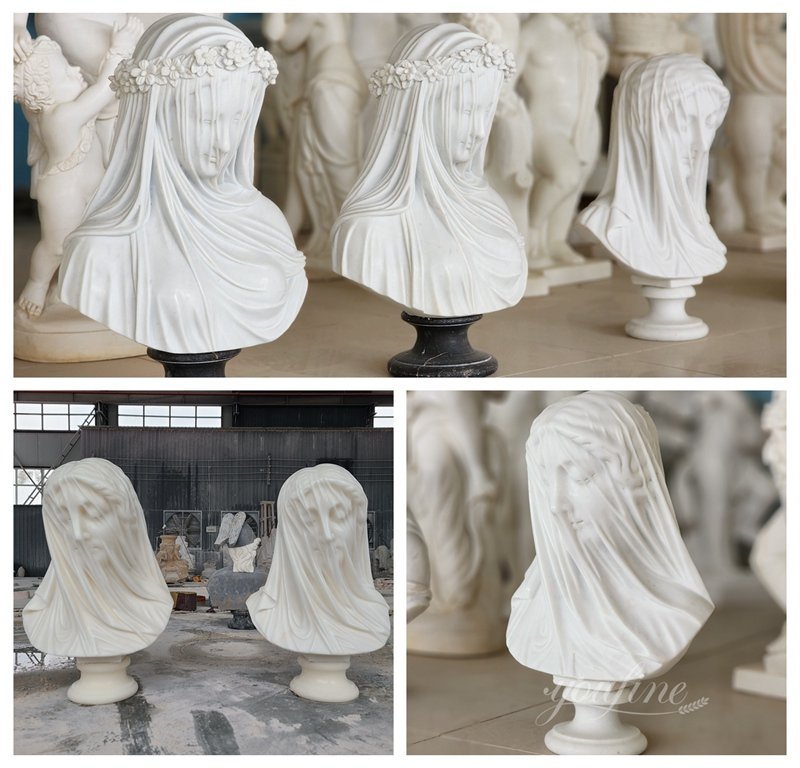
The Veiled Virgin by Giovanni Strazza
Sculptor: Giovanni Strazza
Period: Early Baroque (19th century)
Current Location: Presentation Convent, St. John’s, Newfoundland
Details: Although the saintly maiden is veiled, her facial expression and hair are still clearly visible, conveying her grace and serenity.
Influence: The work, embodying astonishing skill, creates a soft, transparent veil from solid marble, earning it the nickname “the miracle of a veil carved from stone.”

-
David Sculpture
Sculptor: Michelangelo
Period: Renaissance (1501–1504)
Current Location: Galleria dell’Accademia, Florence
Details: David stands with a focused expression, his brow furrowed, his gaze fixed into the distance, as if carefully observing his enemy.
Influence: This sculpture, a symbol of courage and the radiance of humanity, is one of the world’s most iconic works of art, perfectly embodying the Renaissance aesthetic of the human form.


-
The Rape of Proserpina
Sculptor: Gian Lorenzo Bernini
Period: Baroque (1621–1622)
Current Location: Galleria Borghese, Rome
Details: The sculpture depicts the moment Pluto abducts Proserpina. Pluto holds Proserpina tightly in his arms, as if dragging her towards the underworld. Proserpina struggles to break free, her expression filled with fear and despair.
Influence: The sculpture demonstrates strong dynamic tension and emotional conflict, with the delicate texture of the skin, seemingly soft and tactile, making it a pinnacle of Baroque art.

-
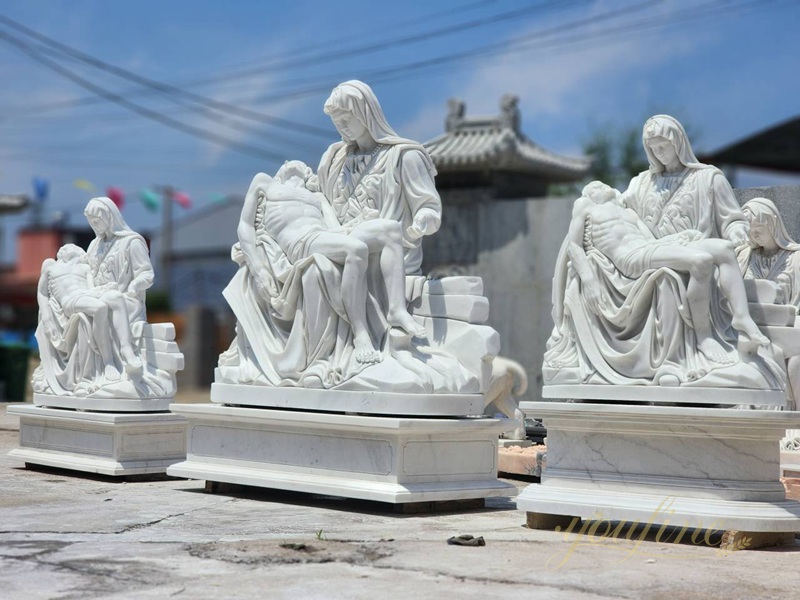
Michelangelo’s Pieta
Sculptor: Michelangelo
Period: Renaissance (1498–1499)
Current Location: St. Peter’s Basilica, Vatican City
Detail: The Virgin Mary holds the body of Christ in her arms. Although her expression is calm, her eyes reveal a deep sorrow and helplessness.
Influence: The scene of the Virgin Mary holding the body of Christ conveys both the tenderness of maternal love and the solemnity and sacredness of religion.


-
Laocoön and His Sons
Sculptor: Agesander, Arcedorus, and Polydorus of Rhodes
Period: Hellenistic Greek (circa 40–30 BC)
Current Location: Vatican Museums
Detail: The sculpture depicts the tragic scene of Laocoön and his two sons in extreme pain and struggle as they are entangled by a sea serpent.
Influence: This sculpture depicts the story of the Trojan War in ancient Greek mythology, expressing a powerful sense of suffering and power, as well as humanity’s powerlessness and despair in the face of the gods’ wrath.


-
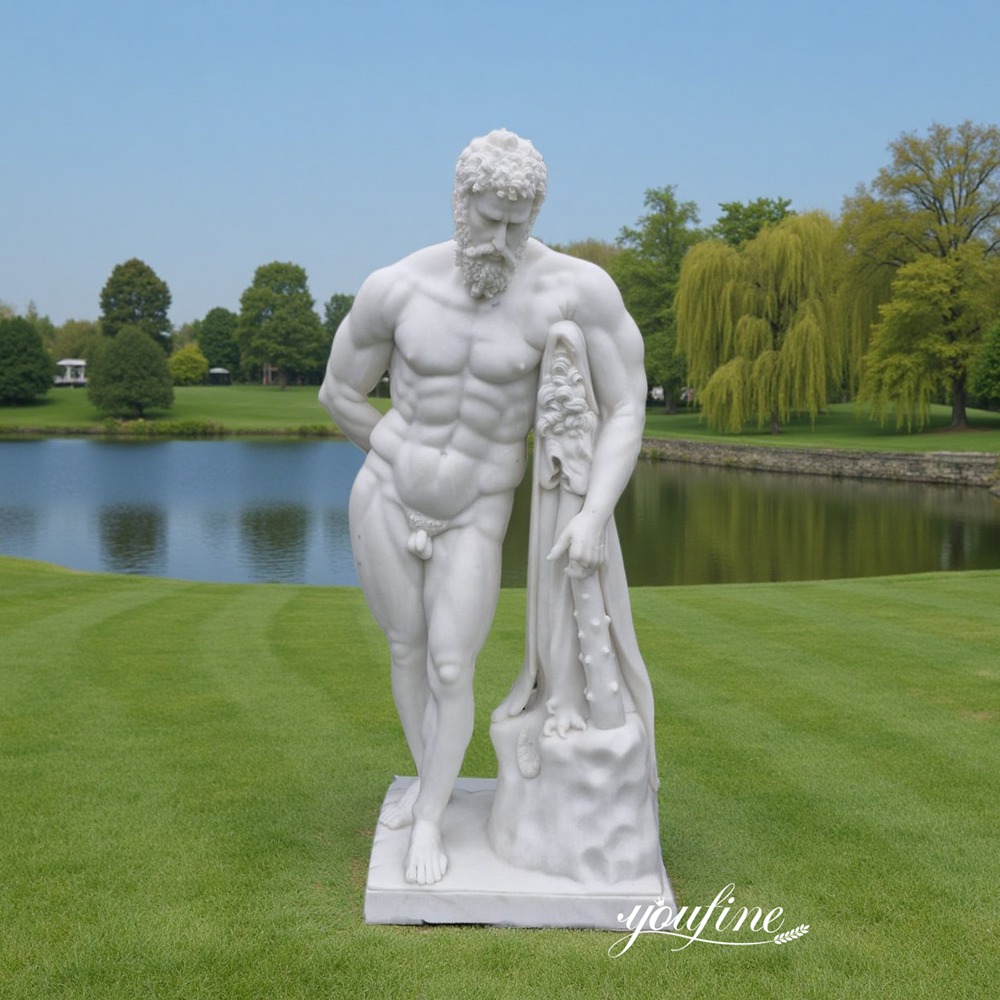
Farnese Hercules
Sculptor: Glicon of Athens
Period: Roman copy of Greek original (3rd century AD)
Current Location: National Archaeological Museum, Naples
Details: This sculpture depicts Hercules, exhausted after completing his final feat, resting against a pillar, one hand on the trunk and the other holding an apple.
Influence: This sculpture is a landmark work of classical sculpture, the ultimate visual representation of the ancient Greek heroic ideal.


-
Medici Venus
Sculptor: Anonymous Greek sculptor
Period: Hellenistic Greek (1st century BC)
Current Location: Uffizi Gallery, Florence
Details: Aphrodite in the sculpture covers her breasts with one hand and her lower body with the other, her head tilted to one side, her posture elegant.
Influence: Her graceful posture and soft curves have made her a model of feminine beauty, inspiring countless artists since.

-
Apollo Sauroktonos
Sculptor: Praxiteles
Period: Classical Greek (4th century BC)
Current Location: Louvre Museum, Paris
Details: Apollo’s expression is one of curiosity and joy. He holds a tree trunk with one hand and grasps with the other. His head is tilted, and he wears a headband in his hair.
Influence: This sculpture is a classic example of the interpretation of theocracy and youthful aesthetics in classical art, and has long inspired the art of future generations.

If you’re also fascinated by these classic sculptures, YouFine Art Sculpture can custom-make high-quality marble replicas. Whether for garden decoration or art collection, we can accurately recreate the spirit of historic masterpieces.
Contact us today to customize your own masterpiece and bring a classic back to life!