For thousands of years, lion statues have stood as powerful symbols of strength, courage, authority, and protection. From ancient civilizations and royal palaces to modern city landmarks, lions have inspired some of the world’s most remarkable sculptures. Today, famous lion statues can be found in public squares, historic monuments, government buildings, temples, libraries, and gardens around the globe. Some commemorate important historical events, while others serve as architectural guardians or cultural icons. Each sculpture reflects the artistic traditions, beliefs, and values of the society that created it.
In this article, we explore twelve of the most famous lion statues in the world, uncovering their history, artistic significance, and the reasons they continue to captivate visitors centuries after their creation.
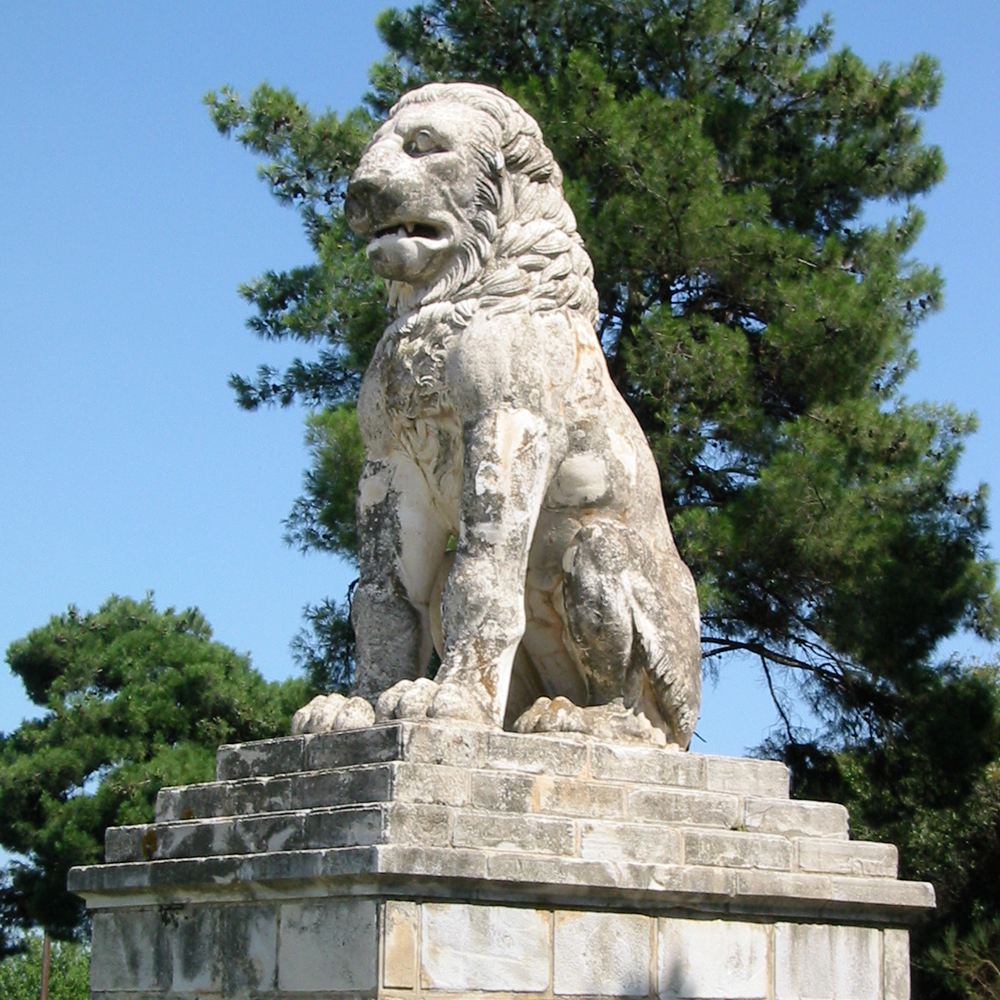
Lion of Amphipolis (Amphipolis, Greece)
Historical Background
The Lion of Amphipolis is one of the most important surviving lion monuments from ancient Greece. Archaeologists believe the original monument was created during the late 4th century BC, possibly to commemorate a distinguished military commander associated with Alexander the Great’s empire.
Fragments of the lion were discovered near the ancient city of Amphipolis in northern Greece during the early twentieth century. After extensive archaeological study, the monument was reconstructed in its present form in the 1930s.
Sculpture Description
Carved from marble, the Lion of Amphipolis stands atop a tall pedestal overlooking the Strymon River. The sculpture depicts a seated lion with a proud posture, broad chest, and commanding gaze. Despite centuries of damage and reconstruction, the monument still conveys remarkable dignity and strength.
The simplicity of the design reflects the artistic ideals of Classical Greek sculpture, emphasizing balance, proportion, and natural form rather than excessive decoration.
Why It Is Famous
The Lion of Amphipolis is famous because it represents one of the largest surviving lion monuments from ancient Greece. It also offers valuable insight into the role of monumental sculpture in the Hellenistic world and remains closely connected to the legacy of Alexander the Great.
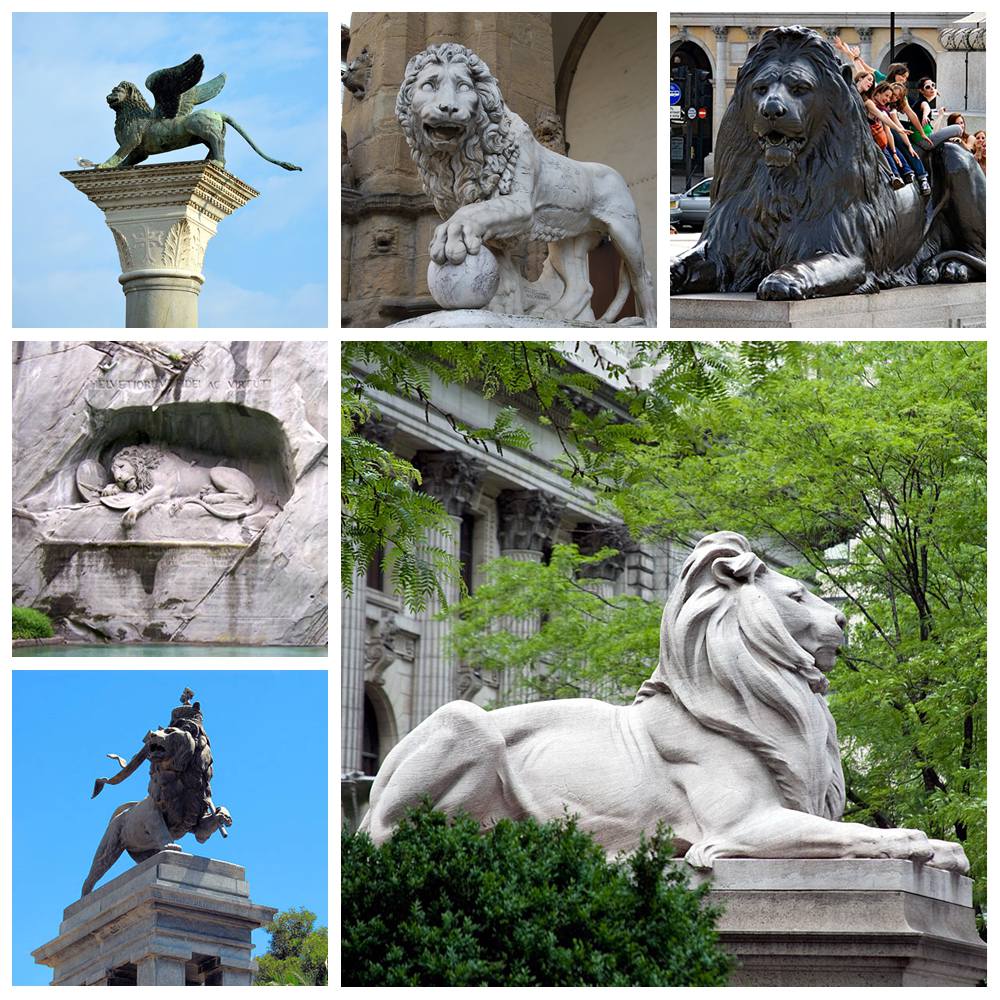
Medici Lions (Florence, Italy)
Historical Background
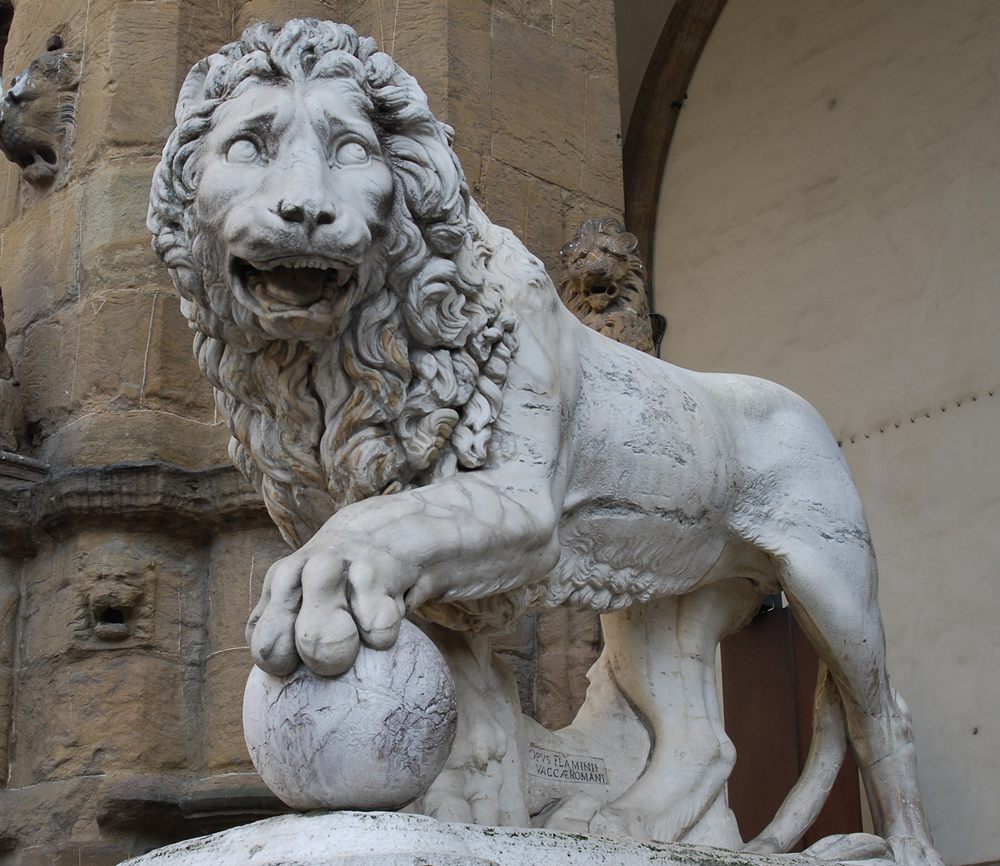
The Medici Lions are among the most influential lion sculptures in European art history. One lion is an ancient Roman marble sculpture dating to the second century AD, while the companion lion was created during the Renaissance to complete the pair.
The sculptures were acquired by the powerful Medici family and eventually placed at the Loggia dei Lanzi in Florence during the late eighteenth century.
Sculpture Description
Both lions are carved from marble and portrayed in a reclining pose with one paw resting on a sphere. Their muscular anatomy, expressive faces, and carefully carved manes demonstrate the exceptional skill of both Roman and Renaissance sculptors.
The combination of classical realism and symbolic authority helped establish the Medici Lions as a model for countless later lion sculptures.
Why It Is Famous
The Medici Lions became one of the most copied lion designs in the world. Replicas can be found in museums, gardens, estates, and public parks throughout Europe and North America. Their influence on garden sculpture and architectural ornamentation remains significant today.
Lion of Venice (Venice, Italy)
Historical Background
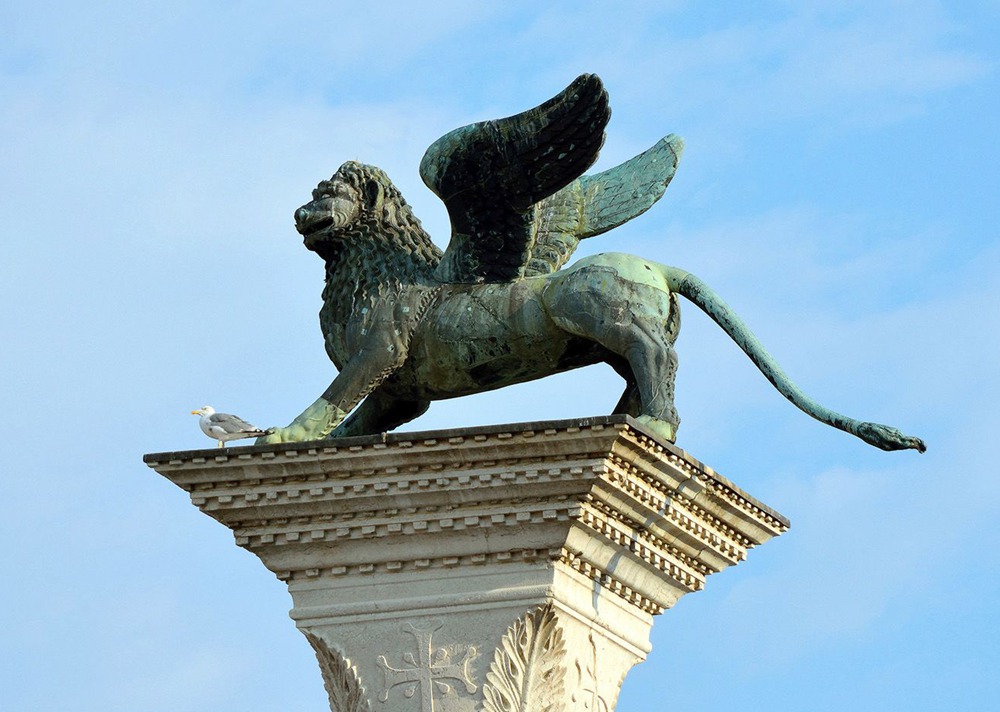
The Lion of Venice, also known as the Winged Lion of Saint Mark, has been the symbol of Venice for centuries. The sculpture is associated with Saint Mark the Evangelist, the patron saint of Venice, and became the official emblem of the Venetian Republic.
The most famous version stands atop a column in Piazza San Marco and has served as a symbol of Venetian power since the medieval period.
Sculpture Description
Unlike most lion statues, the Lion of Venice features wings. The lion is typically shown holding an open book bearing the words “Pax Tibi Marce Evangelista Meus,” meaning “Peace be upon you, Mark, my Evangelist.”
Constructed primarily from bronze and stone elements, the sculpture combines religious symbolism with political authority.
Why It Is Famous
The Winged Lion became one of the most recognizable civic symbols in Europe. It represents not only Venice but also the city’s maritime dominance, religious identity, and cultural influence throughout the Mediterranean world.
Lion Monument of Lucerne (Lucerne, Switzerland)
Historical Background
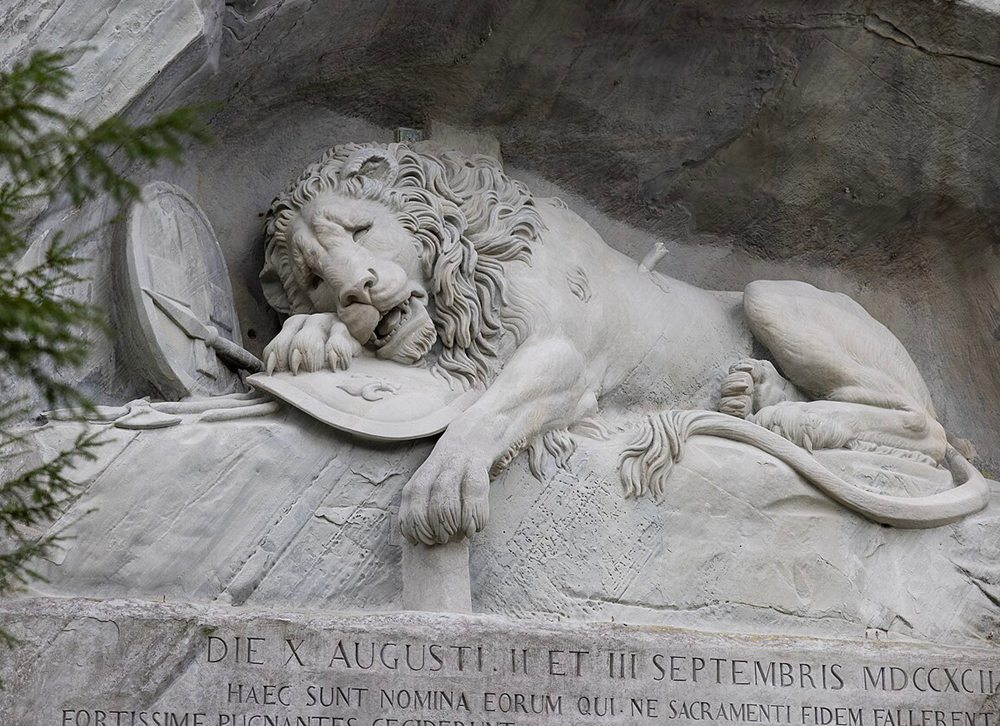
The Lion Monument was designed by Danish sculptor Bertel Thorvaldsen and carved by Lukas Ahorn between 1820 and 1821.
The monument commemorates the Swiss Guards who were killed while defending King Louis XVI during the French Revolution in 1792. It serves as a powerful tribute to loyalty, sacrifice, and courage.
Sculpture Description
Unlike freestanding sculptures, the Lion Monument is carved directly into a sandstone cliff face. The dying lion lies draped over a shield bearing the French royal emblem, while another shield displays the Swiss coat of arms.
The lion’s expression conveys sorrow and suffering, making it one of the most emotionally moving animal sculptures ever created.
Why It Is Famous
The Lion Monument is widely regarded as one of the world’s greatest memorial sculptures. American writer Mark Twain famously described it as “the most mournful and moving piece of stone in the world.”
Its combination of artistic mastery and emotional depth continues to attract visitors from around the globe.
Trafalgar Square Lions (London, England)
Historical Background
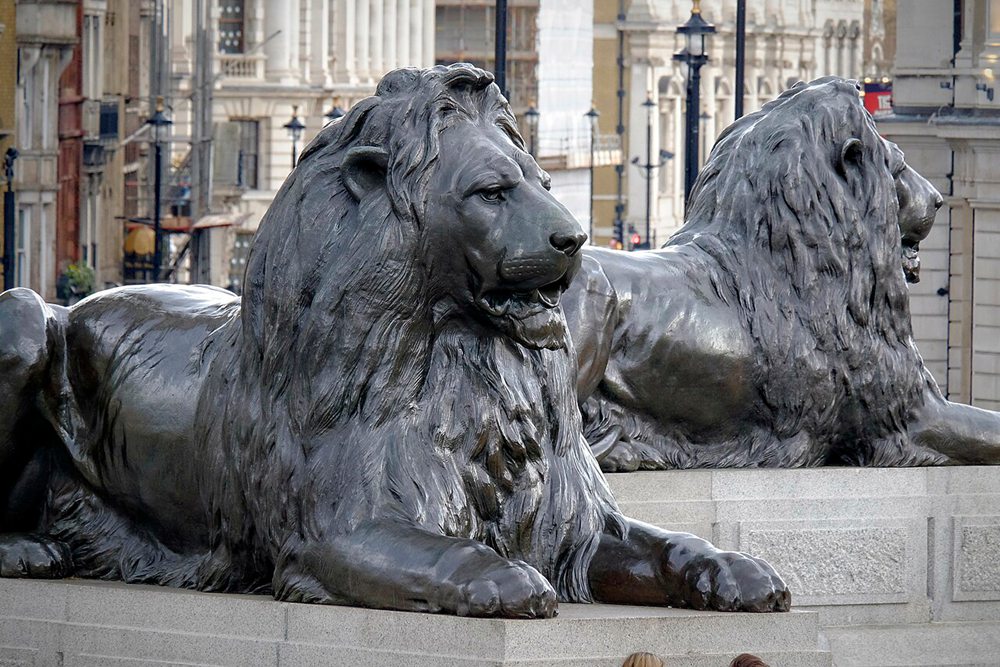
The four bronze lions surrounding Nelson’s Column in London’s Trafalgar Square were designed by British artist Sir Edwin Landseer and installed in 1867. Their creation followed decades of planning after the completion of Nelson’s Column, which commemorates Admiral Horatio Nelson’s victory at the Battle of Trafalgar.
Sculpture Description
Cast in bronze, each lion measures approximately 20 feet (6 meters) in length and rests in a relaxed yet vigilant pose. Landseer carefully studied real lions at the London Zoo to achieve anatomical accuracy while maintaining a majestic appearance suitable for a national monument.
Why It Is Famous
The Trafalgar Square Lions are among the most photographed sculptures in the United Kingdom. As symbols of British strength, naval power, and national pride, they have become an iconic part of London’s identity.
Library Lions: Patience and Fortitude (New York City, USA)
Historical Background
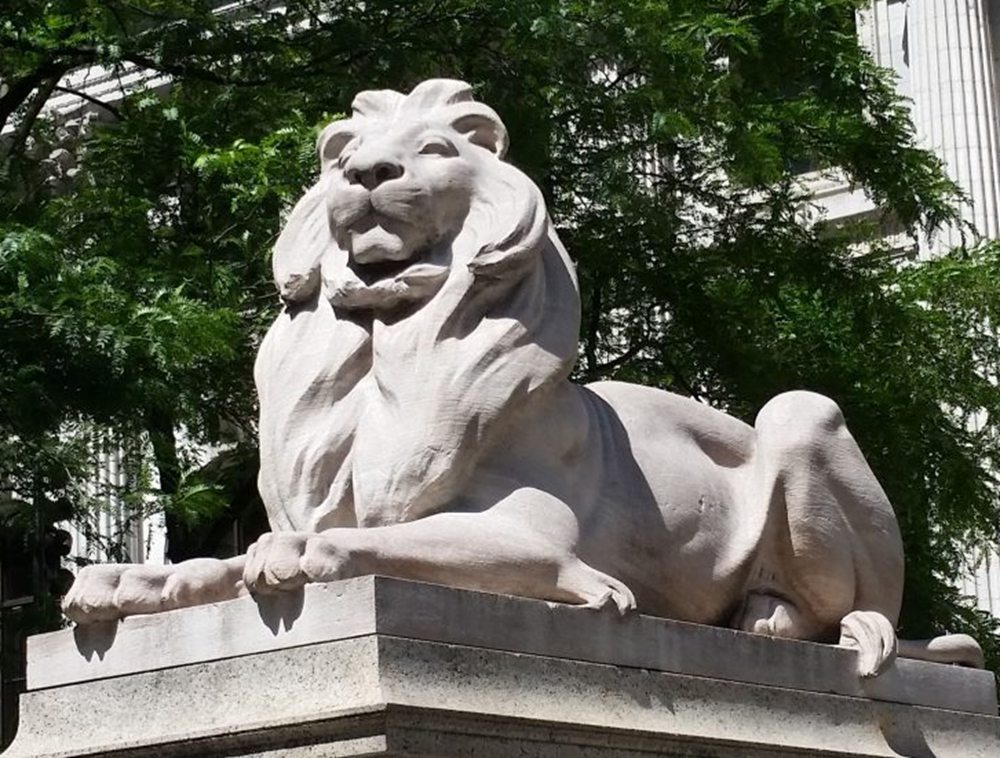
Installed in 1911 at the entrance of the New York Public Library’s main branch, these lions were designed by sculptor Edward Clark Potter and carved by the Piccirilli Brothers from Tennessee pink marble.
During the Great Depression, New York Mayor Fiorello La Guardia nicknamed them “Patience” and “Fortitude,” qualities he believed New Yorkers needed during difficult times.
Sculpture Description
The two reclining marble lions flank the grand staircase leading into the library. Their calm expressions and elegant proportions reflect the Beaux-Arts architectural style of the building.
Why It Is Famous
The Library Lions have become one of New York City’s most beloved landmarks. Their symbolic names and prominent location make them instantly recognizable to millions of visitors each year.
Chinese Guardian Lions of the Forbidden City (Beijing, China)
Historical Background
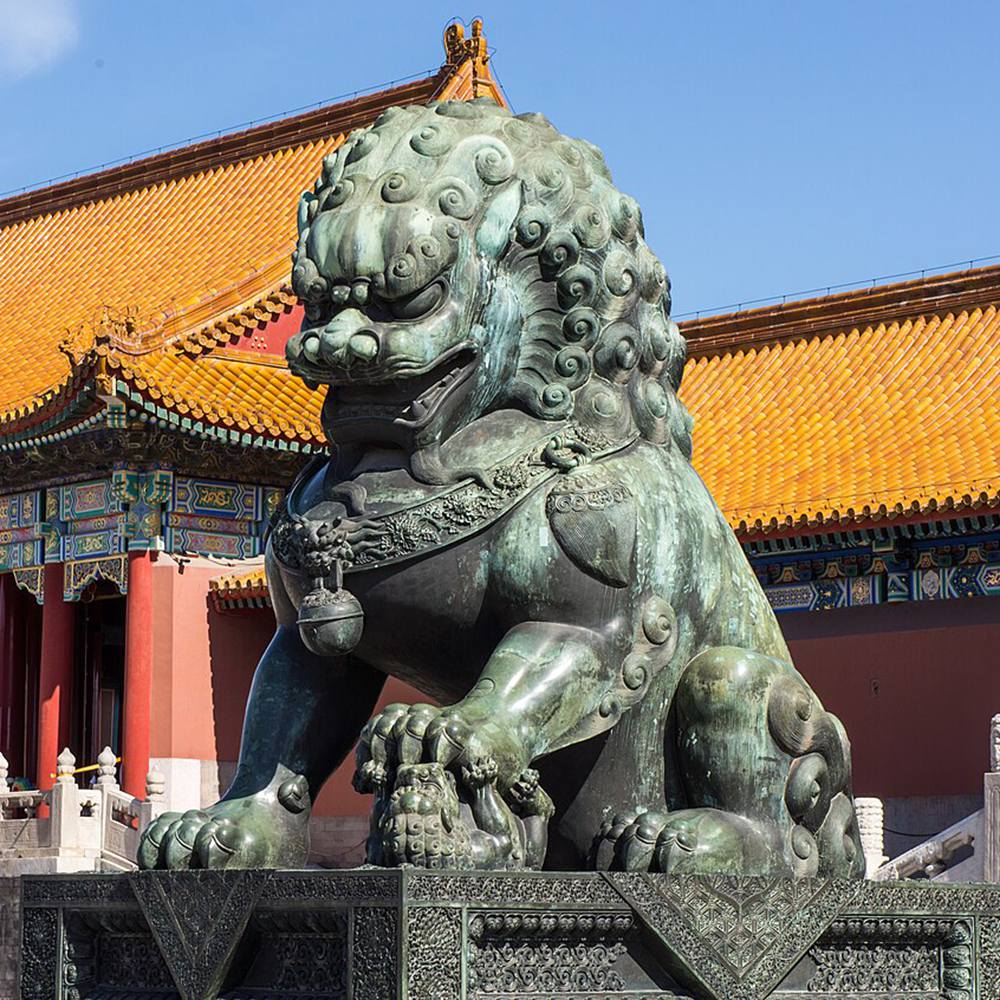
Commonly known as “Foo Dogs” in the West, Chinese guardian lions have protected imperial palaces, temples, government buildings, and wealthy residences for over a thousand years. The examples at Beijing’s Forbidden City are among the most famous in China.
Sculpture Description
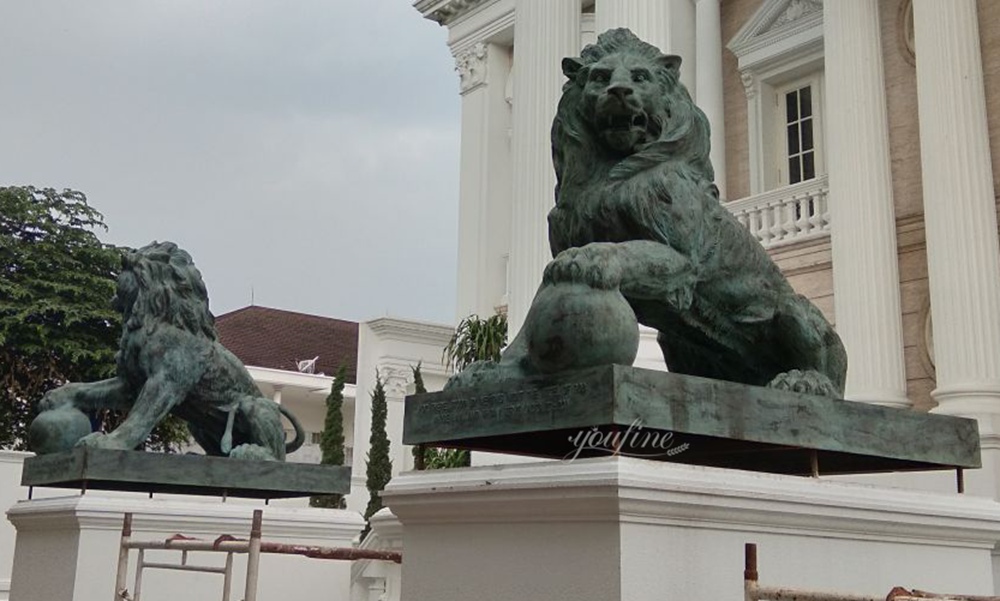
Typically carved from marble, granite, or cast in bronze, guardian lions appear in male-and-female pairs. The male lion traditionally rests a paw on a decorative ball representing authority over the world, while the female protects a lion cub symbolizing family and prosperity.
Unlike naturalistic Western lions, Chinese guardian lions feature stylized manes, exaggerated expressions, and decorative details.
Why It Is Famous
These sculptures represent one of the most influential lion traditions in world art. Their symbolism of protection, power, and good fortune has inspired countless lion sculptures throughout East Asia and beyond.
Lion of Belfort (Belfort, France)
Historical Background
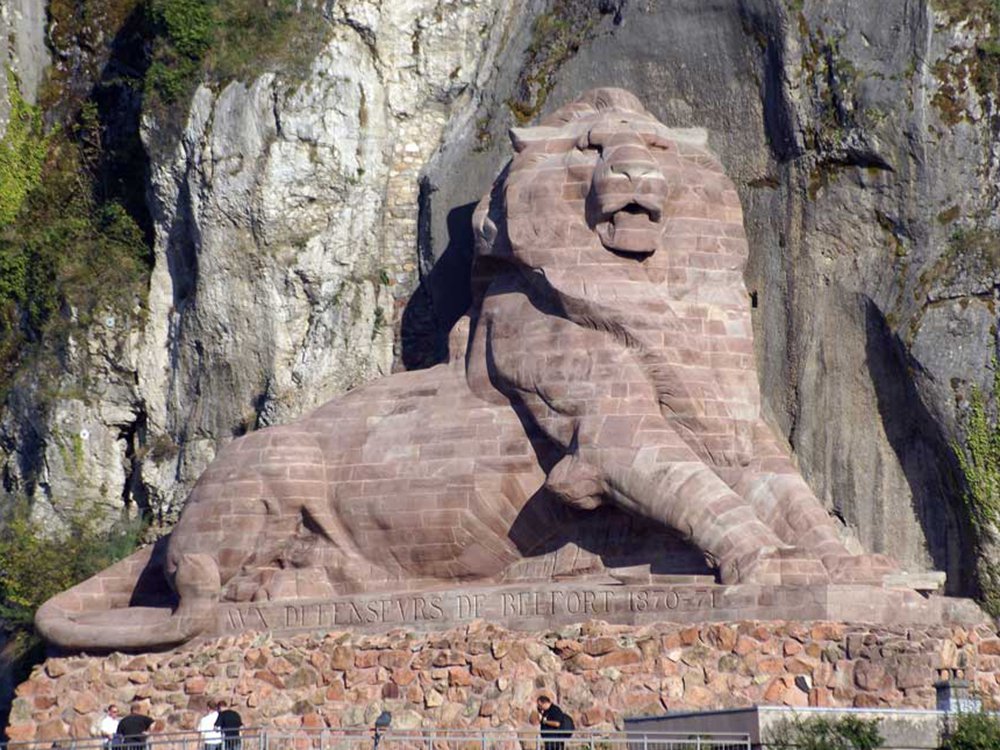
Created by renowned French sculptor Frédéric Auguste Bartholdi—the artist who later designed the Statue of Liberty—the Lion of Belfort was completed between 1875 and 1880.
The monument commemorates the heroic defense of Belfort during the Franco-Prussian War.
Sculpture Description
Carved directly into red sandstone cliffs beneath the Belfort Citadel, the sculpture measures approximately 22 meters long and 11 meters high. The lion appears alert and determined, symbolizing resistance against invasion.
Why It Is Famous
As one of Europe’s largest lion sculptures, the Lion of Belfort stands as a powerful national symbol of courage and resilience. It remains one of Bartholdi’s most celebrated works outside the Statue of Liberty.
Lions of the Alhambra Fountain (Granada, Spain)
Historical Background
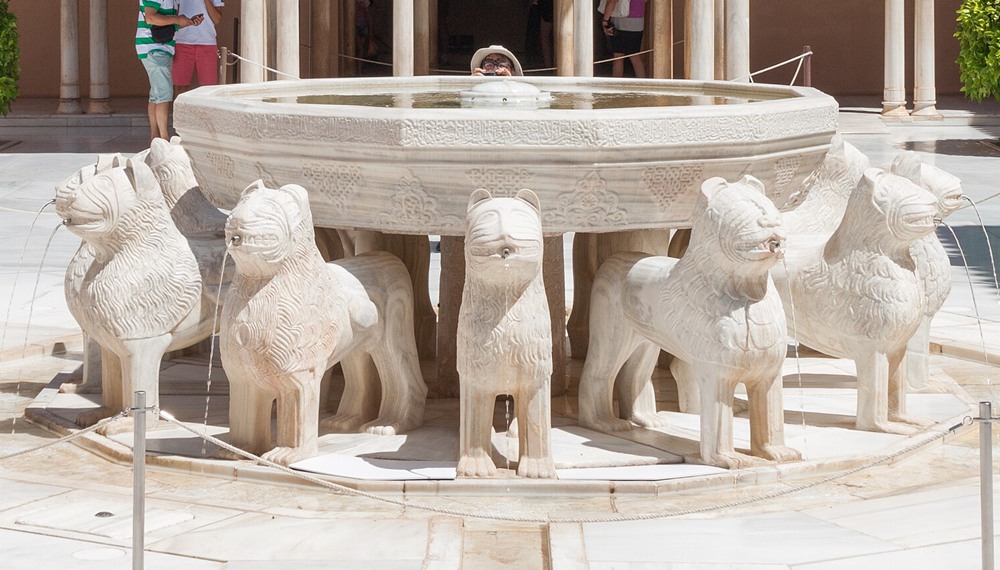
Dating to the 14th century during the Nasrid Dynasty, the Fountain of the Lions is located within the Court of the Lions at the Alhambra Palace in Granada.
The fountain reflects the sophisticated artistic and engineering achievements of medieval Islamic Spain.
Sculpture Description
Twelve carved marble lions support a large circular basin. Each lion serves both a decorative and functional purpose, forming part of the fountain’s water distribution system.
The sculptures combine symbolic meaning with architectural harmony, creating one of the most admired courtyards in the world.
Why It Is Famous
The Fountain of the Lions is considered a masterpiece of Islamic art and architecture. Its unique integration of sculpture, water, and landscape design has influenced garden and fountain design for centuries.
HSBC Lions: Stephen and Stitt (Hong Kong)
Historical Background
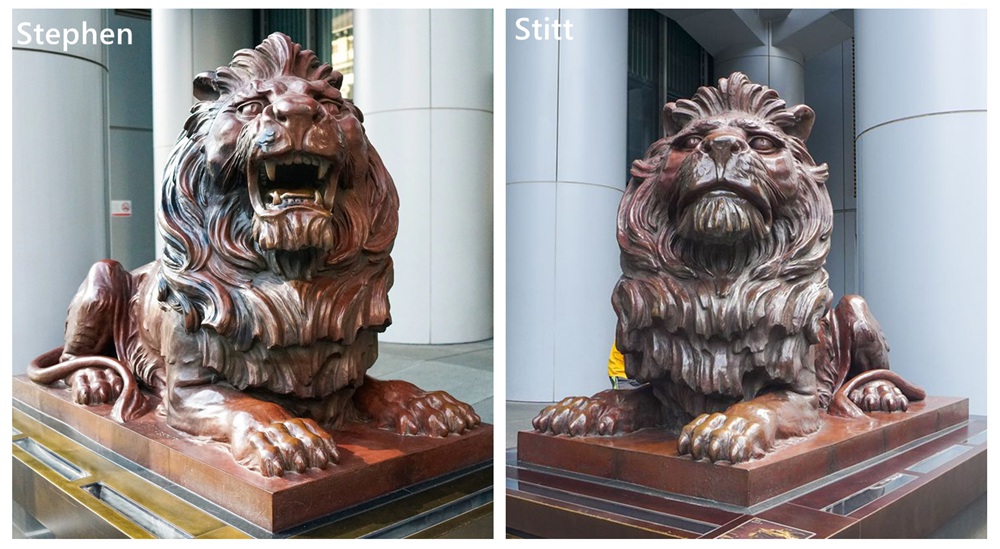
Commissioned for the Hong Kong and Shanghai Banking Corporation headquarters in 1935, the famous bronze lions were sculpted by British artist W. W. Wagstaff.
The lions were named Stephen and Stitt after two senior HSBC executives.
Sculpture Description
Cast in bronze, the two lions differ significantly in personality. Stephen displays a fierce, roaring expression, while Stitt appears calm and dignified. Their contrasting characters create a memorable visual balance.
Why It Is Famous
The HSBC Lions have become unofficial symbols of Hong Kong’s financial success and resilience. Replicas and references to the sculptures can be found throughout Asia.
Merlion (Singapore)
Historical Background
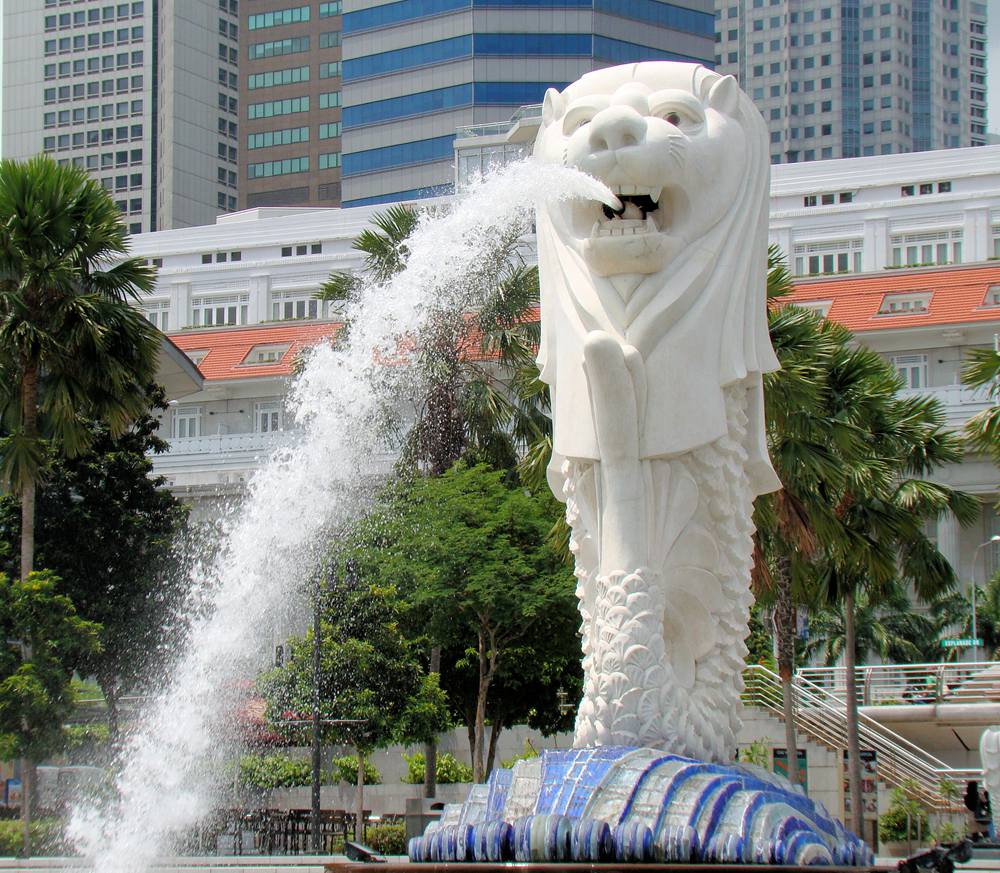
The Merlion was designed in 1964 as a symbol for the Singapore Tourism Board and later transformed into one of the country’s most recognizable national icons.
Sculpture Description
Unlike traditional lion statues, the Merlion combines a lion’s head with the body of a fish. The fish symbolizes Singapore’s origins as a fishing village, while the lion references the legendary discovery of the island by a prince who reportedly encountered a lion.
The current Merlion statue stands over 8 meters tall and continuously sprays water into Marina Bay.
Why It Is Famous
The Merlion has become synonymous with Singapore itself. Few lion-inspired sculptures in the world enjoy such strong national and international recognition.
Lion of Judah (Addis Ababa, Ethiopia)
Historical Background
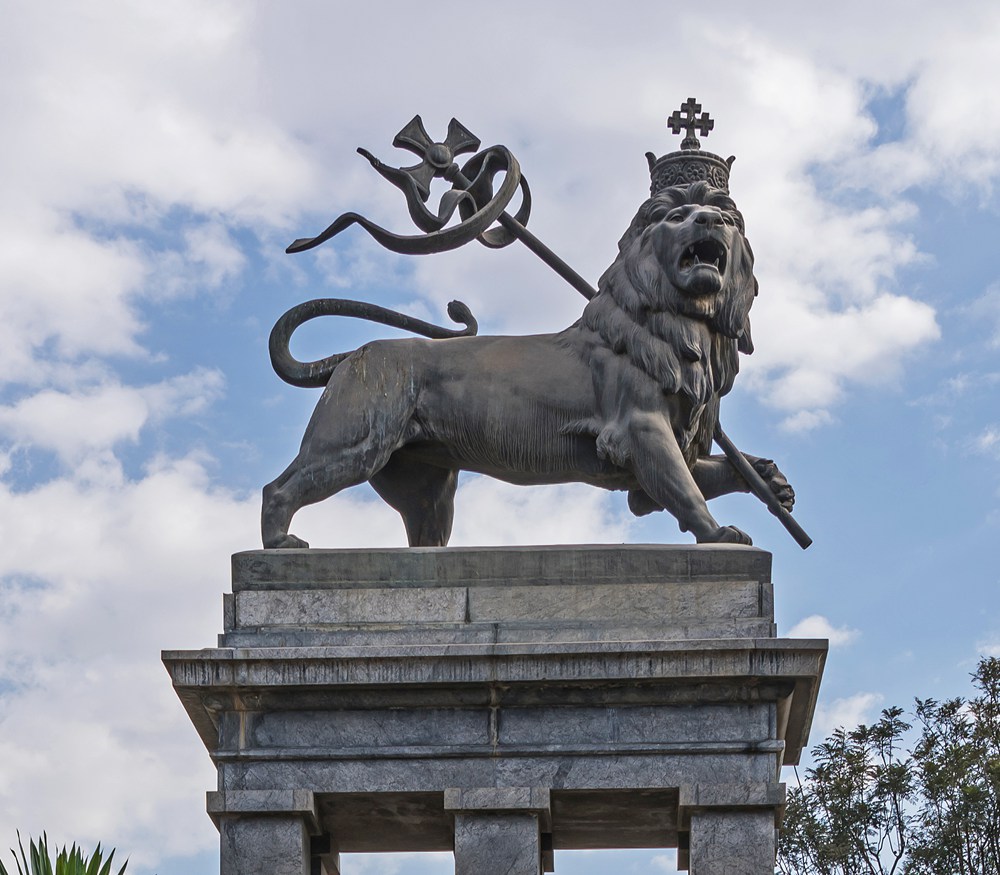
The Lion of Judah has long served as a symbol of the Ethiopian monarchy and national identity. The most famous monument was erected in Addis Ababa during the early twentieth century under Emperor Haile Selassie.
Sculpture Description
Typically cast in bronze, the Lion of Judah is depicted standing proudly while carrying a processional cross or royal standard. The sculpture combines religious symbolism with royal authority.
Why It Is Famous
As one of Africa’s most recognizable sculptural symbols, the Lion of Judah represents strength, sovereignty, and Ethiopia’s ancient cultural heritage. It also holds significant meaning within the Rastafarian movement worldwide.
How Lion Sculptures Evolved Across Different Cultures
Although lion statues appear throughout the world, their forms vary significantly because different cultures attached different meanings to the lion.
-
Ancient Greece & Rome: Emblems of Heroism and Power
In ancient Greece and Rome, lions stood for heroism, military strength, and noble leadership. Sculptors focused on realistic anatomy and harmonious proportions, creating classic works like the Lion of Amphipolis and the Medici Lions. -
Medieval & Renaissance Europe: Symbols of Royalty and National Pride
In Europe’s medieval and Renaissance eras, lions represented royal power, civic glory, and religious virtue. Iconic pieces, including the Lion of Venice and the Trafalgar Square Lions, embodied political influence and national spirit. -
East Asia: Stylized Guardian Lions
In China and other East Asian regions, lions were reimagined as sacred guardians rather than realistic creatures. Stylized Chinese guardian lions were crafted to dispel misfortune and protect premises, featuring highly decorative appearances. -
Islamic Art: Geometric & Symmetrical Designs
Islamic art presents another unique style. The lion sculptures of the Alhambra prioritize symmetry and geometric aesthetics, blending harmoniously with the architecture instead of pursuing realism. -
Modern Interpretations: Tradition Meets Contemporary Design
Today’s lion sculptures combine traditional symbolism with modern aesthetics. They remain powerful monuments that stand for strength, bravery, and cultural heritage.
How Famous Lion Statues Influence Modern Sculpture Design
Many modern lion sculptures trace their inspiration directly to famous historical examples.
- The Medici Lions: Influenced countless garden and estate sculptures across Europe and North America. Their reclining posture remains one of the most popular lion designs today.
- Chinese Guardian Lions: Continue to inspire entrance sculptures for hotels, temples, government buildings, and private residences throughout Asia and beyond.
- The Library Lions: Helped establish the tradition of placing lion sculptures at the entrances of important public buildings, symbolizing wisdom, protection, and prestige.
- Monumental Lions (e.g., Lion of Lucerne, Lion of Belfort): Demonstrate how animal sculpture can communicate powerful emotions and historical narratives, inspiring modern memorial design.
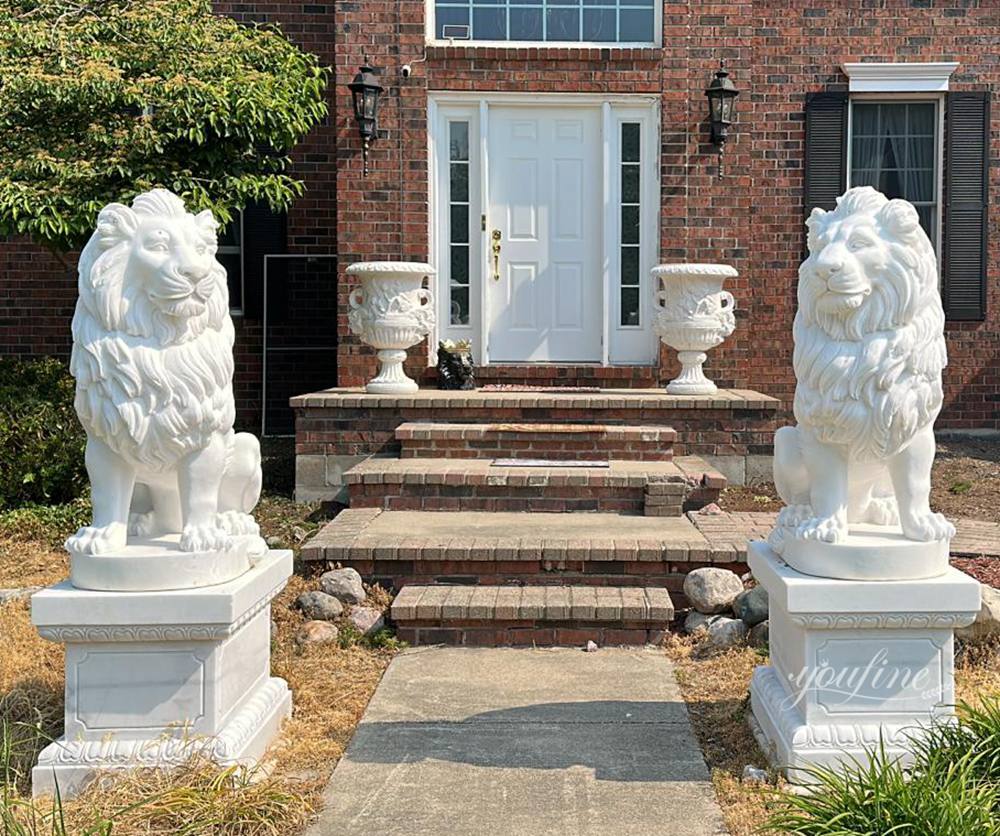
Today, architects, landscape designers, and sculptors still draw inspiration from these famous works when creating custom lion statues for gardens, estates, public squares, hotels, and cultural institutions.
Frequently Asked Questions
What is the most famous lion statue in the world?
The Lion of Lucerne in Switzerland is widely considered the most famous lion statue in the world due to its unparalleled emotional impact and historical significance. However, the Trafalgar Square Lions in London and the iconic Merlion of Singapore are equally celebrated as world-renowned landmarks.
What do lion statues symbolize?
Globally, lion statues symbolize strength, courage, protection, leadership, authority, and nobility. Depending on the culture, they can also represent:
-
Prosperity and Wealth (such as the Medici Lions and Chinese Guardian Lions)
-
Sacrifice and Loyalty (such as the Lion of Lucerne)
-
Spiritual Guardianship and Wisdom
Why are lion statues often placed at entrances?
Throughout art history, lions have served as the ultimate symbols of heavy-duty guardianship. Placing lion statues flanking entrances—whether at royal palaces, public libraries, or luxury estates—is traditionally believed to ward off evil, project security, and demonstrate social prestige while making a powerful architectural statement.
Why do Chinese lion statues look different from European lions?
European lion statues focus on anatomical realism and biological accuracy, reflecting the realism of classical Greco-Roman and Renaissance art. In contrast, Chinese guardian lions (Foo Dogs) are stylized, mythical creatures designed around spiritual symbolism rather than physical realism, incorporating decorative manes and sacred postures to represent harmony, yin-yang balance, and good fortune.
Which materials are most commonly used for lion statues?
Historically, master sculptors relied on natural stones like marble, limestone, granite, sandstone, and bronze to ensure longevity. In contemporary landscape design, while classical marble and bronze remain timeless, modern stainless steel (especially mirror-polished and geometric designs) is widely adopted to complement modern commercial plazas and public art spaces.
Final Thoughts
From ancient Greece and imperial China to modern Singapore and New York City, lion statues have served as enduring symbols of courage, authority, protection, and cultural identity. Each famous sculpture tells a unique story about the values its creators wished to preserve. Whether carved from marble, cast in bronze, or sculpted into stone cliffs, these monuments continue to inspire artists and historians worldwide, proving the lion is one of the most powerful symbols in sculpture.
Inspired by these iconic lion sculptures? Would you also like to add a lion sculpture like this to an entrance, a grand estate, a public memorial, a hotel, or a similar setting? If so, please feel free to contact us directly to commission a custom lion sculpture; we could turn your vision into reality.
From classic marble lion statues and antique bronze lion statues to modern stainless steel lion sculptures, our professional designers and experienced artists would craft a masterpiece tailored to your exact needs—a timeless work of art built to last.