What is a Lion with Wings Called?
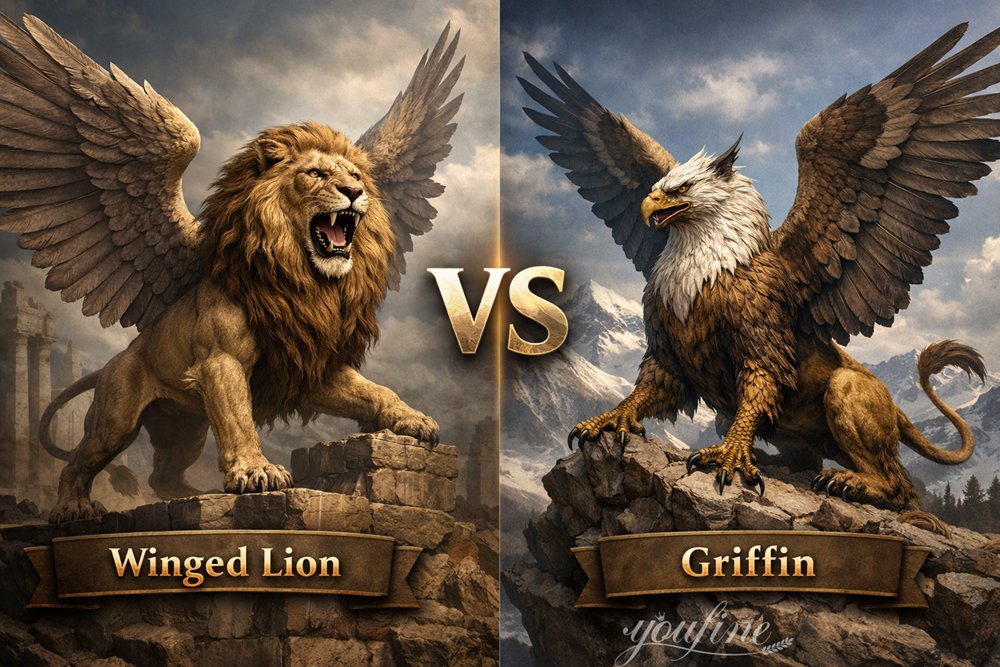
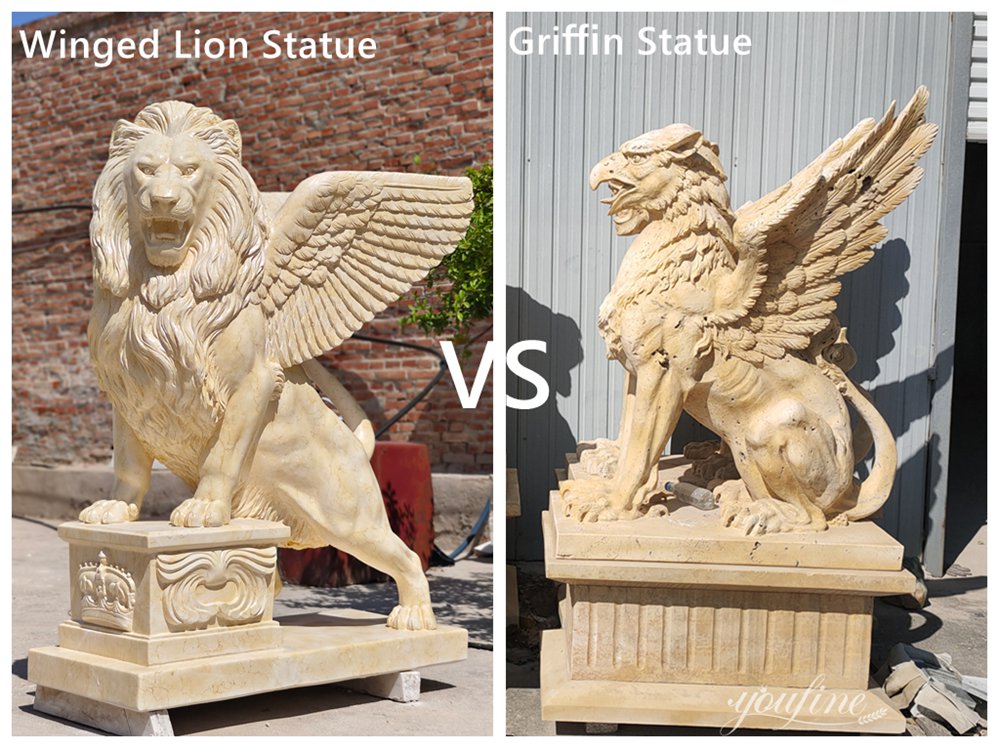
A lion with wings is most commonly called the winged lion. In specific historical and artistic contexts, it is also called the Lion of Saint Mark, representing the evangelist and the city of Venice. Although it is often confused with the griffin (which has the head of an eagle), the true winged lion retains the majestic head and torso of a lion, while adding powerful, bird-like wings.

Winged Lion Meaning
The meaning of the winged lion varies depending on cultural and religious context, but the creature almost always represents power, protection, and divine authority. Below are some of the most important symbolic interpretations of the winged lion.
Winged Lion Mythology
The winged lion mythology can be traced back thousands of years to ancient civilizations.
- Ancient Mesopotamia
Some of the earliest examples of flying lion mythology appear in Assyrian and Babylonian art. Winged guardian creatures were commonly used in palace architecture and temple reliefs.
These creatures symbolized: Divine protection, strength and authority, guardianship of sacred places. They were believed to protect cities, rulers, and important buildings from evil forces.
- Persian and Ancient Near Eastern Art
In Persian mythology and ancient Near Eastern culture, the lion with wings mythology often represented royal power and cosmic authority. The lion was already a symbol of kingship, and wings elevated it to a more divine status.
Winged Lion Meaning in the Bible
One of the most famous interpretations of the winged lion’s meaning in the Bible is its connection to Saint Mark the Evangelist. In Christian symbolism, the four authors of the Gospels are represented by four creatures:
Matthew – Angel, Mark – Lion, Luke – Ox, John – Eagle
The winged lion symbolizes Saint Mark and represents: Courage, resurrection, divine authority.
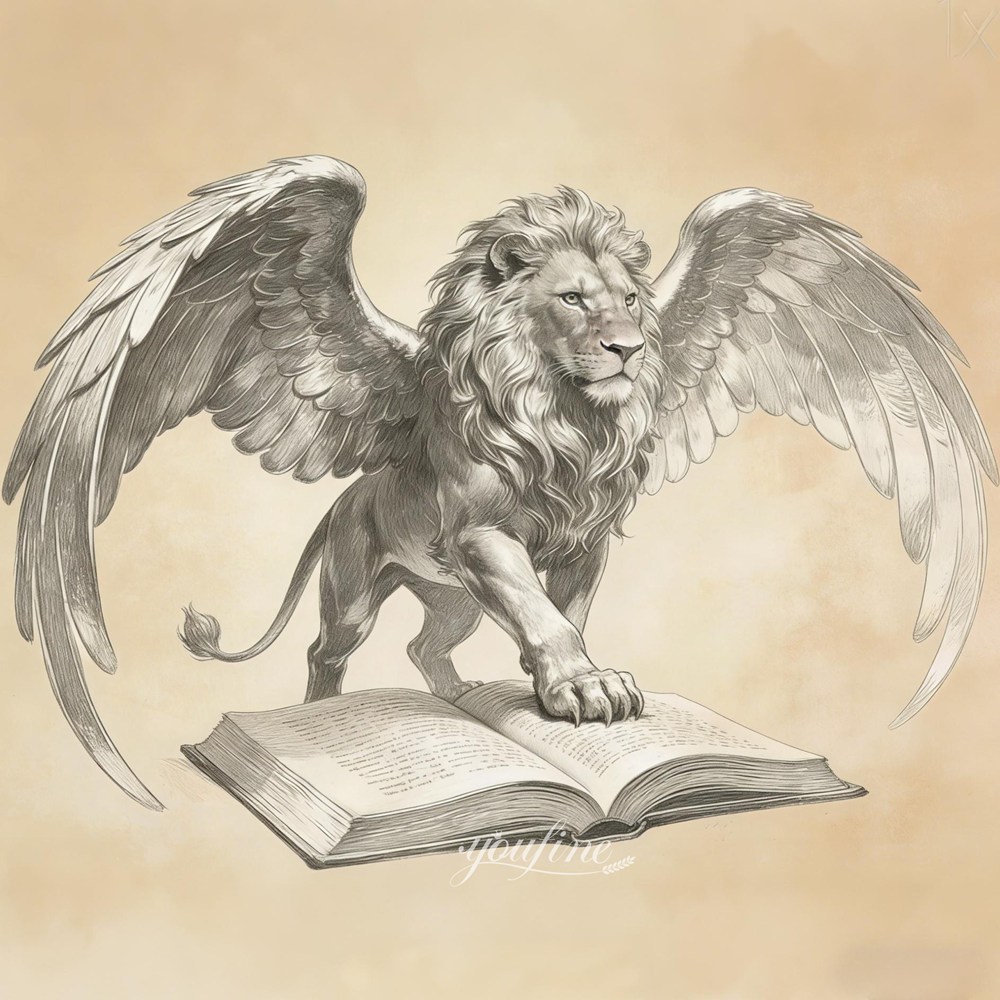
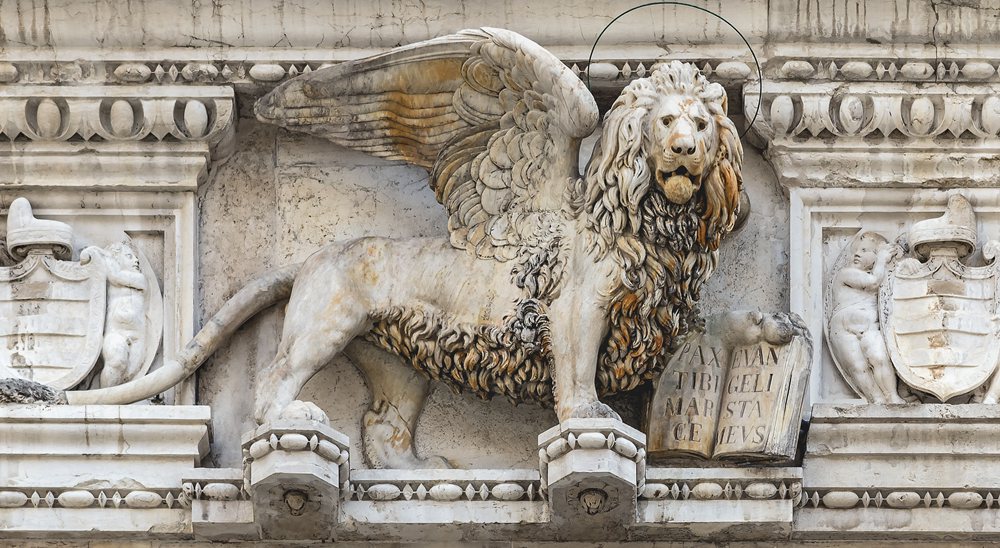
This is why the Winged Lion of Saint Mark became the official symbol of the city of Venice, appearing on flags, monuments, and architectural decorations. In many depictions, the lion is shown standing on an open book, which represents the Gospel of Mark.
Winged Lion Spiritual Meaning
Beyond mythology and religion, the winged lion spiritual meaning often represents the balance between earthly power and spiritual wisdom.
Common spiritual interpretations include:
- Strength and courage – the lion symbolizes bravery and leadership
- Divine protection – wings represent heavenly guardianship
- Authority and justice – a symbol of righteous power
- Spiritual elevation – combining earthly strength with higher wisdom
Because of these meanings, winged lions are often used in temples, churches, and monumental architecture.
Origin and History of the Winged Lion
The winged lion originated from the ancient civilizations’ worship of power:
- Mesopotamia and Assyria: First seen in the colossal Lamassu, a mythical beast serving as a palace guardian and symbol of divine protection.
- Ancient Persia: Frequently appearing in reliefs and artworks, it represents a fusion of imperial power and spirituality.
- Religious Evolution: In the biblical context, it became a symbol of Saint Mark, representing the majesty of Christ.
- Venice: Officially adopted as its city symbol in the 9th century AD, transforming from a mythological totem into a renowned political and artistic icon.
Winged Lion vs Griffin
The winged lion and the griffin are often confused because both creatures combine animal and winged features. However, they are fundamentally different mythological beings.
| Creature | Physical Form | Symbolism |
|---|---|---|
| Winged Lion | Lion body with wings | Courage, divine authority, protection |
| Griffin | Lion body with eagle head and wings | Guardianship, treasure protection |
The key difference is that the griffin combines two animals (lion and eagle), while the winged lion is simply a lion enhanced with wings.
Both creatures appear frequently in medieval architecture and sculpture.
Common Artistic Expressions of the Winged Lion
- Heral prowess and flags: Symbols of sovereignty and nobility. The most famous is the Venetian flag, which conveys specific political messages through the winged lion’s paws resting on a book (peace) or holding a sword (war).
- Tattoos: An expression of the modern spirit. Combining the lion’s power with the freedom of its wings, it symbolizes fearlessness, leadership, and the awakening of the individual soul.
- Sculptures: Guardians of architecture and landscape. Often made of bronze or marble, they possess both decorative value and sacred protective connotations.
4 World-Famous Winged Lion Sculptures
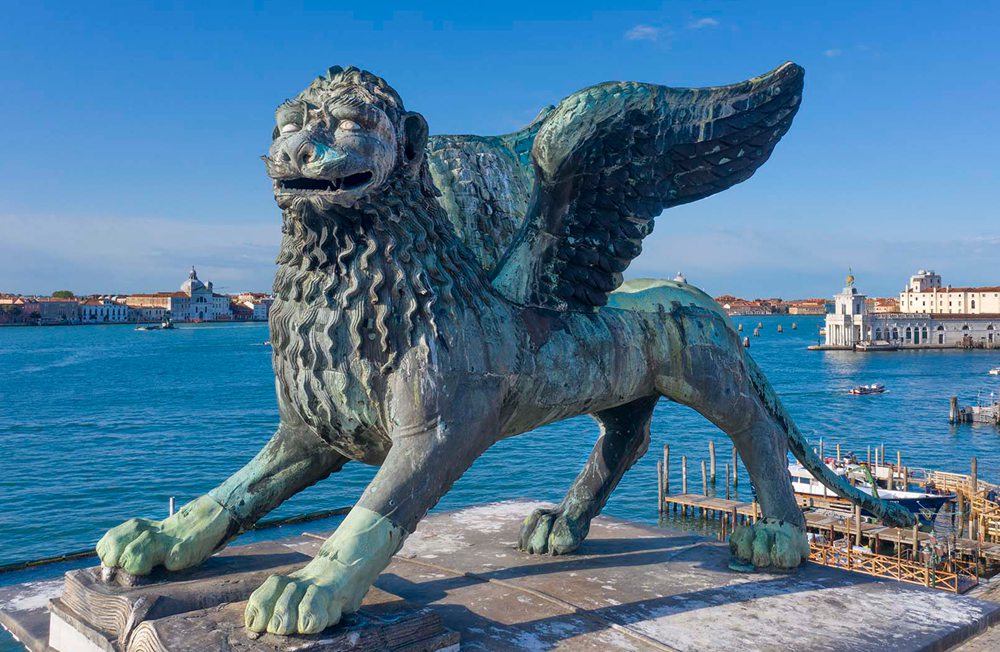
- The Bronze Lion of Venice: The iconic bronze statue atop the columns of St. Mark’s Square symbolizes Venice’s former trade dominance and maritime power in the Mediterranean.
- The Lamassu of Nineveh: Now housed in the British Museum, this colossal stone sculpture with a human face, a sphinx, and wings features a unique five-legged design, appearing to be steadily moving forward from any angle, representing inviolable protection.

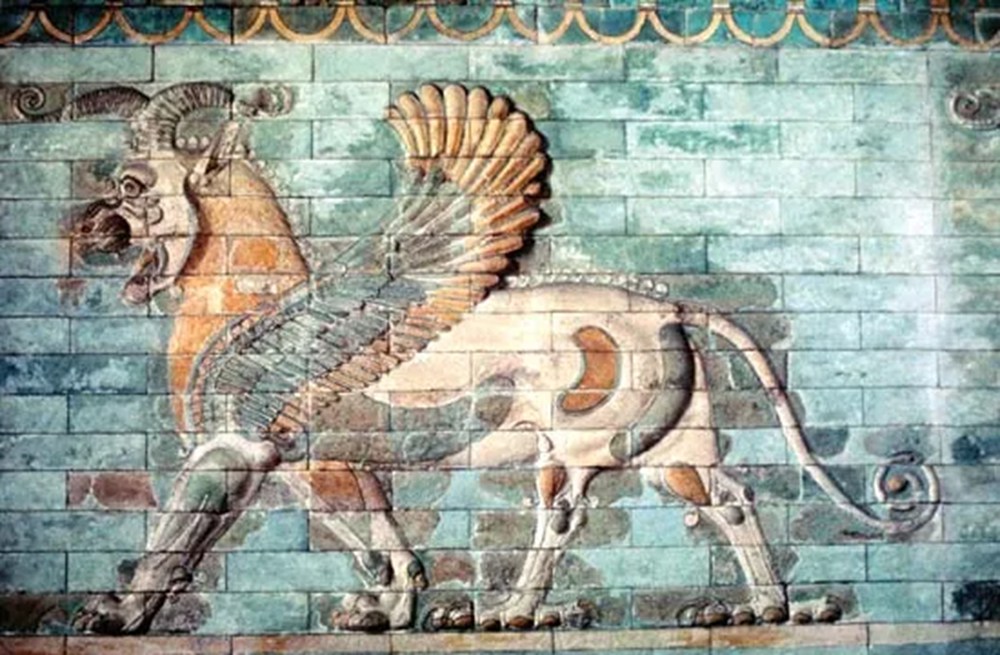
- The Persian Winged Lion: A pinnacle of art from the ancient Persian Achaemenid dynasty, its exquisite reliefs showcase highly muscular lines, symbolizing the absolute authority and spirituality of the royal family.
- Lion of Saint Mark: Stone-carved winged lions covering the facade of the basilica, often with their paws resting on the Gospel of St. Mark, perfectly blending exquisite artistic beauty with profound religious narrative.
6 Common Styles of Flying Lion Sculptures and Applications
In art and architectural decoration, the flying lion not only carries different symbolic meanings but has also developed into various classic sculptural styles. Different styles are often suitable for different architectural or landscape environments.
Flying Lion Sculpture with Paws on a Sphere
A flying lion with its paws on a sphere symbolizes dominance and control over the world. The sphere usually represents the earth or the universe; thus, this sculpture carries a very strong symbolic meaning of authority.
Suitable Applications:
- Landmark sculptures in city squares
- Government building plazas
- Commemorative public sculptures
- City entrances or large parks
This form is usually large in scale and has a strong visual impact, making it very suitable as a city symbol or landmark sculpture.
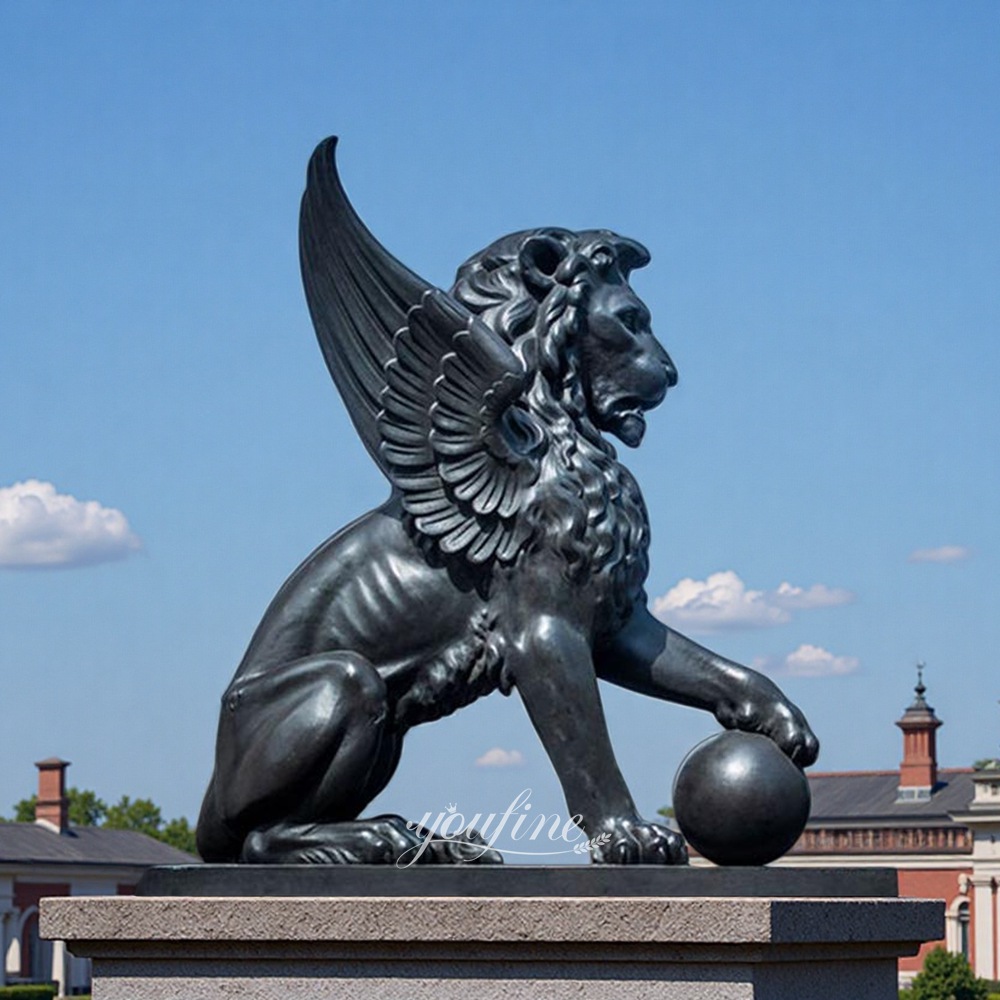
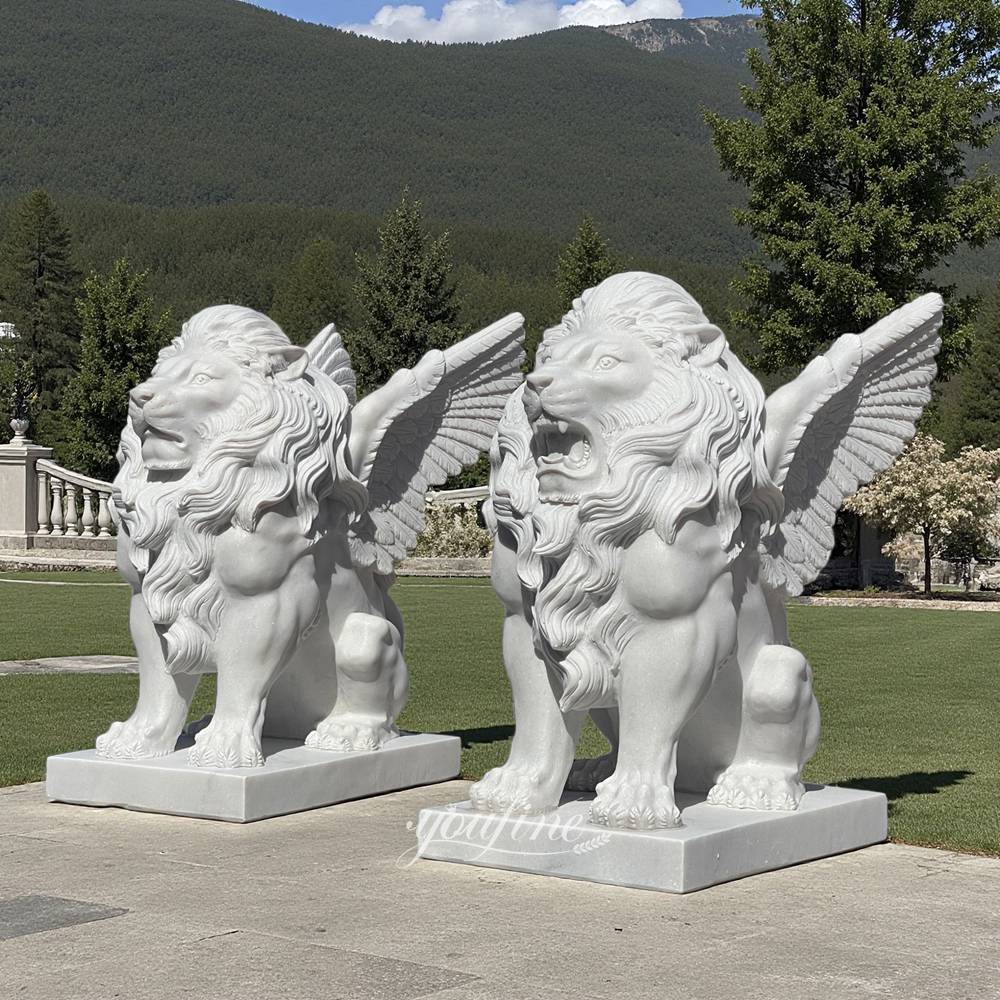
Seated Flying Lion Sculpture
A seated flying lion symbolizes stability, majesty, and protection. This posture gives a sense of solemnity and reliability, and is therefore very common in architectural decoration.
Suitable Applications:
- Palace or Castle Entrance
- Luxury Manor Gate
- Hotel Entrance Sculpture
- High-End Residential Area Entrance
Seated winged lions are usually placed in pairs, similar to Chinese stone lions, symbolizing the protection of building entrances.
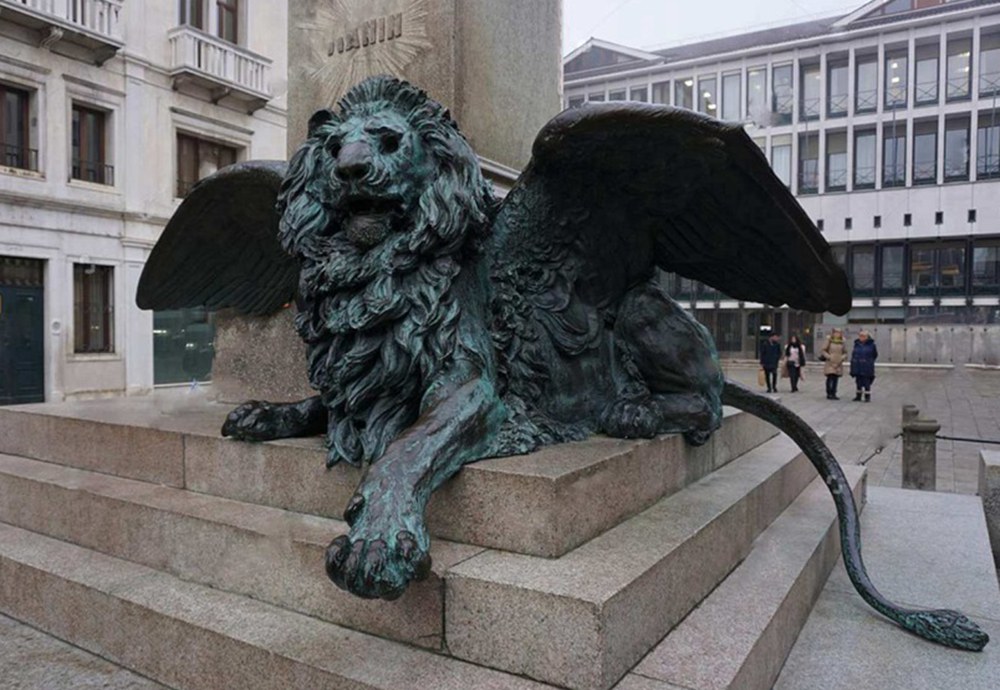
Reclining Winged Lion Sculpture
The reclining winged lion gives an elegant and composed visual impression. Although the posture is relaxed, it still embodies the lion’s power and majesty.
Suitable Applications:
- Private Garden
- Landscape Courtyard
- Manor Landscape Sculpture
- Fountain Decoration
This style is more artistic and is commonly found in landscape design and garden sculptures.
Winged Lion Sculpture with Paws on Shields or Heraldry
Winged lions with paws on shields or family crests usually symbolize protection, glory, and power. This form is very common in medieval European architecture and heraldry.
Suitable Applications:
- European Style Architecture
- Museums or Historical Buildings
- City Monuments
- Noble Manor Decoration
This sculpture is often used in conjunction with family crests or city emblems.

Flying Lion Sculpture with Both Feet on a Base
A flying lion sculpture standing firmly on a base is a classic and stable form. This posture showcases the lion’s power and majesty, while also making it a visual focal point in architectural spaces.
Suitable Applications:
- Urban Plaza Sculpture
- Commercial Plaza or Shopping Mall
- Building Entrance Decoration
- Park Sculpture
This style is commonly used for large-scale public sculptures or architectural decorative sculptures.
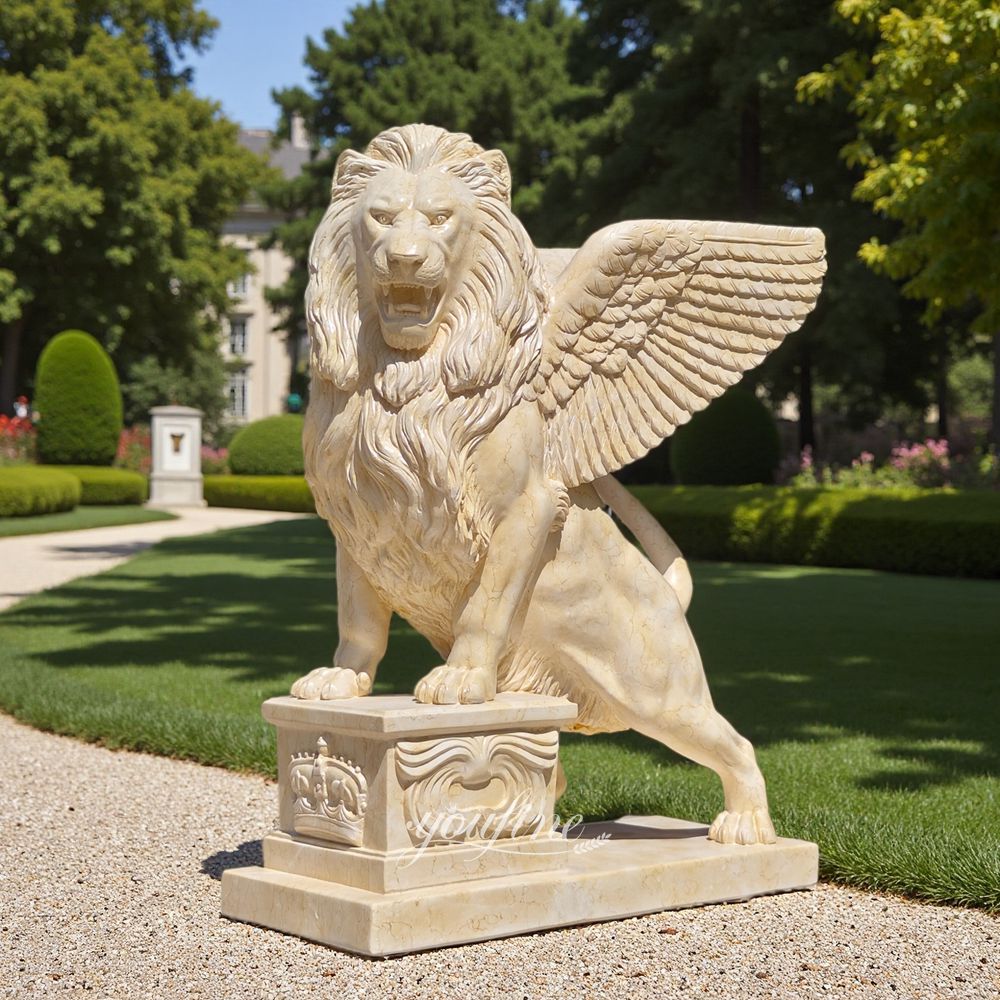
Walking Flying Lion Sculpture
A walking flying lion sculpture conveys a sense of dynamism and power, as if the lion is patrolling or guarding an area.
This style is more artistically expressive than traditional static sculptures.
Suitable Applications:
- Urban Public Art Sculpture
- Theme Parks or Cultural Scenic Areas
- Large-scale Landscape Projects
- Modern Architectural Landscape Design
Walking flying lion sculptures are often used as visual focal points, enhancing the dynamism and artistic atmosphere of a space.

Where to Buy a Winged Lion Sculpture?
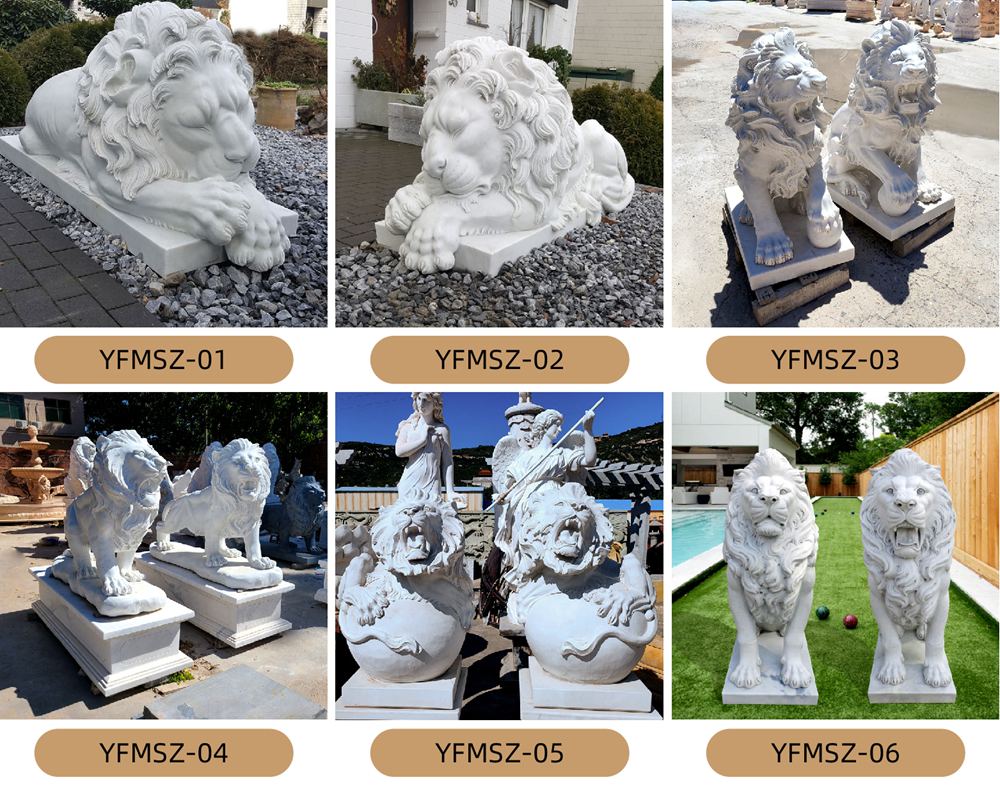
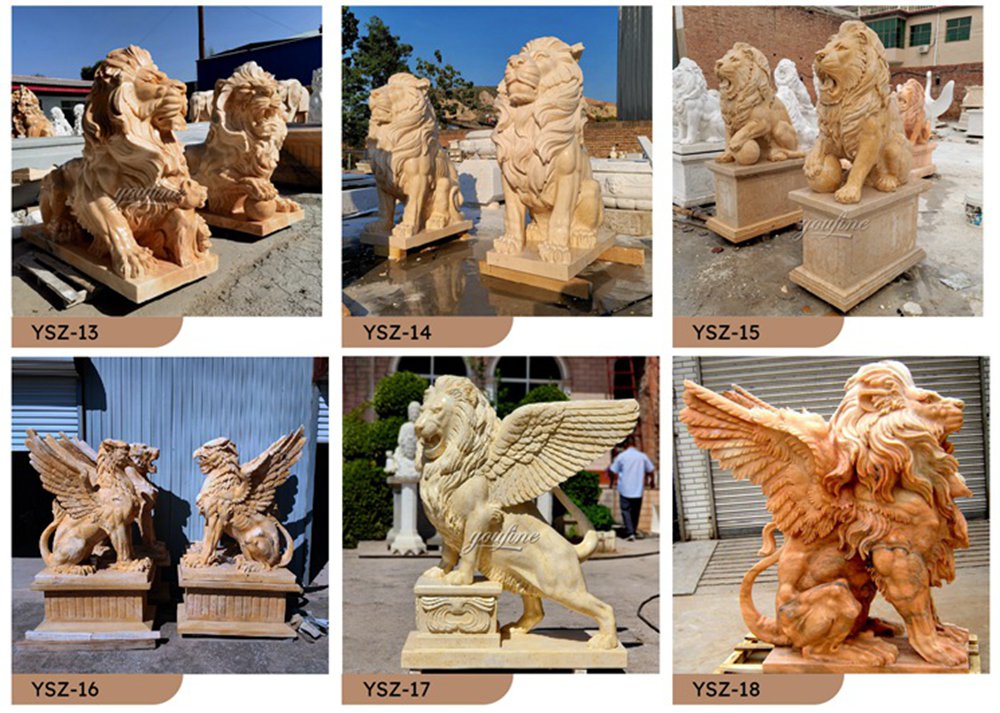
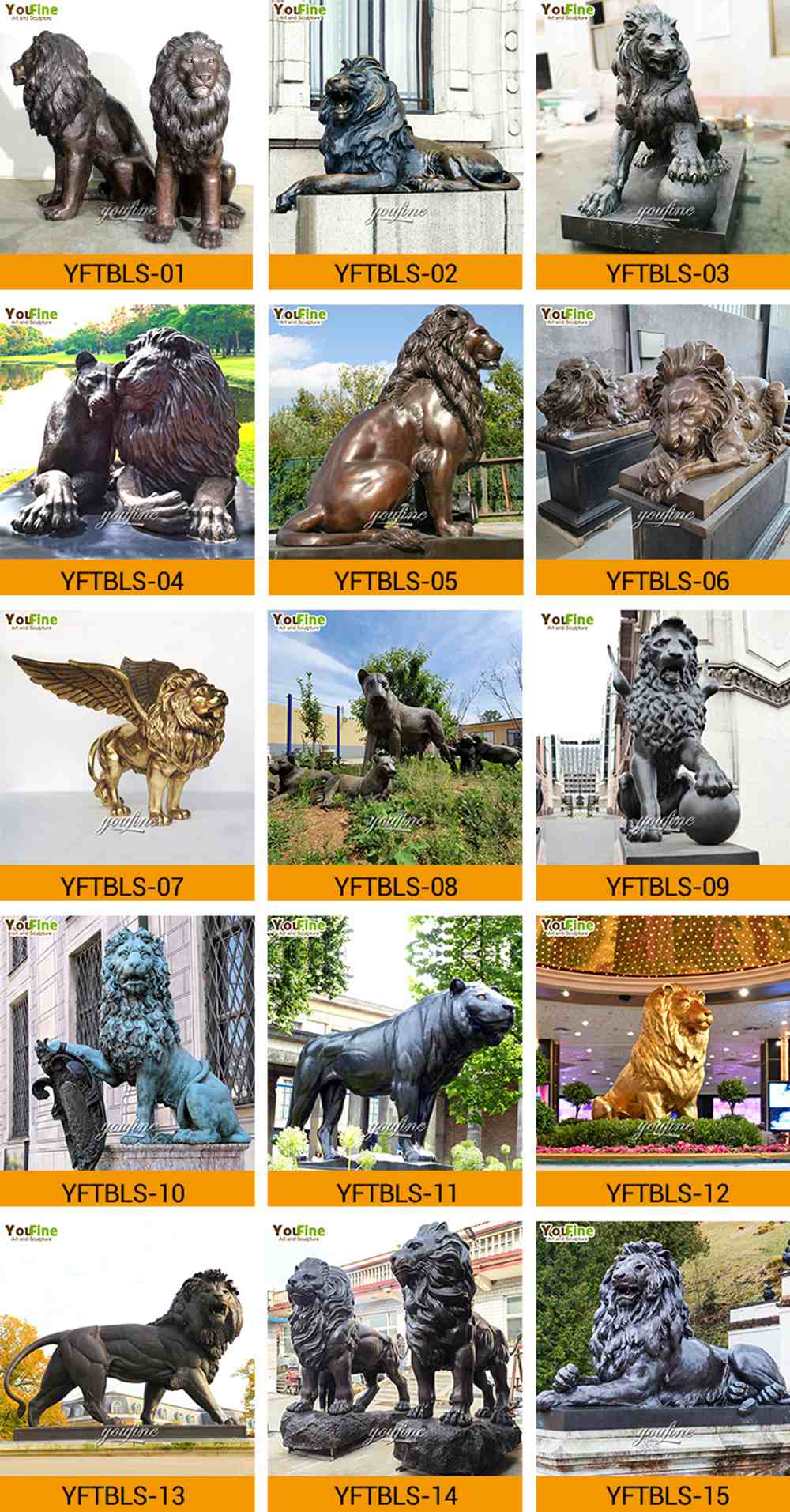
As a professional art sculpture factory, YouFine Artsculpturegallery has over 40 years of experience in marble lion statue and bronze lion statue production and can provide you with exquisite, high-quality winged lion sculptures.
- Two premium materials are available: natural marble and high-content bronze.
- Factory direct sales, highly competitive prices;
- An experienced team of artists can reproduce the sculpture’s details to the greatest extent.
- A strict quality control team ensures high quality and strict standards at every stage of the sculpture’s production.
- A variety of styles are available, and a professional design team can provide customization services.
- Professional scene-matching services ensure the sculpture blends perfectly with the surrounding environment.
Therefore, if you have any needs, whether in stock or custom-made, please contact us directly!
FAQ
-
Who is the winged lion in the Bible?
The most famous symbol of the winged lion in the Bible is St. Mark. It represents the Evangelist St. Mark, symbolizing the majesty, power, and divine dignity of Christ’s cry in the wilderness.
-
Is the winged lion good or evil?
In most cultures, the winged lion is seen as a guardian of justice and holiness. Originating as the guardian beasts of ancient palaces, they were designed to ward off evil and protect sacred spaces, signifying courage, wisdom, and divine protection.
-
What are the meanings of different colored winged lion sculptures?
Color conveys different atmospheres visually:
- Gold: Symbolizes the splendor of royalty, the power of the sun, and supreme nobility.
- Antique Green: Simulates the sedimentation of time, signifying a sense of eternal history and harmony with nature.
- Dark Brown/Black: Shows composure, strength, and solemnity, often used for manor guards.
- White/Beige: White symbolizes holiness, while beige conveys a more approachable feel.
-
How to Choose Between Bronze and Marble Flying Lion Sculptures?
- Bronze: Suitable for clients seeking exquisite details (such as the tension of the feathers) and custom colors.
- Marble: Suitable for settings that appreciate a classic, warm, and substantial texture; the preferred choice for classic gardens and private villas.
-
How to Maintain and Care for a Flying Lion Sculpture?
Clean the surface of the sculpture monthly with a soft towel or brush to remove dust. Avoid using harsh cleaning agents.
Conclusion
The winged lion has always been one of the most powerful mythological symbols in human history. Today, the image of the winged lion still appears in buildings, city landmarks, religious sites, and garden sculptures around the world. Whether standing proudly atop columns, guarding entrances, or adorning historic squares, the winged lion remains an enduring symbol of power and protection.