Standing high above Rio de Janeiro, the Jesus Christ the Redeemer Statue is one of the most recognizable religious monuments in the world. With its open arms overlooking the city, this giant statue has become a symbol of faith, peace, and welcome.
Beyond its religious meaning, the monument is also an impressive achievement in sculpture, engineering, and construction. Built nearly a century ago on the top of Corcovado Mountain, it continues to attract millions of visitors and remains one of the most famous statues ever created.
What is the Jesus Christ the Redeemer Statue?
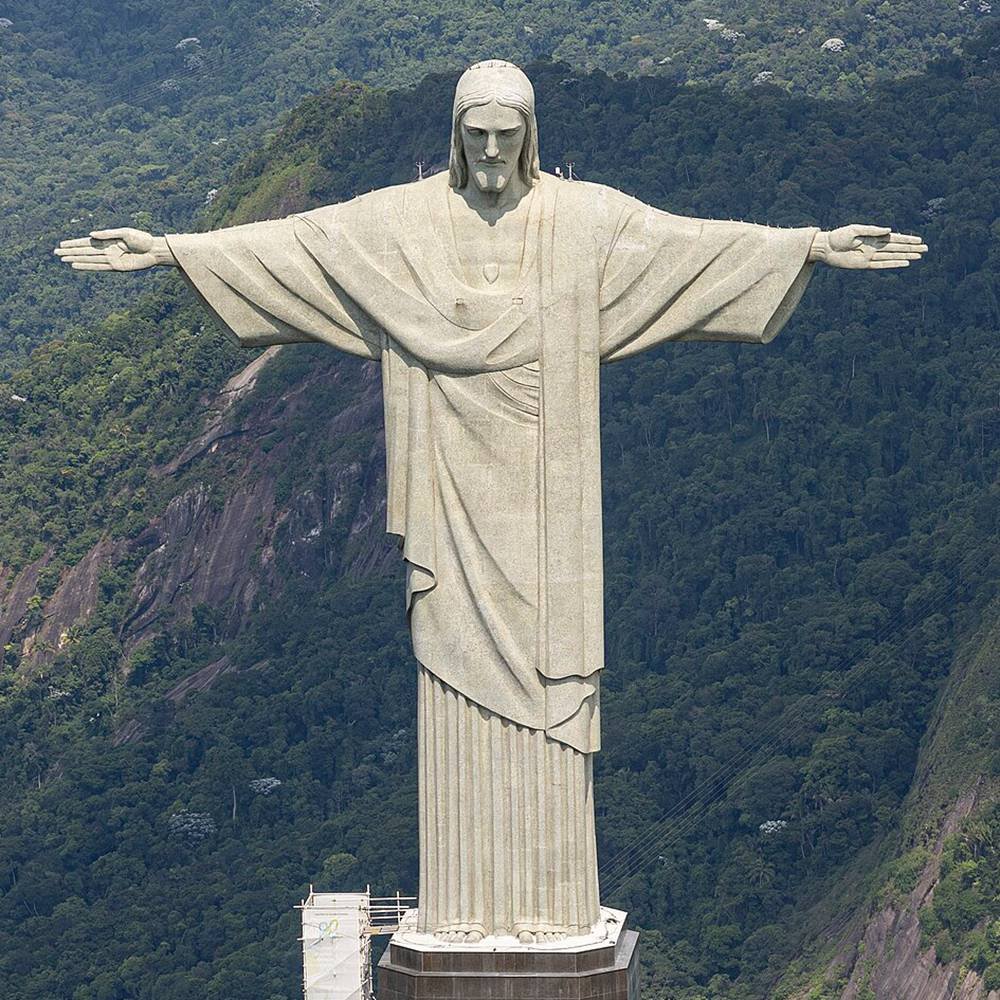
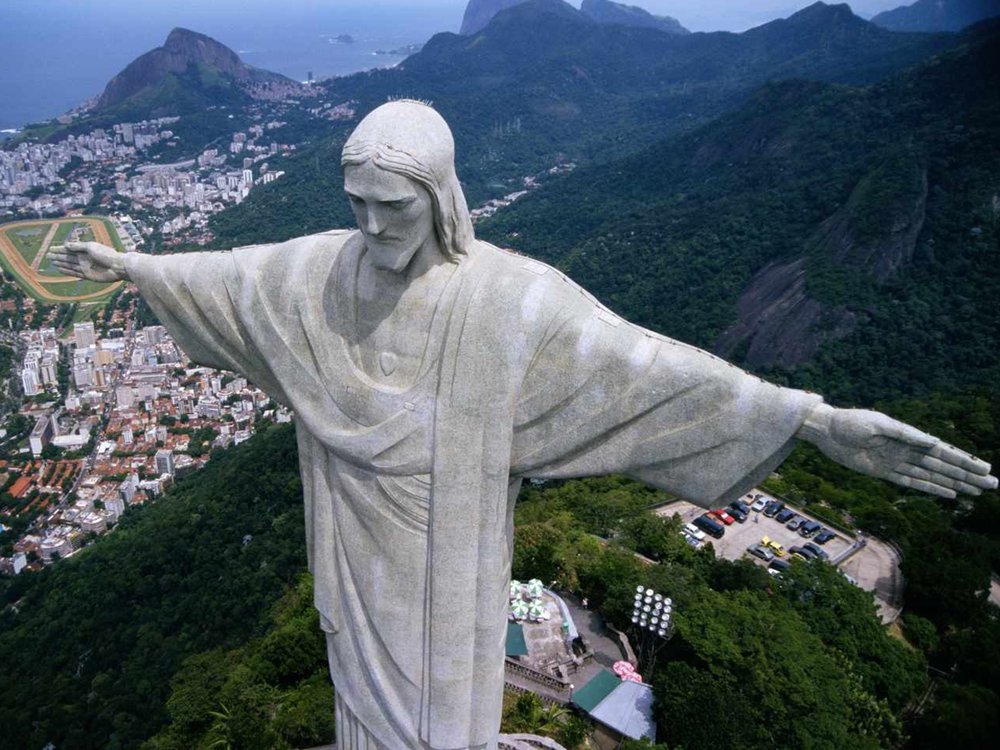
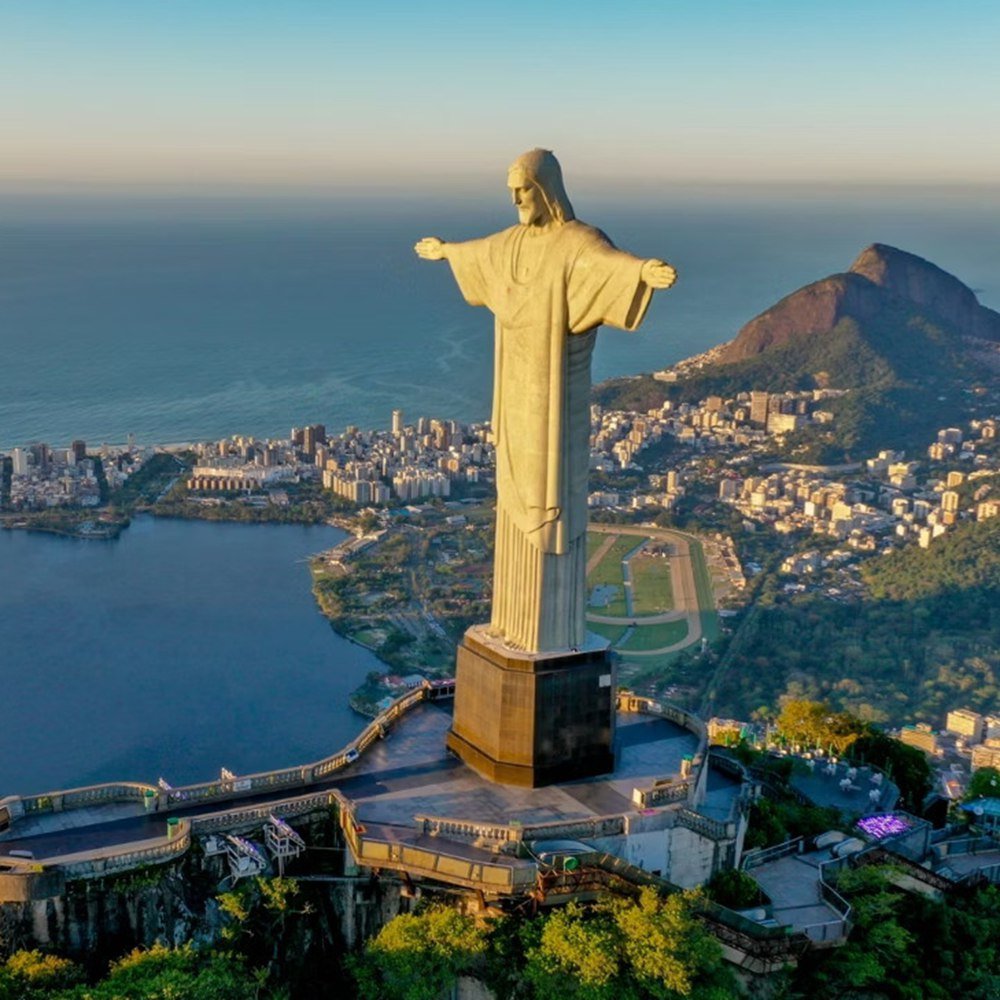
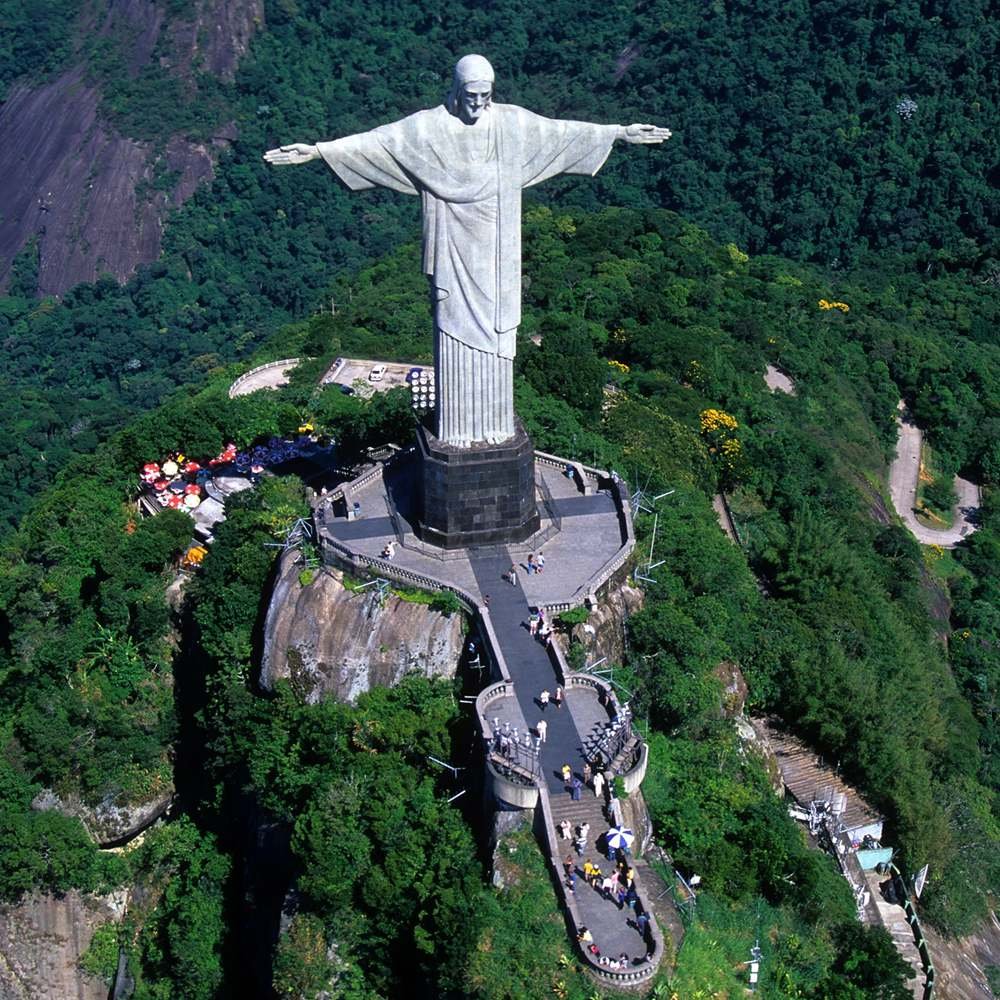
The Christ the Redeemer Statue (Cristo Redentor) is a large Art Deco statue of Jesus Christ located in Rio de Janeiro, Brazil. Completed in 1931, it stands on the peak of Corcovado Mountain inside Tijuca National Park and overlooks the entire city.
Dimensions
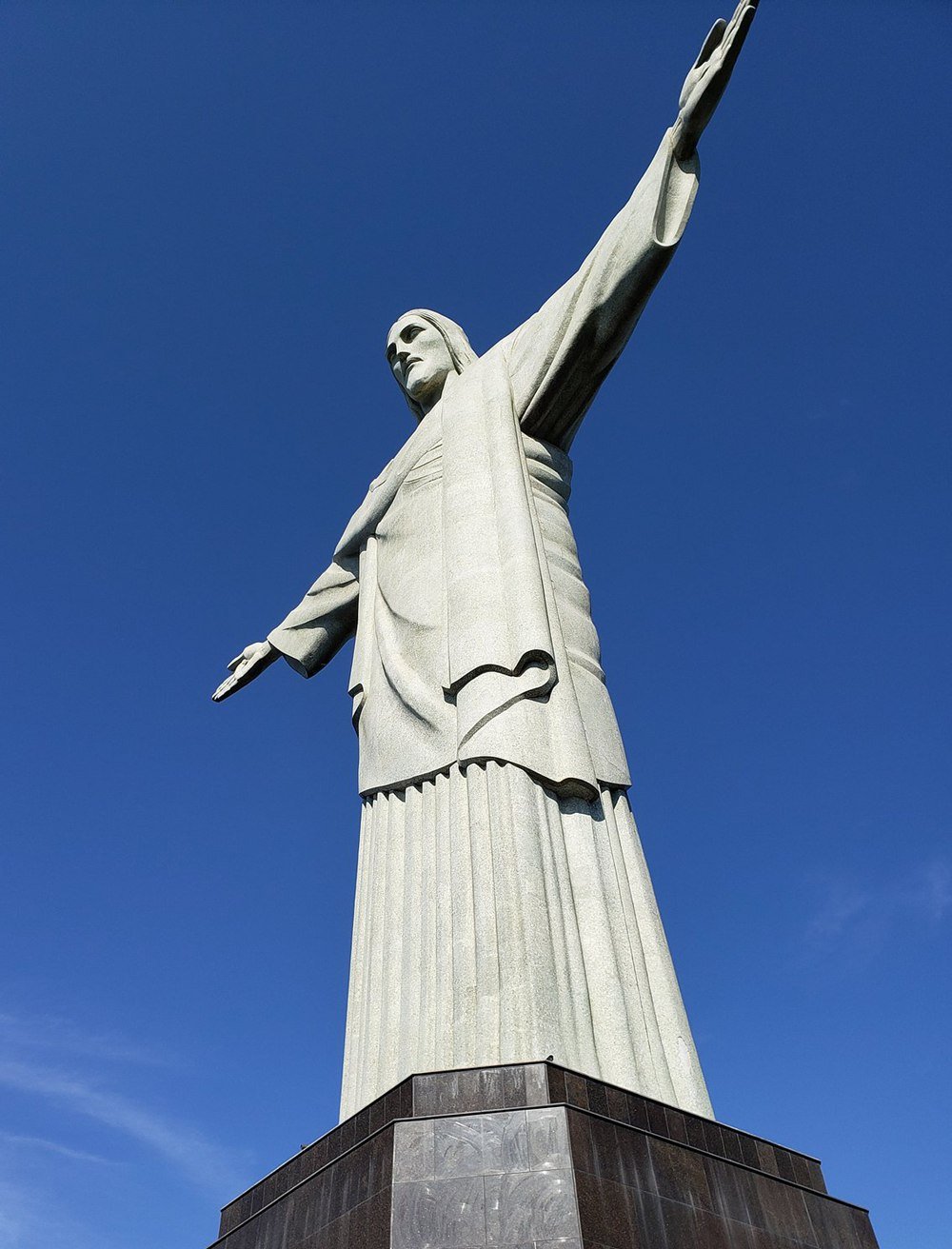
The statue itself stands 30 meters (98 feet) tall from head to toe, resting upon an 8-meter (26-foot) stone pedestal base, bringing the total height to 38 meters. Its most striking structural feature is its massive horizontal cantilevered reach: the outstretched arms span 28 meters (92 feet) from fingertip to fingertip.
Appearance
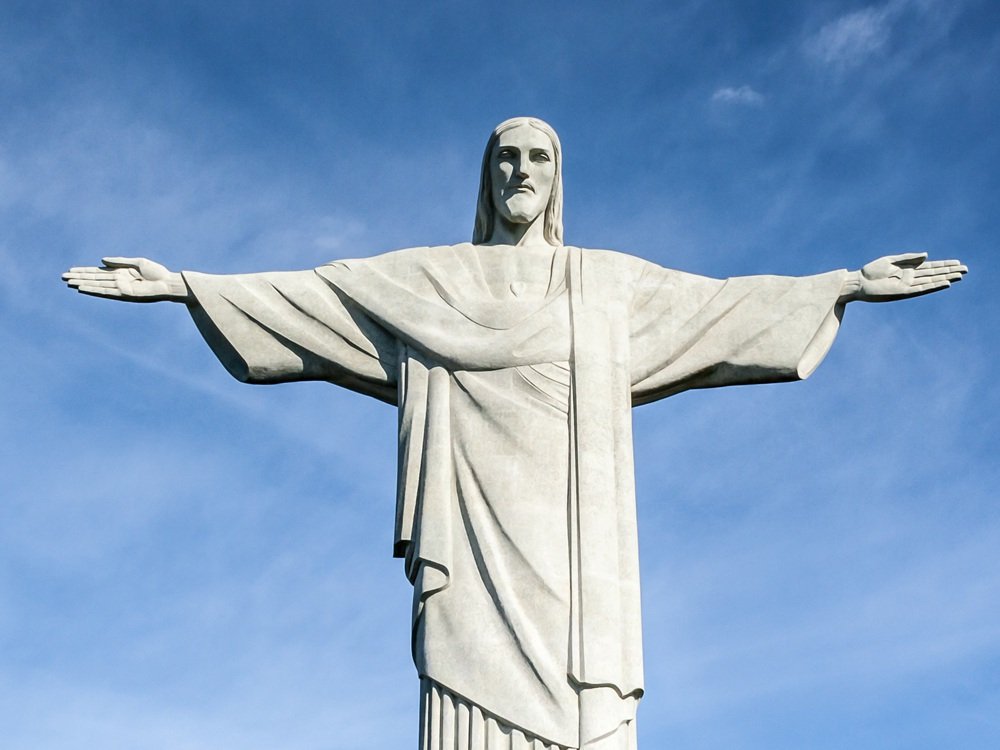
Unlike intricate, lifelike drapery on Renaissance and Baroque sculptures, it features simple, neat geometric lines.
Its upright figure, smooth surface, and wide outstretched arms convey balance, power, and peace. Sharp vertical folds run evenly along the robe. This bold linear shape lends the giant monument a modern architectural feel that matches the mountain’s natural outline.
The design prioritizes a clear overall silhouette, so the figure of Christ can be easily spotted from far across Rio.
Why Was the Christ the Redeemer Statue Built?
The initial concept emerged briefly in the 1850s when a Vincentian priest suggested honoring Princess Isabel, but the project truly took root after World War I.
In 1920, the Catholic Circle of Rio de Janeiro observed what they perceived as a rising tide of godlessness and a loss of spiritual values across the country.
To counteract this, they proposed a massive religious monument that would be visible from almost any point in the city, reclaiming the landscape for faith.
15 Fascinating Secrets & Facts About Christ the Redeemer
-
The Original Sketch Was Radically Different
Initial blueprints showed Christ holding a massive wooden cross in one hand and a globe of the Earth in the other, before evolving into the iconic open-arm silhouette.
-
A Global Collaboration of Master Artists
The monument is a multinational masterpiece. Brazilian engineer Heitor da Silva Costa managed the project, Frenchman Paul Landowski sculpted the head and hands, Romanian Gheorghe Leonida crafted the face, and French engineer Albert Caquot did the structural math.
-
Handcrafted Clay Models From Paris
The delicate head and giant hands were first built to scale using clay in a Paris studio, cast into plaster blocks, and then shipped across the Atlantic to Brazil for assembly.
-
100% Civically Crowdfunded
The landmark cost $250,000 to build (over $3 million today). The Brazilian government provided no financial support; it was entirely funded by donation campaigns led by local Catholics.
-
Massive Cantilevered Arms
The 28-meter (92-foot) arm span features no vertical pillars underneath. They were engineered as true structural balconies, balanced perfectly to withstand intense gravitational and wind stress.
-
Multi-Story Hollow Skeleton
The statue is not solid stone. Inside lies a complex, multi-story maze of reinforced concrete grid pillars and a narrow, 12-story steel staircase allowing maintenance crews to navigate inside.
-
Hand-Glued Mosaic Skin
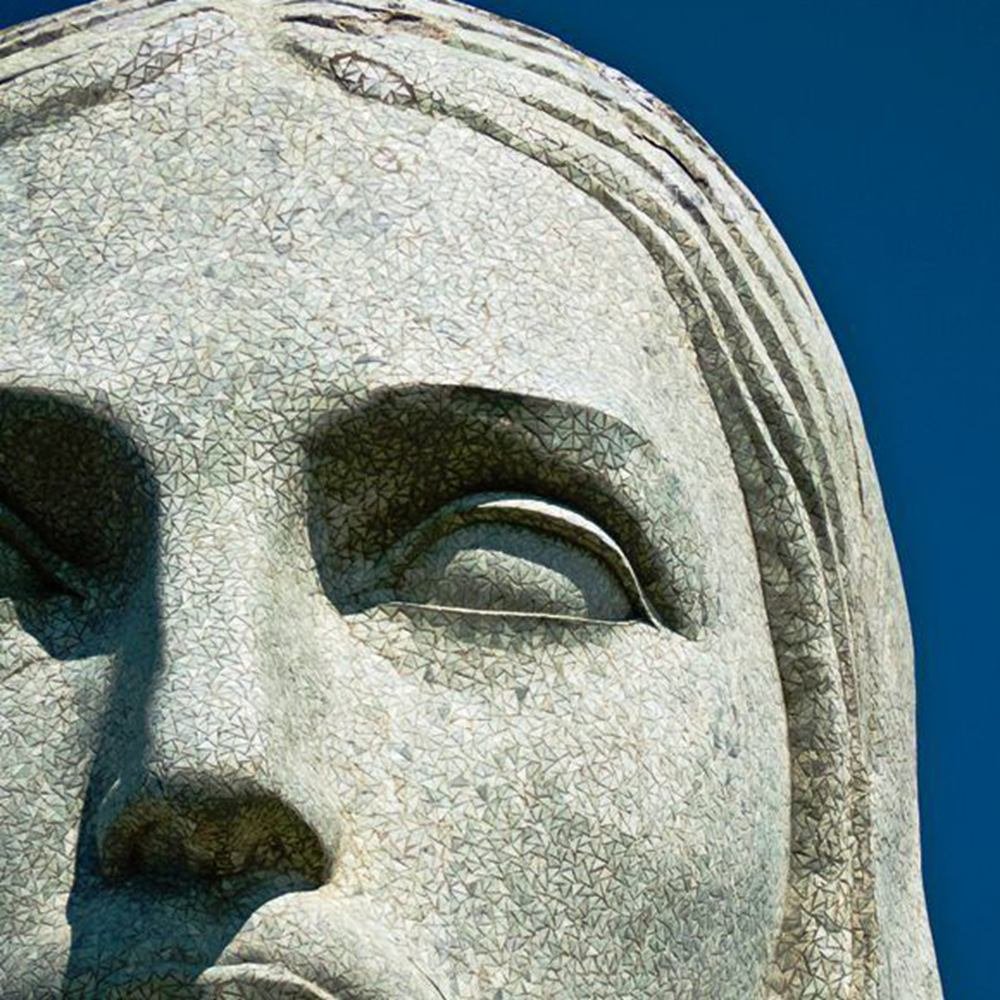
The millions of triangular soapstone tiles were hand-glued onto flax fabric sheets by local female volunteers at the foot of the mountain before being transported up and applied to the concrete core.
-
Premium Imported Swedish Cement
Although engineered in South America and sculpted in Europe, the high-grade cement used for the structural skeleton was actually imported from Limhamn, Sweden, for maximum durability.
-
No Heavy Cranes Were Used
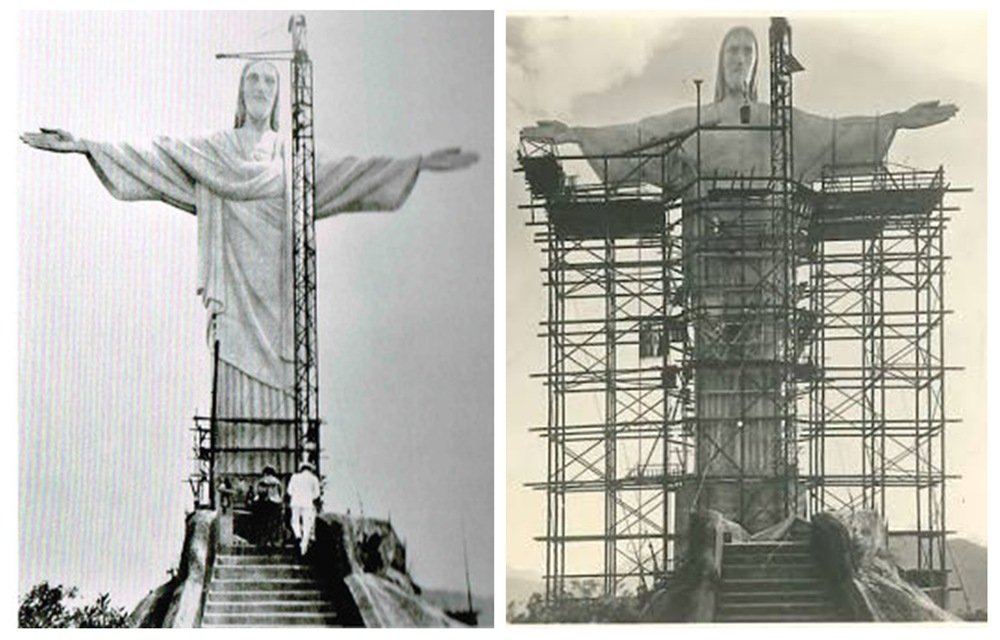
Because of the razor-thin mountain peak, workers had to transport all materials, scaffolding, and giant plaster casts up the steep incline using a small cog railway.
-
A High-Altitude Lightning Target
Sitting on an exposed peak, the statue is struck by lightning 2 to 4 times every year. In 2014, a massive strike chipped off the tip of the statue’s right thumb.
-
Equipped with a Shielding Lightning Protection System
To combat constant storm damage, a complex network of grounding cables runs along the top of the crown, down the fingertips, and deep into the mountain bedrock, acting as a giant lightning rod.
-
Multiple Continuous Restorations
Due to extreme weathering and lightning, the statue has undergone multiple major restoration campaigns (notably in 1980, 1990, 2010, and after the 2014 storm), slowly darkening its complexion as the original light-colored soapstone quarry has run out.
-
One of the New Seven Wonders
In 2007, following a global poll of over 100 million votes, the statue was officially named one of the New Seven Wonders of the World, alongside the Great Wall of China and the Taj Mahal.
-
NOT the Tallest Jesus Statue Globally
Despite its immense fame, it is a common misconception that it is the largest. Statues like Christ the King in Poland and Cristo de la Concordia in Bolivia actually surpass their 30-meter height.
Nevertheless, it remains one of the most frequently replicated sculptures of Jesus in the world; if you would also like a Christ the Redeemer replica statue, you could contact us directly.
-
Subtle Historical Controversies
While celebrated as a Brazilian symbol, historical debates occasionally surface regarding the intellectual property of the design, with the heirs of French sculptor Paul Landowski and the Brazilian church having historically contested who holds the ultimate artistic copyright of the silhouette.
Construction Timeline and History
- 1921 (The Project Revival): The Catholic Circle organizes “Monument Week” to collect mass signatures and donations.
- 1922 (The Foundation): The symbolic historic cornerstone is laid on the peak of Mount Corcovado on April 2.
- 1924 (Design Finalization): Engineer Heitor da Silva Costa refines the blueprint from a globe-holding figure to the timeless Art Deco open-arm design.
- 1926 (Active Construction Begins): Workers begin erecting the massive internal wooden scaffolding and pouring the foundational concrete core.
- 1928-1930 (The Sculpting Phase): Plaster casts arrive from France; workers meticulously piece together the monumental head and hands.
- 1931 (The Grand Opening): On October 12, 1931, the finished monument is officially dedicated.
Materials & Engineering: Concrete + Soapstone System
One of the most interesting aspects of Christ the Redeemer is the combination of engineering and sculpture techniques used in its construction.
Reinforced Concrete Core: The Structural Foundation
The main body of the statue is made with reinforced concrete, which provides strength and stability. This internal structure supports the enormous arms, body, and head while allowing the monument to remain stable on the mountain.
Soapstone Exterior: The Protective Surface Layer
The outside of the statue is covered with thousands of small triangular soapstone tiles.
Soapstone was selected because it has several advantages:
- High resistance to weather conditions
- Easy to carve into detailed shapes
- Good durability over long periods
- A smooth appearance suitable for monumental sculpture
The small tiles also make maintenance easier because damaged pieces can be replaced individually.
This combination of a strong internal structure and a durable exterior surface has helped Christ the Redeemer survive for nearly 100 years.
Symbolism and Meaning
While deeply rooted in Christian theology, the statue’s symbolism extends into the secular world of public art.
The Welcoming Embrace: The wide-open arms form a universal gesture of peace, acceptance, and sanctuary, welcoming visitors arriving in the harbor below.
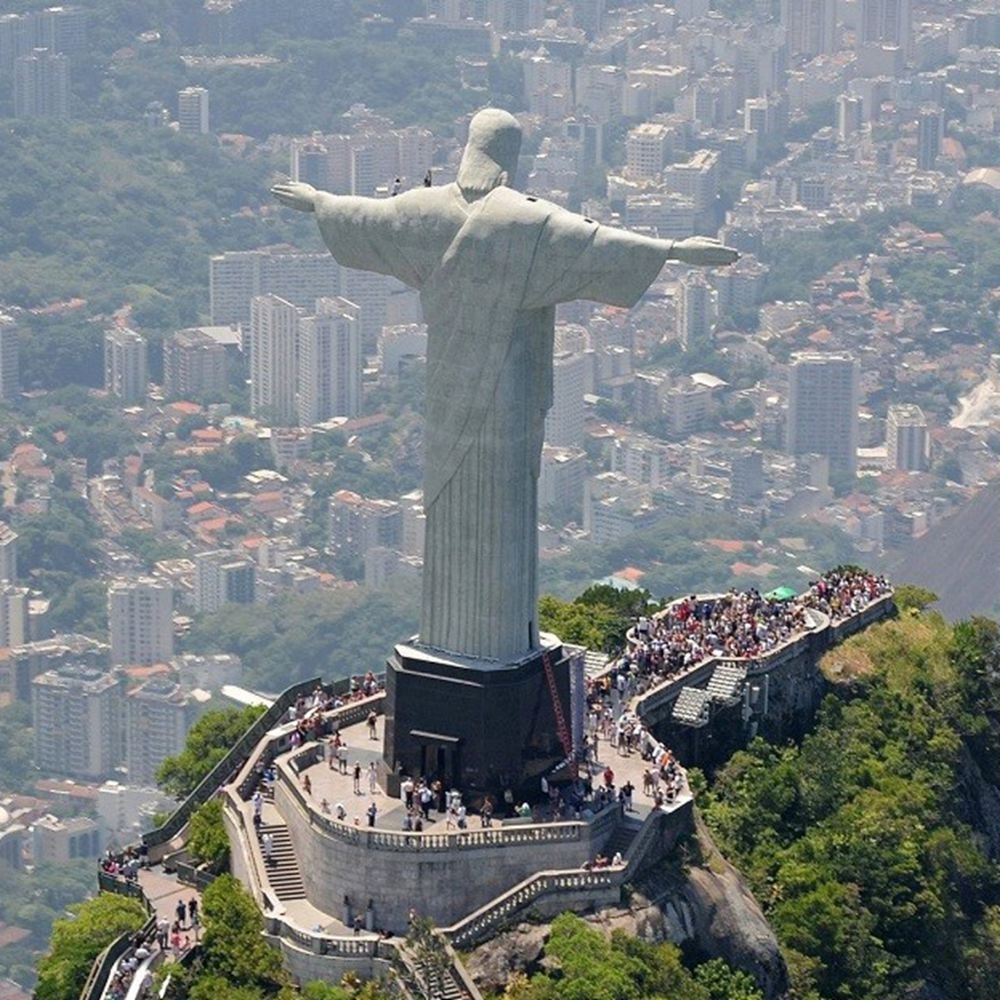
The Cross-Shaped Silhouette: From a distance, the horizontal arm span aligns seamlessly with the vertical column of the body, transforming the figure of Christ into a living, monumental cross that dominates the horizon.
Why Is It So Famous?
-
Unbeatable location
It sits on a high mountain. People can see it all over Rio. The mix of mountains, sea, and city creates stunning views.
-
Huge size
It stands 38 meters tall with wide outstretched arms. It is the largest Art Deco Jesus statue in the world.
-
World official honors
It is one of the New Seven Wonders of the World and part of a UNESCO World Heritage Site.
-
Deep religious meaning
It is a key Catholic landmark in Brazil. Its open arms stand for love and acceptance, drawing pilgrims globally.
-
Constant media coverage
It appears widely at sports events like the World Cup and Olympics, plus movies, souvenirs, and celebrity visits.
-
Unique art and craft
It follows classic Art Deco design. Its soapstone outer surface is a great model for large outdoor sculptures.
-
National cultural symbol
It represents Rio and Brazil. Local people raised all the money to build it, making it a beloved national icon.
-
Word-of-mouth travel spread
Millions of tourists visit yearly and share photos online, making it more famous around the world.
Visiting Christ the Redeemer: Quick Guide
- Best Way to Travel
Take the Corcovado Cog Railway (Trem do Corcovado). This 20-minute electric train ride up through the Tijuca rainforest drops you right at the monument. Book tickets online in advance to skip the lines.
- Best Time to Visit
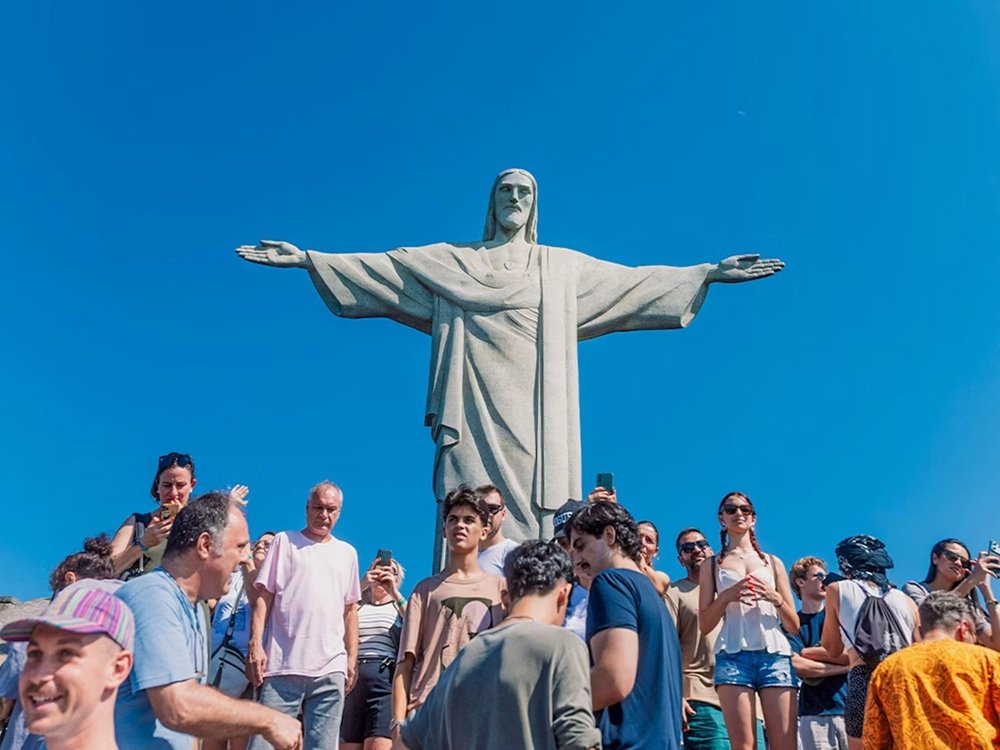
- 8:00 AM – 9:00 AM: Best for avoiding heavy crowds and getting clear morning light on the statue’s face.
- 3:00 PM: Best for dramatic silhouette photography as the sun moves behind the monument.
- Packing & Family Tips
- Essentials: Pack high-SPF sunscreen, sunglasses, and a light jacket (the mountain summit gets very windy and chilly).
- Traveling with Kids: Bring a baby carrier instead of a stroller, as the mountain plaza has narrow stairs and dense crowds. Pack extra water and snacks to avoid long lines at the summit cafes.
Factory Perspective: How We Engineer Large Outdoor Sculptures to Last for Decades
Rio’s Christ the Redeemer has stood strong for nearly a century despite endless storms and lightning strikes. As a professional sculpture manufacturer, here are our four golden rules for making large-scale outdoor landmark sculptures safe, stable, and long-lasting:
- Heavy-Duty Internal Framing + Full Welding
- Storm-Proof Skeleton: Inside every large sculpture, we build a thick, engineered steel support frame. This ensures the monument won’t shake or deform during high winds or heavy storms.
- Seamless Welding: We never rely on quick spot welding. Every single seam must be fully welded solid (Full-Penetration Welding) and polished smooth. This blocks rainwater from leaking inside, preventing hidden rust from cracking the sculpture open.
- Choosing the Right Material for the Right Environment
- Classic Bronze: Ideal for a timeless look. We apply professional high-temperature coloring and anti-oxidation sealants, allowing the bronze to develop a beautiful, historic patina over time without deteriorating.
- Stainless Steel: For coastal or rainy cities, we strictly use marine-grade 316L stainless steel to guarantee the sculpture remains rust-free for decades.
- Natural Marble: For stone carvings, we apply deep-penetrating water-resistant sealants to protect the marble from moisture, moss growth, and natural weathering.
- Secure Foundation & Thunderstorm Protection
- Installation Instructions: We provide clients with detailed foundation drawings for chemical anchors and embedded parts, ensuring the sculpture and its ground foundation form a solid, integrated unit capable of withstanding the loads associated with both static viewing and frequent public interaction.
- Lightning & Water Drainage: For sculptures taller than 6 meters (20 feet), we install hidden lightning rods to divert strikes safely into the ground. We also design concealed interior drain holes so water cannot get trapped inside the hollow body.
- Routine Inspections & Repair Promptly
Detecting issues early—such as hairline cracks or surface stains—and promptly cleaning or repairing them can prevent major structural risks down the line.
If you are planning a project involving large-scale landmarks or landscape sculptures—such as those for churches, parks, or public plazas—we invite you to contact us. We offer complimentary technical consultation, material selection, and foundation safety assessments, dedicated to creating artistic masterpieces designed to endure for a century.