What Is Carving in Art?
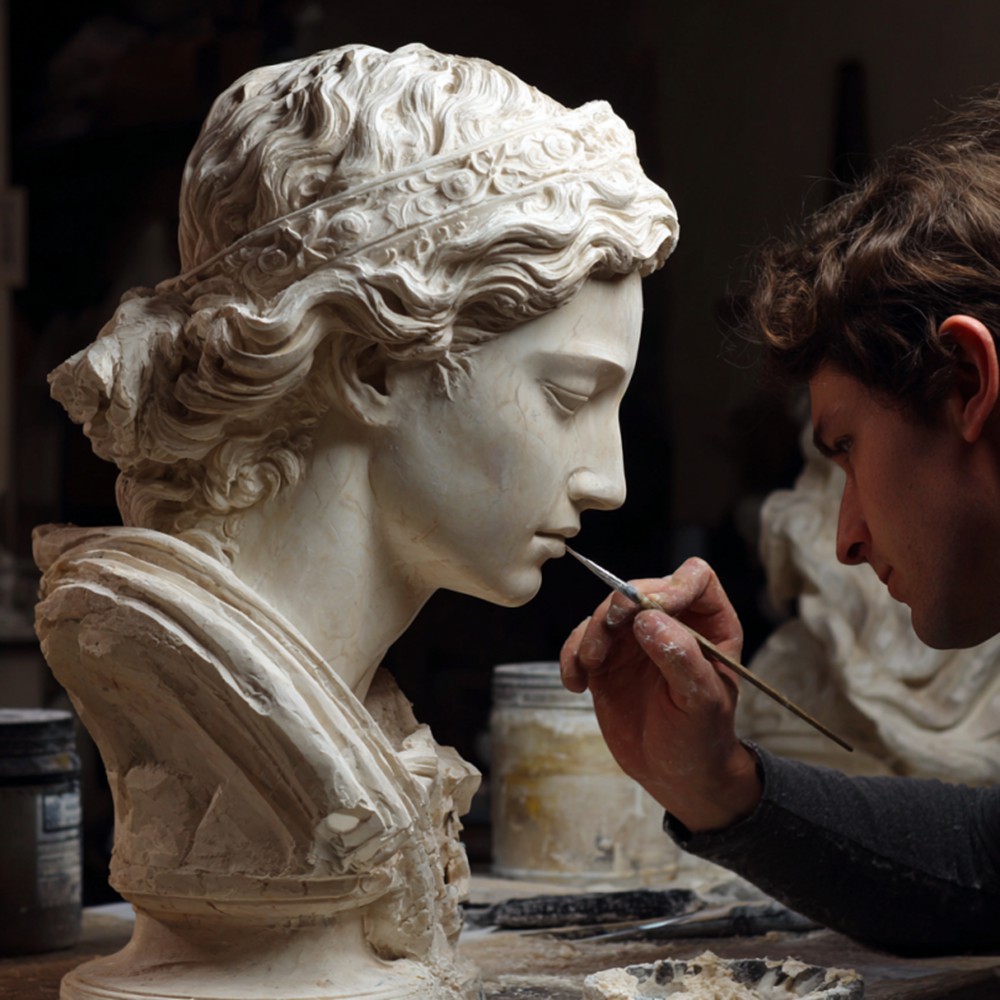
Carving in art is a subtractive process in which an artist creates a form by cutting, chipping, or removing material from a solid block such as stone, wood, or marble. Unlike modeling, which adds material, carving reveals the final shape by taking material away—making it precise, permanent, and irreversible.
Whether you are an art beginner, a sculpture enthusiast, or a buyer planning a project for a garden, private residence, or public space, understanding carving helps you better appreciate how traditional sculptures are made. It also explains why marble sculptures are widely valued for their durability, elegance, and artistic quality. In addition to defining carving in art, this guide explores its key characteristics, materials, techniques, and real-world applications.
What Is Carving in Sculpture?
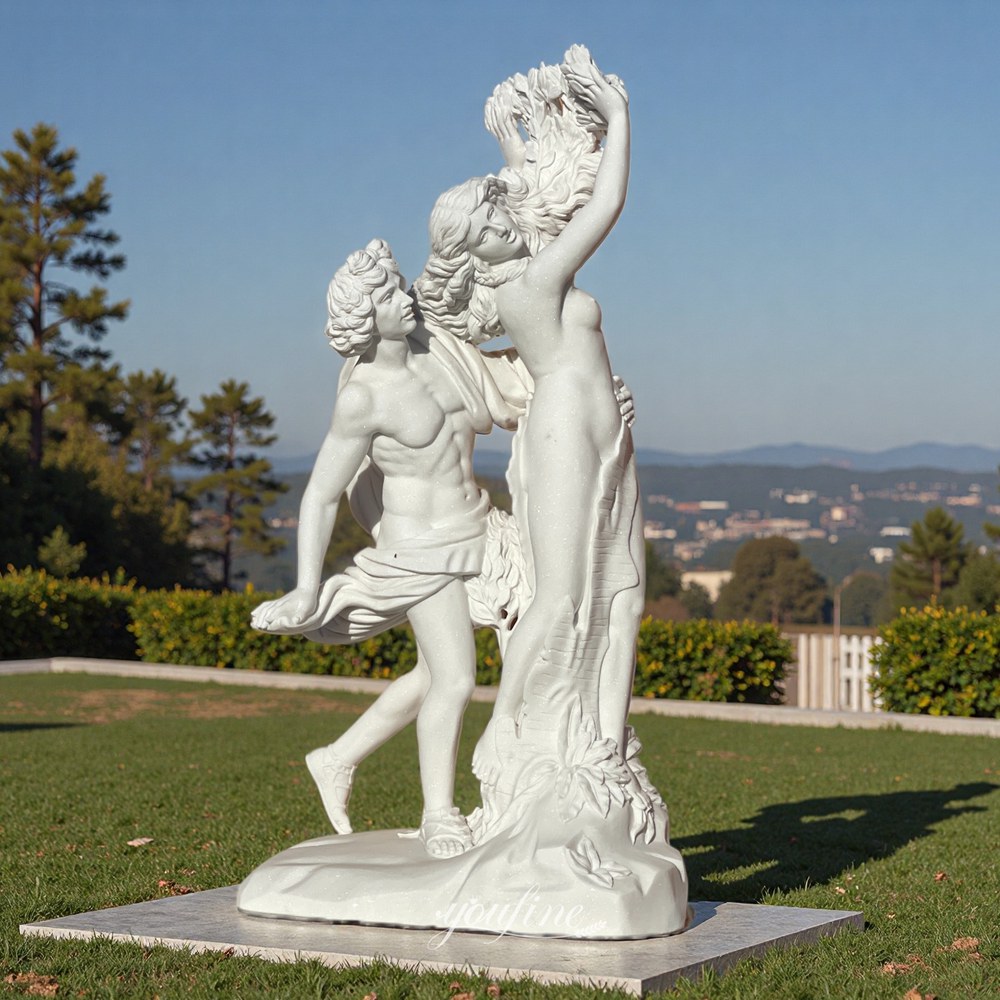
Carving in sculpture refers specifically to the practical application of carving techniques to create three-dimensional artworks.
Relationship Between the Two Concepts
- Carving in art → a broad concept (applies to many art forms, including decorative arts)
- Carving in sculpture → a subset of carving in art, focused only on 3D sculptural works
In simple terms: All carving in sculpture is carving in art, but not all carving in art is sculpture.
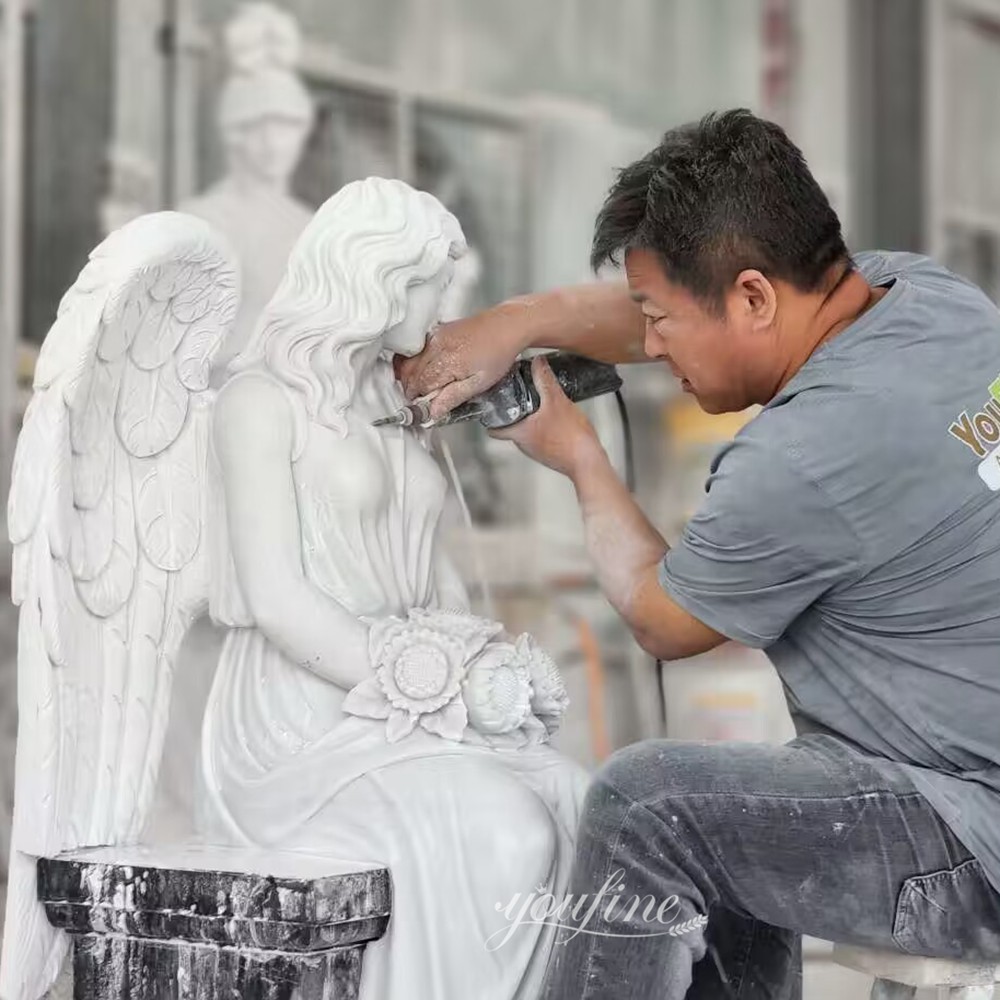
Key Characteristics of Carving
Carving stands out from other artistic techniques because of several defining traits:
- Subtractive Process: Material is removed, not added
- Irreversible Nature: Mistakes cannot be undone—precision is critical
- Material-Driven Outcome: Artists often follow the natural grain, texture, or structure of the material
- From Mass to Detail: Work typically progresses from rough shaping to fine finishing
- High Skill Requirement: Especially in stone carving, where experience directly impacts the final quality
Common Materials Used in Carving
Choosing the right material is one of the most important decisions in carving. Different materials not only affect the appearance and durability of a sculpture, but also determine the level of detail, cost, and suitable environment.
-
Stone Carving (Most Important Category)
Stone has been the primary material for carving for thousands of years due to its strength, permanence, and prestige.
Marble (Premium Choice)
- Fine, smooth texture allows for high-detail carving
- Ideal for figurative sculptures, classical statues, and luxury projects
- Widely used in gardens, villas, and memorial sculptures
- Best for: high-end decorative and collectible sculptures
Granite (Most Durable)
- Extremely hard and resistant to weather
- Perfect for outdoor sculptures, monuments, and public art
- More difficult to carve → requires advanced tools and expertise
- Typically features a more textured, bold aesthetic
- Best for: long-term outdoor installations and large-scale projects
Sandstone (Architectural Favorite)
- Medium hardness → easier to carve than granite
- Warm, natural tones (beige, red, yellow)
- Widely used in architectural ornamentation, wall reliefs, and historical buildings
- Slightly more porous → requires sealing for outdoor longevity
- Best for: decorative facades, relief carvings, and traditional-style projects
Other Stones
- Limestone → softer, easier for beginners
- Alabaster → semi-translucent, used for artistic pieces
-
Clay (Used in the Process, Not Final Carving)
Soft and highly flexible material
- Commonly used to create a model or prototype (maquette) before carving stone
- Allows artists to refine proportions and details before committing to irreversible carving
- Essential in professional workflows, especially for large commissions
-
Wood Carving
Easier to shape compared to stone
- Offers a warm, organic aesthetic
- Different woods provide different characteristics:
- Basswood → soft, beginner-friendly
- Walnut → rich color, premium look
- Oak → strong but harder to carve
Note: Sensitive to humidity, insects, and weather. Not ideal for long-term outdoor use without treatment. Best for: indoor decoration, cultural art, and detailed craftsmanship
-
Other Materials
Bone & Ivory (Historical Use)
- Used in ancient and decorative arts
- Fine detail possible, but now restricted due to ethical concerns
Ice (Temporary Carving)
- Used for events and exhibitions
- Highly expressive but short-lived
Modern & Composite Materials
- Resin or synthetic stone may imitate carving aesthetics
- Often used for cost-effective alternatives, though lacking the authenticity of hand-carved stone
Essential Tools in Carving Sculpture
The tools used for carving depend on the material, but there are several essential tools that most carvers rely on. Here are the most common ones, organized by material type:
- For Stone Carving: Chisels (flat, pointed, and toothed), mallets (wooden or rubber, to strike chisels without damaging them), rasps (to smooth rough surfaces), and grinders (for shaping large pieces).
- For Wood Carving: Carving knives (small, sharp blades for detailed work), gouges (curved blades for hollowing or shaping), chisels, and sandpaper (to smooth the final surface).
- General Tools: Measuring tools (rulers, calipers) to ensure precision, protective gear (gloves, goggles) to stay safe, and brushes to remove dust and debris.
- Modern carvers may also use power tools (e.g., electric grinders, laser cutters) to speed up the process, but many still rely on traditional hand tools for precision and control—especially for detailed work.
Main Types of Carving in Sculpture
Carving in sculpture can be divided into four main types, based on the form and technique used.
-
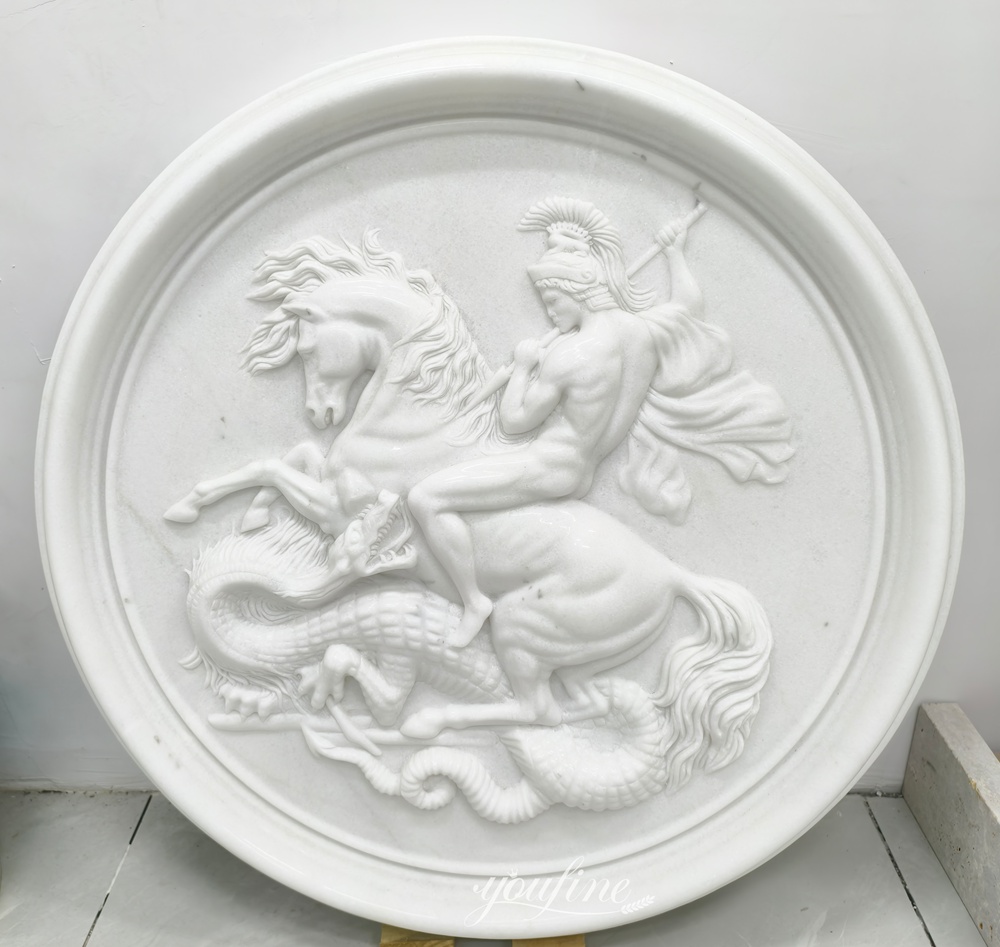
Relief Carving
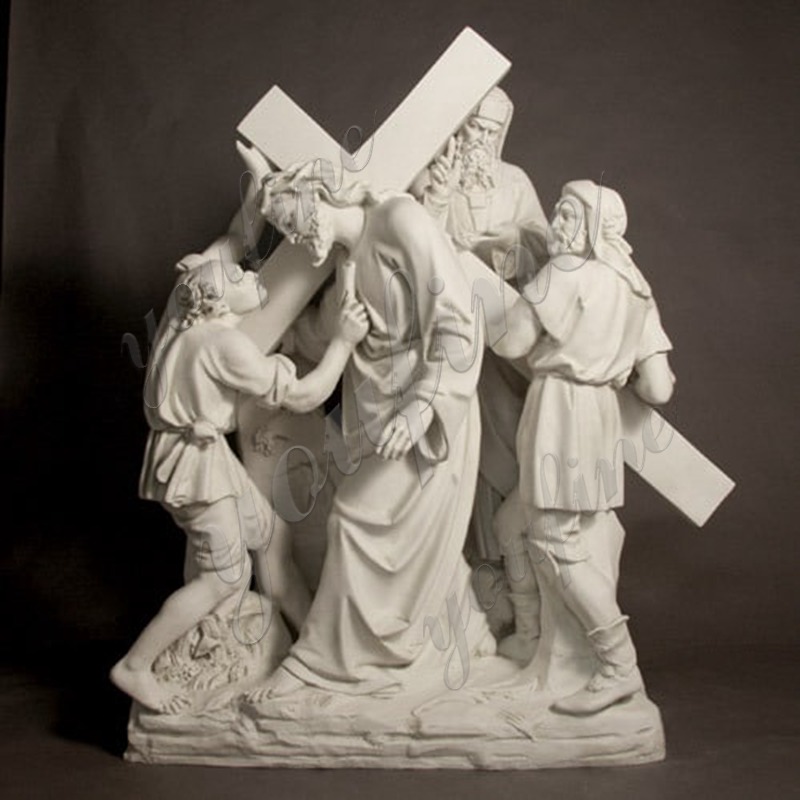
Relief carving is a type of carving where the design is raised from a flat background, creating a “low” or “high” relief. The background remains flat, while the subject is carved to stand out.
Examples include stone reliefs on ancient temples, wood carvings on furniture, or metal engravings. It’s a popular choice for decorative pieces, as it can be displayed on walls or flat surfaces.
-
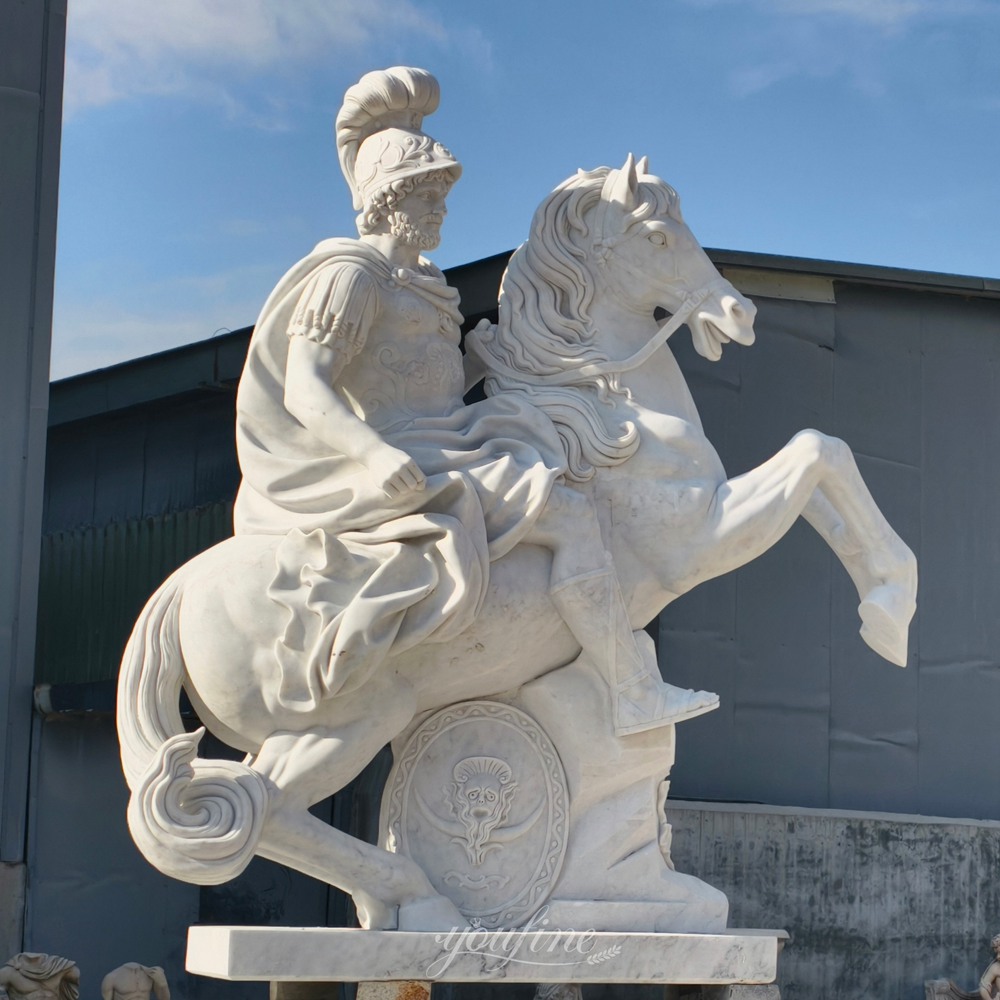
Full-Round Carving (In-the-Round)
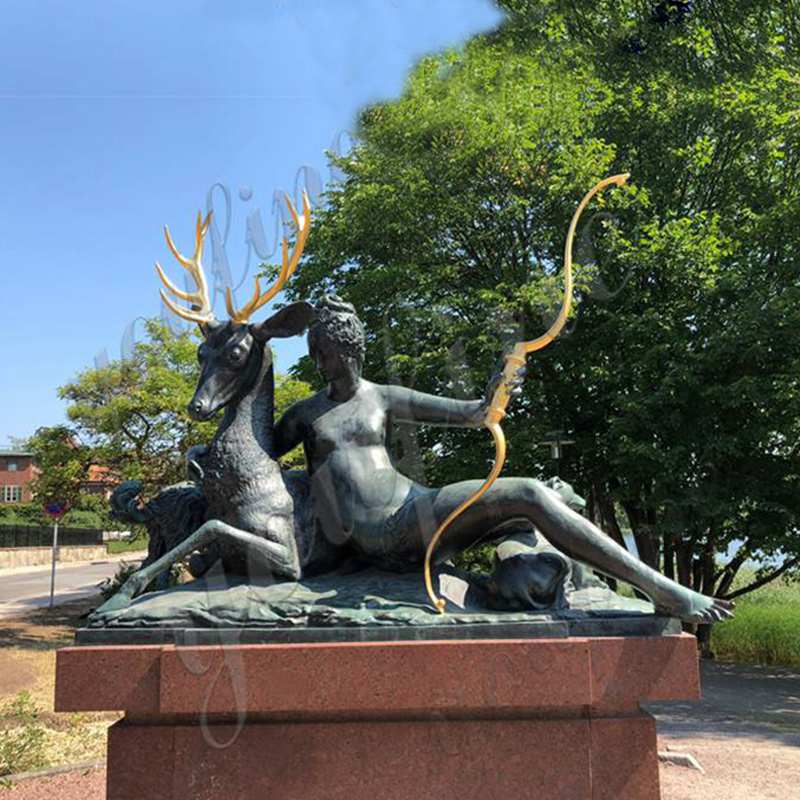
Full-round carving is the most common type of sculpture carving. It creates a fully three-dimensional form that can be viewed from all angles—think of a marble statue, a wooden deer sculpture, or a bronze figure.
This type of carving requires careful planning, as the artist must ensure the piece looks balanced and proportional from every perspective.
-
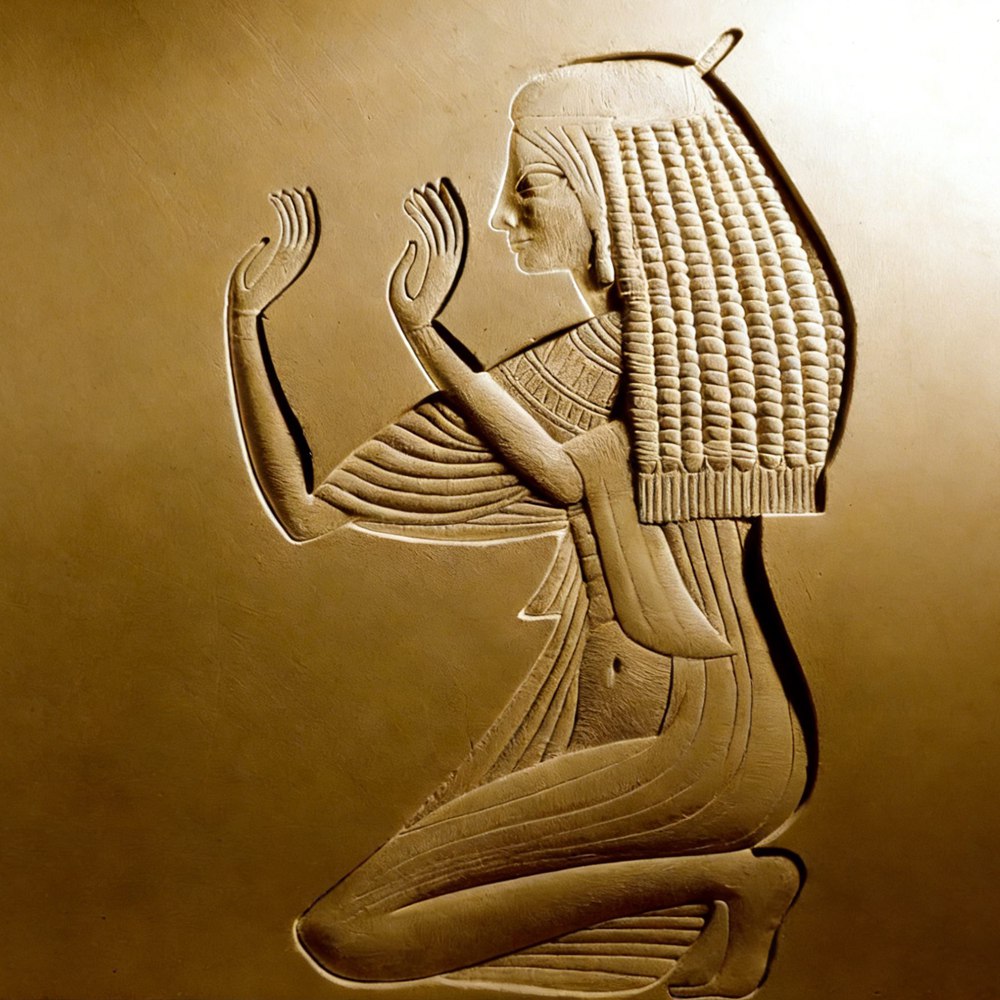
Intaglio (Incised) Carving
Intaglio carving is the opposite of relief carving: instead of raising the design, the artist carves the design into the material, creating a recessed pattern.
This technique is often used for decorative details, such as inscriptions on stone monuments, engravings on metal, or patterns on wood.
-
Direct Carving
Direct carving is a technique where the artist carves directly into the material without creating a detailed preliminary model (e.g., a clay mold).
This approach relies on the artist’s skill and intuition, as they work with the natural grain or texture of the material to create the final piece. Many modern sculptors prefer direct carving for its organic, spontaneous feel.
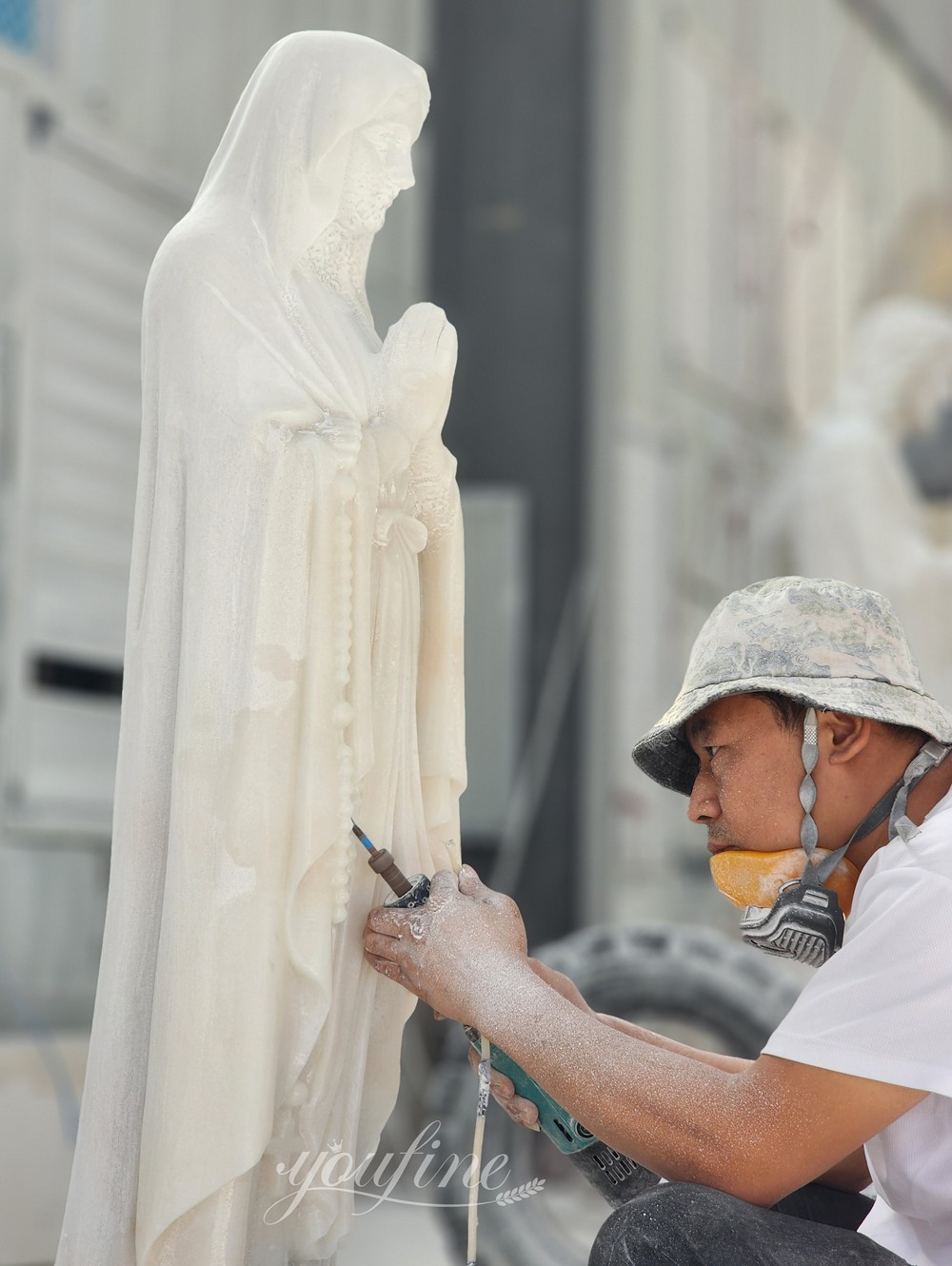
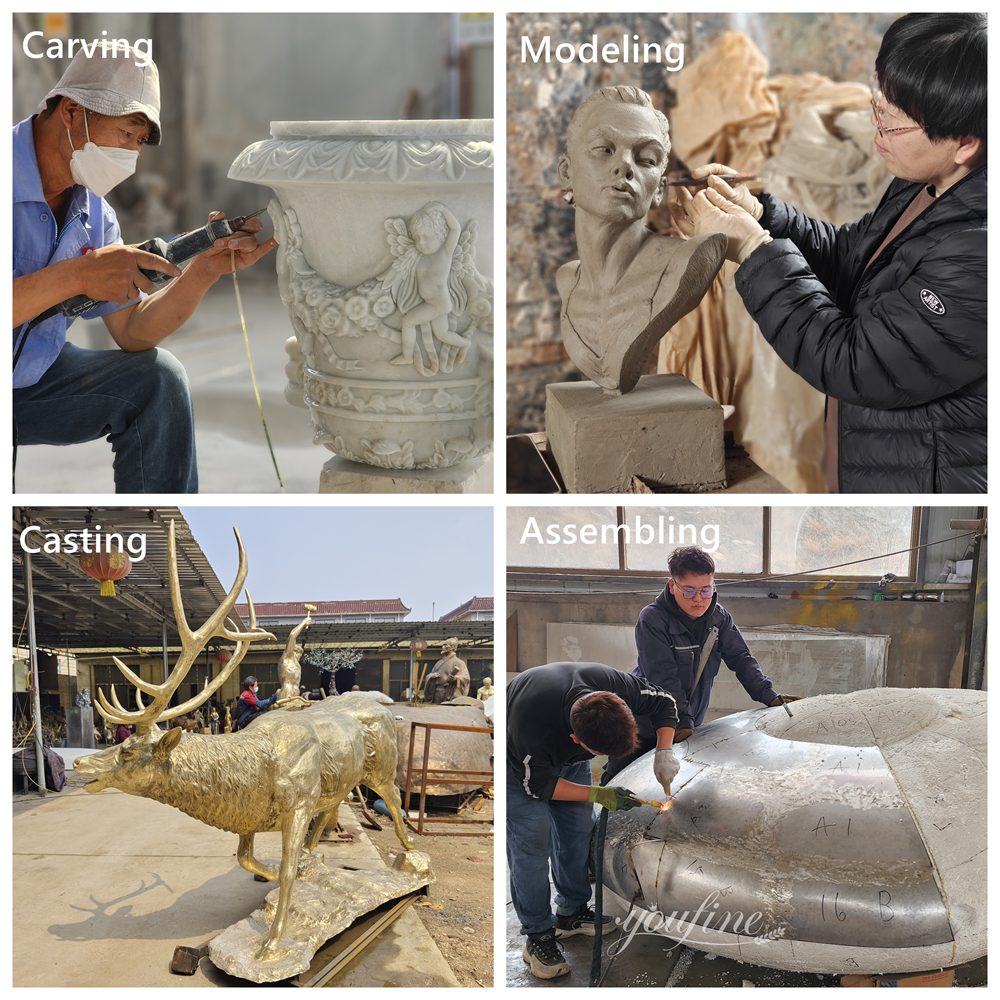
Carving vs Modeling vs Casting
To truly understand carving, it helps to compare it with the other two major sculpture techniques: modeling and casting. Each method has its own strengths, limitations, and ideal use cases.
Quick Comparison Table
| Method | Process | Core Characteristics | Materials | Flexibility | Suitable Scenarios |
|---|---|---|---|---|---|
| Carving | Subtractive (removing material) | Irreversible, precision-driven, material-led, highly durable | Marble, granite, sandstone, wood | Low | High-end outdoor sculptures, architectural decoration, monuments, and luxury estates |
| Modeling | Additive (adding material) | Flexible, easy to modify, ideal for experimentation and prototyping | Clay, wax, plaster | High | Concept design, art studies, sculpture planning, and small indoor artworks |
| Casting | Mold-based reproduction | Replicable, scalable, allows complex forms, combines art & industry | Bronze, resin, fiberglass | Medium | Public sculptures, large installations, commercial projects, edition artworks |
If you want a deeper introduction, you could continue reading the dedicated guide on sculpture techniques (Technique in Sculpture: What Are the 4 Basic Sculpture Techniques?).
Famous Carving Sculptures & Artists
Carving has produced some of the most iconic artworks in history. These works not only demonstrate technical mastery but also show how carving evolved across cultures and time periods.
-
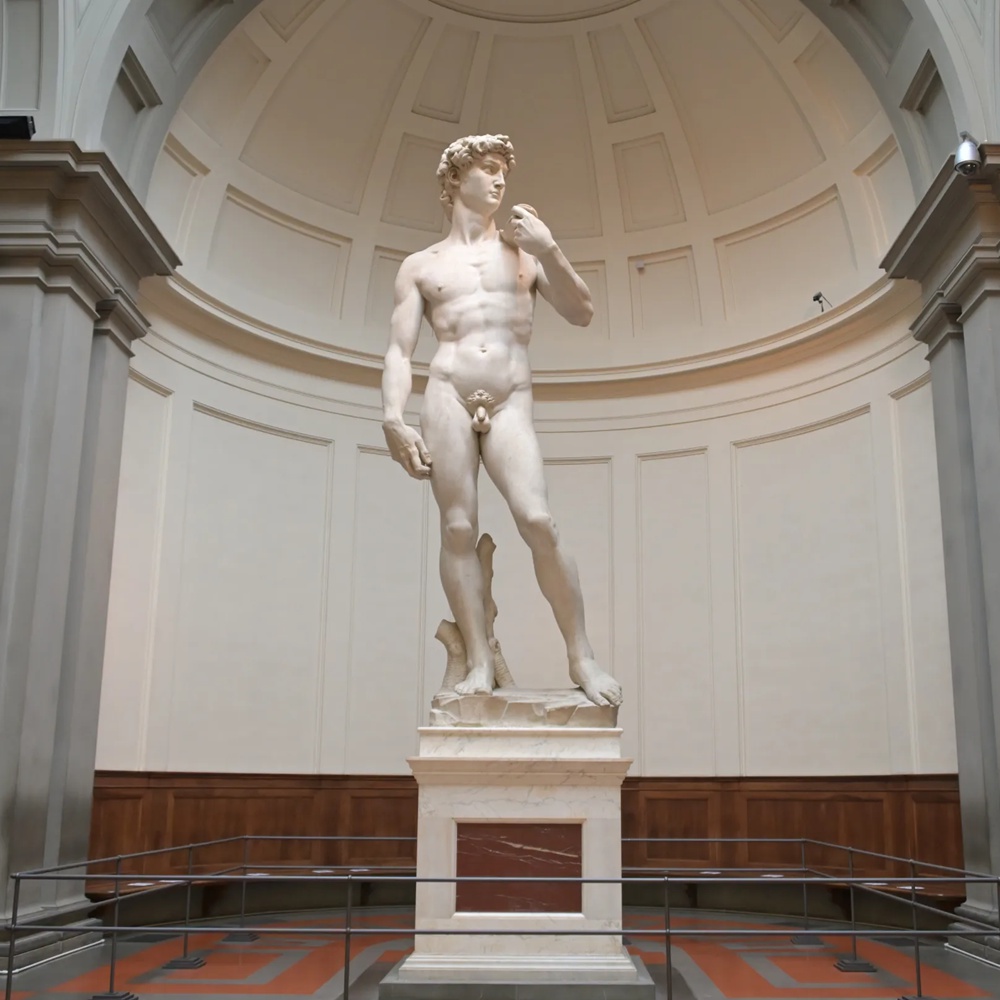
Classical Masters
Masterpiece: David
Material: Marble
Significance: Demonstrates perfect human anatomy and precision carving
Michelangelo famously believed the figure already existed within the stone—he simply “revealed” it
-
Modern Sculpture Innovators
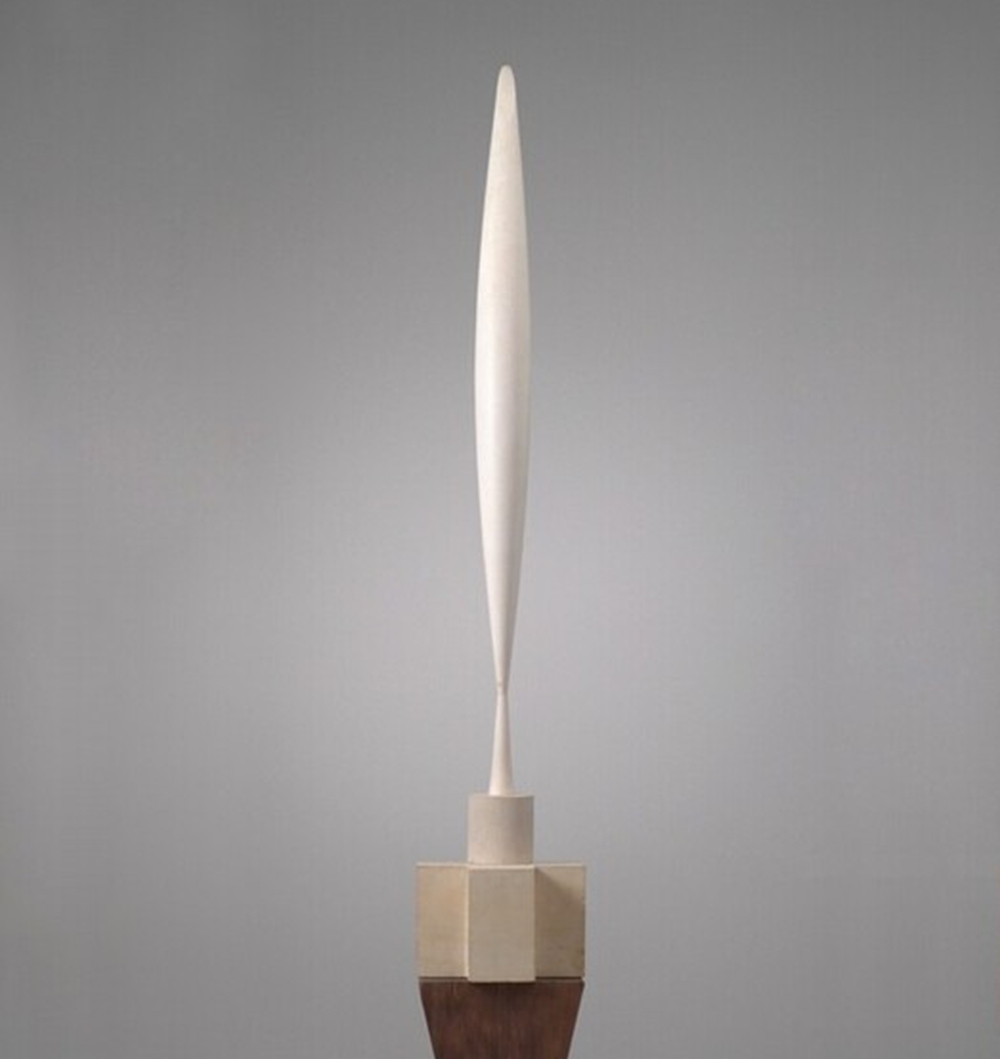
Constantin Brâncuși
Work: Bird in Space
Technique: Direct carving
Significance: Simplified forms, emphasizing essence over detail
-
Monumental Stone Carving
Mount Rushmore
A large-scale granite carving of U.S. presidents
Demonstrates how carving can be applied to architecture and national monuments

-
Ancient Civilizations
Ancient Egyptian stone carvings
Greek marble sculptures
These works highlight: Longevity (lasting thousands of years), cultural storytelling through carved forms.
-
Traditional & Cultural Carving
African wood carvings
Asian temple carvings
European architectural reliefs
These traditions show that carving is not just fine art—it is also deeply connected to religion, culture, and identity
How to Choose the Right Carved Sculpture?
Choosing a carved sculpture isn’t just about appearance—it’s about matching the material, environment, scale, and budget to your specific project. Here’s a structured way to make the right decision.
-
Start with the Application Scenario (Indoor vs Outdoor)
Your installation environment should guide almost every other decision.
Outdoor Spaces (gardens, courtyards, public areas):
- Prioritize weather resistance and durability
- Recommended materials: marble, granite, sandstone
- Consider exposure to rain, sunlight, and temperature changes
Indoor Spaces (lobbies, homes, galleries):
- More flexibility in material and detail
- Wood and fine marble are excellent choices
- Focus on aesthetic refinement and surface finish
Tip: Always think about long-term maintenance, not just initial appearance.
-
Choose the Right Material
Material defines both the visual quality and lifespan of the sculpture.
- Marble → Elegant, detailed, ideal for high-end decorative use
- Granite → Extremely durable, best for large outdoor projects
- Sandstone → Warm tones, great for architectural and relief carving
- Wood → Artistic and traditional, best for indoor use
If your goal is a luxury, long-lasting piece, marble is usually the safest choice.
-
Consider Material Durability
Different materials perform very differently over time:
- High durability: Granite, marble (especially outdoors)
- Medium durability: Sandstone (requires sealing)
- Lower durability: Wood (sensitive to moisture and insects)
For outdoor installations, durability should never be compromised for aesthetics alone.
-
Set a Realistic Budget
Budget impacts:
- Material selection
- Size
- Level of detail
- Craftsmanship quality
General guidance:
- Entry level: Smaller wood or simple stone carvings
- Mid-range: Standard marble sculptures
- High-end: Large, detailed, custom marble or granite works
Remember: hand-carved sculptures are labor-intensive, so the price reflects craftsmanship.
-
Get the Size & Proportion Right
A sculpture should feel balanced within its environment.
- Large spaces → require monumental or statement pieces
- Small spaces → benefit from compact, refined designs
Key considerations:
- Viewing distance
- Surrounding architecture or landscape
- Visual impact vs overcrowding
A common mistake is choosing a sculpture that is too small to stand out.
-
Match the Style with the Space
The sculpture should complement its surroundings:
- Classical spaces (villas, gardens): Figurative marble sculptures
- Modern architecture: Abstract or minimalist carving
- Cultural/religious settings: Symbolic or traditional designs
Consistency in style enhances the overall aesthetic value of the space.
-
Custom vs Ready-Made
This decision depends on your project goals.
Custom Sculpture:
- Fully personalized (size, design, material)
- Ideal for: Luxury homes, Hotels & commercial projects, Public art installations
Ready-Made Sculpture:
- Faster delivery, more cost-effective
- Suitable for standard decorative needs
If your project requires a unique visual identity, custom carving is the better choice.
FAQs
-
What is the oldest known carving?
The oldest known sculpture is the Lion Man of the Hohlenstein Stadel, an ivory carving dating back approximately 40,000 years. It proves that carving is one of humanity’s most ancient and enduring forms of creative expression.
-
Why is carving considered an “irreversible” process?
Carving is a subtractive art; once a master carver removes a piece of material, it is gone forever. This is why at our factory, we emphasize the highest level of precision—especially with marble—where there is no room for error in capturing intricate anatomical or floral details.
-
What is the best material for carving?
Marble is widely considered the gold standard for its fine grain and translucency, allowing for lifelike detail. However, the “best” material depends on the project: Granite is ideal for outdoor durability, while Hardwood offers a warm, organic feel for interiors.
-
Marble vs. Wood: How to choose the right material?
Choose Marble if you want a timeless masterpiece that can withstand outdoor elements and increase in value over time. Wood is often limited to indoor use and is prone to warping, cracking, or rotting; in contrast, a hand-carved marble statue is a one-time investment that lasts for generations.
-
Is marble carving more expensive than wood carving?
Yes, marble carving typically carries a higher price point. This reflects the premium cost of natural stone, the advanced diamond-tipped tools required, and the intensive labor of our artisans who spend weeks hand-polishing the surface—a level of craftsmanship that wood simply cannot match.
-
How to order a custom-carved marble sculpture?
The process starts with a design consultation where we discuss your vision and dimensions. Once the 3D model or sketch is approved, our artist selects the finest stone block and hand-carves your piece, providing progress updates until the final masterpiece is ready for global shipping.
Final Thought
Carving remains one of the oldest and most respected techniques in art and sculpture, valued for its precision, durability, and timeless beauty. From marble statues in classical gardens to modern architectural installations, carved sculptures continue to represent the highest level of craftsmanship.
We honor centuries of sculptural tradition with every chisel stroke at YouFine Art Sculpture Gallery factory. Our artists specialize in finely carved marble sculptures, from figures and angels to religious pieces, bringing your vision to life. We use only premium marble to ensure every detail is perfectly realized. Contact us for any project inquiries; we look forward to working with you.