People fall in love with Colombian master Fernando Botero sculptures because of his signature style: Boterismo.
Through exaggerated, rounded volumes, the smooth and inviting touch of bronze, and an accessible presence on city streets, Botero’s works bring rare humor, warmth, and monumental grace to modern public spaces.
Boterismo: How Volume Became an Artistic Language
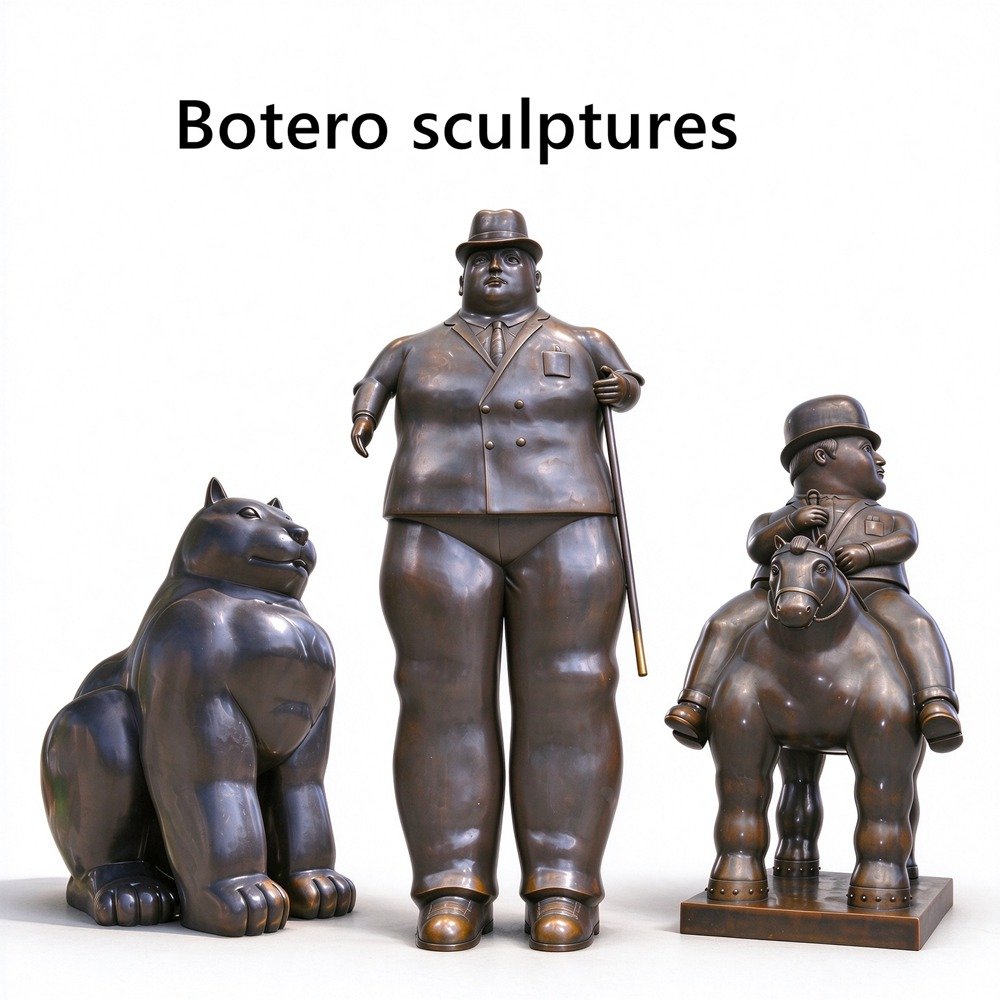
To understand the sculptures, one must first understand Boterismo—Botero’s lifelong artistic philosophy.
-
The Breakthrough Moment: In 1956, while painting a still life of a mandolin in Mexico City, Botero accidentally made the sound hole unusually tiny. That tiny hole instantly made the instrument swell in proportion. As documented in Google Arts & Culture’s feature on the artist, this eureka moment ignited his lifelong journey into the power of volume.
-
Volume, Not “Fat”: Botero consistently pushed back against critics who claimed he simply “painted fat people.” He famously insisted: “I don’t paint fat women. Nobody believes me, but it is true. What I paint are volumes… it is the sensuality of form.” His distortion was never a mockery; it was a way to give subjects weight, dignity, and visual presence.
-
The Playful Contrast: Botero’s genius lies in contrast. Massive bodies often feature tiny facial expressions, petite eyes, and delicate hands; giant cats sport thin whiskers. This intentional shift in scale makes his figures feel gentle, whimsical, and immediately endearing.
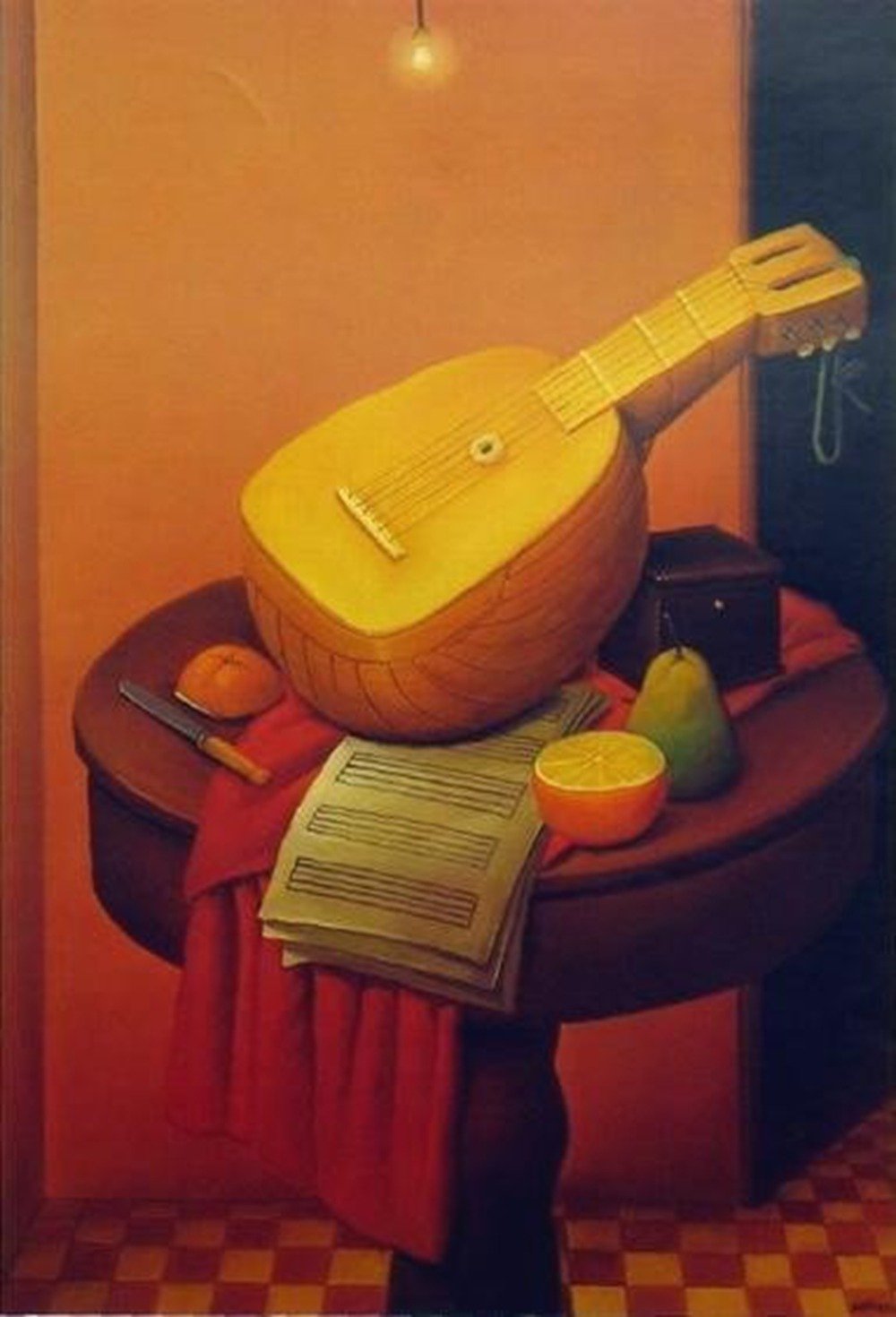
Botero’s breakthrough moment in Mexico City: by painting the mandolin’s central sound hole as a tiny dot, the instrument’s body expanded dramatically, sparking his lifelong exploration of volume as form.
Instant Recognition: Volumetric Form and Bronze Texture
When these painted volumes stepped into three-dimensional bronze, they created a powerful visual impact:
-
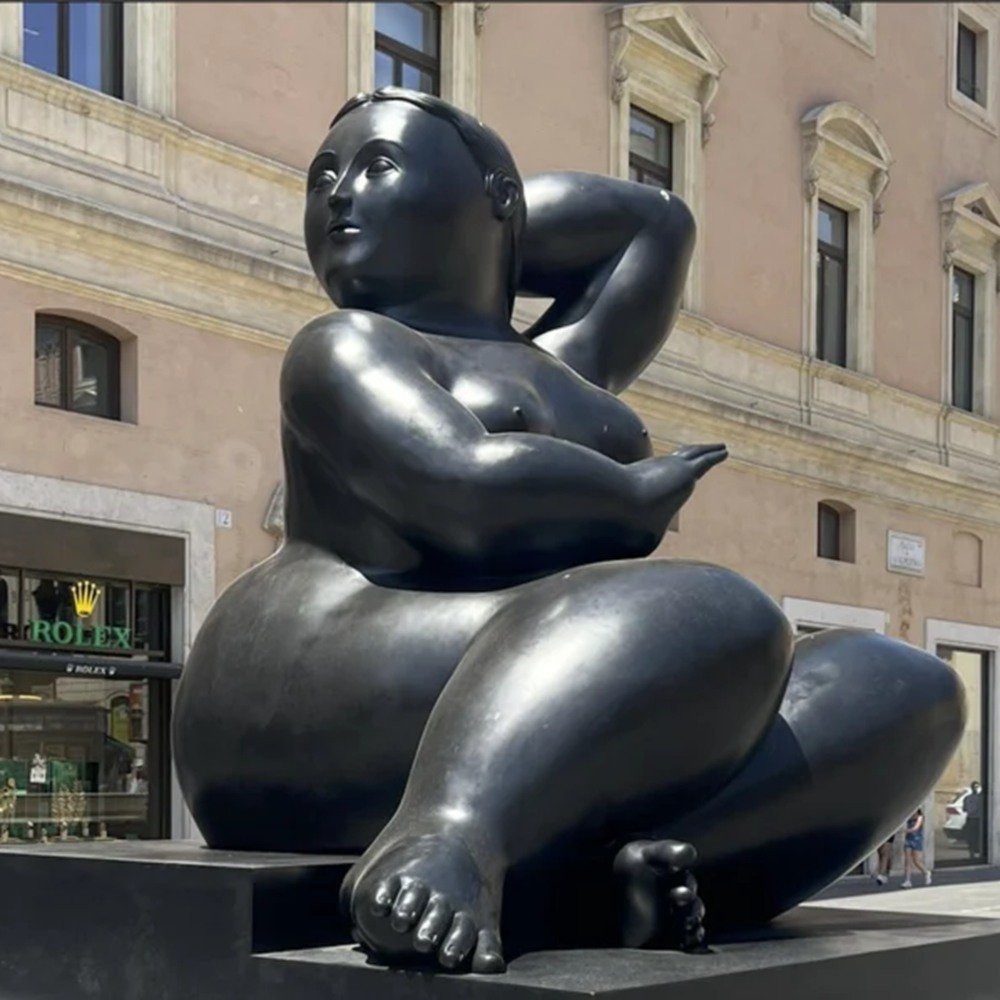
Recognizable from a Distance: Whether it is a reclining woman, a proud horse, or a peaceful bird, Botero’s simplified contours and generous forms can be spotted from across a busy plaza.
-
Holding Space Without Intimidation: As his son and biographer Juan Carlos Botero noted, even next to towering skyscrapers or expansive historical squares, Botero’s sculptures command their environment without being overpowered by surrounding architecture.
-
The Tactile Warmth of Bronze: Botero cast his monumental bronzes using the traditional lost-wax method in Pietrasanta, Italy. The rich patina and seamless curves transform cold metal into a smooth, tactile surface that practically invites people to reach out and touch it.
Art You Can Touch: A Connection with the Public
The most moving quality of Botero’s sculptures is their accessibility.
-
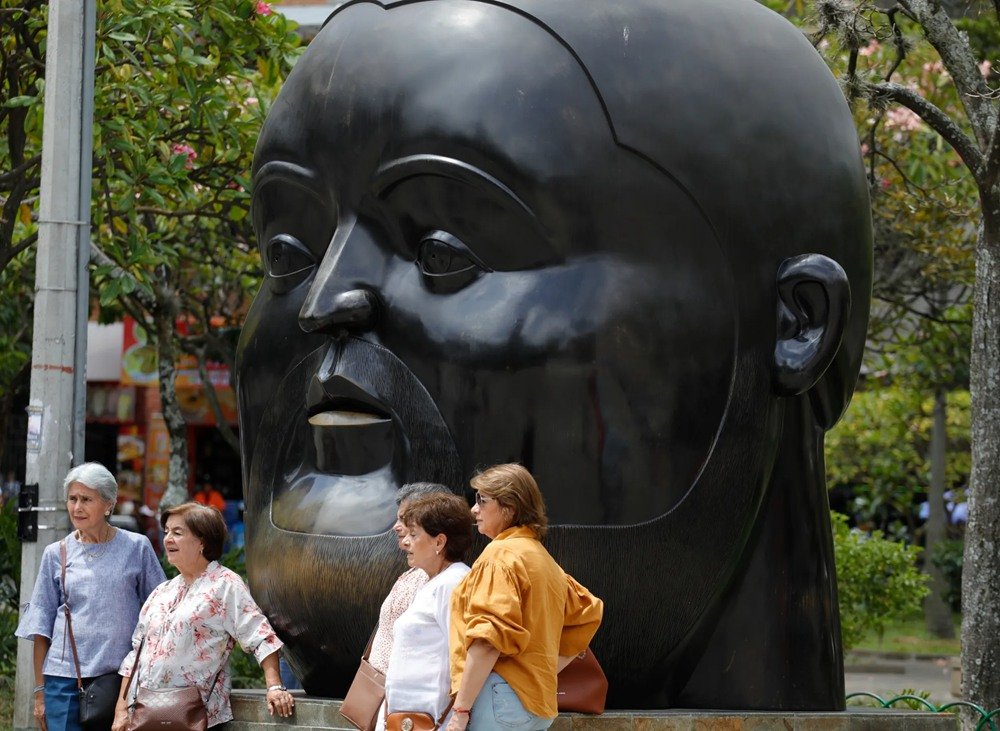
Leaving the Museum Behind: In Plaza Botero in Medellín, as well as on the streets of Paris, New York, Madrid, and Florence, dozens of monumental bronzes stand openly on the pavement—free of ropes, glass, or admission fees.
-
Worn Golden by Affection: Passersby sit against them, and children climb into their laps. Over the decades, repeated caresses from millions of hands have burnished the toes, knees, and fingers of these public figures to a bright, polished gold—a living testament to genuine public affection.
-
An Oasis in Daily Life: Botero believed that art should serve as “an oasis, a place of refuge from the hardness of life.” As highlighted in The Art Story’s overview of his career, he created these pieces specifically to evoke “feelings of pleasure.” Their soft curves disarm viewers, offering a moment of calm and a gentle smile across cultural boundaries.
Beneath the Whimsy: History, Memory, and Colombian Identity
Botero’s work is far from pure lightheartedness. Beneath the plump curves lies a profound engagement with history and social reality.
-
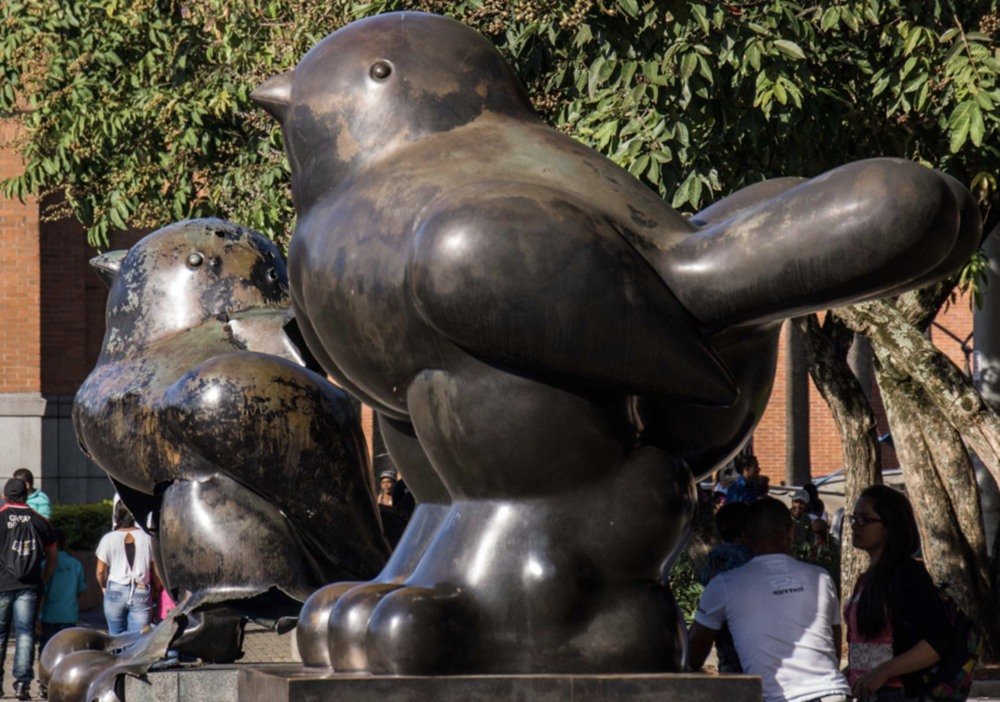
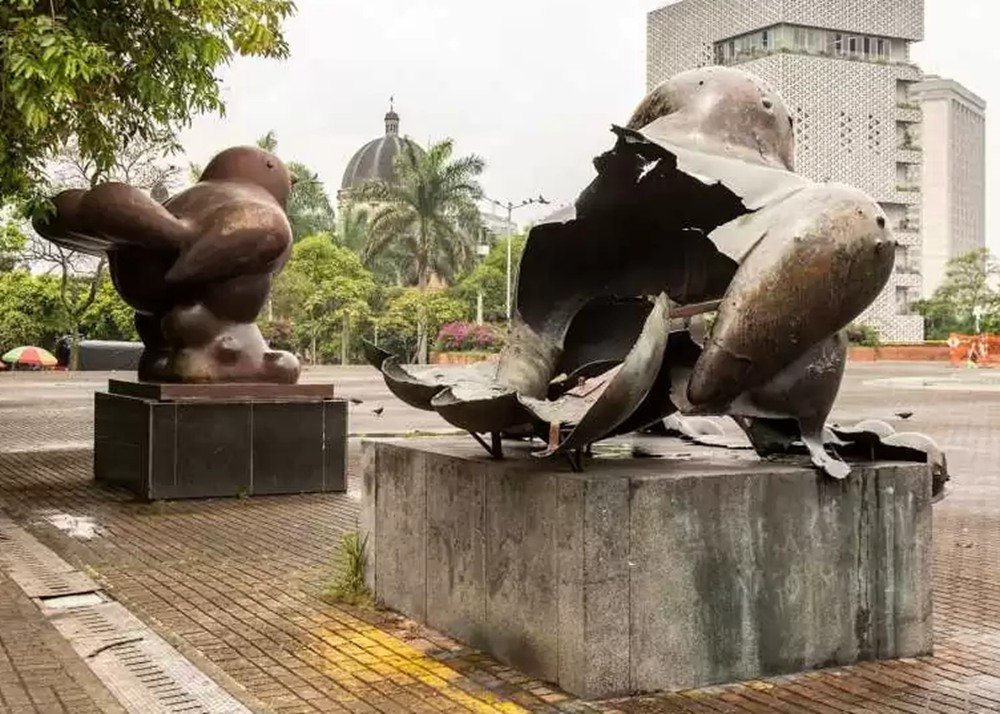
Witness to Tragedy and Hope: In 1995, a terrorist bomb exploded underneath his sculpture The Bird in downtown Medellín, causing numerous casualties. Rather than removing the mangled bronze, Botero insisted it remain in place as a memorial, while placing an intact replica directly beside it. Together, they are known as The Birds of Peace—a symbol of resilience, healing, and collective memory.
-
Colombian Roots: Proudly calling himself “the most Colombian of Colombian artists,” Botero poured the spirit, everyday joys, and struggles of Latin America into his art, sharing his homeland’s soul with the world.
-
Reinventing the Masters: He frequently applied Boterismo to classical masterpieces, such as Jan van Eyck’s The Arnolfini Portrait and Leonardo da Vinci’s Mona Lisa. Rather than parodying them, he reinterpreted European canons through a distinct Latin American lens.
Scale and Space: From Public Plazas to Private Sanctuaries
Botero’s language adapts seamlessly across environments:
-
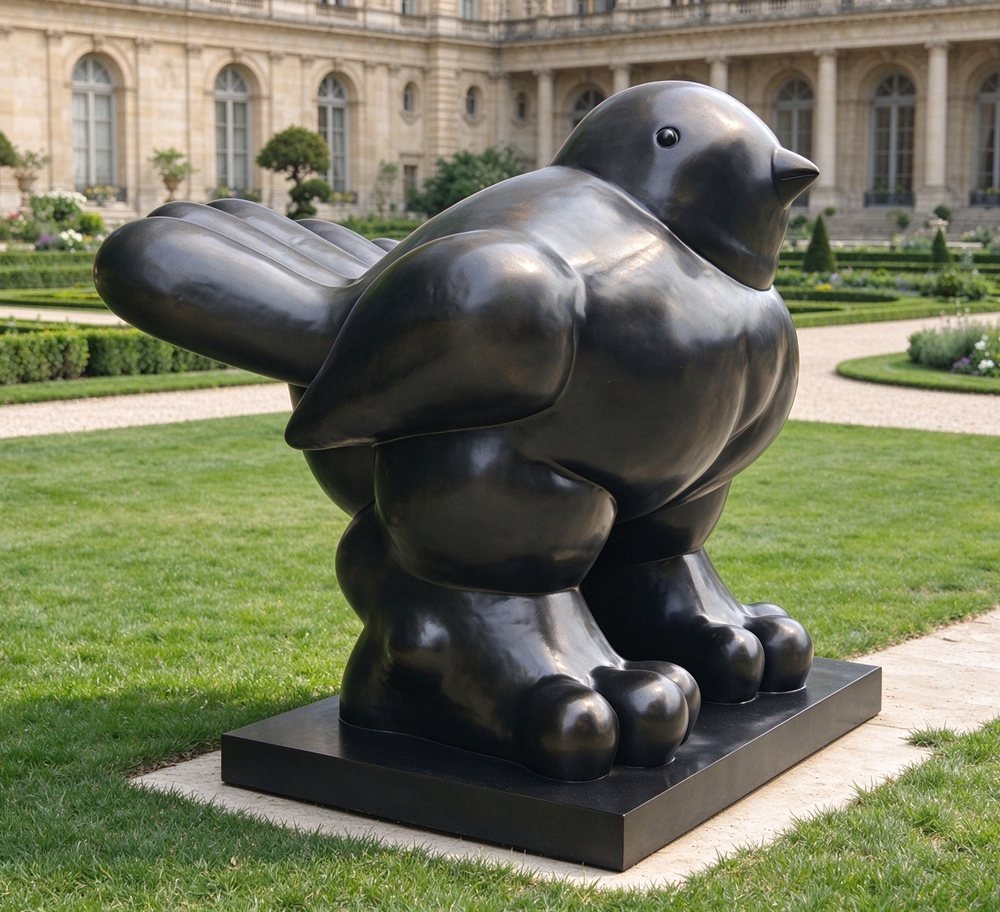
Civic Landmarks: Multi-ton, monumental outdoor installations anchor urban centers and become cultural gathering points for entire cities.
-
Intimate Spaces: Medium and smaller bronze editions bring the same fullness, serenity, and sculptural gravity into private residences, galleries, and corporate collections, adding an atmosphere of quiet richness.
Enduring Market and Curatorial Recognition
The admiration for Botero extends from everyday pedestrians to major institutions and discerning collectors worldwide:
-
Permanent Art History Status: Regarded as Latin America’s most influential 20th-century figurative artist, his works reside in the permanent collections of world-class museums.
-
Rigorous Casting Standards: Produced in limited, numbered editions with documented provenance and foundry marks, his bronzes represent master-tier craftsmanship.
-
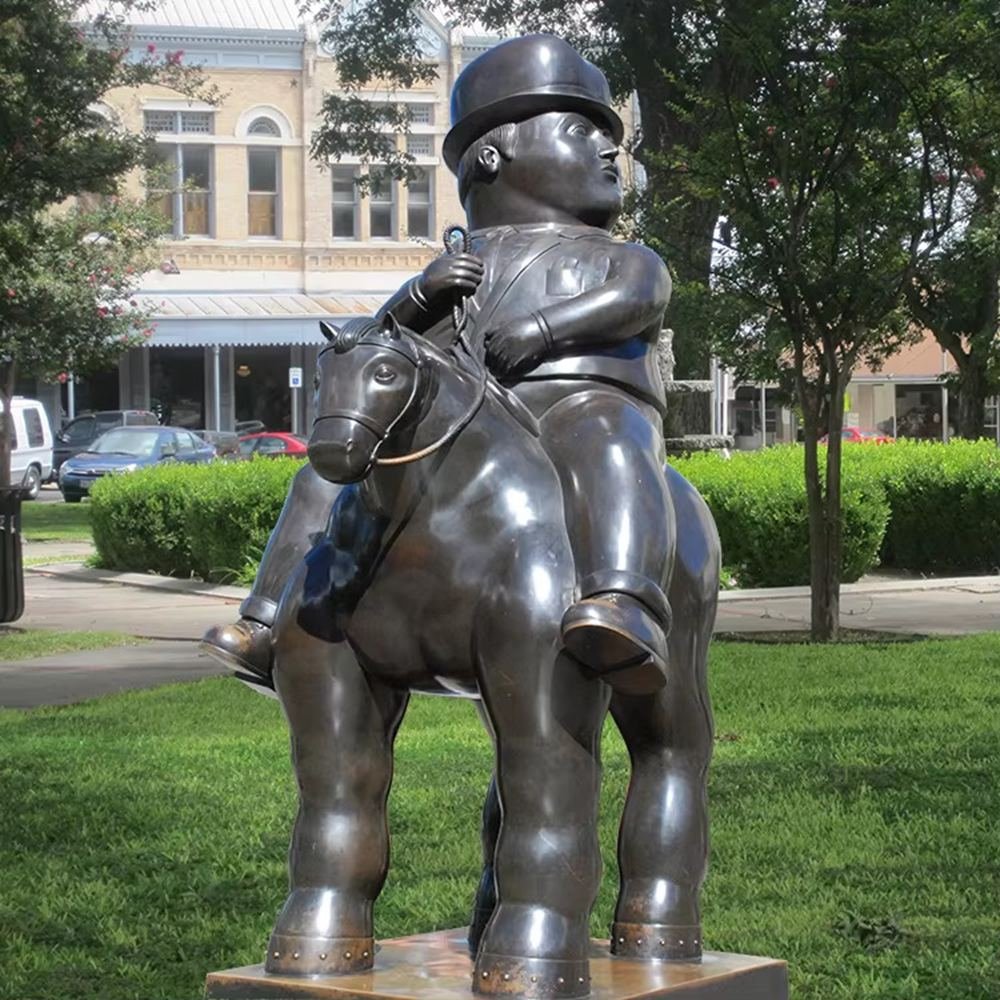
Sustained Secondary Market: From auction records set by iconic pieces like Hombre a Caballo to consistent demand across private galleries, his market strength reflects lasting cultural relevance rather than fleeting trends.
Art World Debates vs. Everyday Love: The Power of Accessibility
Botero’s popularity has long sparked an interesting tension between academic critics and the public:
-
Critical Skepticism: Some contemporary art critics questioned his consistent style. Respected curator Robert Storr once observed that Botero’s inflated forms were almost too consistently agreeable, sometimes softening the punch of serious themes.
-
Universal Public Embrace: Everyday audiences connected with him precisely because his work needed no explanation. As explored in the Los Angeles Times appreciation of his life, Botero took pride in his popular appeal. He noted that modern art had often divorced itself from the public, making people feel they needed a professor to tell them whether art was good. Botero believed great art should communicate directly through form, color, and composition.
This honest, direct connection is why people of all generations continue to love his work.
FAQ
Q1: Are Botero’s sculptures supposed to depict obesity?
A: No. Botero repeatedly rejected that interpretation. His goal was to explore the “sensuality of form and volume.” By expanding physical dimensions, he gave objects and human figures greater dignity, space, and expressive presence.
Q2: What are Botero’s most famous sculptures, and where can you see them
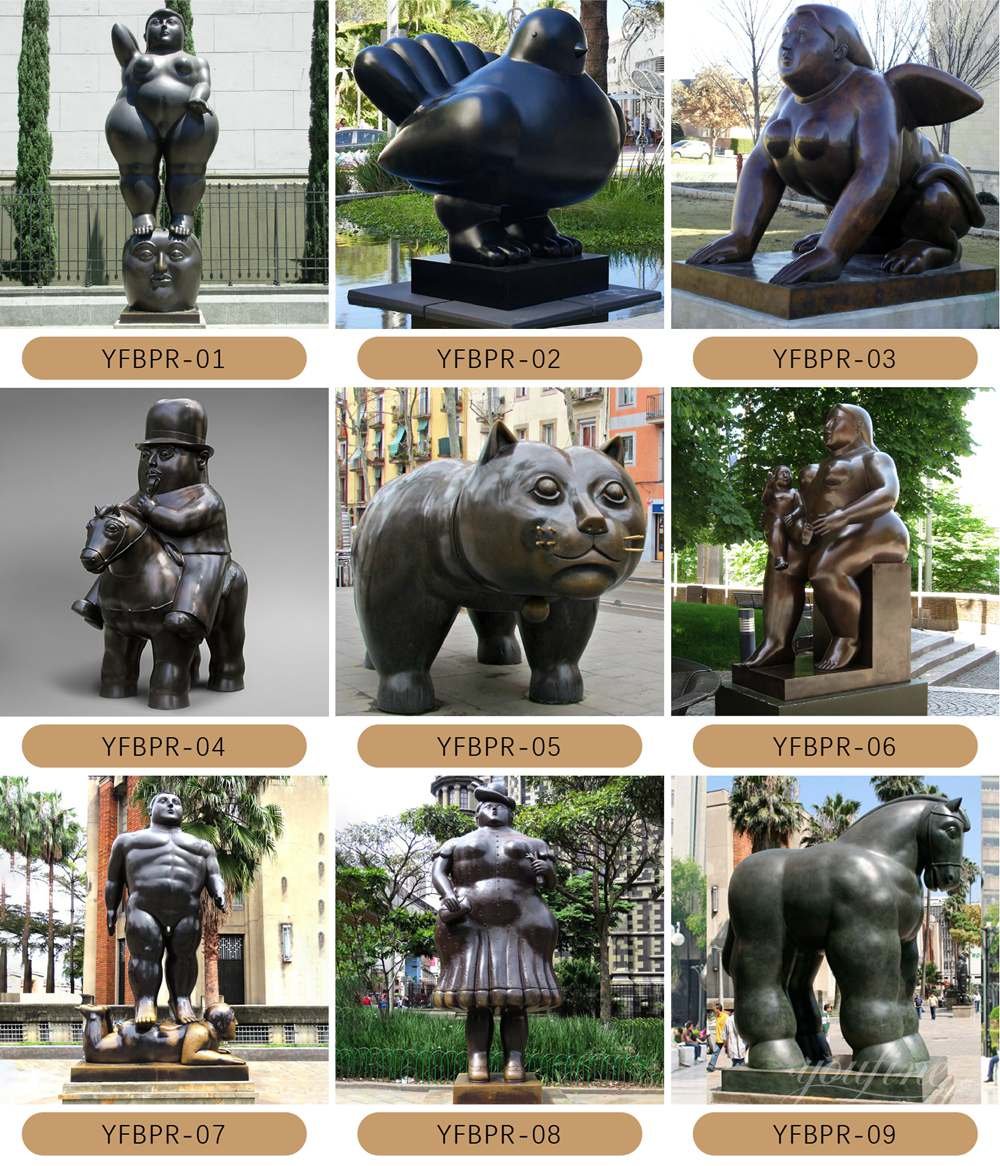
A: Famous works include Woman with a Mirror, Man on Horse, The Hand, and The Bird. They are installed in major public locations such as Plaza Botero in Medellín, Plaza de Colón in Madrid, Park Avenue in New York, and along the Singapore River.
Q3: Was Fernando Botero primarily a painter or a sculptor?
A: He was accomplished in both. Botero established his international reputation through painting before turning seriously to bronze sculpture in the 1970s. His sculptures are a natural, three-dimensional evolution of his painted figures.
Q4: What does “Boterismo” mean?
A: Boterismo refers to Botero’s signature visual style, characterized by inflated volumes, exaggerated proportions, smooth contours, and small facial features. It conveys monumental serenity, gentle humor, and human warmth.
Q5: Why are Botero bronze sculptures so recognizable?
A: They combine immediately identifiable swollen, rounded silhouettes with flawless lost-wax bronze casting. Even against complex city backdrops, their tranquil balance and glowing patinas stand out instantly.
Final Thoughts
Fernando Botero passed away in September 2023 at the age of 91, but his monumental figures remain woven into the fabric of cities around the globe.
People love Botero sculptures because they strike a rare balance: monumental artistic dignity paired with pure, accessible warmth. In an increasingly digital world, these solid, tactile bronze shapes offer a comforting, joyful anchor for anyone walking past.