Introduction
Michelangelo once said, “Every block of stone has a statue inside it, and it is the task of the sculptor to discover it.” But exactly how are marble statues made—and how does a rough, heavy block transform into a lifelike, timeless work of art?
Quick Answer:
Marble sculptures are created through a subtractive carving process. The full steps include design & modeling, marble block selection, measurement transfer, rough carving, detailed refining, and multi-stage polishing to bring out the stone’s natural beauty.
For art collectors, luxury homeowners, landscape designers, and custom buyers, understanding this craft is essential to recognizing true quality, durability, and artistic value. Today, we take you behind the scenes at our professional sculpture factory to show exactly how marble is shaped into lasting masterpieces.
What Is a Marble Sculpture?
Before diving into the step-by-step process, let’s clarify what a marble sculpture is and why marble remains the world’s most trusted material for fine statuary.
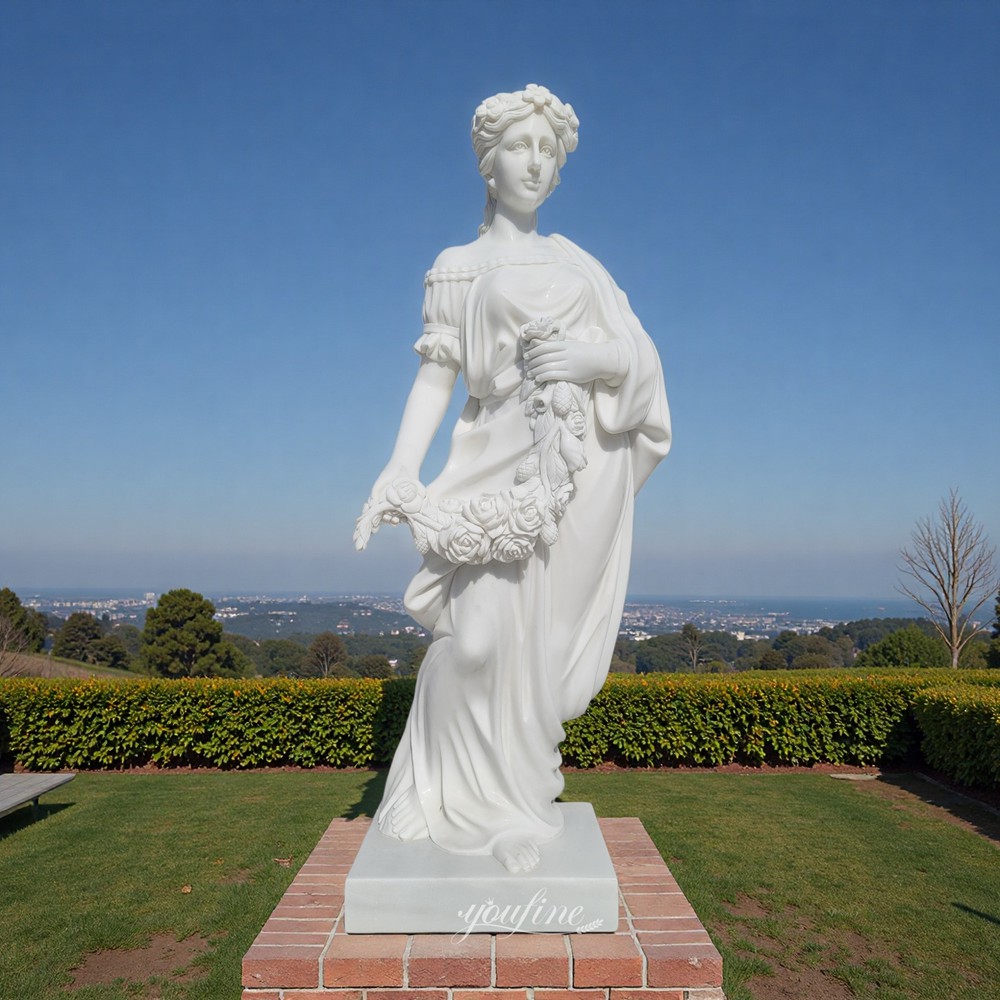
A marble sculpture is a three-dimensional artwork carved from natural marble. Since ancient times, marble has been widely used in the production of sculptures, and these are the reasons why marble is used for sculptures:
- Natural translucency – Lets light pass through the surface, creating a soft, skin-like glow that mimics life.
- Ideal hardness – Easier to carve with accuracy than granite or other dense stones.
- Fine, uniform grain – Allows for incredibly precise detailing, such as facial expressions, hair, and fabric folds.
- Outstanding polishability – Can be finished to a smooth, luminous, high-end surface.
- Exceptional durability – Properly maintained, marble statues can last for centuries outdoors and indoors.
This unique combination of traits is why marble remains the gold standard for both classical and modern sculptures.
Marble Sculpture Production Steps
-
Design & Modeling
Before any carving begins, the sculptor must fully define the concept and structure of the artwork. This stage ensures that the final sculpture is both visually accurate and technically feasible.
- Sketching the Initial Concept
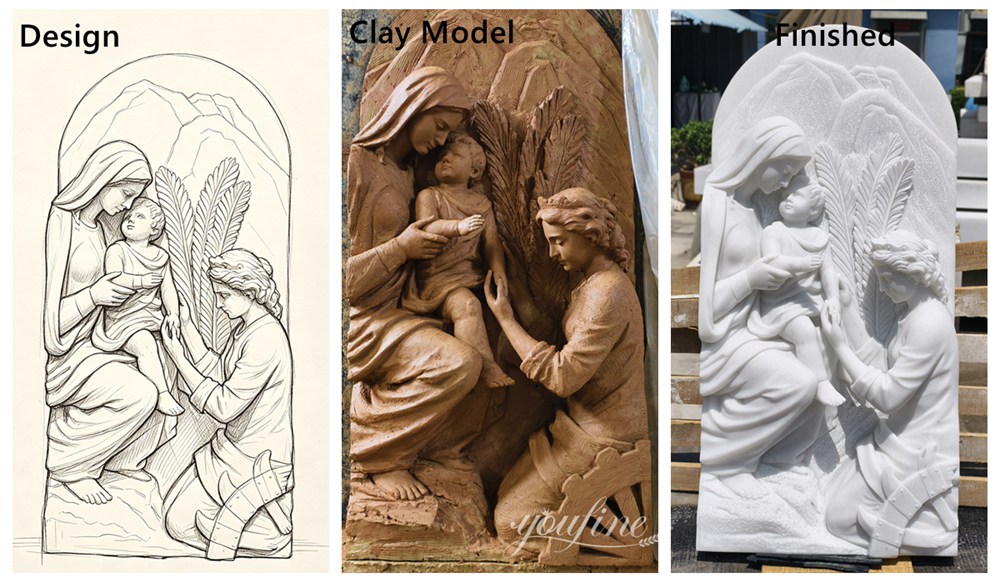
Every marble statue begins with an idea. Sculptors first create sketches to explore composition, posture, and proportions. These drawings serve as the first visual translation of imagination into form. However, because marble carving is irreversible, sketches alone are not enough to guide the entire process.
- Creating the Maquette and Full-Scale Model
To refine the design, artists create a small-scale model (maquette), followed by a full-size clay or plaster model. This allows adjustments to anatomy, balance, and artistic expression before working on the stone.
Working with clay provides flexibility—forms can be reshaped, details can be enhanced, and errors can be corrected without risk. This step is essential for achieving precision in the final sculpture.
- Using 3D Modeling and Scanning Technologies
Modern sculptors increasingly use 3D modeling and scanning tools to improve efficiency and accuracy. These technologies allow for precise scaling and digital adjustments, especially in large or complex projects.
Whether created by hand or digitally, the model serves as the blueprint of the sculpture, ensuring that the carving process follows a clear and accurate reference.
-
Selecting the Marble Block
The quality of the marble block directly determines the durability and visual impact of the finished sculpture. Selecting the right stone is both a technical and artistic decision.
- How to Select High-Quality Marble? (Factory Perspective)
With over 40 years of experience in marble sculpture carving and sales, our factory has summarized the following methods for judging the quality of marble materials:
(1) Carefully inspect the stone’s color, texture, and surface condition to determine whether there are any obvious cracks or uneven surfaces.
(2) Gently tap the stone with a small hammer and judge the integrity of its internal structure based on the resonant sound it produces:
- If the sound is clear and loud, it indicates that the marble is of solid texture and has no hidden cracks.
- If the sound is dull and muffled, it suggests there may be hidden cracks or weak points inside, making it prone to breaking during sculpting.
Only those stones with perfect structure and uniform quality will be selected for the creation of detailed sculptures.
- Quarrying and Transportation
Once selected, the marble is extracted from quarries using specialized cutting techniques. The block is then transported to the workshop, often requiring heavy equipment and careful handling.
Larger sculptures demand larger stone blocks, which increases both logistical complexity and overall cost.
-
Measuring & Transferring Proportions
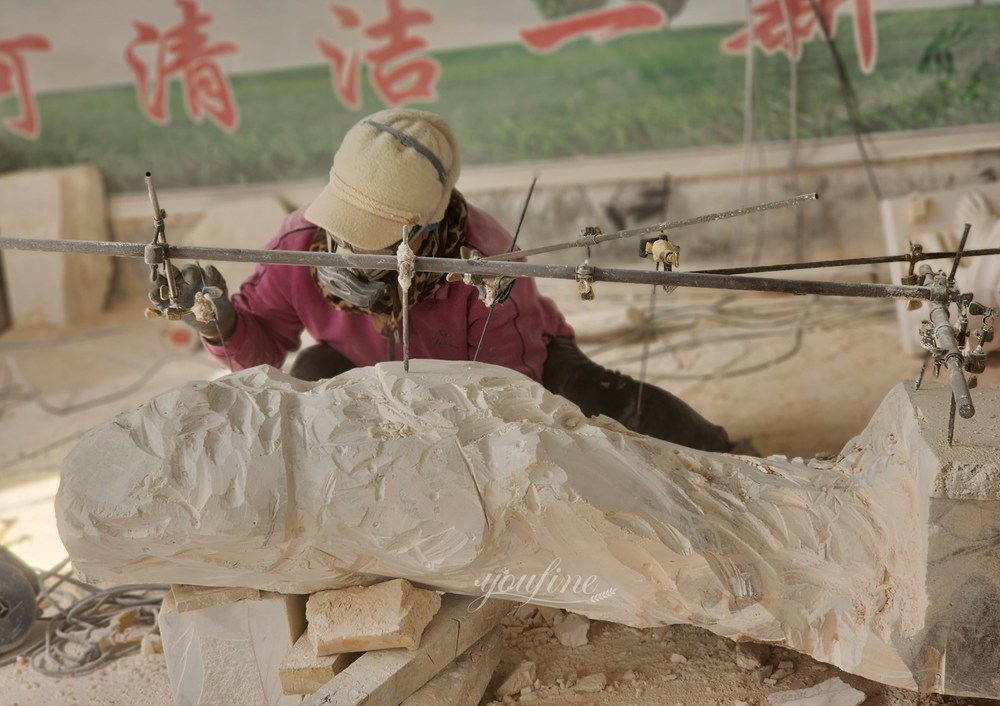
Before carving begins, the sculptor must transfer the exact dimensions of the model onto the marble block. This ensures that the final sculpture maintains accurate proportions.
- Using Calipers for Manual Measurement
Sculptors traditionally use calipers to measure distances between key points on the model and replicate them onto the marble. This method requires patience and precision, as each measurement must be carefully checked.
- Applying the Pointing Technique
For more complex works, a pointing machine is used to map three-dimensional reference points. These points act as guides, helping the sculptor remove stone without losing proportion or symmetry.
-
Roughing Out
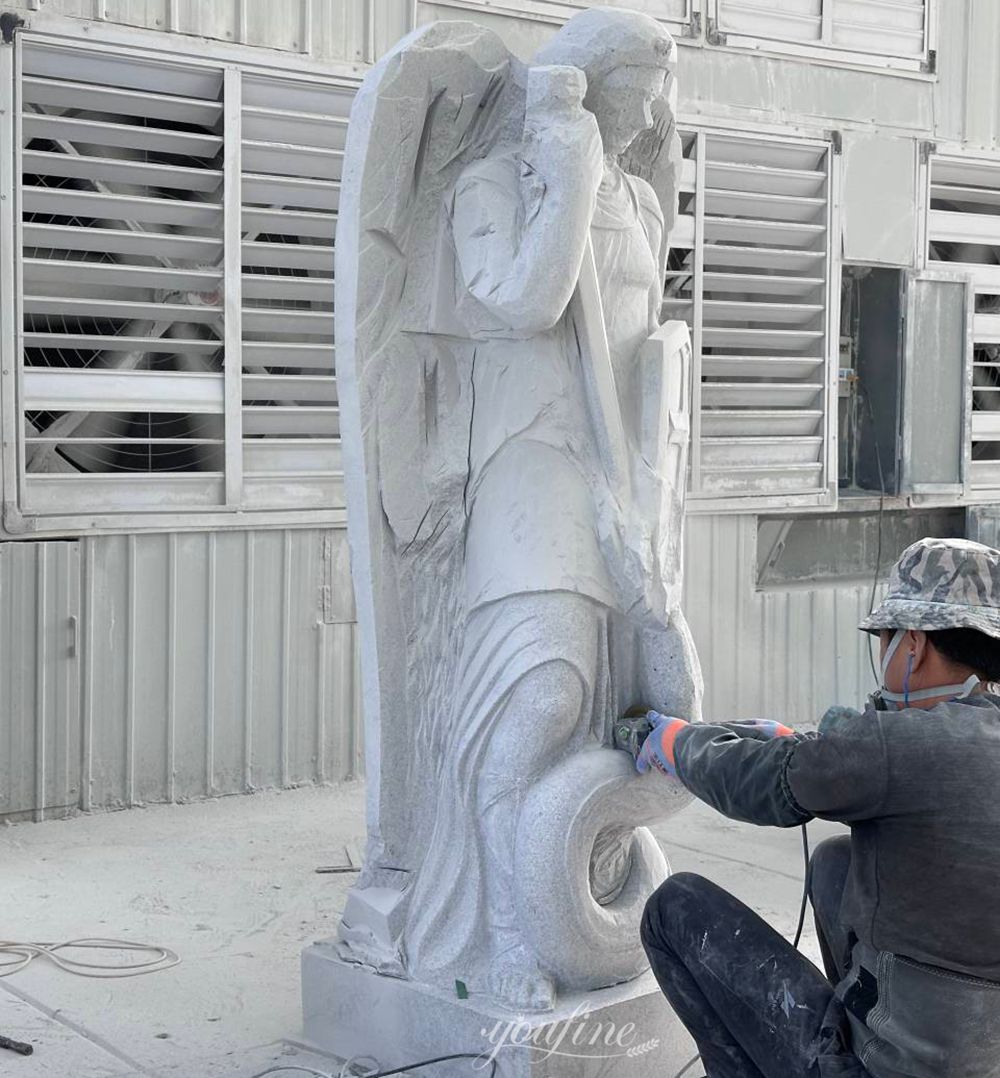
With measurements in place, the sculptor begins removing large portions of stone to reveal the general shape of the sculpture.
- Using Point Chisels and Mallets
Heavy tools such as point chisels and mallets are used to break away excess marble. This process is forceful but controlled, gradually shaping the block into a rough outline.
- Establishing the Basic Silhouette
At this stage, only the overall form and proportions are defined. The sculpture may still look abstract, but the main structure is now visible.
-
Refining the Details
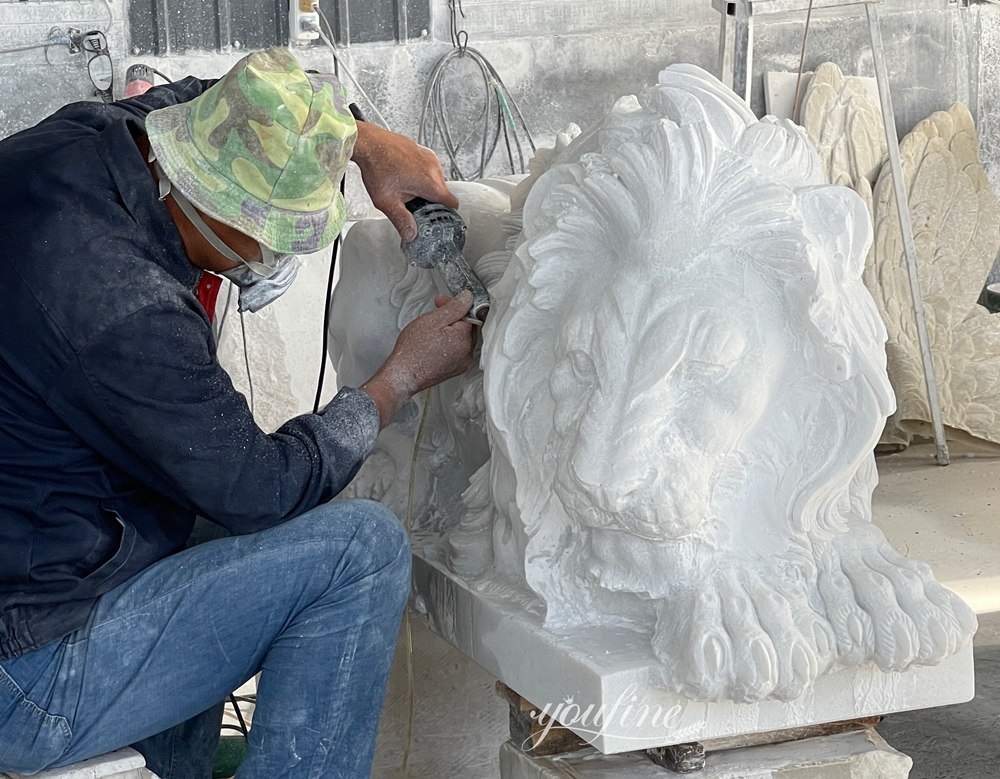
Once the basic form is complete, the sculptor begins refining the finer details that give the sculpture its character and realism.
- Using Specialized Detailing Tools
Tools such as tooth chisels, rasps, and rifflers are used to gradually smooth surfaces and define shapes. Drills may be used to create depth in areas like folds or undercuts.
- Defining Facial Features and Anatomy
The sculptor carefully works on facial expressions, muscle structure, and body proportions. This step requires both technical skill and artistic sensitivity, as small adjustments can significantly impact the final appearance.
- Enhancing Texture and Depth
Surface textures—such as hair, fabric, or skin—are refined to create contrast and realism. These details influence how light interacts with the sculpture, enhancing its visual depth and lifelike quality.
-
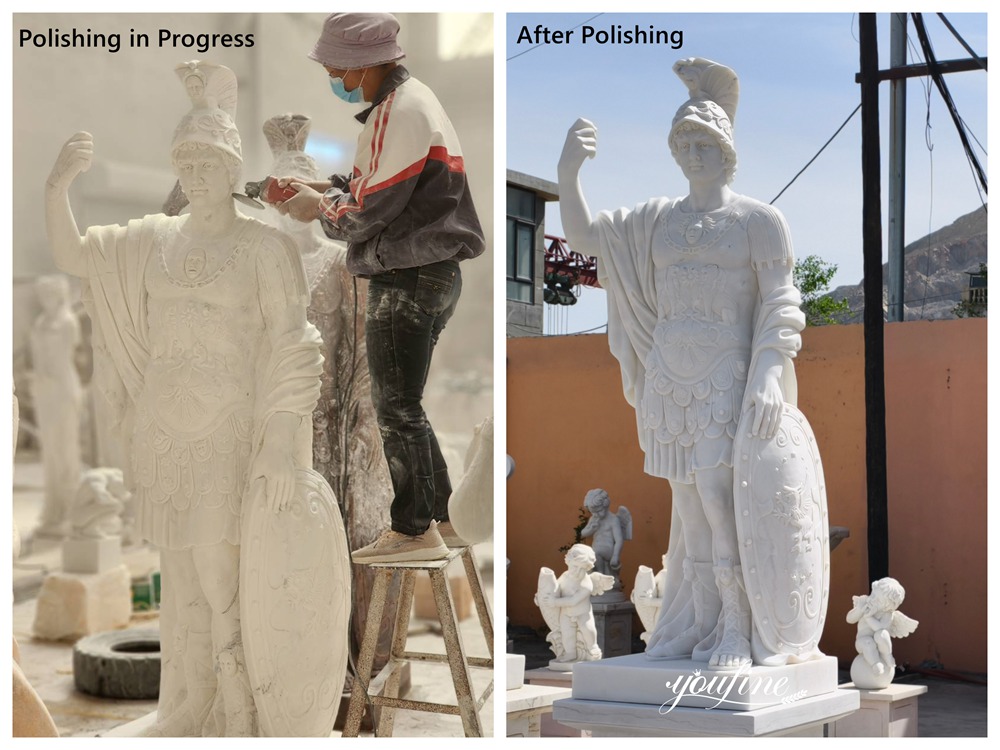
Sanding & Polishing
The final stage transforms the carved stone into a finished work of art by refining its surface and enhancing its natural beauty.
- Smoothing the Surface
The sculptor begins with coarse abrasives to remove tool marks and irregularities. Gradually, finer materials are used to achieve a smooth and even texture.
- Achieving Different Finishes
Depending on the desired effect, the surface can be finished in several ways:
- Matte for a soft, natural look
- High polish for a glossy, reflective surface
Polishing not only improves the sculpture’s visual appeal but also helps protect the marble by reducing its porosity. This makes the surface more resistant to moisture, dirt, and environmental damage.
At this stage, the transformation is complete—a raw block of stone has become a refined and enduring piece of art.
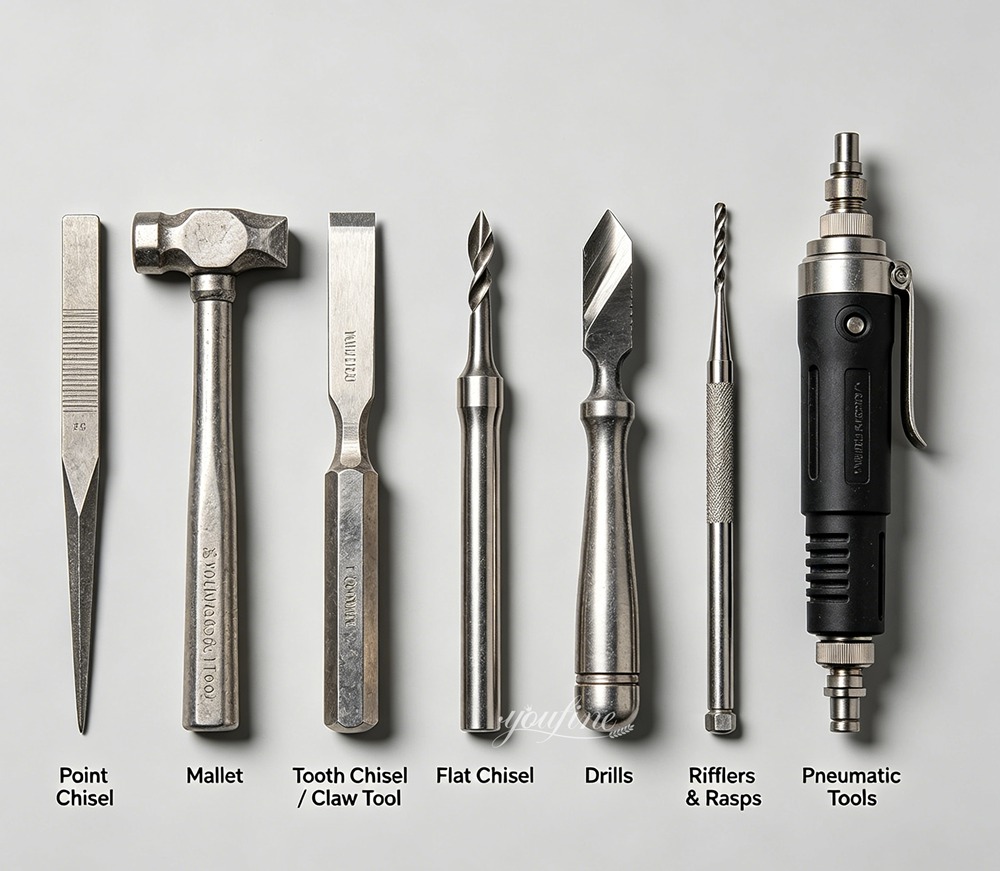
Marble Sculpture Common Tools and Their Functions
| Tool Name | Stage of Use | Key Function |
|---|---|---|
| Point Chisel | Roughing Stage | Used with a heavy mallet to remove large blocks of excess stone and establish the basic outline of the sculpture. |
| Tooth Chisel | Refining Stage | Creates texture and depth, shaping muscle forms, clothing folds, and balancing surface transitions. |
| Flat Chisel | Detailing Stage | Smooths chisel marks and flattens surfaces, preparing the sculpture for sanding and polishing. |
| Rifflers | Smoothing & Blending | Used for refining tight corners and hard-to-reach areas where standard tools cannot reach, ensuring smooth transitions. |
| Pneumatic Hammer | Precision Detailing | Enables highly detailed carving such as hollow sections, fine facial expressions, and intricate features like hair strands. |
Traditional vs. Modern Techniques
- Modern sculptors use CNC machinery to speed up production and improve efficiency, while the core subtractive carving principle remains unchanged from ancient times. However, machines can only achieve general overall accuracy and cannot capture delicate human details.
- Most professional workshops now use a hybrid method: machines handle rough carving to shape the main contours efficiently, while artisans complete all final details by hand—including soft expressions, subtle facial features, and natural fabric drapery.
This irreplaceable hand-finishing is what separates ordinary mass-produced pieces from museum-quality masterpieces.
What Determines the Quality of a Marble Statue?
These key standards evaluate a truly high-quality marble statue:
- Material purity: Dense, flawless marble free of cracks, bruising, or inconsistent spotting.
- Anatomical accuracy & balanced proportions: Lifelike, natural, and visually harmonious.
- Depth of carving: Deep, clean undercuts that create real shadows and three-dimensional depth.
- Precision detailing: Smooth surface transitions, delicate textures, and realistic expressions.
- High-level polishing: Uniform, refined finish that enhances the stone’s natural beauty.
Together, these qualities separate ordinary carvings from museum-worthy masterpieces.
FAQ
-
Natural marble vs. cold cast marble: what’s the difference?
Natural marble is a hand-carved stone with a 1,000+ year lifespan and high investment value. Cold cast marble is a mixture of resin and marble dust poured into a mold—it’s cheaper but lacks the weight, translucency, and longevity of the real thing.
-
Are marble statues hand-carved?
Yes, high-end sculptures are usually hand-carved, though machines may assist in early stages.
-
Can I customize a statue from a photo?
Absolutely. By combining 3D modeling with traditional carving, we can transform any 2D photograph into a 3D marble portrait or monument.
-
How long does it take to carve a statue?
Timeline depends on the complexity and scale:
- Small pieces: 2–4 weeks.
- Life-size/Realistic statues: 1–3 months.
- Large-scale/Monumental projects: 3–6 months.
-
How long do marble statues last?
With proper care, marble statues can last for hundreds or even thousands of years.
-
How to clean and maintain marble statues?
Dust regularly with a soft cloth. For outdoor pieces, avoid acidic cleaners (like vinegar) as they can etch the stone. A professional stone sealant applied every few years is recommended.
Final Thoughts
Creating a marble statue is a technical process—and more than that, it is a fusion of art, skill, and patience. From selecting design to the final polish, every step determines the final masterpiece.
If you are looking for high-quality hand-carved marble sculptures, YouFine Art Sculpture Gallery Factory will be your best partner. We have the following advantages:
- Over 40 years of experience in marble sculpture carving and export
- Top-notch sculpture artist team
- Outstanding design team
- Select natural marble material
- Highly recognized by customers
Therefore, if you have any related needs, whether it’s for personal garden decoration, collection, custom commemorative sculptures, or any projects involving large-scale marble religious statues that need collaboration, you could contact us at any time.