For centuries, Roman columns have stood as the ultimate symbol of strength, elegance, and timeless beauty. From the majestic ruins of the Pantheon to modern luxury resorts and private estates, these architectural masterpieces continue to define the standards of high-end landscape design.
In this guide, we will introduce the structural components, 5 types of Roman columns, the evolution of history, and how to select the ideal Roman pillar for your cherished project.
Structural Components of Roman Columns
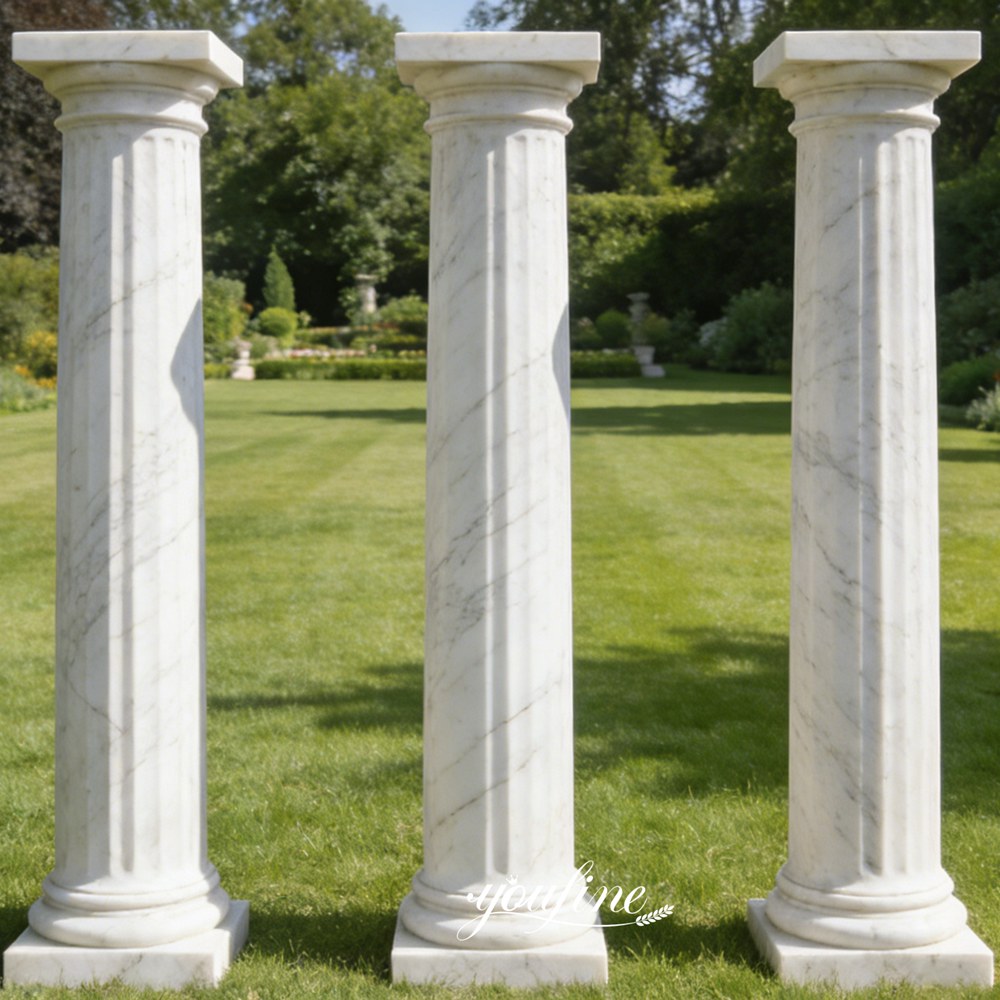
Roman columns are vertical architectural structures used to support roofs, entablatures, or arches, and also serve an important decorative function. Before understanding the different column orders, it’s necessary to understand the basic structure of a Roman column:
- Capital: Located at the very top, it is the most ornately decorated part and the key to distinguishing different types of column orders.
- Shaft: The main body of the column, usually cylindrical, which can be smooth or have vertical fluting (called “grooving”).
- Base: The base of the column, used to support the weight of the entire column and distribute the pressure to the ground.
Above the column sits the entablature, a horizontal structure that includes the architrave, frieze, and cornice.
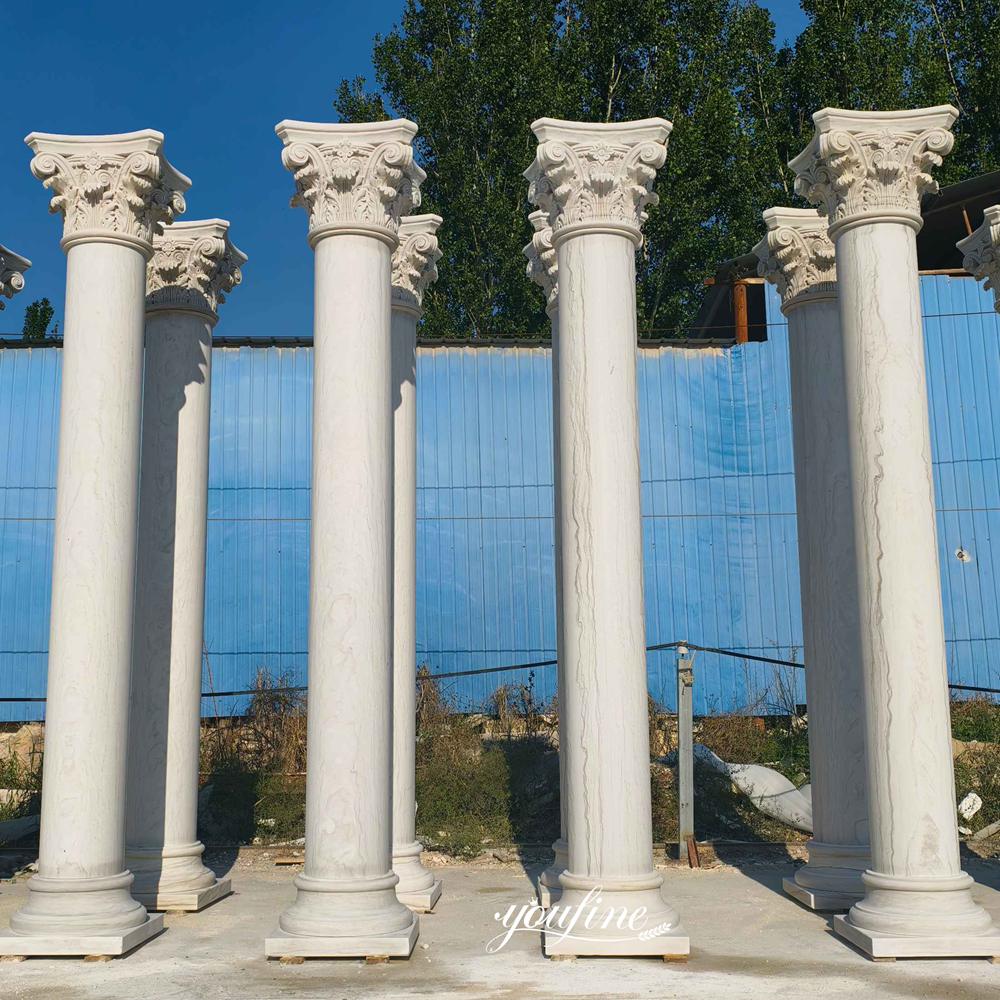
Five Types of Roman Columns
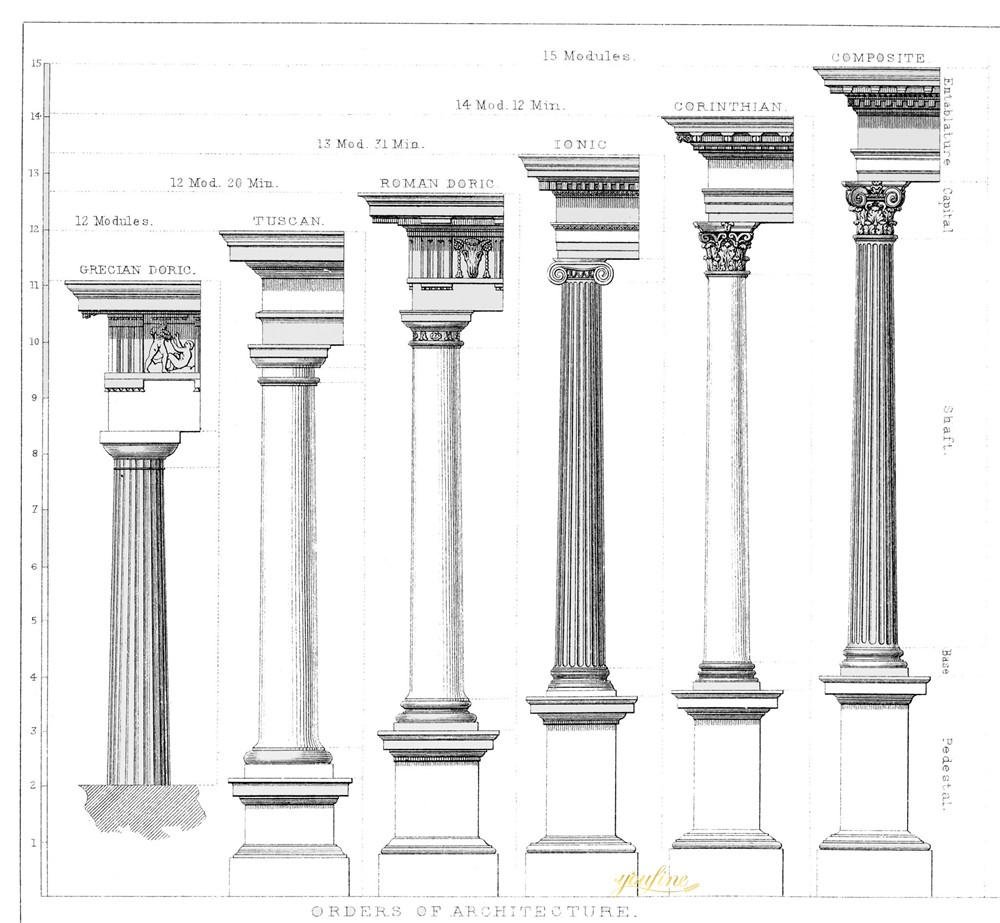
Although many people frequently ask, “What are the 3 types of Roman columns?” (typically referring to the three fundamental column orders influenced by Greek architecture), Roman architecture actually evolved five distinct column orders.
Quick Comparison Table
| Column Type | Complexity | Shaft Style | Capital Design | Typical Use |
|---|---|---|---|---|
| Doric | Simple | Fluted | Plain | Temples |
| Ionic | Elegant | Fluted | Scrolls | Civic buildings |
| Corinthian | Decorative | Fluted | Acanthus leaves | Palaces |
| Tuscan | Simplest | Smooth | Plain | Villas |
| Composite | Most ornate | Fluted | Scroll + leaves | Monuments |
-
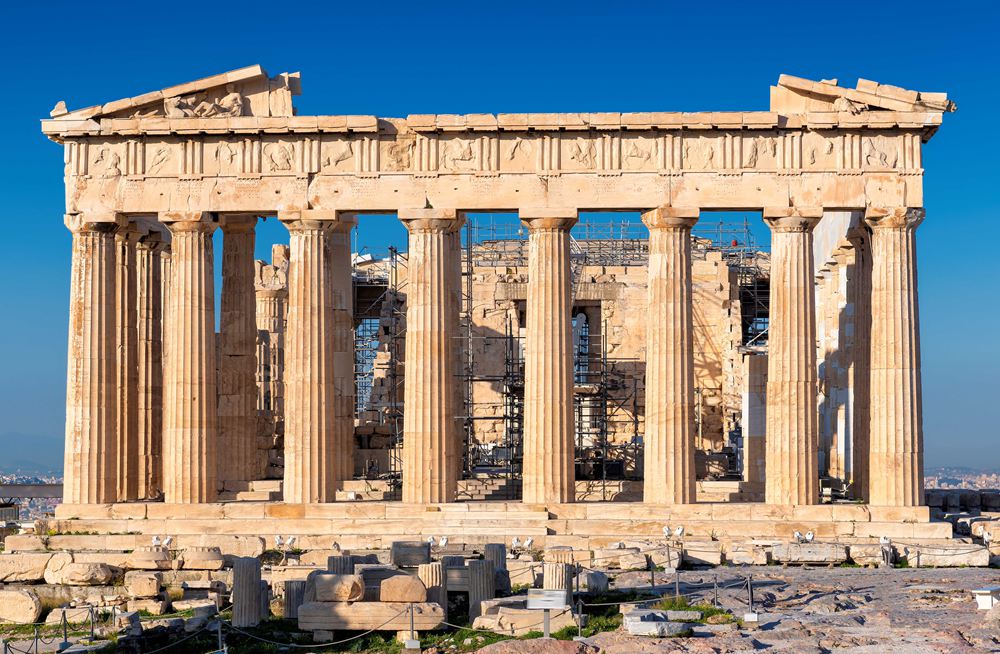
The Doric Order: The Bold Classic
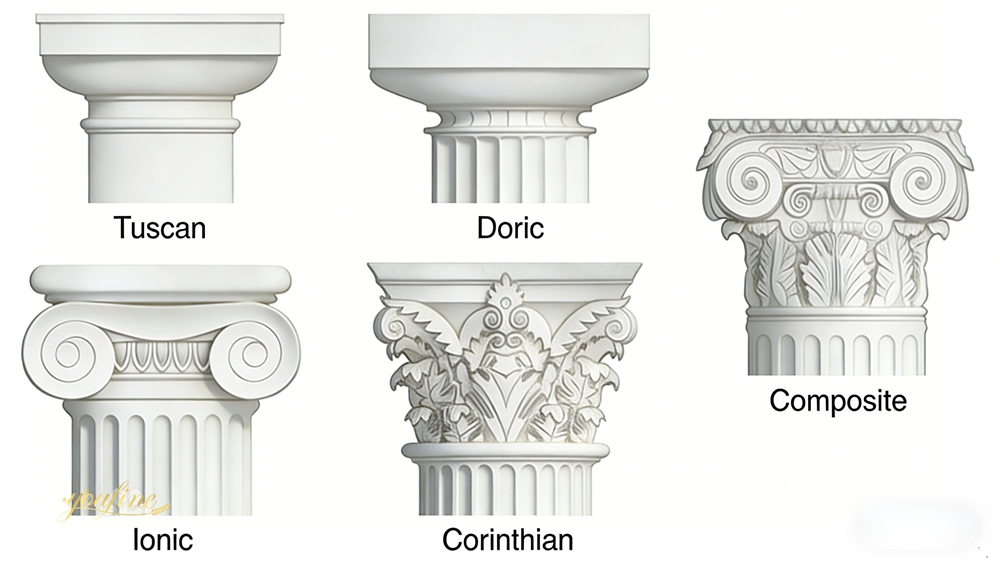
- Characteristics: Sturdier than other styles, often featuring a fluted shaft and a circular capital.
- Symbolism: Masculinity and structural integrity.
- Suitable Applications: Ideal for use as the foundational base of large villas, as protective pillars at manor entrances, or in outdoor colonnades seeking a majestic, minimalist aesthetic.
- Famous Example: The Parthenon, Athens. Although it is a work of Greek architecture, the Roman Doric order was deeply inspired by it. It stands as a byword for a sense of strength within classical architecture, showcasing the most primal and sturdy aesthetic of stone.
-
The Ionic Order: The Mark of Elegance
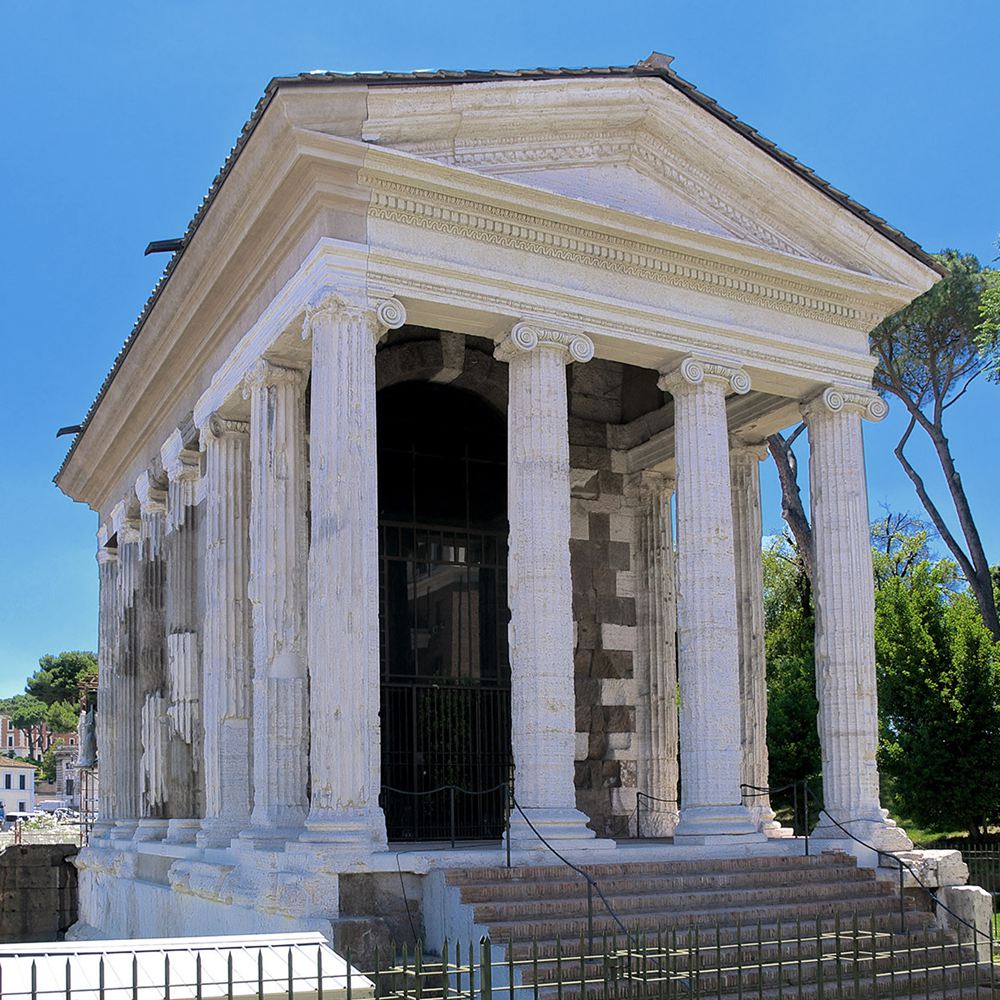
- Characteristics: Distinguished by its volutes (scroll-like ornaments) on the capital.
- Symbolism: Sophistication, wisdom, and femininity.
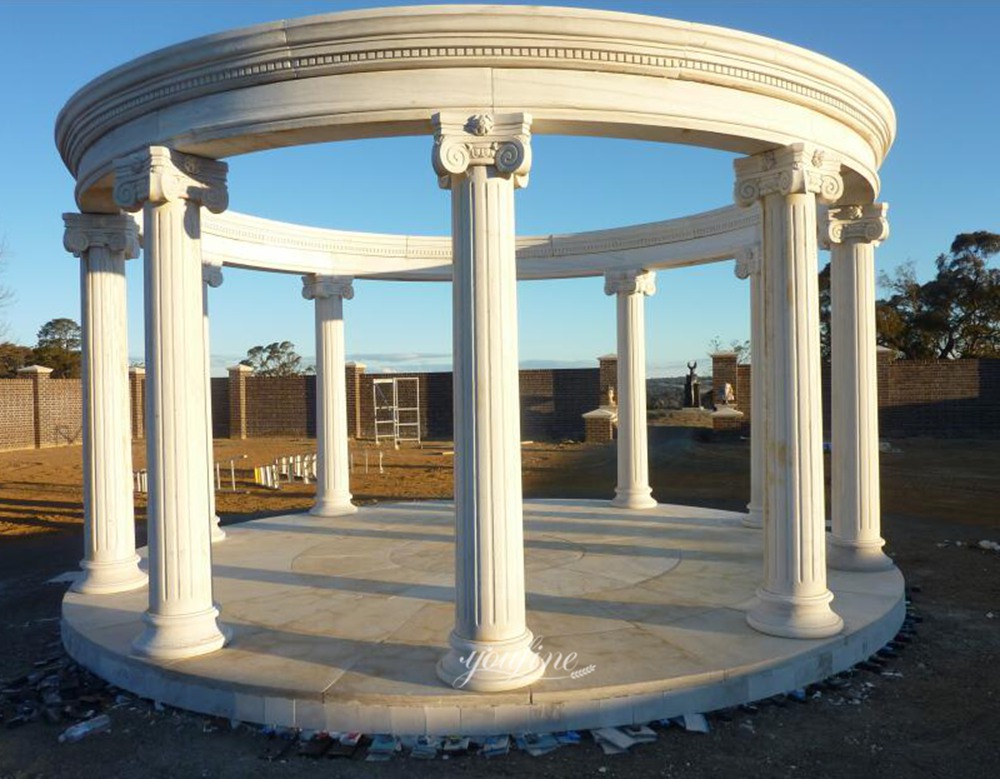
- Suitable Applications: Library entrances, gazebos, and formal garden walkways.
- Famous Example: The Temple of Athena Nike or the Temple of Portunus in Rome. In the Temple of Portunus in Rome, these columns demonstrate how the heaviness of stone can be balanced through elegant proportions.
-
The Corinthian Order: The Ultimate Luxury
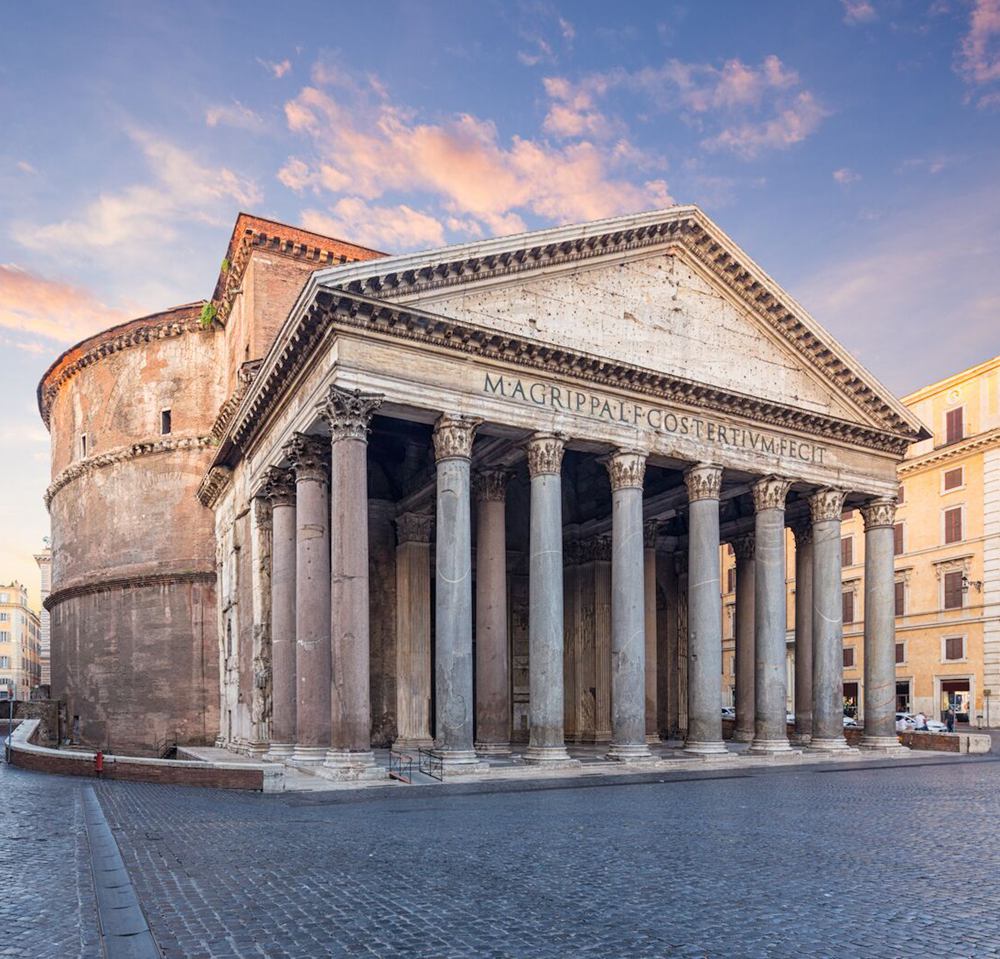
- Characteristics: The most ornate of the Roman column styles, featuring capitals intricately carved with delicate acanthus leaves.
- Symbolism: Prosperity, status, and high-level artistry.
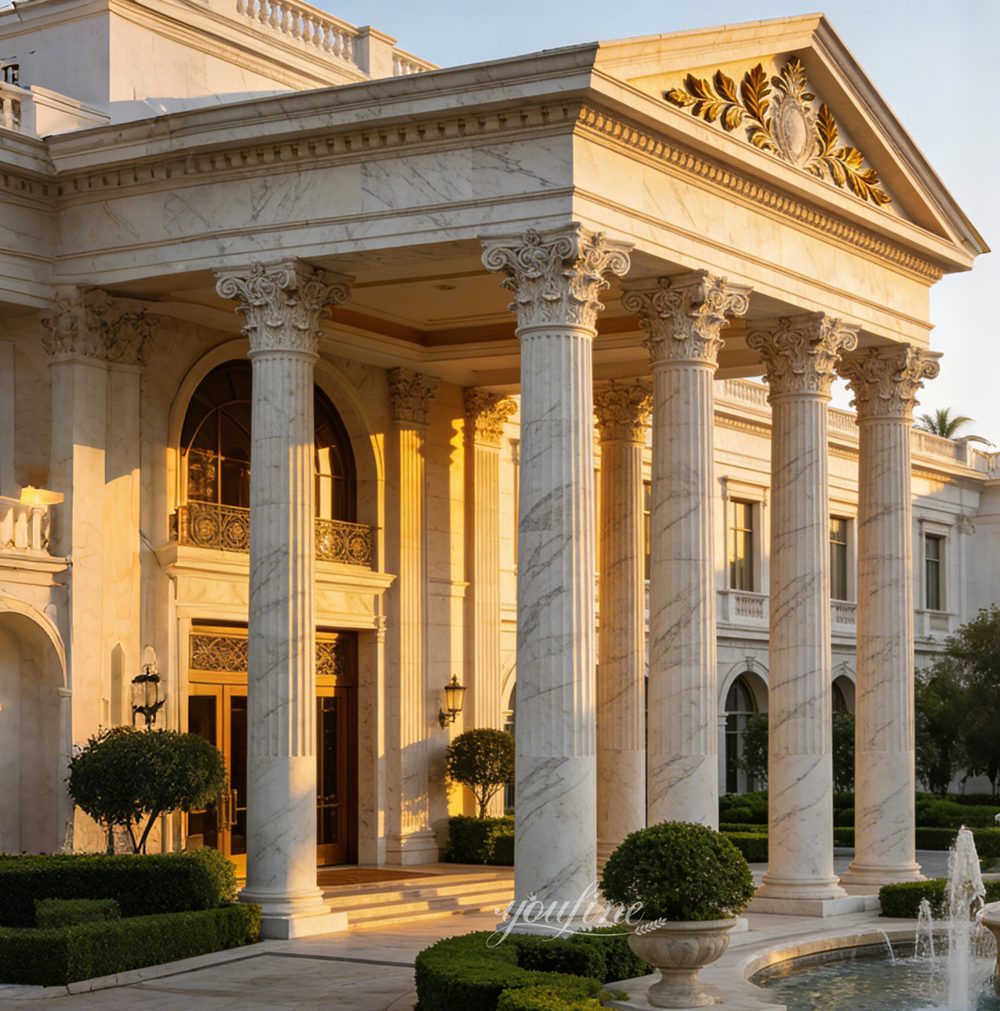
- Suitable Applications: Main entrances of luxury resorts, grand building facades, and high-end private estates.
- Famous Example: The Pantheon, Rome. The colossal monolithic marble Corinthian columns of the Pantheon’s portico constitute one of the world’s most celebrated sights. Their intricate foliate carvings serve as a symbol of ultimate luxury and power.
-
The Tuscan Order: The Power of Simplicity
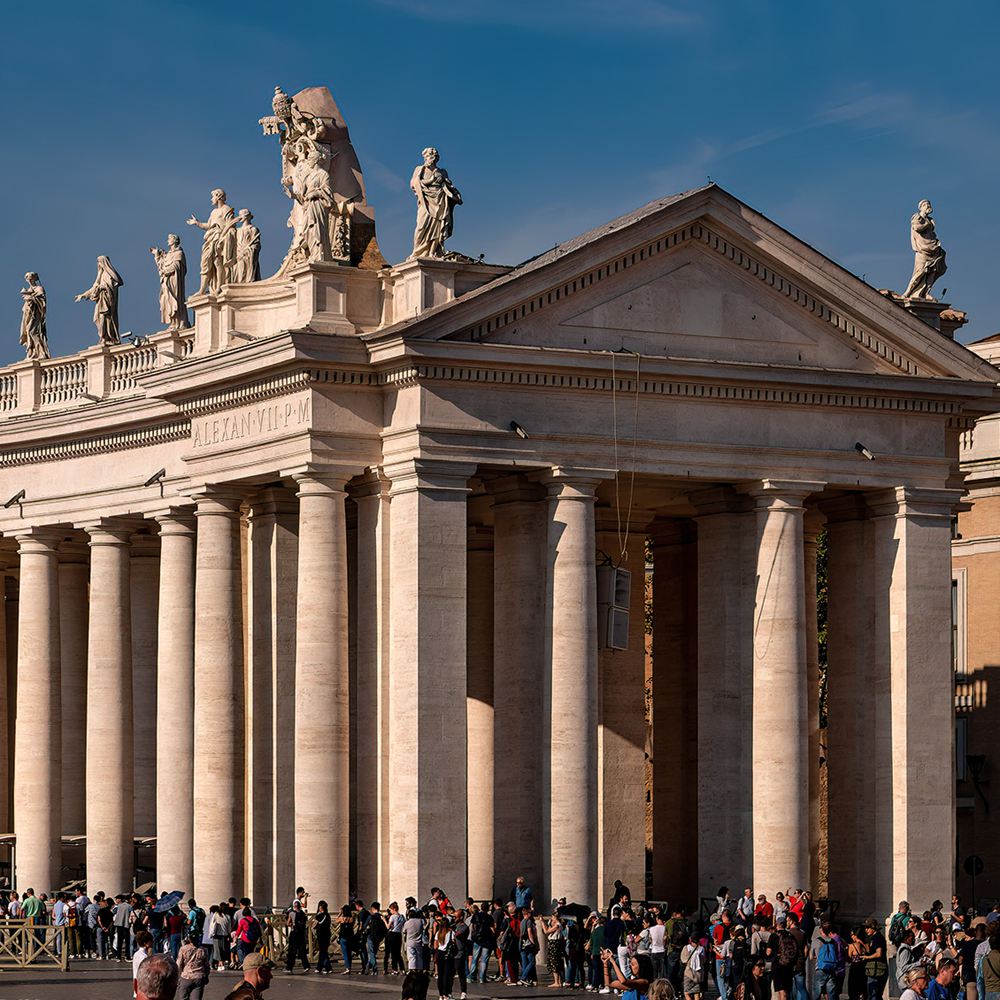
- Characteristics: A smooth shaft with a simple capital and base. It is the sturdiest and most understated.
- Symbolism: Stability and strength.
- Suitable Applications: Support pillars for heavy structures, garden walls, or minimalist modern villas.
- Famous Example: St. Peter’s Square in Rome (Vatican City). The massive semicircular colonnade designed by Bernini in the Vatican is composed of 284 Tuscan columns. They are simple yet substantial, creating a sense of solemnity that is profoundly inclusive.
-
The Composite Order: Masterful Sophistication
- Characteristics: A Roman innovation combining Ionic scrolls with Corinthian leaves.
- Symbolism: Absolute prestige and peak craftsmanship.
- Suitable Applications: Large-scale monumental projects and center-piece architectural statements.
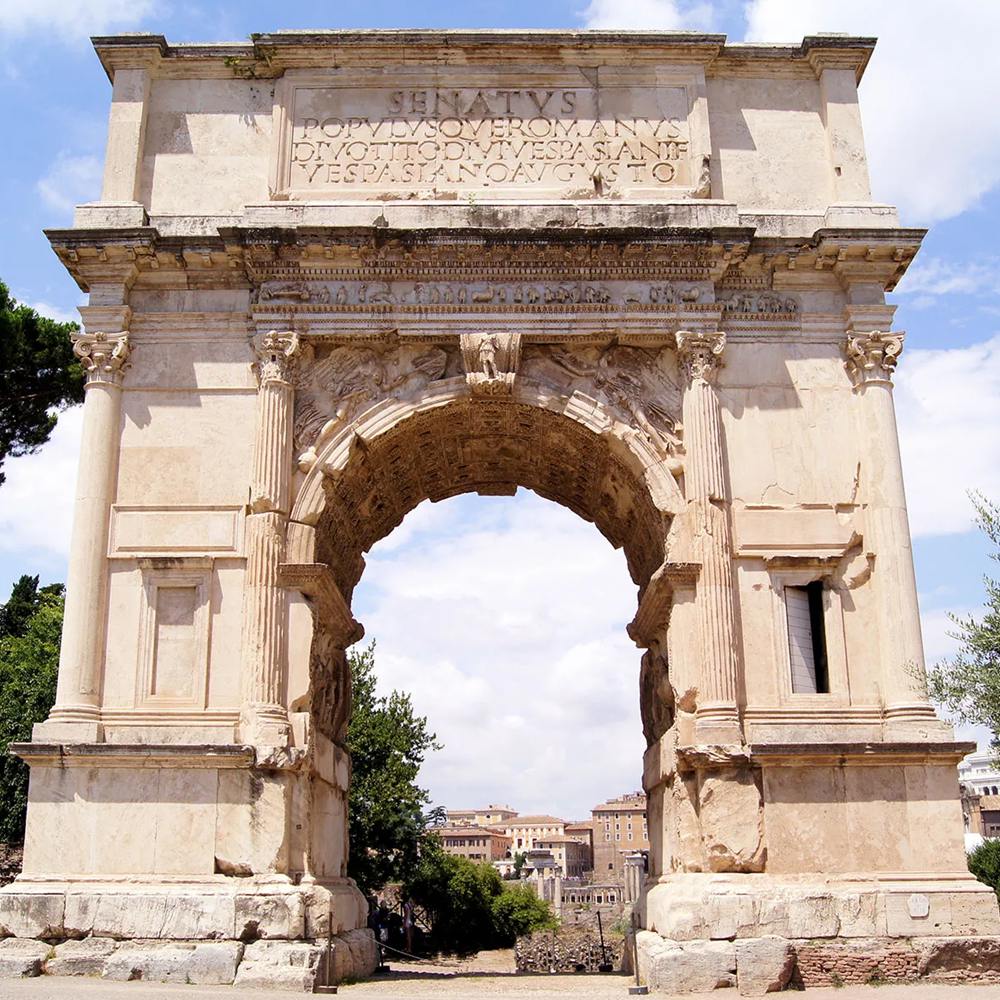
- Famous Example: The Arch of Titus (Rome). On the Arch of Titus, this type of capital—which combines volutes with foliage ornamentation—was employed to commemorate the greatest of victories, representing the most decorative of all architectural orders.
The Historical Evolution of Roman Columns
- Greek Origins (7th Century BC): Established the three classic orders of columns—centered on the proportions of the human body—and transformed wooden structural forms into enduring works of stone sculpture.
- Roman Zenith (1st Century BC): Introduced two new orders—the Tuscan and the Composite—and innovatively utilized columns as decorative elements in the design of triumphal arches and theaters.
- Revival and Dissemination (14th–19th Centuries): During the Renaissance, the principles of proportion were redefined, establishing columns as a standard architectural feature for palaces, legislative buildings, and grand mansions worldwide.
- Modern Application (21st Century): Evolving beyond their purely load-bearing function, columns have become aesthetic symbols that enhance property value, with widespread use in the custom design of high-end luxury villas.
How to Choose the Right Roman Column Style?
Selecting the right style of Roman column primarily involves considering two aspects:
Complementing the Architectural Style:
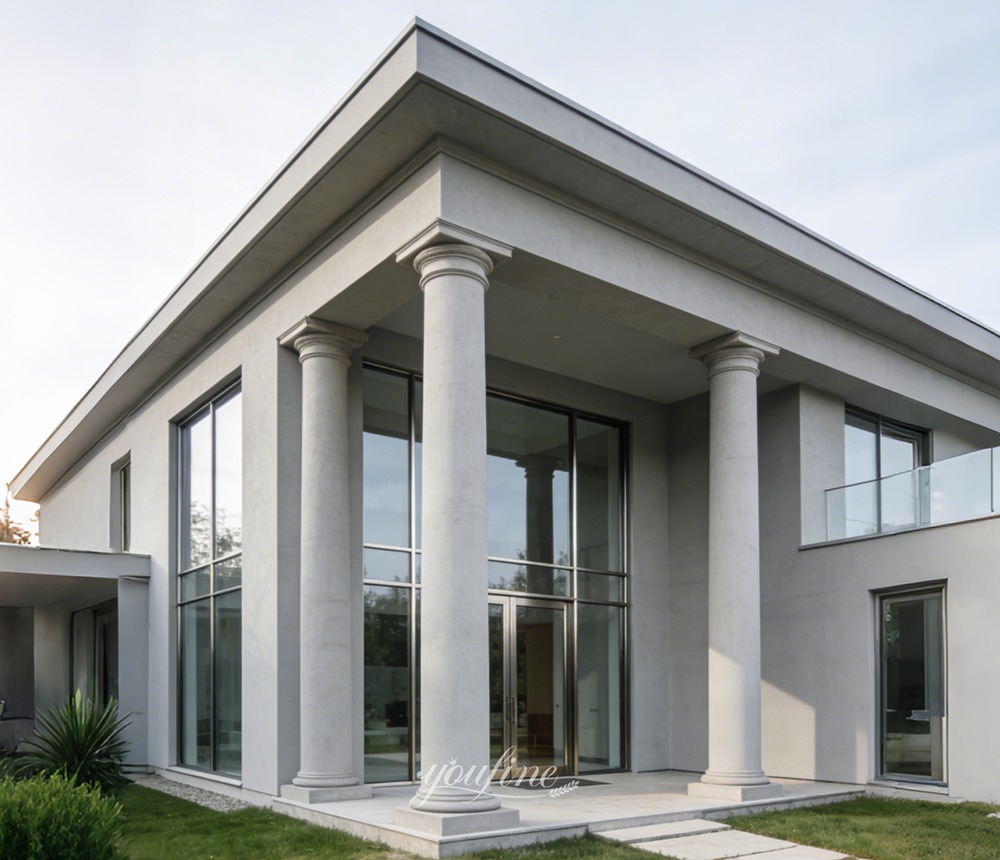
- Modern Minimalist Villas: Tuscan or Doric styles are recommended. Their clean lines serve as the perfect backdrop for large glass windows without overpowering the design.
- Italian/Mediterranean Estates: The Ionic style is the preferred choice; its distinctive volute (scroll) ornamentation adds a layer of cultural depth to gardens and arched gateways.
- Luxury Resorts/Grand Entrances: For truly conveying a sense of “grandeur,” no styles are more effective than the Corinthian or Composite orders.
Achieving Visual Balance:
- A Sense of Solidity: When used for boundary walls or heavy stone gates, the sturdier proportions of Doric columns provide a reassuring sense of security.
- A Sense of Lightness: For poolside pergolas or balconies, the more slender profile of Ionic columns helps create an airy, relaxed, and open atmosphere.
Recommended Dimensions for Roman Columns in Different Applications
To achieve the perfect aesthetic balance, we recommend following the classical proportions of architecture. Below is a professional reference table for common international project scales:
| Application / Scene | Recommended Height | Recommended Diameter | Aspect Ratio (Diameter: Height) | Expert Notes |
|---|---|---|---|---|
| Interior Decor / Fireplaces | 240 cm – 270 cm | 25 cm – 30 cm | ~ 1: 9 | Ideal for standard ceiling heights; Ionic or Corinthian styles are commonly used for decorative elegance. |
| Standard Entryway / Portico | 300 cm – 350 cm | 35 cm – 45 cm | ~ 1: 8 | Provides a strong and welcoming architectural presence; often used as half-columns or engaged pillars. |
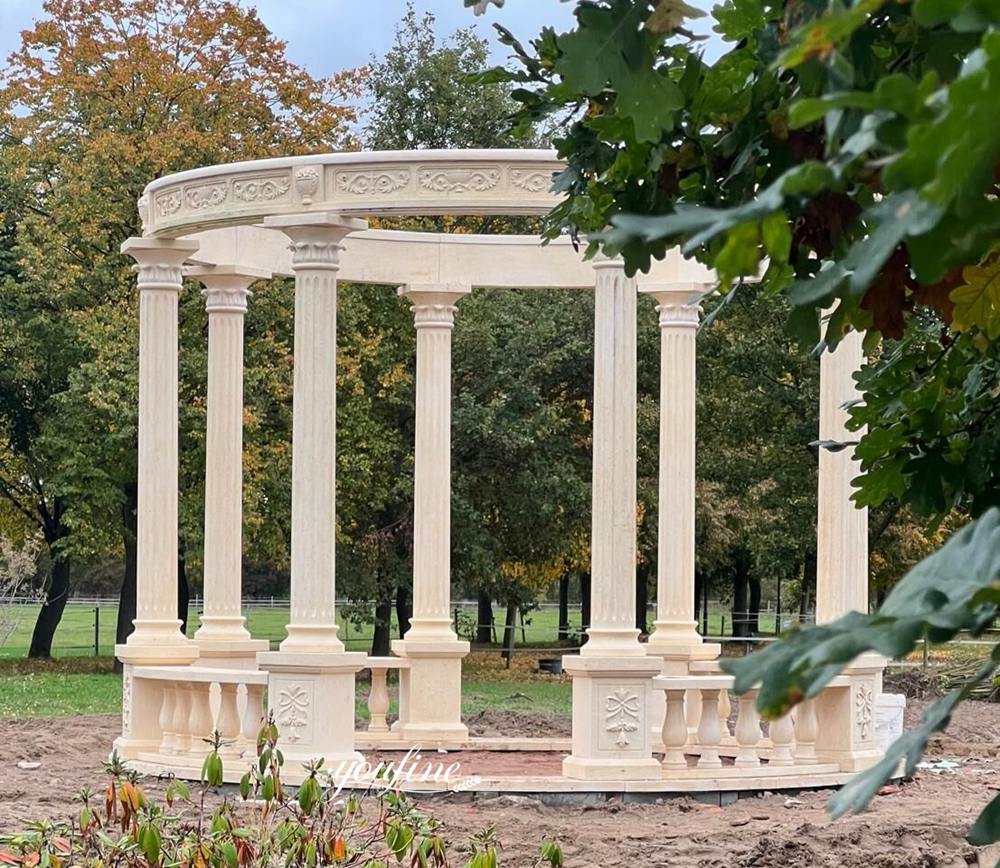
| Garden Gazebos / Pergolas | 280 cm – 320 cm | 30 cm – 40 cm | ~ 1: 8 | Must consider roof load; Tuscan or Doric orders are recommended for structural stability. |
| Grand Estates / Resorts | 450 cm – 600 cm+ | 50 cm – 70 cm | ~ 1: 9 | Creates a majestic visual impact; requires professional structural design and engineering. |
From Factory to Estate: YouFine’s One-Stop Service
With over 40 years of experience in hand-carving natural marble columns, YouFine Artsculpturegallery seamlessly blends ancient artistry with modern logistics.
- Fully Customized: Whether you require load-bearing solid columns or decorative hollow column wraps, we offer precise 1:1 customization to your exact specifications.
- Global Delivery: We employ a dual-layer packaging system—featuring thick sponge and soft foam wrapping on the interior, encased in a standard wooden crate secured with iron fasteners—to ensure safe, direct delivery to destinations worldwide via sea freight.
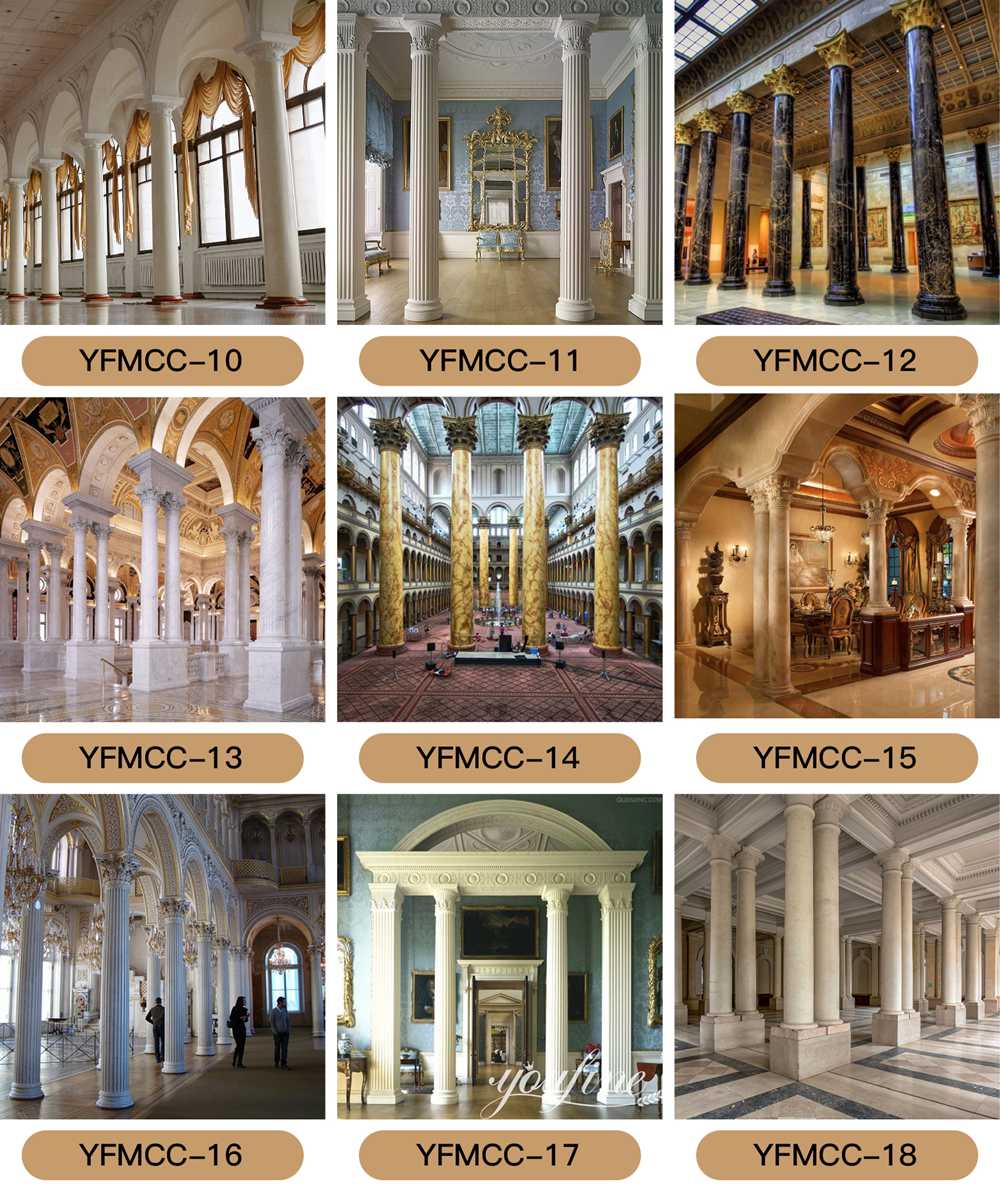
- Comprehensive Solutions: We also provide a full range of complementary marble products—including marble gazebos, marble fountains, marble planters, and garden marble sculptures or animal statues—to help you bring your unique landscape vision to life.
Ready to improve your landscape with the grandeur of Roman artistry?
Contact Us Now to receive a professional design consultation and a personalized quote tailored just for you.
FAQ
-
What is the difference between Greek and Roman columns?
- More Styles: Building upon the three major Greek orders, the Romans introduced two additional styles: the Tuscan order and the Composite order.
- Enhanced Functionality: While Greek columns were primarily used for structural load-bearing, Roman architecture pioneered the use of decorative pilasters—columns attached directly to walls.
- Taller Proportions: Roman columns typically feature a base, giving them a visually more slender and upright appearance compared to Greek columns.
- What were Roman columns made of?
- Natural Marble (Recommended): Possessing a warm, smooth texture and unique veining patterns, natural marble boasts a lifespan of up to a century and is the preferred choice for high-end projects.
- Granite: Extremely hard and resistant to acids and alkalis, making it ideal for outdoor environments with harsh weather conditions.
- Artificial Stone: Offers lower costs and lighter weight; however, it lacks the natural character and soul of genuine stone and is prone to cracking over time with prolonged use.
-
What does the customization service include?
Customization options cover design, material, color, quantities, and dimensions.
-
How should Roman pillars be maintained?
- Regularly dust the columns using a soft cloth, and ensure the surface remains dry and clean. The use of harsh or abrasive cleaning agents is strictly prohibited.
- Before shipment, we apply a deep-penetrating waterproofing and stain-resistant treatment; we recommend reapplying a stone sealant every 3 to 5 years.