When you look at a marble bust, you see more than stone—you see a moment of life preserved in time. For over 3,000 years, human head sculpture has been a true test of a sculptor’s skill.
With many years of experience in marble carving, I believe the difference between a masterpiece and an ordinary work lies in one thing: capturing the “spirit.”
In this article, I’ll guide you through 12 of the most famous marble bust sculptures, revealing the artistic secrets behind their timeless appeal.
Definition and Meaning of Marble Bust
Before delving into these classic works, let us first address a fundamental question:
-
What is a marble bust?
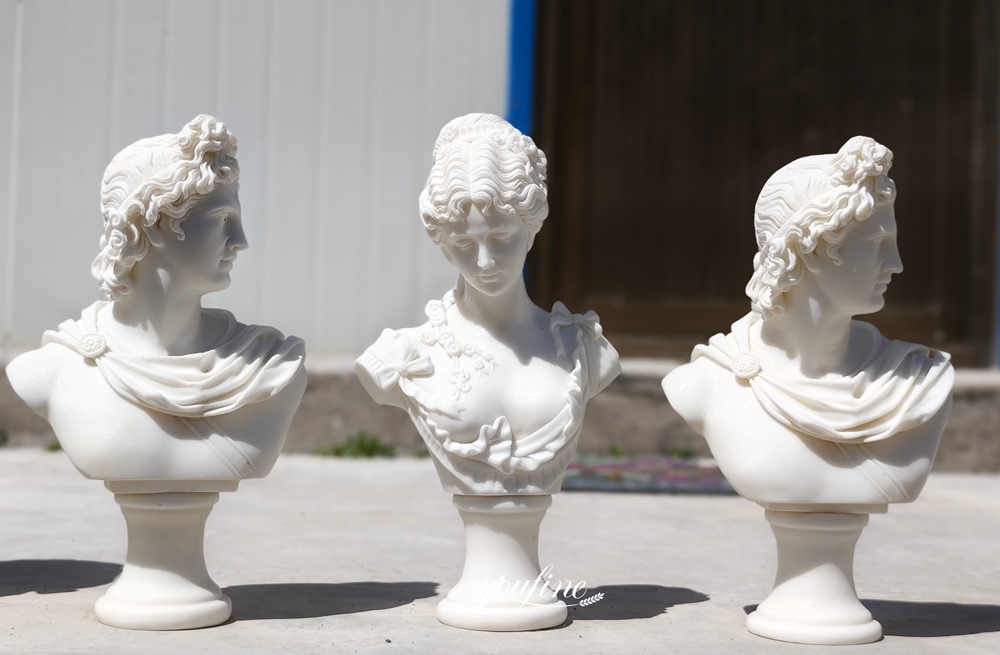
A marble bust refers to a sculptural form that depicts only the head, neck, and a portion of the shoulders or chest of a subject.
This art form originated in Ancient Rome and reached its artistic zenith during the Renaissance; it remains one of the most iconic genres within the realm of portrait sculpture.
-
Marble Bust Meaning
In my view, the significance of a bust extends far beyond the mere concept of a “portrait”:
- In Ancient Rome, it symbolized familial lineage and the enduring memory of power.
- During the Renaissance, it embodied the humanist spirit and the beauty of reason.
- In Modern Spaces, it reflects aesthetic taste and cultural depth.
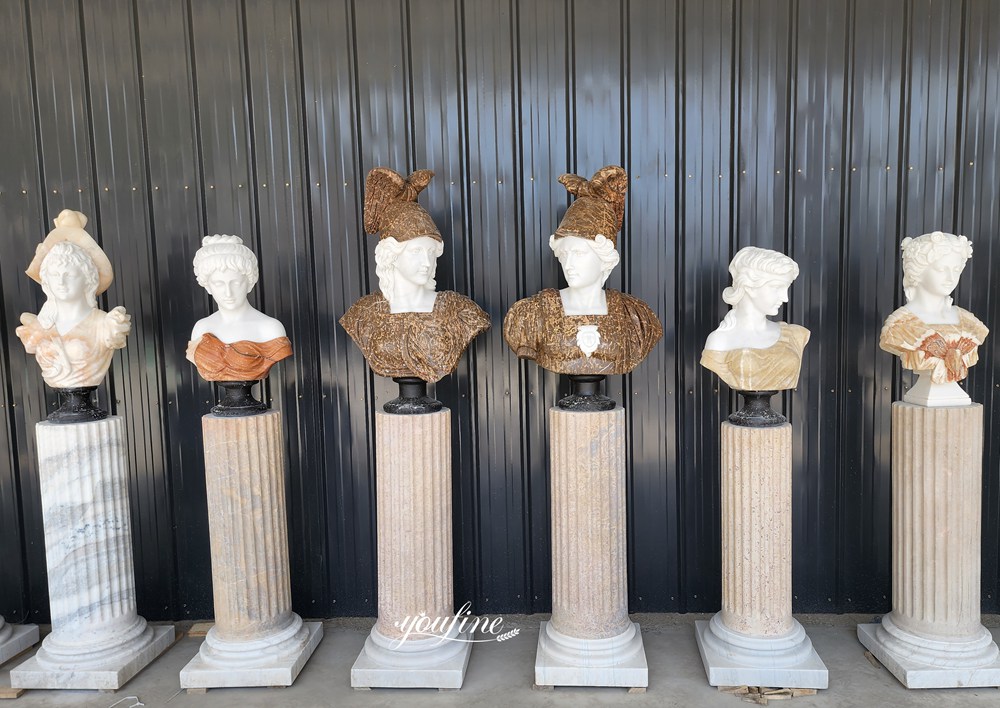
The 12 Famous Marble Bust Sculptures
Original Busts: Born to Capture the Soul
-
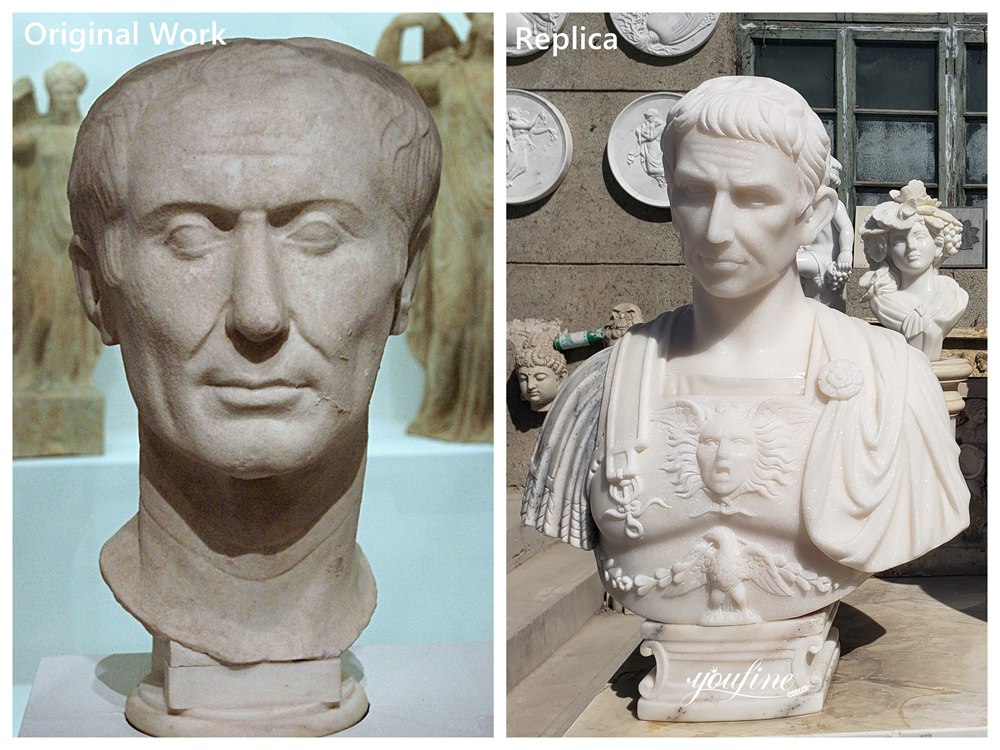
Bust of Julius Caesar
- Background: Circa 25 BC. A pinnacle of Roman Realism designed to convey the leader’s resolve and majesty.
- Location: Vatican Museums.
- Details: It masterfully captures Caesar in his later years, featuring deep forehead furrows, sunken eye sockets, and anatomically precise, aging neck muscles.
- Influence: This is the definitive image of Caesar in Western history, shaping the visual legacy of the “uncrowned king.”
- Expert Insight: The secret lies in the forehead wrinkles; they aren’t just lines, but “sagging skin” created through subtle transitions. In our workshop, we know that capturing Caesar’s soul requires extreme restraint—one stroke too many looks artificial, one too few and the character is lost.
-
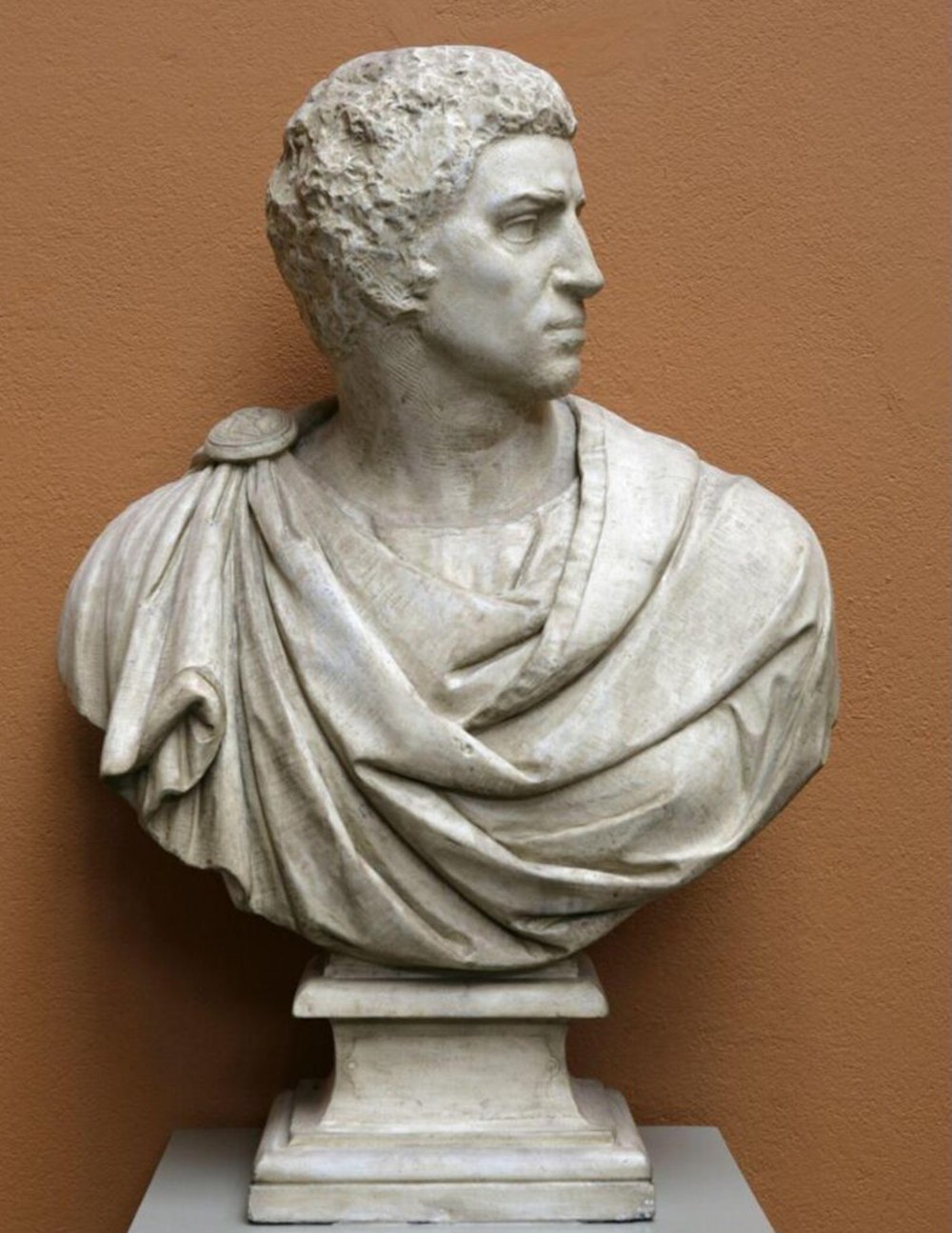
Michelangelo Brutus
- Background: Created circa 1538. This is the only bust Michelangelo ever produced, intended to honor the spirit of liberty and rebellion.
- Location: Bargello Museum, Florence.
- Details: The face is exquisitely refined, while the toga on the shoulders retains rough, raw chisel marks. This non-finito (unfinished) style creates a powerful tension against the delicate facial details.
- Expert Insight: Michelangelo deliberately left those tool marks on the shoulders. To a carver, those marks aren’t “incomplete”—they represent an untamed energy. Only those who have held a chisel can truly feel the tension Michelangelo locked inside that stone.
-
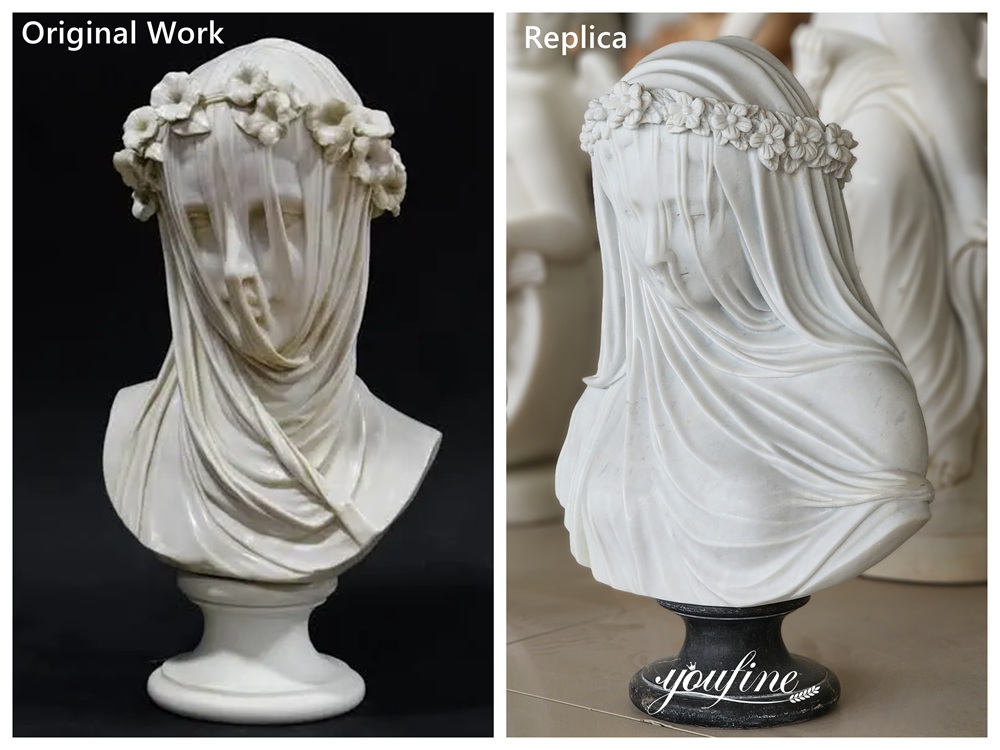
The Veiled Vestal
- Background: 1847. A 19th-century masterpiece where sculptors pushed marble to its physical limits, turning cold stone into “transparent” fabric.
- Location: Chatsworth House, England.
- Details: By grinding the marble to extreme thinness, the artist harnesses light to make the facial features visible beneath the “veil.” The floral wreath features delicate, airy openwork.
- Expert Insight: The secret isn’t just carving a veil; it’s the mastery of light. We must calculate the exact thickness of the stone so the features appear “dimly visible”—a high-stakes game of shadows we love to play in our workshop.
-
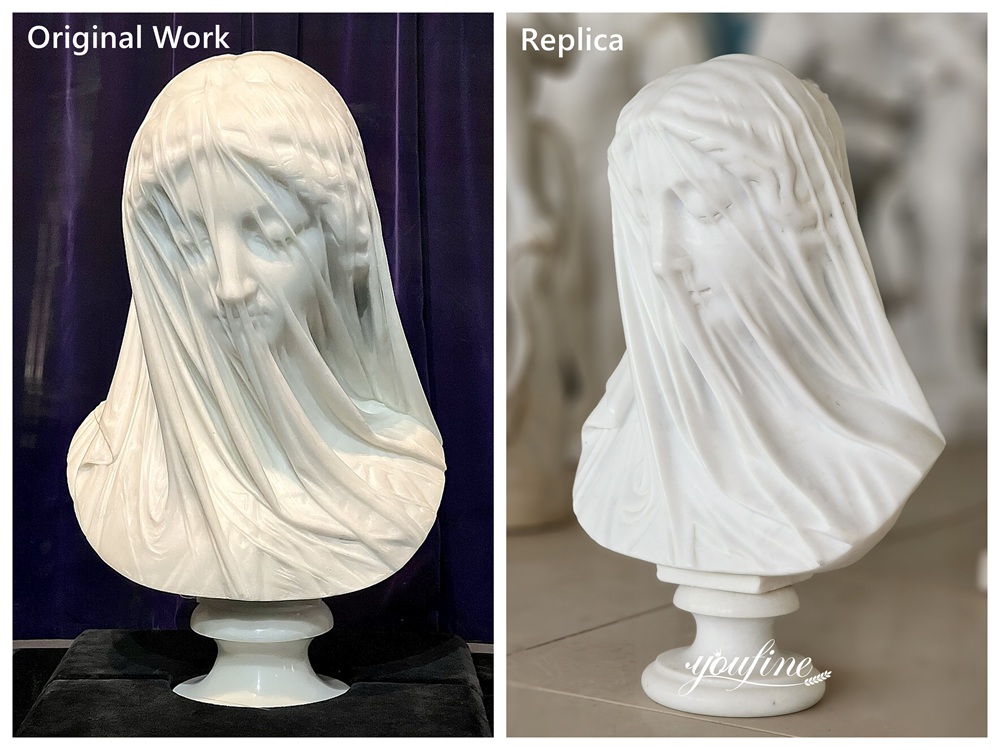
The Veiled Virgin
- Background: 1850s. A Neoclassical gem embodying profound sanctity and peace.
- Location: Basilica of St. John the Baptist, Canada.
- Details: The veil has a “damp,” clinging quality, perfectly following the contours of the Virgin’s praying face. Every fold aligns with the underlying musculature.
- Expert Insight: Creating a replica is a delicate balancing act of thickness and translucency. It is the ultimate test for a sculptor: how to maintain the stone’s integrity while achieving a visual weightlessness.
-
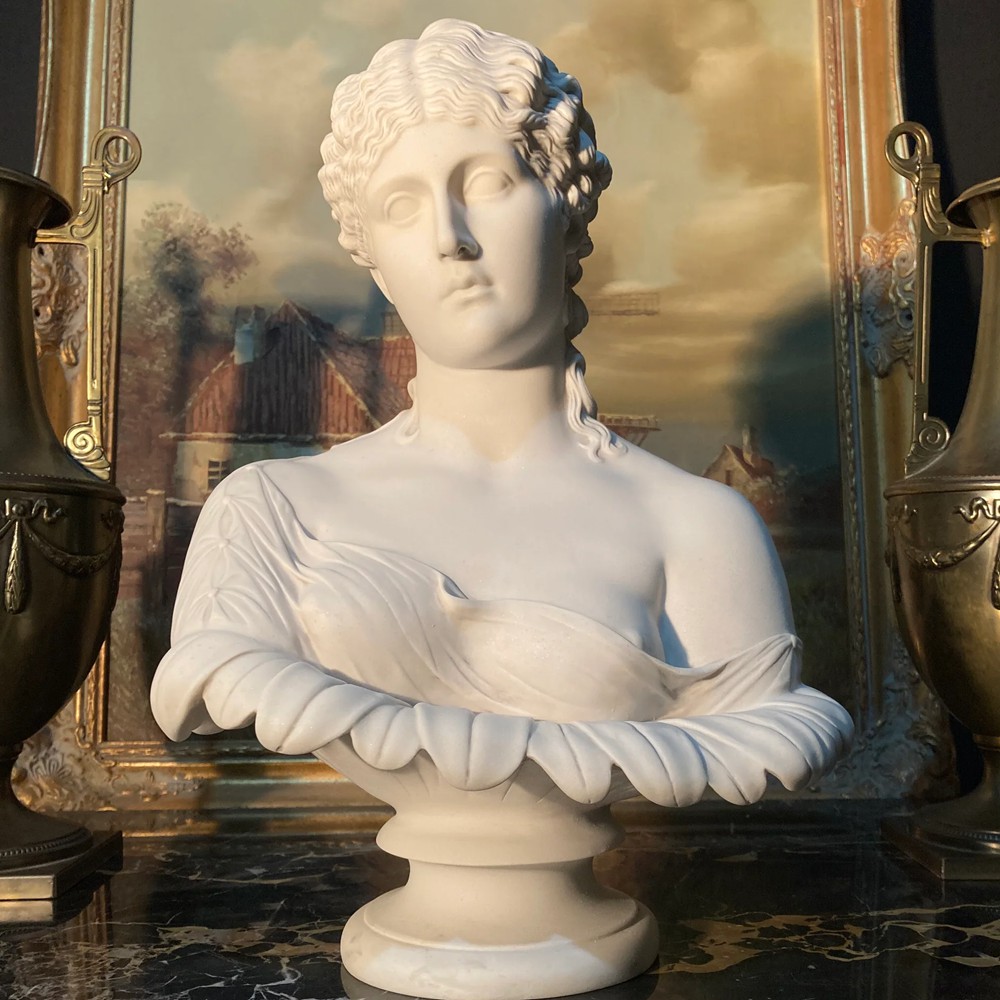
Clytie
- Background: Circa 40–50 AD. An original Roman bust of a melancholic woman emerging from sunflower petals.
- Location: The British Museum.
- Details: Her expression is one of restrained sorrow. The magic is in the sunflower leaves—their edges are carved so thin they imbue the marble with a rare, organic softness.
- Expert Insight: I am particularly fond of those sunflower edges. They are incredibly prone to chipping during carving, but that fragility provides a natural grace perfect for high-end, feminine interior spaces.
-
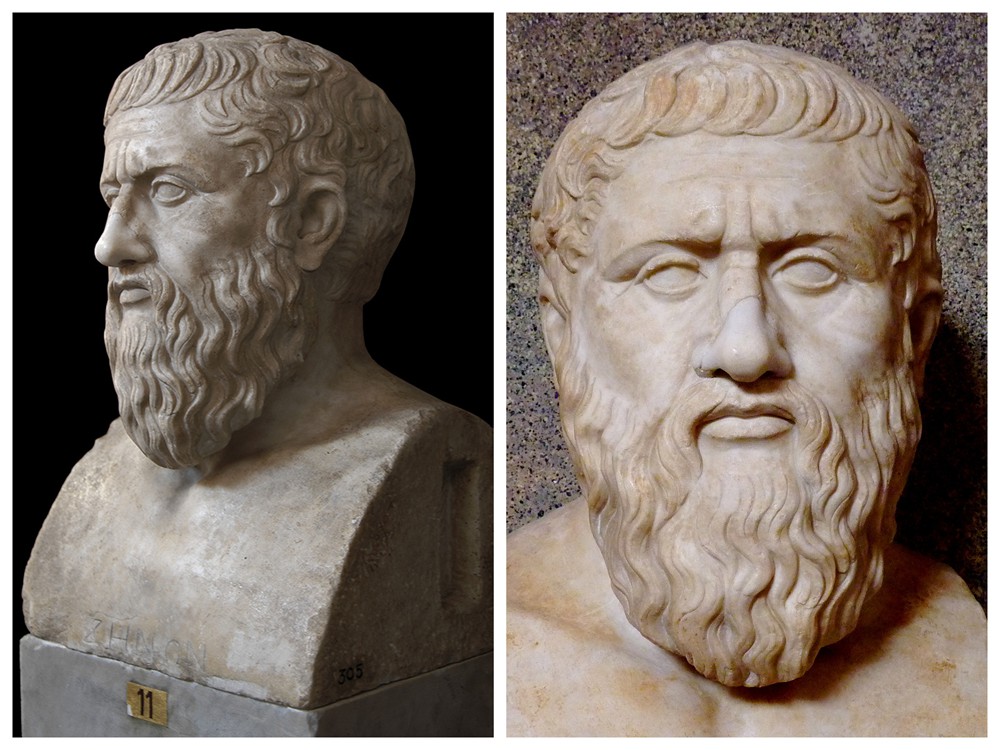
Bust of Plato
- Background: Based on a 4th-century BC prototype. Designed specifically for the libraries and academies of the ancient world.
- Location: Altes Museum, Berlin.
- Details: The focus is the thick, curly beard. Deep-carving techniques create heavy shadows that give the beard vitality, while the broad forehead accentuates his intellect.
- Expert Insight: When carving a philosopher, we focus on the “weight of shadow” in the beard. It gives the stone a sense of gravity. A great statue should make the viewer actually feel the weight of the subject’s thoughts.
Classic Busts: Elevated from Full-Figure Sculptures
-
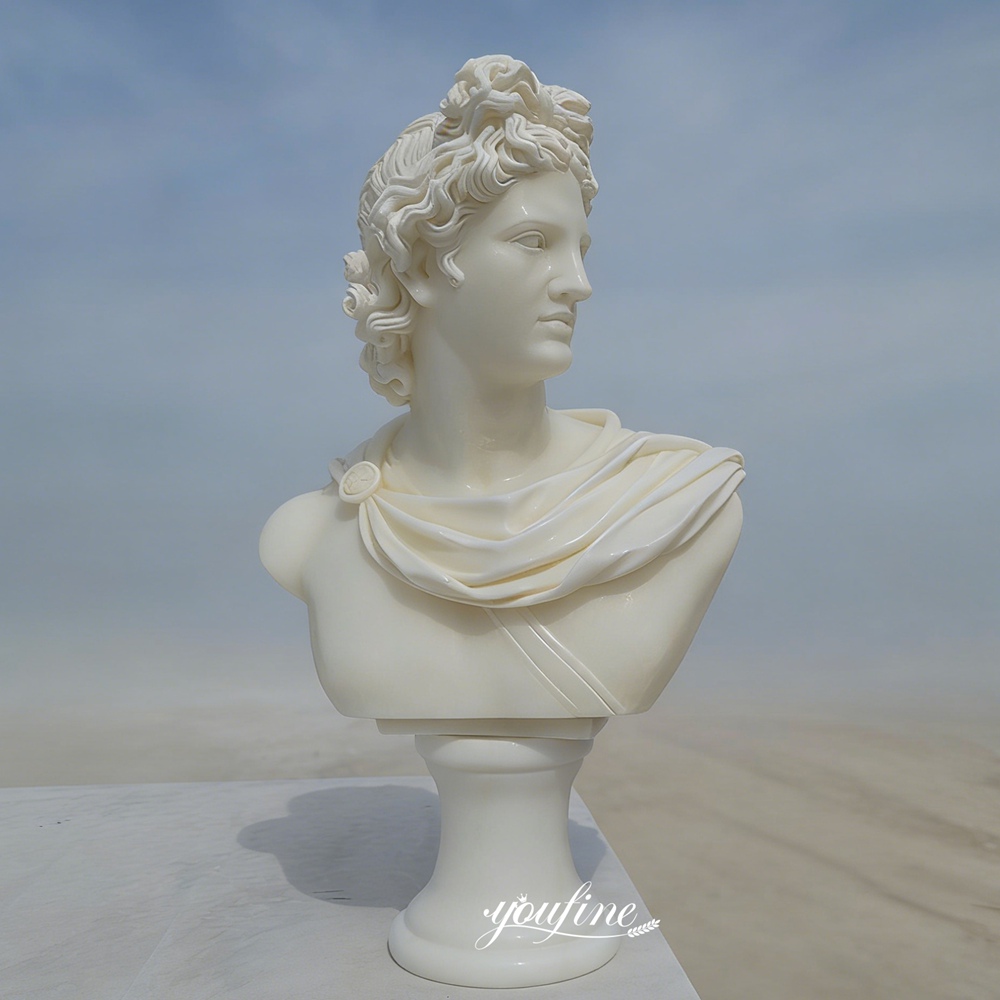
Bust of Apollo (Apollo Belvedere)
- Background: Extracted from the world-famous Roman full-figure statue in the Vatican.
- Location: Original in the Vatican Museums.
- Details: This is the “textbook of hair styling.” Curls are bound by a headband, and the skin is polished to a mirror-like sheen, capturing the eternal youth of a god.
- Expert Insight: The challenge here is the hair—it requires distinct layering to provide depth without appearing chaotic. This remains our most requested classic style for luxury foyers.
-
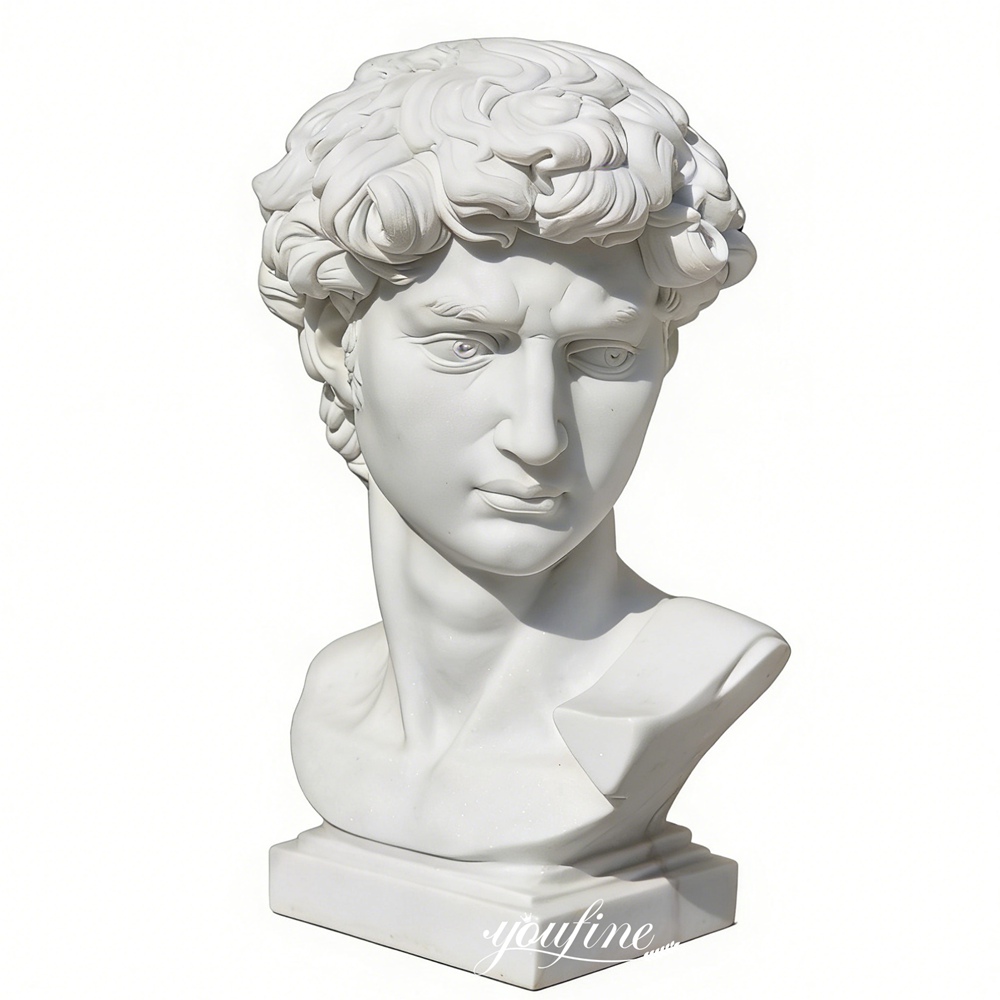
Head of David Sculpture
- Background: 1501–1504. To bring the 5-meter giant into private studies, later workshops began reproducing the head as a standalone bust.
- Location: Original in the Galleria dell’Accademia, Florence.
- Details: It features heart-shaped pupils to catch shadows and a resolute, furrowed brow. The bust allows a direct, eye-level encounter with David’s intense focus.
- Expert Insight: In bust form, David’s expression becomes even more concentrated. Our biggest challenge in reproduction? Capturing that exact moment of “anger meeting focus.”
-
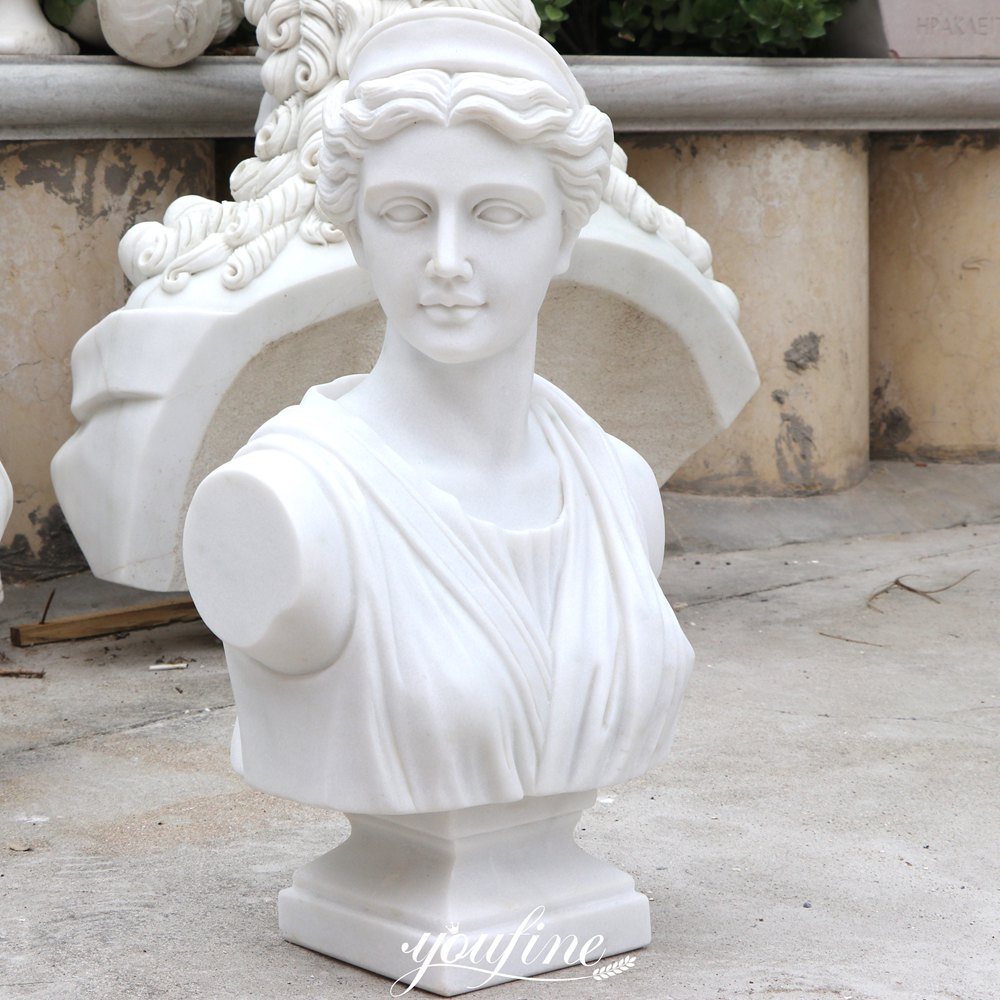
Bust of Diana (Diana of Versailles)
- Background: Adapted from the Louvre’s iconic “Goddess of the Hunt” full-figure statue.
- Location: Original in the Louvre Museum.
- Details: The side-turned posture is incredibly dynamic. The graceful neck curve and simple chignon showcase a perfect balance of feminine strength and elegance.
- Expert Insight: I love the twisting lines of her neck. In this format, that dynamism is amplified, making it an excellent choice for a hallway or garden entrance.
-
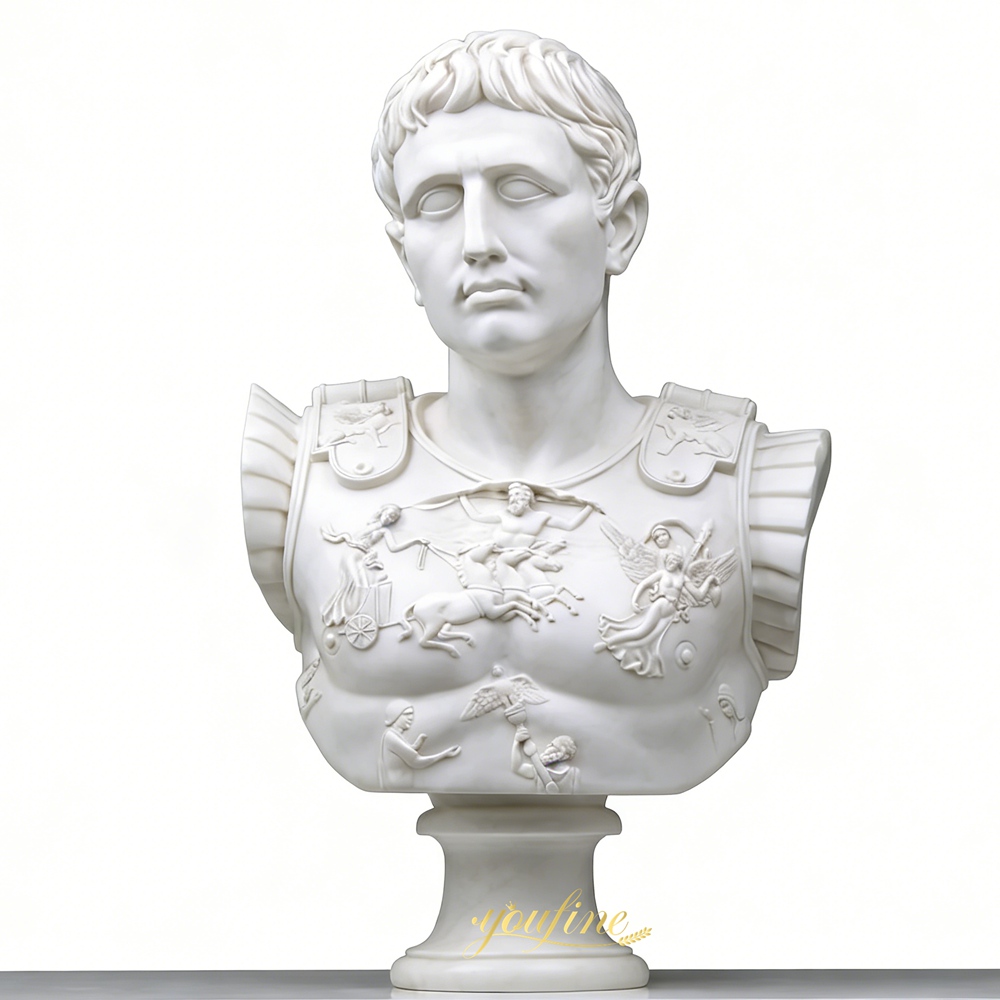
Bust of Augustus (of Prima Porta)
- Background: Adapted from the legendary 20 BC statue of Rome’s first emperor.
- Location: Original in the Vatican Museums.
- Details: The bust emphasizes the mythological reliefs on the breastplate, where marble is carved to mimic the texture of leather.
- Expert Insight: This is where politics meets art. The challenge lies in the breastplate—carving complex narratives and varying textures within such a confined space is a true test of a master’s hand.
-
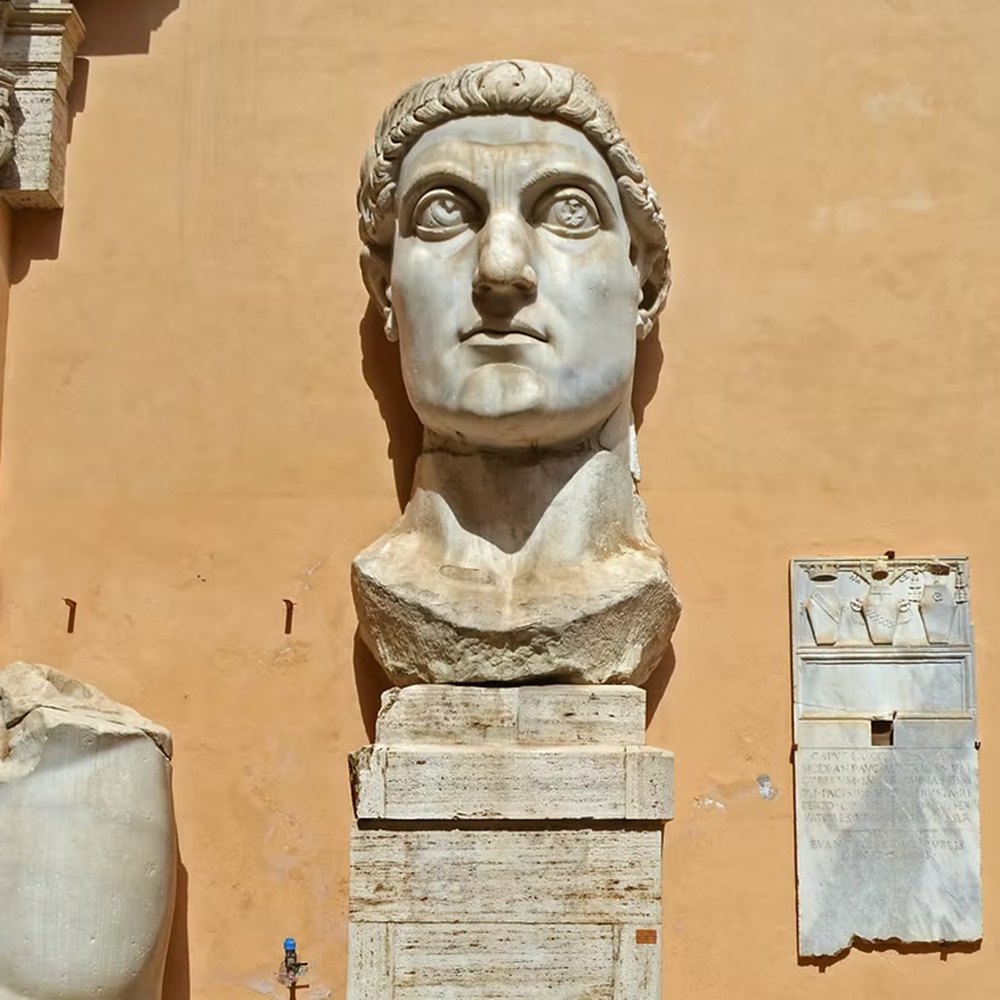
Colossal Head of Constantine
- Background: Circa 312–315 AD. The sole surviving fragment of a massive 12-meter-tall statue.
- Location: Capitoline Museums, Rome.
- Details: It features massive, almond-shaped eyes and oversized pupils, creating a “divine gaze.” It favors bold geometric planes over fine wrinkles.
- Expert Insight: This piece is all about “presence” rather than detail. It’s about the aura. It’s a fantastic choice for modern, minimalist spaces that need a focal point with gravity.
-
Beethoven Bust
- Background: 19th-century Romantic era. Sculptors fought to capture the untamable spirit of the musical genius.
- Location: Vienna, Bonn, and global collections.
- Details: The lion-like mane is the centerpiece, achieved through deep undercutting and drilling. The pursed lips vividly portray the indomitable spirit of the deaf composer.
- Expert Insight: Beethoven’s hair is a sculptor’s nightmare—and our greatest pride. We use deep drilling to convey raw power and freedom. It’s not just a portrait; it’s a challenge to the limits of stone.
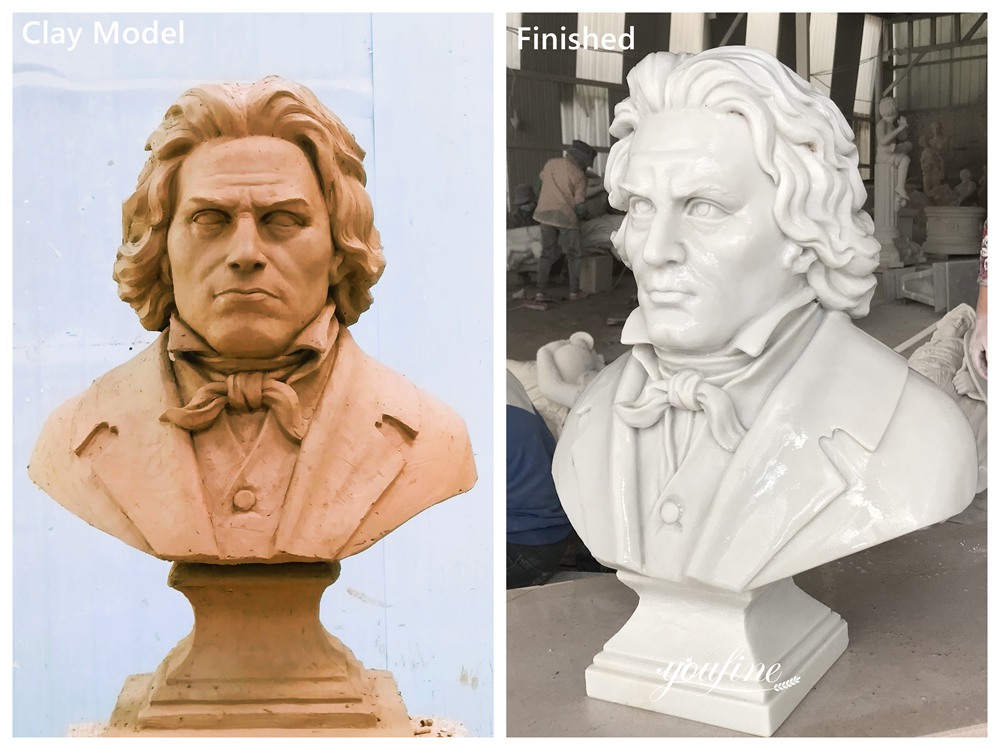
The Evolution of Bust Sculpture: From Classical Forms to Modern Art
The development of bust sculpture mirrors the broader evolution of art history:
- Ancient Rome: Realism and Symbols of Power
- The Renaissance: Humanism and the Revival of Classicism
- The 19th Century: Technical Mastery and Emotional Expression
- The Modern Era: Abstraction and Individualized Expression
Today, bust sculptures are no longer confined to emperors or philosophers; they can now be custom-made for anyone.
How to Choose a Reliable Bust Statue Maker?
When selecting a professional workshop, focus on these key factors:
- Natural Marble or High-Quality Bronze
Natural marble offers lifelike texture and translucency, while high-content bronze ensures durability and fine detail.
- 1:1 Clay Model (Essential Step)
A full-scale clay model is crucial for capturing both likeness and expression before carving begins.
- Hand-Carved Craftsmanship
Only skilled hand carving can achieve realistic facial details and artistic depth—machines cannot replicate this quality.
- Strong Customization Ability
The ability to create accurate portraits from photos reflects true artistic expertise.
- Proven Project Experience
Real project photos and case studies help verify quality and craftsmanship.
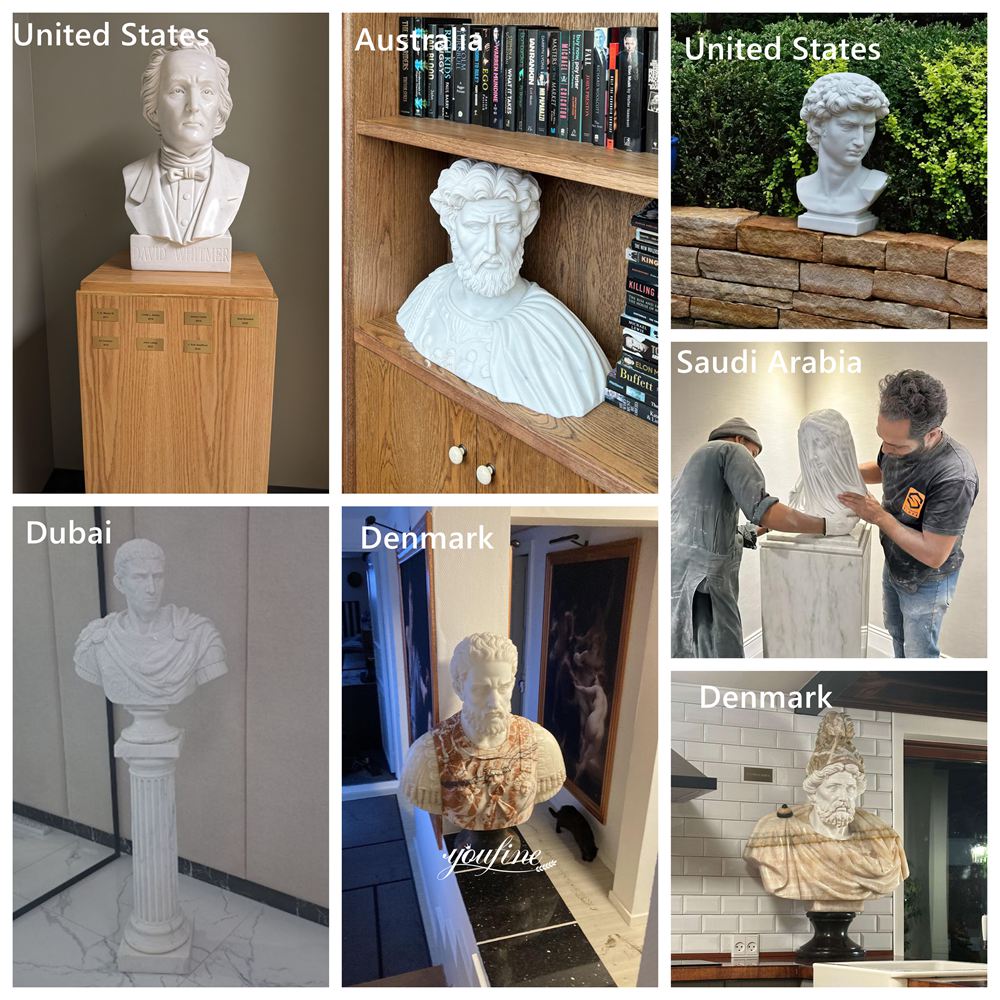
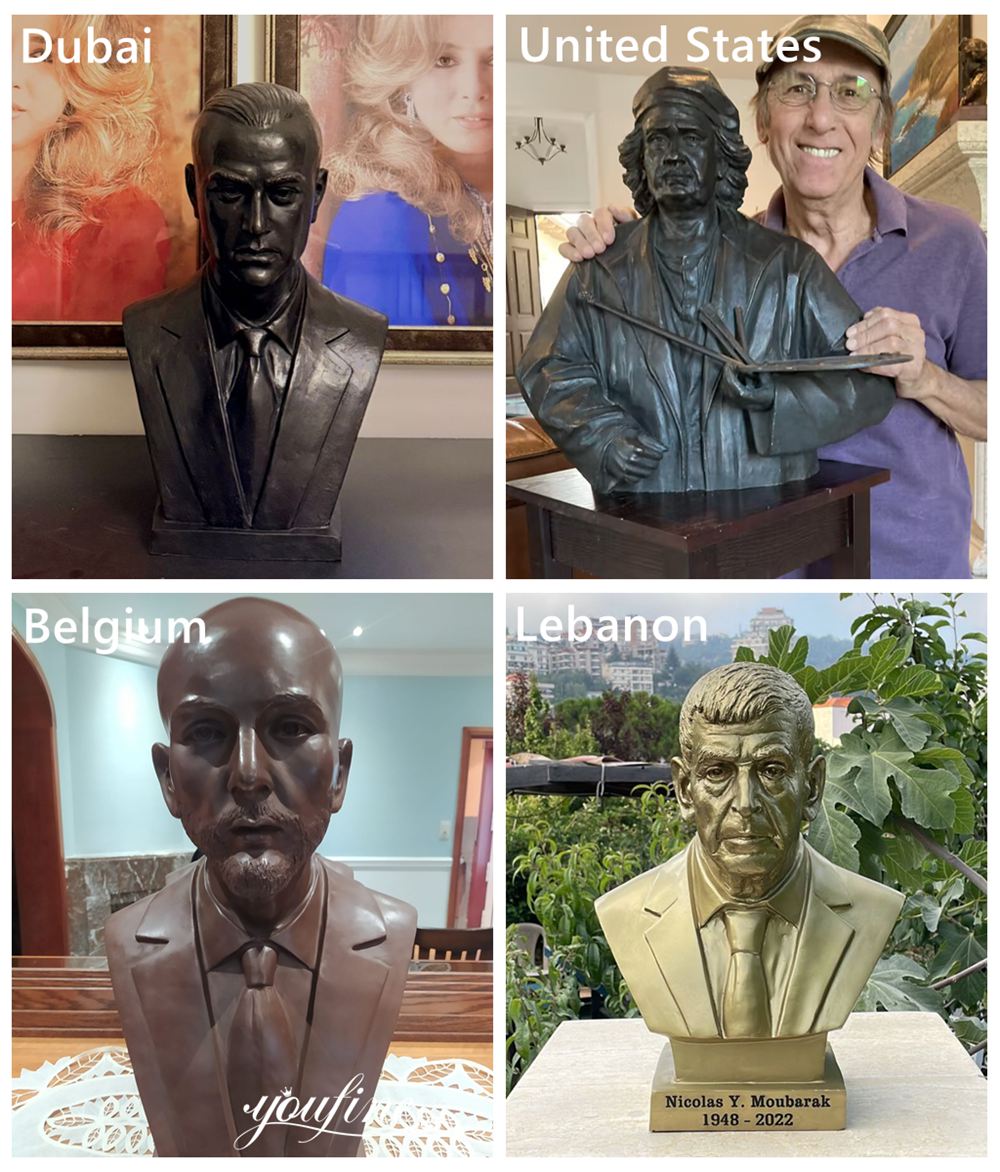
With 40 years of experience, YouFine Artsculpturegallery offers expert sculptors, premium materials (marble & bronze), and full clay model approval to ensure the perfect result—whether replicating classics or creating custom portraits. Feel free to contact us anytime!
FAQ
-
Why choose marble over bronze for busts?
Marble offers a classic, elegant look with finer carving details and a timeless feel.
-
Who are famous bust sculpture artists?
Key figures include Michelangelo, Bernini, Antonio Canova, and Raffaello Monti.
-
Can I customize a bust from a photo?
Yes. Provide clear photos (front, side, back). A 1:1 clay model is made first for approval before carving.
-
Can marble busts be used outdoors?
Yes. Natural marble is durable and suitable for outdoor display.
-
Is a pedestal included? Can it be customized?
A standard pedestal is included, and custom sizes and designs are available.
-
How is shipping handled safely?
We use foam, sponge padding, and strong wooden crates to ensure safe delivery worldwide.