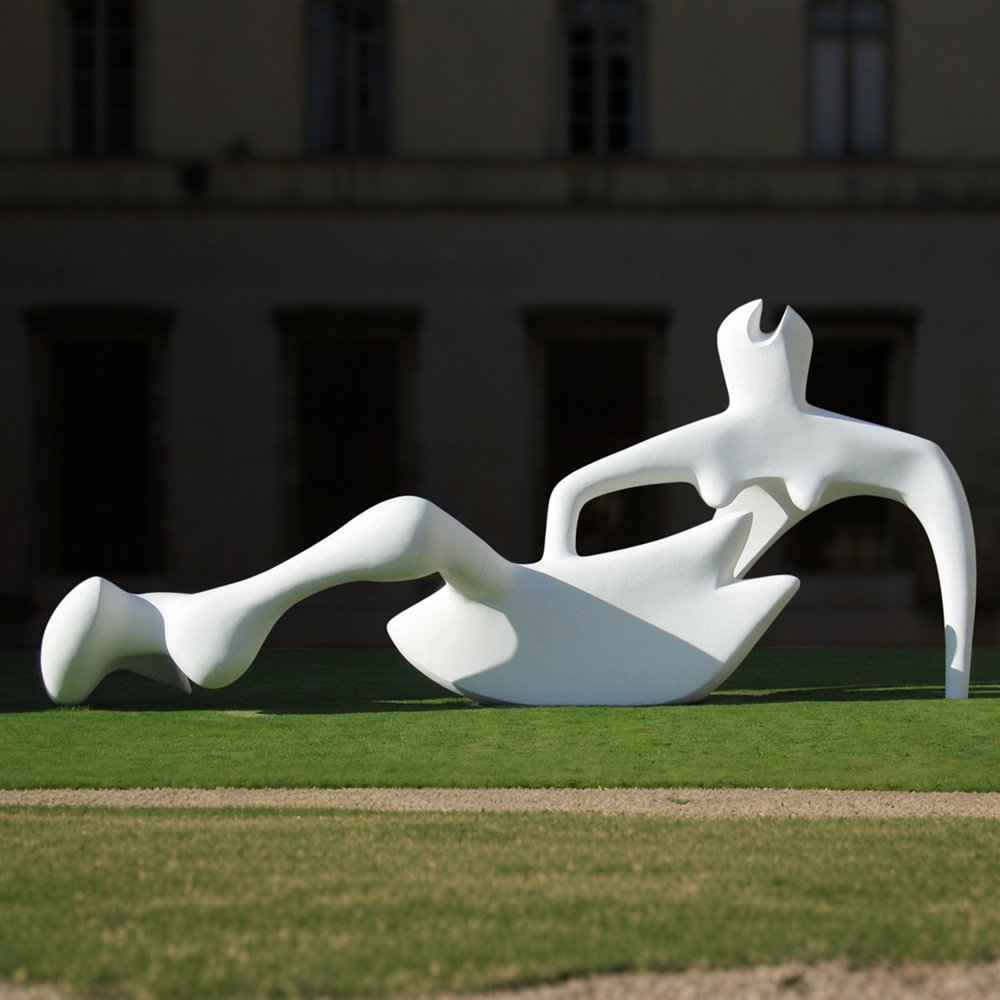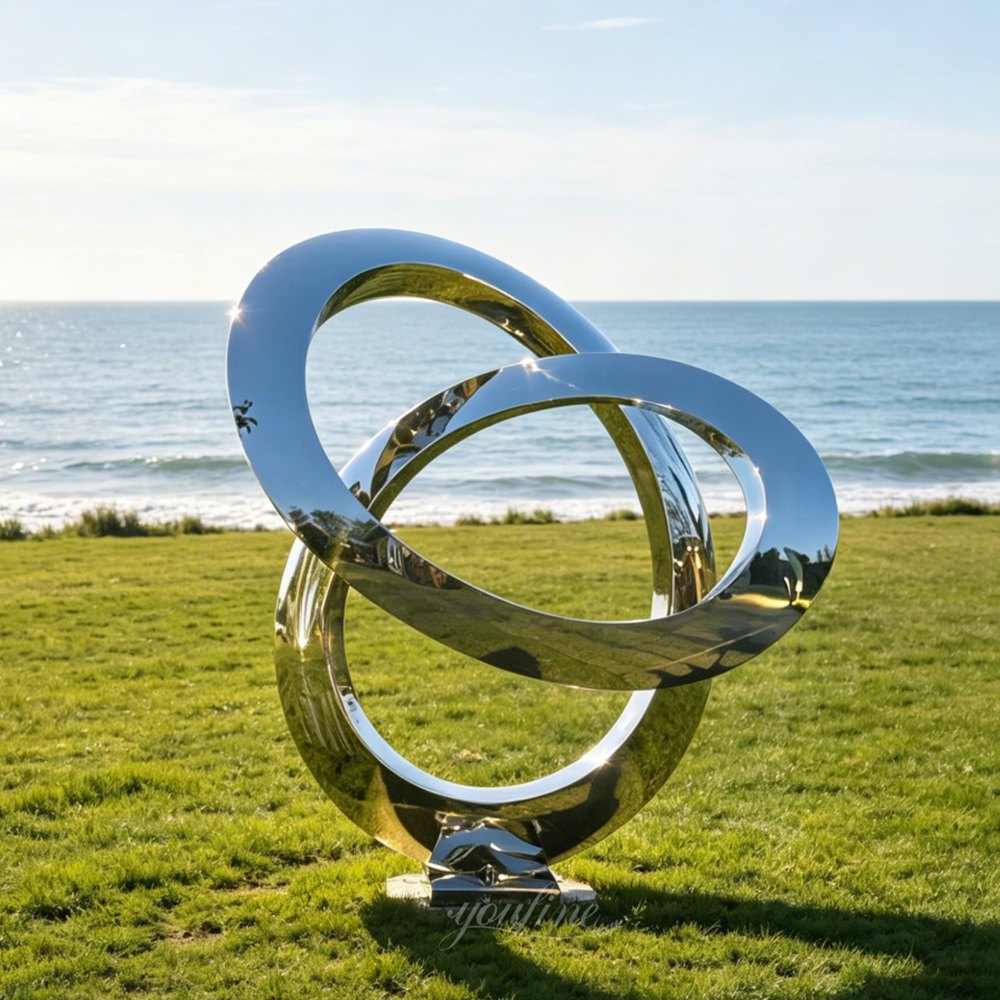
Baroque sculpture and Classical sculpture represent two fundamentally different artistic philosophies in the history of Western art. While Classical sculpture emphasizes balance, ideal beauty, and restraint, Baroque sculpture is known for its dramatic movement, emotional intensity, and theatrical presence. Understanding their differences not only helps clarify major stylistic shifts in art history but also deepens appreciation for sculpture as an expressive medium.
Key Differences Between Baroque Sculpture and Classical Sculpture
The most significant differences between Baroque and Classical sculpture lie in their dynamic expression, emotional portrayal, compositional methods, spatial interaction, and viewer experience.
Movement and Dynamism
- Classical sculpture favors stable, balanced poses, conveying calmness and restraint. Figures typically appear reserved and complete, and can be appreciated in their entirety from a single viewpoint.
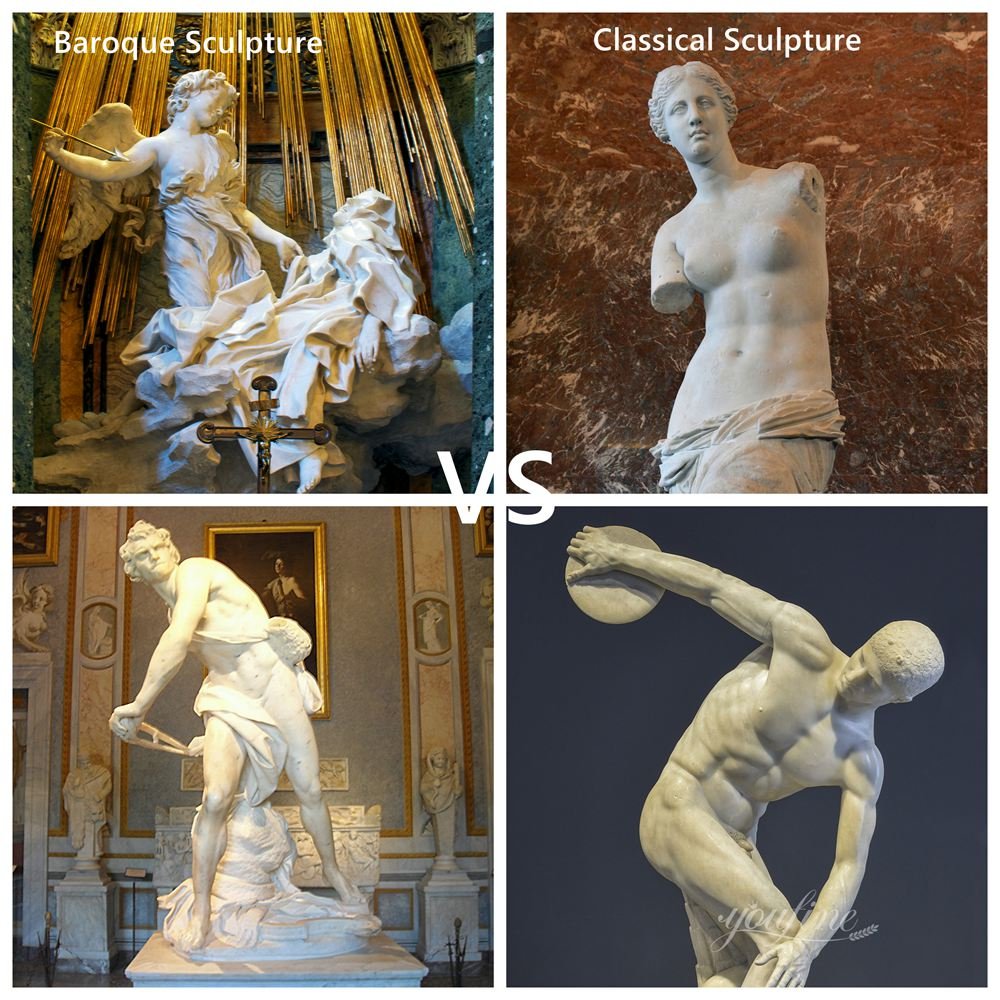
- For example, Myron’s Discobolus depicts an athlete in the act of throwing a discus, but the overall form remains harmonious and complete, showcasing idealized human proportions and rhythm.
- In contrast, Baroque sculpture is highly dynamic, capturing figures in moments of action, tension, or transformation, often requiring the viewer to move around the sculpture to experience the work fully.
- Bernini’s David presents a figure with a strongly twisted body and tensed muscles; the viewer can almost feel the moment of impending power, the sense of movement being direct and intense.

Emotional Expression
- Classical sculpture typically conveys idealized tranquility and emotional restraint. Figures have calm and reserved facial expressions.
- For example, the Venus de Milo is known for its calm and restrained expression; the focus of the work is on the beauty of the form, not the outward expression of emotion.
- Baroque sculpture, on the other hand, emphasizes intense emotions such as ecstasy, pain, piety, or victory, making emotional engagement a core objective.
- Bernini’s Ecstasy of Saint Teresa vividly portrays a state of religious ecstasy through the figure’s exaggerated facial expression, flowing drapery details, and dramatic composition, creating a strong emotional resonance with the viewer.

Composition and Form
- Classical sculpture relies on clear proportions, symmetry, and harmonious forms.
- Polykleitos’s Doryphoros (Spear Bearer) is a typical example, employing the contrapposto stance to maintain stability and balance within a natural pose.
- Baroque sculpture, however, breaks with strict symmetry, using diagonals, twisted limbs, and complex compositions to create dramatic visual effects.
- In Bernini’s Apollo and Daphne, the figures’ movements and forms constantly change as the story unfolds, requiring the sculpture to be viewed from multiple angles to fully understand its narrative and dynamism.

Interaction with Space
- Classical sculptures are typically restrained and self-contained, maintaining a distance from their surroundings.
- For example, the Augustus of Prima Porta stands in a dignified pose, with the visual focus concentrated on the sculpture itself, resulting in minimal interaction with the surrounding space.
- Baroque sculptures, on the other hand, extend outwards, integrating with the surrounding space and blurring the boundaries between the artwork and the viewer’s environment.
- The Ecstasy of Saint Teresa is placed within a specific architectural space, and through light, background, and the three-dimensional layers of the sculpture, the work forms a whole with the architectural environment, enhancing the visual and emotional impact.

Viewer Experience
- Classical sculptures encourage viewers to maintain a certain distance for contemplation.
- Baroque sculptures, however, strive to immerse the viewer emotionally and visually, often creating a sense of immersive participation.
Baroque Sculpture vs Classical Sculpture: Comparison Table
| Aspect | Classical Sculpture | Baroque Sculpture |
|---|---|---|
| Historical Period | Ancient Greece and Rome | 17th–18th century Europe |
| Artistic Ideal | Harmony, proportion, ideal beauty | Drama, movement, emotional intensity |
| Sense of Motion | Calm, controlled, balanced | Dynamic, energetic, theatrical |
| Emotional Expression | Restrained and idealized | Intense and expressive |
| Composition | Symmetrical and stable | Asymmetrical and complex |
| Interaction with Space | Self-contained | Expands into surrounding space |
| Typical Subjects | Gods, athletes, idealized humans | Religious scenes, saints, dramatic narratives |
| Materials | Marble, bronze | Marble, bronze, mixed materials |
| Representative Artists | Phidias, Polykleitos | Gian Lorenzo Bernini |
| Famous Works | Discobolus, Venus de Milo | The Ecstasy of Saint Teresa |
What is Baroque Sculpture?
Baroque sculpture emerged in the late 16th and 17th centuries, heavily influenced by the social and religious environment of the Counter-Reformation. It is an art form that emphasizes visual impact and emotional appeal, aiming to move viewers through dramatic expression.
Key Characteristics of Baroque Sculpture
- Strong dynamism and twisting poses
- Rich and exaggerated emotional expression
- Multi-perspective composition and a strong sense of space
- Emphasis on light and shadow contrast and deep carving
- Focus on narrative and capturing momentary actions
These characteristics give Baroque sculpture a strong sense of vitality and impact.
Purpose and Function of Baroque Sculpture
The core purpose of Baroque sculpture is to evoke emotional responses. Many works were commissioned by the Catholic Church for religious propagation and spiritual inspiration. At the same time, Baroque sculpture was also widely used in public spaces, palaces, and monumental buildings to display power, faith, and grandeur.

What is Classical Sculpture?
Classical sculpture primarily refers to the sculptural art of ancient Greece and Rome, whose core concept is to shape idealized human figures through reason and proportion.
Key Characteristics of Classical Sculpture
- Human anatomy based on mathematical proportions
- Stable and balanced poses
- Smooth and delicate surface treatment
- Restrained emotional expression
- Clear and orderly forms
Classical sculpture emphasizes eternal beauty, rather than the emotions of a specific moment.
Ideals and Artistic Goals of Classical Sculpture
Classical sculpture pursues an “ideal beauty” that transcends the individual, reflecting ancient philosophical ideas about order, reason, and natural harmony.

FAQ:
Who are the famous Baroque sculptors?
Notable Baroque sculptors include Gian Lorenzo Bernini, Alessandro Algardi, François Girardon, and Gregorio Fernández. These artists played key roles in shaping Baroque sculpture across Italy, France, and Spain.
Who is considered the greatest Baroque sculptor?
Gian Lorenzo Bernini is widely regarded as the greatest Baroque sculptor. His ability to combine movement, emotion, and technical mastery set the standard for Baroque sculpture and influenced generations of artists.
What are the most representative works of Baroque sculpture?
Some of the most iconic Baroque sculptures include:
- The Ecstasy of Saint Teresa by Bernini
- Apollo and Daphne by Bernini
- David by Bernini
These works exemplify the dramatic intensity and emotional power of the Baroque style.
How does Baroque art differ across European regions?
Baroque sculpture developed differently across Europe, influenced by local culture and religious traditions.
| Region | Characteristics |
|---|---|
| Italy | Highly dynamic, theatrical, emotionally intense |
| France | More restrained, formal, and classical in structure |
| Spain | Strong realism, intense religious emotion, polychrome sculpture |
What is the difference between Baroque sculpture and Art Nouveau sculpture?
Baroque sculpture focuses on dramatic narrative, religious themes, and emotional intensity, while Art Nouveau sculpture emphasizes organic lines, decorative elegance, and modern aesthetics inspired by nature. The two styles differ significantly in historical context, purpose, and visual language.
Art Nouveau sculpture representatives:
- Auguste Rodin – The Kiss, The Thinker
- Rupert Carabin – architectural and decorative sculptures
What is the difference between Baroque sculpture and Rococo sculpture?
Baroque sculpture is dramatic, monumental, and emotionally intense. Rococo sculpture, which developed later, is lighter, more decorative, and playful, often focusing on elegance, intimacy, and ornamental beauty rather than dramatic storytelling.
Rococo sculpture representatives:
- Étienne-Maurice Falconet – The Bather
- Clodion – decorative terracotta mythological figures
What is the difference between Baroque sculpture and Renaissance sculpture?
Renaissance sculpture emphasizes balance, proportion, and classical ideals inspired by antiquity. Baroque sculpture builds upon Renaissance foundations but pushes them toward greater movement, emotion, and theatricality, prioritizing emotional engagement over ideal restraint.
Renaissance sculpture representatives:
- Michelangelo – David, Pietà
- Donatello – David (bronze)
Conclusion
Baroque and Classical sculptures represent two distinct artistic pursuits: reason versus emotion, and order versus drama. By understanding their differences, we can not only better appreciate sculptural works but also gain a deeper understanding of how artistic styles respond to historical context and intellectual shifts. These two sculptural traditions together form a crucial foundation for the development of Western sculpture.