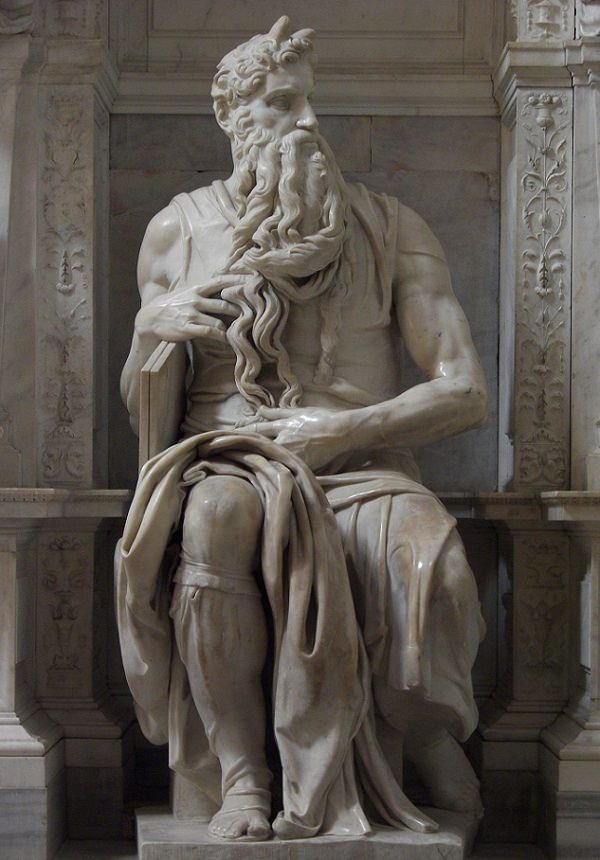
In front of courthouses, law firms, and legal institutions around the world, you can often see a solemn female figure: holding scales in one hand and a sword in the other, usually with her eyes blindfolded. This is the famous Lady Justice Justitia.
But did you know that this goddess symbolizing fairness and law didn’t appear overnight? Her image has evolved over thousands of years, blending the wisdom of ancient Greece with the rigor of ancient Rome. Today, we will delve into the meaning of the Lady Justice statue and take you through her legendary evolution from the Greek Themis to the Roman Justitia.
What Does Lady Justice Represent?
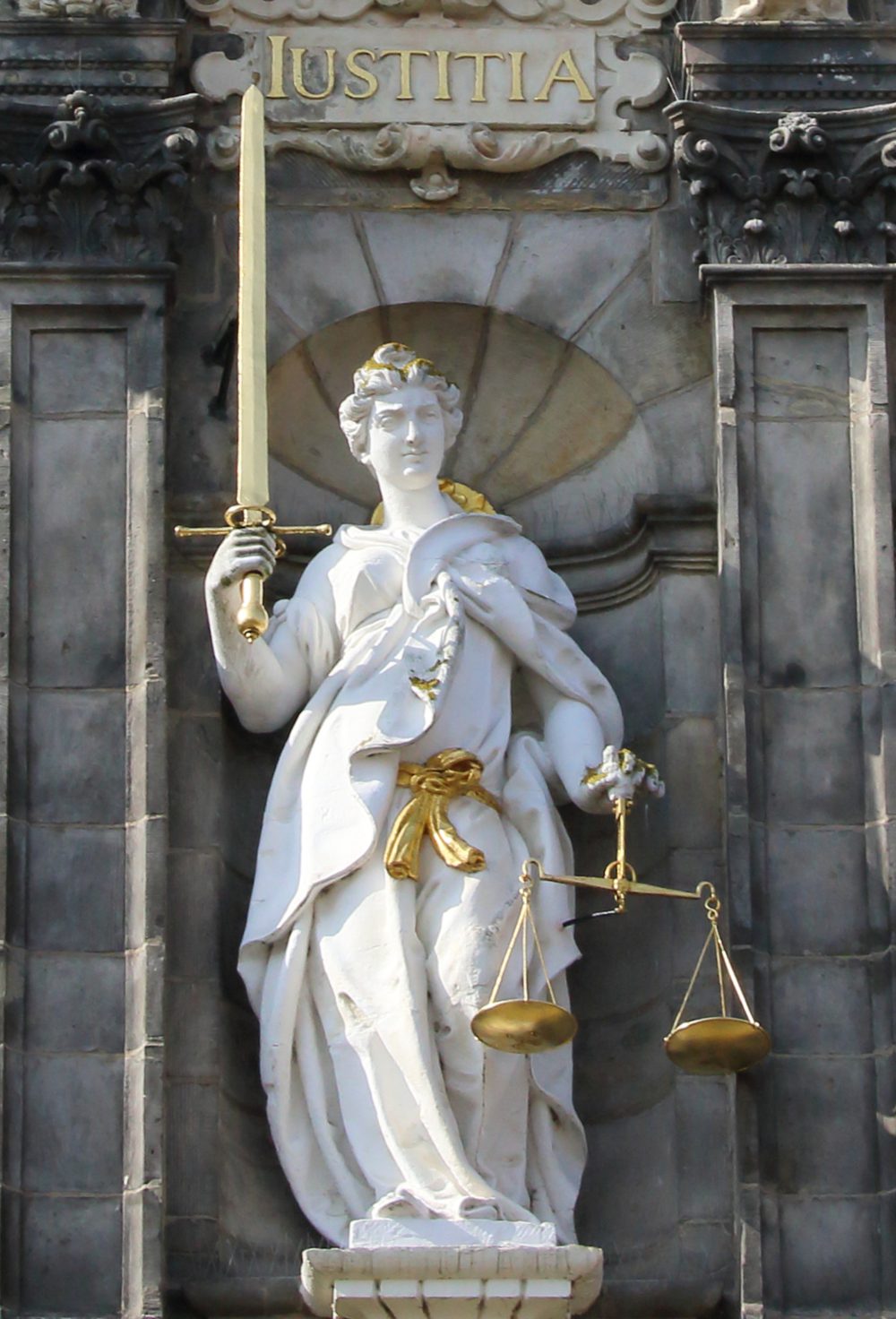
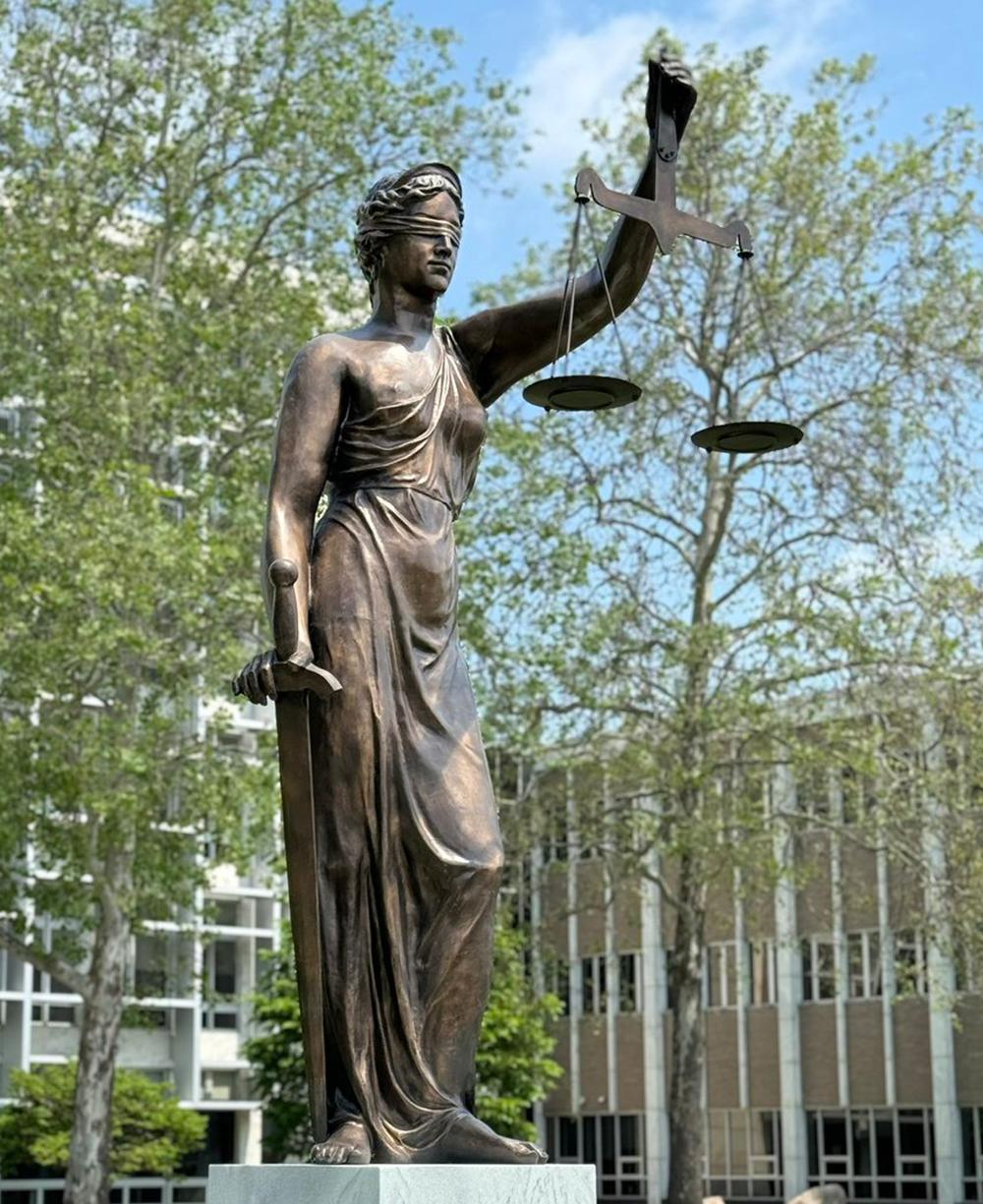
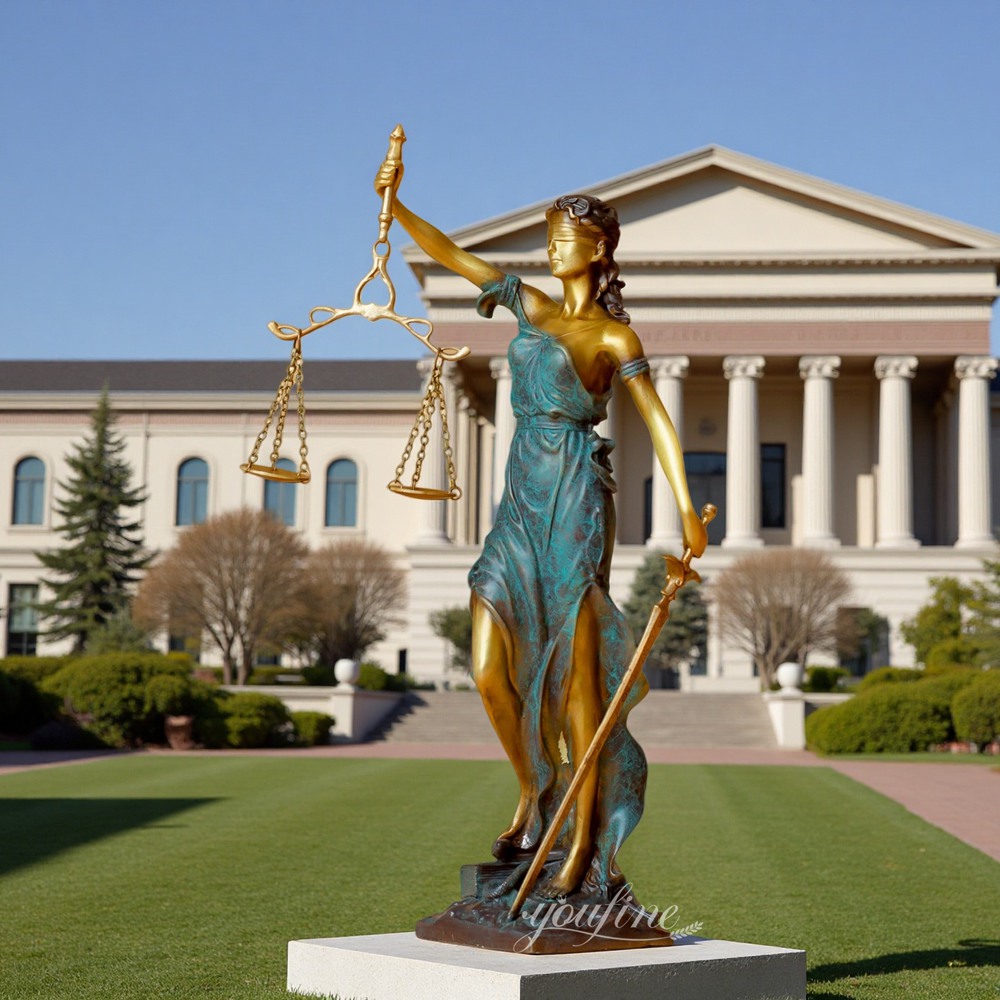
Every element of the Lady Justice statue carries profound legal symbolism. Understanding these symbols is key to understanding the spirit of the law:
- The Scales: Represent fairness and evidence. Lady Justice uses the scales to weigh the evidence supporting and opposing a claim, ensuring that judgments are based on rational assessment rather than emotional bias.
- The Sword: Represents power and enforcement. This double-edged sword signifies that justice possesses the power to render judgments. The double-edged design symbolizes that the law is equally binding on both the prosecution and the defense, and that the judgment is final and unassailable.
- The Blindfold: Represents objectivity and impartiality. This is the most prominent feature of the modern Lady Justice statue, symbolizing that everyone is equal before the law and that justice should not be influenced by wealth, power, or social status.
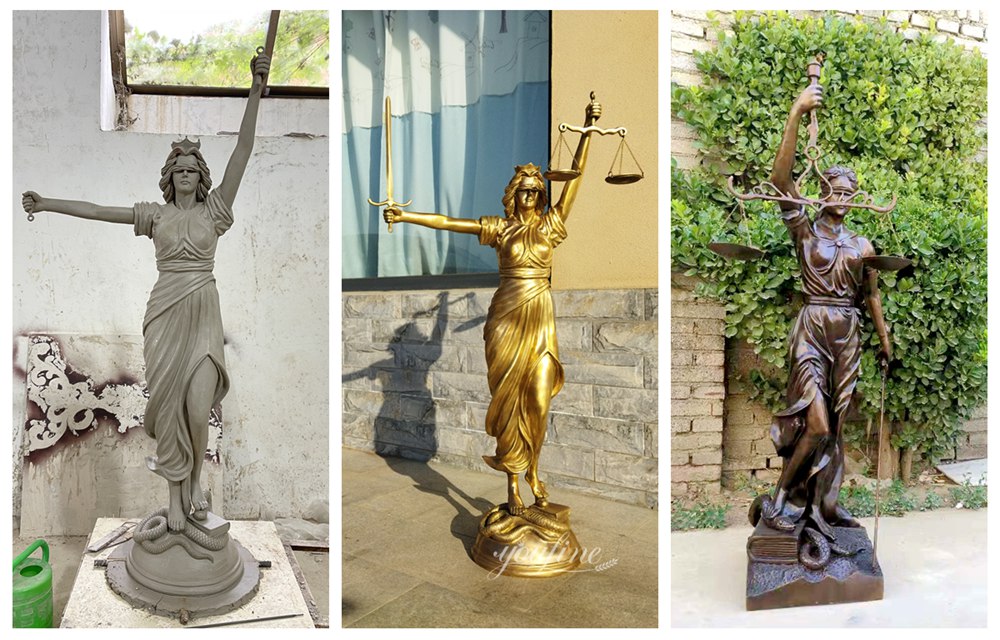
- The Snake and Book: The snake usually symbolizes evil or corruption, and the goddess trampling it underfoot symbolizes the complete triumph of justice over evil; the book at the bottom represents the authority of written law.
The Historical Evolution of the Goddess of Justice
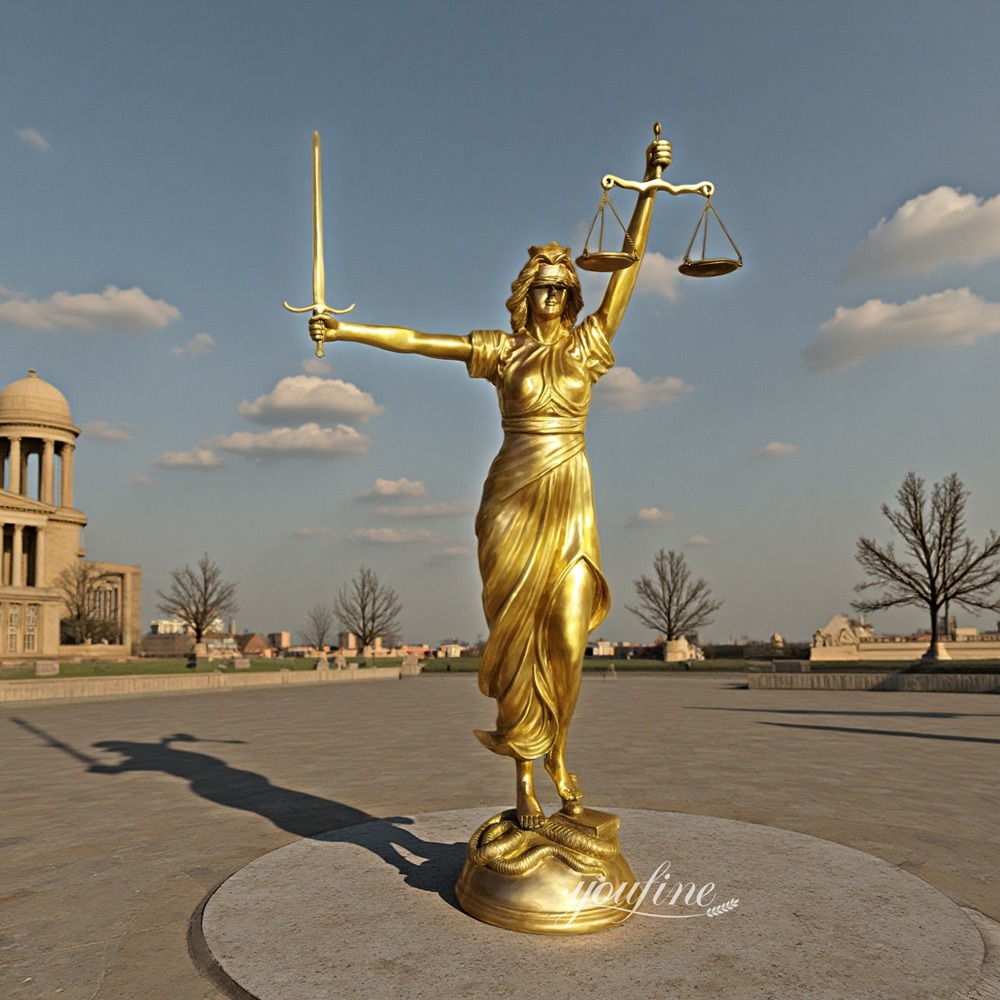
The image of the Goddess of Justice is not static; her evolution is actually a microcosm of the progress of the rule of law in human civilization.
Greek Origins: Themis
In ancient Greek mythology, Themis was a member of the Titan gods and an advisor to Zeus. She represented “natural law” and “divine order.” Early statues of Themis often did not have blindfolds, because as a goddess, she possessed the foresight to perceive all things in the world.
Roman Adaptation: Justitia
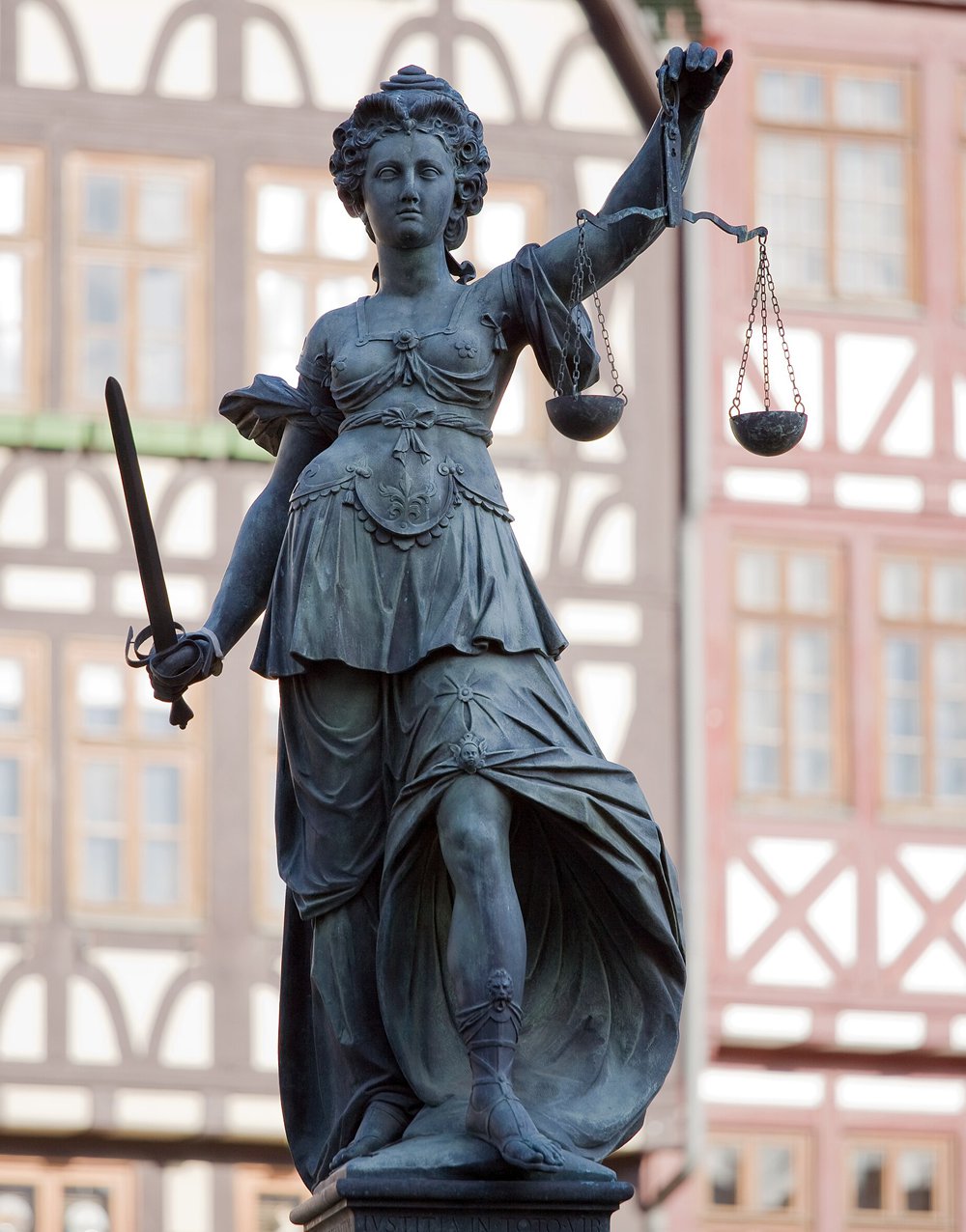
The Romans inherited the Greek image and personified it as Justitia. The Romans were more pragmatic; they brought “justice” down from the divine realm to the human world, making it a symbol of the civil legal system.
The Reversal of the “Blindfold”: From Satire to Sublimity
Interestingly, the blindfold only became popular in the 16th century. Initially, it was designed by artists to satirize the “incompetence” and “blindness to the truth” of the law. However, over time, this symbol was given a new, positive meaning: impartial justice.
Although the spirit of the goddess of justice originates from the Greek goddess Themis, the “Lady Justice” we know today is more closely related in image and spirit to the Roman goddess Justitia.
The Greek Goddess of Themis vs the Roman Goddess of Justitia
Although they are often confused, there are subtle yet crucial differences between the two in both visual representation and symbolism:
Comparison Between Greek Themis and Roman Justitia
| Feature | Greek Goddess Themis | Roman Goddess Justitia |
|---|---|---|
| Cultural Background | Ancient Greek mythology | Ancient Roman legal and political system |
| Core Meaning | Natural law, divine prophecy, sacred order | Written law, civic justice, and administrative punishment |
| Symbolic Focus | Cosmic and moral order | Legal fairness and judicial authority |
| Visual Representation | Usually not blindfolded; solemn and dignified | Commonly blindfolded in modern depictions, emphasizing objectivity |
| Objects Held | Scales, scroll, or torch | Scales and sword |
| Emphasis on Enforcement | Limited; focused on moral and natural order | Strong emphasis on legal enforcement and punishment |
| Symbolic Status | A Titan goddess with prophetic insight | The personification of law and social order |
| Typical Display Contexts | Mythological art, cultural or religious representations | Courthouses, judicial buildings, public institutions |
Generally speaking, Themis is closer to a symbol of “divine will and natural law,” while Justitia represents “institutionalized law and social order.”
The Modern Influence and Applications of the Statue of Lady Justice
Today, the statue of Lady Justice has transformed from a mythological figure into a symbol of the rule of law, widely applied in various settings:
- Courthouses and Prosecutor’s Offices: Large sculptures are often placed at the entrance, embodying the solemnity and fairness of the law.
- Law Firms: Small statues are displayed, showcasing professionalism, integrity, and fairness.
- Law Schools and Campuses: Serving as a symbol to inspire students to pursue justice.
- Public Spaces: Such as squares or rule of law-themed parks, evoking public recognition of the rule of law.
How to Choose the Right Lady Justice Sculpture for Your Space?
As a professional sculpture manufacturer, we recommend choosing from the following two dimensions:
Material Preference:
- Bronze: Possesses a sense of historical gravitas, suitable for formal, high-end office environments or outdoor plazas.
- Marble: Pure in color, suitable for modern interior design styles, emphasizing the flawless and pure nature of justice.
Size and Proportion:
- Indoor: A height between 60cm and 120cm is recommended, which, with a base, can create an excellent visual focal point.
- Outdoor: A height of 1.5m or more is recommended, considering the proportional harmony with the building facade.
FAQ:
Q: Why do some statues of Lady Justice not have a blindfold?
A: This is usually a tribute to the Greek prototype, Themis. In some historic courthouses (such as the Old Bailey in London), the lack of a blindfold symbolizes that justice possesses the wisdom to see through deception and discern the truth.
Q: Why does the sword in Lady Justice’s hand point downwards?
A: This symbolizes that while punishment exists, the law prioritizes balance (the scales) over violence. Only after a guilty verdict is reached will the sword of justice fall.
Conclusion
Whether it’s the natural order of Greece or the legal spirit of Rome, the statue of the Goddess of Justice constantly reminds us that true justice is impartial, based on evidence, and powerful.
Looking for the perfect statue of the Goddess of Justice? From classic bronze casting to sacred marble carving, we offer custom services in various sizes and materials. Contact us and let us help you create an artistic masterpiece that best embodies the dignity of the law.