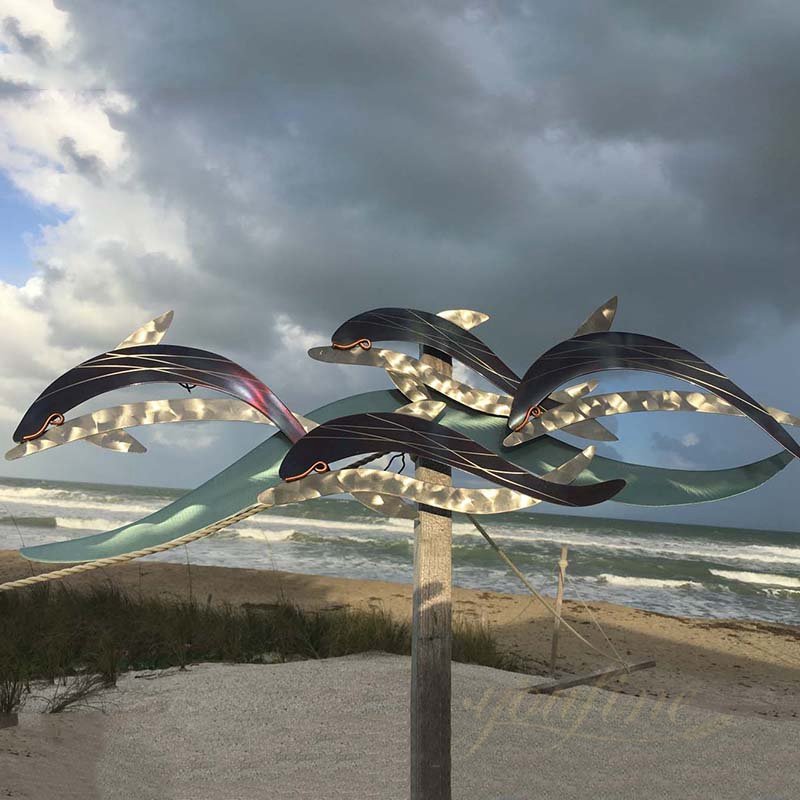
If you’re trying to choose a sculpture for a coastal setting—and you keep asking yourself whether the material can really stand up to salt air, or whether it will start to rust within just a few years—this article is for you.
From years of hands-on experience and many completed projects, we can tell you this: bronze and 316 stainless steel remain the two most trusted materials for metal sculpture by the sea. Both handle weather far better than ordinary materials, and both bring something special to a coastal scene. So how do you choose between them for your own project?
We’ll walk you through it step by step: how far you are from the sea → choosing a material and caring for it → style and size → installation. It will take about ten minutes to read, and by the end you’ll have a clear answer.
First, How Far Are You from the Sea?
Many people use “coastal” and “seaside” as if they were the same thing, but they’re really quite different. A house right on the waterfront and a home a few kilometers inland in a coastal city face completely different levels of salt. So before anything else, figure out where your space sits:
Here’s an honest note: distance is not the whole story. Two houses in the same row can feel very different—the one facing the sea gets far more salt than the sheltered one. So after checking the distance, also look at where the sculpture will stand: straight in the wind, or shielded by a building or trees? Distance sets the general direction; wind and shelter fine-tune it. Between the two, you’ll have a reliable picture.
Bronze or Stainless Steel: Which One Is Right for You?
With your location sorted, we come to the heart of it: choosing the material.
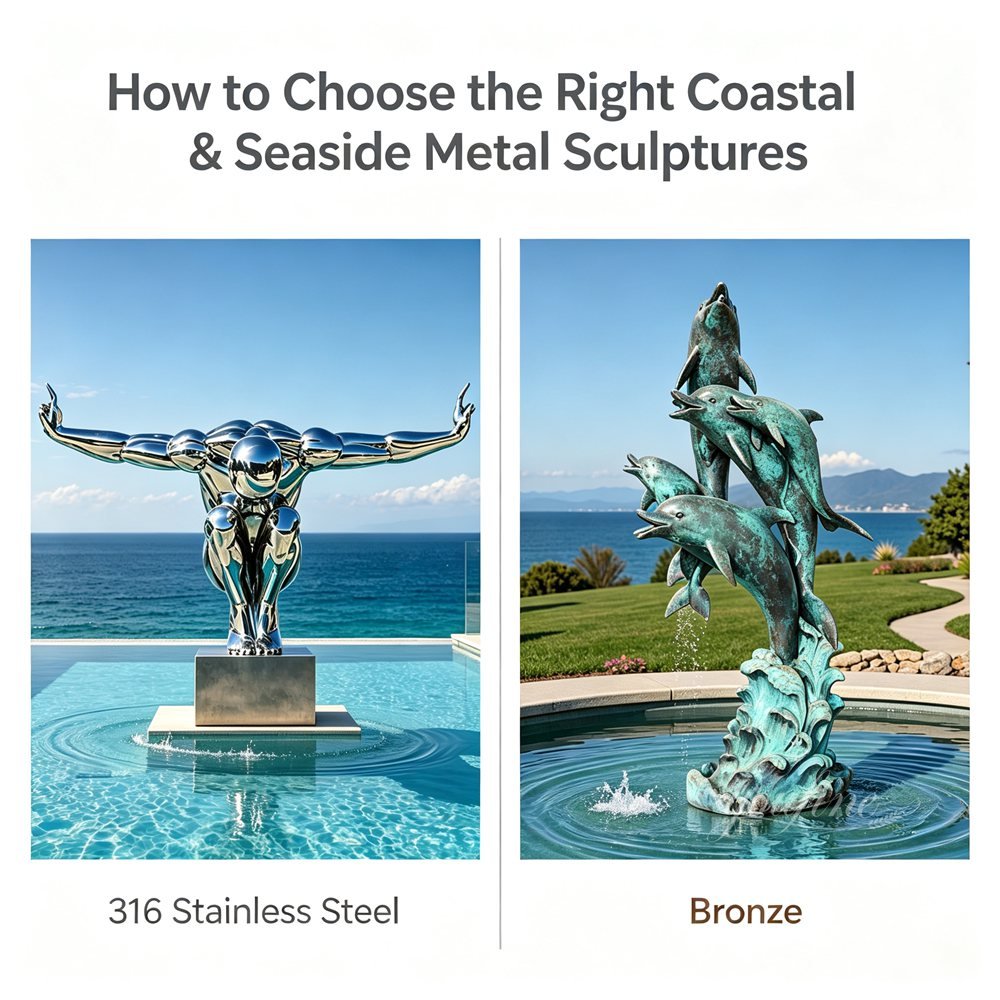
There are plenty of outdoor metal sculptures on the market, but by the sea only two really stand the test of time: bronze and stainless steel. Neither is “better”—it’s about which one suits you.
In one sentence: bronze gets more beautiful with age; stainless steel stays easy and effortless. Choosing between them is really about choosing the relationship you want with your piece.
A quick word about price, since we’re on the topic of materials: coastal sculptures don’t come with a “standard price,” because size, complexity of craftsmanship, the amount of material, and whether the piece is an original or a limited edition all affect the final cost. For a general sense of pricing, you can check two articles we’ve written: How Much Does a Life Size Statue Cost? and How Much Does a Custom Statue Cost?
Caring for Bronze and Stainless Steel by the Sea
This is the part people care about most—and often overlook. It sits right after the material comparison on purpose, because how much care a piece needs is one of the most important things to weigh when choosing a material.
Don’t worry—seaside care is not as demanding as it sounds. It all comes down to one simple idea: rinse your sculpture regularly with fresh water to wash the salt away. Salt is the biggest enemy of sculpture by the sea, and fresh water is its cure. Rinsing once a month is usually enough, plus one extra rinse after a big storm or heavy rain.
This is also exactly what professional conservators recommend. In Caring for Outdoor Sculptures, professional conservator Rosa Lowinger lists regular fresh-water rinsing as the most basic maintenance step for outdoor art.
For a complete rundown of outdoor sculpture care—cleaning, protective coatings, and material-specific tips—see our earlier article, How to Preserve Outdoor Sculptures?.
Bronze: it ages gracefully, and needs a little of your time
By the sea, the most noticeable change in bronze is that its surface oxidizes faster, so the color deepens more quickly than inland. Many owners worry the first time they see it: “Is it damaged?” No—it’s fine. The dark layer that slowly forms on bronze is the patina, and it acts as the sculpture’s own protective coating. The more stable it becomes, the better it shields the metal underneath.
One small point about color is worth knowing: an even, deep brown patina is healthy. Some bronzes gradually take on an even greenish tone over time—that, too, is a stable protective layer, so there’s no need to worry. What you should watch for is powdery, patchy, loose light-green corrosion—professionals call it “bronze disease.” It means the protective layer has broken down, and it’s best to have a professional treat it rather than scrub it yourself. (For more background on protecting outdoor bronze and on bronze disease, you can read this Wikipedia article.)
Day-to-day care is simple:
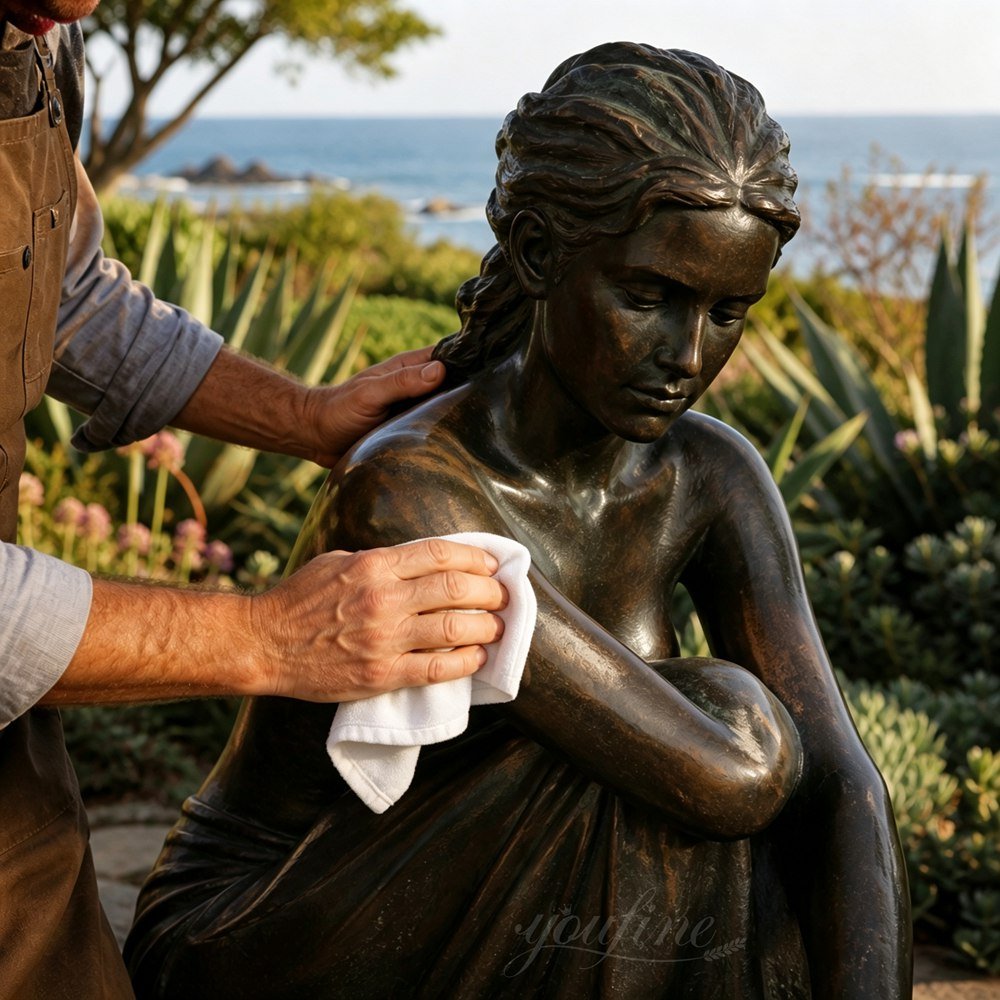
- Wax regularly: apply a thin coat of microcrystalline wax and buff with a soft cloth, once or twice a year. While waxing, take a quick look to make sure the wax layer is even and nothing is left exposed.
- Clean gently: plain water and a soft cloth are enough. Avoid steel wool and acidic or alkaline cleaners.
- Act quickly on messes: don’t let bird droppings or tree sap sit on the surface.
Every bronze piece we ship is given a base protective treatment before delivery. Depending on where you live and what you prefer, we’ll recommend either the “natural patina + regular waxing” route or a lacquer-style protective coating—for waterfront clients, we usually suggest the latter.
Stainless steel: not all stainless steel is the same
Many people assume stainless steel can never rust—that’s the biggest misunderstanding. Stainless steel comes in different grades. By the sea, look for 316—or, even better, 316L. The 316 grade contains molybdenum, which is exactly what resists the chloride in salt air. 316L has even lower carbon content, so welded areas stay sound and corrosion resistance is more stable—which is why it’s the standard choice in marine engineering (see this technical article from stainless steel producer Outokumpu). Grades like 201 and 304 are fine indoors or inland, but after years of salt and wind by the sea they can develop scattered rust spots that have to be sanded out later—a real hassle. Want to know exactly how these grades differ? See our earlier article, What Are the Differences Between 201, 304 and 316 Stainless Steel?.
There’s also an easily overlooked step: passivation. After stainless steel is machined and welded, tiny iron particles and impurities remain on the surface. Left untreated, those spots become the starting points for future rust. The professional approach is an acid pickling and passivation treatment before the piece leaves the workshop—it cleans the surface and lets a complete protective film reform. This is why we often say: two pieces both labeled “316” can have very different lives by the sea, depending on how they were made.
Day-to-day care is simple:
- Rinse regularly: plain water to wash off salt and dust, about once a month, plus once more after a storm.
- Clean gently: use mild detergent when dirty, wiping along the grain of the surface.
- Skip the steel wool: it scratches the surface, and scratches become places where salt hides.
- Smoother surfaces are easier: mirror-polished or finely brushed finishes don’t hold salt and grime as easily—by the sea, they’re the better choice.
Brownish “tea stain”-like discoloration is the most common problem on stainless steel near the coast. For what causes it and how to clean it, check out this guide from the Australian Stainless Steel Development Association (ASSDA).
There’s a lot more to cleaning and long-term stainless steel care. For the full picture, see our guide, How to Clean and Maintain Stainless Steel Sculptures.
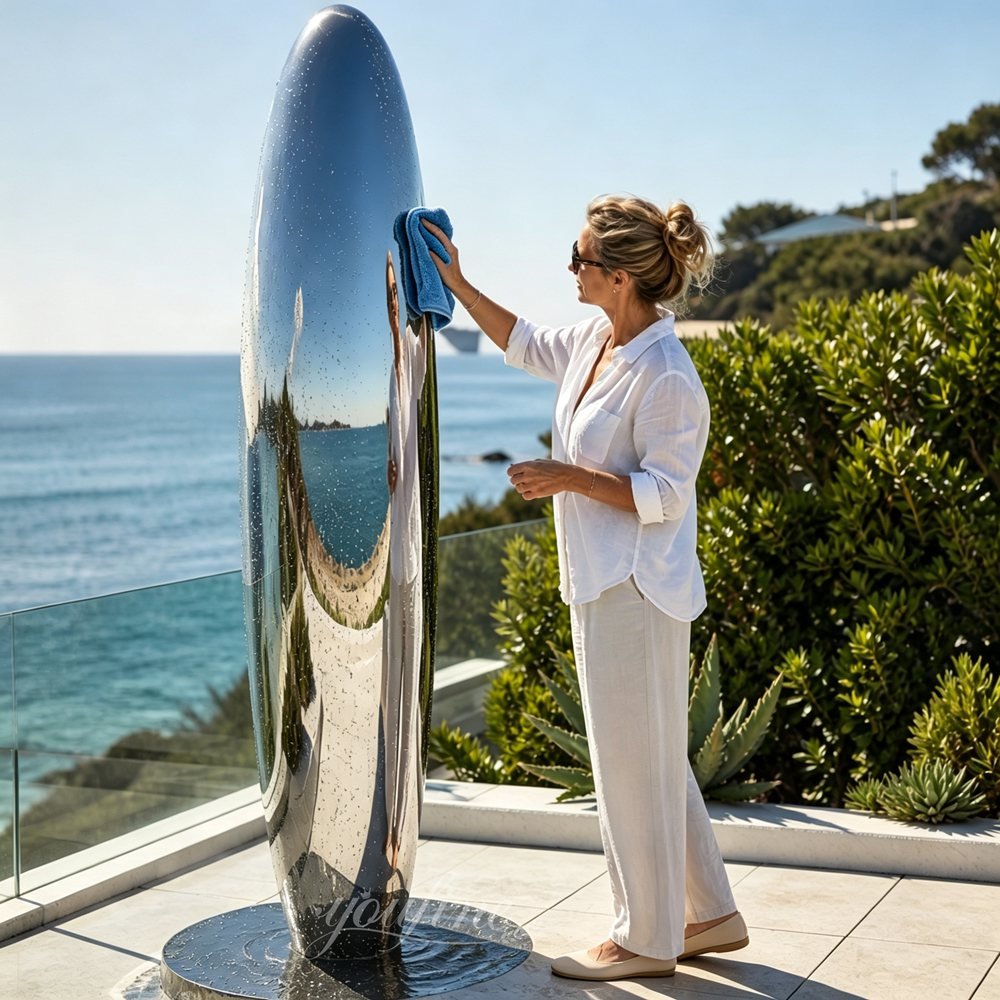
Style: Let Your Sculpture Complete Your Space
With the material decided, we come to the fun part—choosing the look.
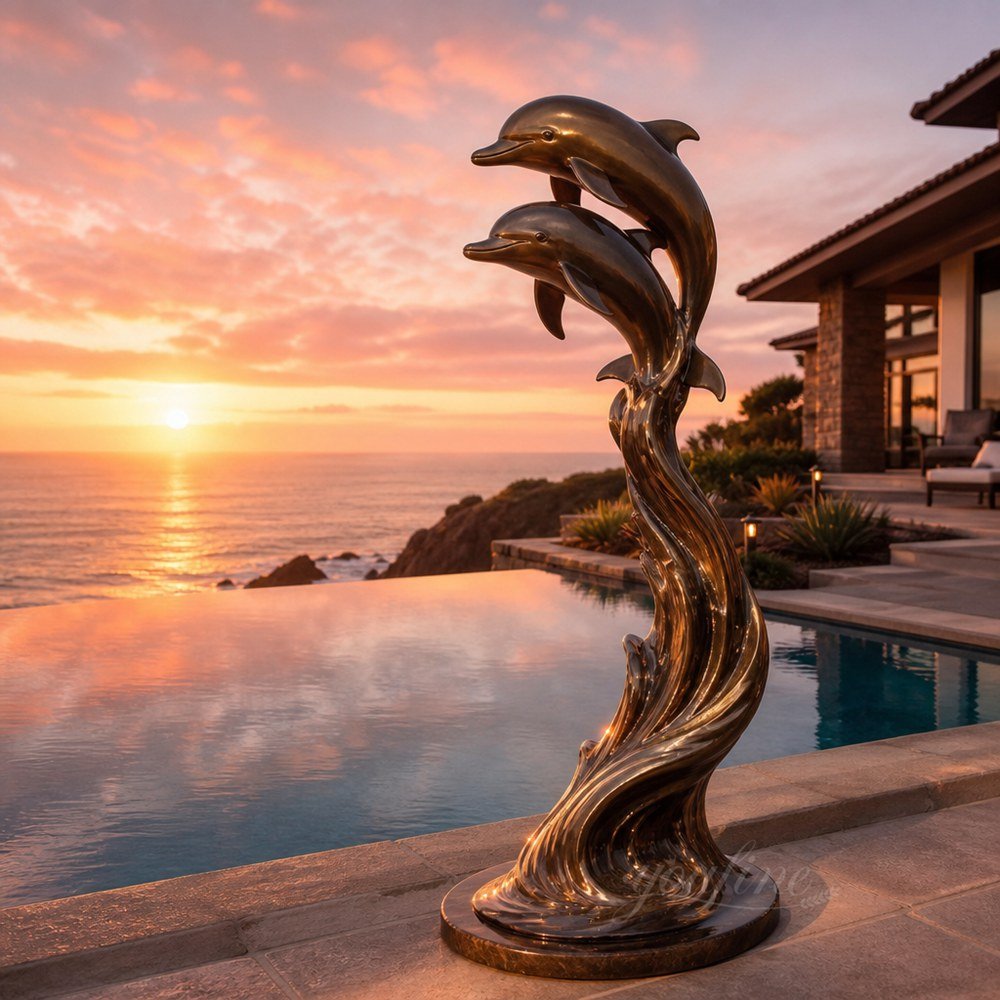
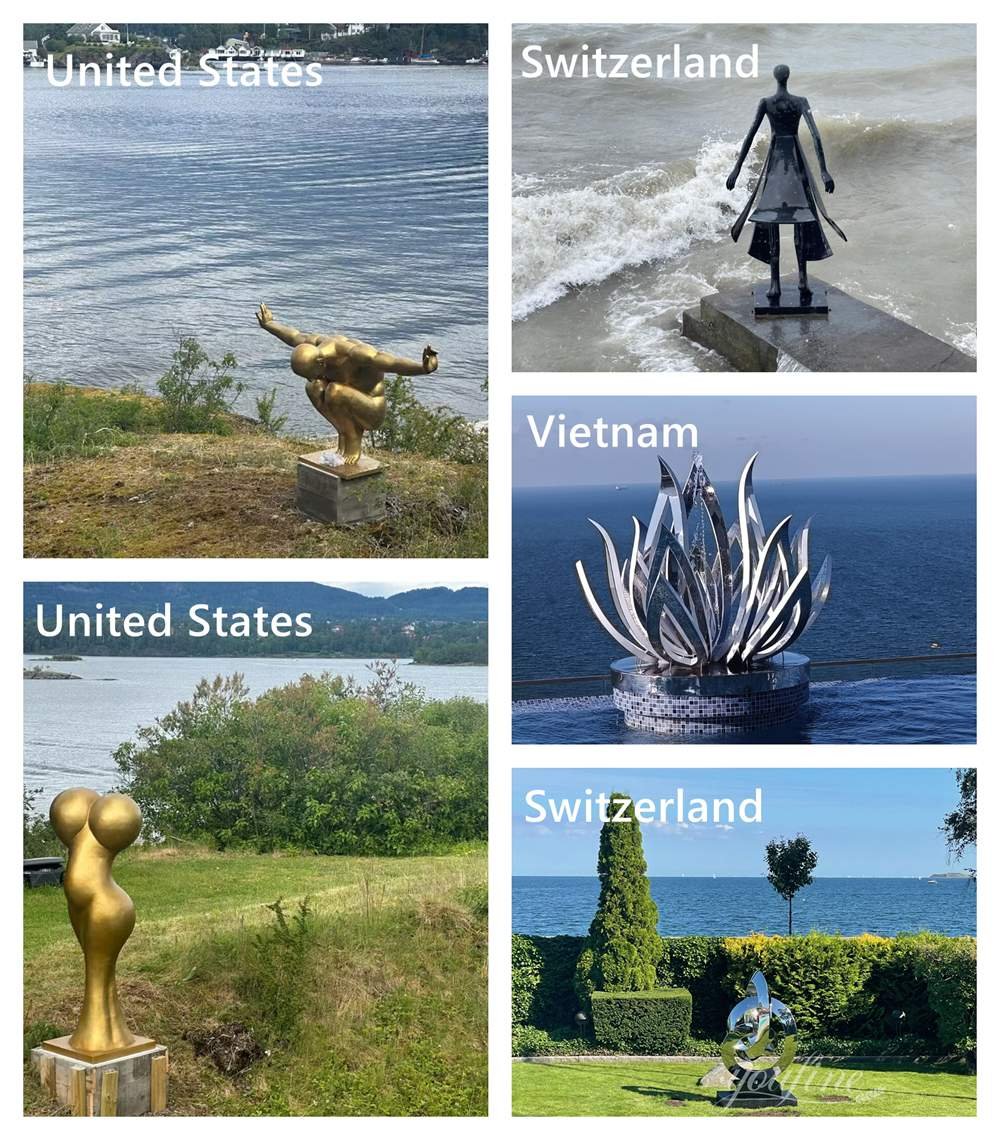
By the sea, many people immediately think of marine themes—and they’re right to: pieces like these are the most natural match for a seaside setting. A sculpture that echoes the ocean makes the space feel like it finally has its own voice. Popular seaside themes fall into a few groups, so here are some directions for you:
- Marine life & the sea: dolphins, waves, whales and similar forms that speak directly to the water beside you
- Figures with feeling: mermaids, divers, surfers—pieces that add story and movement to a space
- Flowing & abstract: geometric and linear forms—modern, timeless, and easy to live with
No theme is better than another. What matters is whether it clicks with the character of your space. Then think about where it will stand:
- Terrace or balcony: closest to where you sit—pick a piece with fine details that reward a close look
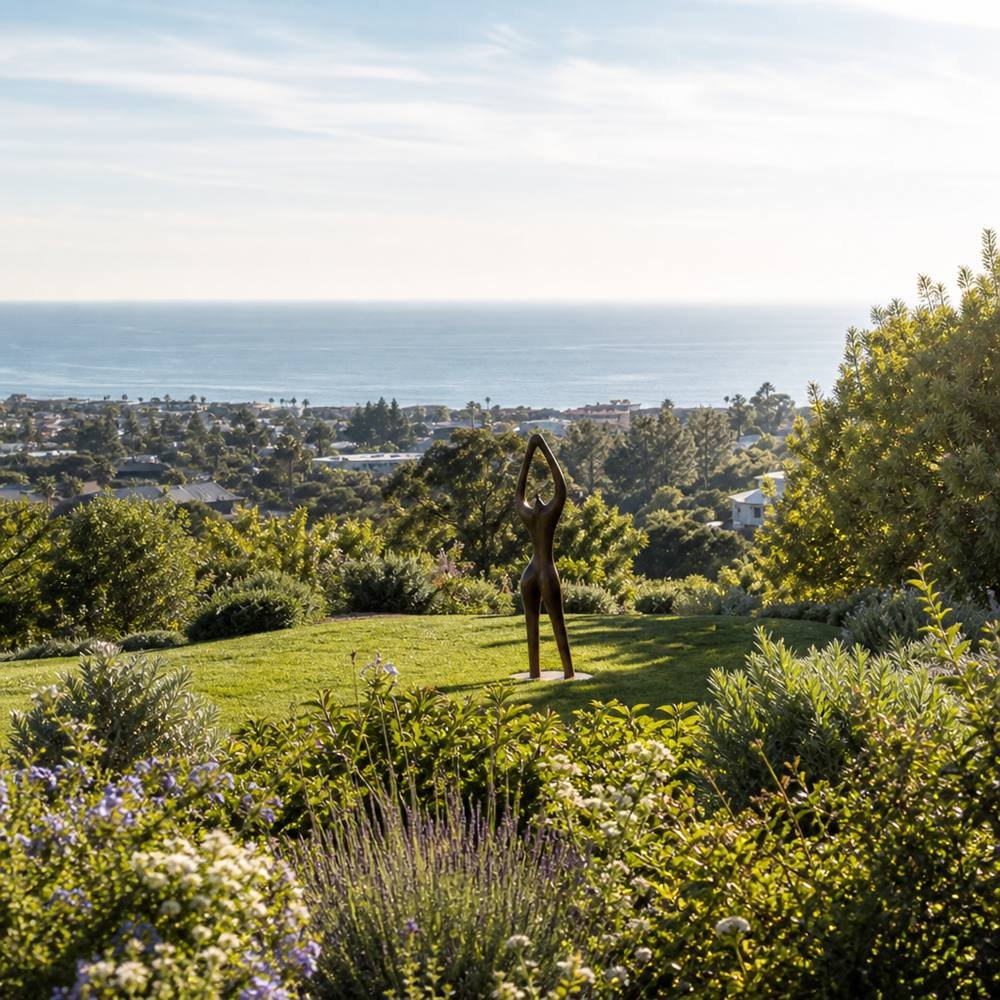
- An open lawn or garden: the focal point seen from inside—it needs real presence
- Near the entrance: the first thing visitors see—something warm and welcoming works best
- Beside water (pool, garden pond): pieces with flowing lines or a shimmering surface echo the water beautifully
- A quiet corner: a calm, contemplative piece—your own little spot to daydream
For more ideas, browse our seaside sculpture collection, which features a number of works made for the coast.
Size: A Special Rule by the Sea
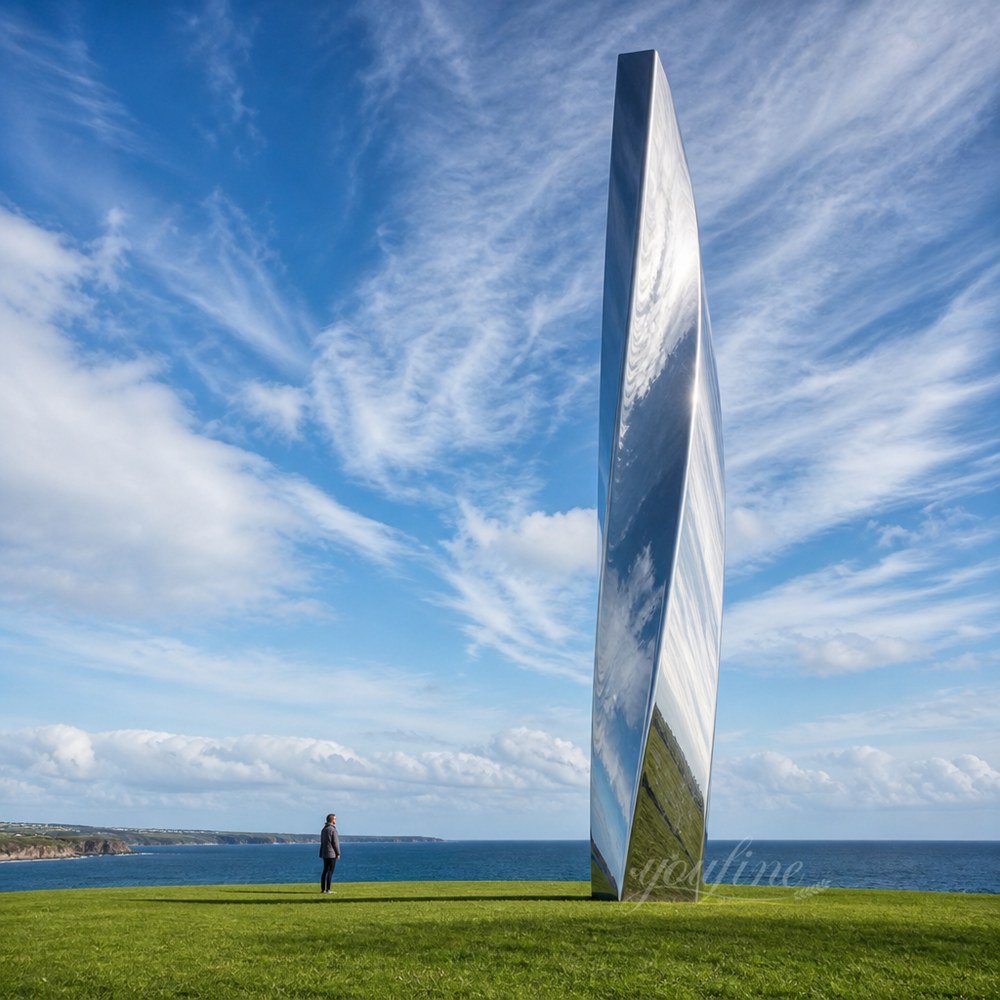
The most common mistake in sizing is choosing too small. In an ordinary garden, you size a sculpture by the area of the space. But by the sea there’s one special situation:
The background is simply too big. An endless expanse of sea and sky is a natural point of comparison. If the sculpture isn’t big enough, it will look timid next to it—more like a small ornament than a statement.
So by the sea, go boldly a size larger than your first instinct. Look at it from your window: the sculpture should be the main character of the view, not a tiny dot lost in the seascape. If you’re unsure, judge it from “inside looking out”—that’s far more reliable than standing right next to it.
Installation & Safety: Coastal Wind Is No Joke
The second most common accident by the sea is a sculpture being blown over. There are always a few big windy days every year, and hurricane season needs no introduction—when a beautiful sculpture falls, it can at best be dented and damaged, and at worst hurt someone or something. Safety deserves to be taken seriously:
- Base and ballast: the closer to the sea, the stronger the wind. The base should be designed for your local wind conditions—”roughly good enough” is not good enough.
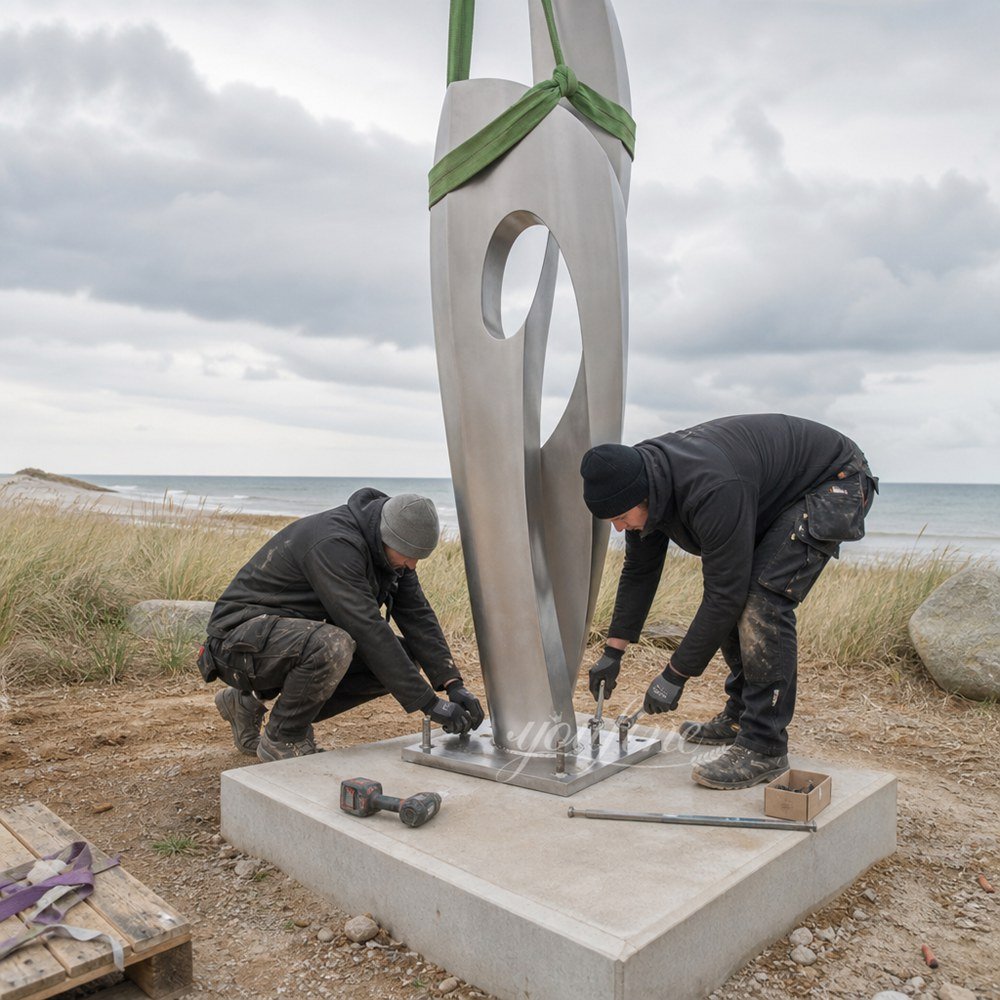
- Sandy ground / embedded base: sand is soft and unstable. We recommend a cast-in-place concrete footing—the footing is poured into the ground, and the sculpture is bolted onto it through embedded anchor bolts, which gives the strongest wind resistance. On hard surfaces (terraces, paving), bolting with anchor bolts plus ballast is sufficient. The position of the footing and the anchor bolt holes should be confirmed before pouring.
- Marine-grade fasteners: choose 316-grade fixings. By the sea, this is a must, not an upgrade.
- Large sculptures: if lifting equipment is needed, we’ll provide professional installation guidance or arrange a nearby experienced installation team to complete the job for you.
Also, after every hurricane season, check the base and fasteners for looseness—a few minutes of checking can prevent a big problem. And when you buy, always ask how installation is done and whether it’s included. A sculpture that stands firm is the only kind that can be truly beautiful.
Not Quite Right Off the Shelf? Custom Could Fit You Better
If you’ve browsed around and stock pieces always feel slightly off in size or theme—there’s no need to settle.
Custom commissioning is a well-established path, especially for special settings like the coast. A piece made for your space and your idea will often fit your needs better than a “close enough” stock piece. It’s not a “fancier” option—just another route that may suit you better. If a stock piece already makes you happy, that’s wonderful too.
You don’t need to be a professional to commission a piece. Just prepare three things:
- Photos of the site (take them from several angles)
- A few reference images you like (any style is fine)
- A rough idea (what feeling you want, where it will go, roughly what size)
We’ll handle the rest: material plan, corrosion protection, size advice, and production timeline—we’ll walk you through every step. Custom work simply asks for a little more patience, and in return you get a piece that’s truly yours.
A Two-Minute Checklist Before You Order
Finally, let’s slow down for a simple checklist:
Ask yourself:
- How far is my site from the sea—which tier in the table does it fall into?
- What do I want it to look like in ten years—more and more character, or still brand new?
- What level of care can I commit to: a rinse once a month and a wax once a year—can I manage that?
- Do I have a realistic expectation of price—understanding that it’s driven mainly by size, craftsmanship, and material, rather than simply picking the cheapest option?
Ask us (or any manufacturer you’re considering):
- Is it 316 or 316L?
- What treatment is done before delivery? (e.g., passivation, protective coating)
- Do you have experience with coastal installations? How is installation done, and what does it cost?
- What does the warranty cover? Do you provide care instructions?
Feel free to ask all of these—we’re happy to walk you through each one.

Frequently Asked Questions
Will bronze or stainless steel sculpture rust by the sea?
Bronze won’t “rust through”—the darkening of its surface is normal, and that patina is its own protective layer. With stainless steel, choose 316/316L, and you won’t see obvious corrosion even after years by the sea. That said, “never rust” is an exaggeration—any metal exposed to salt air for decades needs proper care and cleaning.
Which lasts longer by the sea—bronze or stainless?
Both are durable and can last for decades with proper care. The difference isn’t lifespan but character: bronze gains depth and charm over time, while stainless steel stays clean and new-looking.
How often should I rinse with fresh water?
About once a month in normal conditions, plus one extra rinse after storms or heavy rain—just to wash the salt off.
Does bronze need waxing? How often?
Yes—once or twice a year. Apply a thin coat of microcrystalline wax and buff it. If you’d rather not do it yourself, a professional can apply a protective coating that lasts longer.
Can I place a marble or stone sculpture by the sea?
You can, but it’s a path that needs more attention: stone is porous, so salt can penetrate and crystallize, which may cause the surface to flake. It needs breathable sealers and more careful maintenance. Neither metal nor stone is “better”—it depends on your taste and how much effort you’re willing to invest.
Is corten steel (weathering steel) suitable for the coast?
We wouldn’t recommend it. Corten protects itself with a layer of rust, but in the chloride-heavy coastal environment that rust layer struggles to stabilize, and the piece may keep “bleeding” rust stains. To compare the pros and cons of different materials, take a look at our earlier article, The 5 Most Common Materials Used in Sculpture.
Does coastal installation need special treatment?
Yes. Use 316 marine-grade fasteners, design the base for local wind conditions with ballast or deep embedment, and on sandy ground, build a properly reinforced foundation.
What’s the best way to light a sculpture at night by the sea?
Low, upward lighting shows off the silhouette best. Warm light suits bronze and brings out its patina; cooler light suits stainless steel and makes it look crisp. That said, lighting is the icing on the cake—choose the right sculpture first.
Final Thoughts
A truly good sculpture becomes the piece with the most stories in your outdoor space. It will watch countless sunrises and sunsets with you and weather season after season of wind and rain; over the years, every change in its texture and color is a shared mark carved by time.
If you’ve already found a seaside sculpture you love, or if you have a custom design or site-matching need, feel free to contact us directly. Send us photos of your site, and we’ll give you professional advice on material, size, and installation—along with full-service support from scene styling and production to on-site installation.
We’re always here—we look forward to talking about your coastal space.