Quick Answer: Statue vs Sculpture in One Sentence
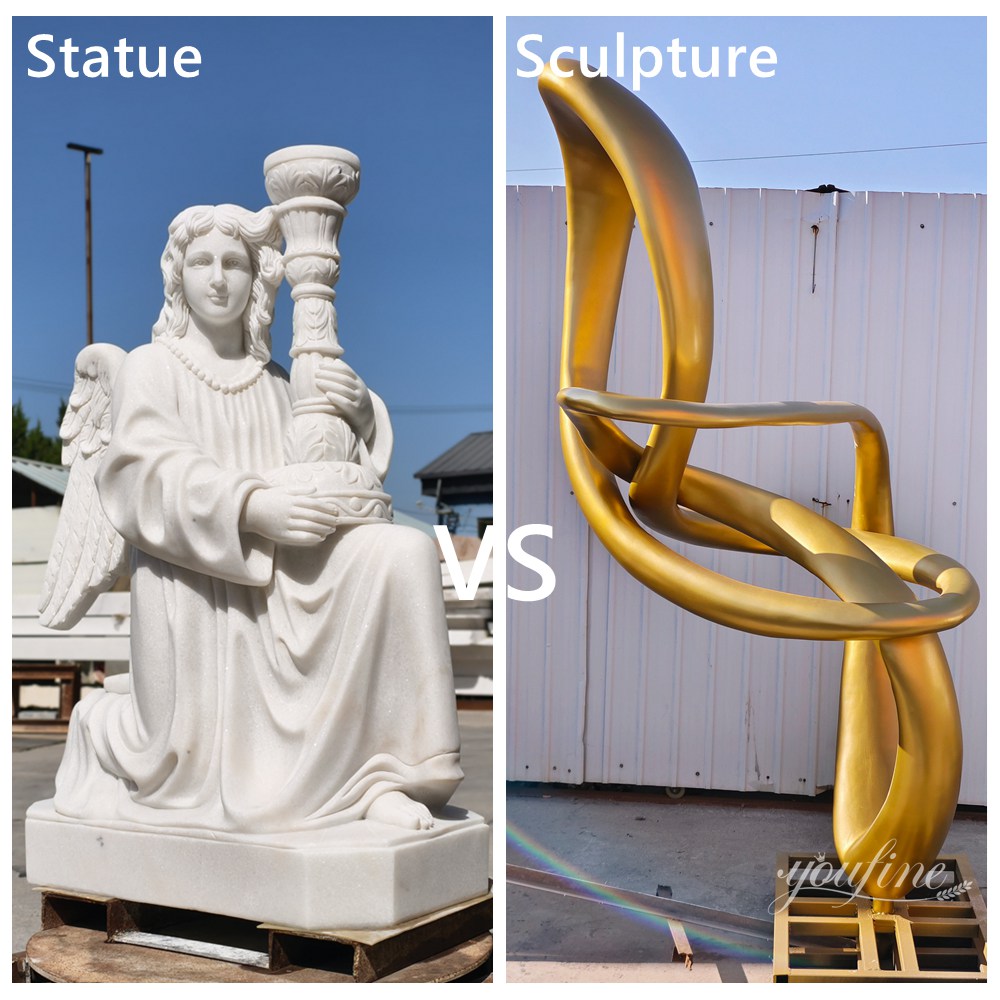
All statues are sculptures, but not all sculptures are statues.
- A statue is a type of sculpture that represents a recognizable human or animal figure.
- A sculpture is a broader term that includes all three-dimensional artworks, whether realistic or abstract.
Key Differences Between Sculpture and Statue
Before we dive into the details, here is a high-level breakdown of the 7 core distinctions:
Overview Comparison Table
| Feature | Statue | Sculpture |
|---|---|---|
| Primary Subject | Figurative (people, animals, deities) | Unlimited subjects including abstract, conceptual, and geometric forms |
| Core Purpose | Commemoration and honoring individuals or events | Artistic expression, creativity, and aesthetic exploration |
| Representation | Realistic and easily recognizable | Ranges from realistic to non-representational (abstract or conceptual) |
| Form & Placement | Usually free-standing; commonly used in public monuments and memorials | Can be free-standing, relief sculpture, wall-mounted, or installation art |
| Materials | Durable materials such as bronze, marble, and stone | Wide variety including metal, wood, resin, fiberglass, and mixed media |
| Scale | Typically life-size or larger-than-life (colossal) | Ranges from miniature artworks to large-scale environmental or landscape installations |
| Technical Focus | Emphasis on anatomical accuracy and lifelike expression (capturing the “soul”) | Emphasis on form, texture, material interaction, and artistic experimentation |
Detailed Analysis
-
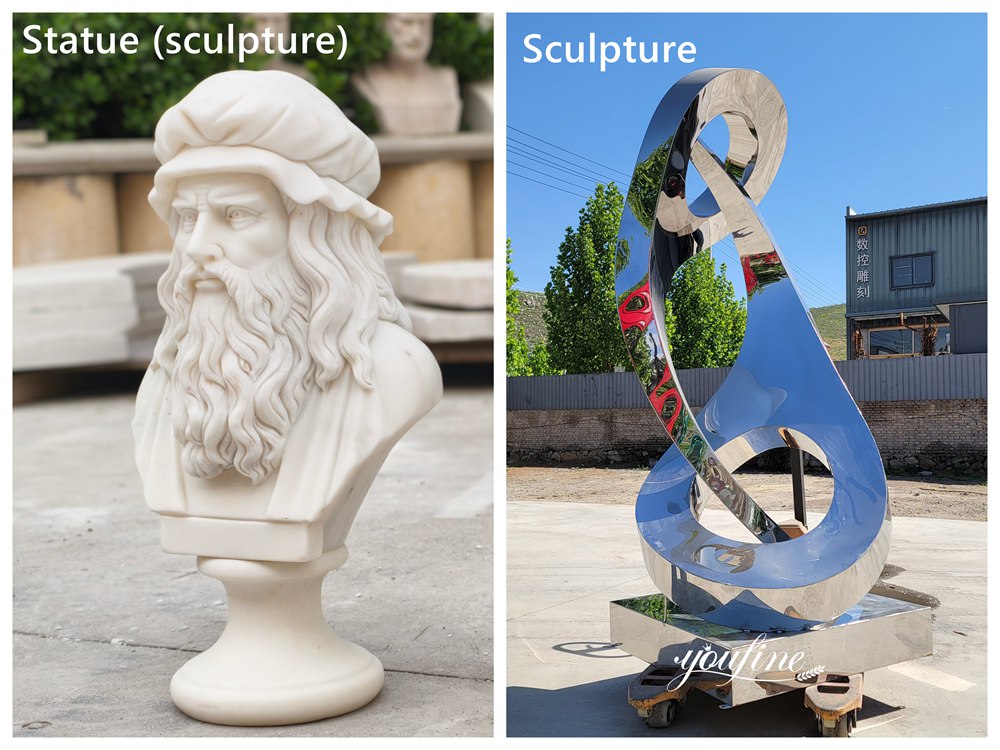
Definition & Scope
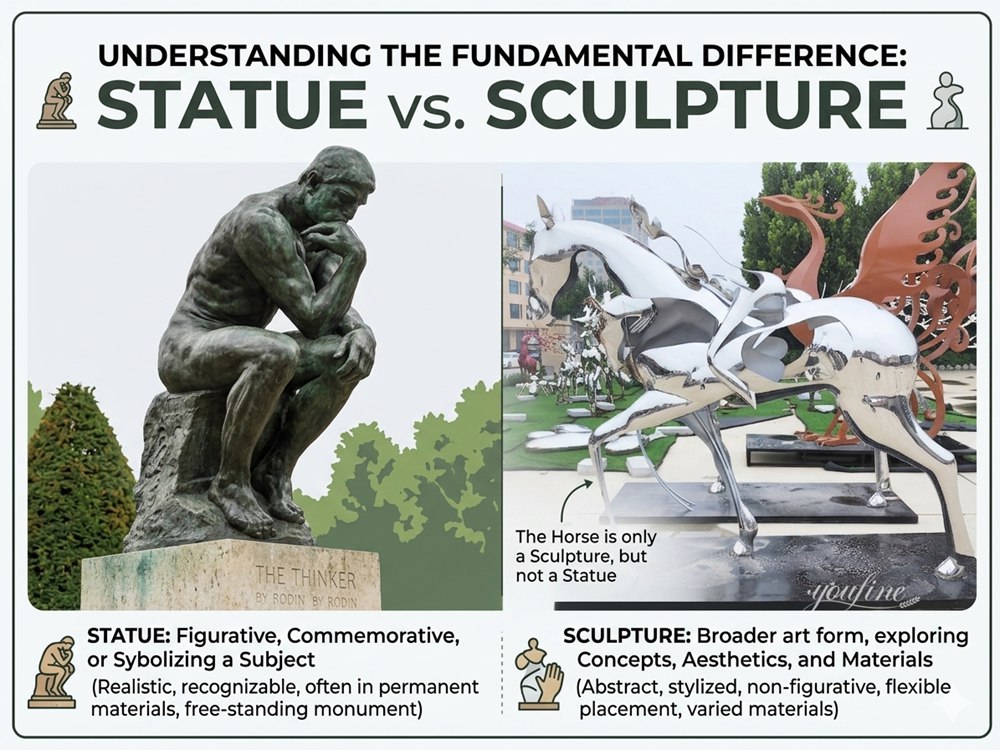
A statue is a figurative representation. It has a specific “subject.” A sculpture is the “overarching art form.” For example, a marble bust of a president is a statue (and a sculpture), but a welded metal shape representing “anxiety” is only a sculpture.
-
Purpose & Intent
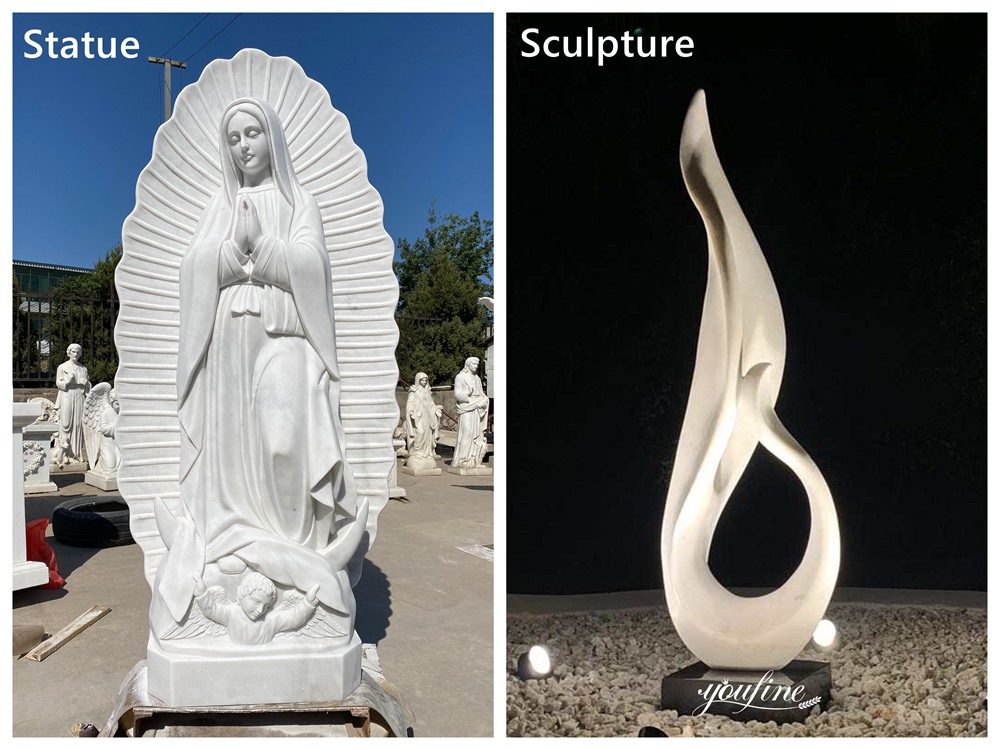
Statues are generally created to honor, commemorate, or symbolize a specific subject. They tell a story of a person or event.
Sculptures, however, often focus on exploring concepts or purely aesthetic beauty.
-
Representation & Style
Statues are almost always realistic and recognizable. In contrast, a sculpture can be stylized, abstract, or completely non-representational, focusing on how the material interacts with light and space.
-
Form & Placement
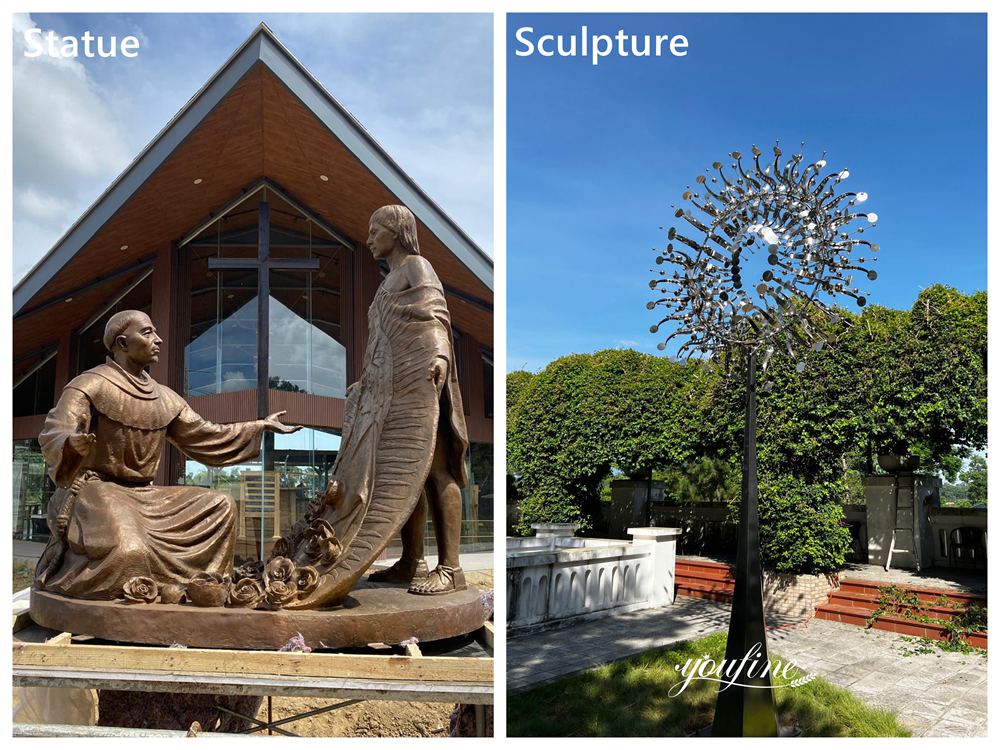
Statues are frequently designed for public spaces as monuments. They are usually free-standing.
Sculptures have more freedom; they can be reliefs (attached to a wall), kinetic (moving), or integrated into the architecture itself.
-
Materials
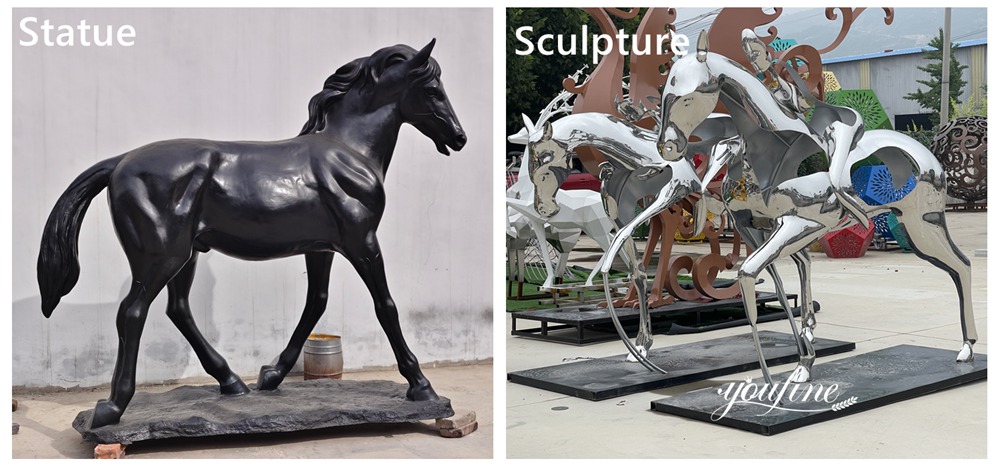
Because statues often serve as legacies, they are made of permanent materials like bronze, marble, or granite.
Sculptures can experiment with a wider array of media, including glass, plastic, or even mixed media.
-
Scale & Detail
A statue is often “heroic” or life-size to create a connection with the viewer. The detailed focus is on anatomical precision and capturing the “soul” of the subject.
A sculpture might prioritize the texture of the metal or the flow of the shape, regardless of biological accuracy.
-
Complexity: Anatomy vs. Artistry
Crafting a statue requires deep knowledge of human anatomy.
A sculpture follows artistic conception, where the rules of physics and imagination take precedence over the rules of biology.
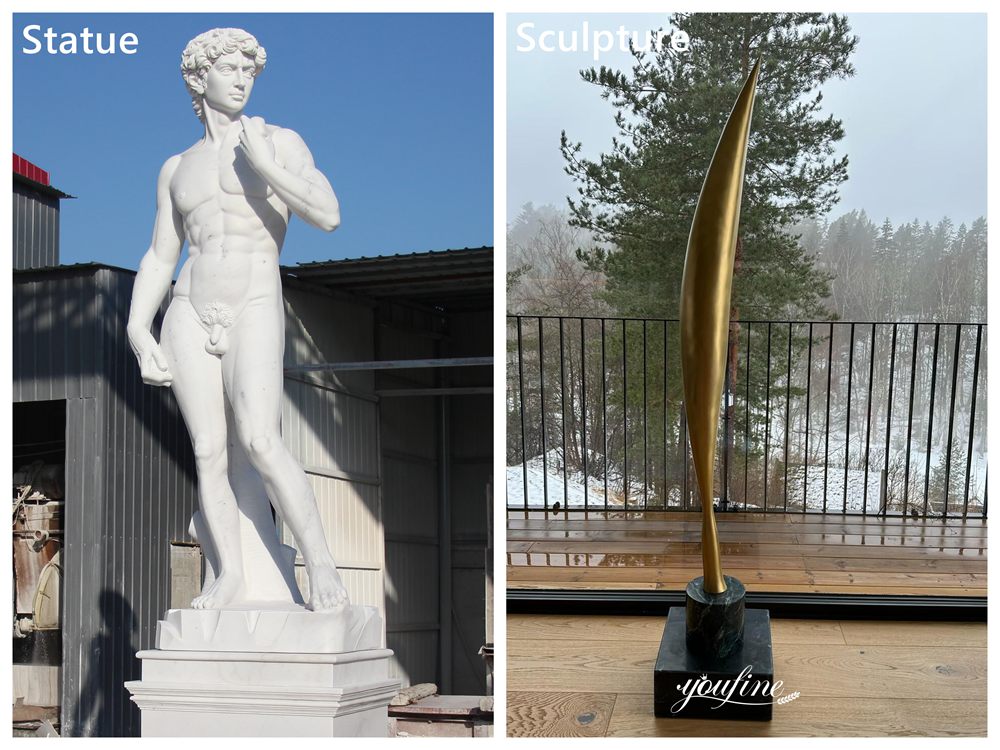
How to Quickly Tell the Difference
You can identify them easily with a few simple questions:
- Does it look like a real person or animal? → It’s likely a statue
- Is it abstract or hard to recognize? → It’s likely a sculpture
- Is it meant to honor someone? → Usually a statue
- Is it meant to express an idea or emotion? → Usually a sculpture
If you find this topic confusing, the following video provides a simple and visual explanation of the key differences between statues and sculptures:
Key takeaway from the video:
– Statues are typically realistic and used for commemoration
– Sculptures can be abstract and focus on artistic expression
The Factory Perspective — Which is Right for Your Project?
With 40 years of experience in fine sculpture craftsmanship, we’ve found that the choice depends on your site’s mission:
- Choose a Statue if: You are developing a memorial park, a private estate garden to honor a family legacy, or a civic square dedicated to a historical figure. The goal here is tradition and respect.
- Choose a Sculpture if: You are designing for a modern corporate headquarters, a luxury hotel lobby, or a contemporary urban plaza. The goal here is innovation and visual impact.
At ArtSculptureGallery, we master both. Whether it’s a 10-meter stainless steel abstract landmark or a meticulously carved Carrara marble bust, our skilled team ensures your vision stands the test of time.
FAQ
Why isn’t the Statue of Liberty called the “Sculpture of Liberty”?
Because it is a figurative representation of a deity (Lady Liberty). Its primary function is to symbolize an ideal through a human form, making “Statue” the more accurate term.
Can a statue be abstract?
This is a “grey area.” Usually, if it’s too abstract to recognize a person/animal, it’s called a sculpture. However, stylized figures (like Giacometti’s thin men) are often called statues because the human essence remains.
Which is more expensive?
Typically, Statues incur higher labor costs due to the intricate detail required for faces and hands. However, large-scale Sculptures can involve complex structural engineering that also increases the budget.
Can a statue be a sculpture?
Yes. All statues are sculptures. A statue is simply a specific sub-category of sculpture that represents a person, animal, or deity.
What qualifies as a statue?
To be a statue, a work must be a three-dimensional, realistic, and free-standing representation of a living (or once-living) being, such as a human, animal, or god.
What are the 4 types of sculpture?
The four traditional methods of sculpture are:
- Assembling/Modeling (adding material, like clay).
- Carving (removing material, like stone or wood).
- Casting (using a mold, like bronze).
- Construction (joining different materials together).
More Information: Technique in Sculpture: What Are the 4 Basic Sculpture Techniques?
Final Thoughts
Understanding the difference between a sculpture and a statue is crucial; it empowers you to make more informed decisions across a wide range of design, procurement, and artistic projects.
- Statues = Realism, Symbolism, and Commemorative Significance
- Sculptures = Creativity, Abstraction, and Artistic Expression
Whether you are an architect, urban planner, high-end private homeowner, estate owner, commercial real estate developer, or a project manager for cultural and tourism initiatives, if you require custom-made sculptures or statues, we invite you to contact us directly.
At Art Sculpture Gallery, we have dedicated ourselves for over 40 years to transforming premium raw materials into timeless artistic masterpieces. From initial design concepts to meticulous craftsmanship, secure packaging, and on-site installation, we provide high-quality, personalized, one-stop solutions to help you bring your vision to life.