What Is a Baptismal Font?
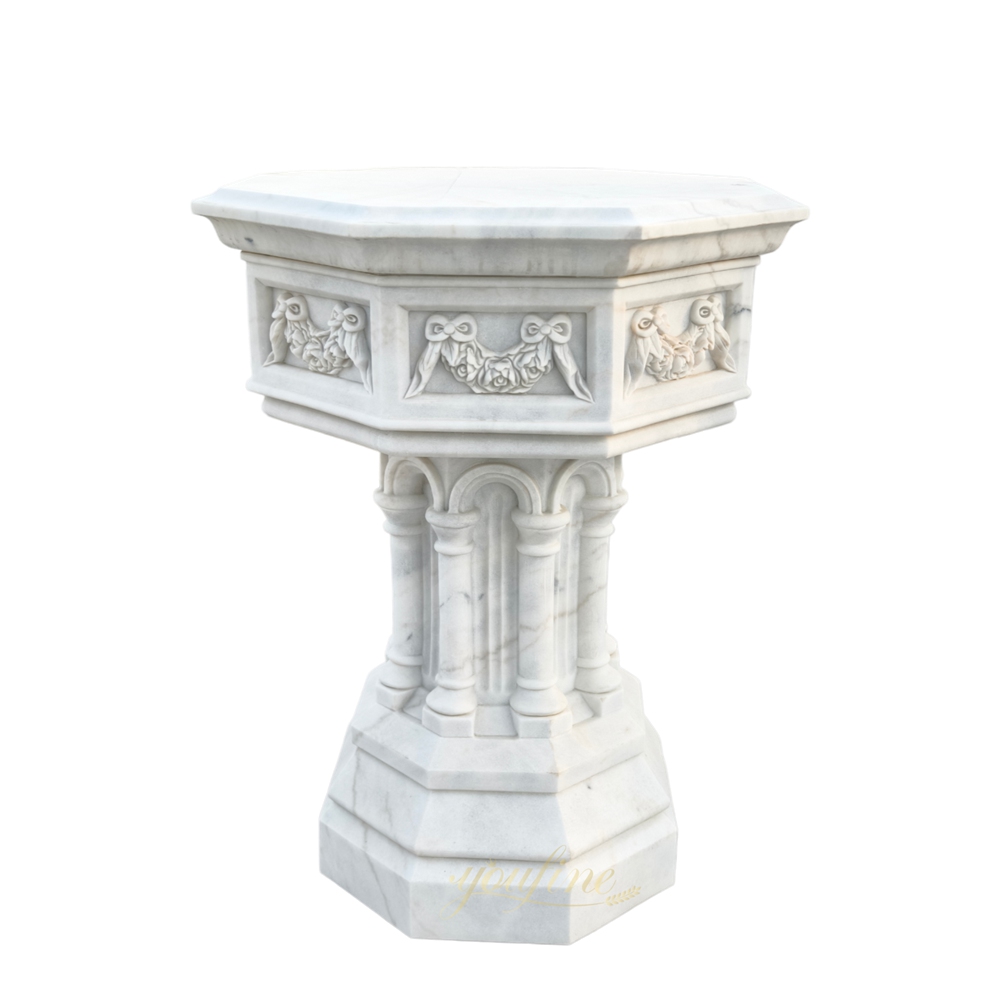
A baptismal font is a sacred basin used in Christian churches to hold water for the sacrament of baptism. Often placed near the entrance of a church, it symbolizes spiritual rebirth, cleansing from sin, and a believer’s entry into the Christian faith. As one of the most important pieces of church furnishings, the baptismal font plays both a functional and symbolic role in religious practice.
Whether you are exploring church architecture, learning about Christian traditions, or selecting a baptismal font for your church, understanding its meaning, design, and use can help you make informed decisions.
Baptismal Font vs Baptistery vs Baptismal Tub / Pool
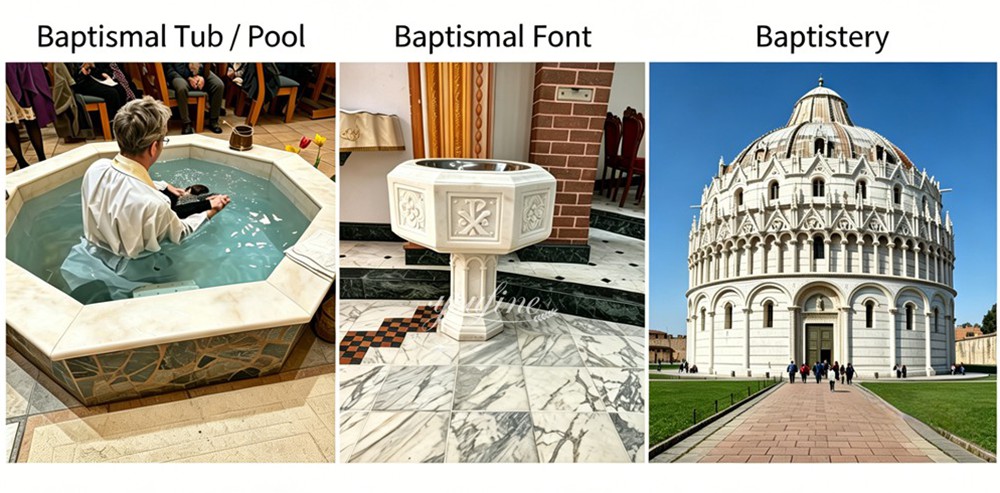
Before delving into the deeper meanings, symbolism, and functions of the baptismal font, let us first clarify two modern terms that are frequently confused with it, thereby enabling you to understand and utilize these concepts with greater precision.
| Term | Definition | Essential Nature | Size | Primary Use |
|---|---|---|---|---|
| Baptismal Font | A traditional basin or bowl used to hold water for baptism | Small vessel | Small to medium | Pouring or sprinkling water, commonly used for infant baptism |
| Baptistery | A dedicated building or designated space used for baptism | Architectural space | Large (room or building scale) | Houses baptismal facilities and accommodates baptism ceremonies, including immersion |
| Baptismal Tub / Pool | A large basin specifically designed for full immersion baptism | Large container | Medium to large | Full-body immersion, commonly found in Baptist and evangelical churches |
In short, the Baptistry is the building; the Baptismal Font is the basin located inside that building; and the Baptism Tub is the large tub found within it.
What Is a Baptismal Font Used For?
The primary purpose of a baptismal font is to hold blessed water used during baptism, one of the most important rites in Christianity.
Common uses include:
- Infant Baptism – Water is poured or sprinkled over the child
- Adult Baptism – In some traditions, partial immersion may occur
- Liturgical Rituals – The water is often blessed before use
- It also serves as a permanent visual reminder for the congregation of their own baptismal vows and spiritual rebirth.
Different denominations may practice baptism differently, but the font remains a central element in the ritual.
For a simple yet profound explanation of the ceremony, you could watch this short visual guide on how the baptismal font serves as the vessel for spiritual cleansing.
Meaning & Symbolism of a Baptismal Font
Beyond its function, the baptismal font carries deep spiritual meaning.
-
Rebirth
Baptism represents being “born again” into a new spiritual life.
-
Cleansing from Sin
Water symbolizes purification and the washing away of sin.
-
Entry into the Church
The font marks the beginning of a person’s journey in the Christian community.
-
The Octagonal Shape (The “Eighth Day”)
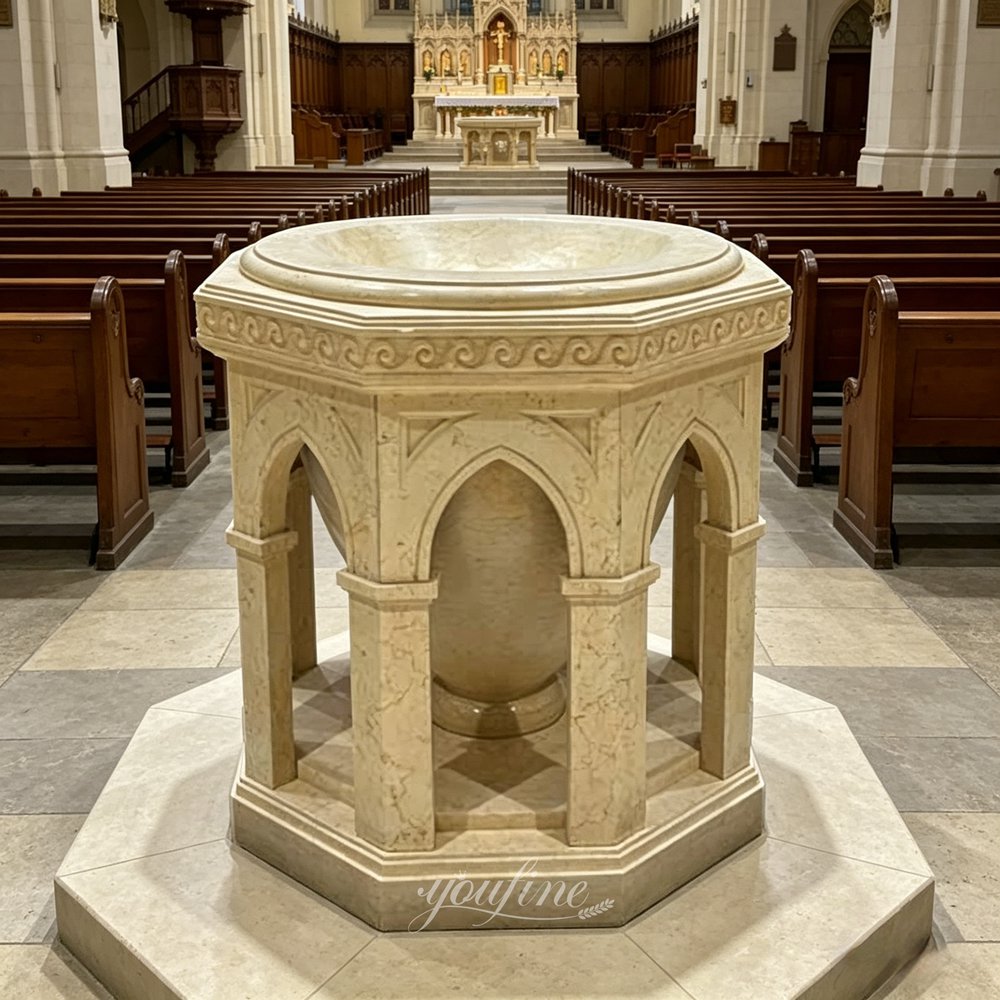
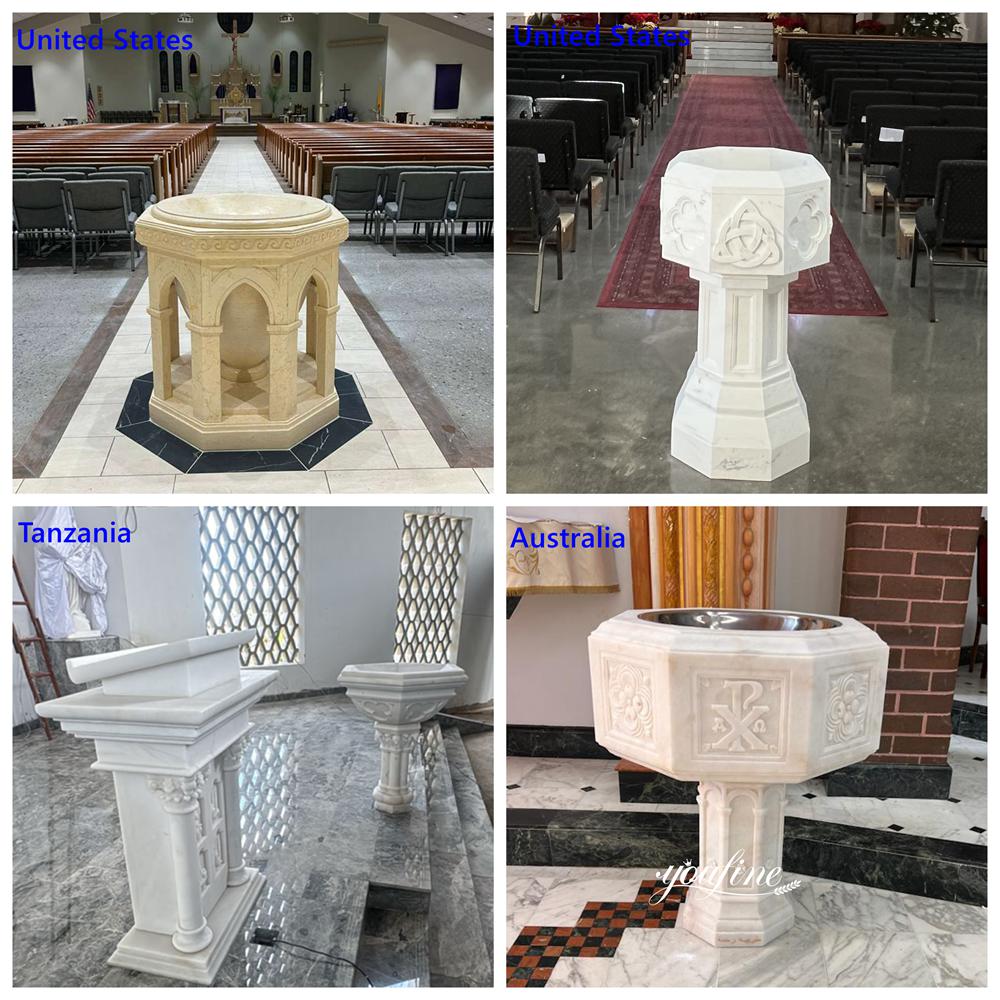
Many baptismal fonts are octagonal, symbolizing the “eighth day”—a reference to resurrection and new creation beyond the seven days of the world.
Where Is the Baptismal Font Located in a Church?
The baptismal font is usually placed in a meaningful and visible location within a church, reflecting its importance in the Christian faith.
Common Locations:
- Near the Entrance (Narthex): This is the most traditional placement. It symbolizes that baptism is the first step into the Church.
- In a Side Chapel or Baptistery: Some churches place the font in a separate area, creating a quiet and dedicated space for baptism.
- Near the Altar or in the Sanctuary: In modern churches, the font may be placed in the main worship area to highlight the connection between baptism and the life of the Church.
Why Placement Matters:
The location of the baptismal font reflects its spiritual meaning. It represents new beginnings, entry into faith, and participation in the Christian community.
Materials and Types of Baptismal Fonts
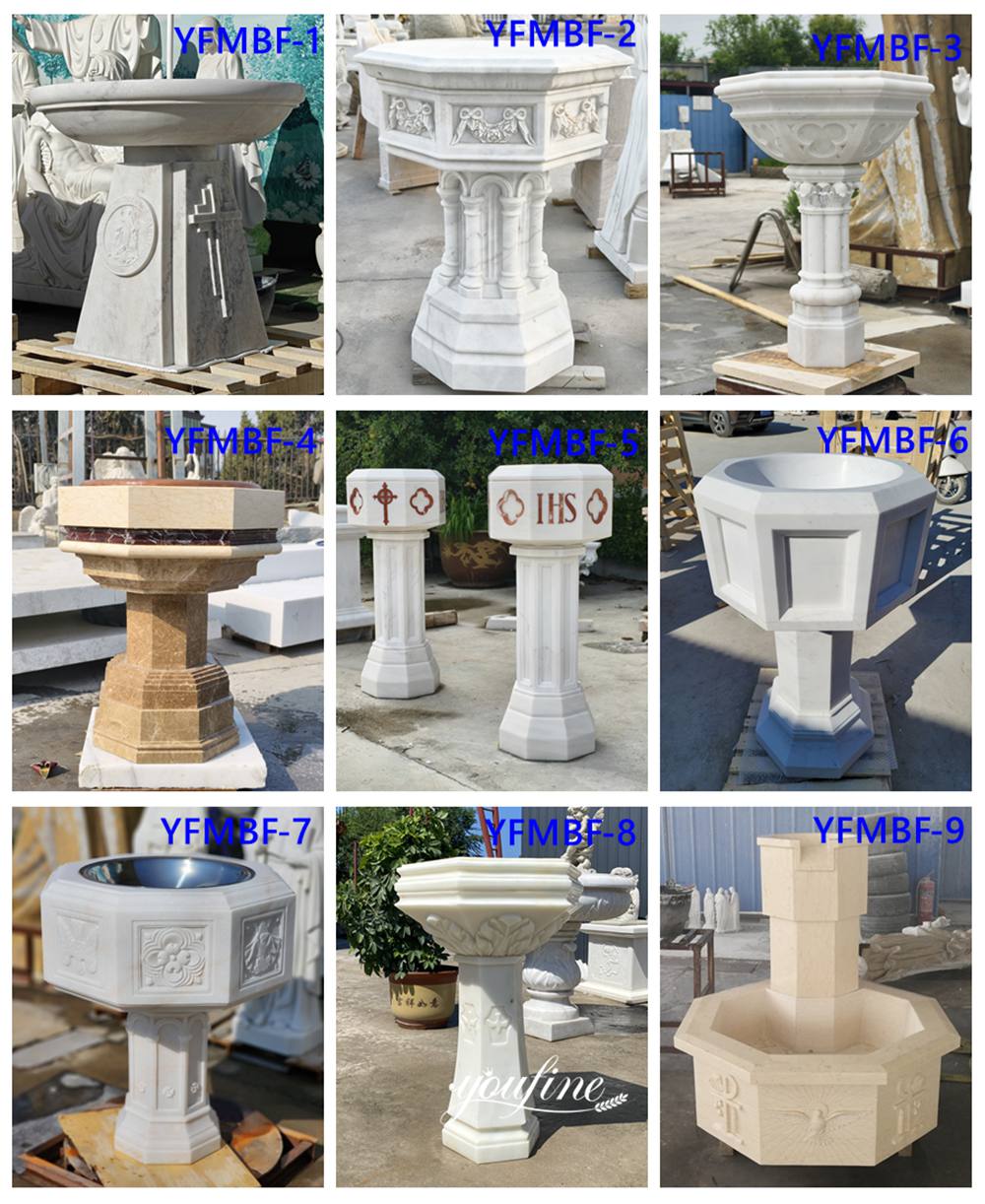
Common Materials:
- Natural Marble (Top Recommendation): The premier choice for centuries. Marble is non-porous (when polished), extremely durable, and possesses a natural “glow” that reflects divine light.
- Fine Wood: Often used in smaller or more rustic chapels, usually lined with metal to hold water.
- Bronze/Metal: Provides a modern or liturgical look, often featuring intricate relief carvings.
Common Types:
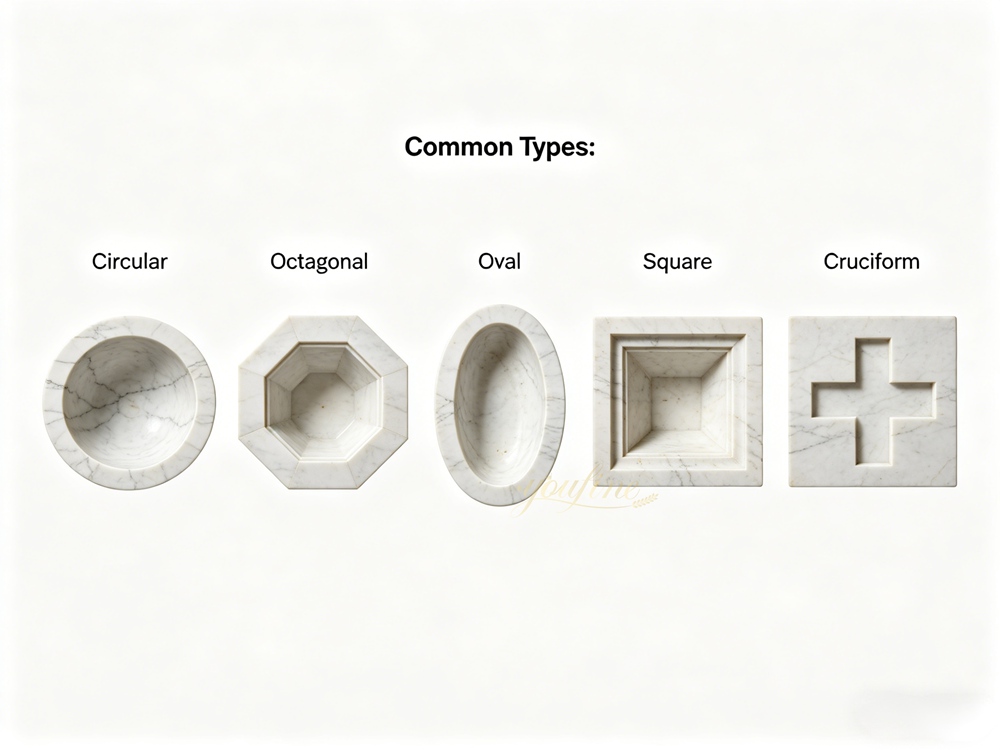
- Circular: Represents eternity and God’s infinite love, with its beginningless and endless silhouette symbolizing the wholeness of life found in Christ.
- Octagonal: The most traditional design, symbolizing the “Eighth Day” of Resurrection and the believer’s transition from the old world into a new life.
- Oval: The elegant, curved contours symbolize the womb of the Church, profoundly signifying the believer’s spiritual rebirth and transformation through the sacrament.
- Square: Frequently found in Protestant traditions, symbolizing the stability and security of faith and the eternal, unchanging covenant between God and His people.
- Cruciform: A direct reference to the sacrifice and redemption of Christ, symbolizing that the baptized person dies and rises again with Him in faith.
Baptismal Fonts in Church Art & Architecture
A baptismal font is not just a functional object—it is also an important part of church art and architectural design.
In many churches, the font is:
Carefully integrated with the altar and pulpit
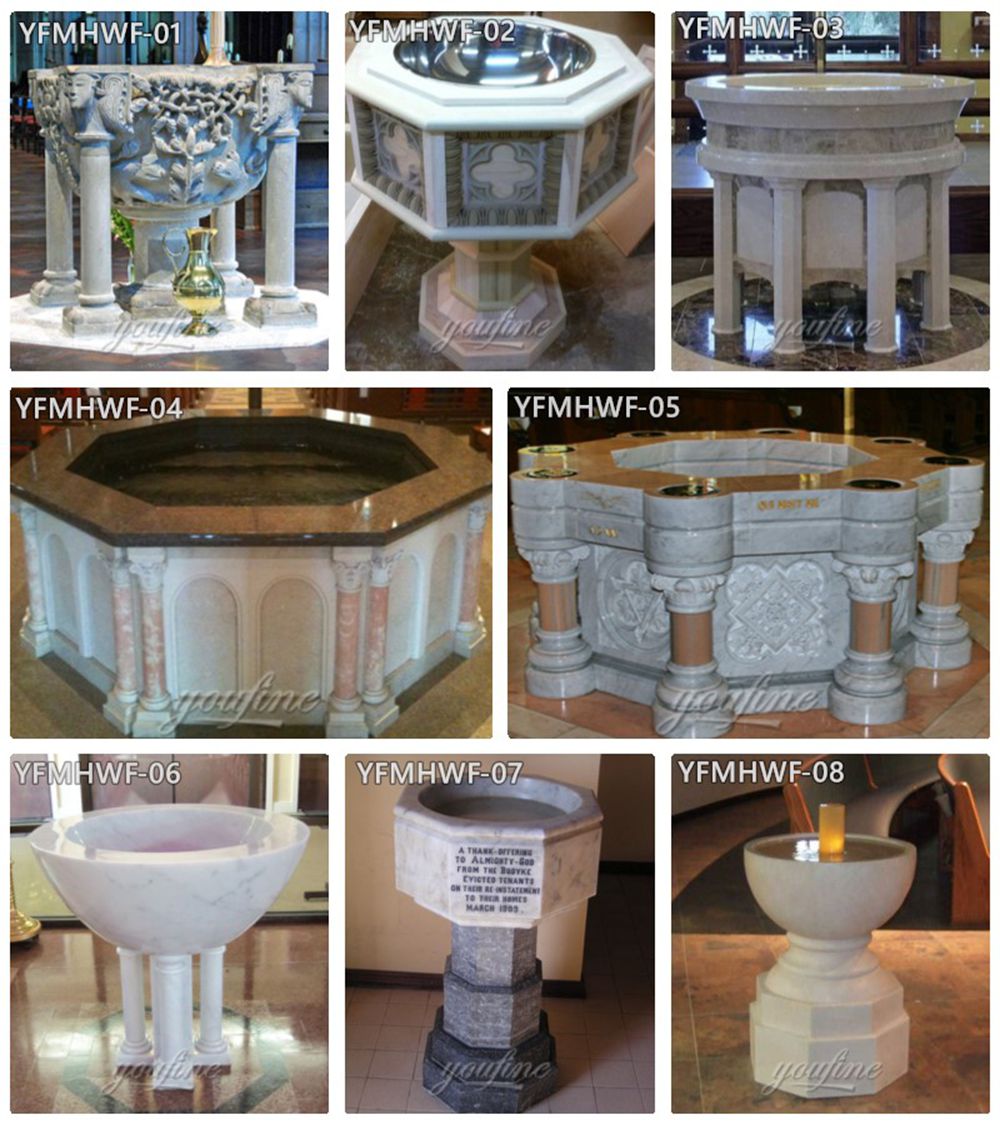
Decorated with carvings such as:
- The cross
- The dove (Holy Spirit)
- The fish (early Christian symbol)
A well-designed font enhances the space’s spiritual atmosphere and reflects the church’s identity.
How to Choose the Right Baptismal Font?
Choosing a baptismal font is a long-term decision that combines practicality, religious style, space suitability, and budget. Below are the key factors for selection:
-
Premium Material
Marble is the top choice for baptismal fonts. It is durable for centuries, easy to clean and sanitize, and free of warping or tarnishing compared to wood and metal.
It also delivers a solemn, sacred atmosphere and supports fine custom carving.
-
Suitable Size & Height
Compact fonts are ideal for infant baptism, while larger styles fit partial immersion needs.
The standard height of a pedestal font is 36–42 inches, offering comfortable use for clergy.
-
Denominational Style Preference
Orthodox Churches: Elaborate carvings and classic Byzantine decorative details
Catholic Churches: Elegant classical lines with subtle symbolic engravings
Baptist Churches: Simple, modern, and spacious designs for immersion baptism
-
Church Space & Placement
Measure the actual floor area in advance.
The font should be prominent for viewing, while keeping a smooth pedestrian flow.
It needs to match the layout of the entrance, chapel, or sanctuary.
-
Customization
Customize dimensions, surface finishes, religious symbols, and carved inscriptions to unify with the church’s overall architectural style and spirit.
-
Budget Considerations
The cost of a baptismal font depends on 3 core factors: material, size, and craftsmanship.
High-quality materials (e.g., marble), larger sizes, and intricate hand-carving will increase the cost.
You could choose a cost-effective solution based on the church’s needs and your budget.
FAQs
-
What is a font church?
The term “font church” usually refers to the baptismal font located within a church sanctuary. It is not a type of building, but rather the sacred stone or marble vessel used for the sacrament of initiation, symbolizing the spiritual entrance into the faith community.
-
What is the baptism tub called?
A baptism tub is commonly called a baptismal pool or baptistery, depending on the context. In many modern churches—especially Baptist and evangelical traditions—the large tub used for full-body immersion is referred to as a baptismal pool.
The term baptistery can also be used, but it more accurately refers to the space or area where baptisms take place, which may include a pool or other baptismal structure.
-
What are some common baptismal font synonyms?
Common synonyms for a baptismal font include baptismal basin, holy water font, and simply church font. In some contexts, it may also be referred to as a baptismal bowl or font in a church, especially when describing its basic function as a vessel for baptismal water.
It is important to note that while these terms are often used interchangeably in everyday language, “baptismal font” is the most accurate and widely used term in formal church and architectural contexts.
-
Why are there eight sides on many baptismal fonts?
The octagonal shape symbolizes the “Eighth Day,” representing the Resurrection of Christ. It signifies that through baptism, a believer leaves the old creation to enter a new, eternal life.
-
Do stone baptismal fonts require special drainage or maintenance?
Most professional marble fonts feature integrated drainage leading to a sacrarium (a drain to sacred ground).
Maintenance is simple, requiring only warm water and a soft towel. If necessary, a mild cleaner can also be used. to preserve the stone’s luster for generations.
-
How do I customize a marble baptismal font for my church?
First, select the marble material, size, and design based on your church’s architectural style, religious traditions, and space layout.
After confirming the price and any special customization needs, our skilled artists will complete the hand-carving. Once you approve the finished work, we will arrange delivery promptly.
Final Thoughts
A baptismal font is far more than a simple vessel. It stands as a profound symbol of faith, spiritual renewal, and new beginnings. From its traditional placement inside the church to its meaningful design and premium materials, every detail carries centuries of religious heritage and fine artistic craftsmanship.
At YouFine Art Sculpture Gallery, we specialize in custom hand-carved marble baptismal fonts tailored to your church’s unique traditions.
- We use high-quality natural marble, crafted by skilled artisans with over 20 years of experience. Our designs range from intricate ornate styles to minimalist modern looks.
- Besides baptismal fonts, we also offer matching religious artworks, including marble altars, pulpits, marble Virgin Mary statues, marble Jesus statues, religious marble statues, marble chairs, tables, and marble shrines.
- More importantly, we have undertaken numerous large-scale church projects—all of which were highly successful—and have received extremely positive feedback from our clients.
Feel free to contact us directly for any inquiries.