When we consider the concept of contemporary sculpture, we’re often discussing more than just stylistic forms; we’re also exploring the innovation of materials. Materials have become one of the most crucial expressive languages in “sculpture in contemporary art.”
From traditional marble and bronze to modern stainless steel, corten steel, resin, and even environmentally friendly recycled materials, the continuous breakthroughs in modern sculpture materials have propelled the comprehensive development of the visual language, spatial expression, and public art forms of contemporary sculpture.
This article will systematically analyze the characteristics, techniques, and artistic impact of common materials used in modern sculpture, and, in conjunction with representative artists and works, help you gain a clearer understanding of the relationship between modern sculpture characteristics and materials.
Marble Sculpture: Timeless Material Texture (Marble)
Marble is the most sacred material in the history of sculpture. In the modern context, it has shifted from simply “realistic form” to exploring “material texture” and “visual deception.”
- Characteristics: Hard and dense texture with a unique translucency, capable of capturing subtle light and shadow.
- Craftsmanship: Modern marble sculpture combines CNC machining with traditional hand carving, achieving extremely detailed constructions that were previously impossible.
- Modern Influence: It infuses modern spaces with a timeless sense of luxury and humanistic depth.
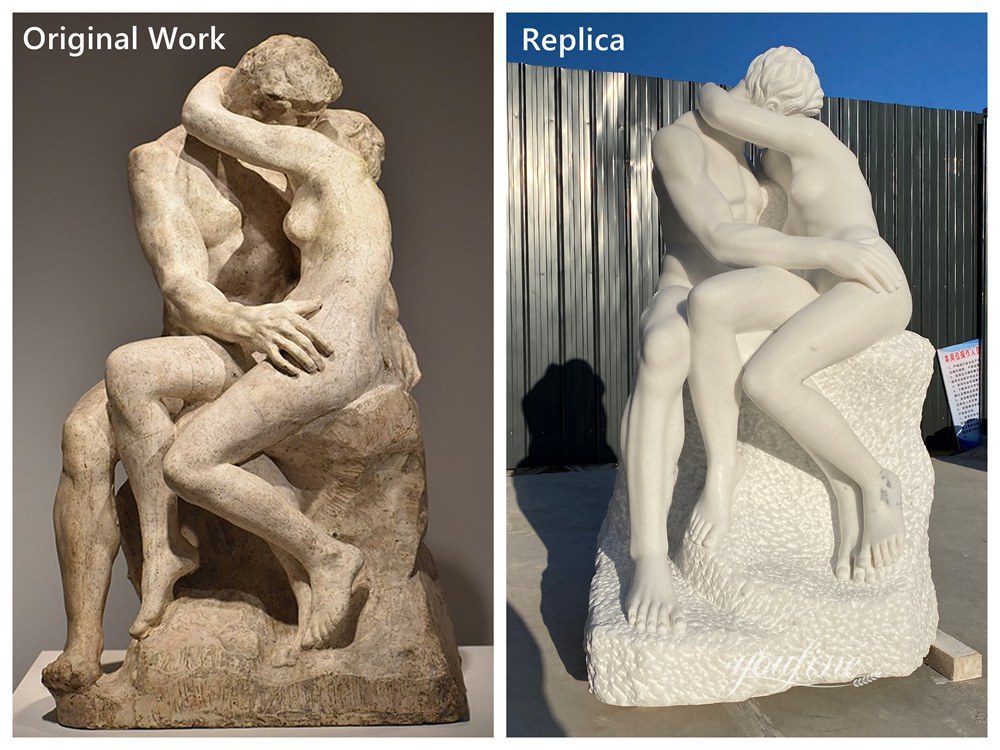
- Representative Artists: Auguste Rodin: Although at the beginning of modern sculpture, his treatment of the rough texture of stone has inspired countless successors.
- Fabio Viale: A contemporary Italian artist who can sculpt hard marble into rubber that looks like foam, paper, or tattoos, creating a powerful visual impact.
Bronze Sculpture: A Continuation of Power and Heritage (Bronze)
Bronze serves as a vital bridge connecting the history of modern sculpture with the contemporary era. Its exceptional weather resistance and expressive power have made it a preferred choice for public art.
- Characteristics: Highly malleable, capable of producing a rich range of colors from rustic deep brown to modern bright green through chemical coloring (patina).
- Craftsmanship: While the core technique remains the precision lost-wax casting, modern technology has enhanced the structural stability of large-scale bronze sculptures.
- Modern Influence: It symbolizes the project’s stability and cultural heritage.
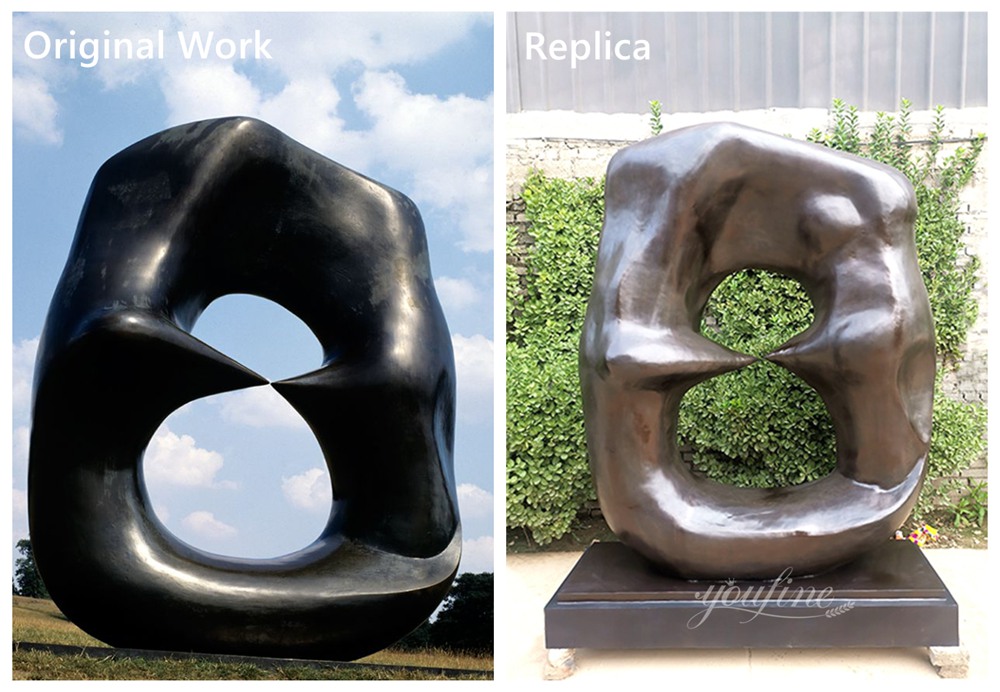
- Representative Artist: Henry Moore: His large-scale bronze abstract works, through organic perforated designs, redefine the relationship between sculpture and space.
Stainless Steel Sculpture: The Pinnacle of Modernism (Stainless Steel)
If stainless steel had a language, it would be “futurism.” It embodies the ultimate characteristics of modern sculpture: purity, precision, and simplicity.
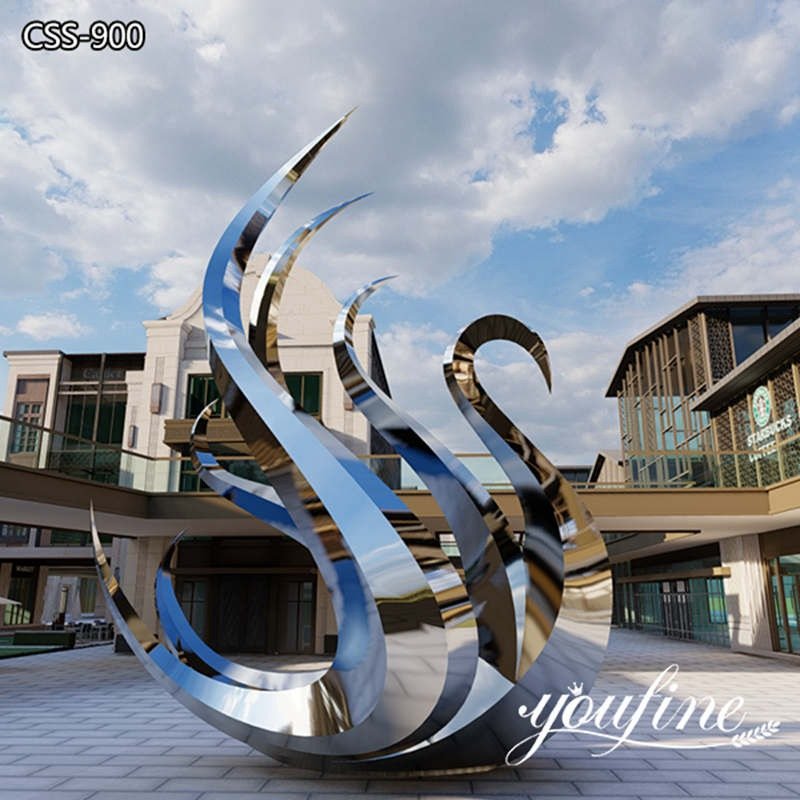
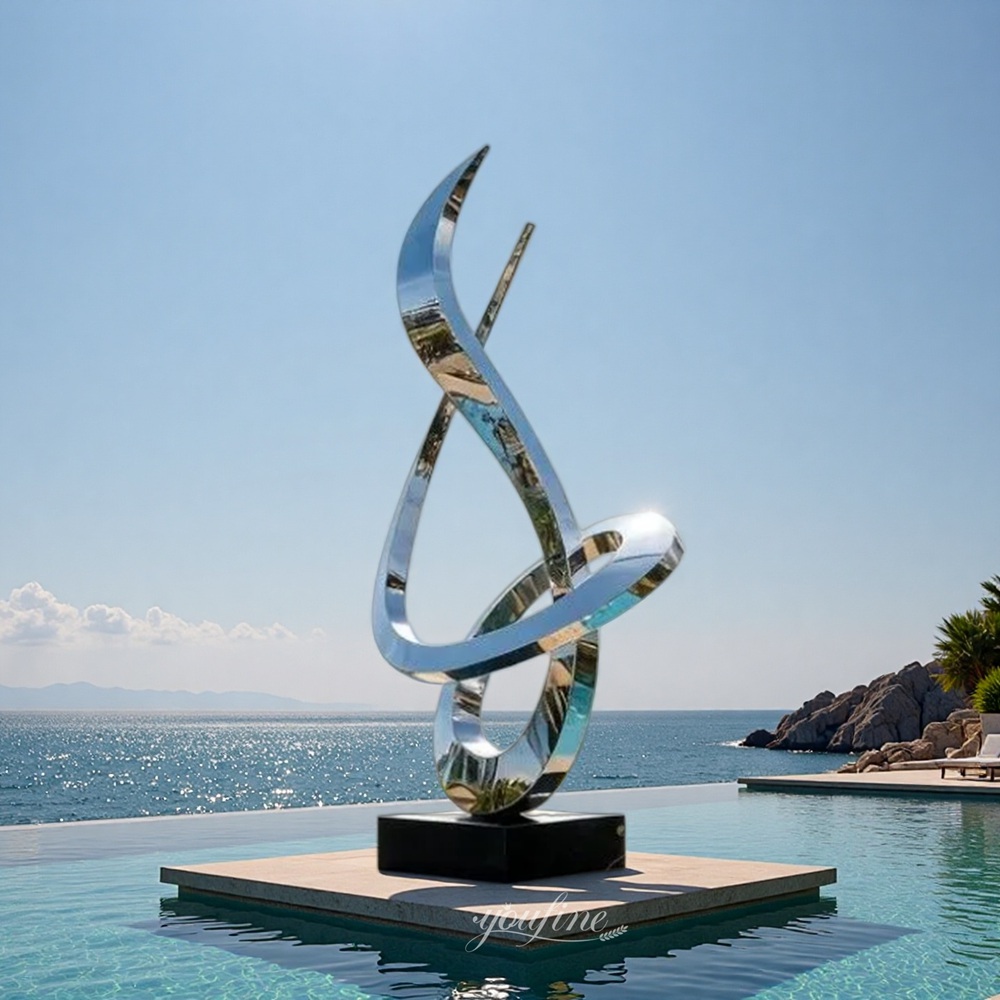
- Characteristics: Mirror polishing provides exceptional reflectivity, seamlessly integrating the surrounding environment into the artwork; corrosion-resistant, requiring virtually no maintenance.
- Craftsmanship: Modern stainless steel sculptures involve complex laser cutting, forging, and seamless welding of metal sheets; surface polishing must achieve an 8K mirror finish.
- Modern Influence: The ideal choice for enhancing the modern feel of commercial real estate and CBD office buildings.
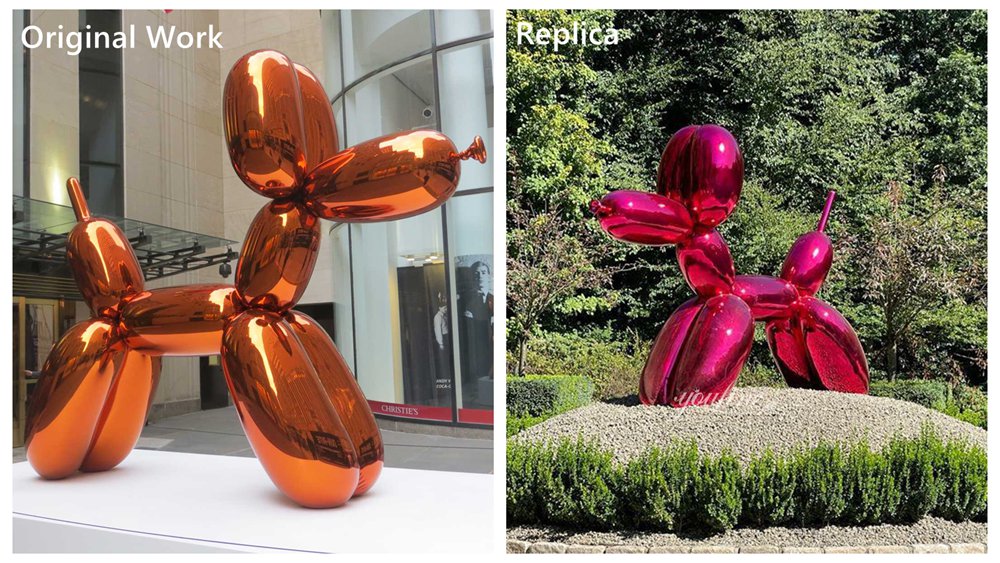
- Representative Artist: Jeff Koons: His “Balloon Dog” series polishes stainless steel to resemble a lightweight inflatable toy, blurring the boundaries between popular culture and art.
Corten Steel Sculpture: The Industrial Aesthetics of Controlled Oxidation (Corten Steel)
Corten steel represents a “dynamic” aesthetic—it “grows” over time.
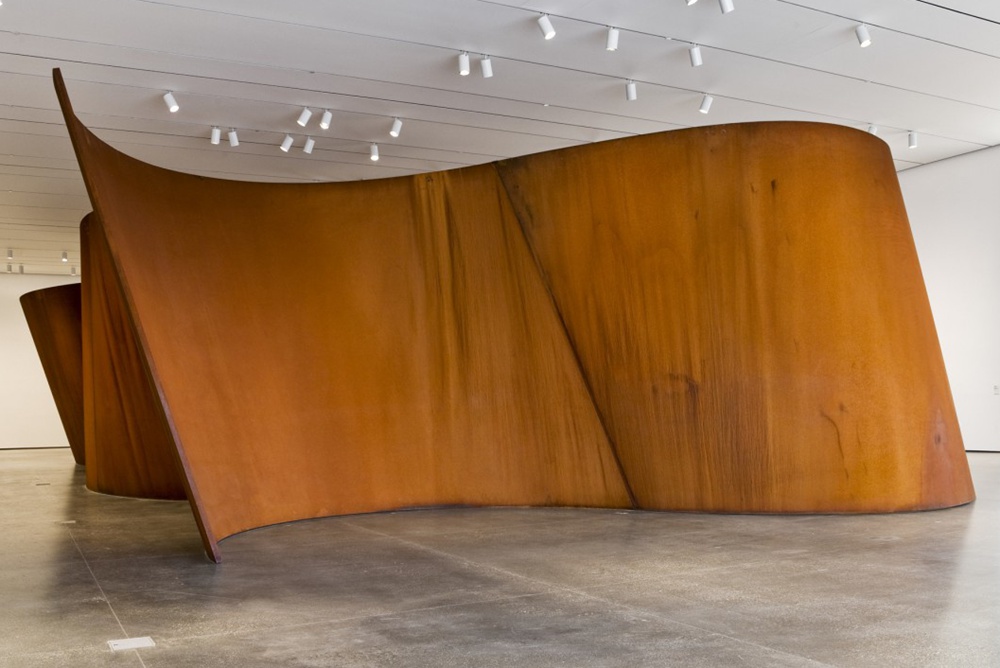
- Characteristics: The deep brown rust layer that forms on its surface is its natural protective film, presenting a strong industrial feel.
- Process: Modern corten steel sculptures utilize the self-protective properties of steel; no painting is required, and they have extremely high resistance to environmental corrosion.
- Modern Influence: Conveying a sense of weathered yet resilient strength, it is often used in minimalist landscape design.
- Representative Artist: Richard Serra: His spatial installations using massive weathering steel plates allow viewers to experience the awe-inspiring power of gravity and time within the rust-colored enclosure.
Resin/Fiberglass Sculpture: A Creative Medium with Limitless Possibilities(Resin/Fiberglass)
Fiberglass sculpture is a medium for Pop Art and contemporary art, liberating sculpture from all limitations in color and form.
- Characteristics: Extremely lightweight and durable, capable of producing highly saturated, vibrant finishes.
- Process: After molding, it undergoes fine polishing, and the surface can be finished with various post-treatments such as painting and electroplating.
- Modern Influence: It is a powerful tool for attracting traffic and creating trendy photo spots in modern commercial spaces.
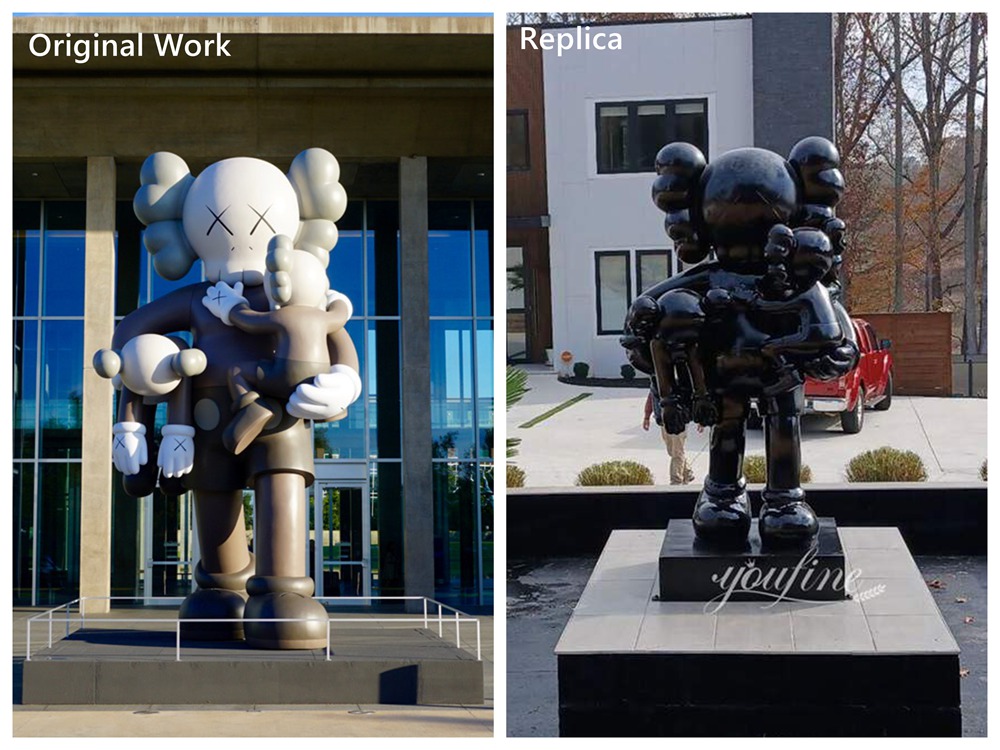
- Representative Artist: KAWS: His Companion series of sculptures, using resin/fiberglass, successfully transforms trendy figurines into museum-quality contemporary art.
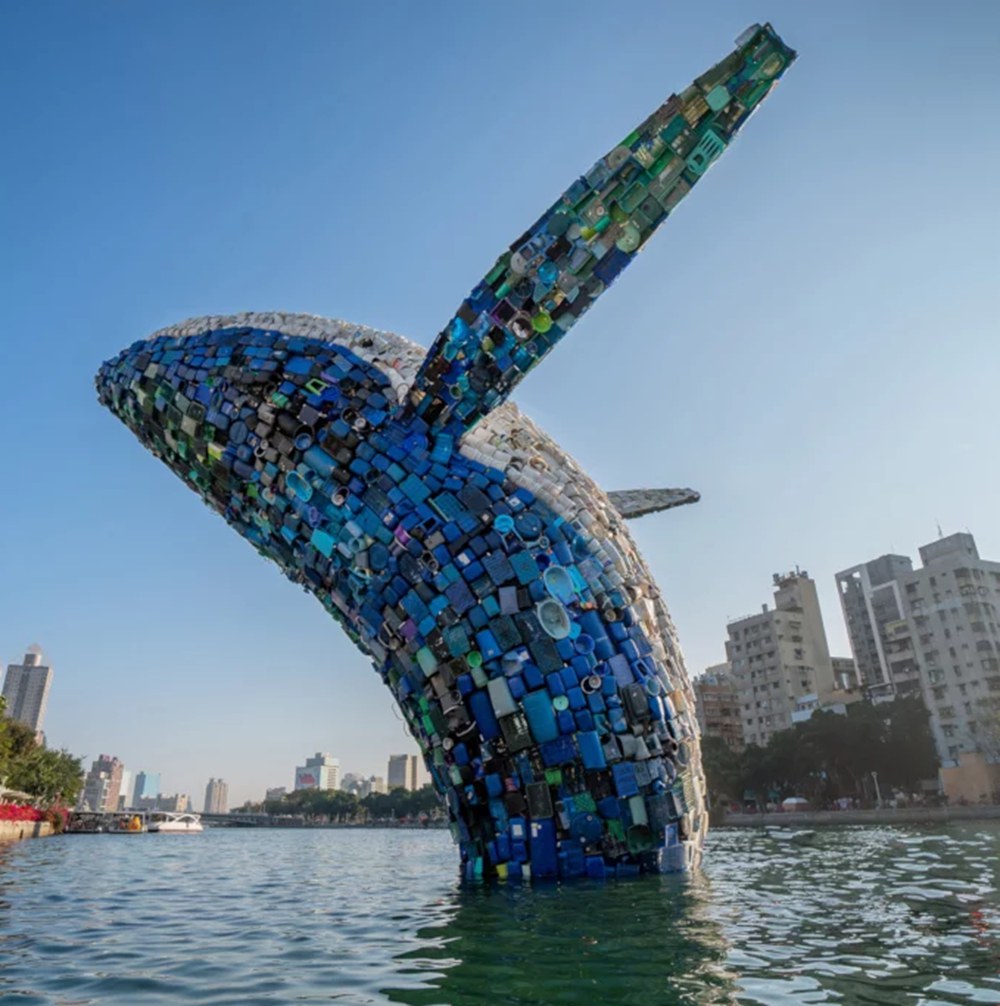
Sustainable Sculpture and Other Materials (Sustainability)
Contemporary art is moving towards environmental protection and interdisciplinary collaboration.
- Materials: Including recycled metals, biodegradable materials, and even composite materials combining light and shadow with digital media.
- Craftsmanship: Emphasizing recycling and low-carbon production.
- Modern Influence: Imbuing works with a high moral standard of environmental protection, aligning with the social responsibility of modern enterprises.
- Representative Artists: Many contemporary eco-artists utilize discarded industrial parts to create stunning installation art.
The Historical Evolution of Modern Sculpture: From Deconstruction to Reconstruction
The history of modern sculpture is a history of material liberation.
- Breaking with Tradition: Rodin infused emotion into clay; Brancusi simplified form, pursuing essence.
- Spatial Intervention: Henry Moore allowed space to permeate his sculptures; David Smith introduced welding techniques.
- Material Dissolution: Minimalism and contemporary artists no longer focus on “sculpture” itself, but on the presentation of “material” and “concept.”
How to Choose the Right Material for Your Project?
When choosing materials, we recommend referring to the following “gold standard”:
- Project Positioning: High-end hotels should choose marble or bronze; commercial centers should choose stainless steel; creative districts should choose resin or corten steel.
- Environmental Factors: 316 stainless steel is preferred in coastal areas; marble is suitable for warm interiors.
- Budget and Maintenance: Stainless steel and corten steel have the lowest maintenance costs; resin offers a wide range of colors but requires sun protection.
For 40 years, YouFine Art Sculpture Gallery has focused on custom-made contemporary sculptures. Whether you need marble, bronze, stainless steel, corten steel, or resin sculptures, we offer a one-stop solution from detailed design to factory production. So, if you have any needs, please feel free to contact us directly.
FAQ
What is contemporary sculpture?
Contemporary sculpture is a visual art form that uses any possible material to express modern ideas in space.
What are the most commonly used materials in modern sculpture?
Stainless steel, bronze, and marble remain mainstream, while resin and environmentally friendly materials are rapidly gaining popularity.
What is the difference between modern and traditional sculpture?
Modern sculpture emphasizes abstraction, spatial participation, and conceptual expression, rather than mere realism.
How has the history of modern sculpture influenced contemporary artists?
The history of modern sculpture has granted artists “material freedom.” That sculpture is no longer simply imitating nature, but rather utilizing the physical properties of different materials to express philosophical viewpoints and contemporary emotions.