When I first started knowing animal and mythological sculptures, I often noticed that many clients confused unicorn vs pegasus. Some even asked me: “Is Pegasus just a unicorn with wings?”
The truth is—they are completely different creatures, with different origins, meanings, and uses in art. In this blog, I’ll walk you through everything I’ve learned over the years in a simple and clear way.
What Is a Pegasus?
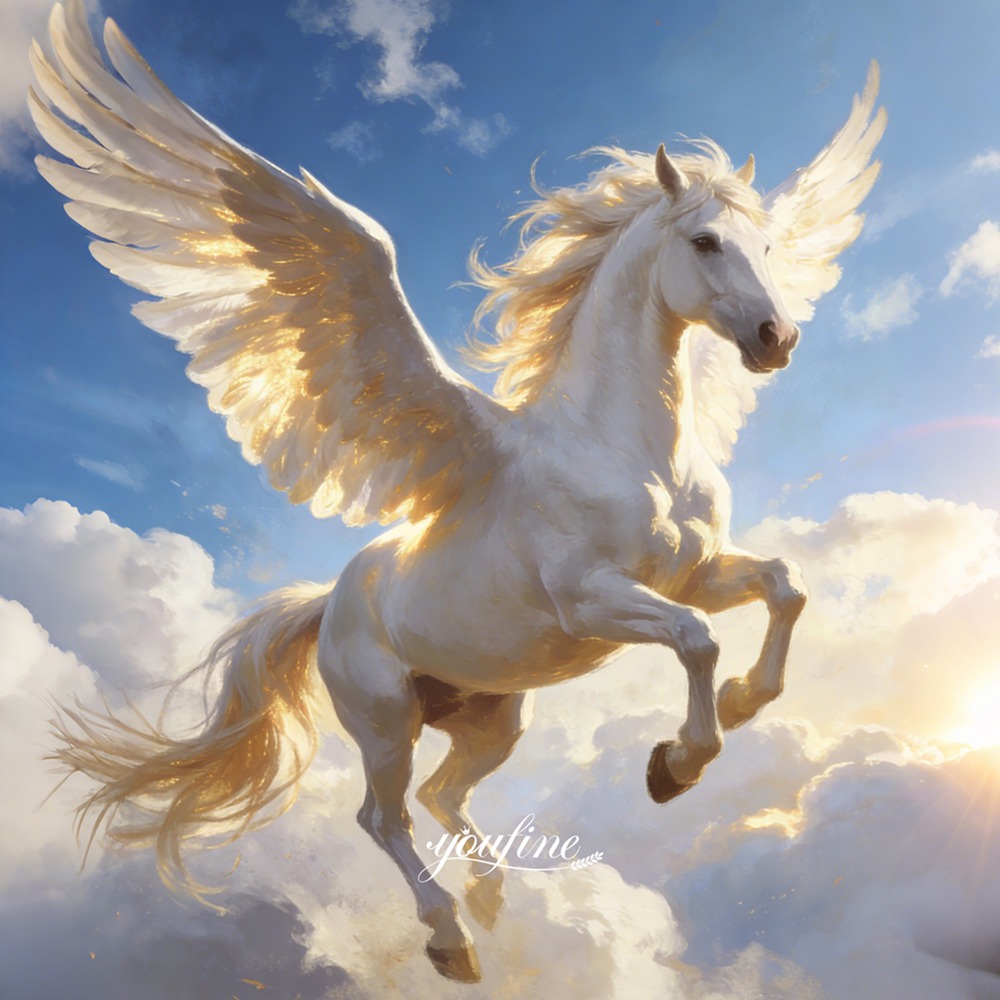
A Pegasus is a winged horse from Greek mythology, known for its ability to fly and its connection to the gods.
In mythology, Pegasus was born from the blood of Medusa and is often associated with heroes like Bellerophon. Later, it served Zeus, carrying thunderbolts across the sky.
Today, Pegasus is widely seen as a symbol of freedom, power, and artistic inspiration.
What Is a Unicorn?
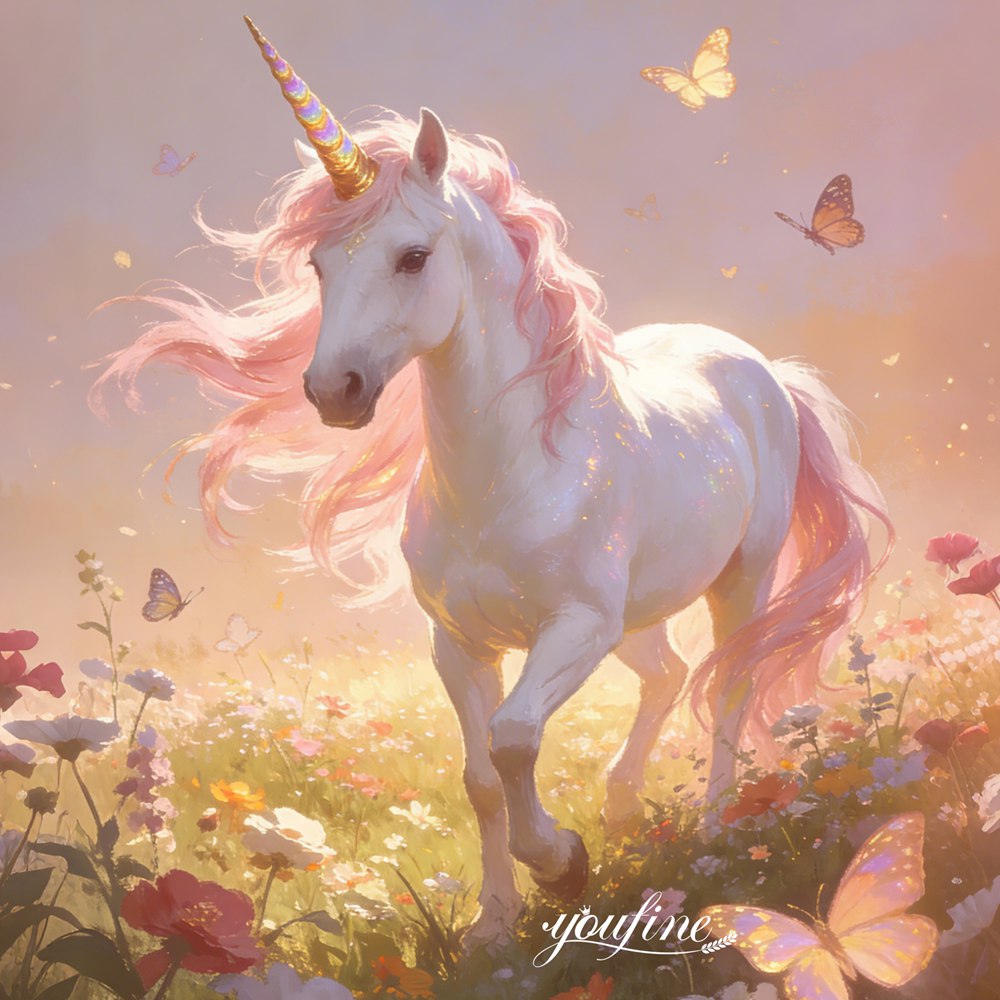
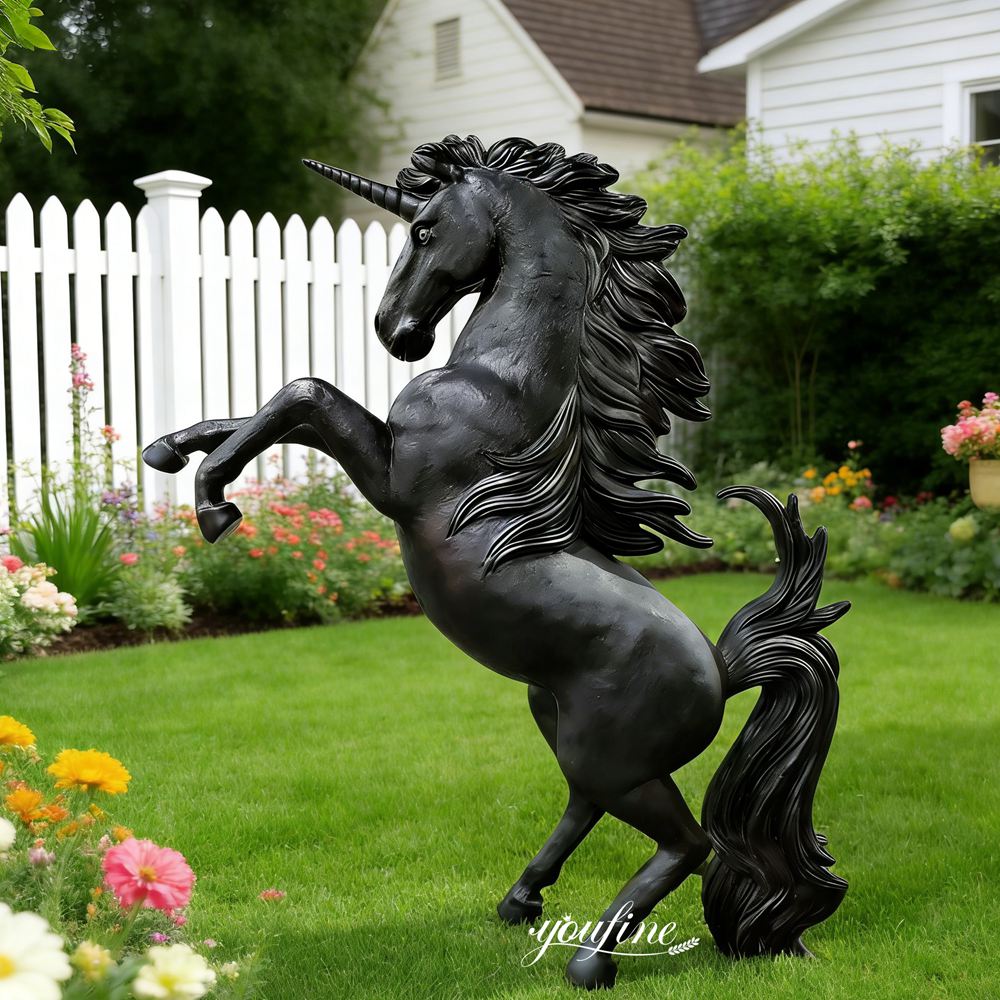
A Unicorn is a mythical horse-like creature with a single spiral horn on its forehead, commonly associated with purity and magic.
Unlike Pegasus, the unicorn does not come from a single myth but appears across many cultures, especially in medieval European legends. Its horn, sometimes called an “alicorn,” was believed to have healing powers.
The unicorn is often seen as a symbol of purity, grace, and spiritual strength.
Unicorn vs Pegasus: Key Differences
Quick Comparison Table
| Feature | Unicorn | Pegasus |
|---|---|---|
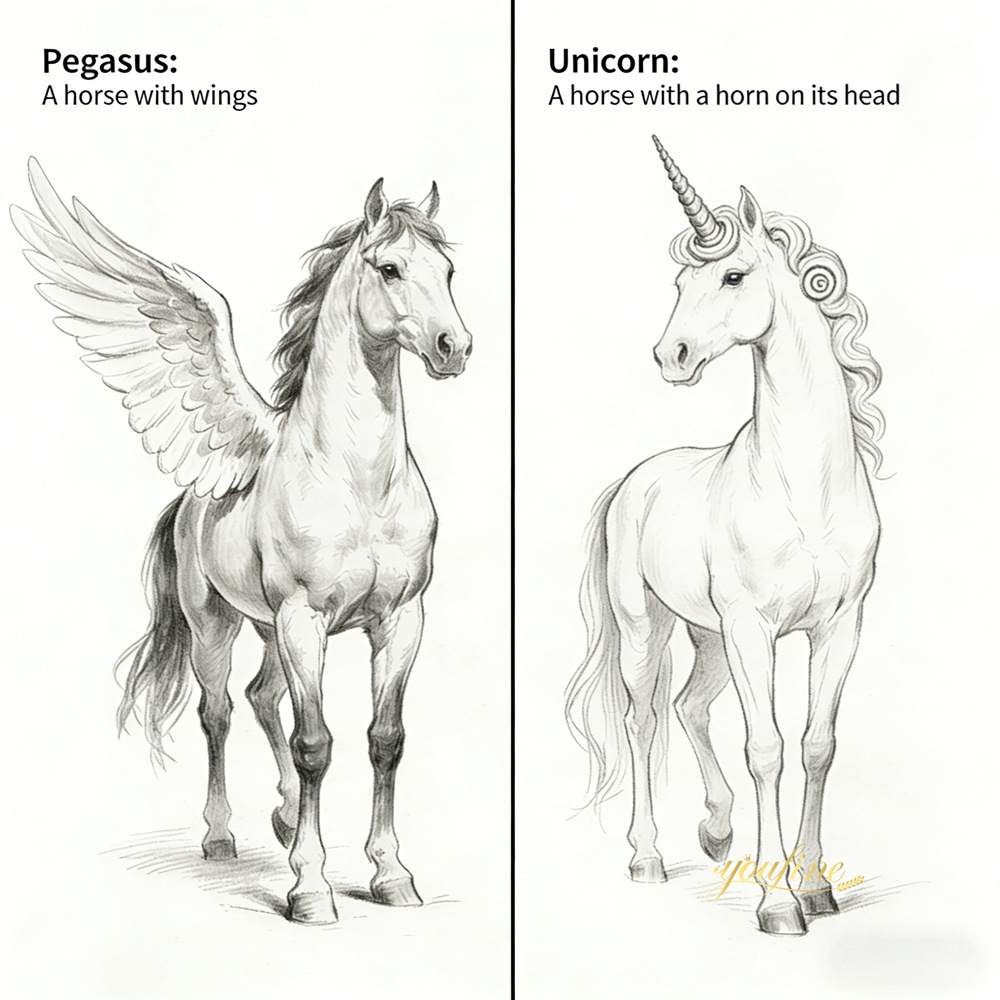
| Appearance | A horse with a single spiral horn on its forehead | A horse with a pair of large feathered wings |
| Origin | Global folklore (Indus Valley, medieval Europe) | Greek mythology, child of Poseidon |
| Abilities | Magical powers, healing, purity | Flight, speed, physical strength |
| Symbolism | Purity, grace, healing | Heroism, ambition, inspiration |
| Modern Role | A magical guardian of the land | A powerful master of the sky |
Appearance
From my experience, this is the easiest way to tell them apart:
- A unicorn has a single spiral horn in the center of its forehead
- A pegasus has large wings on its back
Sometimes people ask about a “pegasus unicorn” or a “pegasus with a horn”, but traditionally, these are two completely separate creatures.
Origin
- The unicorn does not come from a single story. Instead, it appears across many cultures, from early descriptions in ancient civilizations to medieval European legends.
- The pegasus, however, has a very clear origin in Greek mythology. It is said to be the son of Poseidon and is closely connected to heroic myths and gods.
Abilities
Their abilities are very different, which also affects how they are represented in art:
Unicorn
- Known for healing powers and magic
- Often seen as gentle but spiritually powerful
Pegasus
- Known for flight, speed, and strength
- Represents action, movement, and freedom
Symbolism
In my work with clients, symbolism is often more important than appearance:
- Unicorn → purity, elegance, healing, and inner peace
- Pegasus → heroism, ambition, inspiration, and power
This is usually the key reason why someone chooses one over the other.
Modern Cultural Role
In modern design and sculpture, their roles are quite distinct:
Unicorn
- Seen as a magical guardian of the land
- Often used in gardens, fantasy themes, and decorative spaces
Pegasus
- Seen as a powerful ruler of the sky
- Common in large-scale outdoor sculptures, symbolizing strength and movement
What Is a Unicorn with Wings Called?
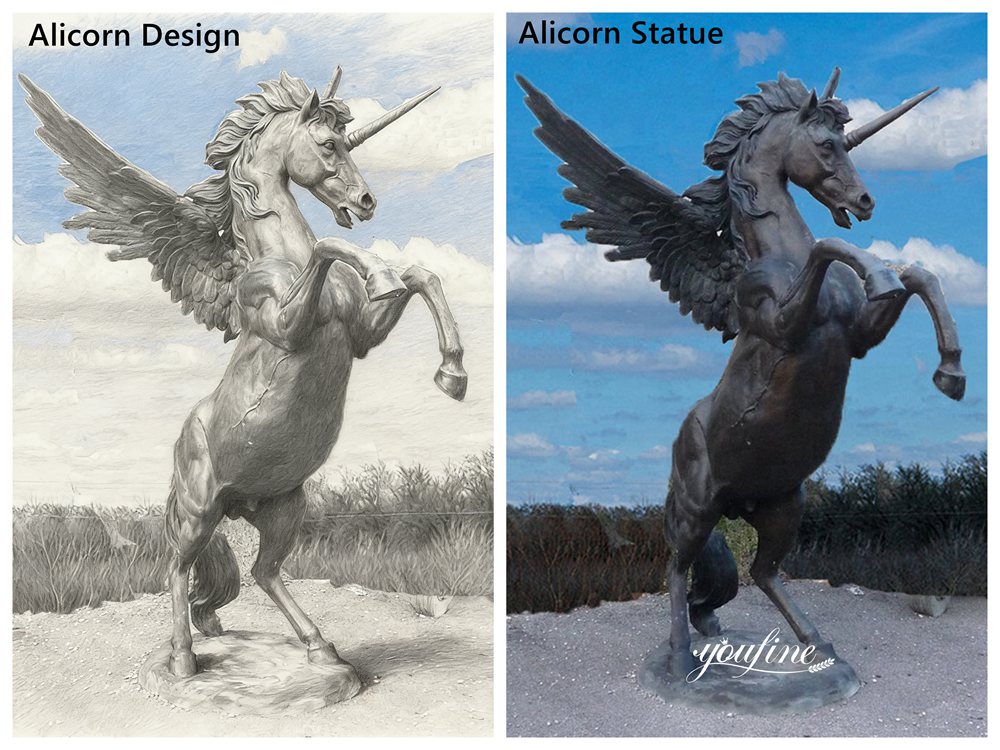
A unicorn with wings is called an Alicorn.
In simple terms, when you combine the horn of a unicorn with the wings of a pegasus, you create an alicorn—often seen as the ultimate mythical horse. It has both the unicorn’s magical horn and the pegasus’s ability to fly.
Unlike unicorns and Pegasus, the alicorn does not appear in classical ancient mythology. Instead, it comes from modern fantasy culture, where it has become increasingly popular in books, games, and shows like My Little Pony.
Because of this, it is often seen as a symbol of balance between earthly magic and celestial power.
Who is More Powerful, Pegasus or Unicorn?
If these two were to meet, who would win?
The Unicorn possesses magical defense: its horn can neutralize any poison and sense the truth in any heart.
The Pegasus has the aerial advantage: its incredible speed and ability to create springs (like the Hippocrene) with a single hoof-strike make it a formidable physical force.
The Verdict: The Pegasus wins in a battle of speed and strength, but the Unicorn is nearly impossible to capture or deceive due to its mystical protection.
The Application of Pegasus and Unicorns in Sculpture
Drawing upon my 10 years + of experience in sculpture, I offer the following summary:
Common Materials
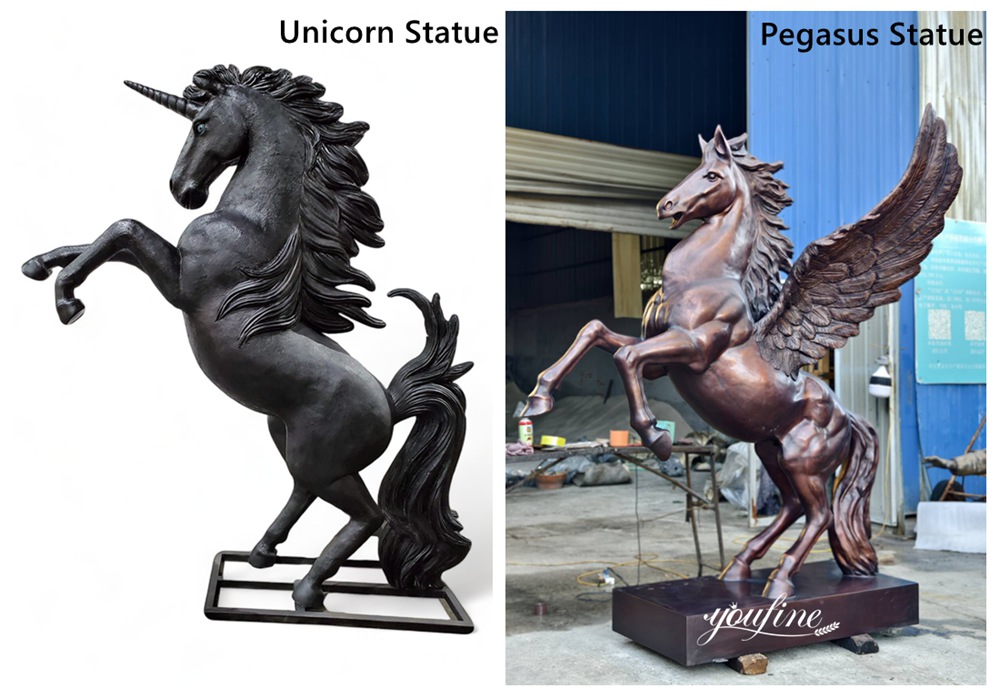
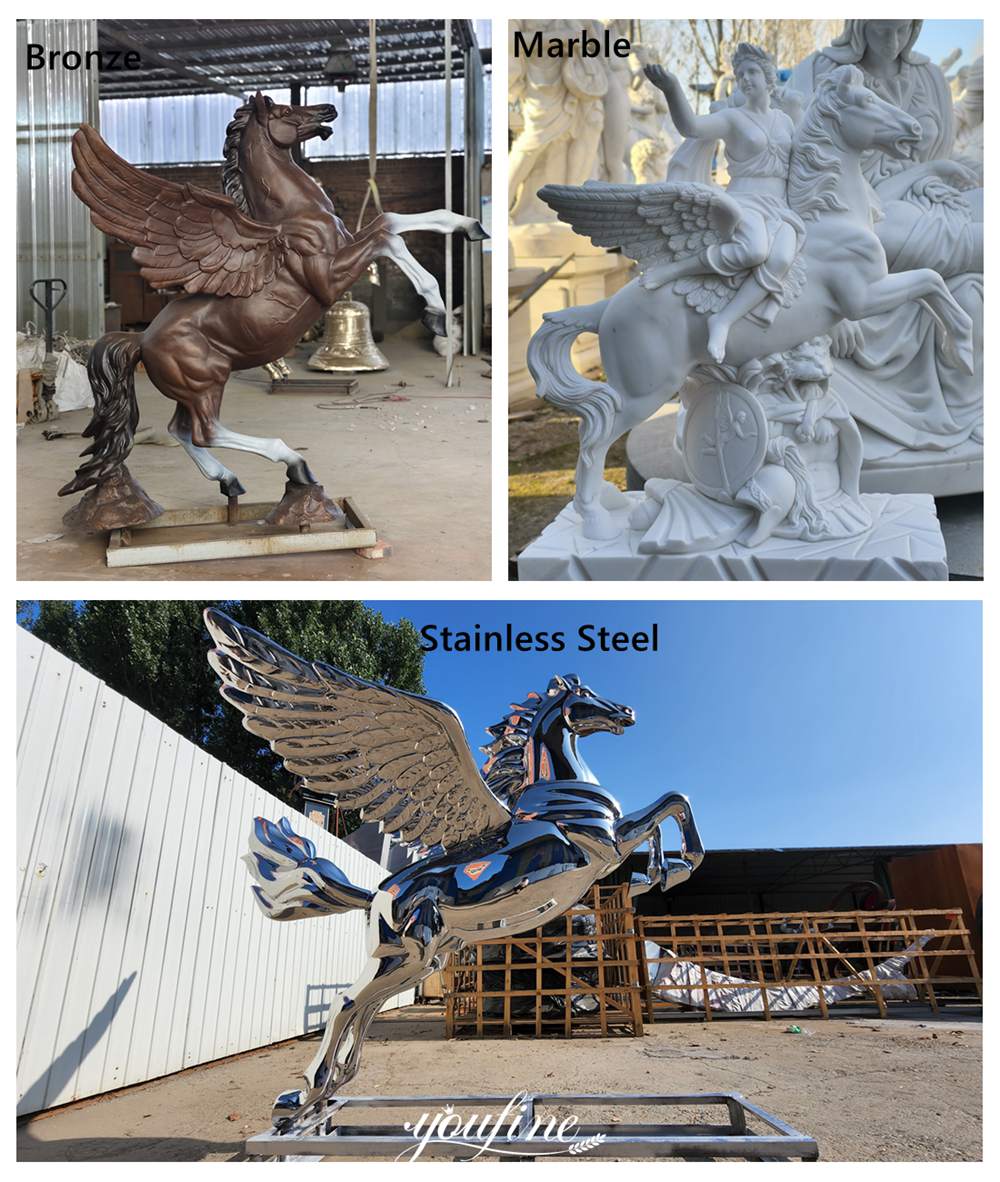
- Pegasus Sculptures: Primary Material: Bronze. Other Materials: Stainless steel, marble (often used in compositions featuring mythological figures—such as Mercury riding a Pegasus).
- Unicorn Sculptures: Primary Material: Bronze. Other Materials: Stainless steel.
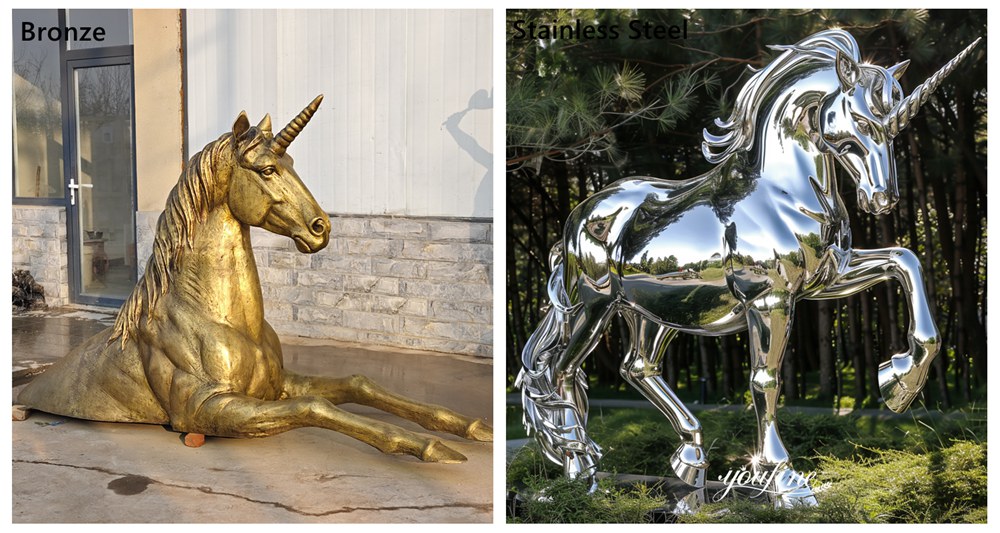
Production Process (Primarily Bronze)
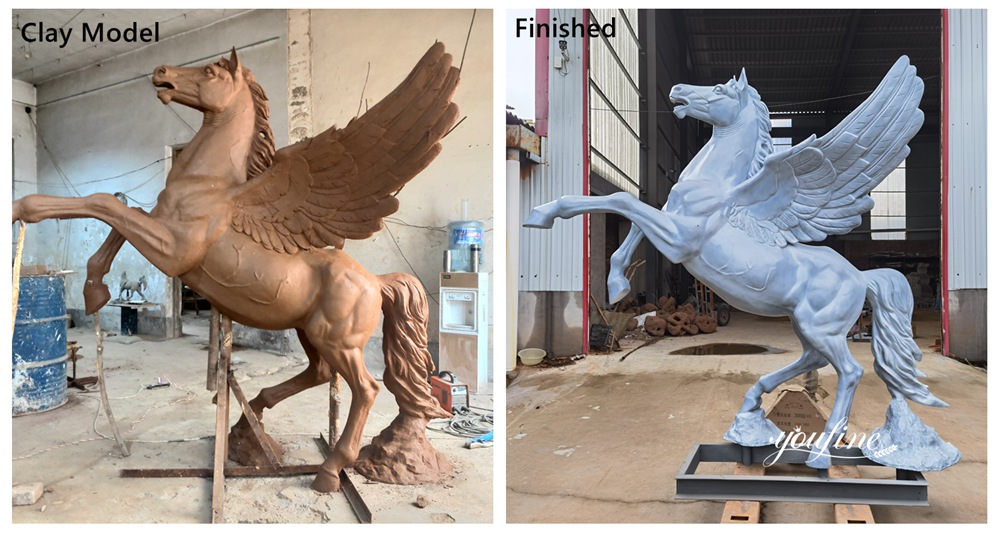
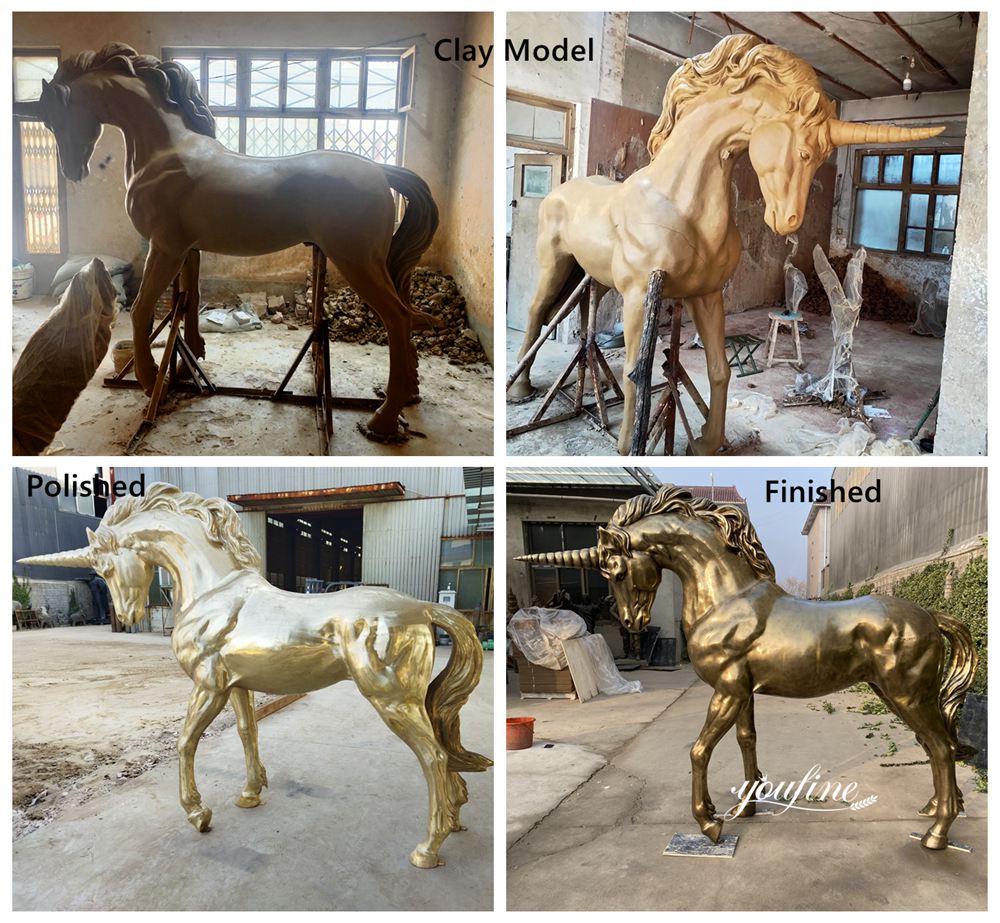
The Lost-Wax Casting Method is the primary technique employed: Following the initial design approval, the traditional lost-wax process is utilized, involving over 30 intricate steps to bring the sculpture to fruition. These steps encompass critical stages such as clay modeling, casting, welding, polishing, and patina (coloring).
At YouFine Artsculpturegallery factory, we also offer custom services for both types of sculptures—including bespoke designs, dimensions, and finishes. Our customers typically like life-size or larger-scale pieces, with heights ranging from 1.8 to 3.5 meters.
Popular Styles
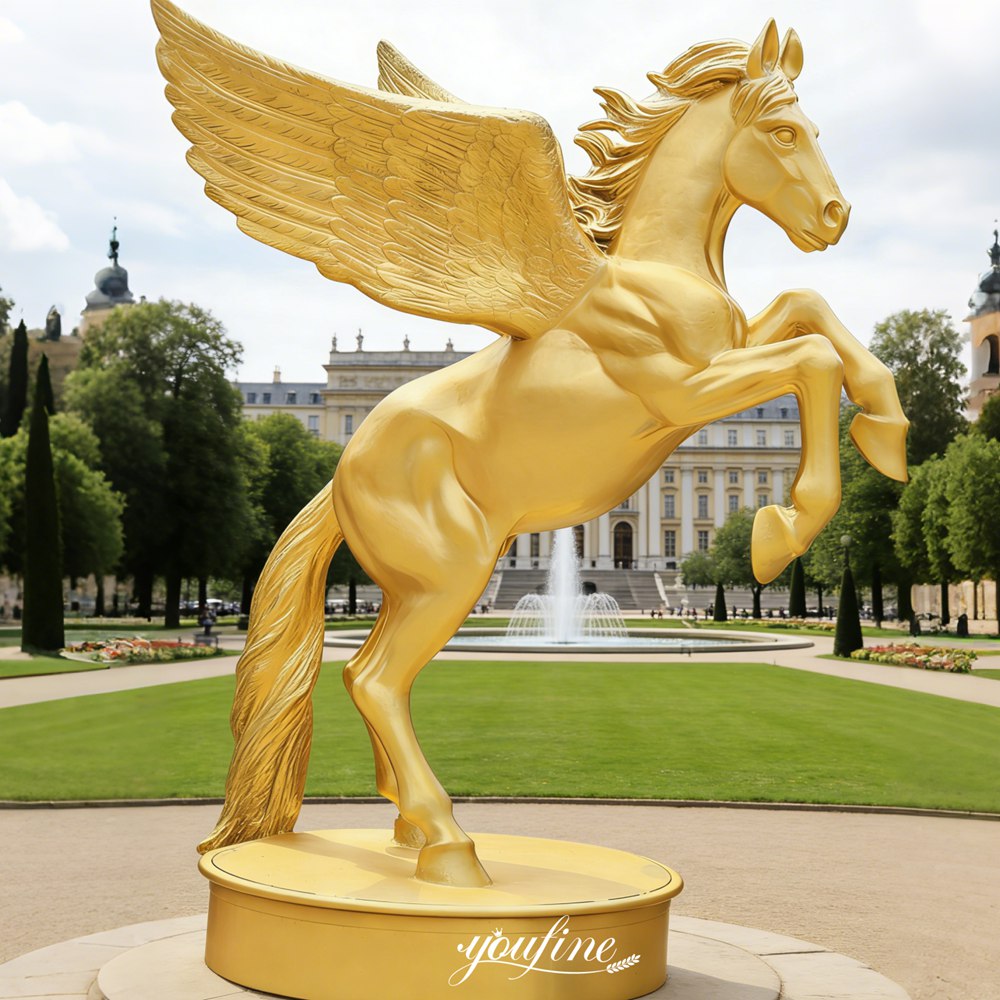
- Pegasus Styles: Most clients prefer a stance with one front leg raised.
Professional Tip: If you opt for a marble Pegasus, the stone’s inherent weight and brittleness typically require adding artistic supports—such as sculpted clouds or stone pillars—between the horse and its base to ensure stability.
- Unicorn Styles: Common stances include walking, raising front legs, and reclining.
How to Choose Between a Unicorn and a Pegasus Sculpture?
When clients ask me to choose between unicorn vs pegasus, I usually suggest:
Choose Pegasus if:
- You want a powerful and eye-catching landmark
- The space is large (parks, squares, hotels)
- You prefer dynamic movement
Choose Unicorn if:
- You want something elegant and symbolic
- The space is smaller (gardens, courtyards)
- You like a softer, magical feeling
FAQ
What Does the Bible Say about Unicorns?
Some older translations of the Bible mention “unicorn,” but modern scholars believe it refers to a wild ox, not the mythical creature.
Is the Unicorn a Symbol of Jesus?
In medieval Christian symbolism, the unicorn was sometimes seen as a symbol of purity and was loosely connected to Jesus, but this is symbolic, not literal.
Unicorn vs Pegasus vs Alicorn
Unicorn = horn
Pegasus = wings
Alicorn = both
What is a Unicorn and a Pegasus Combined?
That creature is called an Alicorn.
Conclusion
The difference between a pegasus unicorn is not just about appearance—it’s about meaning and emotion.
If you’re considering adding one to your space, feel free to reach out to us. We’d be happy to help you choose the perfect design or create a custom sculpture that fits your vision.